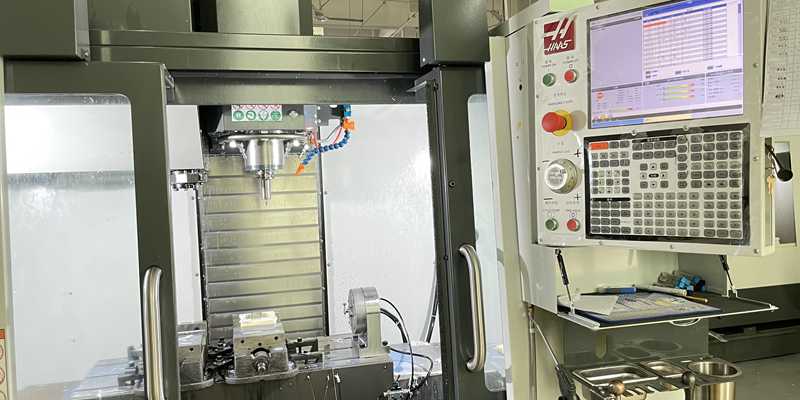
Understanding the Prototype to Production Transition: Phases, Risks, and Realities Mapping the Critical Stages: From Functional Validation to Process Stability The journey from prototype to production unfolds through four disciplined, gate-controll...
VIEW MORE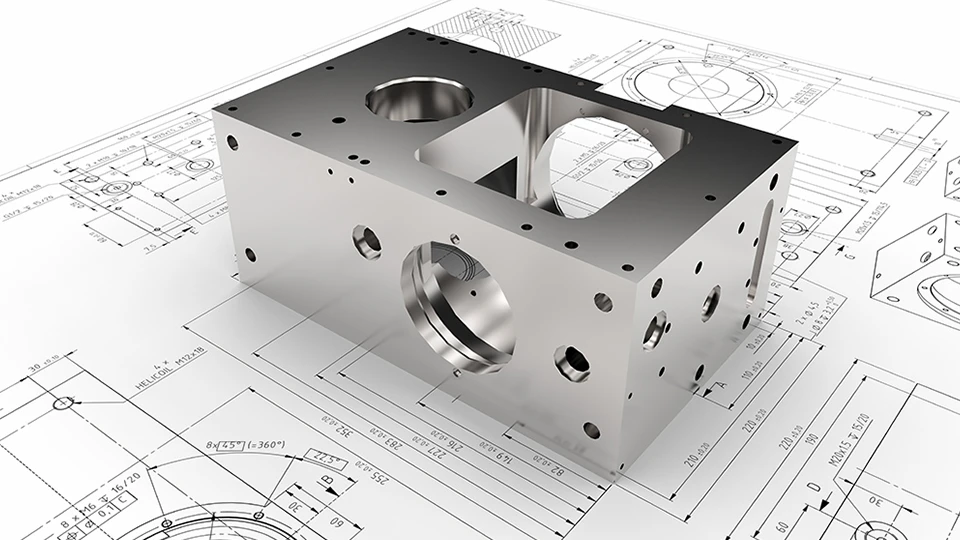
The Nonlinear Impact of Tolerances on Manufacturing Cost Reduction Exponentially higher machining costs result from minute tolerance adjustments—deviations below ±0.13 mm (±0.005") dramatically escalate manufacturing cost reduct...
VIEW MORE
Thermal Effects: The Leading Cause of Dimensional Drift in Production Thermal expansion of machine tools and workpieces during extended cycles Heat from spindle rotation, cutting friction, and motor operation is the dominant contributor to dimensio...
VIEW MORE
End-Use Requirements Define Non-Negotiable Coating Performance Thresholds Functional failure case: Medical device corrosion from saline exposure + inadequate passivation A stainless-steel laparoscopic grasper corroded after just twelve reprocessing...
VIEW MORE
Key Selection Criteria for Fabricating Complex Metal Shapes Tolerance Requirements, Material Thickness, and Geometric Complexity Interplay Selecting a fabrication method for complex metal shapes hinges on how tolerance, material thickness, and geom...
VIEW MORE
Establish Process Control for Reliable Batch Consistency in Machining Why Variability Emerges Between CNC Machining Batches Batch-to-batch variation in CNC machining rarely stems from a single source—it arises from cumulative micro-shifts acr...
VIEW MORE
Why Metal Surface Damage Occurs: Material Properties and Handling Risks How hardness, ductility, and surface finish affect scratch, dent, and abrasion susceptibility Metal surface damage stems directly from the interplay of three core material prop...
VIEW MORE
The Visual Deception: Why Surface Appearance Doesn’t Guarantee Weld Integrity How smooth, uniform weld beads mask critical internal weaknesses A smooth, uniform weld bead often inspires confidence—but that appearance is no guarantee of ...
VIEW MORE
Lean Foundations for Sustainable Lead Time Reduction Value Stream Mapping to Eliminate Waste Without Compromising Quality Checks Value stream mapping (VSM) reveals every step from order to delivery, distinguishing value-adding work from delays&mdas...
VIEW MORE
Clarify Your Functional & Design Requirements First Starting a custom metal parts order without clear specifications often leads to delays and cost overruns. A rigorous upfront definition of functional and design requirements ensures the final comp...
VIEW MORE
Why Cutting Features Directly Determine Part Geometry Accuracy Tool path strategy and its impact on surface fidelity and dimensional stability Tool path programming governs part geometry accuracy by dictating how the cutter engages the material. Th...
VIEW MORE
Material Selection: The Foundational Driver of Metal Part Cost Raw Material Economics: Alloy Type, Scarcity, and Market Volatility Material selection dictates the largest share of metal part cost—often 45–60% of the total manufacturing ...
VIEW MORE Small batches, high standards. Our rapid prototyping service makes validation faster and easier —
  EN
EN
