 Small batches, high standards. Our rapid prototyping service makes validation faster and easier —
  EN
EN

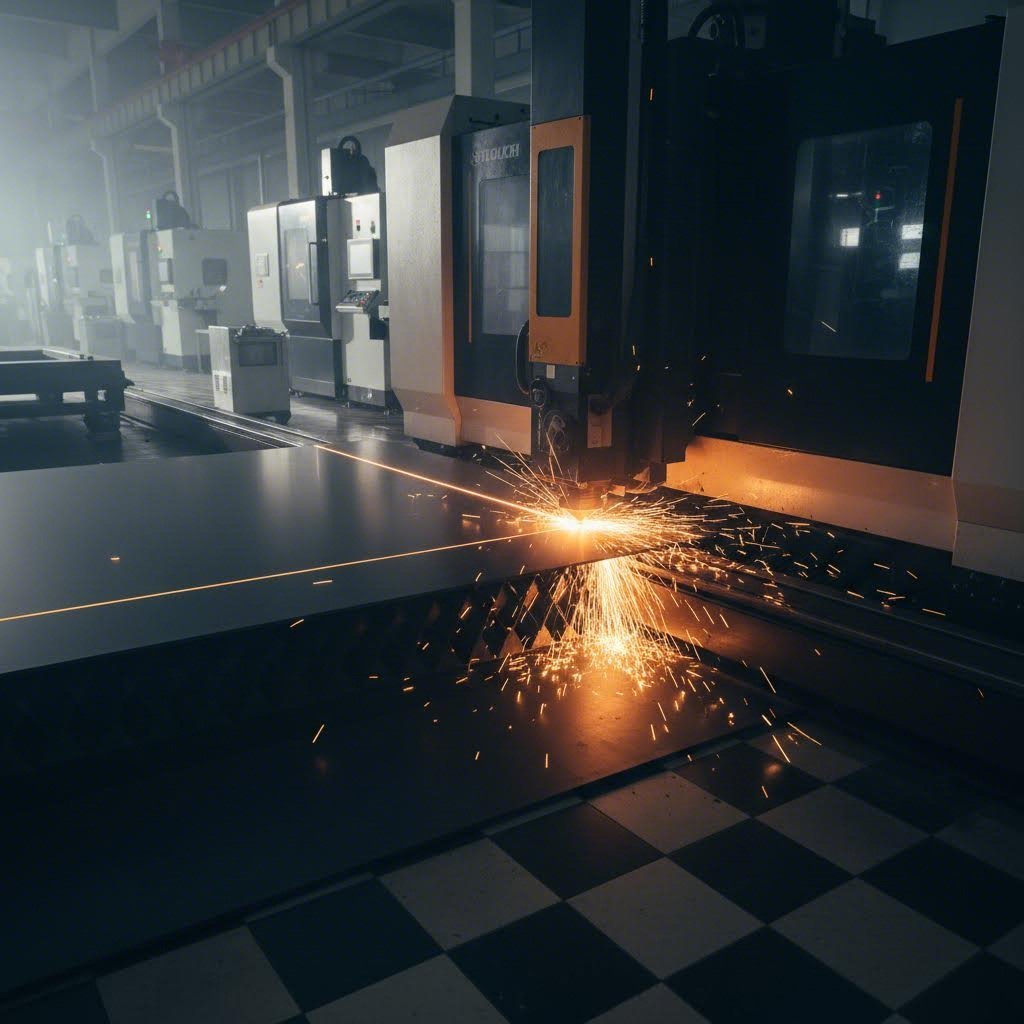
Key Selection Criteria for Fabricating Complex Metal Shapes
Tolerance Requirements, Material Thickness, and Geometric Complexity Interplay
Selecting a fabrication method for complex metal shapes hinges on how tolerance, material thickness, and geometric complexity interact. Tighter tolerances become increasingly difficult to achieve as part geometry grows more intricate—especially with features like narrow ribs, sharp internal corners, or deep-drawn multi-step profiles. Thicker materials compound this challenge: they resist deformation more strongly and exhibit greater springback, demanding higher forming forces and more precise tooling compensation. Conversely, thinner gauges allow finer detail but risk tearing or warping if localized stresses exceed ductility limits. Simulation software is routinely used to model thinning, strain distribution, and springback—enabling predictive tooling adjustments before production begins. For instance, holding ±0.05 mm tolerance on a 3 mm thick steel bracket with tight-radius bends typically requires multi-station progressive stamping rather than single-hit methods. Early collaboration between design and manufacturing teams is critical—not just to align expectations, but to co-develop solutions that balance functional intent with process capability.
Cost, Lead Time, and Minimum Order Quantity Trade-offs in High-Complexity Production
High-complexity metal fabrication demands careful evaluation of cost, lead time, and minimum order quantity (MOQ). Processes like fineblanking or multi-axis CNC machining deliver exceptional precision and repeatability but require substantial upfront investment in custom tooling and programming—making them economical only at higher volumes. In contrast, laser or waterjet cutting eliminate tooling costs and shorten first-article lead times to days, though per-part costs remain elevated and geometric complexity is constrained to 2D profiles. Additive manufacturing unlocks unprecedented freedom for internal features and organic geometries without tooling, yet slower build rates and premium material costs often limit viable MOQs to single or low double-digit quantities. A progressive die may take 12 weeks to commission but then produce thousands of parts per hour; a flexible bending cell can ship the first prototype in under a week. The optimal path depends less on volume alone and more on total cost of ownership—including engineering change costs, quality consistency, and rework risk. For components expected to enter repeat production, robust tooling investment often delivers superior long-term value by ensuring dimensional stability and reducing downstream scrap.
Cutting Technologies Optimized for Complex Metal Shapes
Laser, Plasma, and Waterjet: Precision, Kerf Width, and Heat-Affected Zone Impact on Intricate Features
The choice of cutting technology directly determines whether intricate metal geometries can be realized in a single operation without compromising accuracy, edge integrity, or material properties.
Laser cutting excels in precision applications: it achieves tolerances as tight as ±0.05 mm and kerf widths below 0.3 mm, making it ideal for fine contours, tight radii, and thin-gauge materials. Its minimal heat-affected zone (HAZ) preserves local microstructure, though thermal distortion remains possible on large, thin parts.
Waterjet cutting uses high-pressure abrasive water to cut without heat—eliminating HAZ entirely. This cold process maintains metallurgical integrity and prevents warping in heat-sensitive alloys, composites, or hardened steels. Kerf width is wider (0.5–1.2 mm), limiting resolution for ultra-fine features, but its versatility across material types and thicknesses makes it indispensable for complex, thermally fragile designs.
Plasma cutting offers high-speed processing of thick plate at lower capital cost—but at the expense of precision. With typical tolerances exceeding ±0.5 mm and kerf widths ranging from 1.5–5 mm, plasma is best suited for larger, less-detailed features where edge finish and thermal distortion are secondary concerns. Secondary finishing is often required for intricate geometries.
| Cutting Method | Typical Precision (Tolerance) | Kerf Width | Heat‑Affected Zone | Suitability for Intricate Features |
|---|---|---|---|---|
| Laser | ±0.05 mm | Very narrow (≤0.3 mm) | Minimal | Excellent—handles tight corners and fine detail, minimal burr |
| Waterjet | ±0.10 mm | ~0.5–1.2 mm | None (cold cut) | Very good—zero thermal distortion; ideal for materials prone to warping |
| Plasma | ±0.5 mm+ | 1.5–5 mm | Moderate to high | Limited—best for larger features; thicker sections where edge finish is less critical |
Matching the cutting process to material type, thickness, tolerance requirements, and thermal sensitivity ensures geometric fidelity and avoids costly post-processing or part rejection.
Forming and Bending Strategies for 3D Complex Metal Shapes
Achieving tight tolerances in complex metal shapes demands strategic bending sequences and precise springback control. A multi‑step press brake approach transforms intricate flat patterns into dimensionally accurate 3D components.
Multi-Step Press Brake Sequencing and Springback Compensation for Tight-Tolerance Geometry
Multi-step press brake sequencing breaks down complex bends into controlled, incremental operations—reducing localized stress concentrations and enabling iterative correction of springback, which commonly shifts final angles by 2–3° from nominal values. By designing a progressive sequence—such as an initial 70° bend followed by a coining pass—the part’s geometry is gradually locked into specification with sub-degree accuracy. Research by Golovashchenko et al. (2011) confirms that two-step sequential forming significantly improves springback control through staged plastic deformation. Modern press brakes integrate real-time angle monitoring and adaptive tooling systems that adjust force and position dynamically in response to material variability—ensuring consistent results even across mixed-lot batches. For components requiring hole-to-hole positional accuracy within ±0.12 mm after bending, a rigorously engineered sequence prevents feature shift and preserves alignment to CAD-defined datums, eliminating the need for costly secondary machining or inspection-driven rework.
Design for Manufacturability Principles for Complex Metal Shapes
DFM Guidelines: Bend Radii, Relief Cuts, Nesting Constraints, and Feature Interference Avoidance
Design for manufacturability (DFM) is foundational to producing complex metal shapes efficiently and reliably. Standardizing bend radii to match readily available tooling reduces setup time, minimizes tool changes, and accelerates quoting and launch. Where sharp internal corners are functionally necessary, relief cuts prevent tearing at bend transitions and ensure clean flange separation—particularly critical in high-strength or pre-coated materials. Efficient nesting maximizes sheet utilization while maintaining structural bridges between parts to prevent movement during cutting or handling; automated nesting software helps balance material yield against part orientation constraints. Crucially, designers must avoid placing holes, slots, or tabs within three material thicknesses of a bend line—a common source of distortion due to material flow interference. Early engagement with manufacturing engineers allows these constraints to inform design decisions proactively, ensuring functional performance aligns with fabrication feasibility—without sacrificing precision or driving up cost through late-stage redesign.
Frequently Asked Questions
What is the importance of material thickness in metal fabrication?
Material thickness impacts forming forces, springback, and tolerance achievement. Thicker materials require more force and compensation but resist deformation, while thinner gauges allow finer detail but risk warping or tearing.
How does cutting technology affect the precision of complex metal shapes?
Cutting technologies like laser, waterjet, and plasma vary in precision, kerf width, and heat-affected zones. Laser cutting is ideal for ultra-fine tolerances, waterjet avoids heat distortion, and plasma suits larger, less-detailed parts.
Why is springback compensation necessary in metal bending?
Springback causes final angles and dimensions to deviate after bending due to internal stress recovery. Compensation ensures tight tolerance control and dimensional accuracy.
What factors determine the choice of fabrication method?
Factors include cost, tolerance requirements, material thickness, geometric complexity, and volume requirements. Collaboration between design and manufacturing teams can optimize method selection.
What are DFM principles for complex metal shapes?
DFM principles include standardizing bend radii, adding relief cuts, optimizing nesting patterns, and avoiding feature interference near bend lines to ensure efficiency, accuracy, and cost-effectiveness.
Table of Contents
- Key Selection Criteria for Fabricating Complex Metal Shapes
- Cutting Technologies Optimized for Complex Metal Shapes
- Forming and Bending Strategies for 3D Complex Metal Shapes
- Design for Manufacturability Principles for Complex Metal Shapes
-
Frequently Asked Questions
- What is the importance of material thickness in metal fabrication?
- How does cutting technology affect the precision of complex metal shapes?
- Why is springback compensation necessary in metal bending?
- What factors determine the choice of fabrication method?
- What are DFM principles for complex metal shapes?