 Small batches, high standards. Our rapid prototyping service makes validation faster and easier —
  EN
EN

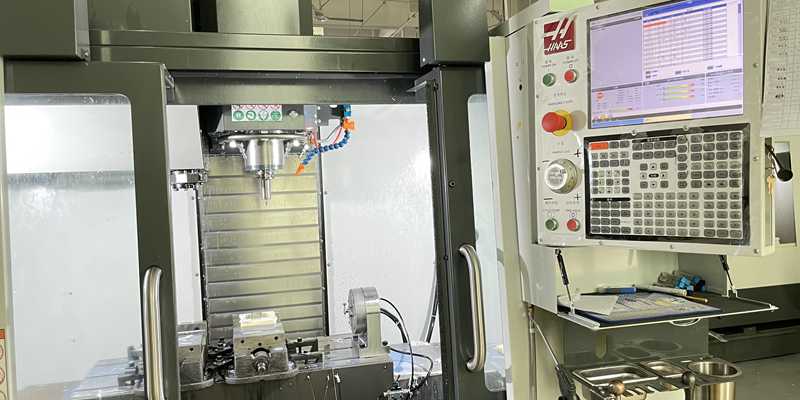
Understanding the Prototype to Production Transition: Phases, Risks, and Realities
Mapping the Critical Stages: From Functional Validation to Process Stability
The journey from prototype to production unfolds through four disciplined, gate-controlled phases. It begins with functional validation, where engineers verify that the prototype meets performance, safety, and user requirements—focusing on form, fit, and function. Once validated, the project advances to design freeze, locking component specifications and tolerances before committing to tooling investments. Next comes the pilot run, a low-volume production trial that tests manufacturing processes, assembly workflows, and supply chain responsiveness under realistic conditions. The final phase is process stability, achieved when Statistical Process Control (SPC) confirms that output variation remains consistently within specification limits. Each stage requires formal gate reviews with objective pass/fail criteria to prevent premature scaling. Rushing—especially skipping functional validation or delaying design freeze—introduces systemic risk: over 40% of new product introductions experience significant delays during ramp-up, often triggered by late-stage redesigns. A rigorous stage-gate approach ensures the prototype to production handoff delivers repeatable quality—not just one-off success.

Why the "Valley of Death" Is a Common Pitfall in Prototype to Production
The “Valley of Death” refers to the high-risk gap between a working prototype and stable, profitable mass production. It arises not from technical failure, but from misalignment between development and manufacturing mindsets: prototypes are built by skilled engineers using flexible, iterative methods, while production demands standardized, repeatable, and scalable systems. Common failure points include undocumented assembly steps, unplanned material substitutions, unvalidated supplier capacity, and untested process controls. Crucially, a prototype proves concept viability—not manufacturing viability. Without early collaboration between design, manufacturing engineering, and procurement teams, the transition stalls. To cross the valley, companies must validate manufacturability before design freeze, secure dual-sourced critical components, and embed quality systems—including IQ/OQ/PQ and SPC—into the workflow, not as an afterthought.
Design for Manufacturability (DFM): The Essential Gate Before Prototype to Production
How Late DFM Integration Increases Cost and Delays in Prototype to Production
Delaying Design for Manufacturability (DFM) until after prototyping is among the most costly oversights in the prototype to production transition. When DFM is applied post-prototype, designs must be reworked to accommodate real-world constraints—tooling limitations, material availability, assembly tolerances, and secondary operation feasibility. Each redesign cycle adds weeks to the schedule and often triggers new tooling investments costing tens of thousands of dollars. Worse, changes cascade: suppliers may need to requalify materials, QA protocols require revision, and production lines demand reconfiguration. A functional prototype that performs well in the lab may fail completely at scale—for example, a part designed without draft angles or uniform wall thickness may be unmoldable or prone to warping. Studies show such late-stage revisions can inflate total project costs by 30–50% compared to addressing manufacturability during concept development. The root cause is clear: designing without regard for how something will be made inevitably leads to expensive rework.
Case Study: Medical Device Housing Redesign — 42% Scrap Reduction Through Early DFM
A medical device manufacturer initially developed a diagnostic instrument housing using a prototype-first approach. After initial tooling, scrap rates exceeded 32% due to inconsistent wall thickness, sharp internal radii, and insufficient draft—causing sink marks, short shots, and ejection failures. Rather than forcing volume production, the team paused and conducted a formal DFM review before full-scale ramp-up. Redesign efforts focused on manufacturability fundamentals: uniform wall sections, generous internal radii, and optimized draft angles aligned with injection molding best practices. The result? Scrap dropped from 32% to 4%—a 42% absolute reduction—and cycle time fell by 18%. The redesign added only three weeks to the timeline but avoided six months of projected delays from rework, rejected parts, and line stoppages. This case demonstrates that early DFM integration doesn’t slow launch—it prevents far greater schedule erosion and cost inflation downstream.
Scaling Supply Chain Readiness for Reliable Prototype to Production Handoff
Early Supplier Involvement and Dual-Sourcing Strategies to Prevent Bottlenecks
Supply chain readiness is not a final checkpoint—it’s a foundational enabler of prototype to production success. Engaging key suppliers during functional validation—not after design freeze—allows them to align capacity, pre-book raw materials, and provide actionable feedback on part geometry, tolerance stacks, and test requirements. This collaborative input improves manufacturability and reduces scrap rates before tooling begins. Dual-sourcing for high-risk, long-lead, or single-source-critical components adds essential resilience. For example, a medical device firm qualified two Tier-1 injection molders for its primary housing before pilot runs—and cut sourcing-related delays by 40%. Early involvement also surfaces hidden constraints: a supplier may flag that a specified surface finish isn’t achievable at target cycle times, prompting a timely design adjustment. When integrated strategically, the supply chain shifts from a passive support function to an active co-developer of scalable production.
Ensuring Quality Consistency Across the Prototype to Production Shift
From IQ/OQ/PQ to SPC: Building Quality into the Prototype to Production Workflow
Consistent quality across the prototype to production transition doesn’t emerge from inspection—it’s engineered in. That begins with robust design validation during prototyping, where functionality, fit, and form are stress-tested against real-world use cases and regulatory expectations (e.g., ISO 13485 for medical devices). Process optimization follows, standardizing work instructions, validating equipment, and eliminating bottlenecks before volume ramp. The quality framework builds progressively: IQ/OQ/PQ (Installation/Operational/Performance Qualification) validates that equipment and procedures meet predefined standards; then SPC (Statistical Process Control) sustains control by monitoring key process parameters in real time and detecting deviations before they impact output. Embedding this progression early—rather than retrofitting it mid-ramp—reduces scrap, avoids regulatory nonconformances, and accelerates time-to-stable-yield. Success hinges on cross-functional alignment: design, manufacturing engineering, procurement, and quality must operate under a unified quality framework, with shared metrics and joint accountability for process capability (Cp/Cpk ≥ 1.33).
FAQs
1. What are the primary phases in the prototype to production transition?
The transition includes four key phases: functional validation, design freeze, pilot run, and process stability. Each phase ensures progressive milestones are met to guarantee manufacturing success.
2. What is the "Valley of Death" in product development?
The Valley of Death refers to the risky gap between a functional prototype and stable mass production, often stemming from misalignment between development and manufacturing processes.
3. Why is Design for Manufacturability (DFM) essential?
DFM ensures that designs are production-ready by considering manufacturing constraints early. Late integration of DFM can lead to costly redesigns, delays, and production inefficiencies.
4. How can early supplier involvement prevent bottlenecks?
Engaging suppliers early helps align production capacity, pre-book materials, and optimize part designs, reducing the risk of delays and inefficiencies in the supply chain.
5. What quality systems are crucial for a smooth transition?
Quality systems like IQ/OQ/PQ and Statistical Process Control (SPC) are essential for maintaining consistent quality and preventing costly errors during production scaling.
Table of Contents
-
Understanding the Prototype to Production Transition: Phases, Risks, and Realities
- Mapping the Critical Stages: From Functional Validation to Process Stability
- Why the "Valley of Death" Is a Common Pitfall in Prototype to Production
- Design for Manufacturability (DFM): The Essential Gate Before Prototype to Production
- Scaling Supply Chain Readiness for Reliable Prototype to Production Handoff
- Ensuring Quality Consistency Across the Prototype to Production Shift
- FAQs