 Small batches, high standards. Our rapid prototyping service makes validation faster and easier —
  EN
EN

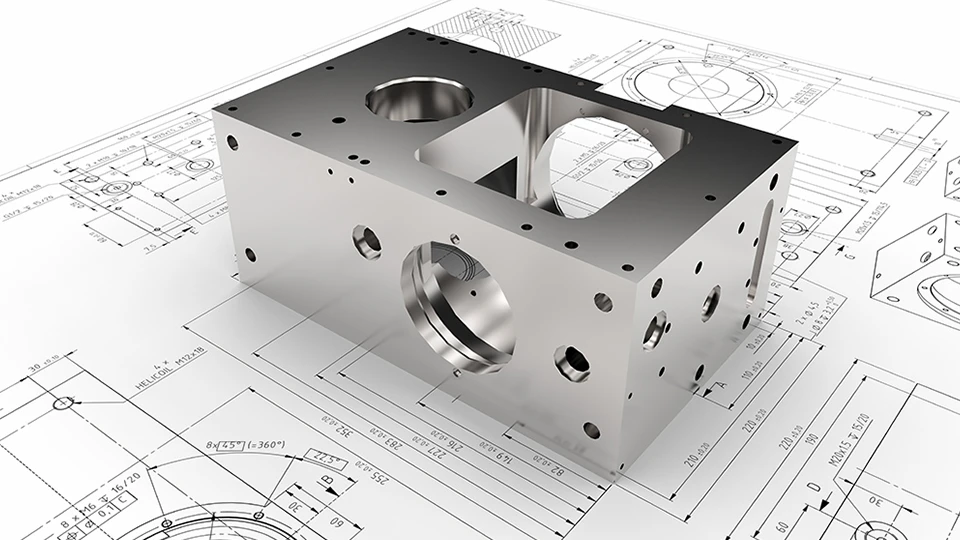
The Nonlinear Impact of Tolerances on Manufacturing Cost Reduction
Exponentially higher machining costs result from minute tolerance adjustments—deviations below ±0.13 mm (±0.005") dramatically escalate manufacturing cost reduction challenges. Beyond this threshold, the expense curve accelerates due to demands for specialized CNC equipment, environmental controls, and enhanced inspection protocols.
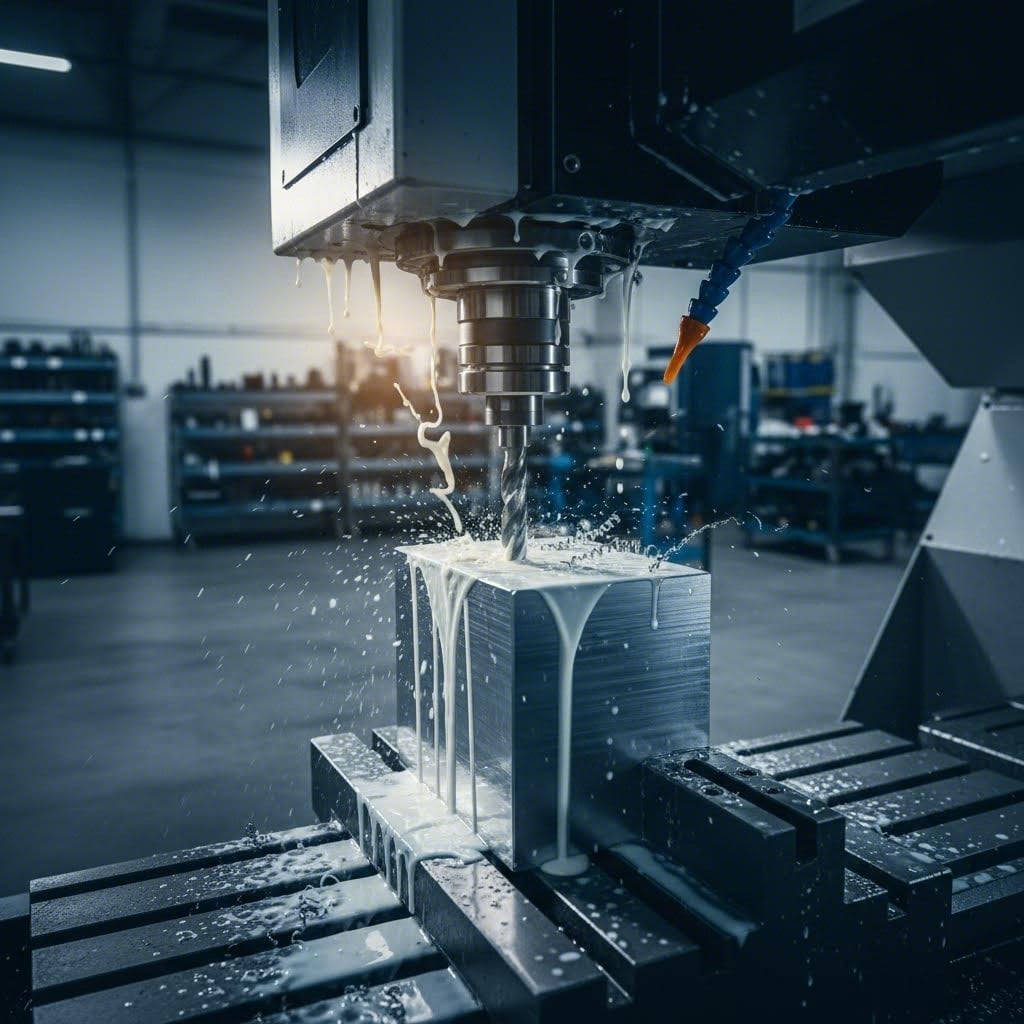
Why ±0.001" Tolerance Shifts Trigger Exponential CNC Cost Increases
Precision tolerance requirements push machining operations into logarithmic cost territory. Each ±0.001" tightening introduces cascading operational impacts: secondary machining passes for surface refinement; dimensional verification using coordinate measuring machines (CMM); temperature-controlled environments (adding ~$90k in facility investment); advanced cutting tools with shortened lifespans; and mandatory statistical process control (SPC) implementation. A recent optimization case study found that tightening tolerances by just ±0.001" increased unit costs by 400% (Springer Journal, Advanced Manufacturing Optimization, 2024).
Tolerance Optimization: Balancing Functionality and Cost-Efficient Machining
Design teams achieve sustainable manufacturing cost reduction by applying functional tolerance classifications—not uniform precision across all features. This tiered strategy maintains performance while eliminating unnecessary constraints:
| Tolerance Class | Machining Approach | Cost Factor | Feasible Applications |
|---|---|---|---|
| Standard (±0.13 mm) | Conventional CNC | 1x | Non-critical interfaces |
| Precision (±0.025 mm) | Multi-stage machining | 3–5x | Rotating assemblies |
| Ultra-Precision (±0.005 mm) | Specialized equipment | 8–12x | Aerospace components |
Best practices include cross-functional tolerance audits during DFM stages to prevent redundant “just-in-case” specifications—a leading cause of avoidable cost escalation.
Geometry Simplification for Machining Efficiency and Cost Reduction
Fillets, Radii, and Orthogonal Edges: Quantifying Cycle Time and Tool Wear Savings
Standard machining favors orthogonal edges and constant radii where function permits. Complex geometries force excessive tool changes and inefficient tool paths—increasing cycle times by up to 30% (RapidDirect CNC Efficiency Report, 2024). Aligning geometry with standard tooling capacities improves throughput and reduces reliance on custom cutters. Manufacturers report 15–20% lower tool wear when replacing variable contours with simplified transitions (BestInParts CNC Analysis, 2023), yielding faster production timelines and lower operational cost per part.
Case Study: Single-Fillet Redesign Cuts Milling Time by 37% and Lowers Scrap Rate
An aluminum housing component originally featured a critical curved profile requiring four separate end mill operations for blended radius transitions. Reengineering non-mating surfaces with functional sharp corners eliminated those passes entirely. The result: a 37% reduction in milling time per unit and an 8% decrease in scrap—driven by reduced material distortion and fewer insertion-point stress fractures during secondary assembly. This illustrates how geometric simplification supports enterprise-level manufacturing cost reduction not only through machine time savings, but also via improved first-pass yield and diminished rework.
Design for Manufacturability (DFM) as a Proactive Manufacturing Cost Reduction Strategy
Cross-Functional DFM Reviews: Preventing Late-Stage Revisions and Cost Escalation
Design for Manufacturability (DFM) embeds production realities into early design decisions—shifting cost optimization upstream. Structured cross-functional DFM reviews—uniting design engineers, process planners, and tooling specialists—identify producibility risks before tooling is commissioned. These sessions proactively resolve tolerance stackup conflicts, material-to-process mismatches, and fixture design gaps that otherwise trigger costly late-stage revisions. According to the Ponemon Institute’s 2023 Hardware Development Cost Study, such oversights average $740k in rework and tooling changes per hardware project. Enterprises adopting formal DFM protocols reduce scrap rates by 15–30%, with ROI exceeding 5:1 on initial investment—demonstrating its role as a foundational lever for sustainable manufacturing cost reduction.
Part Consolidation and Standardization: Scalable Levers for Manufacturing Cost Reduction
Reducing Assembly Count from 12 to 3 Components: BOM, Labor, and QA Savings
Part consolidation replaces multiple discrete components with integrated, multifunctional elements—reducing assembly complexity at its source. Measurable outcomes include:
- BOM Rationalization: Fewer unique parts simplify procurement, shrink inventory carrying costs, and eliminate $24–$38 in excess material and logistics cost per eliminated component.
- Labor Efficiency: Consolidating 12 parts into 3 typically cuts assembly time by 42–55%, reducing fixturing, handling, and fastening labor.
- Quality Improvement: Removing nine interfaces lowers potential failure points—cutting defect rates by 31% (Manufacturing Excellence Institute, 2023).
Standardizing component libraries compounds these gains. A hydraulic manifold redesign leveraging both consolidation and standardization achieved 17% shorter lead times, 29% less CNC programming effort, and $740K in annual tooling savings—proving that scalable manufacturing cost reduction begins with intentional design architecture.
FAQ
Why do tighter tolerances lead to higher manufacturing costs?
Tighter tolerances often require specialized CNC equipment, additional machining passes, advanced measurement tools, and controlled environments, all of which increase costs exponentially.
What is the impact of geometric simplification on manufacturing costs?
Geometric simplification can lower cycle times, reduce tool wear, and improve throughput, ultimately saving both time and money during production.
How does Design for Manufacturability (DFM) reduce costs?
DFM embeds realistic production considerations early in the design phase, preventing costly revisions and improving overall efficiency, leading to significant cost savings.
What are the advantages of part consolidation in manufacturing?
Part consolidation reduces assembly complexity, lowers labor costs, shortens lead times, and improves quality by minimizing potential failure points.
Table of Contents
- The Nonlinear Impact of Tolerances on Manufacturing Cost Reduction
- Geometry Simplification for Machining Efficiency and Cost Reduction
- Design for Manufacturability (DFM) as a Proactive Manufacturing Cost Reduction Strategy
- Part Consolidation and Standardization: Scalable Levers for Manufacturing Cost Reduction
- FAQ