 Small batches, high standards. Our rapid prototyping service makes validation faster and easier —
  EN
EN

How Contamination Directly Causes Weld Defects in Joint Preparation
Oil, Rust, and Oxide: Primary Triggers of Porosity, Cracking, and Lack of Fusion
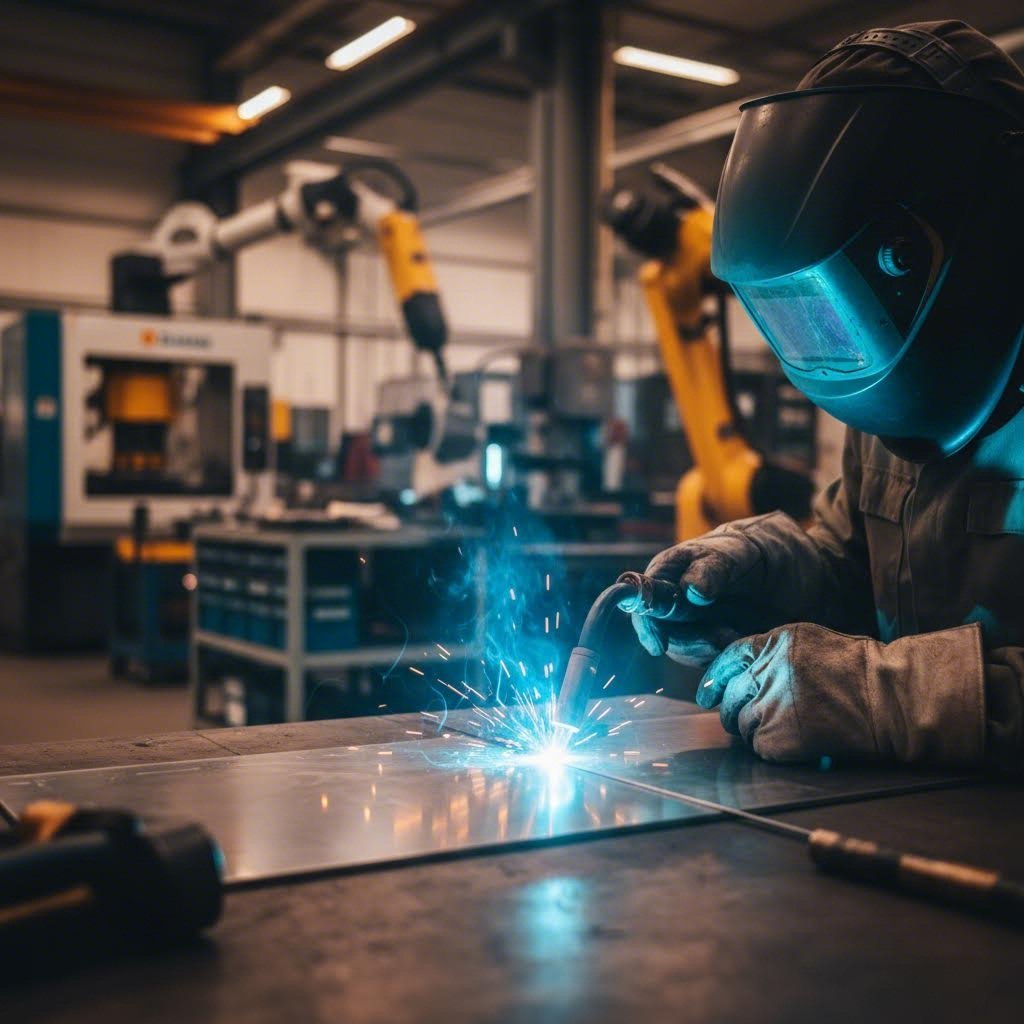
Contaminants on the joint surface are the silent instigators of the most persistent weld defects. Oil and grease—often overlooked residues from machining or handling—vaporize violently in the welding arc, introducing gases that become trapped in the solidifying metal and form porosity: a network of hidden failure points. Even a microscopic oil film can reduce effective joint strength by up to 40% (TWI, 2023). Rust and mill scale, composed of iron oxides, melt at significantly higher temperatures than base steel, acting as a thermal barrier that prevents full fusion. This results in unfused gaps at the weld root or sidewalls—commonly diagnosed as lack of fusion. When moisture or hydrocarbon residues are present, they decompose into atomic hydrogen, which diffuses into the heat-affected zone (HAZ) and accumulates at grain boundaries, triggering hydrogen-induced cracking—often within hours after cooling. Rigorous removal of these contaminants is non-negotiable: solvent wiping, mechanical grinding, or laser cleaning must be completed before arc initiation to ensure metallurgical continuity.
Case Study: Pipeline Failure Linked to Inadequate Welded Joints Preparation
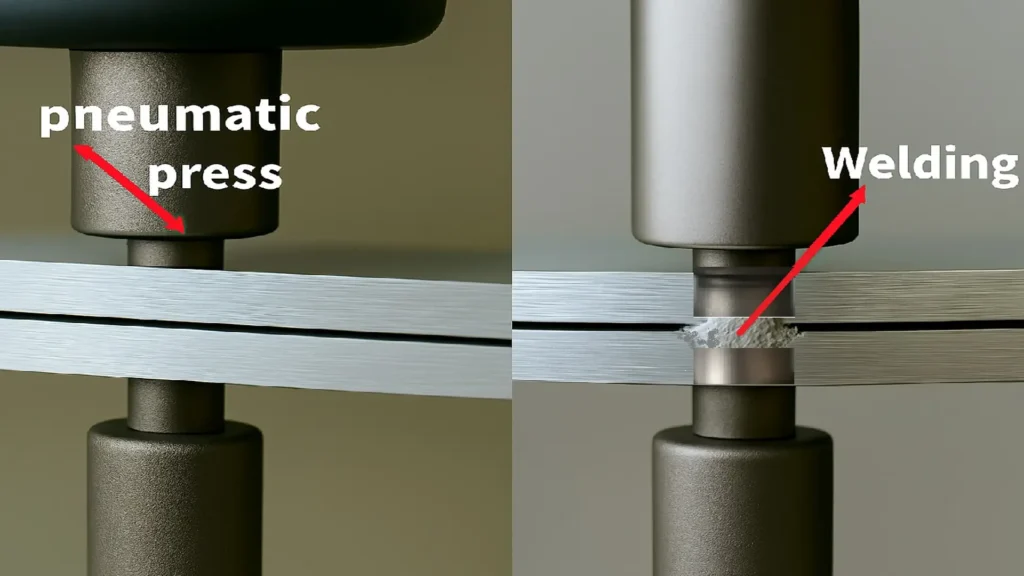
A 36-inch natural gas transmission pipeline in the Permian Basin failed a critical hydrostatic test at 90% of design pressure. Investigation by a leading failure analysis firm traced the rupture to a circumferential weld in a low-alloy steel spool piece. Scanning electron microscopy revealed subsurface wormhole porosity and a 4-mm deep hydrogen crack along the weld centerline. Root cause analysis identified a persistent film of drawing lubricant and an uneven oxide layer left over from pipe manufacturing—both resistant to standard acetone cleaning. Gas-chromatography confirmed hydrocarbons in the weld metal matched the forming lubricant. The defect originated as a 1.2-mm porous discontinuity and propagated under cyclic service pressure until the remaining ligament approached yield stress during testing. Remediation required cutting out and replacing 50 meters of pipeline at a direct cost of $1.8 million (2022 incident). This case confirms that even code-compliant welding procedures cannot compensate for unvalidated surface preparation—and underscores why contamination control must be audited, not assumed.
Material-Specific Welded Joints Preparation Requirements for Reliable Fusion
Aluminum: Overcoming the Oxide Barrier to Achieve Full Penetration
Aluminum’s native oxide layer melts at ~3700°F—over three times the melting point of the base metal (~1200°F). This extreme thermal mismatch prevents fusion unless the oxide is mechanically disrupted immediately before welding. Effective preparation requires aggressive, dedicated cleaning: stainless steel wire brushing (used exclusively for aluminum to avoid embedded iron) removes the oxide without smearing it; chemical etching or acetone wiping eliminates residual grease and moisture. Joint design must also account for aluminum’s high thermal conductivity—bevel angles are typically widened to 60–70° to ensure sufficient heat input and full joint penetration. Without these steps, the oxide remains intact, blocking filler metal wetting and creating a brittle, non-bonded interface prone to crack propagation under load. Field verification via a simple wetting test—where water beads uniformly indicate oxide presence, while rapid sheeting signals readiness—has reduced defect rates by up to 40% in production environments.
Stainless Steel: Preventing Sensitization and Chloride-Induced Stress Corrosion
Stainless steel welded joints preparation prioritizes contamination control to preserve corrosion resistance. Sensitization occurs when excessive heat input causes chromium carbides to precipitate at grain boundaries in the HAZ, depleting adjacent zones of chromium and enabling intergranular corrosion. Minimizing gap tolerance during fit-up reduces required heat input and mitigates this risk. Equally critical is eliminating chloride sources—including shop markers, cutting fluids, and even fingerprints—which initiate pitting and stress corrosion cracking in service. Dedicated stainless tools (grinding discs, wire brushes) prevent iron contamination that leads to rust spotting. Pre-weld passivation removes free iron and restores the protective chromium oxide layer. For critical applications, final inspection with a ferrite scope verifies delta ferrite content within specification limits—directly linking preparation quality to long-term material performance.
Standardized Welded Joints Preparation Protocols That Eliminate Rework
AWS D1.1 and ASME B31.4 Compliance: Fit-Up, Beveling, and Cleanliness Tolerances
Standardized protocols are the primary defense against costly rework in structural fabrication and pipeline construction. AWS D1.1 and ASME B31.4 define precise tolerances for fit-up, bevel geometry, and surface cleanliness—not as guidelines, but as enforceable requirements for consistent fusion. A root face that exceeds specified thickness impedes root penetration; an oversized root opening invites burn-through and distortion. These codes mandate uniform bevel angles—typically 30° to 37.5°—to ensure reliable access to the root and predictable weld pool dynamics. Compliance extends beyond dimensional accuracy: surfaces must be cleaned to bright metal, free of mill scale, rust, and hydrocarbons. Using dedicated stainless steel brushes prevents cross-contamination, and verifying cleanliness with a calibrated surface profile gauge replaces subjective judgment with objective measurement. This rigor ensures every joint—whether on a bridge girder or pressure pipe—meets the same quantifiable baseline. Over 60% of fabrication rework originates from improper fit-up and inadequate cleaning (Ponemon Institute, 2023), reinforcing that standardized preparation is foundational—not auxiliary—to structural reliability.
Measurable Impact: 37% Drop in NDT Reject Rates After Pre-Weld Cleanliness Audits
Quantifying outcomes validates investment in disciplined preparation. A major heavy fabrication facility implemented mandatory pre-weld cleanliness audits using calibrated instruments—including UV fluorescence detection for hydrocarbons and profilometers for oxide depth—to objectively verify surface condition before welding. Over 12 months, this initiative drove a 37% reduction in Non-Destructive Testing (NDT) reject rates. The drop eliminated wasted consumables, labor, and arc time tied to excavating and repairing defective passes. Crucially, the audit replaced variable visual assessments with repeatable, data-driven standards—removing human subjectivity from the production flow. Feedback loops between NDT findings and frontline crews enabled rapid adjustment of cleaning techniques and tooling, proving that measurable preparation directly translates to measurable quality.
Best Practices for Consistent Welded Joints Preparation Across Shop and Field Environments
Disciplined pre-weld routines deliver reliable outcomes regardless of location. Shop environments offer stable positioning, overhead cranes, and climate control—advantages that simplify alignment and consistency. Field conditions demand adaptability: portable generators, wind screens, and mobile alignment tools become essential—but the standard for joint preparation must remain unchanged. Consistency begins with cleaning: all mill scale, oil, and oxide layers are removed using solvents, dedicated wire brushes, or flap discs before fit-up commences. Bevel angles and root openings are then verified with certified gauges aligned to the approved Welding Procedure Specification (WPS). Adjustable clamps and tapered shims maintain precision positioning in both settings, while a structured pre-weld walk-through—guided by concise, field-tested visual checklists—catches misalignment early. Calibrated welding machines, batch-tracked consumables, and verified shielding gas flow rates operate identically on-site and in the bay. When inspection data flows back to operators—not just supervisors—small habit improvements compound rapidly. Field welders who follow the same fit-up drawings, cleanliness thresholds, and verification protocols as their shop counterparts consistently cut rework rates by more than half. Final validation via ultrasonic or radiographic NDT provides objective confirmation that joint integrity meets design intent. Treating every location as part of one integrated quality system closes the gap between controlled benches and exposed job sites—without compromising structural soundness.
FAQ
Why is surface contamination critical in welding?
Surface contamination, such as oil, rust, or oxide layers, can lead to common welding defects like porosity, cracking, and lack of fusion, compromising the reliability and strength of the welded joint.
How can aluminum's oxide layer be mitigated in welded joints preparation?
Aluminum’s native oxide layer requires aggressive cleaning methods like stainless steel wire brushing, chemical etching, or acetone wiping. Joint design modifications, such as widened bevel angles, ensure proper fusion and penetration.
What are the key considerations for preparing stainless steel welded joints?
Stainless steel preparation focuses on preserving its corrosion resistance—eliminating chloride sources, preventing iron contamination, passivating the surface, and verifying delta ferrite content.
How do standardized welding protocols prevent rework?
Protocols like AWS D1.1 and ASME B31.4 prescribe exact tolerances for fit-up, beveling, and cleanliness, ensuring consistent fusion and reducing rework caused by improper preparation.
What measurable benefits come from pre-weld cleanliness audits?
Pre-weld cleanliness audits significantly reduce reject rates in Non-Destructive Testing (NDT), saving costs associated with labor, consumables, and rework while improving production reliability.
Table of Contents
- How Contamination Directly Causes Weld Defects in Joint Preparation
- Material-Specific Welded Joints Preparation Requirements for Reliable Fusion
- Standardized Welded Joints Preparation Protocols That Eliminate Rework
- Best Practices for Consistent Welded Joints Preparation Across Shop and Field Environments
-
FAQ
- Why is surface contamination critical in welding?
- How can aluminum's oxide layer be mitigated in welded joints preparation?
- What are the key considerations for preparing stainless steel welded joints?
- How do standardized welding protocols prevent rework?
- What measurable benefits come from pre-weld cleanliness audits?