 Small batches, high standards. Our rapid prototyping service makes validation faster and easier —
  EN
EN

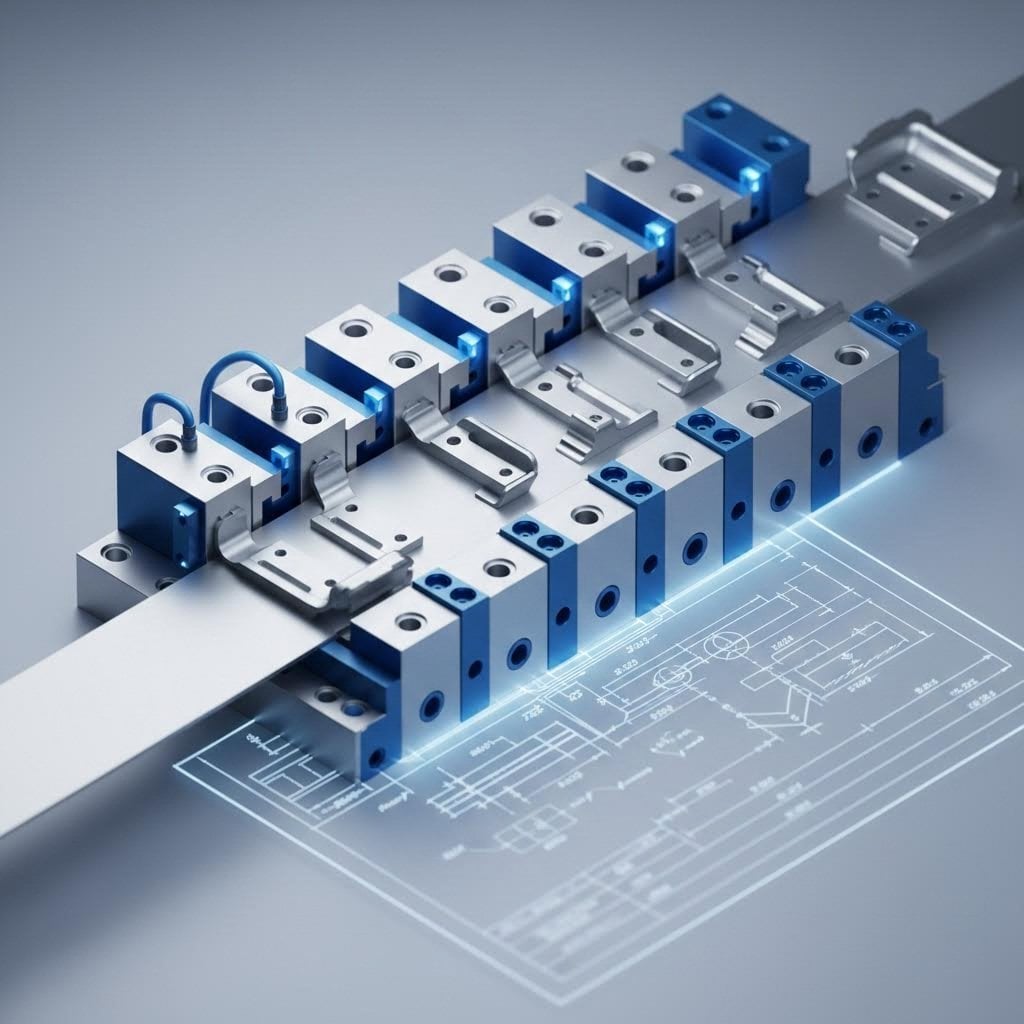
Define Functional and Design Requirements for Metal Parts Fit
Load Capacity, Geometry, and Tolerance Constraints Driving Bracket Performance
A bracket’s load capacity directly shapes structural decisions that ensure reliable metal parts fit. Applied forces—static weight, vibration, or shock—dictate minimum cross-sections, ribbing patterns, and mounting strategies. For instance, a bracket supporting 15 kg in an overhung configuration must resist bending moments that could misalign mating components by more than 0.2 mm. Geometry—including overall envelope and hole pattern—determines how the part nests within its assembly. A U-shaped bracket with offset flanges may simplify installation, but only if clearances between the bracket and adjacent surfaces remain within specified interference or clearance fit ranges. Tolerance constraints bind these requirements together: tightening locating holes from ISO 2768-m to ±0.1 mm can increase manufacturing cost by 20–30%, yet eliminates rework caused by misaligned fasteners (industry survey, 2024). In small-bracket designs, tolerance accumulation across bend lines and mounting faces often determines whether joints stay tight or develop play over time. Mapping how load stress, dimensional envelope, and permissible deviations intersect ensures predictable function without over-engineering.
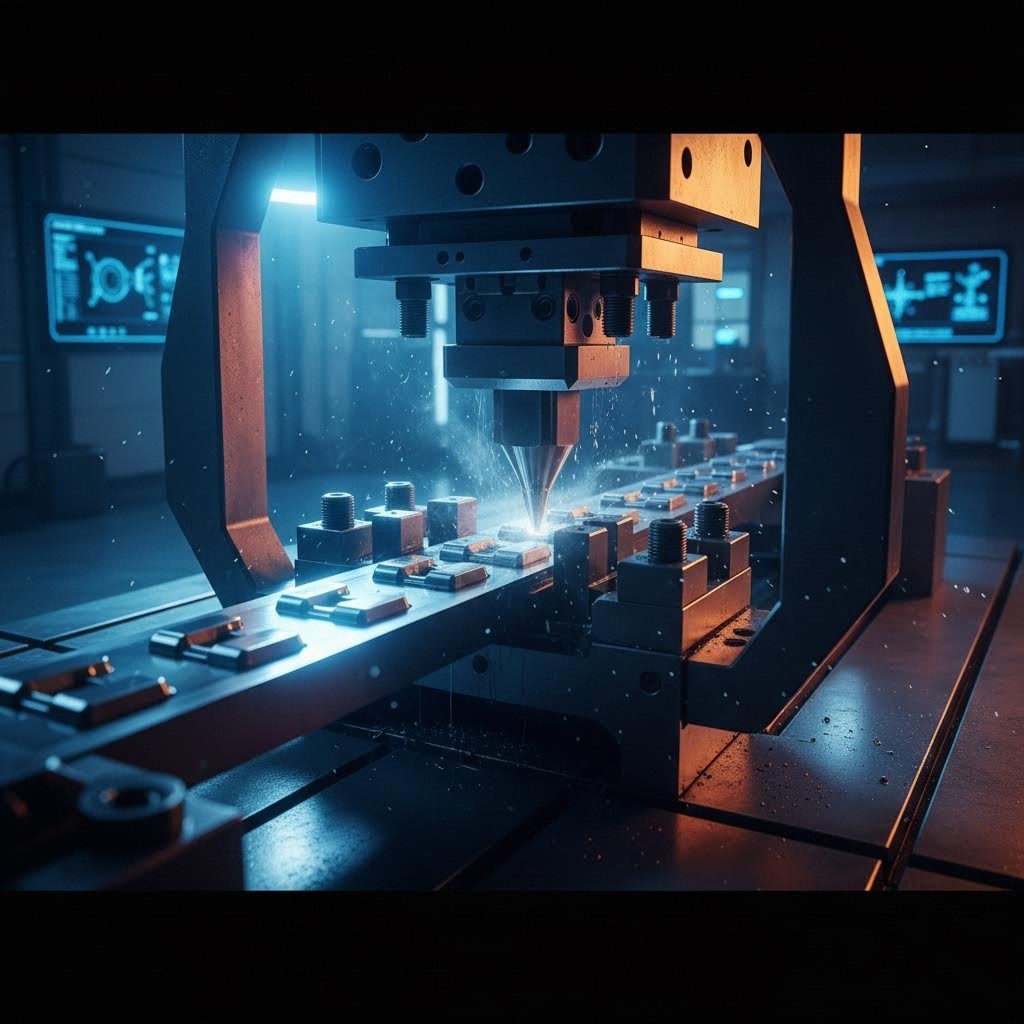
Material Thickness and Feature Design: Bend Radii, Hole Placement, and Flange Stability
Sheet thickness anchors the balance between strength and formability—a foundational choice for metal parts fit. Thinner materials (e.g., 0.8 mm cold-rolled steel) bend easily but risk flange flex under clamping loads, compromising gasket sealing or joint rigidity. A standard best practice is to maintain an inside bend radius no smaller than material thickness to avoid cracking; when space restricts radius size, springback compensation becomes essential to hold final geometry within ±0.3 mm. Hole placement also affects fit: placing a hole closer than 1.5× material thickness to a bend edge risks distortion, shifting its center and altering fastener alignment. Flange stability depends on width-to-thickness ratio—ideally ≤8:1 for steel—to prevent waviness and uneven contact surfaces. In practice, adding a 2 mm offset rib to a long flange often stabilizes flatness without increasing thickness or weight. These interdependent choices cascade: optimal bend radii ease forming, preserve hole accuracy, and maintain flange integrity—ensuring stacked tolerances converge into a robust metal parts fit over the assembly’s lifetime.
Compare Core Production Methods for Small Metal Brackets
Sheet Metal Fabrication (Laser Cutting, Bending, Welding) vs. CNC Machining vs. Stamping
The right manufacturing path directly influences how well the final part fits into its assembly—shaping both tolerance stack-up and structural performance. Each method excels within distinct boundaries defined by volume, complexity, and cost. The table below highlights key trade-offs:
| Method | Typical Tolerance | Ideal Volume | Relative Cost per Part | Key Advantage |
|---|---|---|---|---|
| Sheet Metal Fab. | ±0.1 mm (laser) / ±0.5° (bend) | Low to medium | Low | Combines cutting, forming, and welding for versatile, sturdy parts. |
| CNC Machining | ±0.025 mm | Low | High | Delivers the tightest metal parts fit and complex 3D geometry. |
| Stamping | ±0.05 mm (progressive) | High (1,000+) | Very low | Unbeatable speed—up to 100 parts per minute—for repeatable shapes. |
Sheet metal fabrication begins with laser or punch cutting, followed by press-brake bending and optional welding. It supports prototypes and moderate production runs where precise fit matters—but avoids the lead time and capital investment of hard tooling. CNC machining removes material from solid stock, eliminating tooling costs entirely while delivering exceptional precision; it’s ideal when brackets require ±0.025 mm control across multiple datums. Stamping leverages progressive dies to achieve ultra-low per-part costs at scale—but demands upfront tooling investment and design commitment.
Casting, Extrusion, and Punching: Niche Applications Based on Scale and Precision Needs
These methods fill specific gaps where mainstream processes fall short. Casting (sand, die, or investment) enables complex internal features or organic geometries impossible to achieve through bending or machining—making it valuable for low-volume, high-geometry brackets. Extrusion forms long, constant cross-sections efficiently; it suits brackets cut from profiles, such as mounting rails. Punching rapidly creates hole patterns, louvers, or slots—often integrated into stamping lines for high-volume detailing. None replaces sheet metal fabrication, CNC, or stamping universally—but each becomes indispensable when metal parts fit strategy hinges on near-net shape, continuous profiles, or high-speed feature creation.
Optimize Selection Using Volume, Cost, and Material Compatibility
Choosing the right production method for small metal brackets balances volume, cost, and material constraints to achieve dependable metal parts fit. A break-even analysis clarifies when stamping delivers superior value.
Break-Even Analysis: When Stamping Outperforms Laser Cutting or CNC for Metal Parts Fit
Stamping requires significant initial tooling investment—typically $10 k–$50 k—but reduces per-part cost to as low as $0.10 at scale. Laser cutting and CNC machining avoid this up-front expense, yet their per-part costs remain $2–$5 due to longer cycle times and labor intensity. For a typical small bracket, the break-even point falls between 5,000 and 10,000 units annually. Below that threshold, laser cutting or CNC offers lower total cost; above it, stamping’s amortized tooling yields a 60–80% cost reduction. Material compatibility further refines the decision: thicker gauges and high-strength alloys accelerate tool wear, pushing the break-even higher. Crucially, once tuned, stamping delivers exceptional repeatability—minimizing secondary finishing and reinforcing consistent metal parts fit across high-volume runs. Conducting this analysis early prevents over-engineering for low volumes and avoids costly inefficiencies in high-run production.
FAQ Section
What factors determine the load capacity for brackets?
The load capacity depends on applied forces such as static weight, vibration, or shock, as well as the geometry, ribbing patterns, and minimum cross-sections necessary to resist bending moments.
How does material thickness affect metal parts fit?
Material thickness impacts the balance between strength and formability. Thinner sheets bend easily but risk flex under clamping loads, while thicker sheets may require compensation for springback.
What are the advantages of CNC machining for small metal brackets?
CNC machining offers superior precision (±0.025 mm), avoids tooling costs, and is ideal for complex 3D geometries or low-volume production.
What is the break-even point for switching to stamping for production?
Stamping becomes cost-effective at 5,000 to 10,000 units annually, significantly reducing per-part costs compared to laser cutting or CNC machining.
Which production method is best for high-volume detailing?
Stamping, often combined with punching, is ideal for high-volume detailing due to its speed and repeatability.
Table of Contents
- Define Functional and Design Requirements for Metal Parts Fit
- Compare Core Production Methods for Small Metal Brackets
-
Optimize Selection Using Volume, Cost, and Material Compatibility
- Break-Even Analysis: When Stamping Outperforms Laser Cutting or CNC for Metal Parts Fit
- FAQ Section
- What factors determine the load capacity for brackets?
- How does material thickness affect metal parts fit?
- What are the advantages of CNC machining for small metal brackets?
- What is the break-even point for switching to stamping for production?
- Which production method is best for high-volume detailing?