 Small batches, high standards. Our rapid prototyping service makes validation faster and easier —
  EN
EN

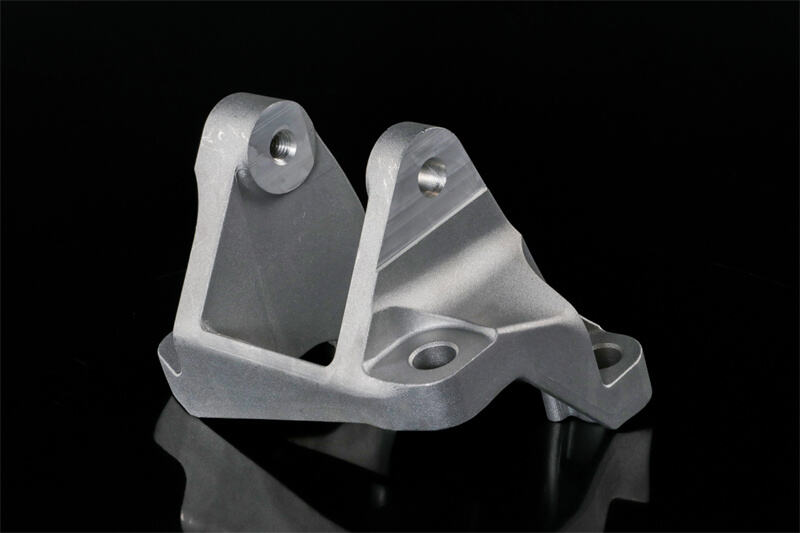
IATF 16949 Certification and Automotive-Specific Compliance
Why IATF 16949 Is the Non-Negotiable Standard for Automotive CNC Suppliers
IATF 16949 is the automotive industry’s definitive quality management standard—extending ISO 9001 with stringent, sector-specific requirements focused on defect prevention, supply chain traceability, and statistical process control. For CNC machining suppliers, certification is not optional: it signals proven capability to maintain ±0.01 mm tolerances across high-volume production while delivering full audit-trail documentation. Manufacturers without IATF 16949 face 47% higher defect-related costs, per industry benchmarks, and are routinely excluded from OEM supplier lists. The standard mandates documented process controls, real-time monitoring, and embedded functional safety protocols—critical for components used in braking, powertrain, and ADAS systems.
How PPAP, APQP, and ISO 9001 Integration Mitigate Supply Chain Risk
Production Part Approval Process (PPAP) and Advanced Product Quality Planning (APQP), when anchored to ISO 9001’s continuous improvement framework, form a layered defense against supply chain failure. PPAP validates that production processes consistently meet design specifications before volume launch; APQP embeds risk-based planning across the entire product lifecycle—from concept through production ramp-up; and ISO 9001 provides the foundational structure for corrective action, change control, and process review. Together, they reduce warranty claims by up to 51% and prevent an estimated 68% of potential failures through early identification and mitigation. For CNC suppliers operating in just-in-time environments, this integration ensures robust change management, rapid defect containment, and seamless alignment with OEM engineering and procurement timelines.
Precision Engineering Capabilities for Automotive Tolerances
Consistently Achieving IT7–IT8 Tolerances (±0.01 mm) Across Aluminum, Steel, and Composites
Automotive applications—especially in fuel systems, braking, and transmission assemblies—require IT7–IT8 tolerances (±0.01 mm) to guarantee functional integrity and long-term reliability. Leading CNC suppliers achieve these specifications across diverse materials, including 7075-T6 aluminum, hardened tool steels (e.g., D2, H13), and carbon-fiber-reinforced composites. Brake caliper bores demand ±0.008 mm concentricity to prevent hydraulic leakage; transmission valve bodies require ±0.01 mm flatness for leak-free sealing under pressure. Success hinges on controlled environmental conditions (±1°C machining rooms), vibration-dampened foundations, multi-axis CNC platforms with laser tool setters for automatic wear compensation, and real-time SPC that triggers intervention when deviations approach ±0.005 mm—well before tolerance limits are breached.
GD&T Proficiency, CAD/CAM Seamless Workflow, and DFMA Collaboration in Design Validation
GD&T expertise—grounded in ASME Y14.5—is essential for translating complex CAD models into precision-machined parts. Top-tier CNC suppliers deploy certified engineers who use integrated CAD/CAM workflows to eliminate data translation errors and ensure feature-based machining strategies align with functional intent. During Design for Manufacturability and Assembly (DFMA) reviews, they flag high-risk geometries—such as thin-walled housings or deep, narrow pockets—that could distort during cutting or heat treatment. Virtual simulation verifies toolpaths and prevents collisions; finite element analysis anticipates stress concentrations in load-bearing components like engine mounts and suspension brackets. This collaborative validation reduces prototype iterations by 40%, accelerating time-to-production. Post-machining, automated CMMs verify parts against original CAD geometry with 0.001 mm repeatability and generate PPAP-compliant inspection reports—ensuring full dimensional traceability.
Scalable Production Infrastructure: From Prototyping to JIT Automotive Delivery
Automotive OEMs expect suppliers to scale seamlessly—from first-article validation to high-volume, just-in-time delivery—without compromising quality, lead time, or traceability. The most capable CNC partners operate a unified production system where design validation, pilot runs, and full-rate manufacturing share the same CAM programs, tooling strategies, and quality protocols—eliminating requalification delays and design drift.
Agile Low-Volume Validation vs. High-Volume Automated Production—One Supplier, Unified System
Agile prototyping cells—with flexible fixturing, rapid changeovers, and direct engineering collaboration—enable fast iteration and design freeze confirmation. Once validated, those same CAM routines, tooling, and inspection criteria migrate directly to high-speed, automated CNC lines optimized for cycle time, repeatability, and minimal operator intervention. This continuity shortens time-to-market by up to 30% versus splitting work across separate vendors. Crucially, the same infrastructure supports JIT synchronization: material pull signals trigger production only when required, eliminating floor stock and aligning tightly with OEM assembly schedules. The table below outlines how this unified model balances responsiveness and efficiency:
| Aspect | Low-Volume Validation | High-Volume Automated Production |
|---|---|---|
| Setup flexibility | High; manual changeovers | Low; automated pallet systems |
| Cycle time per part | Longer; emphasis on dimensional verification | Short; optimized for throughput and consistency |
| Inventory model | Batch-and-queue floor stock | JIT, pull-based, zero warehouse buffer |
| Quality control | Full CMM inspection on every piece | Real-time SPC with automated alerts and sampling |
By consolidating both capabilities under one quality-managed system, suppliers remove procurement friction, qualification bottlenecks, and technical misalignment—delivering speed, scalability, and audit-ready consistency.
End-to-End Quality Assurance and Full Traceability
CMM-Backed Inspection, Real-Time SPC, and Lot-Controlled Documentation for Audit-Ready Deliverables
True automotive-grade quality assurance demands more than pass/fail inspection—it requires an unbroken digital chain linking every part to its origin, process history, and verification data. CMMs validate critical dimensions against CAD models with micron-level accuracy; real-time SPC continuously analyzes in-process measurements, alerting operators before deviations exceed statistical control limits; and lot-controlled documentation traces each component to its raw material batch, machine ID, spindle load logs, tool life counters, inspection results, and operator credentials. This three-layer system satisfies IATF 16949’s requirement for “full traceability throughout the supply chain” and delivers audit-ready records on demand. For buyers, it means faster root-cause analysis, reduced recall exposure, and demonstrable confidence in every shipment—making traceability not just compliance, but a strategic advantage.
Frequently Asked Questions
What is IATF 16949, and why is it important for automotive CNC suppliers?
IATF 16949 is the automotive industry’s quality management system standard. It is critical for CNC suppliers as it demonstrates compliance with strict automotive manufacturing requirements, such as traceability and defect prevention, which are essential for being included on OEM supplier lists.
How do PPAP and APQP processes help in mitigating supply chain risks?
PPAP (Production Part Approval Process) ensures production processes meet design specifications before launch. APQP (Advanced Product Quality Planning) drives risk-based planning throughout product lifecycle stages. Together, they reduce warranty claims and prevent failures by identifying risks early and managing changes effectively.
What tolerances can CNC suppliers achieve for automotive components?
Leading CNC suppliers achieve IT7–IT8 tolerances, or ±0.01 mm, for automotive components made of materials like aluminum, steel, and composites. These tolerances ensure functional reliability in critical applications like braking and transmission systems.
Why is real-time SPC crucial in CNC machining for the automotive industry?
Real-time SPC (Statistical Process Control) continuously monitors machining processes, alerting operators when deviations approach control limits. This proactive approach reduces defects and ensures consistent quality during high-volume production.
What role does full traceability play in automotive supply chains?
Full traceability links every component to its provenance, manufacturing history, and inspection data. It facilitates faster root-cause analysis, reduces recall risks, and fulfills IATF 16949’s requirements, giving buyers confidence in supplier capabilities.
Table of Contents
- IATF 16949 Certification and Automotive-Specific Compliance
- Precision Engineering Capabilities for Automotive Tolerances
- Scalable Production Infrastructure: From Prototyping to JIT Automotive Delivery
- End-to-End Quality Assurance and Full Traceability
-
Frequently Asked Questions
- What is IATF 16949, and why is it important for automotive CNC suppliers?
- How do PPAP and APQP processes help in mitigating supply chain risks?
- What tolerances can CNC suppliers achieve for automotive components?
- Why is real-time SPC crucial in CNC machining for the automotive industry?
- What role does full traceability play in automotive supply chains?