 Small batches, high standards. Our rapid prototyping service makes validation faster and easier —
  EN
EN

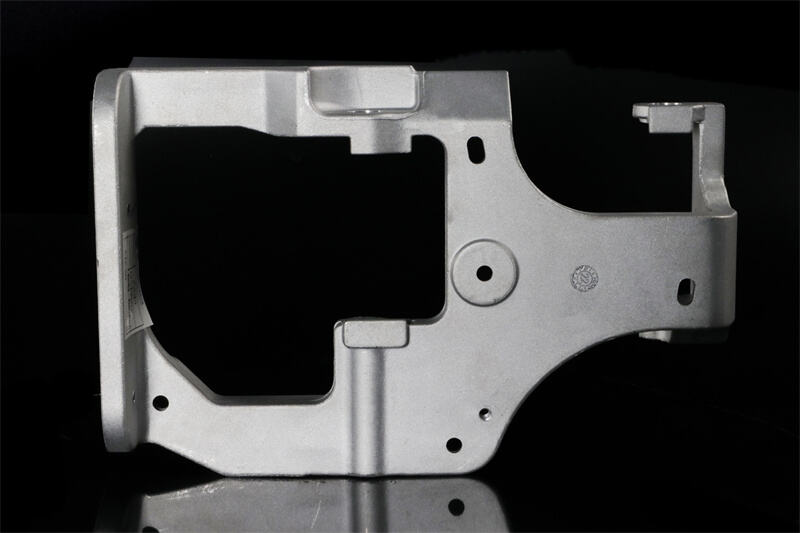
Why Precision Tooling Is Non-Negotiable for Critical Automotive Parts
Tight Tolerance Demands: Crankshafts, Cylinder Heads, and Gears Requiring <5 µm Accuracy
Crankshafts, cylinder heads, and transmission gears operate under extreme loads, heat, and speed—conditions where even micrometer-level deviations compromise performance and safety. A crankshaft journal just 2 µm out of round disrupts oil film formation, accelerating bearing wear by thousands of miles. Similarly, valve seat alignment in cylinder heads must stay within 3 µm to maintain combustion chamber integrity and prevent compression loss or blow-by. Gear tooth profiles demand sub-5 µm accuracy to ensure smooth meshing, minimize noise, and maximize torque transfer efficiency.
CNC machining centers routinely achieve ±0.005 mm (5 µm) positional and dimensional control—but only when supported by tooling engineered to sustain those tolerances across extended production runs. Polycrystalline diamond (PCD) and ceramic-coated carbide tools are selected not just for hardness, but for thermal stability, edge retention, and resistance to micro-chipping. A single 12.7 µm (0.0005-inch) error in a die feature propagates across every part in the batch, undermining assembly fit, function, and long-term reliability. In high-performance and safety-critical applications—from engines to EV drivetrains—precision tooling isn’t an upgrade. It’s the non-negotiable foundation of functional integrity.
Standards Compliance: How ISO 2768-fine and ASME Y14.5 GD&T Drive Tooling Design Decisions
ISO 2768‑fine and ASME Y14.5 GD&T are not theoretical frameworks—they are operational mandates that directly shape how precision tooling is specified, built, and validated. ISO 2768‑fine defines general tolerance classes for linear and angular dimensions, while ASME Y14.5 provides the symbolic language to control form, orientation, location, and runout—ensuring parts meet functional intent, not just nominal size.
When a drawing specifies 0.01 mm true position on a locating pin, the corresponding punch or core must be manufactured—and maintained—to hold that requirement over its entire service life. This drives design decisions like using hardened tool steels (e.g., AISI D2 or M2), employing wire-EDM for critical contours, and integrating in-process gauging to verify geometry before part release. Adherence to these standards significantly reduces scrap and rework: a single undetected deviation on a brake caliper or airbag bracket can trigger full-batch rejection due to regulatory and safety implications. Precision tooling compresses these rigorous specifications into repeatable, scalable production—guaranteeing that part number one and part number ten-thousand are functionally identical.
Advanced CNC Machining Strategies Enabled by Precision Tooling
The evolution of automotive CNC machining—from rigid mass production to agile, high-mix manufacturing—is powered by precision tooling that enables tighter control, faster adaptation, and greater process autonomy.
From Fixed Lines to Flexibility: Multi-Tasking Machines (MTMs) in Powertrain Component Production
Multi-Tasking Machines (MTMs) consolidate milling, turning, drilling, and threading into a single setup—eliminating handling errors, datum shifts, and cumulative tolerance stack-up. Precision tooling designed for high-speed tool changes, dynamic balance, and vibration damping ensures MTMs sustain positional accuracy below 5 µm, even during complex operations on crankcases or gear blanks. According to the 2024 Automotive Manufacturing Report, facilities deploying MTMs with optimized tool paths and adaptive feed strategies have cut per-part cycle times by up to 30%, directly improving cost-per-part and capacity utilization.
Hybrid Machining in Action: Mill-Turn + In-Process Probing for CV Joint Housings
For constant-velocity (CV) joint housings—where sealing surface flatness and bore concentricity dictate driveline smoothness and durability—hybrid mill-turn machining integrates real-time probing to adjust tool offsets on-the-fly. Precision tooling with high-pressure coolant delivery ensures effective chip evacuation during deep boring, while the closed-loop system compensates for thermal drift and workpiece deflection. The result: sealing surfaces consistently held to Ra 0.4 µm, reducing scrap by up to 20% and supporting lean, high-volume production without compromising functional quality.
Material-Specific Precision Tooling Solutions for Modern Automotive Substrates
As automotive materials diversify—from lightweight aluminum alloys to corrosion-resistant stainless steels and abrasive composites—tooling must evolve beyond generic geometries and coatings. Success hinges on matching tool substrate, coating architecture, and cutting-edge geometry to each material’s mechanical, thermal, and tribological behavior.
Aluminum Chassis Brackets: PCD Tools for Wear Resistance and Surface Integrity
Aluminum chassis brackets require high metal removal rates and exceptional surface finish to support fatigue-critical suspension performance. Polycrystalline diamond (PCD) tools deliver unmatched edge retention at elevated speeds, minimizing chatter and maintaining Ra values below 0.8 µm—critical for stress distribution and long-term structural integrity.
Stainless Steel Brake Calipers: Ceramic-Coated Carbide for Heat and Corrosion Resistance
Stainless steel brake calipers generate intense localized heat and endure exposure to road salts and moisture. Ceramic-coated carbide inserts act as a thermal barrier, reducing flank wear and suppressing built-up edge formation. Their enhanced chemical inertness also resists micro-pitting, extending tool life by up to 40% versus uncoated equivalents—without sacrificing dimensional consistency.
CFRP Battery Enclosures: Diamond-Embedded End Mills to Prevent Delamination and Fraying
Carbon-fiber-reinforced polymer (CFRP) battery enclosures present a dual challenge: extreme abrasiveness and susceptibility to fiber pullout and delamination at exit edges. Diamond-embedded end mills—featuring a continuous, uniformly distributed diamond grit layer—shear rather than tear fibers, delivering clean, splinter-free edges that satisfy stringent EV safety, sealing, and dimensional requirements.
FAQ
Why is precision tooling essential for automotive parts?
Precision tooling ensures tight tolerances, critical for the performance, safety, and reliability of components like crankshafts, cylinder heads, and gears. It minimizes deviations, enhances fit, and maintains functionality under extreme conditions.
What role do ISO 2768-fine and ASME Y14.5 GD&T play in tooling design?
These standards define the tolerances and symbolic language required for parts to meet functional and dimensional mandates. Tooling design and validation ensure compliance to eliminate defects and ensure repeatability.
How do advanced CNC machining strategies rely on precision tooling?
Advanced strategies like Multi-Tasking Machines (MTMs) and hybrid machining depend on precision tooling for accurate setup, alignment, and on-the-fly adjustments, which reduce errors, improve cycle times, and maintain quality in complex operations.
What materials require specialized precision tooling?
Materials like aluminum alloys, stainless steels, and carbon-fiber-reinforced polymers require tailored tooling solutions such as PCD tools, ceramic-coated carbide inserts, and diamond-embedded end mills to address their unique machining challenges.
Table of Contents
-
Why Precision Tooling Is Non-Negotiable for Critical Automotive Parts
- Tight Tolerance Demands: Crankshafts, Cylinder Heads, and Gears Requiring <5 µm Accuracy
- Standards Compliance: How ISO 2768-fine and ASME Y14.5 GD&T Drive Tooling Design Decisions
- Advanced CNC Machining Strategies Enabled by Precision Tooling
- Material-Specific Precision Tooling Solutions for Modern Automotive Substrates
- FAQ