 Small batches, high standards. Our rapid prototyping service makes validation faster and easier —
  EN
EN

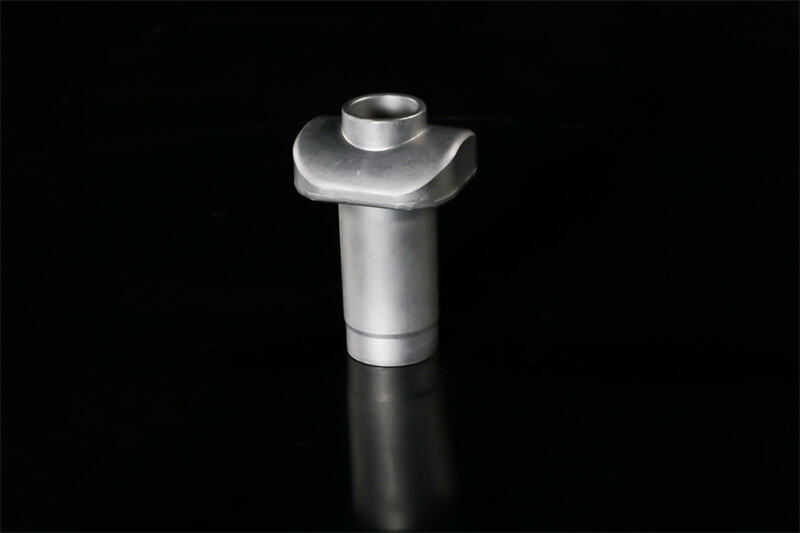
Complementary Strengths: How Die Casting and Stamping Synergize in Automotive Design
Geometric and Material Compatibility: Why Aluminum Die Castings Pair Naturally with Steel/Aluminum Stamped Components
Die casting and stamping complement each other by leveraging distinct geometric and material advantages. Aluminum die castings excel at producing complex, three-dimensional features—such as integrated oil passages, cooling fins, and cavity-rich housings—in a single net-shape operation. These geometries are impractical or prohibitively expensive to achieve via stamping alone, which is optimized for planar or shallow-curved forms like flanges, brackets, and mounting tabs. Crucially, aluminum die castings share a closely matched coefficient of thermal expansion with both steel and aluminum stampings, minimizing thermally induced stress at bolted interfaces during vehicle operation. This compatibility enables robust hybrid assemblies—such as a die-cast housing paired with a stamped lid or bracket—delivering lightweighting without compromising structural rigidity. The result is reduced need for secondary machining and simplified high-volume assembly.
Real-World Integration: Leading Supplier Examples in Brake Caliper Assemblies
Brake caliper assemblies exemplify this synergy in production. A Tier-1 supplier uses an aluminum high-pressure die-cast (HPDC) caliper body to precisely form the piston bore and sealed hydraulic channels—ensuring consistent wall thickness and leak-free performance. This core mates with stamped steel components: a dust shield and mounting bracket engineered to absorb high clamping loads and provide precise bolt-hole alignment. The die-cast portion delivers the intricate internal geometry required for function and sealing; the stamped elements supply cost-efficient, high-strength attachment interfaces. This hybrid design meets tight functional tolerances—including piston travel consistency and seal retention—while achieving weight savings versus traditional cast-iron calipers and maintaining fatigue life across volumes exceeding 500,000 units per year.
Functional Partitioning: Assigning Features to Die Casting vs. Stamping Based on Performance Needs
Die Casting for Structural Integrity, Complexity, and Lightweighting
High-pressure die casting (HPDC) is the preferred process for automotive components demanding structural integrity, geometric complexity, and mass reduction. Aluminum HPDC parts deliver near-net-shape accuracy with high dimensional stability—critical for mating interfaces—and integrate features like ribs, cavities, and thin walls (down to 2 mm) that would require extensive machining otherwise. With a density roughly one-third that of steel, aluminum die castings significantly reduce mass in structural nodes, powertrain mounts, and electric vehicle battery enclosures—where every kilogram saved extends driving range. The process also supports embedded cooling channels in engine blocks and precision sensor housings in transmission systems, enabling multifunctional integration not feasible with subtractive methods.
Stamping for High-Strength Flanges, Mounting Interfaces, and Cost-Efficient Thin-Wall Forms
Stamping dominates where high-strength, repeatable thin-wall geometry and cost efficiency are paramount. Advanced high-strength steels (AHSS) enable stamped suspension arms and chassis brackets with tensile strengths exceeding 1000 MPa, while progressive die tooling achieves flange positional tolerances under ±0.2 mm. Applications include seat frame reinforcements (0.8–1.2 mm), door intrusion beams with controlled deformation zones, and brake pedal assemblies—all produced with minimal secondary operations. For volumes above 100,000 units annually, stamping delivers up to 40% lower per-part costs than machining—making it the optimal choice for high-volume, load-bearing interfaces where planar or gently curved geometry suffices.
Production Realities: Scalability, Tolerance, and Cost Drivers Behind Joint Deployment
Tolerance Matching: Achieving Seamless Assembly Between Cast Cavities and Stamped Flanges
Successful integration hinges on managing inherent tolerance differences between processes. Aluminum die castings typically hold ±0.5 mm dimensional accuracy, whereas stamped steel or aluminum parts routinely achieve ±0.1 mm. Unmanaged stack-up of these variations contributes to approximately 23% of assembly failures in hybrid components, according to a 2024 industry benchmark study. To mitigate risk, designers apply Geometric Dimensioning and Tolerancing (GD&T) to define critical mating surfaces and establish robust datum structures—ensuring consistent part positioning during welding, riveting, or bolting. Strategic tolerance allocation—reserving tighter specs for functional interfaces and relaxing them on non-critical features—enables reliable, high-yield assembly without over-specifying either process.
Economies of Scale: Optimal Volume Ranges (50k–2M Units/Year) for Hybrid Die Casting and Stamping Automotive
The hybrid die casting–stamping approach achieves peak cost efficiency within a defined volume window. Below 50,000 units/year, the combined tooling investment—especially for high-precision die-cast dies and progressive stamping tools—becomes difficult to amortize. Between 50,000 and 500,000 units, shared fixturing, common assembly systems, and synchronized logistics yield 18–27% cost advantages over monolithic alternatives. Above 500,000 units, dedicated transfer presses and casting cells unlock throughput gains, with production economics peaking near 2 million units annually before parallel lines are needed. This sweet spot reflects the balance between per-part cost reduction and capital expenditure payback—making hybrid deployment especially compelling for mainstream powertrain, chassis, and EV platform components.
FAQ Section
What are the main advantages of combining die casting and stamping for automotive design?
Die casting provides intricate geometric features and reduces weight, while stamping allows cost-effective creation of high-strength, repeatable components. Together, they enable robust assemblies that are lightweight, structurally sound, and suitable for high-volume production.
Why is aluminum a preferred choice for die casting in automotive components?
Aluminum has a low density, which contributes to weight reduction. It also ensures excellent thermal compatibility with steel and aluminum stampings, while providing near-net-shape accuracy for complex component designs.
How does tolerance control affect the assembly of hybrid die-cast and stamped parts?
Tolerance control ensures seamless assembly by managing dimensional variations between die-cast and stamped parts. Techniques like Geometric Dimensioning and Tolerancing (GD&T) help allocate tighter tolerances to critical mating surfaces, reducing assembly failures.
What is the optimal production volume for hybrid deployment of die casting and stamping?
Optimal production volumes range from 50,000 to 2 million units annually. This range balances tooling investments and per-part cost reductions for maximum cost efficiency.
Table of Contents
- Complementary Strengths: How Die Casting and Stamping Synergize in Automotive Design
- Functional Partitioning: Assigning Features to Die Casting vs. Stamping Based on Performance Needs
- Production Realities: Scalability, Tolerance, and Cost Drivers Behind Joint Deployment
-
FAQ Section
- What are the main advantages of combining die casting and stamping for automotive design?
- Why is aluminum a preferred choice for die casting in automotive components?
- How does tolerance control affect the assembly of hybrid die-cast and stamped parts?
- What is the optimal production volume for hybrid deployment of die casting and stamping?