 Small batches, high standards. Our rapid prototyping service makes validation faster and easier —
  EN
EN

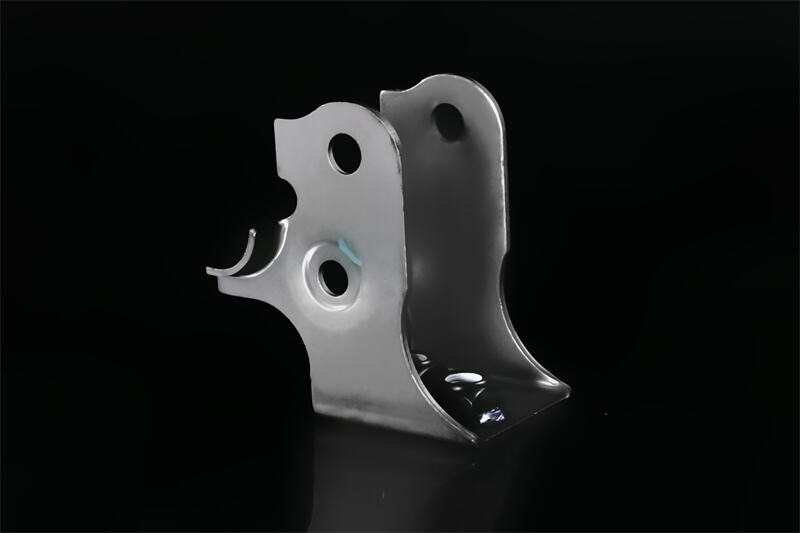
Identify Root Causes of Automotive Metal Part Defects Using the 6M Framework
Man and Method: Human error and procedural gaps in stamping and CNC programming
Operator fatigue, insufficient training, and ambiguous work instructions are leading contributors to automotive metal part defects in stamping and CNC machining. Misapplied tool offsets or incorrect feed-rate selections—often stemming from inconsistent programming practices—frequently result in parts failing geometric tolerance checks. Standardizing setup procedures and embedding mistake-proofing techniques—such as automated tool verification and guided parameter selection in CAM software—significantly reduce these preventable errors. Industry data shows over 25% of quality escapes originate from human and method-related factors, reinforcing the value of structured workflows and ongoing competency development.
Machine and Material: Tool wear, die misalignment, and alloy variability driving dimensional deviations and cracking
Progressive tool wear degrades cutting geometry, introducing burrs and surface irregularities in machined components. In stamping, die misalignment creates uneven stress distribution across the blank, leading to splits, wrinkles, or inconsistent flange heights. Concurrently, variations in incoming metal stock—especially in hardness, ductility, and sulfur content—directly impact formability; for instance, elevated sulfur levels in steel can trigger micro-cracking during deep drawing. Proactive mitigation includes scheduled tool condition monitoring, precision die alignment protocols, and rigorous incoming material certification aligned with ASTM A1011 (steel) or AMS 4027 (aluminum) standards.
Measurement and Milieu: Inadequate in-process metrology and thermal/environmental instability causing springback and wrinkling
Reliance on end-of-line inspection leaves little room to correct progressive drift—whether from tool wear, thermal expansion, or environmental shifts. Thermal fluctuations during machine warm-up or ambient temperature swings induce material expansion and contraction, a primary driver of springback in sheet metal forming. Humidity and airborne particulates further compromise lubricant film integrity and surface finish consistency. Integrating in-line sensors for real-time temperature, geometry, and pressure measurement enables immediate adaptive adjustments—shifting defect management from detection to prevention at the point of occurrence.
Optimize Key Processes to Minimize Automotive Metal Part Defects
CNC machining defect reduction via adaptive feed-rate control and real-time thermal compensation
Dimensional stability in CNC machining hinges on managing two interrelated variables: mechanical deflection and thermal growth. Adaptive feed-rate control systems monitor cutting forces in real time and dynamically adjust feed rates to sustain optimal chip load—reducing chatter and surface finish variation by up to 40%. Complementing this, real-time thermal compensation leverages embedded thermocouples and laser displacement sensors to detect spindle elongation and workpiece thermal drift, automatically correcting tool paths mid-cycle. Tier-1 suppliers report a 92% reduction in dimensional deviations for critical transmission housings and brake calipers using this integrated approach—while also extending tool life through consistent, load-balanced cutting conditions.
Thermal and coolant optimization to suppress heat-induced distortion and residual stresses
Uncontrolled thermal gradients remain a dominant cause of warpage in thin-walled castings and machined assemblies. Strategic high-pressure coolant delivery—targeted at high-heat zones with minimum 1000 psi through-tool flow—improves heat evacuation efficiency by 65%, per SAE International’s 2023 thermal management benchmarking study. Polymer-based synthetic coolants maintain stable viscosity across operating ranges, supporting consistent lubrication and chip removal. For aluminum engine blocks, temperature-controlled fixture jaws (±2°C) ensure uniform thermal boundary conditions during milling, limiting distortion to under 0.1 mm/m. These systemic thermal controls have reduced post-machining straightening operations by 80% among leading suppliers—cutting rework costs tied directly to heat-induced automotive metal part defects.
Prevent Structural and Surface Defects in Stamping, Forming, and Casting
Crack, porosity, and springback mitigation through die heating, lubrication tuning, and blank holder force control
Preventing structural failure and surface degradation begins before the first stroke. Die heating above 350°F (177°C) mitigates micro-cracking in advanced high-strength steels (AHSS) during deep-draw operations by improving local ductility. Precision lubrication—applying 0.2–0.5 g/cm² of polymer-based formulations—reduces galling and porosity by 40% while enhancing draw-in consistency. Blank holder force optimization (15–25 kN for aluminum alloys) ensures controlled material flow, suppressing springback to within ±0.1 mm. When combined with closed-loop thermal and force monitoring, these interventions cut scrap rates by 57% compared to traditional reactive correction methods.
Shift from Defect Detection to Prevention with Smart Monitoring and Workholding
Tool condition monitoring and predictive maintenance integrated with automated in-line inspection
Modern defect prevention relies on continuous, multi-modal sensing—not periodic audits. Vibration, acoustic emission, and temperature sensors capture subtle changes in tool behavior during machining. This data trains predictive models that identify wear progression before it impacts part quality. Coupling these insights with automated in-line optical or tactile inspection closes the loop: anomalies trigger immediate parameter adjustments or tool changeovers. Leading manufacturers report up to 40% less unplanned downtime and near-elimination of surface defects caused by late-stage tool failure—transforming quality assurance from a gatekeeping function into an embedded process control layer.
Vibration-dampening workholding solutions for high-precision, high-speed machining stability
Next-generation clamping systems go beyond static rigidity—they actively counter dynamic instability. Smart workholders incorporate piezoelectric actuators or hydraulic damping modules that adapt clamping force in real time to counteract vibration modes generated at high RPM. This maintains sub-micron positional stability across varying cutting loads and materials. In aluminum alloy machining, such systems reduce chatter-induced surface defects by 57% and eliminate geometric inaccuracies in thin-walled structural components—without sacrificing cycle time. The result is repeatable precision in high-volume production, where stability—not just speed—defines capability.
FAQs
1. What is the 6M framework, and how does it apply to automotive part defects?
The 6M framework refers to the six categories that influence manufacturing outcomes: Man, Method, Machine, Material, Measurement, and Milieu. It helps identify root causes of defects in processes like stamping, CNC machining, and forming.
2. How can human error be minimized in CNC machining and stamping workflows?
Minimizing human error can be achieved through standardized procedures, extensive training, and employing mistake-proofing tools like automated verification systems and guided selection in CAM software.
3. Why is alloy variability significant in automotive part defects?
Variability in alloy properties like hardness, ductility, and sulfur content affects formability, contributing to defects such as micro-cracking and dimensional issues in metal components.
4. What tools help manage thermal-related defects in machining processes?
Real-time thermal compensation systems, high-pressure coolant delivery, and temperature-controlled fixtures are effective tools to mitigate thermal growth and distortion during machining.
5. How do smart monitoring systems prevent defects?
Smart monitoring systems use sensors to capture real-time data on vibration, temperature, and tool condition, enabling predictive maintenance and timely corrective measures to avoid defects.
Table of Contents
-
Identify Root Causes of Automotive Metal Part Defects Using the 6M Framework
- Man and Method: Human error and procedural gaps in stamping and CNC programming
- Machine and Material: Tool wear, die misalignment, and alloy variability driving dimensional deviations and cracking
- Measurement and Milieu: Inadequate in-process metrology and thermal/environmental instability causing springback and wrinkling
- Optimize Key Processes to Minimize Automotive Metal Part Defects
- Prevent Structural and Surface Defects in Stamping, Forming, and Casting
- Shift from Defect Detection to Prevention with Smart Monitoring and Workholding
-
FAQs
- 1. What is the 6M framework, and how does it apply to automotive part defects?
- 2. How can human error be minimized in CNC machining and stamping workflows?
- 3. Why is alloy variability significant in automotive part defects?
- 4. What tools help manage thermal-related defects in machining processes?
- 5. How do smart monitoring systems prevent defects?