 Small batches, high standards. Our rapid prototyping service makes validation faster and easier —
  EN
EN

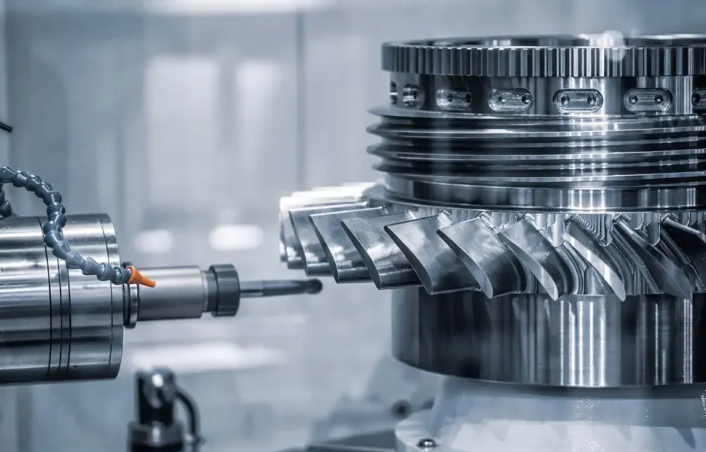
Precision and Tolerance Requirements
Tight Tolerances in Automotive Stamping: Why ±0.05 mm Is Standard (vs. ±0.2–0.5 mm in General Metal Stamping)
The most fundamental distinction between automotive and general metal stamping lies in tolerance requirements. Automotive stamping consistently targets ±0.05 mm—ten times tighter than the ±0.2 to ±0.5 mm typical in non-automotive applications. This precision is essential for seamless integration into complex, safety-critical assemblies like body-in-white structures and crash-relevant components, where deviations as small as 0.1 mm can compromise fit, function, or structural integrity.
Achieving ±0.05 mm demands specialized tooling (e.g., hardened, ground dies with micro-finished surfaces), climate-controlled production environments, and 100% automated inspection using coordinate measuring machines (CMMs) or optical scanners. In contrast, general metal stamping serves applications such as enclosures or mounting brackets—where ±0.13 mm is often sufficient—and prioritizes cost efficiency over micron-level repeatability.
Springback Management and Repeatability: Engineering for Zero-Defect Consistency at Scale
Springback—the elastic recovery of high-strength materials after forming—is a defining challenge in automotive stamping, rarely critical in general metal stamping. With AHSS and aluminum alloys now standard in modern vehicles, even minor springback can shift part geometry outside the ±0.05 mm envelope across millions of units.
To ensure zero-defect consistency, automotive engineers rely on predictive finite element analysis (FEA) during die design. Die geometries are intentionally over-formed to compensate for anticipated springback—validated through virtual tryouts before physical tooling begins. One Tier 1 supplier reduced physical tryout cycles by 70% using this approach. Real-time in-die sensors and closed-loop press controls further refine repeatability. General stamping, operating under looser tolerances, typically accommodates springback via post-forming rework or manual adjustments—making it less reliant on simulation or sensor-integrated tooling.
Material Selection and Forming Complexity
AHSS, Aluminum, and Press-Hardened Steel: Material Drivers of Automotive Stamping Challenges
Automotive stamping is defined by its material portfolio: Advanced High-Strength Steels (AHSS), aluminum alloys, and press-hardened steels (PHS). These enable weight reduction and crash performance but introduce significant process complexity. AHSS grades like DP980 or TRIP800 require press forces exceeding 2,000 tons and demand precise control of strain distribution to avoid localized thinning. Aluminum’s low elongation (often <25%, versus >35% for mild steel) increases susceptibility to cracking during deep draws. PHS must be heated to ~900°C, formed while hot, then rapidly quenched in-die—a process requiring integrated heating/cooling channels and thermal management systems.
According to SAE International’s 2023 report on material formability, automotive-grade alloys exhibit 15–40% lower stretchability than conventional cold-rolled steels—driving adoption of tailored blank technologies and multi-stage forming strategies to manage localized strain.
Formability Trade-offs: How Automotive-Grade Alloys Demand Specialized Lubrication, Tooling, and Simulation
Material-driven formability constraints necessitate upstream engineering adaptations. High-strength steels increase galling risk and accelerate tool wear, requiring:
- Extreme-pressure lubricants with molybdenum disulfide or borate additives
- Hard, low-friction die coatings (e.g., chromium nitride or diamond-like carbon)
- Multi-axis CNC-machined tool surfaces to support complex draw bead geometries
Simulation is not optional—it’s foundational. Every new automotive component undergoes FEA-based virtual forming to predict thinning, splitting, and springback. This enables proactive die compensation and eliminates costly late-stage rework. While upfront simulation investment runs 3–5× higher than in general stamping, it delivers measurable ROI: faster time-to-production, fewer physical tryouts, and robust first-article compliance.
Tooling Architecture and Production Lifecycle
Automotive stamping demands fundamentally different tooling architecture and lifecycle management compared to general metal stamping. While both use dies and presses, automotive tooling is engineered for extreme durability and dimensional stability across multi-million-cycle production runs. This requires hardened tool steels (e.g., AISI D2 or H13), precision-ground and polished surfaces, and often integrated sensor networks for real-time monitoring of temperature, pressure, and wear.
Production lifecycles reflect this commitment: automotive tooling is designed for 10+ years of service with scheduled, predictive maintenance—supported by documented tool performance histories and statistical process control (SPC) data from day one. In contrast, general stamping tools may be replaced or refurbished more frequently based on part volume and complexity, with less formalized lifecycle tracking. The validation rigor also differs markedly: automotive tooling must pass rigorous first-article inspections, including full GD&T verification and capability studies (CpK ≥ 1.33), before launch—ensuring dimensional fidelity for safety-critical parts like door intrusion beams or suspension links.
Quality Systems and Regulatory Compliance
IATF 16949, APQP, and PPAP: Why Automotive Stamping Requires End-to-End Traceability and Validation
Automotive stamping operates under a quality governance framework unmatched in general metal stamping. Compliance with IATF 16949—the globally recognized quality management standard for automotive suppliers—is mandatory, not optional. It mandates end-to-end traceability, statistically validated processes, and auditable documentation at every stage—from raw material receipt through final shipment.
Advanced Product Quality Planning (APQP) structures cross-functional collaboration early in development, embedding Failure Mode and Effects Analysis (FMEA) to preempt risks before tooling begins. The Production Part Approval Process (PPAP) then formalizes evidence of readiness: material certifications, dimensional inspection reports, process capability studies, and sample parts—all tied to specific production conditions and tool sets.
Traceability extends to the component level: each stamped part must be linkable to its exact production batch, press cycle, tool cavity, and inspection record. A single non-conforming part in a safety-critical application could trigger regulatory scrutiny or recall—making this rigor non-negotiable. General metal stamping, by comparison, often relies on batch-level tracking and simplified inspection protocols suited for non-safety-critical industrial applications.
FAQ
Why does automotive stamping require such tight tolerances?
Automotive stamping demands tight tolerances like ±0.05 mm to ensure parts seamlessly integrate into complex assemblies while meeting safety and structural integrity requirements.
What materials are commonly used in automotive stamping?
Automotive stamping frequently uses Advanced High-Strength Steels (AHSS), aluminum alloys, and press-hardened steels due to their lightweight and high-strength properties.
How is springback managed in automotive stamping?
Springback is managed through predictive finite element analysis (FEA), die over-forming, and real-time in-die sensors to maintain repeatability and precision across production runs.
What quality standards are specific to automotive stamping?
Automotive stamping adheres to IATF 16949, APQP, and PPAP standards, which mandate end-to-end traceability, statistically validated processes, and rigorous validation protocols.
How does automotive tooling differ from general metal stamping tooling?
Automotive tooling is engineered for extreme durability, precision, and long lifecycles. It often includes hardened tool steels, integrated sensors, and predictive maintenance systems.