 Small batches, high standards. Our rapid prototyping service makes validation faster and easier —
  EN
EN

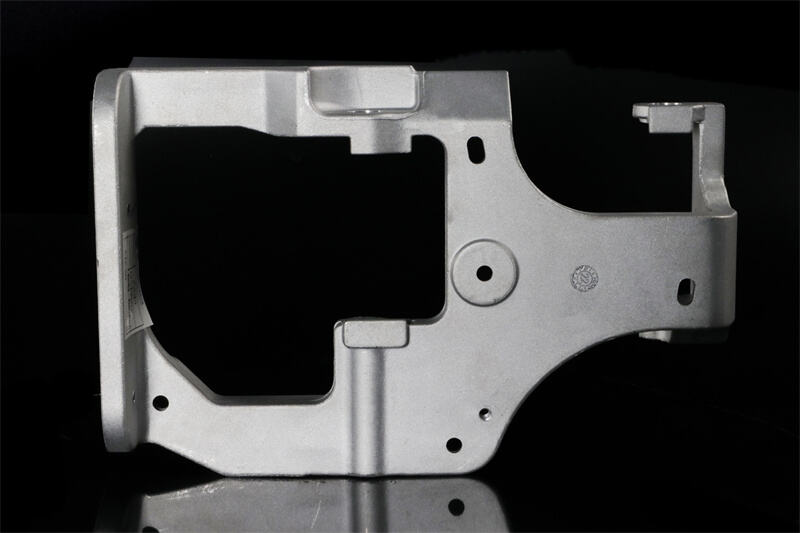
Unmatched Precision and Consistency at Scale
Maintaining ±0.05 mm Tolerances Across Millions of Stamping Cycles
Modern automotive stamping achieves repeatable dimensional accuracy of ±0.05 mm—even after hundreds of thousands of cycles—making it one of the most precise high-volume metal forming processes available. This level of consistency eliminates the need for post-stamping machining on most exterior panels and structural components, reducing labor, time, and secondary operation costs. Premium tool steels and disciplined maintenance schedules mitigate die wear, ensuring that the millionth part matches the first in geometry and surface integrity. As a result, assembly line rework drops significantly, fit-and-finish targets are met without manual correction, and thinner-gauge materials can be used safely—lowering both vehicle weight and material spend. In contrast, casting and forging typically require extensive finishing to reach comparable tolerances, adding cost and lead time. By sustaining micron-level precision across long production runs, stamping delivers unmatched repeatability for mass-market applications where part-to-part identity is non-negotiable.
Closed-Loop Feedback Systems for Real-Time Dimensional Control
Leading automotive stamping operations deploy closed-loop feedback systems directly integrated into press controls. Using laser sensors or in-die force transducers, these systems capture critical dimensional and force data with every stroke. A real-time controller analyzes the input and automatically adjusts ram speed, cushion pressure, or feed rate—correcting deviations within seconds. This responsiveness keeps scrap rates below 0.5% on mature high-volume lines and extends die life by detecting abnormal loading before damage occurs. Operators monitor live dashboards showing trended variance data, enabling predictive maintenance and faster root-cause resolution. Crucially, the system compensates for minor fluctuations in incoming coil properties—such as thickness variation or yield strength shifts—ensuring output remains within specification regardless of material batch differences. For automotive stamping high-volume production, closed-loop control transforms precision from a static target into a continuously optimized, self-correcting process—boosting consistency, reducing waste, and improving overall equipment effectiveness (OEE).
Scalable Metal Stamping Process Design for High-Volume Production
Modular Die Architecture: From Prototyping to 1M+ Units/Year
Modular die architecture is the cornerstone of scalable automotive stamping. Rather than designing dedicated dies for each stage of development, manufacturers build on standardized die bases with interchangeable modules—such as blank holders, punch inserts, and stripper plates—that can be rapidly reconfigured. This approach enables engineers to validate prototypes on the exact same tooling platform used for full-rate production, eliminating costly mid-cycle redesigns and bridging the gap between concept and launch. When ramping from pilot batches to annual volumes exceeding one million units, modular systems cut die changeover time by up to 50%, support quick model changes, and maintain consistent part quality across all volumes. Standardized interfaces and reusable components also reduce spare parts inventory and simplify training—key advantages when managing complex, multi-plant production networks.
The Tooling Investment Paradox: How Higher Upfront Costs Reduce Cost per Part at Scale
While high-precision stamping dies often exceed $100,000—and can surpass $250,000 for complex progressive or transfer dies—their fixed cost is amortized across millions of parts. At 2 million units, a $250,000 die adds just $0.125 per part. Compare that to machining the same component: no die investment is required, but per-part costs range from $1.80 to $4.20 due to slower cycle times, higher material waste, and greater labor content. The break-even threshold occurs around 50,000 annual units; beyond that, stamping’s economies of scale dominate. This “tooling paradox” reflects not just capital efficiency—but process maturity: once validated, a stamped part requires minimal intervention across its lifecycle, delivering predictable cost performance, faster throughput, and lower total cost of ownership.
Superior Cost-Effectiveness in Automotive Stamping Applications
Automotive stamping delivers exceptional value in high-volume production by combining durable tooling, automated press lines, and tightly integrated secondary operations. Its cost advantage grows exponentially with volume: the fixed investment in dies, automation, and setup is distributed across millions of parts, driving down the per-unit cost while raising quality and throughput.
Cost Benchmark: $0.12–$0.45/part vs. $1.80–$4.20/part for Machined Equivalents
A stamped structural bracket typically costs $0.12–$0.45 per part—up to 15× less than its machined counterpart ($1.80–$4.20). This dramatic differential stems from three core efficiencies: material utilization above 90%, sub-second cycle times for progressive dies, and seamless integration of features like holes, bends, and embossments directly into the stamping sequence. Machining, by comparison, consumes more raw stock, demands frequent tool changes, and relies on slower, serial processing—each factor compounding per-part cost. For programs exceeding 100,000 units annually, stamping consistently delivers the lowest total cost of ownership and shortest payback on tooling investment. These savings free up capital for strategic initiatives—lightweighting, advanced surface treatments, or accelerated product iteration—without sacrificing margin or quality.
Speed, Efficiency, and Sustainability in High-Volume Stamping
Sub-8-Second Cycle Times and 92% Material Utilization via Advanced Nesting
High-speed servo presses and synchronized robotic feeding enable sub-8-second cycle times—translating to over 4,000 qualified parts per shift. This velocity meets the relentless pace of modern automotive assembly lines. Simultaneously, AI-powered nesting software optimizes part layout on metal coils, achieving material utilization rates above 92%. According to the Metal Forming Journal (2023), this reduces scrap generation by 40% compared to legacy nesting methods, conserving both raw material and the energy embedded in its production. The combined impact slashes per-part manufacturing costs by 18–22% and meaningfully lowers carbon intensity per unit. In an era where sustainability and speed are converging imperatives, high-volume stamping stands out—not as a legacy process, but as a digitally enhanced, resource-efficient foundation for responsible mass production.
FAQ
What is high-volume automotive stamping?
High-volume automotive stamping is a manufacturing process that produces metal parts with high precision, utilizing advanced presses and tooling to achieve consistent dimensions and features at a large scale.
How is precision maintained in automotive stamping?
Precision is maintained using advanced materials, disciplined maintenance schedules, and closed-loop feedback systems that make real-time adjustments during production.
What are the cost advantages of stamping compared to machining?
Stamped parts typically cost $0.12–$0.45 per piece compared to $1.80–$4.20 per piece for machined components, thanks to high material utilization, fast cycle times, and integrated operations.
What is modular die architecture?
Modular die architecture involves using standardized die bases with interchangeable components, allowing manufacturers to scale production and reconfigure tooling quickly as needed.
How does stamping contribute to sustainability?
Stamping enhances sustainability by achieving high material utilization rates (over 92%) and reducing scrap, energy waste, and carbon intensity in production.