 Small batches, high standards. Our rapid prototyping service makes validation faster and easier —
  EN
EN

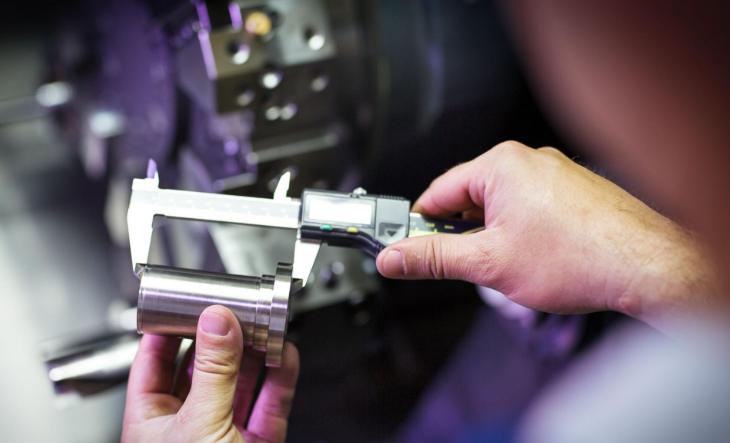
Mastering Thermal Stability for Automotive CNC Machining Accuracy
Real-time thermal mapping and coolant-induced stabilization
Achieving micron-level precision in automotive CNC machining demands rigorous thermal management. Embedded thermal sensors enable real-time mapping of heat distribution across spindles, guideways, and bearing housings—feeding data directly into adaptive coolant systems that dynamically adjust flow rates and temperature. Chilled glycol solutions targeted at spindle bearings, for example, reduce positional drift by up to 60% during extended high-load cycles. Integrated thermal compensation algorithms use this live data to adjust tool paths mid-operation, sustaining dimensional tolerances within ±0.005 mm—even in high-volume aluminum transmission housing production. As documented in the 2024 Spindle Thermal Analysis Report, such closed-loop thermal control prevents cumulative thermal errors exceeding 15 microns per hour.
Material-specific thermal response: Aluminum vs. stainless steel under high-speed automotive machining
Thermal behavior differs fundamentally between aluminum alloys and stainless steel—requiring distinct stabilization strategies:
- Aluminum alloys, with high thermal conductivity (130–170 W/mK) and a coefficient of thermal expansion of 23 µm/m·°C, absorb and redistribute heat rapidly. Aggressive internal coolant delivery—especially high-pressure (1000 psi) through-spindle cooling—is essential to prevent localized deformation in thin-walled battery enclosures.
- Stainless steel components, such as exhaust valves, conduct heat poorly but concentrate it at cutting edges. Here, reduced speeds paired with cryogenic mist lubrication preserve cutter integrity while limiting workpiece thermal growth to <0.01% per cycle.
Because aluminum expands ~40% more than stainless steel (17 µm/m·°C) under identical conditions, CAM systems must embed material-specific thermal models to maintain ±0.025 mm positional accuracy across mixed-material automotive programs.
Optimizing Machine Kinematics and Dynamic Compensation
To achieve sub-10 micron tolerances in high-volume production, modern CNC machine tools must go beyond static calibration. Advanced kinematic modeling and real-time dynamic compensation directly address the two dominant sources of accuracy loss: geometric errors inherent in machine structure and vibration-induced deviations during cutting.
Geometric error modeling using laser tracker–validated volumetric compensation
Laser trackers capture true spatial motion by measuring a reflector at hundreds of positions across the full work envelope. These empirical measurements are compared against the ideal kinematic model to generate a high-resolution volumetric error map. The CNC controller then applies inverse compensation to each axis—effectively canceling systematic deviations before they affect part geometry. Automotive manufacturers report over 60% reduction in positioning errors when machining complex freeform dies, molds, transmission housings, and engine blocks—where multi-axis stack-up errors directly compromise assembly fit. Critically, laser tracker validation ensures compensation remains accurate despite thermal drift or mechanical wear.
Chatter mitigation via modal analysis–guided spindle speed selection and damping-integrated workholding
Chatter—the self-excited vibration that degrades surface finish and accelerates tool wear—is suppressed not by slowing down, but by intelligently avoiding resonant frequencies. Modal analysis identifies the dominant natural frequencies of the tool-holder-spindle-workpiece system. Spindle speeds are then selected to steer clear of these bands, preserving metal-removal rate while eliminating regenerative chatter. Damping-integrated workholding—using viscoelastic layers or tuned mass dampers in fixtures—further absorbs vibrational energy. For thin-wall aluminum battery trays, this dual approach enables double the achievable depth of cut while holding ±5 µm dimensional tolerances. When embedded into CAM post-processing, modal guidance automates optimal speed selection per toolpath segment—making chatter mitigation a seamless, hands-off element of production.
Leveraging AI and In-Process Metrology for Real-Time Accuracy Assurance
Closed-loop adaptive compensation using embedded probing + digital twin feedback (BMW Plant Leipzig case)
Real-time adaptation transforms accuracy from a post-process check into an embedded production capability. At BMW’s Plant Leipzig, embedded on-machine probing continuously measures part geometry during machining, feeding live data into a physics-based digital twin. This twin simulates the ideal part, compares it against actual probe readings, and triggers micro-adjustments—such as feed-rate modulation or sub-micron tool-path corrections—without interrupting the cycle. AI algorithms analyze historical trends and real-time sensor inputs to predict deviations before they breach tolerance limits, enabling preemptive compensation for thermal drift, tool wear, and environmental fluctuations. The result is dramatically lower scrap and rework, stable cycle times, and consistent compliance with tight automotive specifications.
Ensuring Workholding Integrity and Residual Stress Control
Vacuum-assisted clamping vs. hydraulic fixturing: Impact on distortion in thin-wall aluminum chassis components
Thin-wall aluminum chassis components are highly susceptible to machining-induced distortion due to residual stresses locked in during casting or extrusion. Vacuum-assisted clamping distributes holding force uniformly across large surface areas, minimizing localized stress concentrations that trigger warping. In contrast, hydraulic fixturing applies higher point loads—often exacerbating stress redistribution and part spring-back. Industry benchmarking shows vacuum systems reduce measurable distortion by up to 40% compared to hydraulic alternatives in production-scale aluminum chassis machining. Further gains come from adaptive sequencing: roughing operations performed before final fixturing allow residual stresses to relax and redistribute, enabling final passes to hold dimensional tolerances below 0.1 mm. Leading OEMs combine vacuum clamping with strategic toolpath planning—including stress-relief milling patterns—to institutionalize distortion control as a core element of automotive CNC machining accuracy.
FAQ Section
What is the significance of thermal stability in automotive CNC machining?
Thermal stability is crucial for maintaining precision in automotive CNC machining as temperature changes can lead to dimensional drift and reduced accuracy.
How do aluminum and stainless steel differ in terms of thermal response?
Aluminum has higher thermal conductivity and expands more than stainless steel, requiring aggressive coolant delivery, whereas stainless steel benefits from reduced machine speeds and cryogenic lubrication.
What is modal analysis in machining?
Modal analysis identifies the natural frequencies of the machining system, aiding in chatter mitigation by avoiding resonant frequencies during operation.
How does AI improve accuracy in CNC machining?
AI enables real-time compensation for deviations by analyzing live data through embedded probing and digital twin feedback systems.
Why is vacuum-assisted clamping preferred for thin-wall aluminum components?
Vacuum-assisted clamping distributes holding force evenly, minimizing stress concentrations and reducing distortion compared to hydraulic clamping.
Table of Contents
- Mastering Thermal Stability for Automotive CNC Machining Accuracy
- Optimizing Machine Kinematics and Dynamic Compensation
- Leveraging AI and In-Process Metrology for Real-Time Accuracy Assurance
- Ensuring Workholding Integrity and Residual Stress Control
-
FAQ Section
- What is the significance of thermal stability in automotive CNC machining?
- How do aluminum and stainless steel differ in terms of thermal response?
- What is modal analysis in machining?
- How does AI improve accuracy in CNC machining?
- Why is vacuum-assisted clamping preferred for thin-wall aluminum components?