 Small batches, high standards. Our rapid prototyping service makes validation faster and easier —
  EN
EN

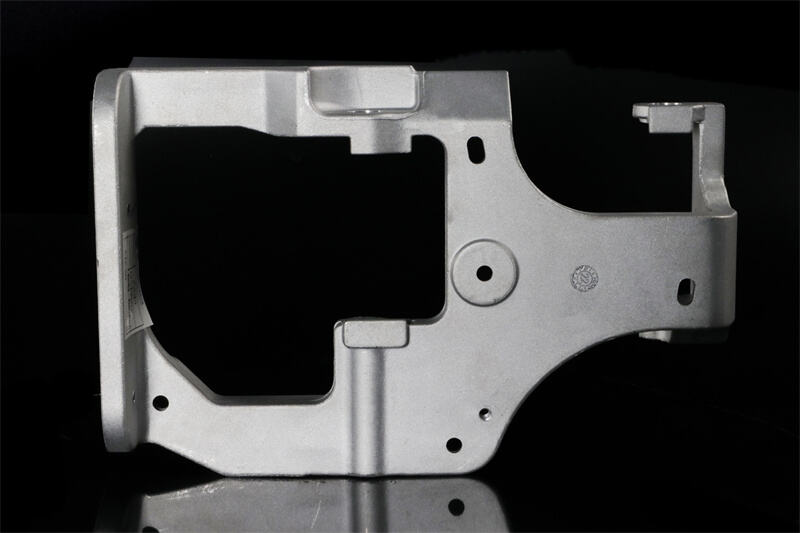
Functional Performance: How Surface Finishing Enhances Fatigue Strength, Friction Control, and Sealing
Fatigue life extension through controlled surface integrity
Surface imperfections—microcracks, tool marks, or irregular roughness—act as stress concentrators under cyclic loading, initiating cracks that propagate toward failure. For automotive metal parts subjected to repeated dynamic stresses—such as connecting rods, transmission shafts, and suspension components—controlled surface finishing removes or mitigates these defects. Processes like shot peening, precision grinding, and fine polishing introduce compressive residual stresses and yield a smooth, defect-free topography. This dual action significantly improves fatigue strength: industry-validated data shows fatigue life increases of 20% to 50% over unfinished counterparts. By aligning finish parameters with material properties and service load profiles, manufacturers extend component service life and reduce the risk of catastrophic failure in high-stress applications.
Reducing friction and enabling precise sealing in dynamic assemblies
Surface topography governs interaction between moving metal parts. Excessive roughness elevates friction, accelerates wear via abrasive and adhesive mechanisms, and wastes energy. A properly finished surface lowers the coefficient of friction and supports stable lubricant film formation. In critical dynamic assemblies—including hydraulic cylinders, engine valve trains, and transmission seals—the finish directly determines sealing performance. Smooth, controlled microroughness enables elastomeric seals to maintain uniform contact pressure, preventing fluid leakage and pressure loss. Overly rough surfaces can cut or abrade seals; overly smooth ones may impair oil retention and hydrodynamic lubrication. OEM specifications typically target Ra values between 0.4–1.6 µm and Rz values of 3–8 µm to balance seal conformity, lubricant retention, and wear resistance—ensuring long-term sealing integrity and system efficiency.
Corrosion and Wear Resistance: Protecting Automotive Metal Parts in Harsh Operating Environments
Real-world validation: Corrosion performance of finished vs. unfinished parts under cyclic exposure
Surface finishing dramatically improves corrosion and wear resistance for automotive metal parts exposed to road salt, humidity, and thermal cycling. Cyclic corrosion testing (CCT), including ASTM B117 salt spray evaluation, demonstrates clear performance gaps: finished components resist red rust for 500–1,000+ hours, while untreated surfaces show failure within 96–168 hours (Automotive Corrosion Test Council, 2023). Engineered finishes provide multi-layer protection against galvanic corrosion at dissimilar-metal junctions, fretting wear in high-vibration systems, and abrasive degradation from airborne particulates. Phosphate-coated fasteners, for instance, retain clamp load integrity three times longer than bare steel in suspension systems under simulated road-salt exposure. When combined with sacrificial metallic plating, such treatments reduce corrosion-related warranty claims by 42%, per OEM field data. Continuous protection across edges and micro-cracks remains essential for thermally cycled components like brake calipers and exhaust flanges.
Coating Adhesion and Paint Durability: The Critical Role of Surface Preparation for Automotive Metal Parts
Surface preparation defines the microstructure that coatings rely on for adhesion. Two key roughness parameters—Ra (arithmetic average roughness) and Rz (maximum height of the profile)—directly govern coating bond strength and mechanical durability. OEM validation consistently shows peak pull-off adhesion occurs when Ra is maintained between 1.5 and 3.0 µm. Surfaces with Rz exceeding 15 µm risk incomplete coating wetting, leaving micro-voids that compromise bond integrity; conversely, Ra below 0.8 µm limits mechanical interlocking and promotes delamination under impact.
OEM test data linking surface roughness (Ra) and profile (Rz) to coating bond strength and chip resistance
Chip resistance—a critical requirement for exterior panels and trim—follows the same roughness dependency. Standardized stone-chip testing reveals parts with Rz in the 10–12 µm range suffer up to 40% fewer chips than those with Rz above 20 µm. Optimal profiling ensures coating penetrates valleys and anchors securely around peaks, forming a robust mechanical lock. In accelerated corrosion-scratch cycles, components prepared with consistent Ra and Rz profiles retain coating integrity six times longer than unprepared surfaces. These results derive from controlled OEM trials. Specifying realistic roughness tolerances in surface finishing contracts is therefore a non-negotiable step toward predictable paint durability and long-term aesthetic performance.
Dimensional Accuracy and Assembly Reliability: Microroughness, Fit, and Functional Tolerance in Automotive Metal Parts
Dimensional accuracy and assembly reliability depend not only on geometric tolerancing but also on how surface finishing controls microroughness and preserves functional fit. For automotive metal parts, surface finish is never purely cosmetic—it governs how mating components behave during assembly and service. Microroughness (quantified by Ra and Rz) directly influences interface behavior: smoother surfaces reduce insertion force in clearance fits, while controlled micro-asperities ensure proper interference and torque transfer in press-fit joints. Precision processes—including centerless grinding, honing, and mass finishing—refine surface characteristics to meet tight functional tolerances, typically ±0.01 mm to ±0.05 mm for engine internals, transmission shafts, and sensor housings.
An overly aggressive finish risks exceeding tolerance limits under operational load, causing misalignment or play; an excessively smooth surface may undermine needed friction for sealing or torque retention. The right balance ensures interchangeability across production batches without rework—critical for high-volume assembly lines where predictability drives throughput and quality. Moreover, specifying surface finish in tandem with dimensional tolerances avoids unnecessary cost escalation: over-tightening either parameter inflates machining time, inspection burden, and scrap rates. Ultimately, dimensional accuracy and assembly reliability are achieved when surface finishing is intentionally aligned with both functional performance and manufacturing economics.
FAQ
Q: How does surface finishing enhance fatigue strength?
A: Surface finishing eliminates imperfections that act as stress concentrators, improving fatigue life by creating smooth topographies and introducing compressive residual stresses.
Q: What role does surface finishing play in friction and sealing?
A: It lowers friction, stabilizes lubricant films, and ensures uniform contact pressure for seals, enhancing both wear resistance and fluid retention in dynamic assemblies.
Q: How does surface finishing improve corrosion resistance?
A: Finishing treatments protect metal parts by resisting rust, galvanic corrosion, and wear, dramatically extending their lifespan in harsh environments.
Q: Why is surface preparation critical for paint durability?
A: Proper surface preparation ensures optimal roughness, allowing coatings to adhere strongly and resist impact, scratches, and corrosion.
Q: How does surface finish affect dimensional accuracy in assemblies?
A: Surface finish influences mating part behavior, such as friction, insertion force, and torque transfer, ensuring precise fits and reliable assembly performance.
Table of Contents
- Functional Performance: How Surface Finishing Enhances Fatigue Strength, Friction Control, and Sealing
- Corrosion and Wear Resistance: Protecting Automotive Metal Parts in Harsh Operating Environments
- Coating Adhesion and Paint Durability: The Critical Role of Surface Preparation for Automotive Metal Parts
- Dimensional Accuracy and Assembly Reliability: Microroughness, Fit, and Functional Tolerance in Automotive Metal Parts
- FAQ