 Small batches, high standards. Our rapid prototyping service makes validation faster and easier —
  EN
EN


Heat Input Imbalance: The Primary Driver of Uneven Weld Penetration
Low Current or Voltage Reducing Energy Transfer
Insufficient amperage or voltage directly reduces the energy delivered to the joint, preventing the base metal from reaching full melting temperature. As shown in the heat input formula—amperage × volts × 60 / travel speed—lower electrical parameters shrink total energy per unit length. A 2025 peer-reviewed study observed that at just 276 J/mm, weld cross-sections exhibited porosity along the fusion boundary and lack-of-fusion at the root, attributed to reduced molten pool volume and rapid solidification. Low current also weakens arc energy density, impairing fluidity and lateral spreading of the molten metal—preventing full penetration, especially at the root in thicker sections. In gas tungsten arc welding (GTAW), this commonly yields a narrow, shallow bead. Even a modest drop in amperage can reduce penetration depth by 10–15% in carbon steel, according to 2023 industry data. Without adequate energy transfer, filler metal fails to fuse completely with the base material, creating weak points vulnerable to service-load failure.
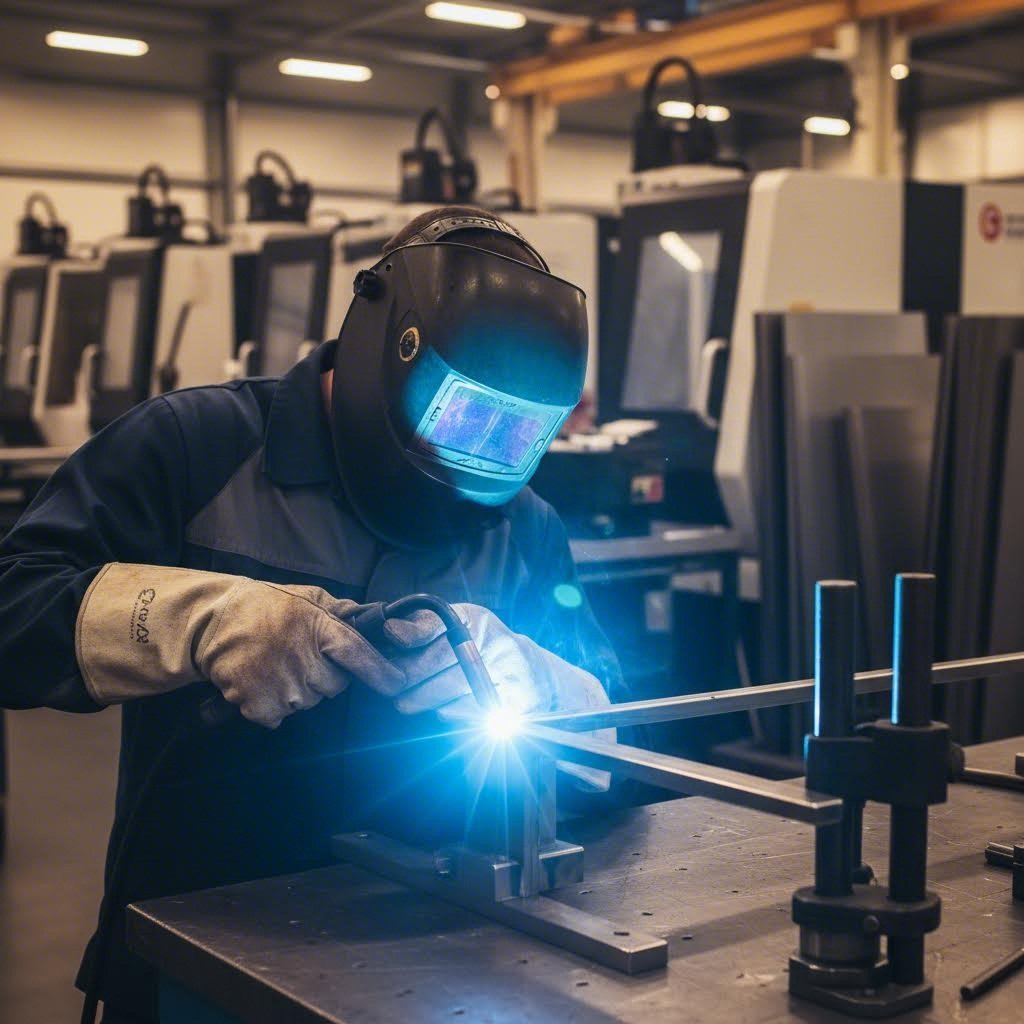
Excessive Travel Speed Limiting Melting Time
Travel speed inversely controls heat input—increasing speed drastically reduces dwell time over the joint, limiting the arc’s ability to melt the root face fully. Because travel speed appears in the denominator of the heat input formula, it is the most sensitive variable for managing energy per unit length. In laser beam welding, unchecked speed increases cause incomplete penetration and a narrow fusion zone. A 2025 analysis confirmed that rapid travel leads to premature pool solidification before joint filling, trapping gas and generating porosity—an effect that directly contributes to uneven penetration when speed fluctuates along the seam. In manual processes like shielded metal arc welding (SMAW), operator-induced variations commonly produce alternating deep and shallow sections. Excessively high speed can also disrupt shielding gas coverage, inviting oxidation and further weakening the weld. Consistent penetration requires balancing speed with sufficient current and voltage to maintain heat input within the optimal range for material and thickness.
Joint Geometry and Fit-Up Issues Contributing to Uneven Weld Penetration
Proper joint design is fundamental to achieving uniform weld penetration. When the root face is too thick or the gap between workpieces is too narrow, the welding arc cannot fully access the joint root—leading to incomplete fusion and uneven penetration.
Excessive Root Face or Insufficient Joint Gap Restricting Arc Access
A root face that is too large or a joint gap that is too small prevents the arc from reaching the base material fully. Energy dissipates on the surface, causing the weld pool to bridge without penetrating the root—a classic cause of lack-of-fusion. Conversely, insufficient melting yields a shallow, low-strength bead. Optimal root opening depends on process and thickness; for example, GTAW on thin sections typically uses 0.5–2 mm. If the gap is too tight, the electrode cannot physically direct the arc to the root, and molten metal may not flow into the joint. A thick root face acts as a thermal barrier, increasing arc path length and reducing effective heat input—often producing a surface-adequate but root-deficient weld. Adjusting root face height and gap spacing to match recommended parameters ensures full arc access and consistent penetration. Welders should verify fit-up with gauges and secure tack welds to maintain uniform gap throughout the joint—preventing localized defects that trigger uneven penetration.
Operator Technique Variability and Its Impact on Penetration Consistency
Skilled operators are the critical link between weld procedure specifications and actual joint quality. Even with properly set power sources and filler metals, manual variations in arc length, torch angle, and manipulation speed frequently create uneven weld penetration along a seam—compromising structural integrity and increasing rework costs. Standardizing these parameters is essential for repeatable, high-integrity welds.
Arc Length and Electrode Angle Inconsistencies
Fluctuations in arc length alter electrical resistance and voltage, shifting heat concentration at the weld pool. A 1 mm increase can spread the arc cone, reduce current density, and yield a shallow, widened penetration with undercut. An excessively short arc risks electrode sticking or globular transfer, disrupting root fusion. Maintaining a consistent arc length—e.g., 1.5–3 mm for short-circuit GMAW—stabilizes energy delivery. Electrode angle errors further distort penetration: in GMAW and FCAW, a push angle (10–15°) directs arc force forward for wider, shallower fusion; a drag angle concentrates heat deeper. Operators who inadvertently vary between 5° and 25° may produce root penetration oscillations of up to 30%. Work angle shifts can misdirect shielding gas, resulting in asymmetric fusion and uneven leg lengths.
Torch or Electrode Manipulation Errors in GTAW and SMAW
In GTAW, precise torch control dictates weld pool geometry. Hesitation at weave edges widens the fusion margin, while rushing through the center reduces root melting. Inconsistent filler rod dipping cadence or height interrupts arc stability and cools the pool erratically—creating bands of varying penetration depth. SMAW relies heavily on electrode manipulation: a long arc (above 3.2 mm electrode diameter) disperses heat, yielding wide, shallow beads; a tight arc concentrates energy at the root. Non-rhythmic whip or weave motions produce peaks and valleys in penetration along the joint. Both processes demand steady travel speed and dwell time—even minor stutter or acceleration yields visible waviness in the root profile. Training programs that combine visual guides with real-time arc monitoring reduce manipulation errors by up to 45% in production environments.
Material and Process Factors Exacerbating Uneven Weld Penetration
While heat input and joint preparation are common focal points, the inherent properties of the base material and the chosen welding process can silently exacerbate uneven weld penetration. Thermal conductivity strongly influences heat distribution: aluminum and copper alloys rapidly draw heat away, often resulting in shallow, inconsistent fusion—especially at the start of a weld before thermal equilibrium is reached. Stainless steel, with lower thermal conductivity, localizes heat more readily, risking sudden excessive penetration if parameters aren’t tightly controlled. Surface condition is equally critical—mill scale, a high-melting-point oxide layer formed during hot-rolling, acts as an insulating barrier. It prevents effective arc fusion of parent metals, leading to surface-acceptable but root-deficient welds. Field reports confirm repair rates exceeding 15% on improperly cleaned structural steel components due to this defect.
The interaction between consumables and process adds another layer of complexity. In flux-cored arc welding (FCAW), flux chemistry modifies arc behavior and puddle fluidity. A fast-freezing slag—designed for out-of-position welding—produces a convex bead and inherently shallower penetration than a fluid slag intended for flat-position welding. Selecting the wrong flux type can suppress fusion depth, mimicking low-energy input. Similarly, using a wire with incorrect alloy composition or excessive diameter for the base material thickness diverts arc energy toward melting filler rather than base metal. The result is often a wide, visually acceptable cap but a dangerously shallow and uneven root—a structural weakness detectable only through non-destructive volumetric examination.
FAQ
Q: What causes heat input imbalance during welding?
A: Heat input imbalance can result from low current or voltage, excessive travel speed, improper joint geometry, or operator technique variability, which can reduce energy transfer and result in uneven weld penetration.
Q: How does travel speed affect weld penetration?
A: Excessive travel speed limits melting time and reduces heat input, causing incomplete penetration, rapid pool solidification, and porosity. Maintaining proper speed ensures consistent heat application.
Q: What impact does joint geometry have on weld penetration?
A: Improper joint geometry, such as a thick root face or narrow joint gap, restricts arc access, reducing penetration consistency and risking lack-of-fusion defects.
Q: How do operator errors influence penetration consistency?
A: Variations in arc length, electrode angle, and manipulation techniques can cause uneven weld penetration along the seam. Consistency in these parameters is critical for optimal results.
Q: Why do base material properties affect weld penetration?
A: Thermal conductivity and surface conditions like mill scale determine how heat distributes during welding. High-conductivity materials like aluminum can lead to shallow fusion, while surface contaminants may block effective arc fusion.