 Small batches, high standards. Our rapid prototyping service makes validation faster and easier —
  EN
EN

Why Hole Pattern Design Directly Impacts Production Flow Efficiency
How Hole Geometry Influences Fixture Repeatability and Cycle Time
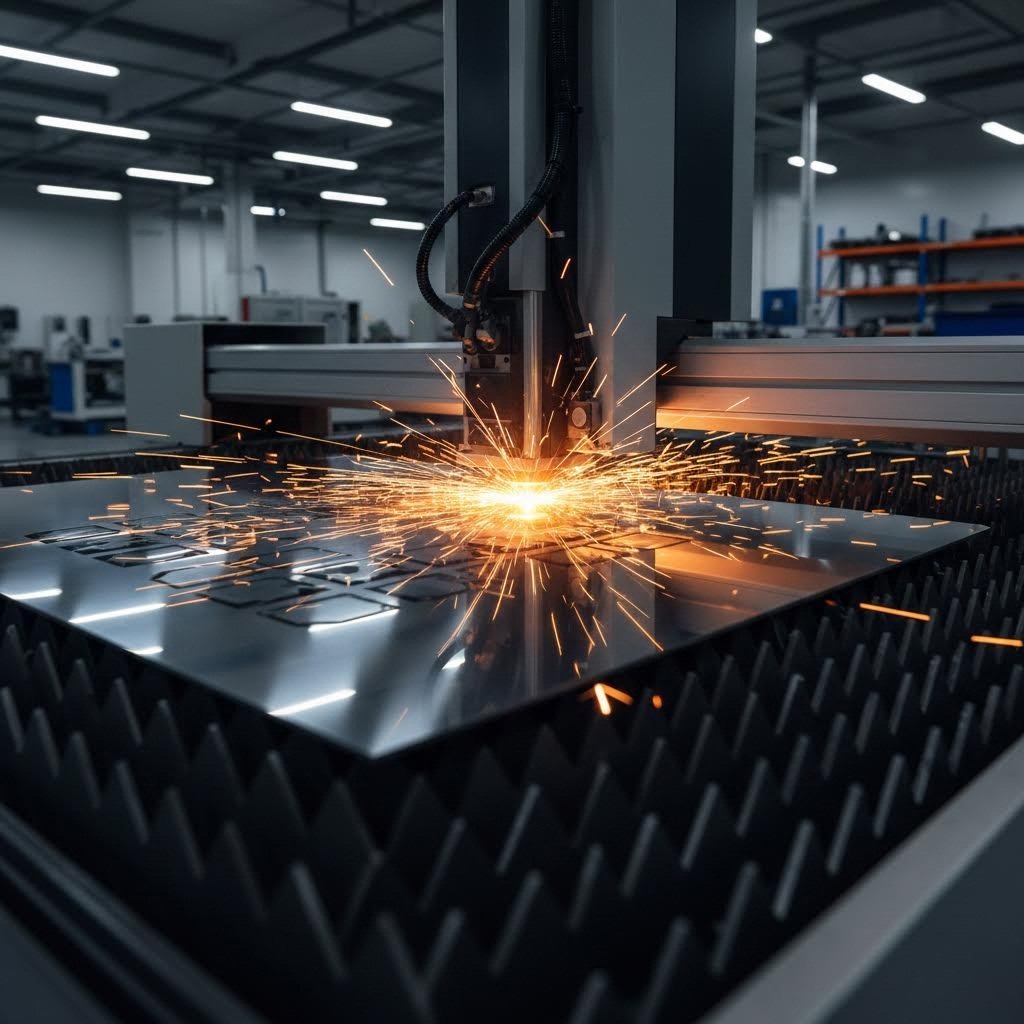
Hole geometry is a foundational driver of fixture repeatability and cycle time. A tapered lead-in, for instance, guides dowels into position 35% faster than a straight-bore hole—demonstrated in a 2022 analysis of automotive assembly lines—reducing fixture engagement time without sacrificing accuracy. Precise location within ±0.05 mm boosts repeatability by up to 20%, per research published in the Journal of Manufacturing Processes (2021). Chamfered edges prevent jamming; consistent diameters ensure uniform clamping force. Together, these features stabilize production cadence, eliminate manual realignment between runs, and let operators maintain steady workflow—no part waits for a fixture to “settle.”
The Cost of Inconsistent Hole Patterns: Downtime, Rework, and Line Stops
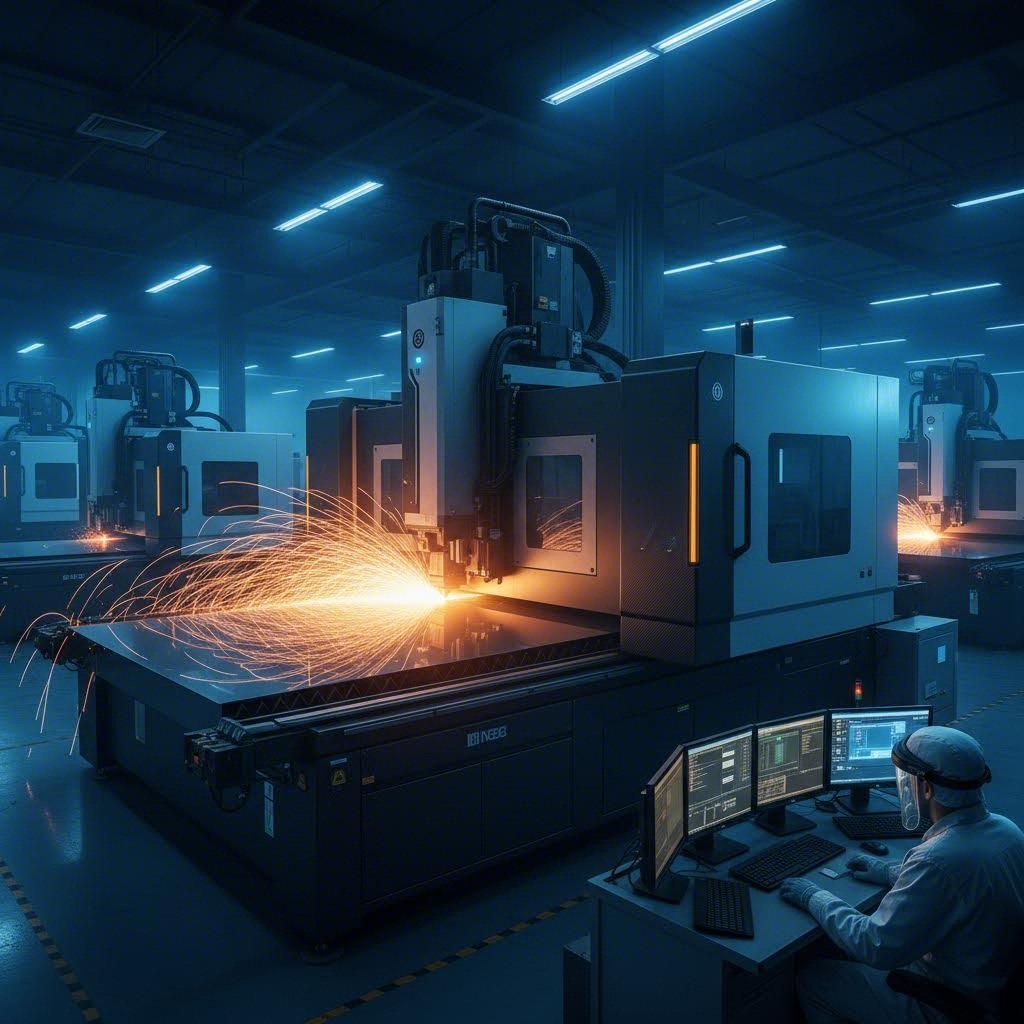
Inconsistent hole patterns trigger misalignment, machine stops, and operator intervention—eroding flow and inflating cost. Unplanned downtime averages $4,200 per hour (IndustryWeek, 2023), while reworking a defective part adds $18.50 in labor and material (Quality Digest, 2022). For a typical medium-volume line, just 12 annual line stops can erase over $50,000 in productivity.
| Cost Factor | Typical Value | Source |
|---|---|---|
| Downtime per hour | $4,200 | IndustryWeek, 2023 |
| Rework per part | $18.50 | Quality Digest, 2022 |
| Annual line stops (avg.) | 12 events | Internal benchmarking |
Beyond direct costs, inconsistency elevates scrap rates, degrades throughput, and turns a minor design oversight into a recurring drag on profitability.
Applying Lean Principles to Hole Pattern Design
Standardizing Hole Patterns to Eliminate Setup Variation
Lean manufacturing targets non-value-added setup variation—and standardized hole patterns are a high-leverage lever. Constraining diameters, depths, and thread types across part families simplifies tooling, programming, and operator action. Reducing six distinct hole specs to two common sizes often cuts tool-change time by more than half, eliminating drill-bit swaps and machine re-zeroing between batches. This aligns with design-for-manufacturing best practices: simplified geometry and uniform callouts streamline CAM programming and toolpath generation. Pre-drilled fixture plates with dedicated bushings become viable, removing manual alignment per job. Operators gain muscle memory with repeated features, lowering misload risk. Fewer unique tools also shrink tool-crib overhead—a direct reduction in overprocessing waste. Firms adopting this approach commonly report a 30% drop in setup time per job, alongside fewer line stops and a more predictable production cadence.
Enabling One‑Piece Flow Through Consistent Datum Alignment
One-piece flow hinges on seamless, station-to-station part movement—and a stable, repeatable datum is essential. When a specific hole or pair serves as the primary locating feature, every workpiece clamps identically. That consistency enables downstream automation—robotic pick-and-place, automated inspection, or assembly—to proceed without recalibration. For example, two precisely located holes functioning as a coordinate system allow robots to grasp units with high repeatability, eliminating vision-based reorientation. Common grid- or intersection-based layouts further simplify pallet and transfer mechanism design. Conversely, inconsistent datums force manual correction or cause jams that break takt-time rhythm. Standardized datums remove that friction, enabling uninterrupted progression at customer demand pace—a core lean outcome that directly reduces work-in-process inventory and its carrying costs.
Integrating Value Stream Mapping with Hole Pattern Specification
Value stream mapping (VSM) transforms hole pattern design from a static drafting task into a strategic flow enabler. By visualizing material and information flow, VSM reveals where fixturing delays, repositioning, or secondary operations accumulate work-in-process—often rooted in suboptimal hole placement.
Using VSM to Identify Critical Material Flow Points for Strategic Hole Placement
VSM pinpoints exact bottlenecks: alignment lag at transfer stations, clamping delays before machining, or rework loops caused by mislocated holes. Design teams use these insights to place holes where they actively support flow—not just meet functional requirements. Relocating tooling holes to align with automated transfer rails, for instance, cuts handling steps and accelerates cycle time. Shared datum holes that travel with the part through multiple stations minimize repositioning and reduce cumulative error. This shifts hole patterns from passive features to active flow enablers—ensuring each hole contributes directly to value-added processing rather than introducing hidden friction.
Avoiding Common Hole Pattern Design Pitfalls That Disrupt Flow
Even well-intentioned designs falter when real-world constraints go unvalidated. Over-reliance on CAD models—without accounting for material springback, thermal expansion, or clamp accessibility—yields patterns that fail on the shop floor. Siloed design-production collaboration leads to hole locations that compromise fixture repeatability or require extra setups. Inconsistent tolerance application across a pattern causes misalignment and line stops. Rushing validation under tight deadlines introduces avoidable flow disruptions. And overlooking material behavior—like flex in thin-gauge sheet metal or dimensional drift in high-temp environments—lets small errors compound across a run. Cross-functional review early in design, grounded in manufacturability and process capability, prevents these pitfalls and keeps throughput steady.
FAQ
Why is hole geometry important in production flow?
Hole geometry affects fixture repeatability, cycle time, and consistent clamping force, which enables smooth production without manual intervention or realignment.
How can inconsistent hole patterns lead to higher costs?
Inconsistent hole patterns cause downtime, rework, and machine stops, increasing costs through labor, material waste, and lost productivity.
What role does standardizing hole patterns play in lean manufacturing?
Standardization of hole patterns reduces setup variations and tool-change time, streamlining production, improving accuracy, and lowering costs.
How does Value Stream Mapping assist in hole pattern design?
By identifying bottlenecks and delays in production, VSM ensures holes are strategically placed to support efficient material flow and reduce unnecessary steps.
What are common pitfalls in hole pattern design?
Pitfalls include overlooking real-world constraints like material behavior and thermal effects, inconsistent tolerance application, and insufficient validation.