 Small batches, high standards. Our rapid prototyping service makes validation faster and easier —
  EN
EN

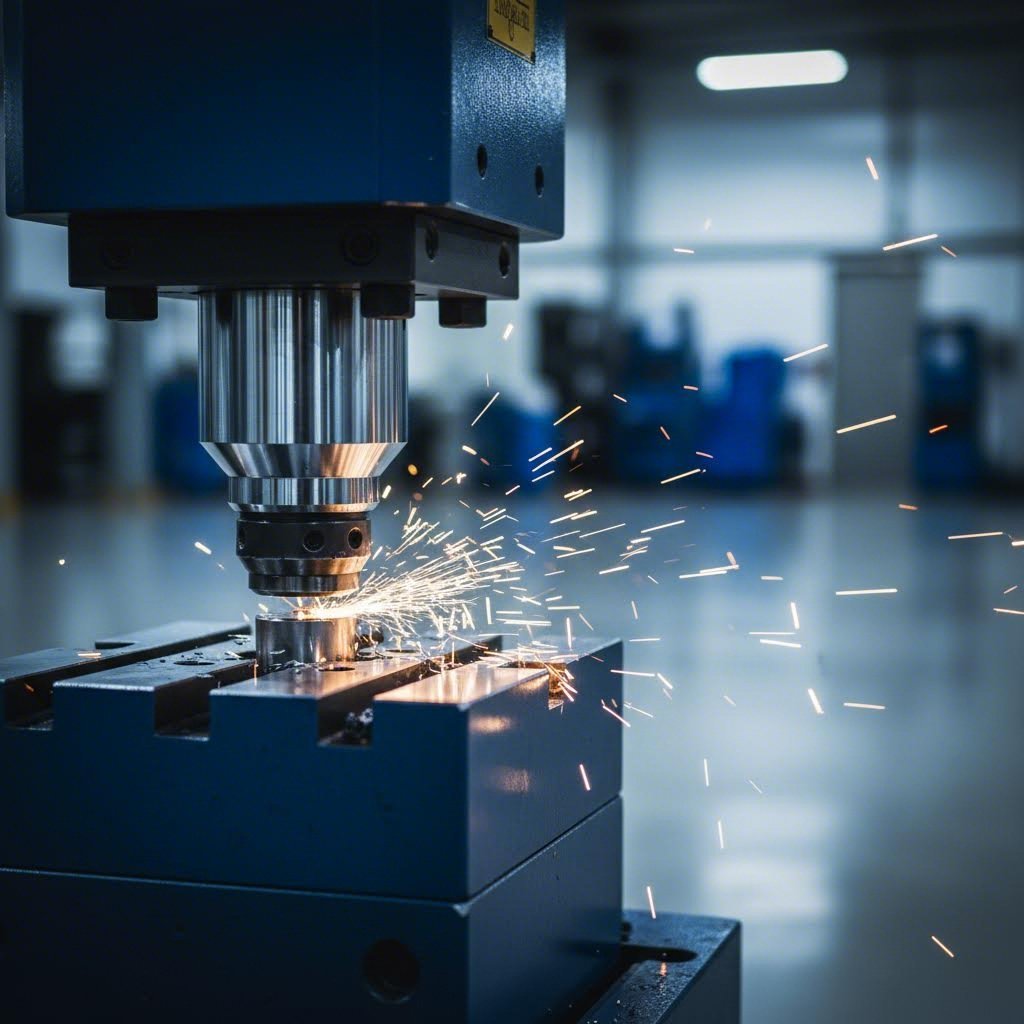
Apply Design for Manufacturability (DFM) to Reduce Complexity
Design for Manufacturability shifts the focus from isolated part geometry to a holistic view of how each feature interacts with production processes, tooling, and assembly. For metal components, DFM directly counters over-engineering by prompting a functional review of every surface, cutout, and tolerance—ensuring each element serves a verified purpose. Embedding manufacturing constraints early cuts machining time, simplifies setups, and reduces scrap—often before the first prototype is built.
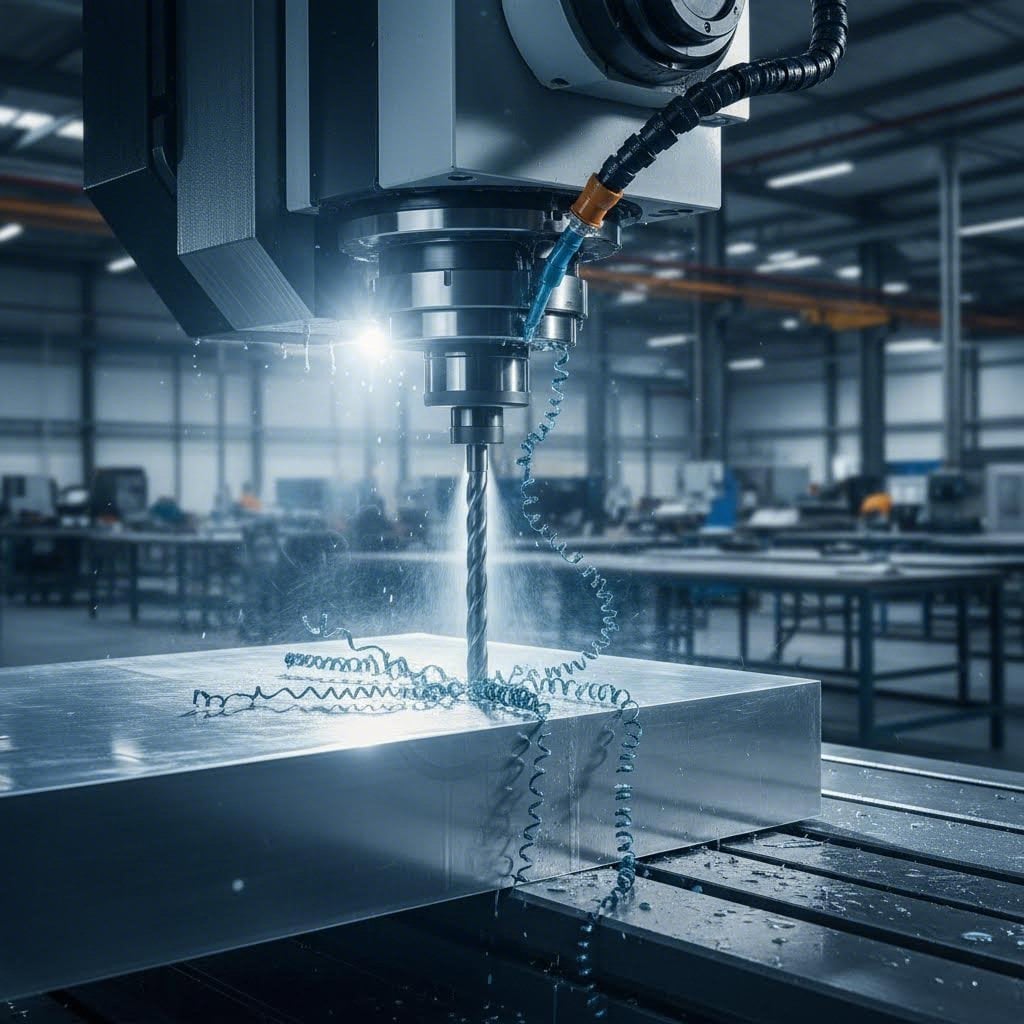
Eliminate Non-Functional Features and Standardize Geometries
Simplify geometry by removing features that add no structural or operational value: undercuts, decorative grooves, sharp internal corners, and non-critical threaded holes increase CNC programming complexity, cycle time, and tooling costs without improving performance. Replace custom radii with standard tool sizes and unify wall thicknesses to match common stock dimensions—reducing tool changes and machining steps. Even eliminating a single non-functional slot can shorten setup time and lower tool deflection risk. Industry benchmarks show designs with fewer unique features cut programming and machining time by 30–40%. Pair this with standardization: specify off-the-shelf hole diameters, use one screw size across assemblies, and align bend radii with existing press-brake tooling. The result is not just a simpler drawing—but a part that flows through production with fewer interruptions, tighter process control, and consistently lower unit costs.
Manage Tolerance Stack-Up with Robust Datum Strategies
Tolerance stack-up analysis is critical—and frequently overlooked—in cost-effective metal part design. Overly tight tolerances on every feature compound variation across interfaces, often forcing expensive grinding, selective assembly, or scrap. A robust datum strategy begins by defining primary, secondary, and tertiary datums aligned with how the part is fixtured and inspected in production. This prioritizes functional relationships: a mounting face becomes the primary datum to control flatness; an edge or bore serves as the secondary datum to lock orientation; a third feature constrains the remaining degree of freedom. Dimensioning from these stable references allows non-critical tolerances to be relaxed without compromising fit or function. For example, widening a clearance hole tolerance from ±0.001 in. to ±0.005 in.—while holding critical bores to ±0.002 in.—can reduce inspection and rework costs by 20–25%. The outcome is a design resilient to normal manufacturing variation, delivering precision exactly where it matters.
Consolidate Parts Using Design for Assembly (DFA) Principles
Design for Assembly applies with equal force to metal components. By reducing part count and simplifying how parts join, DFA untangles complexity—cutting assembly time, defect rates, and long-term production costs. Two high-impact strategies are modular integration and replacing threaded fasteners with integral retention features.
Integrate Components via Modular Interfaces and Self-Locating Features
Modular design groups functions into pre-assembled sub-units that snap or bolt into the main structure—eliminating dozens of discrete handling steps. In complex metal assemblies, this often means a single cast or stamped chassis integrates brackets, sensor mounts, and wiring channels previously installed with individual fasteners and manual alignment. Unified mounting patterns allow robotic systems to install entire modules in one motion, cutting manual touch time by up to 40%. Standardized connector layouts within modules improve precision: one automotive study found common pin-and-socket patterns reduced wiring errors by 43% (SAE J3016, 2023). Self-locating features—such as asymmetric notches, tab-and-slot geometries, and machined guide pins—ensure correct orientation on insertion, removing reliance on operator interpretation of drawings. These poka-yoke details transform error-prone sequences into mistake-proof workflows—essential for agile, high-mix production lines requiring rapid changeovers.
Replace Fasteners with Press-Fits, Tabs, Slots, and Dowels
Screws, bolts, and washers inflate part count, inventory overhead, and assembly steps—each demanding alignment, torque control, and inspection. Press-fit interfaces, tab-and-slot joints, and dowel pins embed retention directly into the part geometry. A press-fit bushing or shaft delivers secure interference without loose hardware; tabs bent into sheet metal engage mating slots with a simple push; dowels simultaneously align and retain stacked plates—replacing two bolts and a fixture pin. On high-volume EV production lines, this approach contributed to a 31% reduction in assembly defects (2023 OEM manufacturing data), where thousands of joints per vehicle benefit from foolproof, hardware-free connections. The result is a lighter, more compact assembly that assembles faster, requires less tooling, and simplifies service—no misplaced nuts, stripped threads, or cross-threading to troubleshoot.
Optimize Sheet Metal Geometry for Bend Producibility
Adhere to Minimum Flange, Bend Radius, and Sequence Rules
A disciplined approach to sheet metal geometry directly reduces rework and scrap. Maintain flange length at least four times the material thickness to prevent distortion during forming. Use a bend radius equal to or greater than the material thickness—sharper radii risk cracking, which accounted for 38% of bending-related failures in a 2022 fabrication center quality audit. Sequence bends to process internal features before outer flanges, and position complex bends last to preserve reference points. Relief cuts at bend tangents eliminate tearing and improve dimensional stability. These rules strengthen DFM compliance and help avoid costly tooling revisions when scaling from prototype to full-rate production.
Align Metal Forming Process Selection with Simplified Part Design
Simplifying a complex metal part is abstract until grounded in a specific manufacturing process. A feature trivial to produce via metal injection molding (MIM) may be prohibitively expensive to machine from solid billet. Misalignment between streamlined CAD geometry and physical fabrication realities reintroduces complexity—through specialized tooling, excessive secondary operations, and low first-pass yield. The core principle is to select the dominant forming method early, then tailor geometric simplifications to leverage its inherent capabilities. For example, eliminating undercuts and standardizing radii enables a shift from 5-axis CNC machining to single-stage progressive die stamping—collapsing processing steps and cost.
The greatest cost overhead arises when a design forces competing technologies—e.g., merging components only to create internal geometry requiring post-casting machining. According to 2024 fabrication economics analysis, aligning forming method with part geometry early in design reduces production costs by 20–30% by avoiding process redundancy. To fully realize simplified design benefits, tolerances and material selection must be native to a single dominant process. The goal isn’t just a simpler drawing—it’s a simpler value stream where the chosen technology produces the net shape with minimal intervention, turning design simplification into measurable manufacturing throughput.
FAQ
What is Design for Manufacturability (DFM)?
DFM focuses on tailoring part designs to align with manufacturing constraints, minimizing production costs, simplifying setups, and ensuring higher yield efficiencies.
How can eliminating non-functional features reduce costs?
By removing unnecessary features like undercuts or decorative grooves, you simplify machining, lower tooling requirements, and reduce total production times and costs.
Why is tolerance stack-up analysis important?
Tolerance stack-up ensures that manufacturing variations do not negatively affect parts’ fit or function, which can prevent expensive rework or reducing material waste.
What role does Design for Assembly (DFA) play?
DFA simplifies how components join together, improving assembly efficiency, reducing part counts, and cutting long-term production costs through strategies like modular integration and replacing threaded fasteners.
What’s the importance of aligning forming processes during part design?
Ensuring geometric simplifications align with a chosen manufacturing method avoids mismatched processes and redundancies, cutting costs while increasing throughput efficiency.