 Small batches, high standards. Our rapid prototyping service makes validation faster and easier —
  EN
EN

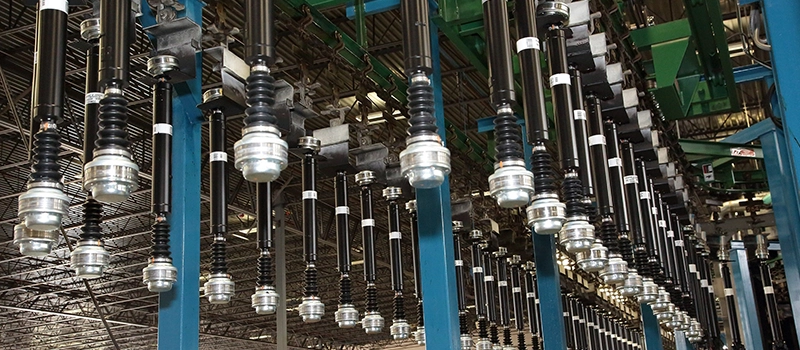
What Is Stamped Automotive Component Durability?
Stamped automotive component durability refers to the ability of metal parts formed through stamping to withstand repeated mechanical, thermal, and environmental loads over the vehicle’s intended lifespan without failure. These parts—such as structural reinforcements, brackets, and body panels—must resist fatigue, corrosion, and deformation under real-world conditions. Unlike cosmetic or non-critical components, durable stamped parts maintain dimensional accuracy and strength even after thousands of cycles of vibration, impact, and temperature swings. In modern automotive engineering, durability is not merely about strength but also about consistent performance across production batches. A durable stamped component minimizes warranty claims, reduces downtime, and contributes directly to vehicle safety. Achieving this requires careful integration of material science, process control, and design geometry from the earliest stages of development.
Key Factors That Influence Stamped Automotive Component Durability
Material Selection and Metallurgical Properties
The durability of a stamped automotive component begins with its raw material. High-strength steel (HSS) and advanced aluminum alloys are widely used for their optimal balance of strength, ductility, and formability. Tensile and yield strength determine how much stress a part can endure before permanent deformation; fatigue resistance dictates longevity under cyclic loading—critical for suspension brackets and chassis members. Thermal stability ensures dimensional integrity near powertrain components, while corrosion resistance extends service life in harsh environments. Galvanized coatings, aluminized steels, and stainless alloys are common solutions where exposure to moisture, road salts, or exhaust heat is expected. Each metallurgical property sets fundamental limits on performance—and ultimately defines the upper bound of stamped automotive component durability.
Stamping Process Precision and Tooling Quality
Even the best material fails if the stamping process introduces micro-defects. Precision die design—enabled by CAD and validated through digital simulation—ensures tight tolerances; deviations as small as 0.1 mm can compromise fit, cause misalignment, and distort stress distribution. Dies fabricated from hardened tool steel withstand hundreds of tons of force over millions of cycles without warping, enabling high-volume repeatability. Consistent press force, speed, and lubrication prevent localized thinning, edge cracking, or springback—defects that reduce load-bearing capacity and accelerate wear. Burrs, surface tears, or inconsistent flange angles introduce stress risers that initiate premature fatigue failure. Robust process control eliminates variability at the source, ensuring every stamped part meets its engineered performance envelope.
Design Geometry and Stress Distribution
A component’s shape governs how forces travel through it—and therefore determines its real-world durability more than any single material property. Sharp corners concentrate stress; smooth radii and gradual transitions distribute loads evenly. Finite element analysis (FEA) allows engineers to model stress paths, predict fatigue initiation points, and optimize geometry before tooling is cut. Features like ribs, flanges, and beads increase stiffness without adding mass, improving resistance to bending, torsion, and vibration-induced resonance. Holes, cutouts, and mounting features must be positioned to avoid interrupting primary load paths. As industry experience shows, an intelligently shaped part made from conventional steel often outperforms a poorly designed one made from ultra-high-strength alloy—underscoring that geometry is not secondary to material, but foundational to durability.
Testing and Validating Durability in Stamped Automotive Components
Validating stamped automotive component durability requires a combination of accelerated laboratory techniques and real-world performance tracking—neither alone is sufficient.
Accelerated Life Testing and Fatigue Analysis
Accelerated life testing compresses years of operational stress into days or weeks by applying controlled cyclic loads, thermal cycling, and broadband vibration profiles aligned with OEM durability standards such as SAE J2570 or ISO 12110. Fatigue analysis—often integrated with FEA—identifies critical stress concentration zones and predicts crack initiation and propagation under simulated service conditions. This enables targeted design refinements and material upgrades before tooling is finalized, reducing late-stage rework and field failures.
Real-World Correlation: Field Data and Warranty Metrics
Laboratory results must be validated against actual vehicle usage. Manufacturers correlate lab test outcomes with field data—including fleet telemetry, roadside assistance reports, and warranty claim analytics—to assess prediction accuracy and refine future test protocols. For example, correlating suspension bracket fatigue failures in lab vibration tests with real-world warranty return rates helps calibrate stress multipliers and environmental weighting factors. This closed-loop validation strengthens confidence in durability predictions and informs material selection and design rules for next-generation platforms.
Improving Durability Through Advanced Manufacturing and Design Integration
Enhancing stamped automotive component durability relies on aligning modern manufacturing techniques with intelligent design strategies from day one. Servo-driven presses offer precise control over stroke profile, blank holder force, and dwell time—reducing strain localization and improving formability of ultra-high-strength steels. Precision die technologies, including laser-welded inserts and in-die sensing, detect wear and adjust compensation in real time, maintaining dimensional consistency across long production runs. Concurrently, design-for-manufacturing (DFM) principles guide geometry optimization to minimize stress concentrations, avoid deep draws, and ensure uniform metal flow. Simulation tools now model full-process strain history—from blank development through trimming—enabling virtual validation of failure modes before physical prototypes exist. When combined with innovations like tailored blank coatings and hybrid material stacks, these integrated approaches extend component lifecycle without compromising cost, weight, or manufacturability. The result is a holistic durability strategy—one grounded in empirical validation, rooted in physics-based modeling, and proven across global production fleets.
FAQs
What materials are commonly used for stamped components?
Manufacturers often use high-strength steel (HSS) and advanced aluminum alloys due to their optimal balance of strength, ductility, and corrosion resistance.
How is durability tested in automotive stamped components?
Durability is tested using accelerated life testing techniques that simulate years of operational stress and validated through real-world field data.
Why is design geometry crucial for stamped component durability?
Design geometry governs stress distribution. Smooth transitions, radii, and added stiffening features ensure even load paths and minimize premature fatigue.
What role does metallurgy play in durability?
Metallurgical properties such as tensile strength, fatigue resistance, and corrosion prevention set the performance capabilities of the stamped components.