 Small batches, high standards. Our rapid prototyping service makes validation faster and easier —
  EN
EN

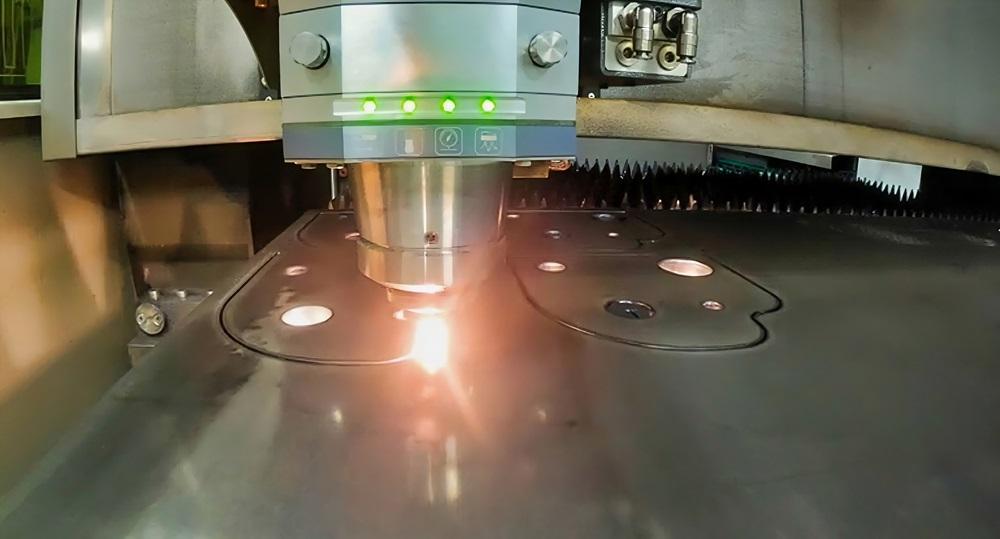
How Cutting Method Quality Drives Final Part Integrity
A CAD file represents an ideal geometry, but a part’s real-world fitness for purpose is determined by the execution — specifically, the cutting method quality. Identical blueprints can yield wildly different surface finishes, edge conditions, and structural reliability because how material is separated dictates whether the design survives or degrades.
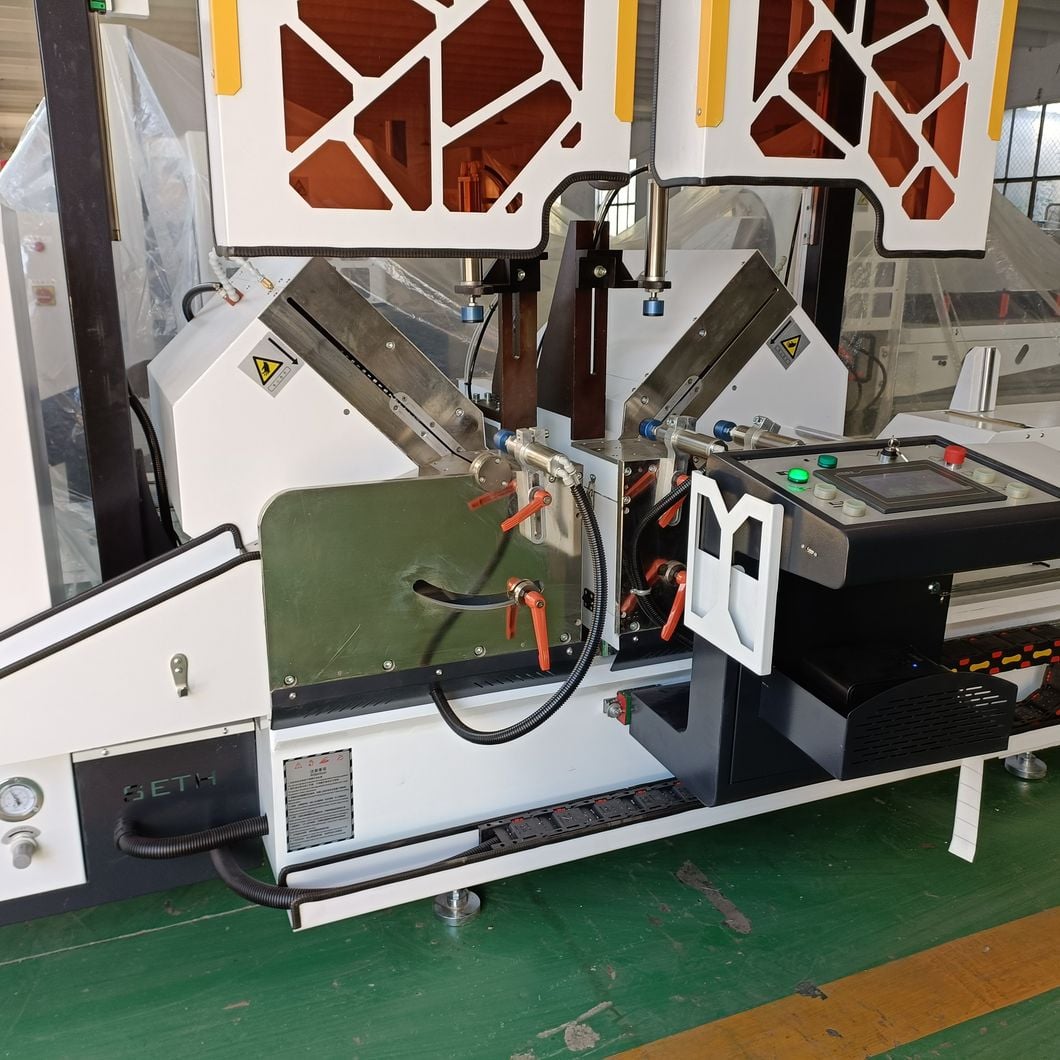
The CAD Illusion: Why Identical Designs Yield Divergent Real-World Quality
Engineers often assume a flawless digital model guarantees a flawless physical part. Yet the energy and mechanics of material separation introduce variables that CAD alone ignores. Industry research shows that nearly 70% of premature part failures in high-precision sectors are traced to cutting-induced defects, not design errors (Modern Machine Shop, 2023). A laser, plasma, or mechanical blade each leaves a unique fingerprint — from micro-cracks to heat-altered zones — that can lower fatigue resistance, dimensional accuracy, and overall service life. Even when two workpieces start from the same file, the chosen cutting method quality creates divergent stress states and surface imperfections that no post-processing can fully erase. The gap between virtual perfection and shop-floor reality narrows only when the separation process itself is treated as a primary design parameter.
Material Response Hierarchy: Thermal, Mechanical, and Cold Cutting Pathways Defined
Every cutting approach imposes a distinct physical pathway on the workpiece, creating a hierarchy of material responses that directly shapes final part integrity:
- Thermal methods (laser, plasma, oxy-fuel) melt or vaporize material, generating a heat-affected zone (HAZ) that can alter grain structure, induce residual stresses, and lower corrosion resistance. The depth of HAZ and the resulting micro-hardness gradient depend critically on how well the process is controlled.
- Mechanical methods (shearing, sawing, punching) apply shear forces that fracture or tear the material, leaving cold-worked edges and burrs. These can act as stress risers unless secondary finishing removes them.
- Cold cutting methods (waterjet, abrasive waterjet) avoid heat entirely, preserving the base metallurgical state and producing minimal mechanical distortion. However, kerf taper and abrasive embedment require tight parameter oversight.
This hierarchy is not theoretical — it dictates whether a load-bearing bracket passes fatigue tests or a surgical implant meets biocompatibility standards. Matching the cutting method quality to the material’s sensitivity (e.g., titanium’s reactivity to heat) and the part’s end use is the foundation of predictable manufacturing.
Cutting Method Quality’s Direct Impact on Edge Geometry and Surface Finish
Surface Roughness (Ra) Ranges: Laser (0.4 µm) vs. Oxy-Fuel (6.3 µm) — Measuring the Gap
The arithmetic average roughness (Ra) directly quantifies the microscopic peaks and valleys left by a cutting method. Modern fiber laser systems routinely achieve an Ra of 0.4 µm on thin-gauge steel — a finish comparable to a smooth machined surface. In contrast, oxy-fuel cutting typically produces an Ra of 6.3 µm or higher, with deep, irregular drag lines. This 15-fold difference stems from the process physics: a focused laser beam melts and ejects material with minimal thermal disruption, while the broad oxygen-fuel flame aggressively oxidizes and gouges the kerf. Plasma cutting occupies the middle ground, yielding Ra values between 1.6 µm and 3.2 µm. Waterjet, a cold process, leaves a matte-but-uniform finish with Ra often below 1.0 µm, though it is sensitive to abrasive grit size. The Ra gap directly influences downstream operations: a 0.4 µm edge may require no additional finishing before powder coating, whereas a 6.3 µm edge demands grinding or blasting to prevent coating adhesion failure.
Edge Perpendicularity, Burr Formation, and Post-Processing Burden by Technique
Laser cutting delivers a nearly square edge, with taper angles typically under 1°, and produces a thin, easily removable oxide burr. Oxy-fuel, by contrast, creates a pronounced top-edge rounding and a draft angle of 2–3°, often leaving a heavy, fused slag burr that must be chipped or ground away. Plasma cutting can achieve a perpendicularity tolerance of ±0.5° on optimized setups but is prone to a bevel angle that varies with material thickness. The post-processing burden is stark: a laser-cut part might require only a light tumbling cycle, while an oxy-fuel edge can add 15–30 minutes of manual grinding per meter of cut length. In high-volume production, this translates to a 5-to-10-fold increase in direct labor cost per part. Waterjet cutting, being cold, eliminates burr entirely but may leave a slight taper unless the head is dynamically tilted. Poor edge perpendicularity forces rework, scrap, or compromises in assembly fit — underscoring that cutting method quality is not merely a surface finish metric but a direct driver of manufacturability and total cost of ownership.
Thermal and Structural Integrity Risks Tied to Cutting Method Quality
Heat-Affected Zone (HAZ) Depth and Microstructural Degradation Across Methods
Cutting method quality directly governs the heat-affected zone (HAZ)—the region where thermal energy alters microstructure and mechanical properties. High-quality processes minimize this zone, while oxygen-fuel techniques create deep, detrimental effects. The table below contrasts HAZ depth and associated microstructural degradation across common approaches.
| Cutting Method | Typical HAZ Depth (mm) | Microstructural Impact |
|---|---|---|
| Fiber Laser | 0.05–0.15 | Fine martensitic layer, minimal grain growth |
| Plasma | 1.5–3.0 | Coarse grains, carbide precipitation, reduced fatigue life |
| Oxy-Fuel | 3.0–6.0 | Decarburization, grain coarsening, embrittlement |
| Waterjet | 0.0 (no thermal HAZ) | No thermal alteration; abrasive erosion possible |
Poor cutting method quality—uneven travel speeds or inconsistent heat input—deepens the HAZ and causes uneven degradation. Such irregularities often lead to unexpected crack initiation, especially in fatigue-prone components, undermining long-term structural integrity.
The Latent Distortion Paradox: When High-Precision Tools Can’t Compensate for Poor Cutting Method Quality
Even the most precise CNC machining cannot correct internal stresses seeded by inferior cutting. This latent distortion emerges during subsequent machining or service, creating a paradox where the tool’s accuracy becomes irrelevant if the workpiece’s residual stress state is uncontrolled. A 2023 survey of precision manufacturers found that parts cut with low-quality plasma methods exhibited average warpage of 0.2 mm after final machining, while those cut with optimized fiber laser remained within 0.02 mm. These distortions arise from an uneven distribution of thermal strain locked in during the initial cut. Post-process stress relief adds cycle time and cost but cannot fully homogenize the microstructure if the HAZ is extensive. True dimensional stability therefore begins with the choice and control of the cutting method quality, not with the final finishing tools.
Selecting the Optimal Cutting Method Quality for Your Application
Selecting the optimal cutting method quality for your application demands a systematic evaluation of material, geometry, and performance requirements. Begin by matching the material type and thickness to the process — laser cutting excels for thin metals with tight tolerances, while waterjet handles thick, heat-sensitive materials without thermal distortion. Assess the required surface finish: laser can achieve Ra as low as 0.4 µm, whereas oxy-fuel leaves a rougher 6.3 µm surface that necessitates post-processing. Critical structural parts must minimize the heat-affected zone; cold cutting methods preserve microstructure integrity. Finally, balance production volume and cost: plasma offers low per-part cost for thicker plates, while laser delivers high efficiency for high-volume precision work. The right choice ensures part integrity without excessive rework.
FAQ
- Why does cutting method quality affect part integrity? Cutting method quality dictates surface finishes, edge conditions, and structural reliability, directly influencing how well the design transitions to a physical part.
- What is HAZ and why is it important? HAZ (Heat-Affected Zone) is the region altered by thermal energy during cutting. Controlling its depth is crucial for maintaining the material's mechanical properties.
- Which cutting method has the least impact on thermal distortion? Waterjet cutting is a cold process with no thermal distortion, preserving the material’s base properties.
- What is the impact of poor cutting method quality on production costs? Poor cutting quality increases post-processing burden and labor costs, resulting in inefficiencies, scrap, or rework.
- How do different cutting methods compare in surface roughness? Laser cutting produces the smoothest surfaces (as low as 0.4 µm Ra), while oxy-fuel methods leave rougher finishes (up to 6.3 µm Ra).