 Small batches, high standards. Our rapid prototyping service makes validation faster and easier —
  EN
EN


Sub-Micron Accuracy and Tight Tolerances in Precision CNC Machining
How Closed-Loop Control and Real-Time Feedback Enable ±0.002 mm Consistency
Achieving sub-micron accuracy in precision CNC machining hinges on closed-loop control systems that continuously monitor tool position, cutting forces, and thermal drift. Servo motors respond in real time to deviations—compensating for vibration, spindle runout, or thermal expansion—ensuring dimensional stability across long production runs.
High-resolution encoders detect axis displacements under 1 micron, while adaptive toolpath algorithms dynamically correct for tool deflection during high-precision milling or turning. Integrated coolant management maintains consistent thermal conditions, preserving both material integrity and geometric fidelity. This convergence of sensing, computation, and actuation delivers repeatable ±0.002 mm tolerances—essential for mission-critical aerospace components and biocompatible medical implants.
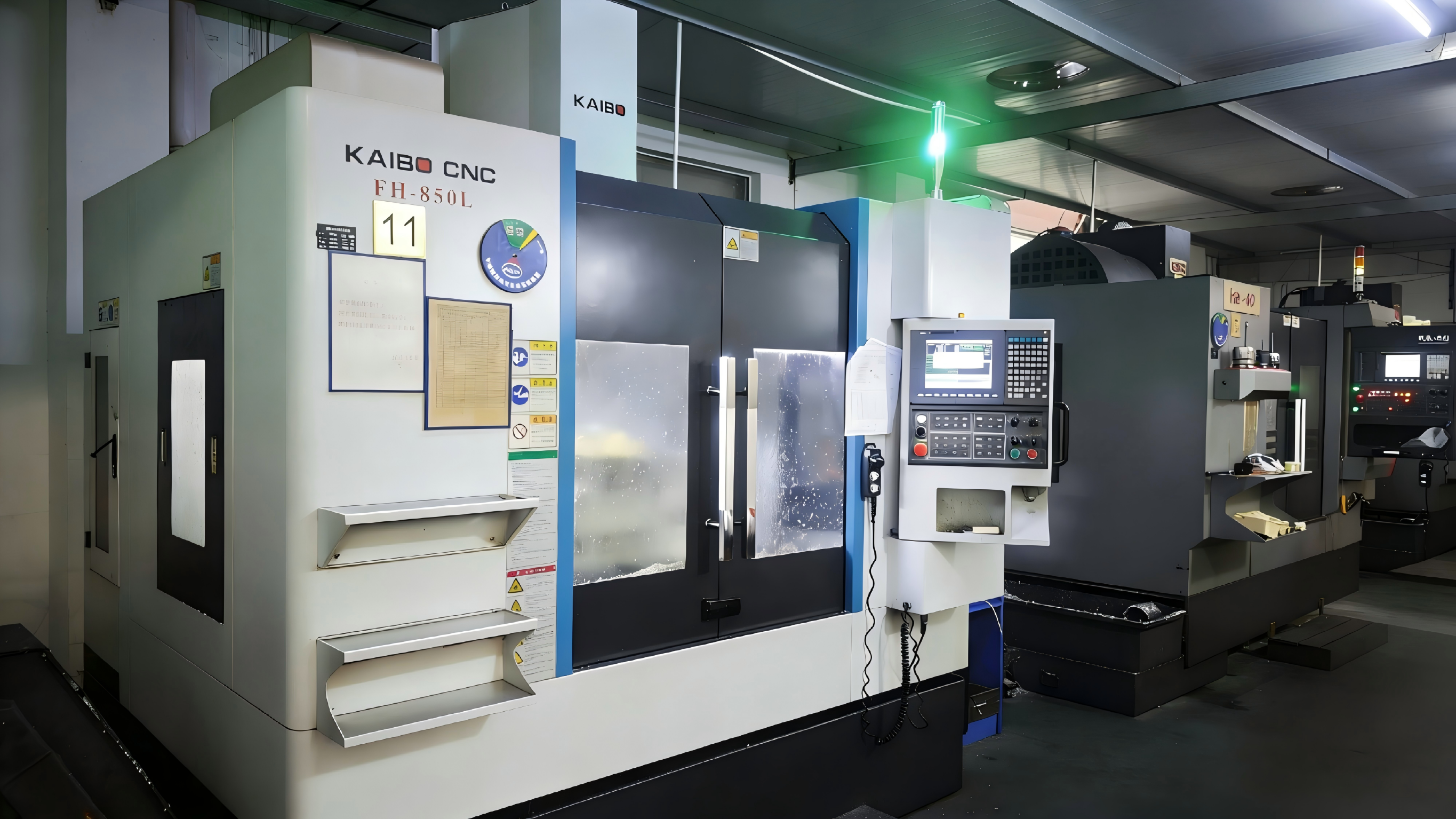
CNC vs. Manual Machining: Quantifying the Precision Gap (±0.005 mm vs. ±0.05 mm)
The precision gap between CNC and manual machining is both measurable and consequential. Industry benchmarks confirm that modern precision CNC systems routinely hold ±0.005 mm tolerances—ten times tighter than the ±0.05 mm typical of even highly skilled manual operations without custom jigs or iterative inspection.
Key differentiators include:
- Tool rigidity compensation: CNC systems apply dynamic offset algorithms to counteract micro-deflections in real time
- Positional repeatability: Per NIST validation, high-end CNC platforms achieve ≤2-micron reproducibility across repeated positioning cycles
- Human factor variability: Manual processes introduce inconsistency through tactile interpretation, fatigue-related judgment shifts, and measurement uncertainty
This documented ±0.045 mm performance differential—illustrated in CNC tolerance comparison data—makes automated precision machining non-negotiable where micronic deviations compromise function, safety, or regulatory compliance.
Unmatched Repeatability and Reduced Human Variance
Precision CNC machining eliminates the variability inherent in manual workflows by replacing subjective decision-making with deterministic, sensor-driven execution. Statistical Process Control (SPC) quantifies this advantage: industries like aerospace and medical devices require a minimum process capability index (Cpk) of 1.67—signifying that 99.994% of output remains within specification limits, with fewer than 6 defects per million opportunities. Achieving this level consistently is unattainable with manual setups, where tactile feedback, operator fatigue, and measurement interpretation introduce unavoidable scatter.
NIST studies show automated CNC workflows reduce operator-induced errors by 92% compared to human-operated machines. While a master machinist may occasionally reach ±0.05 mm manually, precision CNC locks in ±0.005 mm repeatability across thousands of cycles—enabled by encoded toolpaths, live sensor feedback, and autonomous wear compensation. This reliability is critical for high-volume applications such as automotive fuel injectors or orthopedic implants, where functional interchangeability demands absolute consistency. Automated error mitigation also cuts scrap rates by 63%, delivering direct cost savings at scale—without tying quality to individual skill level or shift scheduling.
Complex Geometry Mastery Through Multi-Axis Precision CNC Machining
Today’s most demanding components—turbine blades, cranial plates, optical mounts—feature tight corners, deep undercuts, and organic freeform surfaces that defy conventional 3-axis approaches. Multi-axis precision CNC machining overcomes these challenges by enabling continuous, coordinated motion across multiple rotational and linear axes. This eliminates the need for multiple setups, complex fixturing, and manual repositioning—reducing cumulative error and accelerating throughput.
5‑Axis Simultaneous Machining: Enabling Single‑Setup Production of Aerospace and Medical Components
5-axis simultaneous machining moves the cutting tool and workpiece along five axes concurrently, allowing uninterrupted contouring of complex geometries in a single clamping. For turbine blades and patient-specific implants, this eliminates positional inaccuracies introduced by part remounting—where each re-fixturing adds potential alignment error. By consolidating operations, shops maintain dimensional accuracy within ±0.005 mm—even when machining hard, heat-resistant alloys like titanium and Inconel.
Fewer setups also shorten lead times, lower handling risk, and remove operator-dependent variables—making 5-axis machining indispensable for high-value, low-volume precision manufacturing where first-article correctness and batch-to-batch consistency are paramount.
Scalable Efficiency Without Compromising Precision
Precision CNC machining scales seamlessly from prototype to mass production—without sacrificing dimensional fidelity. Real-time monitoring systems track tool wear, spindle load, and thermal drift, automatically adjusting feed rates, speeds, and offsets to sustain ±0.005 mm tolerances during volume surges. Automated workflows eliminate human variance, enabling reliable 24/7 operation at peak consistency—regardless of batch size.
This integration of intelligence and automation transforms design intent into physical reality with equal rigor whether producing one prototype or ten thousand units. Manufacturers gain cost efficiency and uncompromised quality assurance—ensuring critical specifications remain intact across shifts, suppliers, and production years.
FAQ
What is sub-micron accuracy in CNC machining?
Sub-micron accuracy refers to machining tolerances that measure deviations in dimensions less than one micron. This is achieved through advanced closed-loop control systems in CNC machining.
How does CNC compare to manual machining in terms of precision?
Modern CNC systems routinely achieve tolerances of ±0.005 mm, which is ten times more precise than the ±0.05 mm achievable by manual machining.
What industries depend on precision CNC machining?
Industries such as aerospace, medical devices, and automotive heavily depend on precision CNC machining for critical components that require tight tolerances.
What are the advantages of multi-axis CNC machining?
Multi-axis CNC machining allows for the production of complex geometries in a single setup, eliminating errors from multiple re-fixturings and reducing lead times.
Can precision CNC machining handle large production volumes?
Yes, precision CNC machining is scalable and maintains consistent tolerances even during high-volume production runs.