 Small batches, high standards. Our rapid prototyping service makes validation faster and easier —
  EN
EN

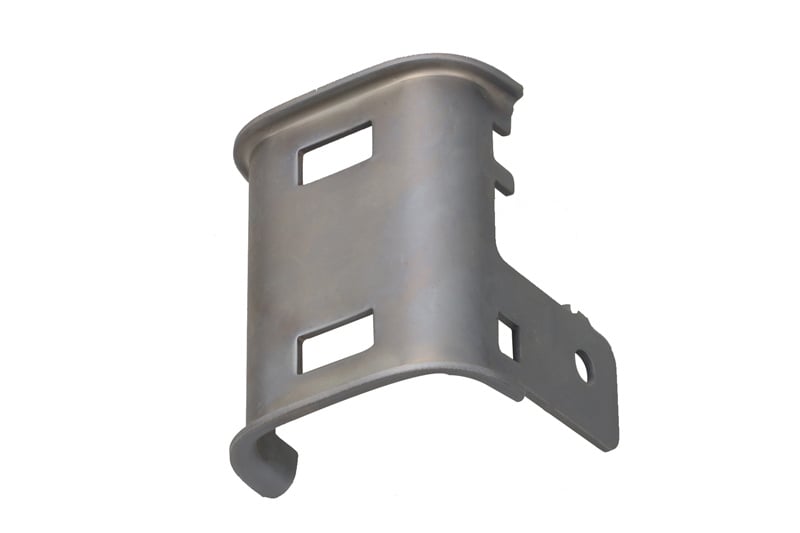
Part Geometry: Why Flat, Repetitive, and Symmetrical Designs Favor Stamping vs Machining
In the stamping vs machining decision, part geometry plays a decisive role. Flat, repetitive, and symmetrical designs align with the high-speed, die-based nature of stamping, enabling rapid production of uniform parts with minimal material waste. Conversely, machining is better suited for complex, deep, or asymmetrical geometries where flexibility and precision are paramount. The following subsections detail how specific geometric attributes—shallow depth, feature density, and bend consistency—drive the choice toward stamping.
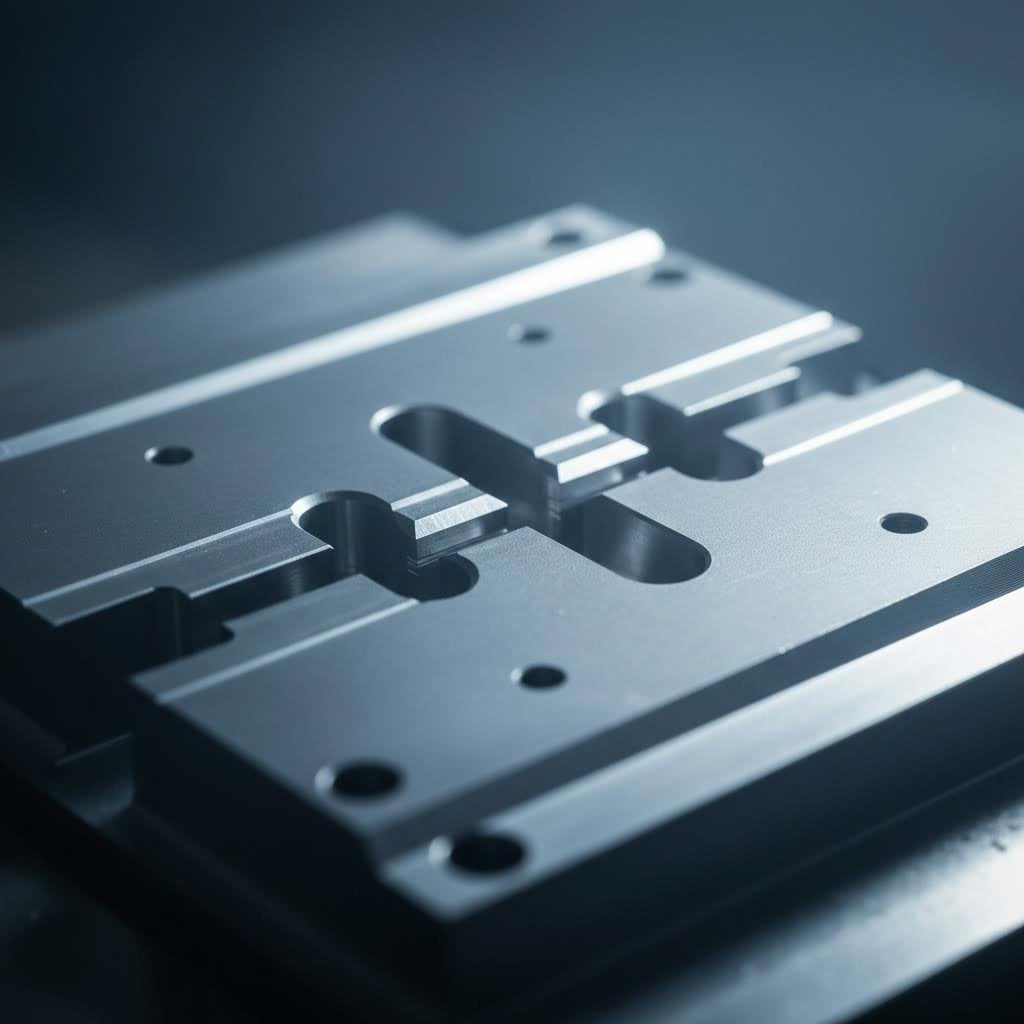
Shallow Depth, High Feature Density, and Nested Layout Efficiency
Shallow-depth parts with multiple features—holes, slots, tabs—benefit decisively from stamping’s ability to produce all features in a single press stroke. While machining requires sequential toolpaths and adds cycle time per feature, stamping embeds high feature density directly into the die, completing flat parts in under a second. This advantage is amplified for symmetric, repetitive designs, where nested strip layouts maximize material utilization. With optimized nesting, scrap can fall below 10%, pushing material utilization above 90% (Manufacturing Efficiency Report, 2022). For large production runs, eliminating individual machining operations per part slashes cost and lead time—making stamping the clear choice for high-volume, flat, feature-rich components. The ability to stamp dozens of identical features across a single sheet—without penalty in cycle time—also supports just-in-time manufacturing, where consistent throughput matters more than one-off flexibility.
Bend Radii, Corner Consistency, and Hole-to-Edge Constraints in Stamping
Bend radii and corner consistency are critical in stamping. The process delivers uniform bend angles and radii across thousands of parts—essential for assemblies requiring precise fit. However, stamping imposes inherent constraints: minimum bend radius is typically 1–2× material thickness to avoid cracking, and hole-to-edge distances must be at least 1.5× thickness to prevent tearing during forming. Machining avoids these limits entirely, enabling sharp internal corners and complex contours—but at sharply higher per-part cost. For symmetrical parts like brackets and enclosures, stamping reliably holds corner radii and hole positions within ±0.005 inches when dies are properly maintained. Designing within these boundaries—using standard bend deduction tables and respecting material grain direction—minimizes springback and dimensional variation in multi-stage operations.
Precision & Tolerance Requirements: Where Stamping vs Machining Delivers Distinct Capabilities
Achievable Tolerances: ±0.005" (Stamping) vs. ±0.001" (CNC Machining)
Achievable tolerances sharply differentiate stamping and machining. CNC machining routinely achieves ±0.001" (0.025 mm) on critical features, enabled by rigid fixturing and multi-axis control. Standard stamping holds ±0.005" (0.127 mm) for flat dimensions; progressive dies in high-volume applications can approach ±0.002". The wider tolerance band stems from die wear, material springback, and press dynamics—not lack of capability. Yet stamping’s repeatability often satisfies engineering requirements without secondary trimming. When sub-±0.002" consistency is mandatory, machining remains essential. But for tolerances ≥±0.005", stamping delivers superior speed and economy.
Springback, Grain Direction, and Cumulative Error in Multi-Stage Stamping
Springback, grain orientation, and cumulative error pose distinct challenges in stamped parts. Elastic recovery after forming shifts dimensions by 0.001–0.003" per bend—depending on material, thickness, and radius. Grain direction further affects accuracy: bending parallel to the grain raises cracking risk, while perpendicular orientation can cause uneven springback. In multi-stage progressive dies, these small deviations accumulate, potentially exceeding ±0.005" across the part. Compensation strategies—including over-bending and simulation-driven die design—mitigate this effect. For high-precision stampings, success hinges on integrating material properties and process sequencing early in engineering. Machining eliminates springback entirely—a decisive advantage for the tightest specs.
Material Formability: How Alloy Choice and Microstructure Determine Stamping Suitability
High-Ductility Alloys (e.g., Al 3003, SS 304, CRCA) and Their Limiting Draw Ratios
Ductility is the primary filter in the stamping vs machining decision. High-ductility alloys—such as aluminum 3003, austenitic stainless steel 304, and cold-rolled close-annealed (CRCA) steel—are engineered for severe plastic deformation. Their formability is quantified by the Limiting Draw Ratio (LDR), representing the maximum blank diameter that can be drawn into a cup without failure. Al 3003 typically achieves an LDR of 2.0–2.2; SS 304 reaches ~2.4 due to its strong work-hardening response. Exceeding a material’s LDR guarantees tearing—regardless of press tonnage or die sophistication. In such cases, machining becomes the only viable option, underscoring why ductility and LDR are not just material traits but hard design constraints guiding process selection.
Grain Flow Effects on Bend Quality, Surface Finish, and Fatigue Resistance
Stamping’s unique advantage lies in preserving—and redirecting—the metal’s internal grain structure. Through cold working, stamping reorients grain flow to follow the part’s contour, unlike machining, which severs grains and exposes brittle endpoints at the surface. This continuous grain path improves bend quality by channeling stress along ductile pathways rather than across fractured boundaries. It also significantly enhances fatigue resistance: cracks initiate and propagate more slowly through uninterrupted grain networks. Stamped components demonstrate 20–30% higher fatigue life than machined equivalents—a decisive factor in cyclical-load applications like automotive suspension and aerospace structural systems.
Design for Manufacturability: Optimizing Parts for Stamping-First Economics and Scalability
A robust design-for-manufacturability (DFM) strategy is the most powerful lever for tilting the economic balance toward stamping. For high-volume production, the goal is to engineer parts that fully exploit stamping’s speed and repeatability while minimizing secondary operations. Core to this is part consolidation: designing a single, slightly more complex stamped component to replace multiple machined parts and fasteners. This eliminates assembly labor, hardware costs, and tolerance stack-up across joints. Integrating tabs, lances, and extruded holes directly into the blank enables snap-fit or riveted connections—bypassing separate drilling or threading steps typical in CNC machining. This isn’t just about reducing part count—it’s a system-level shift that leverages stamping’s inherent capabilities, often cutting total component cost by 20–50% for runs exceeding 50,000 units.
The most impactful DFM strategies amplify stamping’s scalability. Symmetrical parts simplify die design, balance forming forces, and enable efficient progressive layouts—boosting strip utilization. Material efficiency is equally vital: staggered or head-to-toe nesting patterns can lift utilization above 75%, directly lowering per-part cost. Standardizing features—corner radii, bend deductions—across product families reduces tooling lead times and warehousing complexity. Most critically, designing for single-stroke or minimal-stage completion avoids inter-process handling—the largest source of cost and variability in precision machining. Early prototyping and finite element simulation are indispensable for validating these designs, identifying risks like tearing or thinning before committing to hardened tooling—preventing costly rework and delays.
FAQs
What is the main factor in choosing between stamping and machining?
The main factor is the part geometry. Flat, repetitive, and symmetrical designs with high feature density favor stamping due to its speed and efficiency, while complex, deep, or asymmetrical parts requiring tight tolerances are better suited for machining.
Why does stamping have limits on bend radii and hole-to-edge distances?
Stamping imposes these limits to avoid material cracking during forming and ensures durability. Designing within these constraints using guidelines like bend deduction tables optimizes outcomes.
What tolerances can stamping achieve compared to CNC machining?
Standard stamping achieves tolerances around ±0.005", while CNC machining delivers ±0.001" precision. Progressive dies can push stamping tolerances closer to ±0.002" for flat dimensions in high-volume production.
How does material ductility affect the stamping process?
Highly ductile materials like Al 3003 and SS 304 are ideal for stamping due to their ability to undergo severe deformation without failure, measured by their Limiting Draw Ratio (LDR).
What is the role of grain flow in stamping?
Stamping preserves and redirects grain flow to follow the part’s contour, enhancing bend quality, surface finish, and fatigue resistance compared to machining, which severs grains.
Table of Contents
- Part Geometry: Why Flat, Repetitive, and Symmetrical Designs Favor Stamping vs Machining
- Precision & Tolerance Requirements: Where Stamping vs Machining Delivers Distinct Capabilities
- Material Formability: How Alloy Choice and Microstructure Determine Stamping Suitability
- Design for Manufacturability: Optimizing Parts for Stamping-First Economics and Scalability
- FAQs