 Small batches, high standards. Our rapid prototyping service makes validation faster and easier —
  EN
EN

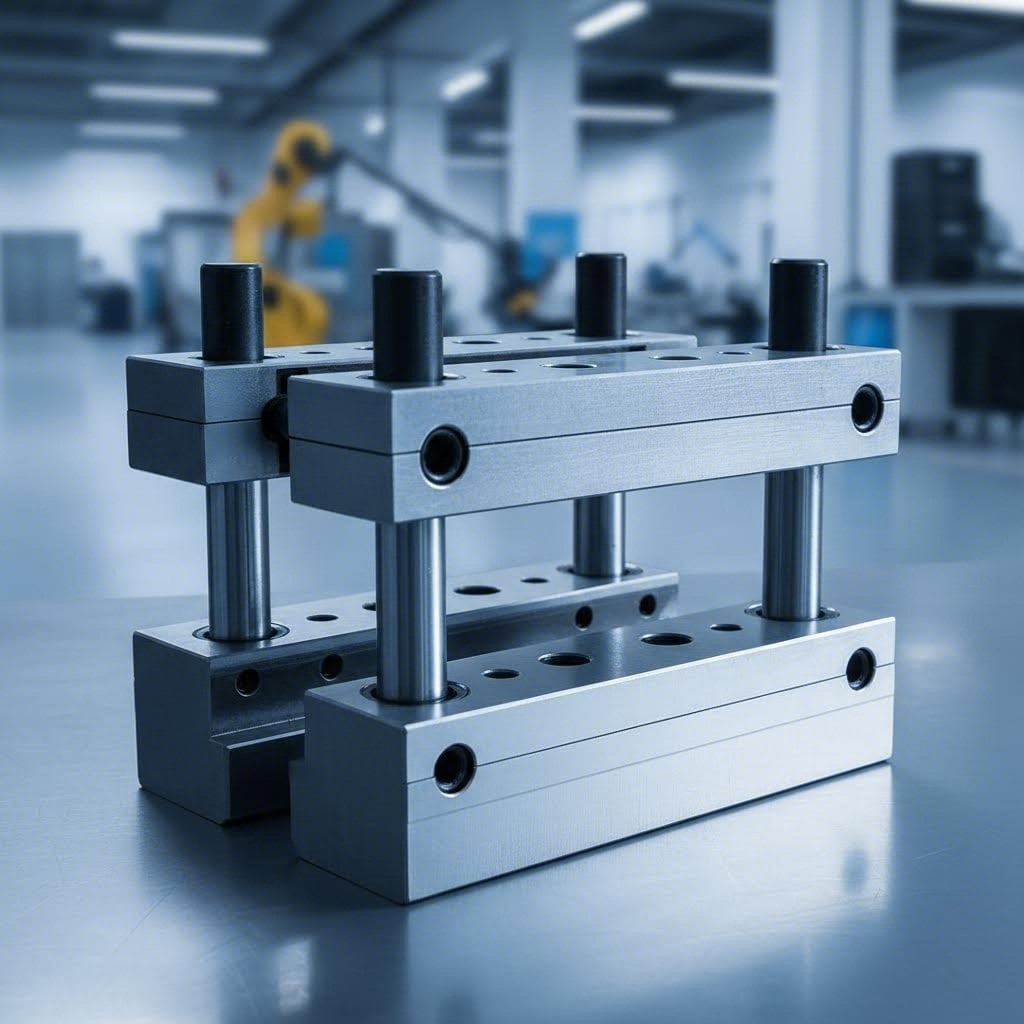
Understanding the Strength and Weight Balance Fundamentals
Why Strength-to-Weight Ratio Is the Core Metric for Structural Efficiency
The strength-to-weight ratio is the definitive metric for structural efficiency—quantifying how much load a material can support per unit mass. It directly governs fuel consumption, payload capacity, and lifecycle economics across industries. In automotive chassis design, reducing frame weight by just 10 kg improves fuel efficiency by 2–3% without compromising crash performance (Automotive Lightweighting Consortium 2022). In aerospace, each kilogram saved in airframe weight cuts fuel burn by ~3,000 liters over service life—making this ratio indispensable for trade-offs between safety margins, cost, and dynamic response. It prevents both over-engineering (with heavy, inefficient materials) and under-engineering (with lightweight but brittle alternatives), anchoring decisions in functional performance rather than isolated properties.

The Physics of Specific Strength: Material Limits and Real-World Constraints
Specific strength—tensile strength divided by density—represents the theoretical upper bound of lightweight potential. Titanium alloys, for example, achieve >200 kN·m/kg, dwarfing mild steel’s ~50 kN·m/kg. Yet real-world viability depends on more than lab values: microstructural flaws from forging or welding can reduce fatigue life by up to 30% (Structures Integrity Report 2023); corrosion, thermal cycling, and notch sensitivity degrade performance over time; and anisotropy in rolled sheets introduces directional variability in strength. These constraints compel engineers to move beyond idealized metrics—incorporating redundant load paths, hybrid material systems, or protective design derating—to ensure field reliability matches theoretical promise.
Strategic Material Selection for Optimal Strength and Weight Balance
Comparing Aluminum, Stainless Steel, and Titanium Alloys Across Key Performance Metrics
Optimal strength and weight balance begins with evaluating specific strength—the yield strength-to-density ratio—alongside stiffness, fatigue resistance, and manufacturability. Aluminum 7075-T6 (density: 2.8 g/cm³; yield strength: ~500 MPa) delivers strong specific strength (179 MPa·cm³/g) and cost efficiency for moderate-load applications. Stainless steel 304 (8.0 g/cm³; ~205 MPa) offers high stiffness and corrosion resistance but low specific strength (26 MPa·cm³/g), limiting its use where mass is critical. Titanium Ti-6Al-4V (4.4 g/cm³; >880 MPa) leads with ~200 MPa·cm³/g—yet its premium cost and machining complexity require justification through lifecycle gains.
| Material (typical alloy) | Density (g/cm³) | Yield Strength (MPa) | Specific Strength (MPa·cm³/g) | Relative Cost |
|---|---|---|---|---|
| Aluminum (7075‑T6) | 2.8 | 500 | 179 | Low |
| Stainless Steel (304) | 8.0 | 205 | 26 | Medium |
| Titanium (Ti‑6Al‑4V) | 4.4 | 880 | 200 | High |
Specific strength = yield strength / density; values reflect common commercial variants.
Stiffness-to-weight and fatigue behavior further differentiate suitability: aluminum excels where cost-sensitive, dynamic loading dominates; stainless steel remains irreplaceable where dimensional stability and environmental resilience are non-negotiable; titanium justifies its expense only when ultimate strength-to-weight and long-term durability converge—such as in critical rotating or high-cycle components.
Matching Material Choice to Application Demands: Aerospace, Automotive, and Industrial Use Cases
Sector-specific priorities drive material selection—not datasheet maxima. In aerospace, where every 100 kg saved yields ~1% fuel reduction, titanium is standard for landing gear and engine mounts despite higher upfront cost. Automotive engineering increasingly adopts high-strength aluminum for body-in-white and suspension parts: a 10% vehicle mass reduction typically improves fuel economy by 6–8% (2021 industry analysis). In heavy industry, stainless steel dominates chemical processing tanks and mining equipment where corrosion resistance and rigidity outweigh mass concerns. A 2024 case study demonstrated that replacing stainless steel structural beams in an overhead crane with an optimized aluminum alloy reduced total weight by 35% while maintaining rated load capacity—proving that optimal material choice emerges from system-level performance requirements, not isolated property rankings. Cross-functional alignment between design, procurement, and operations is essential to weigh lifecycle value against initial investment.
Design Techniques That Enhance Strength and Weight Balance
Topology Optimization and Hollow Structures for Mass Reduction Without Sacrificing Rigidity
Computational topology optimization reshapes components by removing material from low-stress regions—yielding organic, load-path-driven geometries that cut weight by 30–60% while preserving or improving stiffness. Enabled by additive manufacturing, it has moved from simulation to production: one aerospace manufacturer achieved a 15% lighter landing gear bracket with a 20% gain in fatigue life using this method (2023). Complementing this, hollow structures—like tubular or cored sections—leverage geometry to maximize bending and torsional rigidity per unit mass. A hollow tube can retain over 90% of the bending stiffness of a solid bar at significantly lower weight. Integrating lattice infills within these voids further suppresses buckling without adding meaningful mass—transforming passive voids into active structural contributors.
Reinforcement Patterns — Ribs, Webs, and Beam Integration for Targeted Load Distribution
Instead of uniform thickening, targeted reinforcement aligns mass precisely with stress flow. Ribs and webs dramatically increase flexural stiffness—often by 10–20× compared to flat panels of equal mass—by raising the section’s moment of inertia. This principle appears in engine blocks, battery enclosures, and consumer electronics housings. Similarly, beam integration uses optimized cross-sections (e.g., I-beams or box sections) to carry bending and torsion efficiently: an I-beam chassis component can weigh up to 20% less than a solid rectangular equivalent performing the same function. Success hinges on mapping primary stress vectors—ensuring every gram resists applied loads rather than contributing “dead weight.” This precision elevates structural efficiency from incremental improvement to fundamental rethinking of how force moves through a part.
FAQ
What is the strength-to-weight ratio?
The strength-to-weight ratio measures the amount of load a material can support per unit mass. It is a key factor in structural efficiency and impacts fuel consumption and lifecycle economics across industries.
How does specific strength differ from strength-to-weight ratio?
Specific strength refers to tensile strength divided by density. It is a theoretical upper bound for lightweight potential, whereas strength-to-weight ratio factors in practical constraints and application dynamics.
Which material has the highest specific strength among Aluminum, Stainless Steel, and Titanium?
Titanium alloys, specifically Ti-6Al-4V, have the highest specific strength (~200 MPa·cm³/g) among these options.
What are common applications for Titanium in aerospace?
Titanium is used for landing gear, engine mounts, and rotating components due to its high strength-to-weight ratio and corrosion resistance.
What is topology optimization?
Topology optimization is a computational design technique that reshapes components by removing material from low-stress regions to reduce weight without sacrificing rigidity.