 Small batches, high standards. Our rapid prototyping service makes validation faster and easier —
  EN
EN

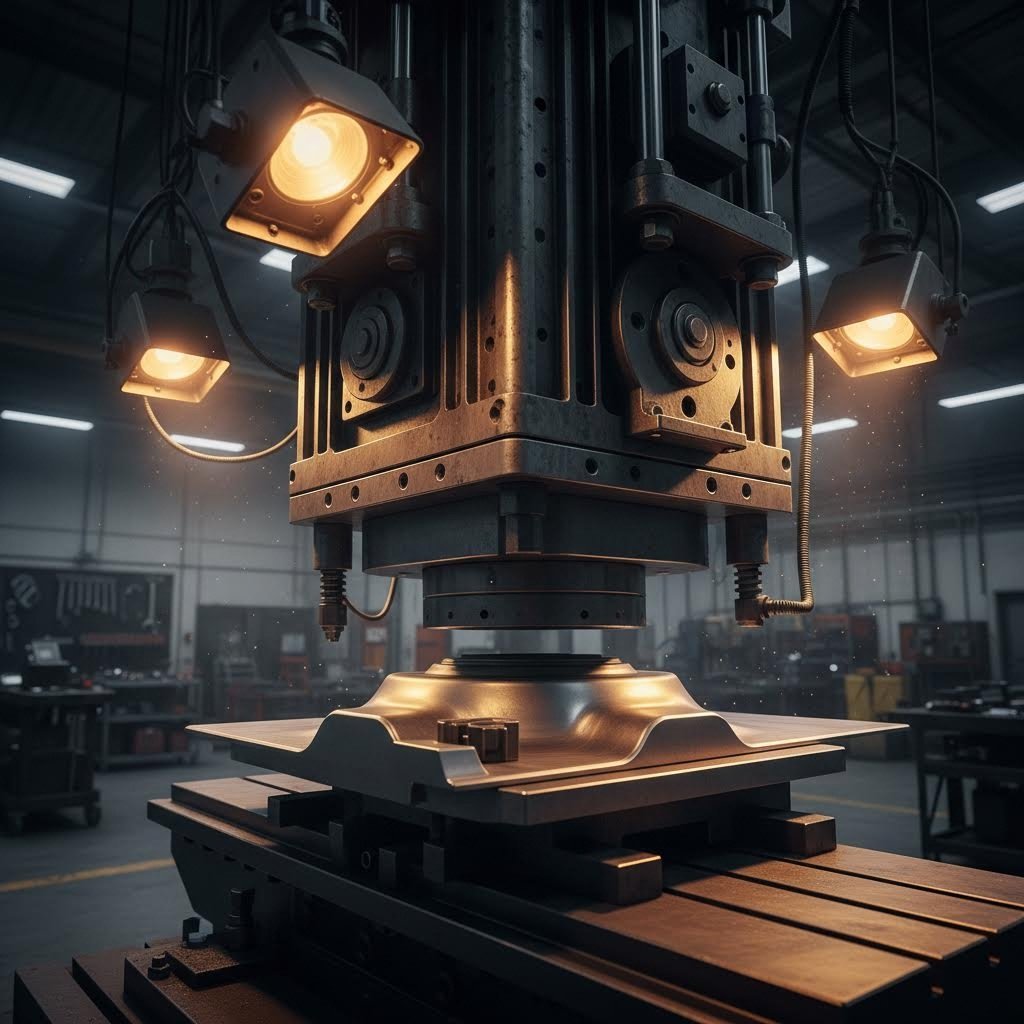
Apply Design for Assembly (DFA) Principles to Metal Parts Assembly
Minimize part count and standardize components to streamline metal parts assembly
Reducing part count is the most impactful DFA lever in metal parts assembly. Each added component introduces handling, alignment, and fastening steps—multiplying error risk and cycle time. Engineers should rigorously question whether a part must move, require a different material, or be separable for service. Consolidating brackets, covers, and mounting features into a single formed sheet metal piece—such as integrating tabs, flanges, or standoffs directly into a stamped part—can cut assembly steps by up to 50% (DFA benchmarking studies, 2023). Standardizing fasteners, hole patterns, and connector layouts across product families further simplifies training, tooling, and logistics. A leading manufacturer reduced wiring errors by 43% after unifying fastening patterns (SAE 2023 Assembly Efficiency Report). Fewer unique parts lower inventory complexity, accelerate operator learning, and improve throughput—turning design decisions into measurable production gains.
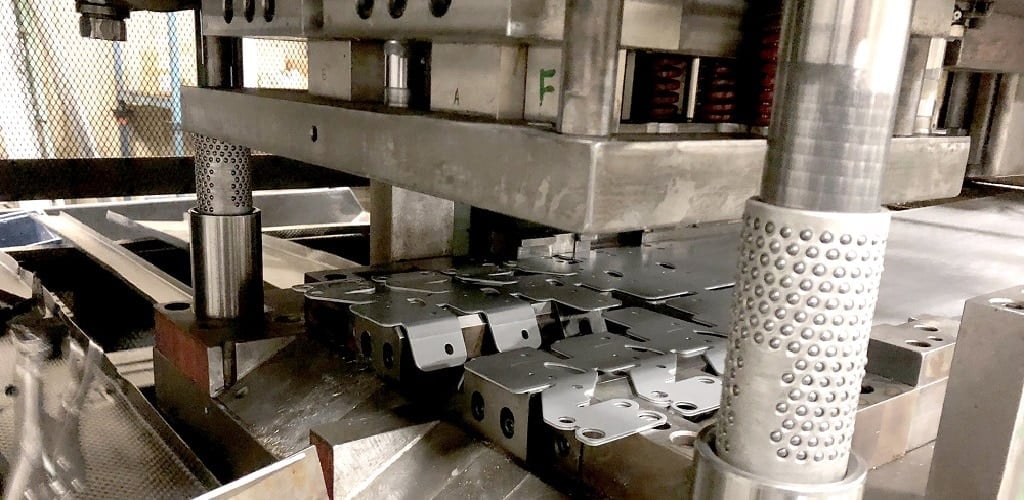
Optimize part orientation and self-aligning geometry in sheet metal assembly design
Designing for foolproof orientation prevents costly misassembly. Sheet metal components should incorporate intentional asymmetry—such as keying tabs, offset holes, or non-identical corner radii—or clearly defined symmetry that makes incorrect placement physically impossible. Self-aligning features like chamfers, lead-ins, pilot holes, and tapered slots guide mating parts into position without manual adjustment. In high-volume EV production, integrated alignment features reduced assembly defects by 31% (2023 manufacturing data). These geometries also support collaborative robotics, where consistent, repeatable part positioning is essential. For example, a slight taper on a bracket’s slot enables smooth tab insertion, while a hemmed edge provides a positive stop—eliminating reliance on external fixtures. Embedding such features early in design shortens cycle times, cuts rework, and enhances process predictability.
Integrate Self-Locating and Self-Fixturing Features for Reliable Metal Parts Assembly
Use tab-and-slot, hemming, and press-fit features to eliminate manual alignment in metal parts assembly
Self-locating and self-fixturing features embedded directly into metal parts reduce or eliminate manual alignment, clamping, and secondary tooling—improving repeatability, throughput, and error-proofing. Three proven techniques deliver these benefits:
- Tab-and-slot: Laser-cut tabs engage matching slots to hold sheet metal parts in precise registration before welding or fastening. This self-fixturing method cuts handling time and ensures consistent alignment without clamps.
- Hemming: Folding a flange over an adjacent edge creates a rigid, pre-aligned joint. Widely used in automotive body panels, hemming stiffens assemblies and serves as a location reference for downstream operations.
- Press-fit / interference fits: Pressing a pin, stud, or bearing into a slightly undersized hole forms a secure, aligned joint without screws or adhesives. The tight fit eliminates secondary fasteners, reduces part count, and maintains positional integrity during service.
By designing these features into parts—not added later—manufacturers achieve faster, more accurate, and inherently mistake-proofed assembly.
Select Fastening Methods That Maximize Speed and Consistency in Metal Parts Assembly
Compare rivets, self-clinching fasteners, clinching, and bolts for repeatability and throughput in metal parts assembly
Fastening method selection critically influences line speed, joint reliability, and long-term serviceability in metal parts assembly. Rivets, self-clinching fasteners, clinching, and bolts differ significantly in repeatability (joint consistency) and throughput (joints per minute). Benchmark data shows automated riveting and clinching achieve first-pass yield rates above 99.5%, whereas bolted joints often require rework due to torque scatter and alignment sensitivity.
| Fastening Method | Repeatability | Typical Throughput | Key Enabler |
|---|---|---|---|
| Rivets | High; consistent clamp force with pneumatic/hydraulic tools | 40–60 rivets/min | Automated feed systems |
| Self-clinching fasteners | High; press-in installation ensures flush, repeatable seating | 30–50 fasteners/min | Precision press tooling |
| Clinching | Very high; uniform interlock without consumables | 50–100 joints/min | Servo-driven presses |
| Bolts | Moderate; torque-tension variation common | 10–20 bolts/min | Torque-controlled tools |
Self-clinching fasteners and clinching both eliminate nuts, washers, and secondary hardware—reducing part count and handling steps. Clinching excels in continuous sheet metal lines: it requires no consumables and forms a joint in one press stroke. Bolts offer reusability but demand precise hole alignment and torque control—trade-offs that slow throughput. For high-volume production, riveting and clinching deliver the strongest balance of speed, consistency, and cost efficiency.
Control Tolerance Stack-Up and Tooling Clearance to Reduce Assembly Variability
Tolerance stack-up—the cumulative effect of individual part variations—is a leading cause of fit issues in metal parts assembly. Even when every component meets its drawing tolerance, combined deviations can cause binding, misalignment, or partial engagement requiring rework. Conducting a statistical stack-up analysis early in design typically yields an assembly tolerance up to 37% smaller than worst-case calculation—enabling more economical manufacturing without compromising functional reliability. Apply tight tolerances selectively: only to features critical to assembly fit or motion, such as bearing seats, alignment pins, and sealing surfaces. For non-critical interfaces, use standard tolerances to avoid unnecessary cost. Define clear datum surfaces and apply geometric dimensioning and tolerancing (GD&T) to communicate functional requirements precisely—without over-specifying. Equally vital is intentional tooling clearance: the controlled gap between mating parts. Proper clearance ensures smooth, low-force assembly while accommodating fabrication variance and thermal expansion. Validate clearance values during prototyping and tune fixtures to maintain consistency across production runs. Aligning tolerance strategy with deliberate clearance design removes “adjust-at-assembly” guesswork—cutting scrap, rework, and variability while delivering repeatable, right-first-time fits.
FAQs on Applying Design for Assembly Principles
What is Design for Assembly (DFA)?
Design for Assembly refers to engineering practices aimed at simplifying the assembly process of products. This involves minimizing the number of parts, standardizing components, and incorporating features that reduce handling and alignment time.
How does minimizing part count impact production?
Minimizing part count reduces complexity, lowers error risks, and streamlines training and logistics. Additionally, it leads to reduced inventory costs and faster throughput during production.
What are self-locating and self-fixturing features?
Self-locating and self-fixturing features, such as tab-and-slot designs, hemming, and press-fit joints, are integrated into metal parts to simplify alignment, reduce tooling needs, and enhance repeatability during assembly.
Which fastening method is best for high-volume metal assembly?
Fastening methods like riveting and clinching are ideal for high-volume production due to their speed, consistency, and minimal requirement for secondary hardware.
What is tolerance stack-up and how is it controlled?
Tolerance stack-up refers to the combined effects of individual part variations on final assembly fit. Conducting a statistical stack-up analysis and applying tight tolerances selectively help control it effectively.
Table of Contents
- Apply Design for Assembly (DFA) Principles to Metal Parts Assembly
- Integrate Self-Locating and Self-Fixturing Features for Reliable Metal Parts Assembly
- Select Fastening Methods That Maximize Speed and Consistency in Metal Parts Assembly
- Control Tolerance Stack-Up and Tooling Clearance to Reduce Assembly Variability
- FAQs on Applying Design for Assembly Principles