 Small batches, high standards. Our rapid prototyping service makes validation faster and easier —
  EN
EN

Effective Post-Weld Cleaning Methods for Welded Parts Appearance
Mechanical Cleaning: Brushing, Grinding, and Polishing Techniques
Mechanical cleaning physically removes surface oxides, spatter, and discoloration using abrasive tools—making it the most direct method to enhance welded parts appearance. Stainless steel wire brushes designed specifically for the base material prevent cross-contamination and rust initiation. Non-ferrous grinding wheels and abrasive discs smooth weld beads and blend them seamlessly into the base metal. However, aggressive grinding risks gouging or smearing the oxide layer—trapping contaminants and compromising corrosion resistance. Polishing with progressively finer grits achieves a bright, reflective finish but requires careful thermal control to avoid re-oxidation. For aluminum, dedicated non-ferrous tools are essential to prevent embedded iron particles that trigger galvanic corrosion. While mechanical methods deliver strong visual uniformity, they often leave a work-hardened surface layer that requires subsequent chemical treatment to fully restore passive film integrity. These techniques remain cost-effective and widely adopted where aesthetics are prioritized over long-term functional corrosion performance.
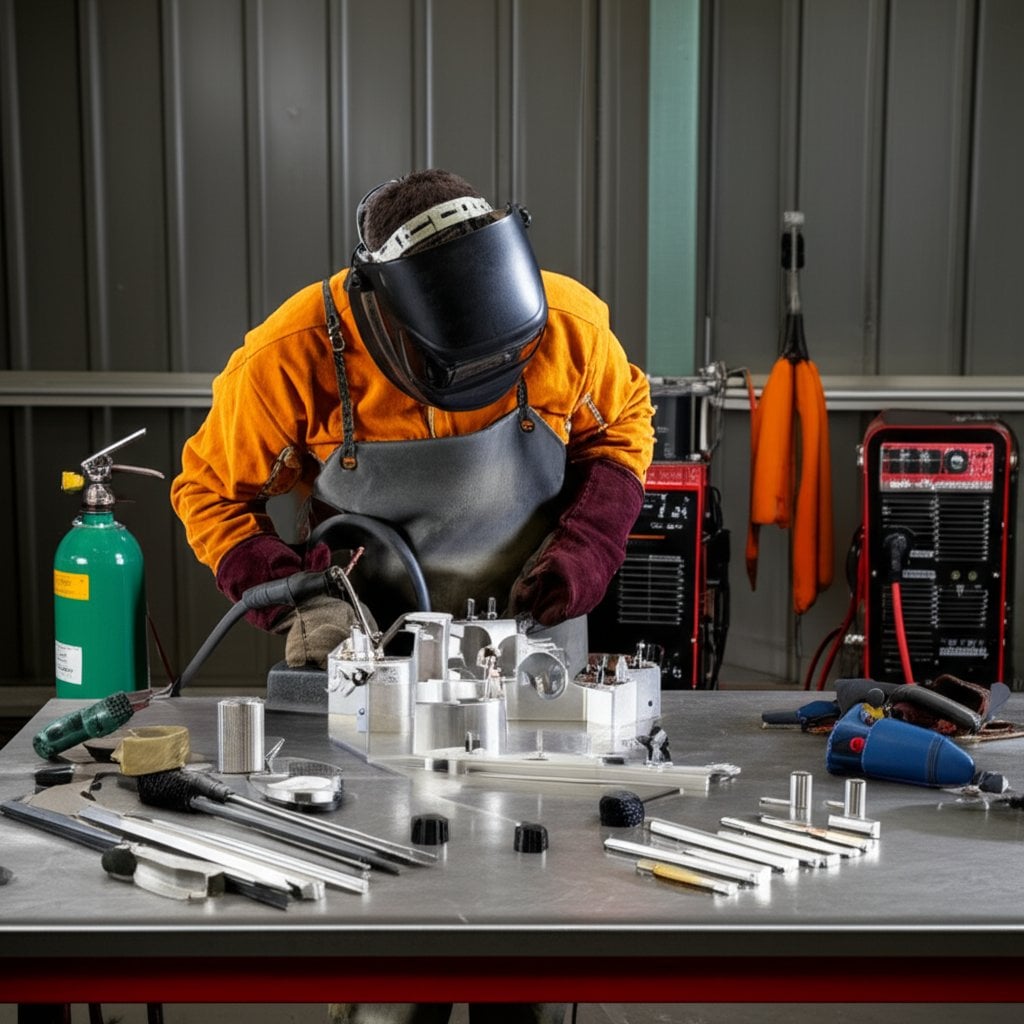
Chemical and Electrochemical Cleaning: Acid Pickling vs. Electropolishing
Acid pickling uses acidic pastes or solutions—commonly nitric or hydrofluoric acid—to dissolve heat tint, oxides, and weld byproducts. It restores surface chemistry but must be followed by passivation to rebuild the protective chromium oxide layer critical for stainless steel corrosion resistance. Applied as gels or immersion baths, pickling accommodates large or complex assemblies but demands strict safety protocols for hazardous chemical handling. Electropolishing, in contrast, is an electrochemical process that uniformly removes a thin, controlled layer of metal—smoothing micro-roughness and eliminating embedded contaminants. The result is a brighter, more reflective surface with superior stain resistance, cleanability, and fatigue performance due to micro-crack removal. Because it yields a consistent, contamination-free finish, electropolishing is the preferred method for sanitary applications in food, pharmaceutical, and medical device manufacturing. The choice between pickling and electropolishing hinges on finish requirements, budget, and functional priorities—not just welded parts appearance, but also durability and hygiene compliance.
Ultrasonic and Solvent-Based Cleaning for Hydrocarbon and Coolant Residue Removal
Ultrasonic cleaning leverages high-frequency sound waves in a liquid bath to generate cavitation bubbles that implode and dislodge tightly adhered oils, coolants, and polishing compounds—especially from crevices, blind holes, and intricate weld geometries unreachable by manual methods. Solvent-based cleaning—using degreasers or vapor degreasing—dissolves organic residues without abrasion, but solvent selection is critical: incompatible formulations may leave film residues or attack the substrate. Final cleanliness is essential for appearance, as residual hydrocarbons can carbonize during post-weld heat treatment or interfere with coating adhesion, causing localized discoloration or blistering. A combined approach—ultrasonic agitation followed by solvent rinsing—often delivers optimal results for complex parts. Thorough water rinsing and rapid drying prevent water spots or flash rusting. Modern aqueous ultrasonic systems incorporate corrosion inhibitors and low-VOC detergents, balancing surface quality, environmental compliance, and material compatibility—practices now standard in aerospace, medical device, and high-purity industrial sectors.
Preventing Surface Degradation to Preserve Welded Parts Appearance
Oxidation Control in Stainless Steel and Aluminum Welds
Oxidation begins instantly on hot metal exposed to air—degrading welded parts appearance and forming a weak, porous boundary layer that traps contaminants. On stainless steel, chromium-depleted heat tint appears as blue, gold, or rainbow discoloration; this layer reduces pitting corrosion resistance by up to 30% (AWS Welding Handbook, 2023). Prevention starts at the root: back purging with argon or nitrogen eliminates interior discoloration in pipe welds. For aluminum, the native oxide melts at 2,063 °C—far above its 660 °C melting point—so thorough mechanical oxide removal via dedicated stainless-steel brushing immediately before welding is essential. Using alloy-specific brushes prevents cross-contamination. Post-weld, citric or nitric acid passivation removes free iron and restores a uniform, chromium-rich surface—locking in both corrosion resistance and the intended aesthetic finish.
Heat Input Management and Shielding Gas Optimization to Minimize Discoloration
Excessive heat input is the primary driver of thick, adherent heat tint on stainless welds. Keeping interpass temperature below 150 °C and limiting individual bead thickness to ≤3 mm significantly curbs oxidation. Research from the Edison Welding Institute (2022) shows that reducing heat input by 20% cuts the color-affected zone nearly in half. Pulsed MIG and pulsed TIG processes deliver precise energy control—maintaining penetration while minimizing thermal distortion and discoloration. Shielding gas composition directly influences oxide formation: for stainless steel, pure argon yields the brightest finish, whereas argon-CO₂ or argon-O₂ blends risk carbon pickup and slight discoloration. On aluminum, pure argon minimizes soot-like smut compared to argon-helium blends. Extending protection with trailing shields or wide-aperture gas lenses ensures shielding continues until the weld cools below 300 °C. Maintaining stable flow rates—15–20 L/min for argon—prevents turbulence-induced air entrainment that mars surface quality.
Equipment and Process Controls for Consistent Welded Parts Appearance
Tool Calibration and Maintenance to Eliminate Cosmetic Defects (e.g., Milky-White Residue)
A flawless welded parts appearance depends on rigorous tool calibration and proactive maintenance. Milky-white residue—a common cosmetic flaw on stainless steel—typically stems from inconsistent shielding gas flow or contaminated torch nozzles and diffusers. Weekly calibration of gas flow meters, along with routine cleaning of contact tips and gas diffusers, eliminates this defect at its source. Tight control of welding parameters—amperage, voltage, and travel speed—stabilizes heat input, reducing oxidation and discoloration. Facilities implementing structured calibration and maintenance schedules reduced surface defects by 47%, according to a 2023 American Welding Society study. Embedding these practices into standard operating procedures not only ensures repeatable visual quality but also extends service life and supports long-term performance integrity of the welded assembly.
FAQs
Why is mechanical cleaning essential for welded parts appearance?
Mechanical cleaning effectively removes surface oxides and discoloration, creating a visually uniform finish. It’s widely used where aesthetics are prioritized over long-term corrosion resistance.
When should electropolishing be preferred over acid pickling?
Electropolishing is ideal for applications requiring a bright, contamination-free finish, superior stain resistance, and hygiene compliance, such as food and medical industries.
How does ultrasonic cleaning improve surface quality?
Ultrasonic cleaning dislodges tightly adhered residues using cavitation from sound waves, making it particularly effective for intricate geometries and crevices.
What methods minimize discoloration in stainless steel welds?
Minimizing heat input, optimizing shielding gas composition, and using processes like pulsed MIG/TIG significantly reduce discoloration and oxidation.
What causes milky-white residue on stainless steel welds?
Milky-white residue typically stems from inconsistent shielding gas flow or contamination in torch nozzles and diffusers. Regular calibration and cleaning prevent this defect.
Table of Contents
- Effective Post-Weld Cleaning Methods for Welded Parts Appearance
- Preventing Surface Degradation to Preserve Welded Parts Appearance
- Equipment and Process Controls for Consistent Welded Parts Appearance
-
FAQs
- Why is mechanical cleaning essential for welded parts appearance?
- When should electropolishing be preferred over acid pickling?
- How does ultrasonic cleaning improve surface quality?
- What methods minimize discoloration in stainless steel welds?
- What causes milky-white residue on stainless steel welds?