 Small batches, high standards. Our rapid prototyping service makes validation faster and easier —
  EN
EN

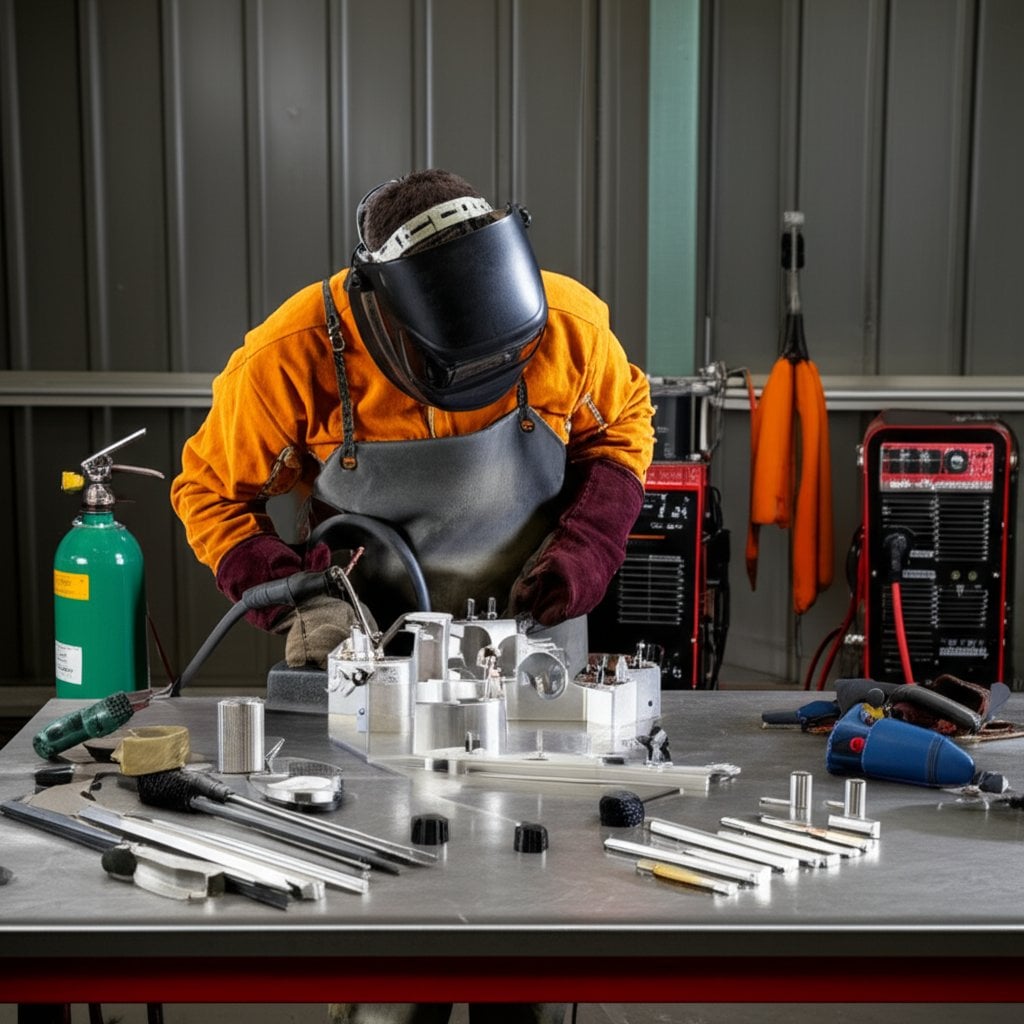
Standardize Execution with Rigorous WPS Adherence
Achieving weld consistency across multiple operators demands more than simply issuing the same Welding Procedure Specification. Even when every welder works from an identical WPS, subtle differences in interpretation, technique, and real-time decision-making can generate significant variation in joint quality. The following subsections explain why these gaps persist and how rigorous enforcement of the WPS as an objective boundary closes them.
Why Identical WPSs Still Yield Variable Results Across Operators
A WPS provides a written baseline, but human execution always introduces micro-variations. One operator may hold a slightly different travel angle, another may pause at the weld stop, and a third might subconsciously adjust heat input when the arc sounds “wrong.” These small deviations—often within the allowable range—accumulate into inconsistent penetration, profile, and mechanical properties. Without a digital lock on critical parameters, the WPS becomes a guideline rather than a fence. Research shows that 73% of non-conformance in structural steel fabrication stems from inconsistent technique (AWS D1.1 audit data, 2023). In practice, identical documents can still produce a 20–30% swing in weld bead uniformity across a shift, proving that procedural consistency alone does not guarantee execution consistency.
How WPS Defines Objective Boundaries for Technique, Parameters, and Materials
A well-constructed WPS translates engineering intent into clear, measurable limits: amperage, voltage, travel speed, electrode type, preheat temperature, and interpass cleaning. By defining these as numeric ranges rather than prose descriptions, the WPS removes subjective judgment. For example, a WPS might specify 130–150 A, 18–22 V, and a travel speed of 4–6 inches per minute, leaving no room for operator preference. When these boundaries are locked into welding software, the machine itself enforces compliance—the arc extinguishes if parameters stray outside the window. This transforms the WPS from a paper reference into an active control system, ensuring that every operator, regardless of experience, operates within the same verified envelope. The result is a process where the procedure, not the person, dictates the weld.
Case Study: ASME IX-qualified shop reduced weld rework by 62% after enforcing WPS lockout in welding software
A structural steel fabricator with ASME Section IX certification faced a persistent rework rate of 11% on full-penetration groove welds, driven by operator-to-operator variation despite following the same WPS. The company integrated a welding software platform that enforced a hard lockout on all critical parameters—amperage, voltage, and travel speed—and prevented arc initiation if the pre-set range was violated. Welders could no longer override the machine settings. After six months, rework dropped to 4.2%, a 62% reduction, and the rework costs fell by approximately $175,000 annually. The key takeaway was not that the WPS changed, but that the system removed the human ability to drift outside the validated window, directly linking procedural rigor to measurable quality gains.
Bridge Human Variability Through Targeted Welder Training and Coaching
Inconsistent technique accounts for 73% of non-conformance in structural steel fabrication
Human variability in technique is the single largest contributor to failed inspections, directly undermining weld consistency. Even when operators follow the same procedure, subtle differences in travel speed, arc length, and torch angle accumulate, creating hidden defects. Targeted welder training addresses this by isolating the specific motor skills that cause deviation. By converting subjective “feel” into measured, repeatable actions, training programs ensure that each operator produces joints that meet identical quality standards. The payoff is a direct reduction in non-conformance and a measurable improvement in structural integrity.
Structured training + real-time technique coaching close competency gaps faster than ad-hoc supervision
Ad-hoc supervision relies on sporadic corrections that rarely build lasting competence. Structured training, combined with real-time coaching, accelerates skill development by focusing on measurable outcomes.
- Personalized skill mapping identifies each welder’s specific technique gaps, eliminating wasted effort on areas already mastered.
- Immediate feedback loops—via digital arc monitors or mentor observation—correct errors in the moment, preventing bad habits from forming.
- Standardized progression milestones ensure that competency is achieved and verified before an operator moves to production work.
- Continuous competency tracking provides objective data, allowing supervisors to intervene before variance affects weld consistency.
This approach replaces guesswork with data-driven development, shrinking the time from novice to reliable, consistent welder by over 40% compared to informal oversight.
Enable Objective Assessment with Integrated Pre-, During-, and Post-Weld Quality Checks
Why visual inspection alone misses 41% of critical underbead defects
Visual inspection after welding remains the most common quality gate, yet it consistently fails to reveal subsurface flaws. Industry weld audits have documented that up to 41% of critical underbead defects—such as lack of fusion, cracks, or porosity—go undetected when operators rely solely on visual examination. Human eyes cannot peer beneath the surface, and fatigue or inconsistent lighting further erode reliability. The gap between what a welder perceives and what actually exists undermines weld consistency, especially when multiple operators interpret acceptance criteria differently. An integrated approach that layers pre-weld preparation checks, in-process monitoring, and post-weld verification catches the defects that visual inspection alone overlooks, building objective evidence across the entire weld lifecycle.
How weld contour gauges and digital arc monitoring convert subjective judgment into quantifiable metrics
Objective measurement removes the guesswork from quality assessment. Weld contour gauges provide precise physical data—leg length, throat thickness, and convexity—expressed in millimeters rather than vague terms like "good" or "acceptable." Simultaneously, digital arc monitoring systems capture real-time welding parameters: voltage, current, travel speed, and heat input. These data streams turn each welder’s technique into a reproducible numeric profile. Instead of arguing over weld appearance, supervisors compare actual values against the qualified WPS envelope. When contour dimensions drift outside tolerance or arc signatures deviate from established benchmarks, the system flags the variance immediately. This direct feedback loop shortens the path to skill correction and ensures that weld consistency is driven by facts, not opinions, across shifts and operators.
Maintain Weld Consistency Through Validated Qualifications and Compliance Alignment
Maintaining weld consistency across operators hinges on rigorous qualification tracking and unwavering compliance alignment. Even when identical Welding Procedure Specifications (WPS) are in place, administrative oversights like expired or misapplied certifications can silently erode quality.
58% of failed weld audits trace back to expired or misapplied qualifications
The 2022 API 1104 compliance review revealed that nearly six in ten audit failures stemmed from qualifications that had lapsed or been incorrectly assigned to the task. An operator may still be technically proficient, but without documented, current proof of competency, there is no objective safeguard against gradual technique drift. In high-mix fabrication, a welder qualified on carbon-steel plate but not on a specific pipe grade can inadvertently create joints that pass visual checks yet fail later under load. This mismatch erodes weld consistency, because the same WPS may be executed with unverified skill. Systematic, time-based re-qualification and rigorous job-to-qualification mapping close this loophole and directly reduce rework.
PQR validation ensures WPS technical soundness; operator qualification ensures human execution matches procedural intent
A Procedure Qualification Record (PQR) validates that a WPS can produce mechanically sound welds under controlled conditions, while operator qualification confirms that a specific individual can replicate those results in production. Together they split the responsibility: the PQR proves the recipe works; the performance test proves the cook can follow it. When either is neglected, inconsistency enters. A shop may have a thoroughly tested WPS, but if operators are not tested against that exact procedure—with its unique heat input, travel speed, and electrode handling—the human variation remains unchecked. Aligning the PQR’s technical boundaries with current operator testing closes the loop, ensuring that every welder’s hands produce the same reliable fusion time after time.
FAQ
Why does identical WPS produce variable results among operators?
Identical Welding Procedure Specifications (WPS) may still yield variable results because human execution introduces micro-variations, such as differences in travel angle, arc pause timing, or heat adjustments. Over time, these small discrepancies can accumulate and create inconsistencies in weld quality.
What is the role of welding software in maintaining parameter compliance?
Welding software can enforce parameter compliance by locking critical settings like amperage, voltage, and travel speed. The software prevents operations outside the set ranges, ensuring welders adhere strictly to the WPS specifications.
Why is human training critical for reducing non-conformance?
Training addresses the motor skill variations causing most non-conformances. By converting subjective feel into measurable actions, training ensures welders perform consistently, directly reducing errors and improving quality.
Can visual inspection alone ensure weld integrity?
No, visual inspection is limited and often misses subsurface defects such as cracks or porosity. Integrated approaches combining pre-, during-, and post-weld checks with digital monitoring are more reliable than visual inspections alone.
How do qualifications and compliance alignment affect weld consistency?
Qualifications ensure that a welder can execute specific WPS requirements, while compliance keeps them current and correctly assigned. Together, they eliminate skill mismatches and technique drift, ensuring consistent weld quality.
Table of Contents
- Standardize Execution with Rigorous WPS Adherence
- Bridge Human Variability Through Targeted Welder Training and Coaching
- Enable Objective Assessment with Integrated Pre-, During-, and Post-Weld Quality Checks
- Maintain Weld Consistency Through Validated Qualifications and Compliance Alignment
-
FAQ
- Why does identical WPS produce variable results among operators?
- What is the role of welding software in maintaining parameter compliance?
- Why is human training critical for reducing non-conformance?
- Can visual inspection alone ensure weld integrity?
- How do qualifications and compliance alignment affect weld consistency?