 Small batches, high standards. Our rapid prototyping service makes validation faster and easier —
  EN
EN

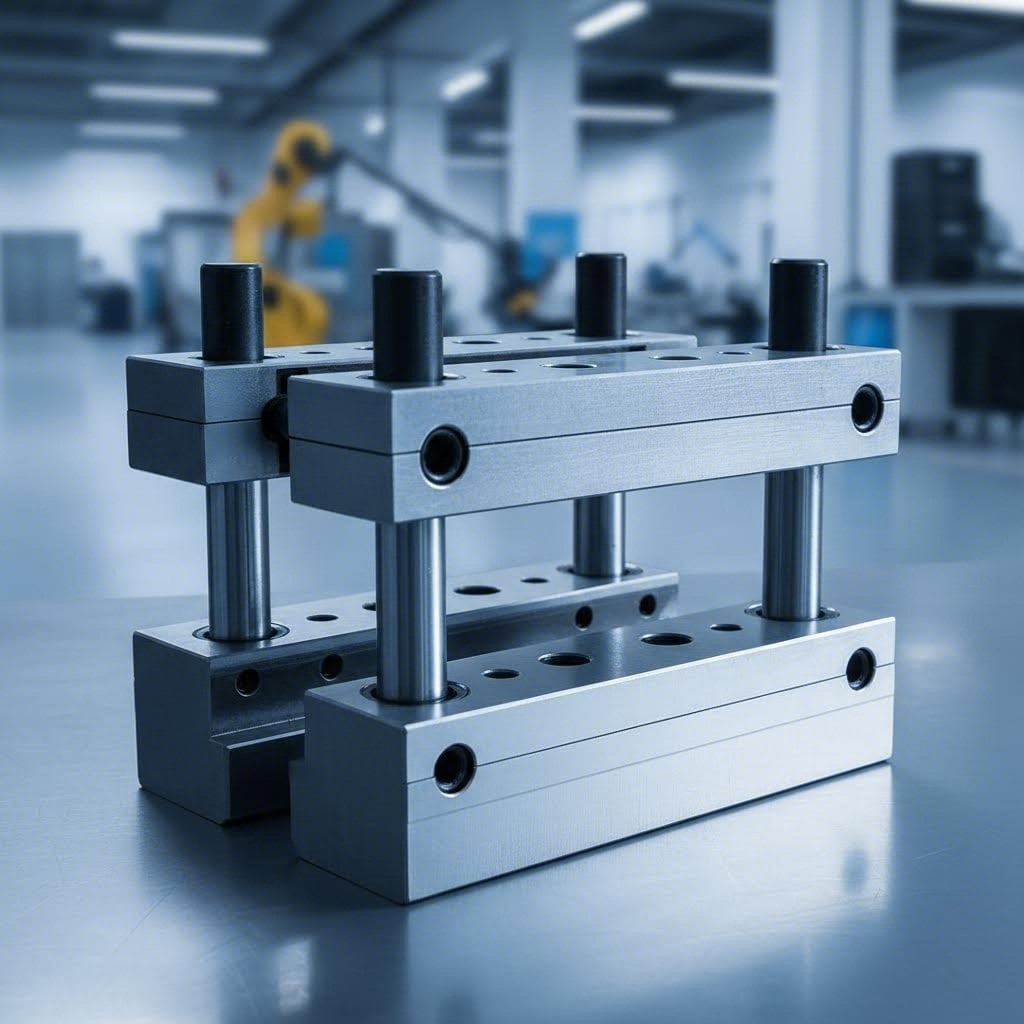
Design for Assembly (DFA) Principles to Enable Faster Assembly
Effective DFA shifts complexity from the assembly line into part geometry—so operators and robots can build products with fewer decisions and less effort. The following three design tactics directly cut cycle times and defect rates by making correct assembly the only possible assembly.
Self‑Locating Features: Tabs, Slots, and Dowels That Eliminate Manual Alignment
Self‑locating features physically guide parts into final position, removing the need for manual alignment, measurement, or fine-tuning. Tabs and matching slots enforce single-orientation fit; dowels and recesses control both location and rotational clocking. These features slash insertion time because the part “finds” its own location—and reduce rework from misalignment. In automated cells, consistent datum points let pick-and-place systems rely on repeatable coordinates without vision correction. Even in manual assembly, benefits are clear: a sheet-metal bracket with two locating tabs and a captive-screw boss installs in under three seconds, versus 12–15 seconds for a loose-fastener alternative requiring alignment. Critical to success is generous lead-ins and clear-out pockets that accommodate normal part-to-part variation. When combined with poka-yoke geometry that prevents reverse insertion, self-locating features ensure assembly becomes a one-way, error-proof motion—directly enabling faster assembly.

Optimized Gap Allowances and Hardware Access for High‑Mix, Low‑Error Assembly
Tight gaps cause binding and excessive force; loose gaps invite rattles, misalignment, and shimming. The optimal clearance balances tolerance stack-up with interference-free travel—letting parts drop into place reliably. For high-mix production, a 0.25–0.5 mm radial clearance on locating pins and slots works across most formed metal and molded plastic parts without sacrificing repeatability. Equally vital is hardware access: wrench and socket clearances must account for the swing arc of automated drivers—not just static dimensions. A design forcing driver tilt or extension adds 2–4 seconds per fastener and raises cross-threading risk. Standardizing gap dimensions across product families enables common tooling and pick-place offsets, reducing changeover errors. Together, intentional clearance and accessible hardware create a forgiving interface that absorbs normal variation—so every build, whether batch size one or ten thousand, proceeds with predictable, fast motion.
Fixture‑Friendly Geometry: Aligning Part Design with Standardized Tooling
Parts designed with flat datum faces, consistent locating holes, and tooling-ball targets enable modular fixturing instead of custom jigs. A base plate with a precision-bored grid can hold any part featuring two dowel holes on a known pitch—slashing setup time from hours to minutes. Fixture-friendly geometry also avoids undercuts, buried mounting interfaces, or surfaces needing 3-D contour clamping. By specifying a primary datum plane, secondary alignment edges, and a tertiary stop, designers implement a robust 3-2-1 location scheme that works across multiple variants. For automated assembly, this fixed-plane referencing allows robots to operate from pre-taught points—eliminating in-cycle scanning. As a result, one fixture serves an entire product line, and operators swap parts in seconds without recalibration. That repeatability feeds directly into faster assembly: every movement starts from a known, stable position—cutting placement time and guaranteeing consistent clamp forces for downstream joining.
Fastening Strategies That Maximize Faster Assembly Through Automation
PEMs, Rivets, and Threaded Inserts: Trade-Offs in Installation Speed and Reusability
Self-clinching fasteners (PEMs) install in a single press stroke—the fastest option for sheet metal when permanent, flush mounting is acceptable. This speed directly supports higher assembly rates, but the joint isn’t reusable. Rivets match PEMs in rapid installation (often under 0.5 seconds) and excel in high-vibration environments, yet disassembly requires destructive removal—increasing rework costs. Threaded inserts provide reusable, strong threads in soft materials but demand extra steps: drilling, heat staking, or ultrasonic insertion. Even when automated, insert placement takes 2–3× longer than riveting. Leading manufacturers report that mismatched fastener selection adds up to 15% in downstream alignment time. The trade-off centers on service life: choose PEMs or rivets for maximum one-way speed; reserve threaded inserts only when field maintenance justifies slower cycles.
Avoiding Blind Holes and Cross-Threading: Design Rules for Reliable Automated Fastening
Blind holes force robots to detect depth and orientation precisely—often requiring vision-assisted alignment that runs 30% slower than open-hole insertion. Cross-threading risk spikes at even 2° misalignment, causing jams that halt the line. The simplest, most effective rule is to specify through-holes wherever possible, allowing guided self-tapping screws to pass cleanly and engage threads on the opposite side. A 30° lead-in chamfer on the hole edge further centers the fastener automatically—reducing reliance on tight positional tolerances. When blind holes are unavoidable, specify pilot-point screws with dog-point tips to minimize cross-threading and torque variability. Automated fastening achieves consistent cycle times only when joint geometry removes the need for manual finesse—eliminating blind holes remains the most direct way to protect line speed and first-pass yield.
Material and Finish Choices That Support Consistent, Faster Assembly
Minimum Thickness Guidelines for Welding and Fastening Without Compromising Speed or Strength
Material thickness governs how quickly and reliably parts join. Sheet metal below 0.8 mm risks burn-through during MIG or resistance welding—forcing slower travel speeds and added rework. For structural joints, AWS D1.3 recommends a minimum base metal thickness of 1.0 mm to maintain weld puddle control and avoid undercut requiring touch-up. Fastening imposes similar constraints: self-clinching fasteners require at least 1.0 mm of host material to seat fully without deformation; thread-forming screws demand a pilot-hole web thickness of ≥0.9 mm to prevent strip-out. Adhering to these thresholds eliminates stop-and-fix interruptions—keeping line speed consistent and enabling faster assembly across mixed-product runs.
Powder Coating Variability: Managing Dimensional Shifts and Torque Consistency
Powder coating adds 60–120 μm per surface—enough to close clearance holes and alter torque-tension relationships. Unmasked threads experience friction spikes of 15–25%, often resulting in under-torquing and joint loosening. To maintain faster assembly, designers specify masked zones around tapped holes, counterbores, and mating faces—and account for coating thickness in tolerance stacks. Following ISO 2782 dimensional allowances for coated parts ensures automated drivers achieve target torque on the first attempt, eliminating secondary hand-tightening and preserving takt time.
FAQ
What is Design for Assembly (DFA)?
Design for Assembly (DFA) is an engineering approach focusing on designing parts and products to simplify their assembly process. This approach minimizes complexity, reduces errors, and shortens assembly time.
How do self-locating features improve assembly speed?
Self-locating features like tabs, slots, and dowels guide parts into position without manual alignment, cutting down assembly time and reducing misalignment errors.
What is the importance of gap allowances in DFA?
Optimized gap allowances ensure interference-free assembly without binding or misalignment. They account for tolerance variations, supporting error-free and efficient assembly.
Why are fixture-friendly geometries important?
Fixture-friendly geometries enable the use of standardized tooling, reducing setup times and ensuring consistent assembly quality, even with product variations.
What fastening methods are ideal for fast assembly?
Fastening strategies like PEMs (self-clinching fasteners) and rivets are the quickest, while threaded inserts, although slower, provide reusability.
How do material thickness and finishes impact assembly?
Appropriate material thickness ensures faster and more reliable joining methods like welding and fastening. Additionally, proper handling of finishes like powder coatings helps maintain assembly precision and consistency.