 Small batches, high standards. Our rapid prototyping service makes validation faster and easier —
  EN
EN

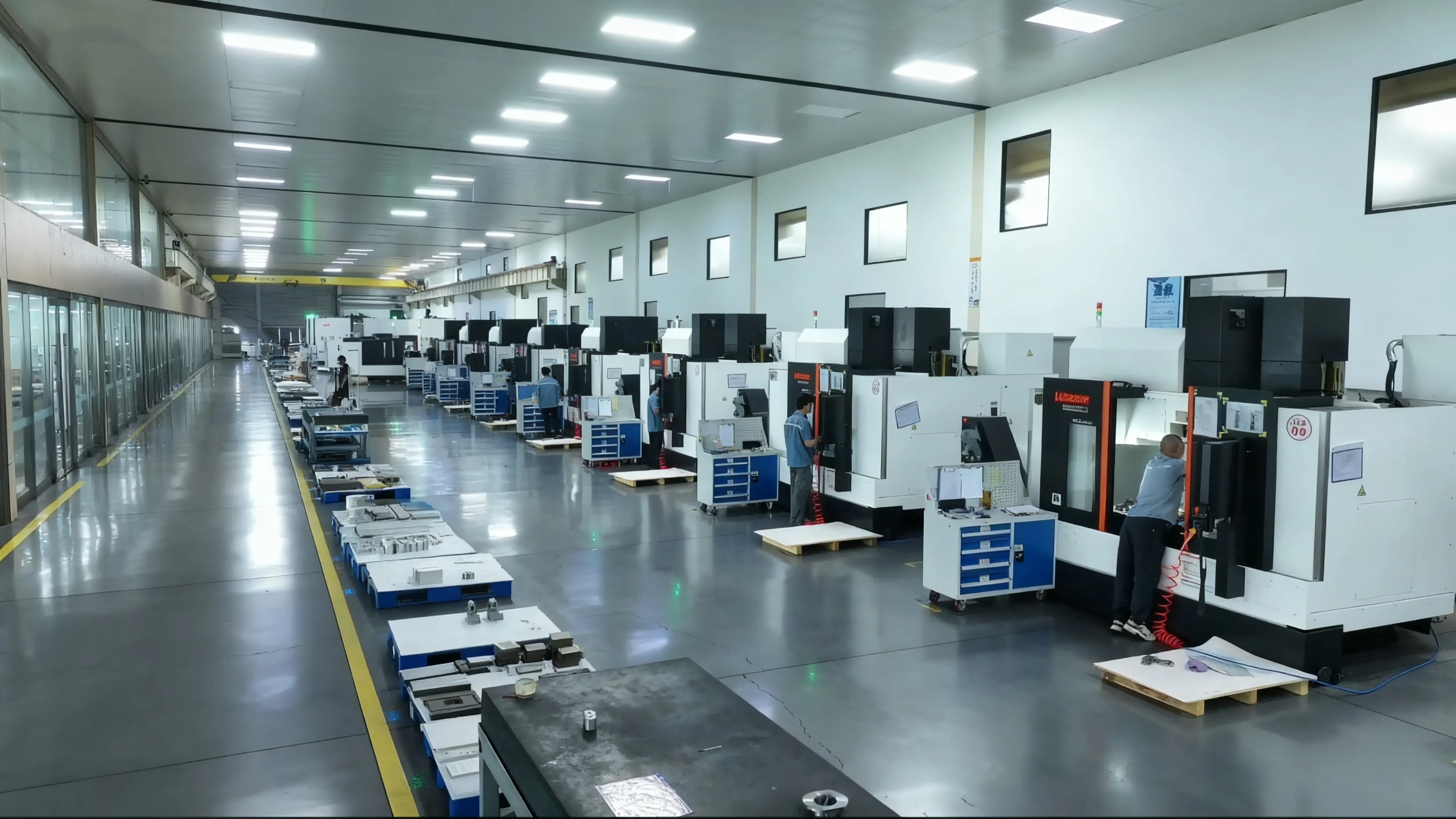
Understanding the Core Cost–Precision Trade-Off
In automotive manufacturing, cost and precision exist in constant tension. Tighter tolerances drive costs upward—not linearly, but exponentially—due to demands for advanced machinery, slower cycle times, and intensified inspection protocols. For instance, achieving ±0.01 mm may cost twice as much as ±0.05 mm for the same feature. The strategic imperative is clear: avoid blanket precision across all dimensions. Instead, engineers must identify critical features—those directly affecting function, safety, or assembly—and apply tight tolerances only there. Non-critical features can safely accommodate wider bands, reducing tooling complexity, cycle time, and scrap rates. This targeted approach preserves functional integrity while containing overall manufacturing cost without compromising real-world performance—a common pitfall when ultra-tight specs are applied indiscriminately.
Strategic Equipment Investment: Optimizing TCO Without Compromising Precision
Automotive manufacturers face pivotal decisions when selecting production equipment: prioritize low upfront cost or invest in systems engineered for long-term precision and reliability. Choosing commercial-grade over budget alternatives significantly improves Total Cost of Ownership (TCO), as cheaper machinery incurs escalating operational burdens—including unplanned downtime, which rises 8% annually according to industry operational studies.
Capital Expenditure vs. Long-Term Precision Gains
Higher initial investment pays compounding dividends by sustaining micron-level tolerances over decades—not years. While budget machines incur $740k in mean lifetime maintenance costs (Ponemon Institute, 2023), premium equipment requires 60% fewer repairs. This stability prevents dimensional drift—the primary driver of costly rework—and delivers consistent quality output that directly lowers TCO. Manufacturers who compromise here often absorb 19% higher operational expenses from preventable quality failures.
ROI Analysis: When High-Precision Machinery Delivers Measurable Value
True ROI on precision equipment extends beyond purchase price to include scrap reduction, yield improvement, and production continuity. Replacing a $300k system with a $500k high-precision alternative yields measurable returns through:
- 90% reduction in tolerance-related recalls
- 12% longer mean time between failures
- $220k annual savings in rework labor
For high-volume components like transmission gears, per-part cost drops 14% within 24 months—demonstrating how disciplined capital allocation protects margins while meeting stringent automotive precision standards.
Design for Manufacturability (DFM) as a Proactive Cost–Precision Lever
Design for Manufacturability (DFM) transforms the cost–precision relationship from reactive constraint to proactive design lever. By embedding precision requirements early—in CAD modeling, not after prototyping—engineers align material selection, machining strategy, and assembly sequencing with functional intent from day one. This prevents late-stage tolerance surprises that inflate costs and delay launches.
Embedding Precision Requirements Early to Prevent Late-Stage Rework and Escalation
A ±0.01 mm tolerance on a non-critical surface introduced late in development can double machining time and trigger cascading rework orders. In contrast, early DFM analysis distinguishes which dimensions truly demand tight control—and which can be relaxed without consequence. That distinction reduces tool wear, shortens cycle time, and stabilizes unit economics. Simple, intentional choices—standardizing hole sizes, minimizing deep cavities, or specifying readily available materials—eliminate the need for custom tooling and specialty processes, reinforcing cost discipline without sacrificing functional quality.
Smart Technologies: AI, Automation, and Digital Twins for Real-Time Cost–Precision Alignment
AI, automation, and digital twins now enable dynamic, real-time calibration of the cost–precision balance—replacing static, batch-based quality checks with continuous, data-driven optimization. These technologies create closed-loop feedback that adjusts production parameters on-the-fly to uphold tight tolerances while minimizing waste, energy, and labor overhead.
AI-Driven Predictive Maintenance: Minimizing Downtime While Sustaining Tight Tolerances
AI-powered predictive maintenance analyzes real-time sensor data from CNC machines and assembly cells to forecast component wear before it impacts dimensional accuracy. By triggering interventions only when empirically justified, manufacturers eliminate both unnecessary maintenance spend and unscheduled downtime. One global OEM achieved a 78% reduction in unplanned stoppages after deployment—enabling sustained sub-micron tolerances on critical drivetrain components without resorting to costly over-maintenance.
Digital Twin Simulations for Pre-Production Optimization of Automotive Manufacturing Cost and Precision
Digital twins provide a risk-free virtual environment to model, test, and optimize production setups before physical commissioning. Engineers simulate hundreds of “what-if” scenarios—varying feed rates, coolant strategies, toolpaths, and fixturing—to identify the precise combination that meets tolerance targets at lowest cost. This pre-production validation embeds precision into the process plan itself, eliminating trial-run rework and ensuring first-batch conformance—delivering measurable gains in both cost efficiency and dimensional consistency.
FAQ
Why is achieving higher precision in automotive manufacturing so costly?
Tighter tolerances require advanced machinery, slower production cycles, and more rigorous inspection processes, leading to exponentially higher costs.
What is Design for Manufacturability (DFM) and why is it important?
DFM is a design strategy that incorporates manufacturing constraints early in the design process, helping reduce late-stage costs and prevent rework.
How does AI-driven predictive maintenance benefit manufacturers?
AI-driven predictive maintenance minimizes downtime and unnecessary maintenance by anticipating component wear, which is crucial for sustaining tight tolerances.
What are digital twins, and how do they improve manufacturing?
Digital twins are virtual models that simulate production environments, enabling engineers to optimize cost and precision before physical manufacturing starts.
What is the role of high-precision machinery in cost efficiency?
High-precision machinery reduces tolerance-related issues, improves yield, and lowers overall operational costs, offering a better Total Cost of Ownership (TCO).