 Small batches, high standards. Our rapid prototyping service makes validation faster and easier —
  EN
EN

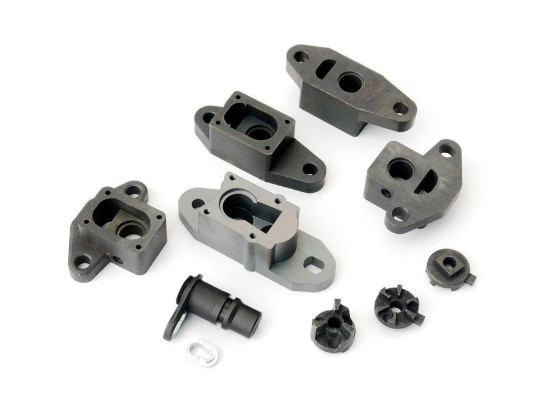
Additive Manufacturing: Scaling from Prototyping to Certified Production Parts
Design-led 3D printing enables manufacturers to rapidly iterate low-volume, high-mix components without expensive tooling. Engineers can produce multiple design variations in a single build, cutting development cycles from weeks to days—especially valuable in advanced automotive manufacturing, where complex brackets, ducts, and housings require frequent validation before serial production.
A notable example is the serial production of high-performance titanium brake calipers using laser powder bed fusion. A leading manufacturer consolidated eight traditionally assembled parts into a single-print unit, eliminating weld joints and reducing weight by 40%. The part meets rigorous safety certifications through strict powder traceability, controlled build parameters, and full process documentation—demonstrating that additive manufacturing can deliver certified production parts when integrated with aerospace-grade quality systems.
Scalability remains the central challenge. Achieving consistent quality across hundreds of identical parts demands end-to-end process traceability and real-time anomaly detection. Advanced software now monitors each print layer, enabling in-situ corrections during the build. As powder certification standards mature and build speeds improve, cost-per-part parity with conventional forging and casting becomes increasingly achievable. To learn how digital oversight supports repeatability, see the analysis of process traceability in additive production.
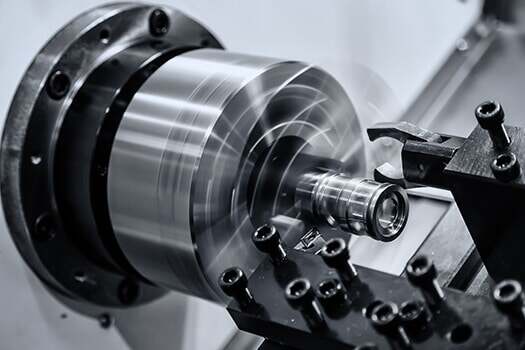
AI-Driven Digital Twins and Simulation for Design for Manufacturability
Advanced automotive manufacturing increasingly relies on AI-driven digital twins to bridge the gap between design intent and production reality. These virtual replicas ingest real-time sensor data—temperature, pressure, torque—to create a continuous feedback loop. Engineers test what-if scenarios, validate part geometries, and optimize process parameters before any physical tooling is cut—shifting from trial-and-error to predictive design for manufacturability (DFM).
Real-time DFM validation slashing pre-production iterations by up to 40%
By simulating the entire manufacturing process digitally, OEMs catch costly design flaws before they reach the factory floor. AI algorithms continuously compare the CAD model with the virtual twin’s performance under actual constraints—tool access, cooling channel placement, material flow—identifying geometry clashes, insufficient draft angles, or stress concentrators instantly. The result: pre-production iterations drop by up to 40%, cutting weeks from the prototype-and-revise cycle. Design engineers receive immediate corrective guidance, eliminating the back-and-forth that traditionally plagued low-volume, high-complexity parts.
Predictive defect simulation in casting and forging—reducing scrap and PPAP delays
Casting and forging processes are prone to porosity, shrinkage, and misruns—defects that can turn a production run into scrap. Digital twins combined with physics-informed AI models now predict these defects with high precision. The twin simulates metal flow, solidification gradients, and thermal stress across the die or mold, flagging likely defect zones before the first pour. This allows engineers to proactively adjust gating, risers, or cooling rates. The payoff: scrap rates fall by 15–20%, and PPAP timelines shrink because the first physical samples already meet quality targets—closing the loop between simulation and real-world parameters to ensure consistency across batches.
Lightweighting and Multi-Material Integration for Electrified and Autonomous Platforms
Hybrid material systems (aluminum–CFRP–magnesium) enabling 15–25% weight savings in EV powertrain and ADAS mounts
Hybrid material systems—combining aluminum, carbon-fiber-reinforced polymer (CFRP), and magnesium—are accelerating lightweighting in electrified and autonomous platforms. These multi-material designs leverage aluminum for cost-effective structural integrity, CFRP for ultra-high stiffness-to-weight ratio, and magnesium for lightweight die-cast complex geometries. When optimized via topology and layup simulation, they deliver 15–25% weight savings over conventional steel assemblies—without compromising crash safety or thermal management. Integration relies on advanced joining techniques such as friction stir welding and adhesive bonding to prevent galvanic corrosion and maintain fatigue life. For EV platforms, every kilogram saved directly extends driving range and reduces battery sizing costs—making multi-material lightweighting a critical enabler of next-generation vehicle architecture.
Intelligent Automation: Real-Time Quality Assurance and Adaptive Assembly
In advanced automotive manufacturing, real-time quality assurance and adaptive automation are converging to eliminate defects and optimize production flow. These systems rely on artificial intelligence and sensor feedback to make instantaneous decisions—without human intervention.
Computer vision–AI inspection achieving >99.98% defect detection accuracy in safety-critical components
Computer vision paired with deep learning algorithms inspects safety-critical parts—including brake calipers, steering knuckles, and battery enclosures—at full production line speed. Systems trained on millions of annotated defect images detect micro-cracks, surface anomalies, and dimensional deviations with greater than 99.98% accuracy. This level of precision minimizes recalls and rework while enabling a shift from sample-based to 100% online inspection—strengthening confidence in zero-defect assembly.
Self-optimizing robotic cells synchronized with supply chain and quality feedback loops
Robotic cells equipped with adaptive process control continuously monitor torque, force, and cycle time. When upstream part variance or downstream demand signals change, the cell recalibrates its parameters in real time. By closing the loop with suppliers’ material data and the plant’s quality dashboard, the system preempts assembly defects and maintains Just-in-Time flow. This integration reduces downtime, cuts scrap, and supports high-mix production without sacrificing throughput—turning automation from a fixed asset into a responsive, learning system.
FAQ
What are the key benefits of additive manufacturing in automotive production?
Additive manufacturing enables rapid prototyping, low-cost design iterations, and the production of certified, complex components like titanium brake calipers, which are lighter and meet stringent safety certifications.
How do AI-driven digital twins improve manufacturing processes?
AI-driven digital twins bridge the gap between design intent and production reality by simulating real-world manufacturing constraints, reducing pre-production iterations by up to 40%, and improving defect prediction accuracy.
What role do hybrid material systems play in vehicle lightweighting?
Hybrid material systems (e.g., aluminum–CFRP–magnesium) enable 15–25% weight savings in components like EV powertrains and ADAS mounts, improving vehicle efficiency, crash safety, and thermal management.
How does computer vision–AI inspection enhance quality assurance?
Computer vision–AI inspection systems detect micro-defects with >99.98% accuracy, paving the way for online, zero-defect assembly of safety-critical components while reducing recalls and rework costs.
What are self-optimizing robotic cells, and why are they important?
Self-optimizing robotic cells adapt their parameters in real time based on supply chain and quality data, increasing production efficiency, reducing downtime, and supporting high-mix manufacturing processes.
Table of Contents
- Additive Manufacturing: Scaling from Prototyping to Certified Production Parts
- AI-Driven Digital Twins and Simulation for Design for Manufacturability
- Lightweighting and Multi-Material Integration for Electrified and Autonomous Platforms
- Intelligent Automation: Real-Time Quality Assurance and Adaptive Assembly
- FAQ