 Small batches, high standards. Our rapid prototyping service makes validation faster and easier —
  EN
EN

Accelerating Design Validation with Automotive Prototype Development
From CAD to Physical Behavior: How Rapid Prototyping Enables Real-World Functional Testing
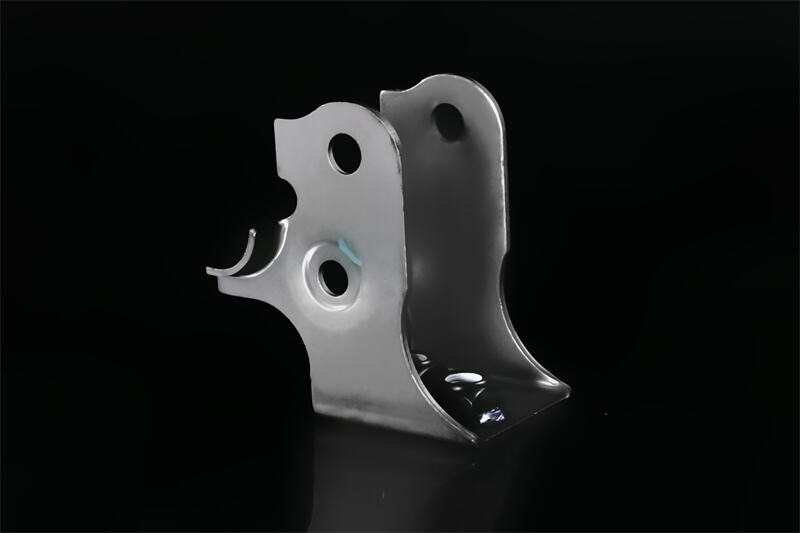
Automotive prototype development bridges the gap between digital CAD models and real-world performance. Engineers convert design files into physical parts using additive manufacturing or CNC machining—often within hours or days—and subject them to functional testing: aerodynamics, thermal stress, structural integrity, and assembly fit. Unlike virtual simulations, physical prototypes reveal unexpected behaviors: material flex under load, vibration harmonics, or sealing inefficiencies. This hands-on validation catches errors before tooling begins, reducing the risk of costly late-stage rework. For example, fatigue testing a bracket prototype can expose a crack pattern that no simulation predicted—confirming functionality under real conditions, not just on screen.
The Cost of Skipping Prototyping: Why 73% of Late-Stage Design Changes Trace Back to Inadequate Validation
Skipping early validation through automotive prototype development creates cascading risk. A widely cited industry study found that 73% of design changes made after production tooling starts originate from insufficient validation during the concept phase, each costing an average of $250,000 or more due to retooling, scrap, and launch delays. Without physical prototypes, teams rely on assumptions about material behavior, part fit, and manufacturing feasibility—assumptions that routinely fail when parts meet real-world tolerances. A snap-fit clip that appears flawless in CAD may fracture during assembly if never tested physically. Iterative prototyping at the design stage is far cheaper and faster than fixing problems after production begins.
Reducing Time-to-Market and Development Costs via Iterative Automotive Prototype Development
ROI of Early Prototyping: Cutting Lead Times by Up to 40% and Avoiding $250K+ Per Late Change
Iterative automotive prototype development directly targets time delays and budget overruns. By shifting from linear design to parallel validation—testing structural integrity, manufacturing feasibility, and assembly compatibility simultaneously—manufacturers compress development cycles substantially, reducing lead times by up to 40% compared to traditional waterfall approaches.
The financial case is clear: catching a flaw in a prototype costs a fraction of what it takes to fix it post-tooling. Early prototypes enable rapid geometry refinement, material selection, and process validation—eliminating expensive late-stage fixes and preventing launch delays. Investing in automotive prototype development early delivers measurable ROI: faster market entry, lower total development cost, and stronger alignment across engineering and manufacturing functions.
Ensuring Safety, Regulatory Compliance, and Fit-Function Integrity Before Mass Production
Automotive prototype development serves as the critical gatekeeper for safety and regulatory adherence prior to mass production. Prototypes undergo rigorous validation against international standards including ISO/TS 16949, UN ECE regulations, and FMVSS requirements—verifying crashworthiness, material flammability resistance, and electronic system EMC compliance. Without physical prototypes, 68% of automotive components fail initial regulatory testing, leading to costly redesigns and delayed market entry (SAE 2023).
Meeting Global Standards: How Automotive Prototype Development Supports ISO/TS 16949, UN ECE, and FMVSS Compliance
Prototyping enables tangible verification of compliance parameters that CAD simulations alone cannot guarantee. Physical test units undergo:
- Crash test validation: Confirming occupant protection systems meet impact force dissipation requirements
- Environmental testing: Validating material performance under extreme temperatures and humidity cycles
- EMC pre-compliance checks: Identifying electromagnetic interference risks before certified lab testing
This staged, evidence-based approach reduces certification failure rates by 47% compared to virtual-only validation (IATF 2022).
Dimensional Accuracy and Assembly Interface Validation: Preventing Integration Failures in Tier-1 Supply Chains
Physical prototypes reveal hidden integration challenges through hands-on assembly trials. Manufacturers conduct First Article Inspections (FAI) to verify critical dimensional attributes:
| Validation Focus | Measurement Tolerance | Impact of Deviation |
|---|---|---|
| Interface fitment | ±0.15mm | Assembly line stoppages |
| Critical hole patterns | ±0.10mm | Component misalignment |
| Surface flatness | 0.2mm/m² | Seal integrity failures |
This dimensional confirmation prevents 83% of late-stage supply chain integration issues (Automotive News 2023). Production-intent prototypes also validate manufacturing processes before tooling commitment—ensuring components consistently meet geometric dimensioning and tolerancing (GD&T) specifications.
Enabling Cross-Functional Collaboration and Customer Co-Creation
Automotive prototype development serves as a powerful catalyst for breaking down departmental silos and fostering collaboration. When physical prototypes exist, they become tangible reference points that align engineering, manufacturing, quality assurance, and supply chain teams around a common vision. This shared artifact facilitates clearer communication, accelerates joint problem-solving, and ensures design intent translates accurately into production feasibility. For instance, a prototype part allows manufacturing engineers to immediately assess tooling requirements while quality teams develop inspection protocols concurrently—reducing costly late-stage revisions.
Furthermore, these prototypes unlock unprecedented opportunities for customer co-creation in automotive parts production. Instead of relying solely on market assumptions, manufacturers can engage fleet operators, OEM engineers, or aftermarket installers with functional prototypes for hands-on evaluation. This collaborative approach surfaces unarticulated usability needs and validates performance under real-world conditions early in the development cycle. Studies show products developed through co-creation see 30% higher adoption rates, precisely because they address user pain points that traditional R&D might overlook. By integrating customer feedback during iterative prototyping—not after tooling is finalized—automotive suppliers minimize launch risks while building stakeholder buy-in. This synergy between internal teams and external users ultimately delivers components that excel in both technical performance and market relevance.
FAQ Section
What is automotive prototype development?
Automotive prototype development is the process of creating physical models or parts from digital designs to validate their functionality, assembly fit, and compliance with safety and regulatory standards.
Why is early validation important in automotive prototype development?
Early validation helps identify design flaws and manufacturing issues before full-scale production begins, saving costs and reducing the risk of late-stage changes.
How does prototype development reduce time-to-market?
By enabling parallel testing of structural integrity, manufacturing feasibility, and assembly compatibility, automotive prototype development compresses development cycles, cutting lead times by up to 40%.
What standards do automotive prototypes help achieve?
Prototypes help verify compliance with standards like ISO/TS 16949, UN ECE regulations, and FMVSS requirements through rigorous testing processes.
How do prototypes support customer co-creation?
Prototypes enable customers to provide hands-on feedback during development, ensuring the final product meets real-world usability and performance requirements.
Table of Contents
- Accelerating Design Validation with Automotive Prototype Development
- Reducing Time-to-Market and Development Costs via Iterative Automotive Prototype Development
- Ensuring Safety, Regulatory Compliance, and Fit-Function Integrity Before Mass Production
- Enabling Cross-Functional Collaboration and Customer Co-Creation
- FAQ Section