 Small batches, high standards. Our rapid prototyping service makes validation faster and easier —
  EN
EN

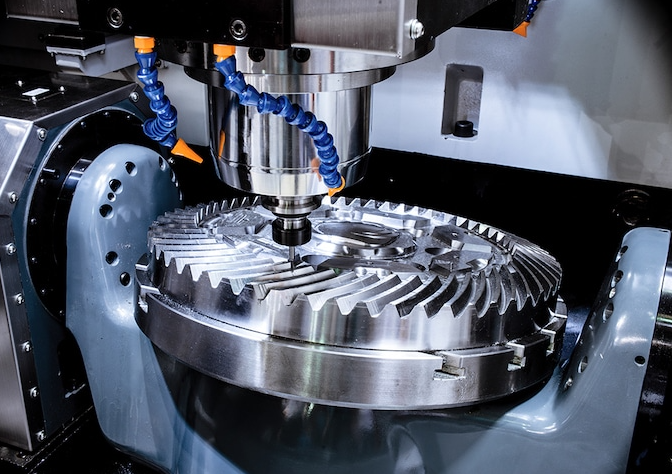
Core Material Selection Criteria for Automotive Stamped Parts
Selecting the optimal automotive stamped parts materials requires balancing three critical performance pillars: formability, structural integrity, and environmental resilience. Each criterion directly impacts manufacturability, functional performance, and lifecycle durability.
Formability and Ductility: Matching Material Flow to Part Geometry Complexity
Formability dictates how effectively metal deforms without cracking during stamping. Complex geometries—like deep-drawn fuel filler necks or intricate bracket contours—demand high elongation (>20%) to prevent thinning-induced fractures in high-strain zones. The r-value (plastic strain ratio) further predicts multi-directional flow behavior, supporting dimensional accuracy in challenging shapes. Low-carbon steels and certain aluminum alloys (e.g., 5182) exemplify this balance, enabling robust production of deeply formed parts without sacrificing surface quality or part repeatability.
Strength Requirements: Aligning Yield and Tensile Strength with Structural Function
Structural components require strength calibrated precisely to their crash and load-bearing roles. B-pillars and door beams demand ultra-high yield strength (>980 MPa) for intrusion resistance, while suspension links prioritize tensile strength-to-ductility balance to endure cyclic fatigue. Advanced High-Strength Steels (AHSS) such as DP780 deliver 780 MPa tensile strength with 14% elongation—optimizing crash energy absorption without compromising stamping feasibility. This duality makes AHSS the benchmark for safety-critical stamped structures where predictable deformation is non-negotiable.
Corrosion Resistance and Environmental Durability by Vehicle Zone
Material degradation varies significantly across vehicle environments. Underbody components face aggressive corrosion from road salts, requiring galvanized steel with ≥70 g/m² zinc coating—delivering ~500 hours in salt spray testing versus ~100 hours for bare steel. Exhaust systems rely on heat- and oxidation-resistant alloys like 409 stainless steel, stable up to 800°C. For joined assemblies, crevice corrosion resistance and coating adhesion strength (>8 MPa) are essential to maintain integrity under stone-chip impact and moisture ingress over the vehicle’s service life.
Comparative Analysis of Automotive Stamped Parts Materials
Advanced High-Strength Steels (AHSS) and Hot-Stamped Boron Steel: Maximizing Strength-to-Weight Ratio
AHSS grades achieve tensile strengths between 600–1500 MPa through multiphase microstructures, enabling panel down-gauging by 25–30% versus conventional mild steel. Hot-stamped boron steel—formed at ~900°C and quenched in-die—reaches up to 1800 MPa with near-zero springback, making it ideal for A- and B-pillars, roof rails, and front-end modules. While these materials demand higher press tonnage (>1000 tons) and specialized tooling, their unmatched strength-to-weight ratio delivers measurable gains in crash performance and fuel efficiency. The WorldAutoSteel Auto/Body-in-White Roadmap confirms AHSS now comprises over 60% of new vehicle BIW mass in premium segments.
Aluminum Alloys vs. Galvanized HSLA Steel: Lightweighting, Formability, and Cost Trade-Offs
Aluminum alloys (5xxx and 6xxx series) reduce component weight by 40–50% versus equivalent steel parts—but at roughly triple the raw material cost. Their lower formability necessitates larger bend radii, dedicated lubricants, and tighter process control to avoid edge cracking. In contrast, galvanized high-strength low-alloy (HSLA) steel offers elongation >30%, excellent drawability, and built-in corrosion protection via its zinc coating. For non-structural closures (hoods, doors), aluminum’s mass savings justify the investment. For frames, subframes, and mounting brackets—where cost-per-part and assembly throughput are decisive—galvanized HSLA steel remains the pragmatic, high-yield choice across mainstream platforms.
Application-Specific Guidelines for Automotive Stamped Parts Materials
Under-Hood Components: Thermal Stability and Corrosion Resistance (e.g., Stainless 301/316)
Engine compartments subject stamped parts to thermal cycling (–40°C to +500°F), oil/coolant exposure, and road-salt residue. Austenitic stainless steels—particularly grades 301 and 316—are standard for heat shields, sensor brackets, and turbocharger housings. Grade 301 work-hardens rapidly, supporting complex forming; grade 316 adds molybdenum for superior resistance to chloride-induced pitting. Thermal expansion mismatch must be considered during joining—especially with resistance welding—to prevent joint fatigue over 15+ years of thermal cycling. As outlined in SAE J2340, stainless grades used in under-hood applications must meet minimum creep rupture strength of 120 MPa at 650°C for 10,000 hours.
Body-in-White and Structural Crash Zones: Prioritizing Energy Absorption and Joinability
For body panels, pillars, and crash rails, the defining requirement is controlled, progressive energy absorption—not just peak strength. Dual-phase steels (e.g., DP600, DP980) provide high initial stiffness followed by gradual yielding, enabling predictable crumple zones. Equally vital is joinability: zinc-coated AHSS maintains corrosion resistance post-forming and supports consistent spot-weld lobe width and nugget integrity across high-volume production. Strain-rate sensitivity—how strength increases under dynamic loading—is a key differentiator in crash simulation; AHSS grades with strong positive strain-rate response outperform conventional steels in real-world barrier tests. As validated by IIHS and Euro NCAP protocols, optimized material selection in these zones directly improves occupant protection scores without adding mass.
FAQ
What are the primary considerations when selecting materials for automotive stamped parts?
The key factors include formability, structural strength, and environmental durability. These criteria impact the manufacturability, functionality, and service life of the components.
Why is formability a critical factor in material selection for complex geometries?
Materials with high elongation (>20%) and favorable r-values prevent fractures during stamping, ensuring dimensional accuracy for intricate part designs.
What makes AHSS ideal for crash-resistant structural components?
Advanced High-Strength Steels (AHSS) provide high yield and tensile strength while ensuring energy absorption and structural integrity during crashes.
How do aluminum alloys compare to galvanized HSLA steel for vehicle components?
Aluminum alloys reduce weight by up to 50% but come with higher raw material costs, while galvanized HSLA steel offers excellent formability and cost-efficiency for structural parts.
What materials are suitable for under-hood components exposed to extreme conditions?
Grades like stainless steel 301 and 316 withstand thermal cycling and resist corrosion, making them ideal for heat shields and turbocharger housings.
Table of Contents
- Core Material Selection Criteria for Automotive Stamped Parts
- Comparative Analysis of Automotive Stamped Parts Materials
- Application-Specific Guidelines for Automotive Stamped Parts Materials
-
FAQ
- What are the primary considerations when selecting materials for automotive stamped parts?
- Why is formability a critical factor in material selection for complex geometries?
- What makes AHSS ideal for crash-resistant structural components?
- How do aluminum alloys compare to galvanized HSLA steel for vehicle components?
- What materials are suitable for under-hood components exposed to extreme conditions?