 Small batches, high standards. Our rapid prototyping service makes validation faster and easier —
  EN
EN

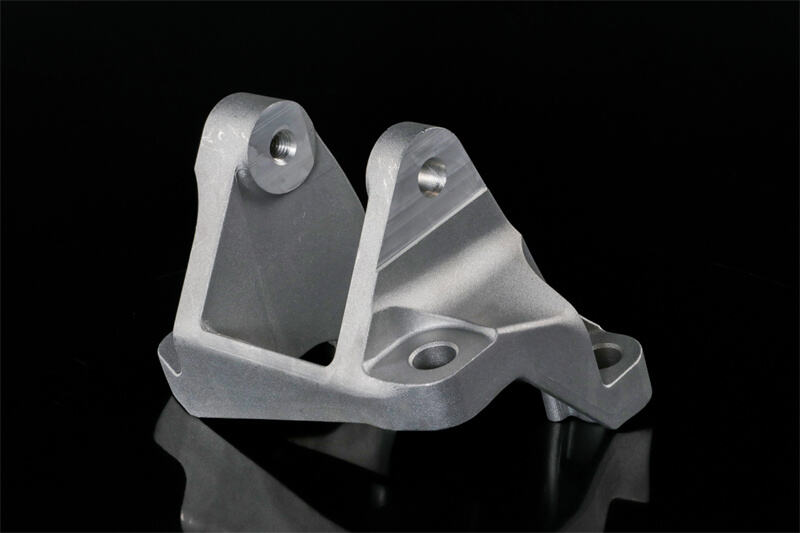
Evaluate Part Complexity: Geometry, Tolerances, and Functional Integration
Geometric complexity and tight tolerances as primary drivers in automotive manufacturing process selection
Part geometry and tolerance requirements serve as the first and most decisive filter in automotive manufacturing process selection. Features such as deep cavities, undercuts, thin walls, and compound angles immediately disqualify many processes—either because they cannot physically form the shape or fail to meet required surface integrity and dimensional fidelity. Tight tolerances—commonly below ±0.01 mm for safety-critical or powertrain components—further narrow options: CNC machining reliably achieves ±0.005 mm but scales poorly beyond low-to-mid volumes, while high-pressure die casting delivers complex net shapes rapidly yet typically requires secondary machining to meet those specs. Mapping each critical feature against verified process capability limits during concept development prevents costly downstream rework, tooling redesign, or last-minute process switches.
How production volume thresholds interact with DFMA principles to narrow viable processes
Once geometric and tolerance feasibility is confirmed, annual production volume becomes the next critical determinant—and interacts directly with Design for Manufacturing and Assembly (DFMA) principles. At low volumes (<1,000 parts/year), processes with minimal tooling investment—such as 5-axis CNC machining or laser powder bed fusion—are economically justified despite higher per-part costs. Mid-volume ranges (1,000–50,000 parts/year) favor investment casting or single-cavity die casting, where improved cycle times begin to offset tooling amortization. Above 50,000 parts/year, multi-cavity injection molding or high-pressure die casting dominate, reducing tooling cost contribution to pennies per part. Crucially, DFMA-driven simplifications—like consolidating multiple stamped brackets into a single cast or additively manufactured assembly—shift these thresholds upward by eliminating secondary operations, reducing part count, and improving yield. The optimal process thus emerges from balancing geometry, tolerance, and volume—not any single factor in isolation.
Align Advanced Digital Tools with Process Feasibility
Convergent design demands CAD-integrated digital twin validation—not legacy assumptions based on historical machining data or fragmented simulations. A digital twin replicates the full physical manufacturing environment—including thermal gradients, toolpath-induced stresses, and material response—enabling engineers to detect interference, warpage, or tolerance stack-up before cutting metal or depositing powder. For example, simulating aluminum engine block machining under operational thermal loads reveals distortions exceeding ±0.05 mm—information vital for evaluating process viability early. This proactive validation cuts scrap rates by 22% compared to traditional trial-and-error approaches (Journal of Digital Engineering, 2023).
Using Digital Twin–Guided Cost and Cycle-Time Analysis for Low-Volume, High-Complexity Automotive Parts
Digital twins support granular, physics-informed cost modeling by linking material behavior, machine kinematics, and labor inputs to real-time process data. For low-volume, high-complexity applications (e.g., <500 units/year), this exposes hidden cost drivers often overlooked in conventional quoting: tool wear can account for over 30% of total cost in titanium turbocharger housing machining, while fixture changeover consumes nearly 18% of scheduled machine time. Simulating alternatives—such as hybrid additive-subtractive workflows—demonstrates potential for 40% cycle-time reduction while maintaining ±0.025 mm transmission component tolerances. This shifts decision-making from experience-based intuition to quantifiable, scenario-tested feasibility.
Select Materials Strategically—Because Material Dictates Process Options
Material properties fundamentally constrain viable manufacturing methods—not merely influence them. Thermal expansion coefficients, anisotropic behavior, and solidification shrinkage are non-negotiable physical boundaries that determine whether a process can deliver functional, dimensionally stable parts. For instance, aluminum’s inherent shrinkage variation (>1.2%) makes conventional die casting unsuitable for components requiring ±0.05 mm stability across thermal cycles—a key requirement in powertrain applications (ASM International, 2023). Ignoring these constraints leads to late-stage failures in fit, function, or fatigue life.
Material properties (e.g., thermal expansion, anisotropy) as non-negotiable constraints in automotive manufacturing process selection
High-strength alloys like forged titanium illustrate how intrinsic material behavior governs process choice. Its pronounced anisotropy demands precise grain orientation control during forming—something injection molding cannot provide. Machining offers dimensional precision but risks introducing residual stresses that compromise fatigue performance under dynamic loading. As a result, precision forging or directed energy deposition (DED) additive manufacturing become preferred for load-bearing suspension or chassis components—methods that either preserve or strategically engineer microstructural alignment.
Emerging hybrid materials (e.g., Al-SiC MMCs) shifting preference toward directed energy deposition and away from conventional molding
Aluminum-silicon carbide metal matrix composites (Al-SiC MMCs) exemplify how advanced materials reshape process hierarchies. With up to 70% higher stiffness-to-weight ratios than conventional aluminum alloys, they’re ideal for high-performance applications—but their abrasive SiC particles rapidly degrade molds and dies used in conventional casting or injection molding. Directed energy deposition (DED) bypasses this limitation entirely, enabling localized reinforcement deposition without tool contact. This shift underscores a broader trend: material innovation increasingly drives process selection—particularly in low-volume, mission-critical domains where traditional economics no longer apply.
Validate and De-Risk Through Integrated Prototyping and Metrology
Integrating physical prototyping with digital simulation and high-fidelity metrology closes the validation loop for complex automotive parts. By comparing simulated outcomes—such as distortion, residual stress, or surface finish—against measured prototype data, engineers verify model accuracy and refine parameters before ramping production. Coordinated physical-digital workflows detect geometric deviations or material anomalies early, cutting late-stage rework by 70% and accelerating time-to-market. Metrology-informed updates to the digital twin further optimize toolpaths, fixturing, and thermal management strategies across batches—ensuring consistent dimensional integrity. For safety-critical systems like brake calipers or transmission housings, this transforms risk management from reactive inspection to proactive prevention, reducing production validation cycles by 40% in low-volume, high-complexity applications.
FAQs
What is the role of tight tolerances in process selection?
Tight tolerances, often below ±0.01 mm for critical components, determine whether a particular manufacturing process can meet precise dimensional requirements. Processes like CNC machining and high-pressure die casting are common, although secondary machining may be needed for tighter specs.
How does production volume affect manufacturing process decisions?
Low production volumes (<1,000 parts/year) favor processes with minimal tooling investment, such as CNC machining. Mid- and high-volume ranges justify automated methods like die casting or injection molding due to amortized tooling costs.
What is a digital twin, and how does it benefit manufacturing?
A digital twin replicates the manufacturing environment in a CAD-integrated simulation model to predict issues like interference or warpage. This proactive approach reduces scrap rates and improves process feasibility.
How does material innovation influence manufacturing process selection?
Advanced materials like Al-SiC MMCs demand updated methods such as directed energy deposition due to physical constraints like abrasion resistance or thermal properties, which conventional processes cannot meet.
How does prototyping improve manufacturing outcomes?
By linking physical prototypes with simulations and metrology data, engineers can validate design accuracy, detect issues early, and optimize parameters, reducing production validation cycles and costs.
Table of Contents
- Evaluate Part Complexity: Geometry, Tolerances, and Functional Integration
- Align Advanced Digital Tools with Process Feasibility
- Select Materials Strategically—Because Material Dictates Process Options
- Validate and De-Risk Through Integrated Prototyping and Metrology
-
FAQs
- What is the role of tight tolerances in process selection?
- How does production volume affect manufacturing process decisions?
- What is a digital twin, and how does it benefit manufacturing?
- How does material innovation influence manufacturing process selection?
- How does prototyping improve manufacturing outcomes?