 Small batches, high standards. Our rapid prototyping service makes validation faster and easier —
  EN
EN

Switching partners between prototype and high-volume metal stamping isn't just inconvenient. It creates expensive delays, quality inconsistencies, and engineering rework that could derail your project timeline. And the bills that arrive after the switch are rarely the ones anyone planned for.
Finding a stamping partner who can scale from low-volume metal stamping through full production means fewer handoffs, better quality control, and a faster route to market. An all-in-one partner unites design, prototyping, and production under one system, which removes the knowledge transfer that gets lost whenever work moves between vendors.
This guide covers the capabilities you need to look for, the questions that separate capable partners from confident ones, and the red flags that predict problems long before the first production run.
Key Takeaways
Choosing the right stamping partner from the start eliminates the costly disruptions of switching vendors mid-project. Here's what matters most:
• Switching stamping partners mid-project costs more than termination fees — you'll face design rework, timeline resets, quality inconsistencies, and potential IP ownership disputes over tooling designs.
• The prototype-to-production handoff is where programs break — soft tooling and a hardened progressive die do not constrain the part the same way, so parts that pass every prototype inspection can still drift at volume.
• Verify five essential capabilities before committing — in-house tooling development, scalability from low to high volumes, integrated secondary operations, quality certification (IATF 16949 for automotive programs), and fast, specific DFM feedback.
• Equipment range matters more than marketing claims — ask for the actual press tonnage range and confirm the press that will run your part exists, rather than trusting a generic capability statement.
• Red flags during quoting predict production problems — vague quality answers, outsourced tooling maintenance, no scaling track record, and poor communication all signal future partnership failures.
The stamping partner you choose today determines whether your product launches on time or gets stuck in vendor transition limbo. Evaluate thoroughly upfront, prioritise integrated capability over the lowest tooling price, and demand transparency about equipment, processes, and quality systems before signing anything.
Why Continuity from Prototype to Production Matters
The Hidden Costs of Switching Partners Mid-Project
Termination fees represent just the surface cost when you abandon a stamping partner mid-program. You'll face resampling from scratch, duplicated pattern development, and potential loss of deposits on prepaid materials. Each new manufacturer operates with different processes, machines and tolerances, so design details must be re-fitted to their specific workflow.
IP ownership creates friction too. Your departing partner may refuse to release tech packs, patterns or tooling designs if your original contract didn't clarify who owns them. They may consider those assets proprietary. You can end up recreating everything from the ground up, and paying for it twice.
Timeline resets hit harder than most teams expect. Your new partner needs time to understand your product, order materials, sample, refine and schedule production into their calendar. That disruption cascades into missed preorder commitments, disrupted sales forecasts and delayed launches. Quality variation follows when production fragments across multiple vendors — and your end customer won't blame the factory for inconsistent finishes. They'll blame your brand.
The financial logic is simple: every dollar of tooling investment you write off is a dollar that has to be earned back out of part cost. That is why tooling investment payback deserves more attention during supplier selection than the headline tooling quotation.
How Single-Partner Programs Reduce Risk and Timeline
An integrated stamping partner combines prototyping, tooling design and production under one system. This approach delivers faster communication, tighter quality control and reduced lead times. When tooling and production sit under the same roof, there's nobody to point at: the people who designed the die and ran it are the ones diagnosing the problem.
Partners who maintain their own tooling answer repair questions without checking another company's calendar. A shop that subcontracts tooling maintenance is quoting you a third party's response time whether it says so or not — and die corrections routed through an external vendor bring freight delays, buffer inventory and sorting costs that never appeared on the original quotation.
Programs that scale cleanly aren't the ones that found the cheapest tool. They're the ones where the tool, the press and the engineering judgment sit close enough together that a problem found on Tuesday gets solved on Tuesday. The cost savings then come from redesigning tooling, streamlining operations and improving material yield — not from shaving the tooling quotation.
When Volume Changes Break the Partnership
High-volume metal stamping presents challenges that eliminate many suppliers. Production programs rarely mean one part at enormous volume; it is far more common to run several small and medium parts at moderate volumes on the same line, which changes how tooling, press time and inspection all have to be planned.
Timing becomes a major factor. Partners who can handle low-volume development work but not the series volume create a forced transition — reintroducing every risk of vendor switching at the most vulnerable point in the program, exactly when the design is frozen and the launch date is fixed.
Soft Tooling vs Hard Tooling: Where the Cost Curve Turns
Most prototype-to-production failures are not commercial. They are technical, and they trace back to a single misunderstanding: soft tooling and a hardened progressive die are not two speeds of the same process. They are different processes that happen to produce a similar-looking part.
What Soft Tooling Can and Cannot Hold
Soft tooling is built for speed, not for repetition. It typically pairs laser-cut blanks or lightly formed sections with single-stage tooling, so geometry can change between builds without scrapping a die. That makes it the right choice while the design is still moving.
What soft tooling cannot do is hold a tolerance indefinitely or constrain the part the way a production die does. Without a full strip layout and hardened tooling, there is no consistent strip feed, no fixed constraint direction, and no repeatable springback behaviour across a long run.
What Changes When the Production Die Takes Over
A progressive die changes the mechanics of the part. The strip advances through fixed stations, each one removing material or forming geometry in a defined sequence, which alters how the material flows and therefore how it springs back. Stations also impose a strip direction and a strip width that did not exist in the prototype process.
The practical consequence: hole positions, bend angles and flatness that were acceptable in a soft-tooled sample can fall outside the print once the part is produced in a progressive die. This is the single most common cause of a "successful prototype" failing at first article.
The Annual Volume Where Hard Tooling Pays Back
Hard tooling carries a real cost, so the decision is an amortisation question rather than a technical preference. The crossover point depends on the part: material utilisation, station count, press tonnage and inspection requirements all move it. The table below sets out the structural differences; the volume threshold has to be calculated per part, not assumed from a rule of thumb.
|
Attribute |
Soft Tooling |
Hard Tooling (Progressive Die) |
|
Typical lead time |
2–3 weeks ⁺ |
8–14 weeks ⁺ |
|
Tool material |
Mild steel, laser-cut and formed |
Hardened tool steel (e.g. SKD11 / DC53) ⁺ |
|
Tool life |
Limited to pre-production quantities ⁺ |
500,000–2,000,000 strokes ⁺ |
|
Achievable tolerance |
±0.2–0.3 mm |
±0.05 mm on critical features |
|
Unit cost at low volume |
Lower — tooling cost is small |
Higher — tooling is amortised into part price |
|
Unit cost at high volume |
Higher — cycle time and rework dominate |
Lower — tooling is spread across the run |
|
Right choice when |
The design is not frozen; validation builds and pre-production samples |
The design is frozen and series volume is confirmed |
⁺ Planning figures — confirm against your own tooling records before publishing.
Essential Capabilities Your Stamping Partner Must Have
Your stamping partner's capabilities determine whether your program scales smoothly or stalls at critical transition points. Certain core competencies separate partners who can support you from prototype through high-volume production from those who will force you into a vendor swap.
Prototyping and Design Validation Services
Strong partners verify designs before you commit to production tooling. Look for providers offering design-for-manufacturability reviews that flag cost-reduction opportunities and progressive-die feasibility before you commit to a tooling path — and ask how quickly they turn those reviews around, because the speed and depth of DFM feedback during quoting is a preview of the working relationship.
Prototyping services staffed by the same engineering team that later builds the production tooling eliminate knowledge transfer gaps. That continuity is what rapid prototyping for metal components is worth doing properly for: not the sample itself, but the engineering file that carries forward into the die.
Tooling Design and In-House Development
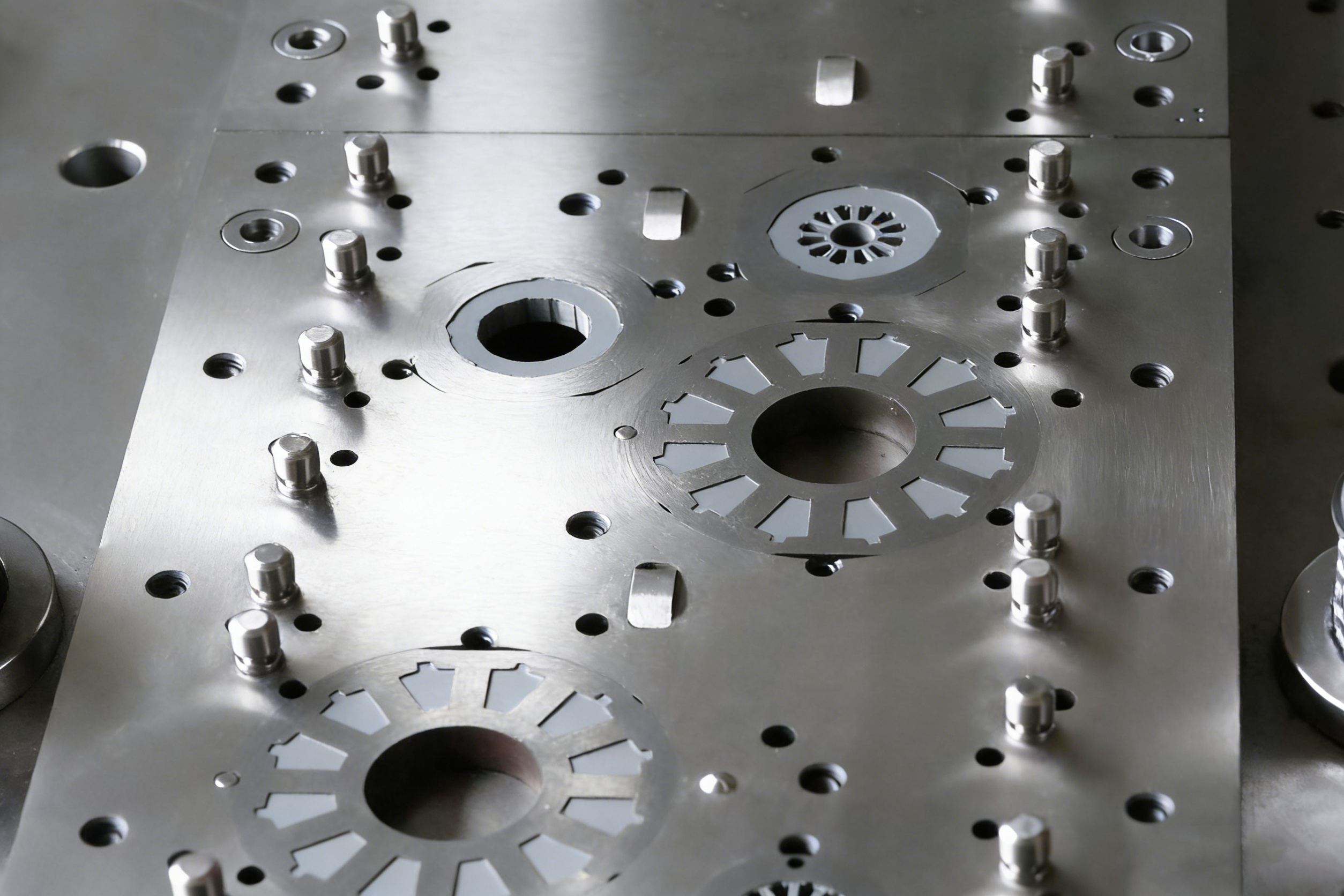
Tooling designed and built internally shortens lead times and supports rapid design changes without renegotiating with outside shops. The same team that verifies your prototype carries it into progressive-die production without starting a new vendor relationship — which is the difference between an engineering revision and a re-qualification.
Die lead time scales with station count and part complexity, so ask for a station-by-station build plan rather than a single delivery date. When you are evaluating custom die design, the question to press on is who owns the strip layout — because that layout is where the prototype-to-production risk is actually resolved.
Low Volume Metal Stamping to High Volume Production Capacity
Partners handling both ranges prevent forced transitions during scaling. The critical check is not whether a supplier claims both capabilities, but whether the same quality system and the same engineering team apply at both ends. A supplier who runs validation builds on one site and series production on another has reintroduced the handoff you were trying to avoid.
As a category, sheet metal stamping services that span both volume ranges should be able to show you the same first-article and process-capability documentation for a 500-piece validation build as for a 500,000-piece series run.
Secondary Operations and Value-Added Services
Integrated secondary operations reduce supplier complexity and handling steps. Capabilities should include tapping, welding, hardware insertion, deburring, washing, laser cutting and assembly performed in-line rather than shipped out to separate facilities. Consolidation lowers total landed cost and keeps tighter quality control across the run, because parts are not re-fixtured or re-datumed between vendors.
Quality Systems and Industry Certifications
IATF 16949:2016 is the automotive quality management standard, and it should be verified if you run automotive programs. Request the certificate itself rather than a claim, and check that the certification scope covers the plant that will actually make your parts — a group certificate that excludes your production site is worth nothing on an audit.
Certification is the floor, not the ceiling. What matters more is how quality is managed day to day: statistical process control on critical characteristics, a defined PPAP process, first-article inspection, and a documented non-conformance trigger. Ask to see our quality assurance process and you should get documents, not adjectives.
The Prototype-to-Production Handoff Checklist
Most of the risk in a prototype-to-production program is concentrated in a short window: the period between design freeze and first article. If the items below are not settled before the production die is cut, they will surface later as dimensional drift, and by then the correction cost has multiplied.
This is the handoff checklist. Use it as a gate — every line is something a buyer can verify, not something a supplier can simply assert.
|
Phase |
What the buyer must verify |
Risk if it is skipped |
|
Print freeze |
The 2D drawing reflects the final 3D model, and the datum scheme is documented and agreed |
Prototype and production parts are constrained to different datums, so both are "correct" and neither assembles |
|
Material |
Grade, thickness, coating and mill certificate for the production batch match the prototype batch |
Springback behaviour shifts, and hole positions drift by more than the print tolerance |
|
Tooling handoff |
The same engineering team carries the part file from soft tooling into the production die |
Design intent is lost in re-quotation, and prototype lessons are paid for a second time |
|
First article |
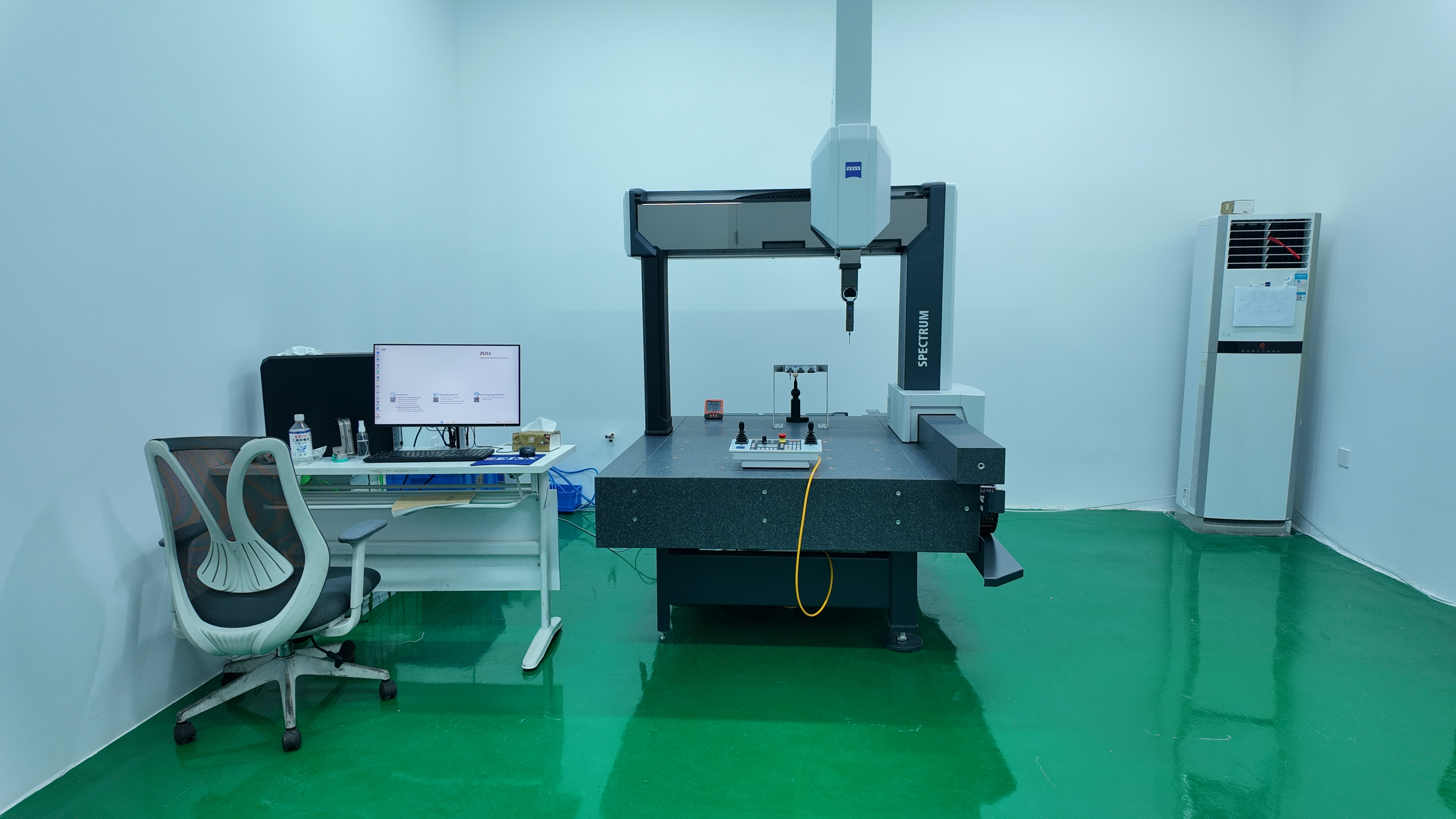
A full CMM report against the frozen print, not a spot check of a few dimensions |
Tolerance drift is discovered after thousands of parts have already run |
|
Process capability |
CPK greater than 1.67 on the identified critical characteristics |
Scrap and rework escape to your assembly line instead of being contained at the press |
|
Documentation |
A PPAP Level 3 submission covering dimensional results, material certification, performance and initial process studies |
Your OEM or Tier-1 customer places a hold on the program at audit |
Datum Scheme and Print Freeze
Datum selection is the quietest failure mode in the whole program. A soft-tooled sample can be measured against whatever surface is convenient, but a production part has to be constrained the way the drawing says it will be — which means the datum scheme in the print should follow a recognised convention such as ASME Y14.5 for geometric dimensioning and tolerancing rather than being agreed verbally at kickoff.
Freeze the print before the die is designed, not after. Every dimension you change afterwards is not an engineering revision; it is a tooling modification, and it is priced accordingly.
Material Batch and Springback Re-validation
Material is not interchangeable across batches once you are forming high-strength steel. A cold-rolled HSLA 340 grade, for example, sits around 370 MPa yield and 445 MPa tensile with roughly 27% elongation — properties that vary enough between coils to move springback noticeably.
So ask for the mill certificate for the production coil, not the prototype coil, and expect springback compensation to be re-validated rather than carried over. Published property data is a starting point: typical mechanical properties for cold-rolled HSLA 340 will tell you the ballpark, but only the actual coil tells you what the die has to compensate for.
First-Article, CMM and PPAP Level 3 Evidence
First article is the first point where the production process — not the prototype process — is being measured, so it needs to be full-scope. A dimensional report that covers only the features that "usually matter" tells you nothing about the features that will drift.
PPAP Level 3 is the submission tier most automotive programs require, and it is worth asking for the actual package contents rather than the phrase. If a supplier cannot name the elements it submits, the documentation is not being managed.
How to Evaluate Partner Readiness Before You Commit
Request current quality certificates with scope and audit dates before you award any contract, and confirm the scope covers the plant that will make your parts. Then go beyond certificates: ask how quality is actually managed through statistical process control, PPAP processes, first-article inspection and non-conformance triggers. A certificate is a claim about a system; these questions test whether the system is running.
Ask About Their Prototype-to-Production Track Record
Request case studies or references that show programs they have scaled from prototype through series production, and ask specifically what changed between the soft-tooled sample and the first production article. A supplier with real track record will answer that question with specifics about datum schemes and springback; a supplier without one will answer it with adjectives.
Verify Equipment Range and Press Capacity
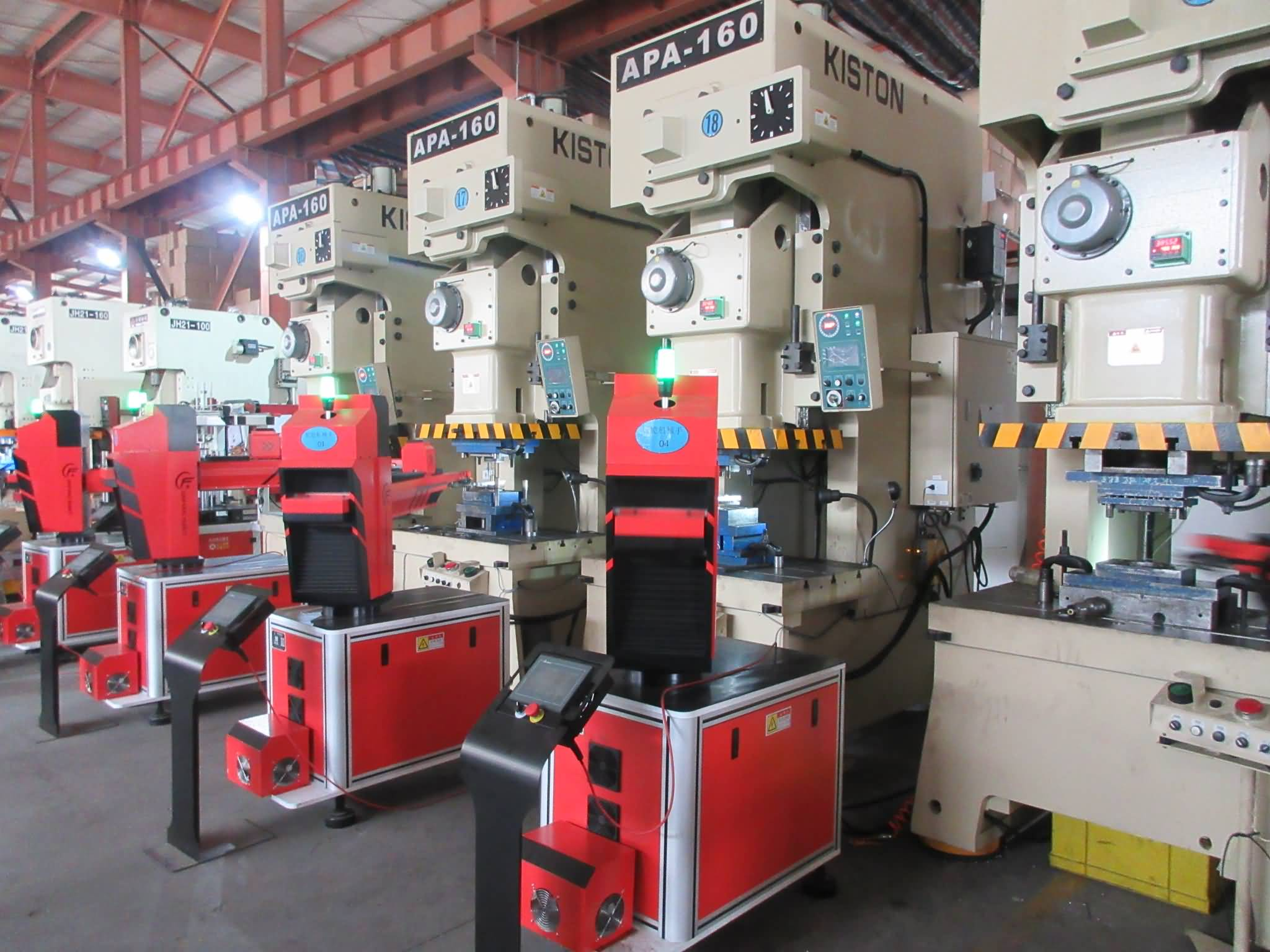
A press list matched to your part matters more than website claims. Tonnage, bed size and feeder configuration determine whether your geometry can run economically, and a small press line is not comparable to a large one regardless of how polished the capability page is. Ask which specific press will run your part, then ask what happens to your program when that press is fully booked.
Also ask about equipment maintenance schedules and documentation, redundant capacity for critical programs, and how unplanned downtime is communicated. Our own capacity runs across 160T to 1200T press lines, which covers most automotive bracket and structural work — but the right question is always whether the range covers your part, not whether the range is large.
Assess Their Engineering Support and DFM Capabilities
Forming simulation is where engineering depth becomes visible. Request native simulation files, or at least a detailed report containing forming limit diagrams and thinning maps, and ask for the springback compensation strategy that was applied to the tool geometry. A supplier who can show you how they adjusted the die in the virtual environment has already solved the problem you are worried about.
Review Material Sourcing and Lead Time Flexibility
Strong partners maintain relationships with service centres or mills rather than calling around when they need something. Ask which grades they run regularly, how material certification and traceability are handled, what happens when a grade goes on allocation, and whether they offer any inventory or stocking arrangement for your program.
The 10 Questions to Ask Before Awarding the Production Die
These are the questions that separate a supplier who can carry your part into volume from one who can only sample it. Ask them in writing, and keep the answers — they become the baseline for the handoff.
1. Which team will build the production die, and did that same team review my prototype?
2. Can you show me a CMM first-article report from a program you carried from soft tooling into series production?
3. What is your press tonnage range, and which specific press will run my part?
4. How did you decide between soft tooling, stage tooling and a progressive die for my annual volume?
5. What datum scheme will you build to, and does it match my drawing?
6. What CPK do you commit to on the critical characteristics, and who signs the initial process study?
7. Which secondary operations do you run in-house and which are subcontracted?
8. What is your die maintenance interval, and what happens to my program if the die needs correction?
9. How do you handle a material grade substitution or an allocation situation?
10. Will you submit a PPAP Level 3 package, and what is your submission date?
If you want a broader structure for the whole sourcing decision — not just the tooling award — the same logic applies to commercial terms, logistics and audit documentation in our supplier vetting checklist.
Red Flags That Signal Future Partner Problems
Limited Equipment or Outsourced Operations
A shop that outsources tooling maintenance quotes you a third party's response time whether it discloses that arrangement or not. Die corrections routed through an external vendor bring freight delays, buffer inventory and sorting costs that never appear on the original quotation. Meanwhile, shops that maintain their own tooling answer repair questions without checking another company's calendar.
No Experience Scaling from Low to High Volumes
Successful prototypes don't prove high-volume capability. A production part has to survive the same forming sequence hundreds of thousands of times without cracking, tearing or drifting out of tolerance, and getting there means debating bend radii, hole placement and material selection with the people who will actually build the tool.
Partners without a scaling track record cannot anticipate the tooling wear patterns or process drift that only appear at volume. Treat "our prototype was perfect" as an unverified statement, not as evidence.
Lack of Quality Documentation or Certification
Vague answers during quality discussions reveal process gaps. A supplier may say parts are "checked regularly" without explaining how inspection frequency is determined or recorded, which usually means the written quality system and daily practice are not operating the same way. Expired or unverifiable certificates deserve follow-up rather than acceptance at face value — and a certificate whose scope excludes your production plant is not evidence of anything.
Poor Communication During the Quoting Stage
Complex parts quoted without sufficient material, tolerance or volume information indicate poor discipline. So does a supplier who commits to tight tolerances before reviewing the geometry, or who cannot explain why a particular tooling strategy was chosen. An unusually low quotation with no stated assumptions about tooling, inspection or process is not a bargain; it is an unpriced risk.
None of these signals disqualify a supplier on its own. All of them should be resolved before you commit tooling or production volume.
Conclusion
You now have what you need to select a stamping partner who scales with your program from prototype through high-volume production. The work you put into evaluating capabilities, certifications and track records upfront pays for itself by eliminating the mid-project transitions that get expensive — and by keeping the engineering knowledge attached to the part instead of losing it at a vendor boundary.
Focus on partners who combine tooling and production under one roof, who will show you the strip layout rather than describe it, and who answer tolerance questions with CPK data instead of confidence. Your timeline, your quality consistency and your bottom line will all reflect that choice.
Ready to pressure-test your program? Send us your STEP or IGES files for a complimentary design-for-manufacturability review covering tooling feasibility and the soft-tooling to hard-tooling transition plan — get your free DFM analysis.
FAQs
Q1. What are the main risks of switching stamping partners between prototype and production phases?
Switching partners mid-project creates several costly challenges, including termination fees, duplicated pattern development, loss of material deposits and timeline resets. You'll also face quality inconsistencies across batches, potential IP ownership disputes over tooling designs, and the need for your new partner to completely relearn your product specifications.
Q2. What essential capabilities should I look for in a stamping partner that can handle both prototyping and high-volume production?
Your ideal partner should offer in-house tooling design and development, capacity for both low-volume and high-volume stamping, integrated secondary operations such as welding and assembly, and design validation services including DFM reviews. For automotive programs they should also hold IATF 16949 certification covering the plant that will make your parts.
Q3. How can I verify a stamping partner's ability to scale from prototype to production before signing a contract?
Request case studies demonstrating a track record of scaling programs from prototype to volume. Verify that their equipment range and press capacity match your part requirements, review their material sourcing relationships, and judge the quality of their DFM feedback during quoting. Confirm that their certification scope covers the specific plant that will manufacture your parts.
Q4. What warning signs indicate a stamping partner may cause problems during production?
Key red flags include outsourcing critical operations such as tooling maintenance, no experience transitioning from low to high volumes, inability to provide detailed quality documentation or valid certificates, and poor communication during quoting. Partners who quote complex parts without asking sufficient questions about materials, tolerances or volumes typically lack the discipline that production requires.
Q5. Why is in-house tooling capability important when choosing a stamping partner?
In-house tooling shortens lead times and enables rapid design changes without coordinating with external shops. When the same team that validated your prototype also builds and maintains the production tooling, you eliminate knowledge transfer gaps and get faster problem resolution. Partners who subcontract tooling introduce delays, additional costs and communication barriers.
Table of Contents
- Key Takeaways
- Why Continuity from Prototype to Production Matters
- Soft Tooling vs Hard Tooling: Where the Cost Curve Turns
- Essential Capabilities Your Stamping Partner Must Have
- The Prototype-to-Production Handoff Checklist
- How to Evaluate Partner Readiness Before You Commit
- Red Flags That Signal Future Partner Problems
- Conclusion
- FAQs