 Small batches, high standards. Our rapid prototyping service makes validation faster and easier —
  EN
EN


Machining Websites Decoded: From Quote Request To Delivered Parts
What Are Machining Websites and How They Work
Imagine needing a custom metal part for your project. A decade ago, you'd flip through directories, make phone calls, and wait days—sometimes weeks—just to get a quote. Today? You upload a CAD file and receive pricing in minutes. That's the power of machining websites.
These online platforms serve as digital bridges connecting buyers with CNC manufacturing capabilities. Whether you're an engineer prototyping a new component or a procurement manager sourcing production parts, these platforms streamline everything from getting a cnc quote online to tracking delivery of finished components.
From Phone Calls to Digital Platforms
Traditional machine shop relationships relied heavily on personal connections. You'd find a local shop, build trust over years, and communicate through phone calls, faxes, and in-person meetings. While these relationships worked, they created bottlenecks. Getting online machining quotes meant preparing detailed RFQs, sending them to multiple shops, and waiting for each to manually calculate costs.
The shift to digital-first ordering systems changed everything. According to industry observations, manufacturers increasingly recognize that sourcing CNC-machined parts online is faster, easier to compare, and provides access to a larger manufacturing base than traditional methods. Modern cnc service platforms leverage advanced algorithms and machine learning to analyze part files and generate accurate quotes almost instantly—transforming what once took weeks into a matter of minutes.
The Three Types of Online Machining Services
Not all online cnc services operate the same way. Understanding the three main platform types helps you choose the right approach for your needs:
- Instant Quote Services: These platforms use AI-powered systems to analyze your uploaded design files and provide immediate pricing. You'll receive a single quote generated algorithmically, making them ideal for rapid prototyping and when speed matters most. The trade-off? Less room for negotiation and custom arrangements.
- Traditional Quote Request Systems: These function like digital versions of the classic RFQ process. You submit your requirements, and human engineers review them before providing quotes—typically within 24-48 hours. This approach works well for complex parts requiring specialized expertise or when you need multiple quotes for comparison.
- Manufacturing Marketplaces: Think of these as matchmaking platforms connecting you with verified suppliers. You post your requirements, and multiple manufacturers respond with competitive bids. These platforms often provide access to vast supplier networks—some featuring hundreds of thousands of factories—giving you maximum choice but requiring more evaluation effort.
Each platform type serves different procurement needs. An online cnc machine service with instant quoting excels for straightforward parts, while marketplaces shine when you need competitive pricing across multiple suppliers.
Why Manufacturing Went Digital
The digital transformation of manufacturing procurement wasn't accidental. Several compelling forces drove this evolution:
- Time Savings: Digital platforms eliminate the back-and-forth communication that slowed traditional quoting. What previously required days of phone calls now happens in hours or minutes.
- Cost Transparency: Online platforms make it easier to compare capabilities and pricing across multiple providers, helping buyers find optimal value.
- Expanded Access: Geographic limitations disappear online. A startup in Ohio can easily source from precision manufacturers across the country or around the world.
- Streamlined Communication: Modern cncservice platforms provide seamless communication channels between manufacturers and machine shops, enabling real-time discussions, clarifications, and modifications.
- Reduced Errors: Digital file uploads and automated analysis minimize the misunderstandings that plagued phone-based ordering.
The result? A cnc online service ecosystem that serves everyone from first-time buyers ordering prototype parts to enterprise procurement teams managing complex supply chains. As you explore these platforms, understanding their underlying structure helps you navigate more confidently—and that's exactly what we'll continue unpacking throughout this guide.
CNC Machining Methods Every Buyer Should Understand
Ever browsed a machining website and felt overwhelmed by terms like "3-axis milling," "swiss machining," or "wire EDM"? You're not alone. Understanding these core processes doesn't require an engineering degree—it just takes a clear explanation of what each method does and when it makes sense for your project.
When you upload a part file to an online platform, the system analyzes your geometry and recommends appropriate manufacturing methods. Knowing the basics helps you communicate effectively with providers, ask the right questions, and make informed decisions about your cnc machining milling or cnc turning requirements.
CNC Milling Explained Simply
Think of CNC milling like a sculptor with a spinning tool. Your material sits on a table while rotating cutting tools remove material to create your desired shape. Unlike a sculptor working by hand, a cnc cutting machine follows precise computer instructions, moving the tool along multiple axes to carve complex geometries.
Standard 3-axis milling moves the cutting tool along three directions: left-right (X), forward-back (Y), and up-down (Z). This configuration excels at creating flat surfaces, pockets, slots, and basic contours. It's the workhorse of CNC machining—straightforward to program, cost-effective, and suitable for a wide range of parts.
When is milling your best choice? Consider it for:
- Flat or angular surfaces: Housings, brackets, and plates with multiple features
- Complex 3D shapes: Parts with curves, contours, and varying depths
- Features on multiple sides: Components requiring machining from different angles (though this may require repositioning)
Most machining websites default to milling for non-cylindrical parts because of its versatility. The process handles everything from soft plastics to hardened steels, making it the go-to method for cnc cutting across industries.
Understanding Turning Operations
If milling resembles sculpting, cnc turning is more like pottery—except instead of clay spinning on a wheel, it's metal or plastic rotating at high speed while a cutting tool shapes it. This fundamental difference makes turning ideal for creating cylindrical parts with rotational symmetry.
During turning operations, your workpiece spins while a stationary cutting tool removes material. This approach delivers exceptional accuracy for diameters and produces superior surface finishes on cylindrical surfaces. Shafts, pins, bushings, and threaded components are natural candidates for a cnc turning service.
For extremely small, intricate cylindrical parts, swiss machining offers enhanced precision. This specialized turning technique supports the workpiece closer to the cutting point, reducing vibration and enabling tighter tolerances on tiny components—think medical implant screws or watch components.
Choose turning when your part features:
- Rotational symmetry: Cylinders, cones, and round profiles
- External threads: Bolts, screws, and threaded connectors
- Internal features: Bores, internal threads, and concentric geometries
- High concentricity requirements: Parts where roundness and center alignment matter
Modern CNC turning centers often include live tooling—powered cutting tools that can perform milling operations while the part is still mounted. This capability reduces setups and improves accuracy when your cylindrical part needs cross-drilled holes or flats.
When 5-Axis Machining Makes Sense
Here's where things get interesting. Standard 3-axis milling limits tool access to surfaces roughly parallel or perpendicular to the spindle. Complex parts with undercuts, angled features, or organic shapes often require multiple setups—each introducing potential accuracy variations.
5 axis cnc machining services solve this problem by adding two rotational axes to the standard three linear movements. The cutting tool—or workpiece—can rotate and tilt, allowing access to virtually any surface angle in a single setup. Imagine being able to machine all sides of a turbine blade without ever unclamping the part.
According to manufacturing experts, this enhanced capability dramatically reduces setup time and improves accuracy for complex geometries. Single-setup machining eliminates cumulative tolerances associated with repositioning, ensuring tighter dimensional relationships across the entire part.
When should you request 5-axis capabilities?
- Complex contoured surfaces: Aerospace components, impellers, and sculptured parts
- Undercut features: Geometry that's impossible to reach with straight tool paths
- Tight tolerance relationships: When features on different surfaces must align precisely
- Superior surface finish: 5-axis allows optimal tool orientation, improving finish quality
The trade-off? 5-axis machining typically costs more due to equipment sophistication and programming complexity. For simple parts, 3-axis milling remains more economical.
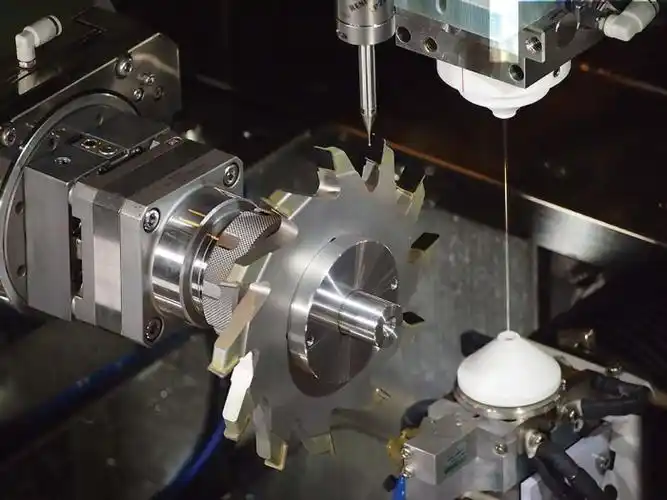
Wire EDM: The Precision Specialist
Sometimes traditional cutting methods can't achieve what you need. Wire Electrical Discharge Machining (EDM) takes a completely different approach—using electrical sparks rather than physical cutting to remove material.
A thin wire electrode (typically 0.004 to 0.012 inches diameter) passes through your workpiece while controlled electrical discharges erode material along the wire path. Because there's no physical contact, wire EDM creates zero cutting forces. This makes it perfect for delicate parts, thin walls, and materials too hard for conventional machining.
Wire EDM shines for punch and die components, precision gears, and any part requiring exceptionally tight tolerances with complex profiles. The limitation? It only works with electrically conductive materials.
| Method | Best For | Typical Applications | Complexity Level |
|---|---|---|---|
| CNC Milling (3-axis) | Flat surfaces, pockets, basic contours | Housings, brackets, plates | Low to Medium |
| CNC Turning | Cylindrical parts with rotational symmetry | Shafts, pins, threaded components | Low to Medium |
| 5-Axis Milling | Complex geometries, undercuts, multi-angle features | Aerospace parts, impellers, medical devices | High |
| Wire EDM | Hardened materials, tight tolerances, delicate features | Dies, punches, precision gears | Medium to High |
Understanding these methods helps you communicate more effectively when requesting quotes. Instead of simply uploading a file and hoping for the best, you'll recognize why a provider recommends specific processes—and you'll know when to ask questions about alternatives that might better serve your requirements.
Industry Certifications and What They Mean for Your Project
You've uploaded your CAD file, compared quotes, and found a machining website with competitive pricing. But then you notice a row of certification logos—ISO 9001, AS9100D, IATF 16949. What do these actually mean for your parts? More importantly, which ones matter for your specific project?
These certifications aren't just decorative badges. They represent third-party verification that a provider maintains rigorous quality systems, follows documented processes, and meets industry-specific requirements. For buyers sourcing precision machining services, understanding these standards helps you identify capable suppliers and avoid costly mistakes.
Quality Certifications Decoded
At the foundation of manufacturing quality sits ISO 9001:2015—the internationally recognized standard for quality management systems. When a precision machining company displays this certification, it means they've demonstrated:
- Documented processes: Procedures for every critical operation are written, reviewed, and followed
- Management commitment: Leadership actively supports and monitors quality objectives
- Continuous improvement: Systems exist to identify problems and implement corrective actions
- Customer focus: Requirements are clearly understood and verified throughout production
- Third-party auditing: External auditors regularly verify compliance
Think of ISO 9001 as the baseline. It doesn't guarantee aerospace-grade precision or medical-device cleanliness—but it confirms the provider has fundamental quality controls in place. Nearly all reputable machining websites feature ISO 9001 certification as a minimum standard.
Beyond this foundation, industry-specific certifications add layers of requirements tailored to particular sectors. These additional standards address unique risks, traceability demands, and regulatory expectations that generic quality systems don't cover.
Industry-Specific Standards That Matter
Depending on your application, certain certifications become non-negotiable. Here's what the major industry standards guarantee:
ISO 13485 for Medical Devices
If your parts will end up in medical equipment, this certification is essential. According to quality management experts, ISO 13485:2016 explicitly describes and defines current QMS expectations for medical device companies—addressing everything from design controls to risk management. Providers certified to this standard maintain:
- Design and development traceability throughout production
- Risk-based approaches aligned with patient safety
- Validated processes for cleaning, sterilization compatibility, and biocompatibility considerations
- Documentation meeting regulatory submission requirements
For medical machining applications, this certification signals a provider understands FDA and international regulatory expectations—not just basic quality principles.
IATF 16949 for Automotive
The automotive industry demands extreme consistency across high volumes. IATF 16949, developed by the International Automotive Task Force, builds on ISO 9001 with automotive-specific requirements focused on defect prevention, variation reduction, and waste elimination in the supply chain. Precision machining companies with this certification typically offer:
- Statistical process control (SPC) monitoring
- Production Part Approval Process (PPAP) documentation
- Failure mode and effects analysis (FMEA) capabilities
- Advanced product quality planning systems
AS9100D for Aerospace
Aerospace cnc machining requires exceptional documentation and traceability. AS9100D adds aerospace-specific requirements to ISO 9001, emphasizing safe and reliable products. According to TUV Nord, this standard focuses primarily on making flight-worthy parts with the controls needed to accomplish that mission. Certified providers appear in the OASIS database—an online resource used by aerospace primes to verify supplier compliance.
Key AS9100D requirements include:
- Comprehensive configuration management
- Risk management throughout product realization
- Counterfeit parts prevention programs
- First Article Inspection (FAI) procedures
ITAR for Defense Applications
Working on defense-related projects? ITAR compliance becomes mandatory. The International Traffic in Arms Regulations govern manufacturing, export, and transfer of defense-related items. According to AMFG, ITAR-compliant providers must register with the Directorate of Defense Trade Controls, restrict access to regulated data and materials to authorized U.S. persons, and develop secure workspaces for handling sensitive information.
ITAR certification signals a provider can handle sensitive projects requiring:
- Physical and digital security for blueprints and specifications
- Strict personnel clearance protocols
- Controlled access to manufacturing areas
- Secure file storage and encryption
For specialty materials used in defense applications—like kovar machining services for hermetic sealing components—ITAR compliance ensures proper handling throughout production.
Matching Certifications to Your Project Needs
So which certifications should you require? Start by asking yourself these questions:
- What's the end application? Medical implants require ISO 13485. Flight-critical aerospace parts demand AS9100D. Defense components need ITAR.
- What do your customers require? If you're supplying to an automotive OEM, they'll likely mandate IATF 16949 certification from your suppliers.
- What's your traceability burden? Highly regulated industries require material certifications, process documentation, and lot traceability that only certified shops routinely provide.
- What's your risk tolerance? For non-critical components, ISO 9001 may suffice. For precision cnc machining where failure isn't an option, industry-specific certifications reduce risk.
When evaluating machining websites, look beyond the certification logos. Ask providers about their most recent audit results, any non-conformances identified, and how they address corrective actions. A certification demonstrates capability at a point in time—ongoing audit history reveals whether quality commitment is genuine.
Remember: certifications protect you. They mean third-party auditors have verified that a provider's claims match their actual practices. For critical applications, they're not optional—they're your assurance that precision machining services will deliver parts meeting your exact requirements.
Material Selection Guide for Online Machining Orders
You've identified the right machining method and verified provider certifications. Now comes a decision that directly impacts your part's performance, cost, and lead time: material selection. When browsing machining websites, you'll encounter dozens of cnc machining materials—each with trade-offs worth understanding before you click "order."
Choosing the wrong material can mean parts that wear prematurely, cost more than necessary, or fail under operating conditions. The good news? You don't need a materials science degree to make smart choices. Understanding a few key properties helps you match materials to your application requirements with confidence.
Metals for Precision Parts
Metals dominate CNC machining for applications requiring strength, durability, and thermal resistance. But within "metals," you'll find significant variation in properties, machinability, and cost. Here's what you need to know about the most common options.
Aluminum Alloys: The Workhorse Choice
When cost-efficiency and fast turnaround matter, aluminum machining often makes the most sense. According to Hubs, aluminum alloys have an excellent strength-to-weight ratio, high thermal and electrical conductivity, and natural protection against corrosion—making them the most economical option for many prototypes and production parts.
The most popular grades include:
- Aluminum 6061: The general-purpose champion with good strength, excellent machinability, and the lowest cost among aluminum options
- Aluminum 7075: Aerospace-grade with strength comparable to steel—ideal when weight reduction is critical but structural demands are high
- Aluminum 5083: Superior resistance to seawater, making it optimal for marine applications and welded assemblies
Stainless Steel: When Corrosion Resistance Matters
Need parts that withstand harsh environments, food contact, or medical applications? Stainless steel combines high strength with excellent corrosion resistance. The trade-off? It's harder to machine than aluminum, which affects pricing and lead times.
Common grades you'll encounter:
- 304 Stainless: The most widely used grade—resistant to most environmental conditions with good machinability
- 316 Stainless: Higher chemical and saline resistance than 304, preferred for marine environments and chemical processing
- 17-4 PH: Can be heat-treated to exceptional hardness while maintaining corrosion resistance—common in aerospace and high-performance applications
Bronze CNC Applications: Bearings, Bushings, and Beyond
When your application involves sliding contact, wear resistance, or low friction, machining bronze deserves serious consideration. Unlike aluminum or steel, bronze alloys excel in bearing surfaces where metal-to-metal contact occurs.
According to First Mold, bronze outperforms steel or stainless steel in CNC machining for applications requiring excellent wear resistance and low friction—making it ideal for manufacturing bearings, bushings, and gears.
Popular cnc bronze alloys include:
- C932 Bearing Bronze: Outstanding wear resistance and anti-friction properties for bushings, thrust washers, and gears under high loads
- C954 Aluminum Bronze: Superior strength and saltwater corrosion resistance—preferred for marine components and heavy-duty bearings
- C510 Phosphor Bronze: Excellent fatigue resistance and elasticity, commonly used for springs and electrical contacts
One consideration: bronze cnc machining can produce long, stringy chips that require careful tool management. Experienced providers know how to optimize cutting parameters for clean results.
Engineering Plastics and When to Use Them
Not every application needs metal. Engineering plastics offer advantages that metals simply can't match: lighter weight, natural electrical insulation, chemical resistance, and often lower material costs. When you're machining nylon, Delrin, or other thermoplastics, you're accessing a different set of capabilities.
Delrin (POM): The Precision Plastic
If you need plastic parts with metal-like precision, delrin plastic is often your best choice. According to Hubs, POM (commonly known as Delrin) offers the highest machinability among plastics, combined with high stiffness, low friction, excellent dimensional stability at elevated temperatures, and very low water absorption.
Delrin excels for:
- Gears and bearings requiring tight tolerances
- Valves and fittings where dimensional accuracy matters
- Food-contact applications requiring FDA-compliant materials
- Parts needing smooth surface finishes without extensive post-processing
Nylon for Machining: Tough and Flexible
When toughness and impact resistance matter more than dimensional precision, nylon for machining offers compelling advantages. According to Jaco Products, nylon's ability to absorb shock and impact during machining allows for parts that need to endure dynamic loads, such as bushings or protective casings.
Choose nylon when your application requires:
- Flexibility combined with durability
- Shock absorption under repeated stress
- Lightweight components for weight-sensitive applications
- Parts that experience movement or flexing during use
One important caveat: machining nylon requires attention to moisture absorption. Nylon can experience slight dimensional changes in humid environments, making Delrin the better choice for parts requiring tight tolerances over time.
Other Engineering Plastics Worth Knowing
- PEEK: High-performance thermoplastic often used to replace metal parts due to its exceptional strength-to-weight ratio—common in medical and aerospace applications
- Polycarbonate: Excellent impact strength and optical clarity—ideal for protective covers and transparent components
- PTFE (Teflon): Lowest friction coefficient of any solid material, outstanding chemical resistance, and one of the few plastics operating above 200°C
Matching Materials to Application Requirements
With so many options, how do you choose? Start with your application requirements and work backward to identify suitable materials.
| Material | Strength | Machinability | Cost Factor | Best Applications |
|---|---|---|---|---|
| Aluminum 6061 | Medium | Excellent | Low | Prototypes, housings, brackets |
| Aluminum 7075 | High | Good | Medium | Aerospace, high-stress components |
| Stainless 304 | High | Moderate | Medium | Food equipment, medical devices |
| Stainless 316 | High | Moderate | Medium-High | Marine, chemical processing |
| C932 Bronze | Medium-High | Good | Medium | Bearings, bushings, gears |
| Delrin (POM) | Medium | Excellent | Low | Precision gears, valves, fittings |
| Nylon 6/66 | Medium | Good | Low | Bushings, washers, impact parts |
| PEEK | High | Moderate | High | Medical implants, aerospace |
Decision Framework
Ask yourself these questions when selecting materials:
- What forces will the part experience? High loads favor metals; dynamic stress might favor nylon's flexibility
- What's the operating environment? Corrosive conditions push toward stainless steel or specialized plastics; sliding contact suggests bronze
- How tight are your tolerances? Delrin maintains dimensions better than nylon; aluminum machines more precisely than brass
- What's your budget priority? Aluminum 6061 and Delrin offer excellent value; PEEK and specialized alloys cost significantly more
- Does weight matter? Plastics and aluminum weigh far less than steel or bronze
When in doubt, many machining websites offer DFM (Design for Manufacturability) feedback during the quoting process. Leverage this—experienced providers can suggest material alternatives you might not have considered, potentially saving cost without sacrificing performance.
With your material selected, you're ready to navigate the ordering process itself. Understanding what happens between uploading your file and receiving finished parts helps you avoid delays and ensure smooth production.
The Complete Order Process from Quote to Delivery
You've selected your material and identified a promising machining website. Now what? For first-time buyers, the journey from uploading a design file to holding finished cnc machining parts can feel like a black box. Understanding each stage helps you avoid delays, communicate effectively, and set realistic expectations for your custom machined parts.
Whether you're ordering a single cnc prototyping sample or scaling toward production volumes, the core workflow remains consistent. Let's walk through exactly what happens—and what you need to prepare—at each step.
Preparing Your CAD Files for Upload
Here's a truth that experienced engineers learn quickly: the success of your online order is largely determined before you ever click "upload." According to Bolang, the quality of your files accounts for roughly 90% of order success. Poor data leads to inaccurate quotes, manufacturing delays, and parts that don't match expectations.
File Format Requirements
Most machining websites accept several 3D file formats, but not all formats work equally well:
- STEP (.stp, .step): The gold standard for CNC machining. STEP files preserve precise geometry that automated quoting systems and CNC programmers need for accurate toolpaths
- IGES (.igs, .iges): An older format that works well for surface data, though STEP generally provides better reliability
- Parasolid (.x_t): Native to Siemens NX and SolidWorks—many platforms accept these directly
- STL (.stl): Avoid for CNC machining. STL files use mesh approximations that lack the precision geometry needed for accurate cnc machine parts. These work for 3D printing, not subtractive manufacturing
The Critical Role of 2D Drawings
Your 3D model shows what the part looks like—but it doesn't communicate everything a manufacturer needs. For machined parts with tight tolerances, always include a 2D PDF drawing that specifies:
- Critical dimensions with tolerance callouts (e.g., ±0.05mm)
- Surface finish requirements for specific features
- Thread specifications (size, pitch, class)
- Geometric dimensioning and tolerancing (GD&T) where applicable
- Material specifications and heat treatment requirements
Think of the 3D file as the shape and the 2D drawing as the contract. Without clear tolerances documented, providers must guess—and guesses lead to parts that don't fit your assembly.
Understanding the Quoting Process
Once your files are ready, the quoting process begins. What happens next depends on the platform type—but understanding both approaches helps you navigate confidently.
Instant Quoting vs. Manual Review
Instant quote platforms analyze your uploaded geometry using algorithms that calculate material volume, machining time, and complexity. Within minutes—sometimes seconds—you receive pricing. This works beautifully for straightforward parts with standard materials and tolerances.
Manual quoting involves human engineers reviewing your files before providing pricing. This takes longer (typically 24-48 hours) but offers advantages for complex projects. Engineers can identify manufacturability issues, suggest design optimizations, and provide accurate quotes for unusual requirements that algorithms might misinterpret.
Design for Manufacturability (DFM) Feedback
Many cnc turning services and milling providers offer DFM analysis as part of the quoting process. This feedback identifies potential issues before production begins:
- Wall thicknesses too thin for stable machining
- Internal corners requiring larger radii
- Features impossible to reach with standard tooling
- Tolerance specifications tighter than necessary (adding cost without benefit)
According to industry experts, taking time to optimize designs based on DFM feedback can reduce machining costs significantly—sometimes by 50% or more when material changes or feature modifications are possible.
The Complete Step-by-Step Ordering Process
- Create or export your 3D model in STEP format, ensuring all features are fully defined
- Prepare your 2D drawing with critical tolerances, surface finishes, and specifications clearly noted
- Upload files to your chosen machining website, selecting material and quantity
- Review the quote—check pricing breakdown, lead time, and any automated DFM warnings
- Request clarification if anything seems unclear or if pricing appears unexpected
- Confirm specifications including tolerances, finishes, and inspection requirements
- Place your order and receive confirmation with production timeline
From Order Confirmation to Delivery
After you confirm your order, manufacturing begins—but what happens behind the scenes? Understanding this process helps you anticipate timing and respond quickly if questions arise.
Production Phases
Your order typically moves through these stages:
- Programming: CNC programmers create toolpaths based on your geometry and specifications
- Material Preparation: Stock is cut to size and loaded into machines
- Machining: CNC equipment executes programmed operations
- Secondary Operations: Deburring, threading, and surface treatments
- Inspection: Quality verification against your specifications
- Packaging and Shipping: Parts are protected and dispatched
Tracking and Communication
Most reputable platforms provide order tracking—sometimes with real-time production updates. Expect communication at key milestones: order confirmation, production start, quality inspection completion, and shipping notification with tracking information.
Lead Time Expectations
For standard aluminum or plastic custom machined parts, expect 3-5 business days for prototypes according to industry norms. Production runs of 100+ units typically require 2-4 weeks depending on complexity and finishing requirements. Rush services are often available at premium pricing when deadlines are critical.
One final tip: if you're new to a provider, start with a small test order. This lets you verify quality, communication responsiveness, and delivery reliability before committing to larger projects—exactly the kind of evaluation strategy we'll explore next.

How to Evaluate and Compare Machining Websites
You've found several machining websites that seem capable of handling your project. Prices look competitive. Lead times appear reasonable. But how do you know which provider will actually deliver quality parts on time? Whether you're searching for cnc machine shops near me or evaluating global online platforms, the same evaluation principles apply.
Choosing the wrong provider can mean missed deadlines, scrapped parts, and frustrating back-and-forth communication. The good news? A systematic evaluation approach helps you identify reliable partners before committing your budget—and your project timeline—to an unknown quantity.
Red Flags When Evaluating Providers
Before diving into what makes a great machining website, let's address warning signs that should make you pause. According to Easy Imex, certain patterns consistently indicate potential problems—regardless of whether you're evaluating local machine shops or international platforms.
Communication Problems
Poor communication is perhaps the most telling red flag. If a provider is slow to reply during the sales process—when they're trying to win your business—imagine how responsive they'll be once they have your money. Watch for:
- Delayed responses: Taking more than 24-48 hours to answer straightforward questions
- Vague answers: Refusing to provide details about quality control procedures, pricing breakdowns, or lead times
- Missing technical expertise: Representatives who can't discuss machining specifics or material properties
- Language barriers: Communication difficulties that could lead to specification misunderstandings
Pricing That Seems Too Good
When comparing quotes from machining shops near me versus online alternatives, dramatic price differences deserve scrutiny. If one provider quotes significantly below competitors, ask yourself why. Are savings coming from inferior materials? Less rigorous quality control? Inexperienced operators? According to industry experts, prices that seem too good to be true usually are.
Suspicious Payment Terms
Legitimate providers typically require a deposit upfront with the balance due upon delivery or after quality verification. Be cautious of:
- Demands for 100% payment before production begins
- Large discounts for paying everything upfront
- Requests for payment through unusual channels or untraceable methods
- Reluctance to provide formal invoices or receipts
Missing Credentials
Any legitimate cnc shop near me or online platform should readily provide business credentials, quality certifications, and verifiable references. Inability or unwillingness to share these documents suggests either disorganization or something to hide.
Questions to Ask Before Ordering
Beyond avoiding red flags, proactive questioning helps you evaluate capabilities before placing orders. According to The Werks, asking specific questions upfront prevents surprises later.
Capability Questions
- What machining methods do you specialize in? Some shops excel at milling; others focus on turning. Matching specialization to your needs improves outcomes.
- Have you worked with my specific material before? Specialty materials like titanium or exotic alloys require experience. A shop unfamiliar with your material may struggle with tool selection and cutting parameters.
- What tolerances can you reliably hold? Don't just ask what's possible—ask what they achieve consistently. There's a difference between capability and routine performance.
- What inspection equipment do you use? According to Boen Rapid, suppliers should be equipped with advanced technologies such as coordinate measuring machines (CMMs), optical comparators, and surface roughness testers.
Process Questions
- Will you provide a free estimate? Understanding costs upfront prevents surprises. Providers unwilling to quote without commitment may be hiding unfavorable pricing.
- What's your typical lead time for projects like mine? Generic answers like "it depends" aren't helpful. Push for specifics based on your quantity and complexity.
- Can you accommodate my timeline? Even capable shops may lack capacity when you need it. Confirm availability before assuming they can meet your deadline.
- What happens if parts don't meet specifications? Understanding their quality guarantee and remake policy matters before problems occur.
Reference Questions
- Can you provide references from similar projects? Experienced providers should have verifiable references from businesses they've served. Reluctance to share references is itself a red flag.
- What industries do you primarily serve? A cnc machine shop near me serving aerospace clients likely maintains higher standards than one focused solely on low-complexity work.
Testing a New Machining Website with Small Orders
Here's practical wisdom from experienced procurement professionals: never bet your critical project on an unproven provider. Instead, test new machining websites with small orders before committing to larger volumes.
Why Test Orders Matter
A test order reveals realities that quotes and conversations cannot. You'll discover:
- Actual versus promised lead times
- Real communication responsiveness during production
- Part quality compared to specifications
- Packaging and shipping practices
- How they handle questions or issues that arise
Designing an Effective Test
Your test order should meaningfully evaluate capabilities relevant to your larger project:
- Include representative features: If your production parts have tight-tolerance bores, include similar features in your test part
- Specify the same material: Testing with aluminum when you need stainless steel doesn't verify material expertise
- Request inspection documentation: Ask for the same reports you'll need for production orders
- Set realistic but firm deadlines: See if they deliver when promised
Evaluation Checklist for Test Orders
When your test parts arrive, evaluate systematically:
- Do dimensions meet specified tolerances? Measure critical features yourself.
- Does surface finish match requirements? Visual and tactile inspection matters.
- Is documentation complete and accurate? Missing certifications signal process gaps.
- Did parts arrive on time? Late test orders predict late production orders.
- How was communication throughout? Responsive providers stay responsive.
- Were any issues resolved satisfactorily? Problems happen—response quality matters more.
Whether you're evaluating machinist shops near me for quick-turn prototypes or vetting an overseas platform for production volumes, this test-first approach dramatically reduces risk. A $500 test order that reveals quality problems saves you from a $50,000 production disaster.
With evaluation criteria established and testing strategies in place, you're ready to understand one of the most frequently misunderstood aspects of CNC machining: specifying tolerances and surface finishes appropriately for your application.
Tolerances and Surface Finishes Explained
Ever uploaded a design to a machining website and wondered whether ±0.005 inches is tight enough—or overkill for your application? You're facing one of the most common dilemmas in CNC procurement: specifying precision requirements that ensure your machining parts function correctly without inflating costs unnecessarily.
Here's the reality: tighter tolerances and smoother finishes always cost more. The question isn't what's possible—it's what's actually necessary. Understanding how to specify requirements appropriately helps you get precision cnc machining services that deliver exactly what your application needs, nothing more and nothing less.
Understanding Tolerance Callouts
Tolerances define the acceptable variation from your specified dimension. When you call out a hole diameter of 0.500 ±0.005 inches, you're telling the machinist that anywhere between 0.495 and 0.505 inches is acceptable. But how do you decide what tolerance your precision machining parts actually require?
Standard vs. Tight Tolerances
Most machining websites work with standard tolerance blocks that apply to dimensions without specific callouts. According to Protolabs, standard bilateral tolerances typically read ±0.005 inches (±0.127mm), while tighter specifications must be explicitly noted on your design. These standard tolerances work perfectly for the majority of features on most parts.
When do you need tighter specifications? Consider these scenarios:
- Mating surfaces: Parts that fit together require controlled clearances
- Bearing seats: Shaft diameters and bore sizes need precise fits
- Sealing surfaces: O-ring grooves and gasket faces demand accuracy
- Assembly alignment: Mounting holes must align across multiple components
Reading Tolerance Specifications
You'll encounter tolerances expressed several ways on machining websites and technical drawings:
- Bilateral (±): Variation allowed in both directions—example: 1.000 ±0.005 in.
- Unilateral: Variation in one direction only—example: 1.000 +0.000/-0.010 in.
- Limit dimensions: Maximum and minimum values stated directly—example: 1.005/0.995 in.
All formats communicate the same information differently. According to Protolabs, sticking with three-decimal-place dimensions (avoiding extra zeros like 1.0000) reduces confusion unless there's an overriding reason for four-place precision.
Geometric Tolerancing (GD&T)
For cnc milling parts with complex relationships between features, geometric dimensioning and tolerancing provides deeper control. Common GD&T callouts include:
- True position: Controls hole location relative to reference datums
- Flatness: Defines two parallel planes within which a milled surface must lie
- Cylindricity: Ensures holes and turned surfaces are truly round, not oblong
- Concentricity: Guarantees coaxial features share a common center axis
| Tolerance Grade | Typical Range | Applications | Cost Impact |
|---|---|---|---|
| Standard | ±0.005 in. (±0.127mm) | General features, non-critical dimensions | Baseline |
| Precision | ±0.002 in. (±0.05mm) | Mating surfaces, bearing fits | +15-25% |
| High Precision | ±0.001 in. (±0.025mm) | Aerospace components, medical devices | +40-60% |
| Ultra Precision | ±0.0005 in. (±0.0127mm) | Optical equipment, metrology instruments | +100%+ |
Surface Finish Options Explained
Beyond dimensional accuracy, surface finish affects both function and appearance of your cnc milled parts. Rougher surfaces are faster to machine; smoother surfaces require additional passes and slower speeds—directly impacting cost.
How Surface Finish Is Measured
Surface roughness is typically expressed in microinches (µin.) or micrometers (µm) as an Ra value—the arithmetic average of surface irregularities. Lower numbers mean smoother surfaces.
According to Protolabs, standard offerings typically provide 63 µin. Ra for flat and perpendicular surfaces, and 125 µin. Ra or better for curved surfaces. This finish works adequately for most functional applications.
When Smoother Finishes Matter
Not every surface needs mirror polish. Focus smoother finish requirements on:
- Sealing surfaces: O-ring grooves and gasket faces benefit from 32 µin. Ra or smoother
- Sliding contact: Bearing surfaces and wear areas perform better with finer finishes
- Cosmetic faces: Visible surfaces may warrant 16-32 µin. Ra for appearance
- Fatigue-critical areas: Smoother surfaces reduce stress concentrations
For cosmetic improvement on metal parts without specifying ultra-fine machining, light bead blasting offers an economical alternative that improves appearance without the cost of extensive polishing operations.
Balancing Precision with Cost
Here's the uncomfortable truth: over-tolerancing is one of the most expensive mistakes buyers make. According to Epec, applying tight tolerances to every dimension doesn't make a part better—it makes it more expensive and harder to manufacture.
The Real Cost of Tight Tolerances
Tighter specifications increase costs through multiple mechanisms:
- Slower machining: Finer cuts require reduced feed rates
- Additional passes: Roughing followed by finishing operations
- More inspection: Tighter specs demand more measurement points
- Higher scrap rates: Less room for variation means more rejected parts
- Premium equipment: Ultra-precision work may require specialized machines
Smart Tolerance Strategy
Instead of blanket tight tolerances, apply precision strategically:
- Identify critical features: Which dimensions directly affect part function?
- Use standard tolerances liberally: Non-critical dimensions at ±0.005 in. reduce cost
- Consider tolerance stack-up: When multiple tolerances interact, cumulative effects matter
- Consult your machining provider: Experienced shops can advise which tolerances are achievable without premium pricing
The goal isn't the tightest tolerance possible—it's the tolerance that ensures your part works perfectly in its intended application.
When specifying requirements on machining websites, remember that every tight tolerance you add increases cost. Focus precision where it matters, accept standard tolerances elsewhere, and you'll receive cnc milled parts that function flawlessly without breaking your budget.
From Prototyping to Production Scaling
You've successfully ordered a few cnc prototype parts that validated your design. Now comes the question every product developer eventually faces: how do you scale from a handful of samples to hundreds—or thousands—of production parts? Understanding how machining websites handle this transition helps you plan effectively and avoid the costly surprises that derail project timelines.
The journey from prototype machining to mass production isn't simply about ordering more parts. According to Fictiv, the journey from initial prototype to mass production is a complex transformation for the development lifecycle of any product—involving material consistency, cost management, design refinement, and process validation at each stage.
Prototyping Through Machining Websites
Rapid cnc prototyping serves a specific purpose: validating your design before committing to production tooling or large orders. During this phase, speed typically matters more than per-unit cost—you need parts fast enough to test, iterate, and refine before competitors beat you to market.
What Makes Prototyping Different
When you're ordering cnc prototype machining parts, the economics work differently than production:
- Setup costs dominate: Programming, fixturing, and first-article inspection costs are spread across just a few parts
- Speed justifies premium pricing: Expedited lead times of 3-5 business days command higher per-unit costs
- Design flexibility matters: You may iterate through multiple revisions, so providers offering quick turnaround on design changes add value
- Material matching is critical: Prototypes should use production-intent materials to validate real-world performance
According to manufacturing experts, working with an experienced manufacturing partner from the outset offers a streamlined path for parts procurement through the product development process and helps mitigate risk down the road. A cnc prototyping service that understands your end-use application can provide Design for Manufacturability (DFM) feedback that prevents costly redesigns later.
Choosing the Right Prototyping Partner
For cnc machining prototyping, look beyond price alone. The right provider should offer:
- DFM expertise: Proactive feedback on designs that may cause production problems
- Material options: Access to production-grade materials, not just easy-to-machine substitutes
- Responsive communication: Quick answers when you need design clarification
- Scalability path: Ability to grow with you from prototypes to production
One common mistake? Choosing a prototype machining services provider solely based on lowest price, then discovering they can't support your production volumes. Switching providers mid-project introduces risk—different machines, different operators, and different interpretations of your specifications.
Scaling to Production Volumes
The transition from prototyping to low-volume production represents a critical inflection point. According to industry experts, low-volume typically refers to quantities ranging from tens to hundreds of thousands of units, depending on the business and product—acting as a crucial testing ground for both the product and the production process.
How Pricing Changes with Volume
CNC machining costs follow predictable patterns as quantities increase:
- Setup cost dilution: Programming and fixturing costs spread across more parts, dramatically reducing per-unit pricing
- Material efficiency: Larger orders allow better nesting and reduced material waste
- Process optimization: Repeated runs allow operators to refine speeds, feeds, and tooling for efficiency
- Economies of scale: According to Unionfab, the cost of CNC machining generally decreases with an increase in quantity due to the principle of economies of scale
Expect significant per-unit price reductions when moving from 10 to 100 parts, with more modest improvements from 100 to 1,000. Beyond certain volumes, injection molding or casting may become more economical—but CNC machining remains competitive for small parts manufacturing requiring tight tolerances or complex geometries.
Lead Time Expectations by Volume
Volume affects scheduling as much as pricing. Realistic expectations help you plan effectively:
- Prototype quantities (1-10 parts): 3-7 business days typical; rush services available in 1-3 days
- Low-volume production (10-500 parts): 2-4 weeks depending on complexity and material
- Production volumes (500+ parts): 4-8 weeks or more; depends heavily on capacity availability
Maintaining Quality Across Production Runs
Consistency becomes paramount as volumes increase. According to manufacturing experts, designing high-quality parts goes beyond design for manufacturability or design for assembly—it ensures that the requirements you stipulate can be inspected and are achievable consistently.
When evaluating machining websites for production work, verify their quality control systems:
- First Article Inspection (FAI): Comprehensive dimensional verification of initial production parts
- In-process monitoring: Regular checks during production runs to catch drift before it creates scrap
- Statistical Process Control (SPC): Data-driven monitoring that identifies trends before they cause defects
- Final inspection protocols: Verification that finished parts meet specifications before shipping
Automotive and High-Volume Considerations
Automotive supply chains demand a different caliber of machining partner. OEMs and Tier 1 suppliers require not just quality parts, but documented processes, statistical evidence of consistency, and the ability to scale production rapidly without sacrificing precision.
Why Automotive Is Different
Automotive applications impose requirements that general machining websites may struggle to meet:
- IATF 16949 certification: The automotive quality standard that goes beyond ISO 9001 with defect prevention and variation reduction requirements
- PPAP documentation: Production Part Approval Process submissions demonstrating manufacturing capability
- SPC monitoring: According to quality management experts, SPC uses statistical methods to monitor and control processes, helping organizations detect variability, spot trends, and take action before problems occur
- Rapid scalability: Ability to increase production volumes quickly when programs ramp
Finding the Right Automotive Partner
For automotive cnc machining needs, providers like Shaoyi Metal Technology demonstrate what purpose-built automotive supply chain support looks like. Their IATF 16949 certification and strict Statistical Process Control (SPC) protocols ensure the consistency automotive OEMs demand. With lead times as fast as one working day for rapid prototyping and seamless scaling to mass production, they exemplify the capability set required for automotive programs.
Volume-Based Decision Framework
When planning your scaling strategy, consider these volume-based factors:
- Under 100 parts: Focus on speed and DFM feedback; per-unit cost matters less than time-to-market
- 100-1,000 parts: Negotiate pricing based on annual volume commitments; establish quality documentation requirements
- 1,000-10,000 parts: Verify production capacity and backup capabilities; require SPC data and process capability studies
- 10,000+ parts: Consider dedicated tooling, automation potential, and long-term partnership agreements
The key insight? Your prototype machining services provider and your production partner may be the same company—or they may not. Some machining websites excel at rapid turnaround for small quantities but lack the systems and capacity for high-volume production. Others focus on production efficiency but offer limited flexibility for prototype iterations.
Successful scaling requires matching your volume requirements to provider capabilities at each stage. For automotive applications especially, verifying certifications, quality systems, and scaling experience before committing protects your program from supply chain disruptions that could halt production lines.
Making Smart Decisions with Machining Websites
You've journeyed from understanding platform types to evaluating certifications, selecting materials, and navigating the quote-to-delivery process. Now it's time to put this knowledge into action. Whether you're sourcing your first cnc machining near me or building a global supplier network, the principles remain consistent: prepare thoroughly, evaluate systematically, and build relationships strategically.
The machining landscape has fundamentally changed. What once required weeks of phone calls and in-person visits now happens in hours through digital platforms. But technology doesn't replace good judgment—it amplifies it. Armed with the frameworks we've explored, you're positioned to leverage these platforms effectively.
Key Takeaways for First-Time Buyers
Before placing your first order, remember these essential principles that separate successful buyers from frustrated ones:
The quality of your CAD files determines 90% of your order success. Invest time in proper file preparation—STEP format, clear tolerances, complete 2D drawings—before uploading anything.
Platform Selection Matters
Match the platform type to your project needs. Instant quote services excel for straightforward parts when speed matters most. Traditional quote systems work better for complex geometries requiring engineering review. Manufacturing marketplaces offer competitive pricing but demand more evaluation effort from you.
Certifications Aren't Optional for Regulated Industries
If your parts end up in medical devices, aerospace applications, or automotive systems, verify that providers hold appropriate certifications—ISO 13485, AS9100D, or IATF 16949 respectively. These aren't marketing badges; they're your assurance of documented processes and third-party verification.
Material Selection Drives Everything
Your material choice affects machinability, cost, lead time, and end-use performance. When in doubt, start with aluminum 6061 for prototypes—it machines quickly and costs less—then validate your production material choice before scaling.
Tolerance Strategy Saves Money
Apply tight tolerances only where function demands them. Standard tolerances (±0.005 inches) work for most features. Over-tolerancing every dimension inflates costs without improving performance.
Never commit large budgets to an unproven provider. A small test order reveals realities that quotes and conversations cannot.
Your Next Steps
Ready to move from learning to action? Follow this practical roadmap:
Step 1: Prepare Your Files Properly
Export your 3D model in STEP format. Create a 2D drawing that clearly specifies critical tolerances, surface finishes, and material requirements. Include thread callouts and any special instructions. According to Fisher Barton, taking time to interview potential machining partners and clarifying your specific requirements upfront prevents costly misunderstandings later.
Step 2: Shortlist Providers Strategically
Whether you're searching for a machinist near me or evaluating global platforms, apply consistent criteria:
- Verify relevant certifications for your industry
- Confirm experience with your specific material
- Assess communication responsiveness during the quoting process
- Request references from similar projects
- Compare not just price, but value—including DFM feedback and quality guarantees
Step 3: Start with a Test Order
Select one or two providers from your shortlist and place small test orders. Include representative features from your production parts. Evaluate results against specifications, measure critical dimensions yourself, and assess the entire experience—from communication to packaging.
Step 4: Document What You Learn
Create a simple supplier scorecard tracking quality, communication, delivery performance, and pricing competitiveness. This documentation proves invaluable when scaling to production volumes or when colleagues ask for provider recommendations.
Building Long-Term Manufacturing Relationships
The best machining outcomes rarely come from treating providers as interchangeable commodities. According to Ivalua's supplier relationship research, strategic supplier relationships lead to better pricing, improved terms, and opportunities for joint innovation that transactional approaches never unlock.
Why Relationships Matter More Than Lowest Price
When you find a provider delivering consistent quality and reliable communication, invest in that relationship:
- Share your roadmap: Providers who understand your upcoming projects can reserve capacity and optimize pricing
- Provide feedback: Constructive communication about what works—and what doesn't—helps providers serve you better
- Consolidate strategically: Concentrating volume with proven partners often yields better pricing than constantly chasing the lowest quote
- Communicate early about problems: Issues handled proactively strengthen relationships; surprises damage them
According to supplier management experts, strong supplier relationships help mitigate risk through transparent communication—identifying potential problems like supply shortages or capacity constraints early enough to prepare.
From Transactions to Partnerships
The shift from reactive to strategic supplier relationships transforms your machine shop services experience. Instead of starting fresh with each project, you build institutional knowledge with providers who understand your quality expectations, preferred materials, and timeline pressures.
The goal isn't finding the cheapest machining provider—it's building relationships with capable partners who consistently deliver quality parts when you need them.
Machining websites have democratized access to manufacturing capabilities that previously required years of relationship-building to access. But technology merely opens doors—you still need sound judgment to walk through the right ones. Apply the evaluation frameworks, preparation strategies, and relationship-building principles from this guide, and you'll navigate these platforms with confidence.
Your next precision part is just a file upload away. Make it count.
Frequently Asked Questions About Machining Websites
1. What is the best online CNC machining service?
The best online CNC machining service depends on your specific needs. Instant quote platforms like Xometry and Protolabs excel for straightforward parts requiring fast turnaround. For automotive applications requiring IATF 16949 certification and scalability from prototyping to mass production, specialized providers like Shaoyi Metal Technology offer dedicated capabilities with lead times as fast as one working day. Evaluate providers based on certifications, material expertise, communication responsiveness, and your industry requirements rather than price alone.
2. How do I get a CNC machining quote online?
Getting a CNC machining quote online involves uploading your 3D CAD file (preferably in STEP format) to a machining website, selecting your material and quantity, and receiving pricing. Instant quote platforms analyze your geometry algorithmically and provide pricing within minutes. For complex parts, traditional quote systems have engineers review your files before providing quotes within 24-48 hours. Always include a 2D drawing specifying critical tolerances, surface finishes, and thread specifications to ensure accurate quotes.
3. What file formats do machining websites accept?
Most machining websites accept STEP (.stp, .step) files as the preferred format because they preserve precise geometry needed for accurate toolpaths and quoting. Other accepted formats include IGES (.igs), Parasolid (.x_t), and native CAD formats like SolidWorks or Fusion 360 files. Avoid STL files for CNC machining as they use mesh approximations lacking the precision required for subtractive manufacturing. Always pair your 3D file with a 2D PDF drawing containing tolerance callouts and specifications.
4. How long does CNC machining take from order to delivery?
CNC machining lead times vary by quantity and complexity. Prototype quantities (1-10 parts) typically ship in 3-7 business days, with rush services available in 1-3 days at premium pricing. Low-volume production (10-500 parts) requires 2-4 weeks depending on material and finishing requirements. Production volumes of 500+ parts may take 4-8 weeks. Some specialized providers offer lead times as fast as one working day for rapid prototyping needs in automotive and industrial applications.
5. What certifications should I look for when choosing a machining website?
The certifications you need depend on your application. ISO 9001:2015 represents the baseline quality management standard most reputable providers hold. For medical devices, require ISO 13485 certification. Aerospace applications demand AS9100D certification and OASIS database registration. Automotive supply chains require IATF 16949 certification with PPAP documentation capabilities and SPC monitoring. Defense projects need ITAR compliance. Always verify certification status and request recent audit results before committing to critical projects.