 Small batches, high standards. Our rapid prototyping service makes validation faster and easier —
  EN
EN


Online CNC Demystified: From First Upload To Finished Part
What Online CNC Machining Actually Means for Modern Manufacturing
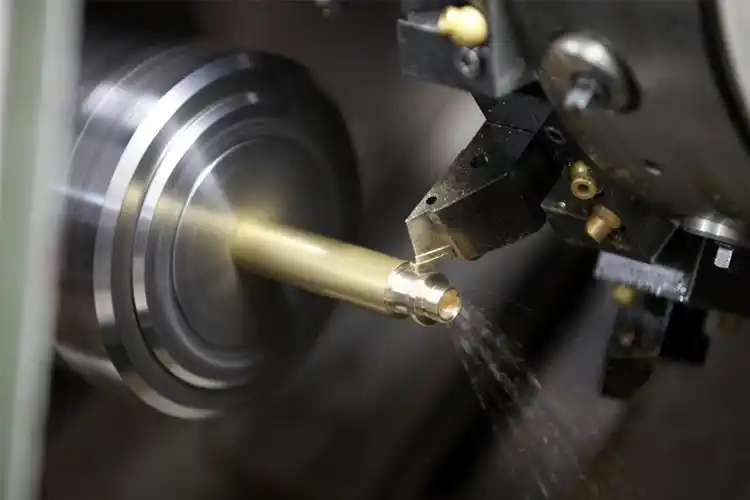
Imagine uploading a digital design file from your laptop and receiving precision-machined cnc parts at your doorstep within days. That's the reality of online CNC machining—a transformative approach that brings industrial-grade manufacturing capabilities directly to designers, engineers, and entrepreneurs through simple web-based interfaces.
At its core, computer numerical control (CNC) refers to automated machining where pre-programmed software controls the movement of cutting tools with extreme accuracy. A cnc machine follows precise digital instructions to carve, drill, and shape raw materials into finished components. Online CNC services take this powerful technology and make it accessible without requiring you to own expensive equipment or maintain specialized facilities.
From CAD File to Finished Part
The journey from concept to physical component has never been more straightforward. When you use an online CNC platform, you're essentially tapping into a network of professional manufacturing facilities equipped with advanced machinery. You upload your CAD design, select your preferred cnc metal or plastic material, and the platform handles everything else—from quoting to production to shipping.
This model represents a significant shift from traditional manufacturing procurement. Previously, getting custom machined parts meant finding local machine shops, requesting manual quotes, and navigating lengthy back-and-forth communications. Online platforms compress this process into minutes rather than days, according to MakerVerse's manufacturing guide.
How Digital Platforms Connect You to Industrial Machines
Think of these platforms as sophisticated matchmakers between your design requirements and manufacturing capabilities. When you submit a project, advanced algorithms analyze your part geometry, material specifications, and tolerance requirements. The system then routes your order to facilities with the right equipment and expertise for precision cnc machining.
This digital infrastructure has effectively democratized cnc fabrication. Small startups now access the same manufacturing quality as large corporations. Hobbyists prototype ideas that previously required significant capital investment. The barriers that once separated creators from industrial manufacturing have largely dissolved.
The Technology Behind Automated Precision
Modern online CNC platforms leverage several interconnected technologies to deliver seamless experiences. Here are the core components that make these services work:
- Instant quoting engines: AI-powered systems that analyze your uploaded files and calculate accurate pricing within seconds, eliminating days of waiting for manual estimates
- Comprehensive material libraries: Curated selections of metals, plastics, and specialty materials with detailed specifications for informed decision-making
- Automated design feedback systems: Software that identifies potential manufacturability issues before production begins, helping you optimize designs for cost and quality
- Real-time order tracking: Dashboard interfaces showing production status, quality checkpoints, and shipping updates throughout the manufacturing process
These integrated systems work together to provide online machining quotes that are both fast and accurate. The automation doesn't replace human expertise—it augments it. Skilled machinists and engineers still operate the equipment and perform quality inspections, but digital tools handle the administrative complexity that once slowed everything down.
The scale of modern online CNC infrastructure is remarkable. Leading platforms maintain networks of vetted manufacturing partners across multiple countries, offering thousands of material, process, and finish combinations. This distributed model provides flexibility for everything from single prototype parts to production runs of thousands of units—all accessible through the same user-friendly interface.
The Complete Online CNC Ordering Workflow Explained
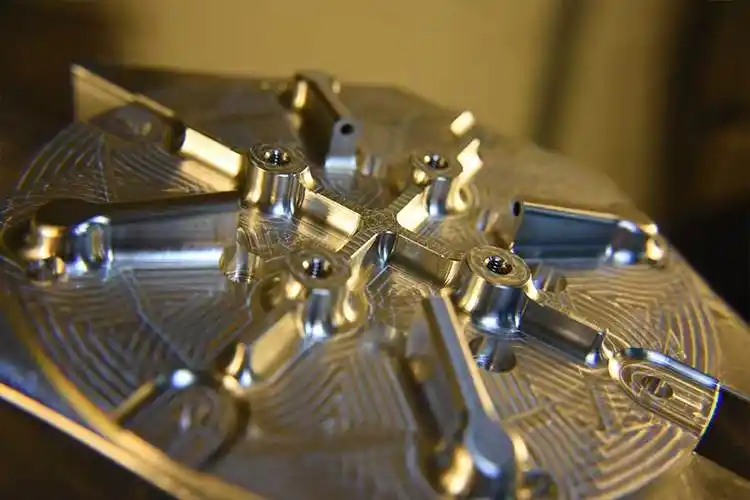
So you've decided to turn your digital design into a physical reality. What happens next? Understanding the complete ordering workflow helps you navigate each stage confidently—from the moment you prepare your design files to when those machined parts arrive at your door. Let's break down exactly how this journey unfolds.
Preparing Your Design Files for Upload
Your CNC machine is only as good as the file you give it. Before uploading anything, you need to ensure your CAD design is exported in a format that online machining platforms can interpret accurately.
The most widely accepted file formats for cnc machining parts include:
- STEP (.step, .stp): The industry standard for CNC work—preserves precise geometry, curves, and dimensional data while maintaining universal compatibility
- IGES (.iges, .igs): Another reliable solid model format that works across most CAM software systems
- Parasolid (.x_t, .x_b): Native to SolidWorks and other professional CAD platforms, offering excellent geometric accuracy
Here's a critical point many beginners miss: avoid mesh-based formats like STL or OBJ for CNC machining. While these work perfectly for 3D printing, they break smooth curves into tiny triangles—creating inaccuracies that can compromise your finished parts. According to JLCCNC's file preparation guide, incomplete or incorrectly formatted CAD data often leads to manufacturing delays, dimensional inaccuracies, or even complete production stoppages.
Understanding the Instant Quote Process
Ever wonder what happens in those few seconds between clicking "upload" and receiving your cnc quote online? Modern quoting algorithms perform sophisticated geometric analysis at remarkable speed.
The system evaluates your uploaded file by examining part dimensions, complexity of features, required tolerances, and material removal volume. It calculates how long each machining operation will take, which tools are needed, and how the part should be oriented for optimal cutting paths. All this computational work—which would take a human estimator hours—happens almost instantaneously.
Common file preparation mistakes that cause quote failures include:
- Missing dimensions or incomplete geometry in your model
- Incorrect unit settings (submitting millimeters when inches were intended)
- Open surfaces or non-manifold edges that create ambiguous geometry
- Features too small or thin for standard tooling to machine
- Forgetting to include technical drawings when your design has threads, specific tolerances, or specialized finishes
Pro tip: If your design includes threaded holes, tight tolerances, or surfaces requiring special finishes, always accompany your 3D file with a 2D technical drawing in PDF format. This eliminates guesswork and ensures your cnc service provider understands your exact requirements.
What Happens After You Click Order
Once you've reviewed your quote and confirmed your order, the behind-the-scenes machinery kicks into gear. Most platforms complete a manufacturing feasibility review within 2-4 hours during business days, as noted by JLCCNC's ordering documentation. Engineers verify that your design can be manufactured as specified and flag any potential issues before production begins.
Here's the complete step-by-step workflow from start to finish:
- Design preparation: Export your CAD file to a CNC-friendly format (STEP recommended) and prepare any supplementary documentation
- File upload: Submit your design through the platform's web interface, where automated systems check for compatibility
- Quote review: Examine the instant quote, including pricing breakdowns for materials, machining time, and any secondary operations
- Material selection: Choose from available metals, plastics, or specialty materials based on your application requirements
- Order confirmation: Finalize specifications, select surface finish options, and submit payment to lock in your production slot
- Manufacturing: Your machining parts enter the production queue, with skilled machinists setting up fixtures and executing programmed toolpaths
- Quality inspection: Finished cnc machine parts undergo dimensional verification against your specifications before approval
- Shipping: Inspected parts are carefully packaged and dispatched through your selected carrier with tracking information provided
Throughout this process, most platforms provide dashboard access where you can monitor order status in real time. You'll typically receive notifications at key milestones—when engineering review completes, when production starts, and when your parts ship.
The entire cycle from upload to delivery can range from as fast as one working day for expedited orders to several weeks for complex multi-part assemblies. Understanding this workflow empowers you to plan project timelines accurately and communicate effectively with your manufacturing partner when questions arise.
Material Selection Guide for Online CNC Projects
Choosing the right material can make or break your CNC project. You might have a flawless design, but select the wrong alloy or plastic grade and you'll end up with parts that warp, wear prematurely, or simply cost more than necessary. The good news? Online CNC platforms typically offer extensive material libraries with detailed specifications—you just need to know how to navigate them.
Material selection comes down to balancing several competing factors: mechanical requirements, environmental conditions, machinability (which affects cost), and budget constraints. Let's explore your options across metals and engineering plastics so you can make confident decisions for your next project.
Metals That Machine Best for Online Orders
When ordering cnc metal parts through online platforms, certain materials consistently deliver excellent results due to their machining characteristics and availability. Here's what you need to know about the most popular choices:
Aluminum alloys dominate online CNC orders for good reason. According to Swiss Labs' material selection guide, aluminum machines faster than other metals, making it more cost-effective while providing excellent corrosion resistance and durability. The 6061 grade offers a great balance of strength and workability, while 7075 delivers higher strength for demanding aerospace and automotive applications.
Stainless steel steps in when corrosion resistance and strength requirements exceed what aluminum can handle. It's the go-to for surgical instruments, electronics hardware, and components requiring weldability. Expect longer machining times and higher costs compared to aluminum, but the performance trade-off is often worth it for food-grade equipment, medical devices, and marine applications.
Brass offers an interesting middle ground—it's inexpensive and machines beautifully, producing smooth finishes with minimal tool wear. The trade-off is decreased strength compared to steel or aluminum. You'll find brass commonly specified for plumbing components, electrical hardware, and decorative parts where its low-friction coefficient proves advantageous.
For specialized applications, bronze cnc machining delivers exceptional wear resistance and self-lubricating properties. Phosphor bronze and aluminum bronze grades excel in bearing surfaces, bushings, and marine hardware where other metals would corrode or gall under load.
Engineering Plastics and Their Sweet Spots
Engineering plastics open up design possibilities that metals can't match—reduced weight, natural lubricity, electrical insulation, and chemical resistance. But choosing between options like delrin, nylon, and polycarbonate requires understanding their behavioral differences.
Delrin (acetal/POM) is often called the "go-to" engineering plastic for precision CNC work. This delrin material offers exceptional dimensional stability, machines cleanly with smooth surface finishes, and barely absorbs moisture—so your parts stay true to specification even in humid environments. According to Penta Precision's comparative analysis, delrin plastic comes off the machine ready to use with little or no post-processing required.
When should you choose delrin? Consider it ideal for:
- Precision gears and bearing surfaces requiring tight tolerances
- Fluid-handling components like valve bodies and pump housings
- Parts requiring consistent dimensions in varying humidity conditions
- Applications where surface finish quality matters for function or aesthetics
Nylon brings different strengths to the table. It handles heat better than delrin—glass-filled grades tolerate continuous temperatures around 120-130°C versus delrin's 100-110°C limit. Machining nylon also makes sense when you need superior impact resistance and toughness for dynamic parts that absorb repeated stress. The raw material typically costs 10-30% less than delrin, making nylon for machining attractive for larger volume projects.
However, there's a significant consideration: nylon is hygroscopic, meaning it absorbs atmospheric moisture and can change dimensions over time. This makes it less suitable for tight-tolerance assemblies or sealed systems where warping cannot be tolerated.
Polycarbonate (PC) delivers outstanding impact strength and optical clarity when transparency matters. It's frequently specified for protective covers, sight glasses, and applications requiring both toughness and visibility. Polycarbonate pc machines reasonably well, though care must be taken to avoid stress cracking during cutting operations.
Matching Material Properties to Your Application
Sounds complex? Here's a practical framework: start with your application's most demanding requirement, then work backward to find materials that satisfy it while remaining machinable and budget-friendly.
The following table compares common CNC materials across key decision factors:
| Material Type | Machinability Rating | Typical Applications | Relative Cost | Key Properties |
|---|---|---|---|---|
| Aluminum 6061 | Excellent | Enclosures, brackets, heat sinks | Low-Medium | Lightweight, corrosion resistant, good strength |
| Aluminum 7075 | Good | Aerospace fittings, high-stress components | Medium | High strength-to-weight ratio, harder to machine |
| Stainless Steel 304 | Moderate | Medical devices, food equipment, marine hardware | Medium-High | Excellent corrosion resistance, weldable |
| Stainless Steel 316 | Moderate | Chemical processing, marine, surgical instruments | High | Superior corrosion resistance, biocompatible |
| Brass C360 | Excellent | Electrical connectors, plumbing fittings | Low-Medium | Easy to machine, low friction, conductive |
| Bronze (Phosphor) | Good | Bearings, bushings, marine components | Medium | Wear resistant, self-lubricating, anti-galling |
| Delrin (Acetal) | Excellent | Gears, valves, precision components | Medium | Dimensional stability, low moisture absorption |
| Nylon 6/6 | Good | Wear parts, structural components, insulators | Low-Medium | High impact strength, heat resistant, flexible |
| Polycarbonate | Good | Protective covers, optical components | Medium | Impact resistant, optically clear, tough |
| PEEK | Moderate | Medical implants, aerospace, high-temp applications | Very High | Extreme heat/chemical resistance, biocompatible |
When evaluating materials, consider these practical questions:
- Will the part experience significant mechanical stress or impact loading?
- What temperature range must it withstand during operation?
- Will moisture, chemicals, or corrosive environments be present?
- How tight are your dimensional tolerances, and will the environment affect stability?
- Does the application require electrical insulation or conductivity?
For prototype work where you're still validating designs, aluminum and delrin offer forgiving machinability at reasonable costs. Once you move toward production, material optimization becomes more critical—you might upgrade to stainless steel for durability or switch to nylon for cost savings on high-volume orders.
Most online CNC platforms include material datasheets within their quoting interfaces. Take advantage of these resources, and don't hesitate to contact technical support when your application requirements don't clearly point to one material. Experienced manufacturing partners can recommend alternatives you might not have considered based on similar projects they've completed.
Understanding CNC Milling Turning and Multi-Axis Operations
You've selected your material and prepared your design files. Now the online platform recommends a specific machining process—but what does that actually mean? Understanding the fundamental differences between CNC milling, cnc turning, and multi-axis operations helps you make informed decisions about how your parts get manufactured. More importantly, it explains why certain geometries cost more and take longer to produce.
Think of it this way: each machining process has its own personality. Some excel at creating cylindrical shapes with smooth surfaces. Others specialize in carving complex pockets and contours. Knowing which process matches your part geometry saves money, reduces lead times, and often improves final quality.
CNC Milling Versus Turning Explained Simply
The core distinction between milling and turning comes down to one question: what's spinning?
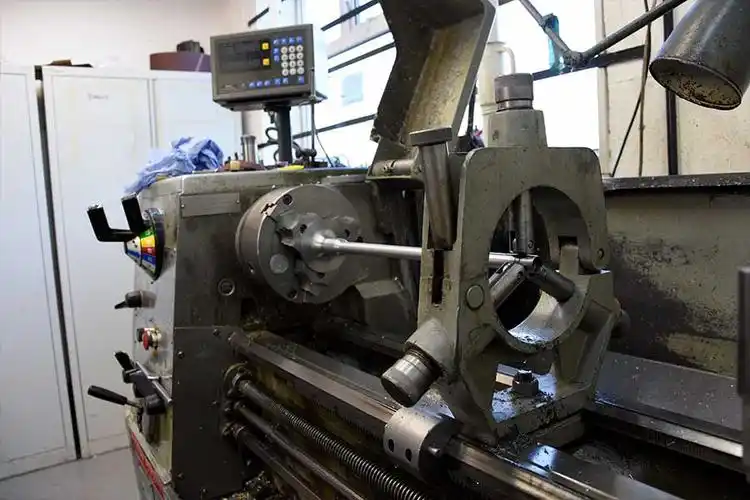
In CNC turning, your workpiece rotates on a spindle while a stationary cutting tool removes material. Imagine a pottery wheel, but instead of clay, you're shaping metal or plastic with precision cutters. This process naturally creates cylindrical shapes—shafts, pins, bushings, and anything with rotational symmetry. According to Shamrock Precision's machining guide, cnc turning is ideal for components like bolts, bushings, and any part where the primary geometry revolves around a central axis.
In CNC milling, the opposite happens. Your workpiece stays fixed while rotating cutters move across it, carving away material to create features. This process handles flat surfaces, angled faces, pockets, slots, and complex 3D contours. When you see cnc milled parts with intricate shapes—brackets, enclosures, gears, and molds—they likely went through a milling operation.
Here's a practical way to think about it:
- Choose turning when your part could be made by spinning a cylinder and shaping its profile
- Choose milling when your part has flat faces, pockets, or non-cylindrical geometry
- Combine both when complex parts need cylindrical features plus additional milled details
Many online platforms automatically analyze your uploaded geometry and recommend the appropriate process. If your design includes both turned and milled features, some cnc turning services offer secondary milling operations—or the platform may route your order to facilities with hybrid capabilities.
When Multi-Axis Machining Makes Sense
Standard 3-axis milling moves the cutting tool along three perpendicular directions: left-right (X), forward-back (Y), and up-down (Z). This configuration handles a remarkable range of geometries, but it has limitations. When your part requires undercuts, angled features, or surfaces that can't be reached from directly above, you either need multiple setups—or more axes.
5-axis machining adds two rotational axes to the standard three linear movements. According to YCM Alliance's technical comparison, this enhanced capability allows simultaneous machining from multiple angles without repositioning the workpiece. The cutting tool can approach surfaces from virtually any orientation, accessing geometries that would otherwise require flipping and re-fixturing the part.
Why does this matter for online orders? Several reasons:
- Single-setup accuracy: Every time a part gets repositioned, small alignment errors accumulate. 5-axis machining eliminates multiple setups, maintaining tighter dimensional relationships between features
- Complex geometry access: Impeller blades, turbine components, and organic sculptural shapes become manufacturable without compromises
- Better surface finishes: The tool can maintain optimal cutting angles throughout complex contours, reducing tool deflection and improving finish quality
- Shorter lead times for complex parts: Eliminating multiple setups compresses production schedules significantly
For specialized applications requiring extreme precision on small, complex components, swiss machining offers another option. This technique uses a sliding headstock and guide bushing to support the workpiece extremely close to the cutting action—ideal for long, slender parts that would deflect under normal turning operations.
Matching Your Part Geometry to the Right Process
When you upload a design to an online CNC platform, how does the system decide what process to recommend? It comes down to geometric analysis and practical constraints.
The following table compares machining processes across key factors that affect your project:
| Process Type | Best For | Geometric Limitations | Typical Tolerances | Cost Implications |
|---|---|---|---|---|
| CNC Turning | Cylindrical parts, shafts, pins, threaded components | Primarily round profiles; limited off-axis features | ±0.005" standard; tighter achievable | Lower setup costs for round parts; efficient material use |
| 3-Axis Milling | Flat surfaces, simple pockets, 2.5D contours | No undercuts without repositioning; vertical wall access only | ±0.005" standard; ±0.001" achievable | Moderate; straightforward programming reduces costs |
| 4-Axis Milling | Parts requiring indexing or continuous rotation around one axis | Single rotational axis limits complex angle access | ±0.003" typical | Higher than 3-axis; fewer setups than alternative approaches |
| 5-Axis Milling | Complex 3D surfaces, undercuts, multi-angle features | Machine envelope and tool length constraints | ±0.002" or better; single-setup accuracy | Highest machine rates; often lower total cost for complex parts |
| Swiss Turning | Small, precise cylindrical parts with high length-to-diameter ratios | Diameter typically under 1.25"; specialized geometry | ±0.0005" achievable | Premium for small, complex components; efficient for volume |
Part orientation and fixturing play crucial roles in what's achievable through online services. Imagine trying to machine a deep pocket in a block of aluminum—the cutting tool can only reach so far before the tool holder collides with the workpiece. 5-axis capabilities let the part tilt, bringing that deep feature into accessible range without requiring a redesign.
Similarly, cnc cutting operations become more efficient when part geometry allows secure clamping. Features that would require elaborate custom fixtures in 3-axis work might clamp easily when approached from a different angle on a 5-axis machine. This flexibility often translates to cost savings that offset higher hourly machine rates.
When evaluating your design, ask yourself:
- Can all critical features be reached with the tool approaching from directly above?
- Are there undercuts or angled surfaces requiring multi-direction access?
- How many times would the part need repositioning on a 3-axis machine?
- Does the part have rotational symmetry that makes turning more efficient?
Most online platforms handle this complexity behind the scenes—their quoting algorithms evaluate geometry and recommend appropriate processes automatically. However, understanding these fundamentals helps you design parts that machine efficiently from the start, potentially saving significant costs before you ever upload a file.
Tolerances and Surface Finishes Decoded for Beginners
You've selected your material and chosen the right machining process. Now comes a question that trips up many first-time users: what tolerance and surface finish should you specify? These seemingly technical details directly affect whether your parts fit together, function correctly, and stay within budget. The good news? You don't need an engineering degree to make smart decisions here.
Every manufacturing process introduces some variation—it's physically impossible to make two parts exactly identical down to the atomic level. Tolerances define the acceptable range of this variation. According to Factorem's tolerance specification guide, properly specifying tolerances is critical because they directly influence the form, fit, and function of your final product.
Reading Tolerance Specifications Without Engineering Degrees
When you see a dimension written as "25.00 ±0.10 mm," that notation tells the machinist the feature should measure 25 millimeters, but anywhere between 24.90 and 25.10 mm is acceptable. That range—the plus and minus values—represents your tolerance.
Think of it like parking a car in a garage. A wide garage (loose tolerance) is easy to navigate. A narrow garage (tight tolerance) requires more precision and takes longer. Both get the car parked, but one demands considerably more skill and attention.
Here are the common tolerance classes you'll encounter when placing online CNC orders:
- Standard tolerances (±0.005" / ±0.127mm): The default for most online platforms—suitable for general-purpose parts where exact dimensions aren't critical to function
- Fine tolerances (±0.002" / ±0.05mm): Required when parts must fit together precisely, such as sliding assemblies or mating components
- Precision tolerances (±0.001" / ±0.025mm): Necessary for high-accuracy applications like bearing seats, sealing surfaces, or instrument components
- Ultra-precision tolerances (±0.0005" / ±0.013mm): Reserved for specialized applications requiring exceptional accuracy—significantly increases cost and lead time
So what is the tolerance for thread holes? Standard threaded features typically follow established thread class specifications (2B for internal threads, 2A for external threads in inch systems), which define the allowable variation automatically. Most online platforms machine threads to these standard classes unless you specify otherwise.
A practical rule: only specify tight tolerances on features that genuinely require them for function. A mounting bracket doesn't need the same precision as an optical instrument housing. Applying tight tolerances everywhere simply inflates your quote without improving performance.
Surface Finish Options and What They Mean
Surface finish describes the texture and appearance of machined surfaces at the micro-level. According to Fictiv's finishing guide, surface finishes are particularly important when parts contact other components—roughness affects friction, wear, and component lifespan even when dimensional tolerances are met.
When a cnc cut creates a surface, the tool leaves behind microscopic peaks and valleys. Surface roughness measurements (typically expressed as Ra in microinches or micrometers) quantify the average height of these irregularities.
The following table breaks down common surface finish options available through online CNC services:
| Finish Type | Ra Value (Typical) | Visual Description | Best Use Cases |
|---|---|---|---|
| As-Machined | 63-125 μin (1.6-3.2 μm) | Visible tool marks, matte appearance | Internal components, non-cosmetic parts, prototypes |
| Fine Machined | 32 μin (0.8 μm) | Minimal tool marks, smoother matte finish | Functional surfaces, mating faces, improved aesthetics |
| Bead Blasted | 100-150 μin (2.5-4 μm) | Uniform matte texture, hides machine marks | Cosmetic parts, pre-coating preparation, consumer products |
| Anodized (Type II) | Varies by base finish | Colored or clear protective layer, slight texture | Aluminum parts requiring corrosion resistance and color |
| Anodized (Type III/Hardcoat) | Varies by base finish | Hard protective coating, slightly rougher | Wear surfaces, aerospace, high-durability applications |
| Powder Coated | N/A (coating applied) | Smooth, uniform colored finish | Enclosures, consumer products, outdoor equipment |
| Electropolished | 8-16 μin (0.2-0.4 μm) | Mirror-like reflective surface | Medical devices, food processing, decorative applications |
Combining finishes often delivers optimal results. Media blasting before anodizing, for example, creates the smooth matte aesthetic found on premium consumer electronics. Precision machining services frequently offer these combination finishes as standard options.
How Precision Requirements Impact Your Quote
Here's the reality that catches many first-time buyers off guard: tighter tolerances and finer surface finishes cost more. Sometimes significantly more.
Why does precision drive up pricing? Several factors compound:
- Slower machining speeds: Achieving tight tolerances requires reduced cutting speeds and lighter passes, extending machine time
- Specialized tooling: Precision work often demands premium cutting tools that wear faster and cost more to replace
- Additional inspection: Parts with cnc cuts held to tight tolerances require more rigorous quality verification using calibrated measuring equipment
- Higher scrap rates: The acceptable window shrinks, meaning more parts fall outside specification and must be remade
- Environmental control: Ultra-precision work sometimes requires temperature-controlled environments to prevent thermal expansion errors
Consider this practical example: a bracket with standard ±0.005" tolerances might quote at $45. Tightening every dimension to ±0.001" could push that same part to $120 or more—without changing the design at all.
Smart specification means applying precision where it matters. Mating surfaces that must slide together? Specify tight tolerances there. Mounting holes for standard fasteners? Standard tolerances work fine. Decorative surfaces visible to end users? Invest in surface finishing. Internal cavities nobody sees? As-machined saves money.
Most online CNC platforms let you specify different tolerances for different features using technical drawings. Take advantage of this flexibility—it's one of the most effective ways to optimize your quote without compromising the functionality that actually matters.
Online CNC Versus Alternative Manufacturing Methods
Now that you understand tolerances and finishes, a bigger question emerges: is online CNC machining even the right choice for your project? Sometimes it absolutely is. Other times, 3D printing, injection molding, or sheet metal fabrication delivers better results at lower cost. Making the wrong call here can waste thousands of dollars—so let's break down when each method shines.
The honest truth? No single manufacturing process wins every scenario. Each method has sweet spots defined by quantity, material requirements, geometric complexity, and timeline constraints. Understanding these trade-offs helps you choose wisely—or strategically combine methods for optimal results.
CNC Versus 3D Printing Decision Framework
3D printing and CNC machining often compete for the same prototype machining projects, but they approach part creation from opposite directions. Additive manufacturing builds parts layer by layer from nothing. CNC prototyping removes material from solid blocks to reveal the final shape.
When does a cnc prototype beat a 3D printed alternative? Consider these factors:
- Material properties matter: CNC machines real production materials—aluminum, stainless steel, engineering plastics with full mechanical properties. Most 3D printed parts use materials with compromised strength, temperature resistance, or durability
- Surface quality requirements: Machined surfaces achieve superior finishes straight off the machine. 3D prints show layer lines requiring extensive post-processing
- Functional testing needed: When prototypes must survive real-world stress testing, CNC parts perform like production components because they're made from identical materials
- Tight tolerances required: CNC routinely holds ±0.001" tolerances that most 3D printing technologies cannot reliably achieve
However, 3D printing wins when geometric freedom trumps material performance. Internal lattice structures, hollow channels, and organic shapes that would require extensive multi-axis CNC work (or prove impossible to machine) become straightforward with additive methods. Carbon fiber prototyping through specialized 3D printing processes can also create composite structures that CNC cannot replicate.
For cnc prototyping, the decision often comes down to this: will your prototype need to function like the final product? If yes, CNC delivers representative parts. If you're primarily validating form and fit with non-functional models, 3D printing often costs less and arrives faster.
When Injection Molding Beats CNC Economics
Injection molding and CNC machining serve fundamentally different production scales. According to CHENcan's manufacturing analysis, CNC machining actually creates the molds that injection molding uses—they're partners, not rivals. The question is when to use molded parts versus machined ones.
Here's the economic reality: injection molding requires expensive upfront tooling—often $10,000 to $100,000+ for production-quality steel molds. But once that mold exists, per-part costs drop dramatically. CNC machining has minimal setup costs but consistent per-part pricing that doesn't decrease significantly with volume.
The crossover point typically falls between 1,000 and 10,000 parts, depending on complexity:
- Under 500 parts: CNC almost always wins economically—tooling costs can't be justified
- 500-5,000 parts: Gray zone—compare total project costs carefully, considering design stability
- 5,000-50,000 parts: Injection molding usually becomes more economical, assuming your design is frozen
- Over 50,000 parts: Injection molding dominates unless parts require machined metal properties
Critical consideration: injection molding locks you into a design. Modifying a hardened steel mold adds weeks of delay and thousands in costs. CNC machining allows design iterations at minimal cost—just update the CAD file. If your design is still evolving, CNC's flexibility often outweighs injection molding's volume economics.
Bridge tooling offers a middle path. CNC-machined resin or aluminum molds can produce 50,000 to 200,000 shots at a fraction of steel tooling cost, according to industry data. This approach validates designs before committing to production tooling.
Sheet Metal Fabrication as a CNC Alternative
When your design involves enclosures, brackets, or panels made from thin material, sheet metal fabrication often proves more economical than CNC machining solid blocks. According to JLCCNC's comparative analysis, sheet metal fabrication shapes flat sheets through cutting, bending, and joining—fundamentally different from CNC's subtractive approach.
Sheet metal punch operations and laser cutting produce flat profiles rapidly, while press brakes create bends that transform 2D sheets into 3D structures. For parts that could be "unfolded" into flat patterns, this process typically costs less than machining equivalent geometry from solid stock.
Consider sheet metal when:
- Your part consists primarily of bent planes rather than complex 3D contours
- Wall thickness is uniform and relatively thin (typically under 6mm)
- Weight reduction matters—sheet structures can be significantly lighter than equivalent solid machined parts
- Large enclosures or panels would waste excessive material if machined from blocks
Metal punching operations excel at creating repeated features—ventilation holes, mounting patterns, decorative perforations—across sheet surfaces faster than drilling each hole individually on a CNC mill.
CNC machining remains superior when parts require tight tolerances on multiple surfaces, complex 3D geometry that can't be formed from bent sheets, or materials not available in sheet form. Many manufacturers combine methods—sheet metal for enclosures with CNC-machined mounting features and internal components.
Manufacturing Method Comparison at a Glance
The following table summarizes key decision factors across manufacturing methods:
| Method | Best Quantity Range | Material Options | Geometric Freedom | Lead Time | Cost Structure |
|---|---|---|---|---|---|
| CNC Machining | 1-5,000 parts | Extensive—metals, plastics, composites | High for external features; limited internal complexity | Days to weeks | Moderate per-part; low setup costs |
| 3D Printing | 1-500 parts | Limited—mostly plastics, some metals | Highest—internal channels, lattices possible | Hours to days | Low for simple parts; scales poorly |
| Injection Molding | 5,000+ parts | Thermoplastics primarily | Moderate—draft angles, uniform walls required | Weeks for tooling; fast production | High tooling; very low per-part |
| Sheet Metal | 1-10,000 parts | Sheet metals—steel, aluminum, stainless | Limited to bent/formed geometry | Days to weeks | Low for suitable geometry |
CNC machining's unique advantages become clear for precision metal parts and functional prototypes requiring production-grade materials. When you need parts that perform exactly like final production components—with real material properties, tight tolerances, and quality surface finishes—online CNC services deliver what other methods cannot.
The smartest approach often combines methods strategically: 3D print initial concepts for form validation, CNC machine functional prototypes for testing, then transition to injection molding or sheet metal for volume production once designs stabilize. Understanding each method's strengths helps you deploy them where they deliver maximum value.
Quality Certifications and Inspection Standards Explained
You've compared manufacturing methods and selected the right approach for your project. But here's a question that separates reliable online CNC providers from risky ones: what quality systems stand behind those machined parts? When components fail in aerospace cnc machining applications or medical devices, the consequences extend far beyond inconvenience—lives and missions depend on consistent precision.
Certifications aren't just fancy logos on a website. They represent documented systems, regular audits, and proven track records that guarantee your parts meet specifications every single time. Understanding what these credentials actually mean helps you evaluate providers with confidence.
What Quality Certifications Actually Guarantee
Think of certifications as different levels of quality assurance, each designed for specific industry demands. A shop might machine beautiful parts, but without formalized systems, consistency becomes a gamble. According to Machine Shop Directory's certification guide, 67% of OEMs require ISO 9001 certification from their suppliers—making it effectively mandatory for serious manufacturing work.
Here are the major certifications you'll encounter when evaluating online CNC services:
- ISO 9001: The foundational quality management standard applicable across all industries. Establishes documented processes, continuous improvement practices, and customer focus. Consider this the baseline expectation for any professional provider
- AS9100D: Built on ISO 9001 but adds rigorous aerospace machining requirements including configuration management, first article inspection protocols, and risk management specific to flight-critical components. Essential for cnc machining aerospace applications
- IATF 16949: The automotive industry's quality standard, emphasizing defect prevention, reduction of variation, and supply chain efficiency. Required by major automakers and their tier suppliers
- ISO 13485: Focused exclusively on medical device machining, this standard creates frameworks ensuring patient safety and regulatory compliance. Critical for components used in surgical instruments, implants, and diagnostic equipment
According to BPRHub's standards comparison, a single quality management mistake can cost companies up to $15 million due to recalls, legal fees, and reputation damage. Certifications provide the documented evidence that systematic controls prevent such failures.
What does this mean practically? When you order aerospace components, AS9100D certification signals that the shop maintains traceability from raw material through finished part, documents every process parameter, and follows approved procedures that have survived independent audits. For medical machining applications, ISO 13485 ensures the provider understands regulatory requirements and maintains the documentation needed for FDA submissions.
Inspection Processes Behind Reliable Parts
Certifications establish systems, but inspection processes catch problems before parts ship. Professional online CNC providers implement multiple quality checkpoints throughout manufacturing—not just a final glance before packaging.
Statistical Process Control (SPC) represents one of the most powerful quality tools in precision manufacturing. According to CNCFirst's SPC guide, traditional sampling inspection discovers problems only after defects have already occurred. SPC takes a fundamentally different approach—continuously monitoring production data to detect trends before dimensions drift out of tolerance.
Here's how SPC works in practice: rather than checking 10 random parts from a batch of 100, technicians measure critical dimensions at regular intervals—say every 5th or 10th part—and plot results on control charts. If measurements begin trending toward tolerance limits, operators intervene immediately by adjusting tool compensation or replacing cutters. The system catches problems at part 15 instead of discovering scrap at part 200.
One medical device customer case study demonstrates SPC's impact: their previous supplier achieved 92% yield. By implementing SPC and replacing cutting tools at the 80th piece rather than waiting for failures, the new manufacturer achieved 99.7% yield—saving approximately $12,000 in rework and scrap costs.
Beyond SPC, certified facilities employ:
- First Article Inspection (FAI): Comprehensive dimensional verification of initial production parts against all drawing specifications before full production begins
- In-process gauging: Regular measurements during machining operations to verify critical features remain within tolerance
- Final inspection: Complete verification of finished parts using calibrated measuring equipment, often including CMM (Coordinate Measuring Machine) reports
- Documentation packages: Certificates of conformance, material certifications, and inspection reports that accompany shipments
Matching Certification Requirements to Your Industry
Choosing a provider with appropriate certifications isn't about collecting the most impressive list—it's about matching credentials to your actual requirements. A hobbyist building custom robotics doesn't need AS9100D-certified suppliers. An aerospace contractor absolutely does.
Consider your industry's regulatory landscape:
- Aerospace and defense: AS9100D certification is typically non-negotiable. Prime contractors flow down these requirements to every tier of their supply chain. Aerospace cnc machining without this credential limits your market access significantly
- Automotive: IATF 16949 demonstrates the production discipline automakers expect. High-volume, zero-defect delivery becomes achievable through the standard's emphasis on prevention over detection
- Medical devices: ISO 13485 certification shows providers understand the unique documentation, traceability, and validation requirements that FDA and international regulators demand for medical device machining
- General industrial: ISO 9001 provides assurance of professional quality systems without industry-specific overhead
Some applications require multiple certifications. A component used in both commercial aircraft and medical monitoring equipment might need a supplier holding both AS9100D and ISO 13485. Fortunately, these standards share common foundations—organizations certified to multiple standards maintain integrated systems rather than separate parallel processes.
When evaluating online CNC providers, look beyond claimed certifications. Request certificate copies showing current validity dates and accrediting body information. Reputable providers display this information prominently and provide documentation upon request. Certificates from recognized accreditation bodies—rather than self-declared compliance—indicate genuine third-party verification.
The investment certified facilities make in quality systems translates directly to your project outcomes. Documented procedures reduce variation. Trained operators understand their responsibilities. Regular audits identify improvement opportunities. This infrastructure might seem invisible when parts arrive meeting specifications—but it's precisely what makes consistent quality possible across thousands of orders.
Understanding What Influences Online CNC Pricing
You've navigated certifications and quality standards—now comes the question everyone eventually asks: why does this quote cost what it does? Online CNC pricing can feel opaque, but the factors driving your cnc machining price follow logical patterns. Understanding these cost drivers empowers you to make smarter design decisions and optimize your budget without sacrificing the quality your application demands.
Unlike retail products with fixed price tags, custom machined parts reflect the unique combination of your design choices, material selection, and production requirements. According to Xometry's cost analysis, there are no set costs universally applied to different machining projects—each quote represents a calculation specific to your part. Let's decode what's actually happening behind those numbers.
What Drives Your Online CNC Quote Higher
When you upload a design and receive a quote, the platform's algorithms evaluate several interconnected factors. Here's what pushes costs upward:
Material selection creates the foundation of your quote. According to Hubs' design guidelines, bulk material cost significantly affects pricing, with metals generally costing more than plastics and exotic alloys commanding premium prices. Beyond raw material expense, machinability matters enormously—harder materials like stainless steel require slower cutting speeds, more frequent tool changes, and longer cycle times compared to aluminum. When searching for machinist shops near me or comparing online options, remember that machinist metal cost reflects both material price and how difficult it is to cut.
Part complexity directly correlates with machining time. Complex geometries requiring multiple setups, special tooling, or 5-axis operations cost more than simple 2.5D shapes machinable in a single setup. Features like deep pockets, thin walls, sharp internal corners, and intricate details all extend cycle time—and in CNC machining, time literally equals money.
Tolerance specifications multiply costs quickly. Tighter tolerances demand slower cutting speeds, additional finishing passes, and more rigorous inspection. A part quoted at $50 with standard tolerances might jump to $150 when every dimension requires precision verification.
Quantity economics work in your favor as volumes increase. Setup costs—programming, fixturing, machine preparation—remain relatively fixed whether you're making one part or one hundred. According to Xometry's data, the cost per unit for production volumes of 1,000 parts can be approximately 88% less than a standalone unit. This dramatic reduction reflects setup costs spreading across more parts.
Design Changes That Cut Machining Costs
Here's the good news: strategic design modifications can reduce your quote substantially without compromising functionality. These optimizations work whether you're ordering custom machined parts for prototypes or production runs.
- Simplify internal corner radii: Sharp internal corners require smaller diameter tools running at slower speeds. According to Hubs' DFM guidelines, specifying corner radii at least one-third of cavity depth significantly reduces machining time
- Relax non-critical tolerances: Apply tight tolerances only where function demands them. Using standard ±0.005" tolerances on non-mating surfaces while reserving precision specs for critical features can cut costs dramatically
- Choose machinable materials: When performance requirements allow flexibility, selecting materials with better machinability reduces cycle time. Aluminum 6061 machines faster than stainless steel; Delrin cuts cleaner than PEEK
- Limit cavity depth: Deep pockets require special tooling and slower feed rates. Keeping cavity depth under four times the tool diameter enables standard tooling and faster cutting
- Design for single-setup machining: Parts requiring multiple setups incur additional handling time and potential alignment errors. Geometry that machines from one side costs less than parts needing repositioning
- Consolidate orders: Batching multiple parts in a single order spreads setup costs and may qualify for volume discounts on cnc machining materials
- Eliminate unnecessary features: Text, decorative details, and non-functional complexity add machining time. Consider whether each feature genuinely adds value
One often-overlooked strategy: design parts slightly smaller than the next standard blank size. A 27mm cube can be machined from 30mm stock, while a 32mm cube requires 35mm material—a small dimension change that reduces material waste and cost.
Balancing Quality Requirements Against Budget
The tension between quality and cost isn't about choosing one over the other—it's about allocating precision where it matters most. Every custom machine project involves trade-offs, and understanding them helps you spend wisely.
Consider this framework for budget optimization:
- Identify truly critical features: Which dimensions must be precise for function? Which surfaces must be smooth? Focus premium specifications there
- Accept as-machined finishes where possible: Secondary finishing operations add cost. Unless appearance or function demands better, standard machined surfaces often suffice
- Evaluate quantity strategically: If you'll need more parts eventually, ordering larger quantities upfront often costs less than multiple small orders
- Consider lead time flexibility: Rush orders command premiums. Standard lead times typically cost 20-40% less than expedited production
- Request design feedback: Reputable online platforms offer manufacturability analysis. Their suggestions often identify cost savings you wouldn't discover independently
The economics become clearer with a concrete example: according to Hubs' cost analysis, increasing an order from one to five parts can cut per-unit price roughly in half, while very high volumes over 1,000 parts may reduce unit cost by five to ten times. These aren't promotional claims—they reflect the fundamental mathematics of fixed setup costs divided across variable production quantities.
When budget constraints feel limiting, remember that smart design choices often deliver more savings than aggressive negotiation. A part redesigned for manufacturability might cost 40% less than the original—savings no discount could match. Understanding what influences your quote transforms pricing from a mystery into a tool you control.
Choosing the Right Online CNC Service for Your Project
You've mastered the fundamentals—materials, processes, tolerances, and pricing. Now comes the decision that determines whether your project succeeds or stumbles: selecting the right manufacturing partner. With countless online platforms and cnc machine shops near me options available, how do you separate exceptional providers from those that deliver headaches alongside your parts?
The truth is, not all online CNC services are created equal. Some excel at rapid prototypes but struggle with production volumes. Others offer rock-bottom pricing but lack the quality systems your application demands. Finding the right fit requires evaluating providers against criteria that matter for your specific needs—not just clicking the cheapest quote.
Evaluation Criteria for Online CNC Providers
When comparing machining shops near me or evaluating online platforms, systematic evaluation prevents costly mistakes. According to Anebon's supplier selection guide, choosing the right CNC machining supplier requires comprehensive understanding of technical capabilities, certifications, experience, quality control processes, and customer service—not just price comparisons.
Here are the essential criteria for evaluating custom cnc machining services:
- Relevant certifications: Verify credentials match your industry requirements. ISO 9001 represents baseline professionalism; AS9100D signals aerospace capability; IATF 16949 demonstrates automotive-grade quality systems; ISO 13485 confirms medical device competence
- Technical capabilities: Assess equipment range—multi-axis machines, material expertise, secondary operations. A provider with advanced 5-axis CNC machines and experience in your required materials delivers better results than one stretching beyond their core competencies
- Quality assurance processes: Look for documented inspection protocols, SPC implementation, CMM capabilities, and willingness to provide inspection reports. Robust QA systems catch problems before parts ship
- Communication responsiveness: Test response times before committing large orders. Effective communication proves essential for resolving issues promptly and ensuring alignment throughout project lifecycles
- Design support: Does the platform offer manufacturability feedback? Providers who identify potential issues before production begins save you money and frustration
- Transparent pricing: Quotes should detail material costs, machining time, and secondary operations. Vague pricing structures often hide surprises
- Track record verification: Request references from clients in your industry. Previous success with similar projects indicates capability to meet your requirements
Red flags to watch include reluctance to share certification documentation, vague answers about quality processes, unusually low quotes without explanation, and poor communication during the quoting phase. If a provider struggles to respond clearly before you order, expect worse after they have your money.
Scaling from Prototype to Production Volumes
One of the most challenging transitions in product development involves moving from initial prototypes to production quantities. According to Factorem's scaling guide, what works efficiently for a single prototype may become prohibitively expensive or unmanageable at high volumes—and businesses frequently struggle with understanding these inherent differences.
The goals, methodologies, and cost structures differ significantly between prototype machining services and production runs:
- Prototyping priorities: Speed and flexibility matter most. You need parts quickly to validate designs, and you expect to iterate. Per-part costs remain secondary to rapid turnaround
- Production priorities: Consistency, efficiency, and cost optimization become paramount. Setup time amortizes across thousands of parts, so robust fixturing and optimized toolpaths deliver savings
The transition pitfalls include assuming prototype suppliers automatically handle production volumes, discovering quality inconsistencies when scaling, and facing unexpected tooling or fixturing costs. Providers who excel at both stages implement proactive Design for Manufacturing (DFM) feedback during prototyping that anticipates production requirements.
Precision cnc machining services designed for scaling offer several advantages: they evaluate your design for production efficiency from the start, maintain consistent processes across volume ranges, and provide transparent costing that reflects actual production economics rather than prototype-level overhead applied to every part.
For automotive applications specifically, this scaling capability becomes critical. Production volumes can ramp quickly once designs validate, and supply chains demand consistent quality across thousands of cnc turned parts. Providers with IATF 16949 certification demonstrate the production discipline automakers expect—defect prevention, variation reduction, and supply chain efficiency built into their operations.
Consider Shaoyi Metal Technology as an example of what to evaluate in an automotive-focused provider. Their facility combines IATF 16949 certification with strict Statistical Process Control (SPC) implementation—exactly the quality infrastructure discussed in previous sections. With lead times as fast as one working day and capability spanning complex chassis assemblies to custom metal bushings, they demonstrate the scaling flexibility automotive projects demand. This combination of certified quality systems, production discipline, and rapid turnaround illustrates the criteria that matter when evaluating providers for automotive supply chain integration.
Finding Specialized Expertise for Your Industry
Generic CNC capability doesn't always translate to success in specialized applications. According to Anebon's research, experience in your specific industry translates to deeper understanding of sector-specific requirements and challenges. Suppliers with proven track records in your field are more likely to anticipate potential issues and provide tailored solutions.
Industry-specific expertise manifests in several ways:
- Material knowledge: Aerospace providers understand titanium's machining challenges. Medical device specialists know biocompatible material requirements. Automotive experts optimize for high-volume consistency
- Regulatory familiarity: Experienced providers anticipate documentation requirements, traceability needs, and compliance checkpoints specific to your industry
- Application insight: Suppliers who've produced similar components understand functional requirements beyond what drawings specify—they recognize what actually matters for your part's performance
When searching for a cnc machine shop near me or evaluating online platforms, ask about previous projects in your industry. Request case studies or references from similar applications. A provider who has successfully delivered comparable components brings valuable experience that generic machine shops lack.
For local machine shops, consider site visits to evaluate equipment, cleanliness, and workflow firsthand. Request sample parts or prototypes to assess quality before committing to production volumes. Speak with previous clients in your industry to verify claims and understand real-world performance.
The ideal provider combines technical capability, appropriate certifications, proven industry experience, and communication responsiveness—all aligned with your specific project requirements. Taking time to evaluate these factors thoroughly prevents the frustration of discovering capability gaps after production begins.
Whether your project requires single prototypes or production runs of thousands, the right online CNC partner transforms digital designs into physical reality reliably and efficiently. Choose wisely, and your manufacturing experience shifts from stressful uncertainty to confident execution.
Frequently Asked Questions About Online CNC Machining
1. What is the best online CNC service for beginners?
The best online CNC service for beginners offers instant quoting, design feedback systems, and comprehensive material libraries. Look for platforms with user-friendly interfaces that analyze your CAD files automatically and flag manufacturability issues before production. Services providing real-time order tracking and responsive technical support help first-time users navigate the process confidently. For automotive applications requiring certified quality, providers like Shaoyi Metal Technology combine IATF 16949 certification with rapid turnaround times.
2. How much does online CNC machining cost?
Online CNC machining costs vary based on material selection, part complexity, tolerances, quantity, and lead time. Aluminum parts typically cost less than stainless steel due to faster machining speeds. Per-unit costs can drop by 88% when ordering 1,000 parts versus single units because setup costs spread across more parts. To reduce costs, simplify geometry, relax non-critical tolerances, choose machinable materials, and consolidate orders. Most platforms provide instant quotes so you can compare options before committing.
3. What file formats are accepted for online CNC machining?
STEP files (.step, .stp) are the industry standard for online CNC machining, preserving precise geometry and dimensional data with universal compatibility. IGES (.iges, .igs) and Parasolid (.x_t, .x_b) formats also work well across most platforms. Avoid mesh-based formats like STL or OBJ, which break smooth curves into triangles and create inaccuracies. For parts with threads, tight tolerances, or special finishes, always include a 2D technical drawing in PDF format alongside your 3D model.
4. What is the difference between CNC milling and CNC turning?
In CNC turning, your workpiece rotates on a spindle while a stationary cutting tool removes material, making it ideal for cylindrical parts like shafts, pins, and bushings. In CNC milling, the workpiece stays fixed while rotating cutters move across it, handling flat surfaces, pockets, slots, and complex 3D contours. Choose turning for parts with rotational symmetry and milling for parts with flat faces or non-cylindrical geometry. Many complex parts combine both processes.
5. How do I choose between online CNC machining and 3D printing?
Choose online CNC machining when you need real production materials with full mechanical properties, tight tolerances (±0.001" or better), superior surface finishes, or functional prototypes that must survive stress testing. 3D printing wins when geometric freedom matters most—internal lattice structures, hollow channels, and organic shapes that would be impossible to machine. For prototypes validating function rather than just form, CNC delivers parts that perform like final production components.