 Small batches, high standards. Our rapid prototyping service makes validation faster and easier —
  EN
EN


Online CNC Machining Decoded: From CAD Upload To Finished Parts
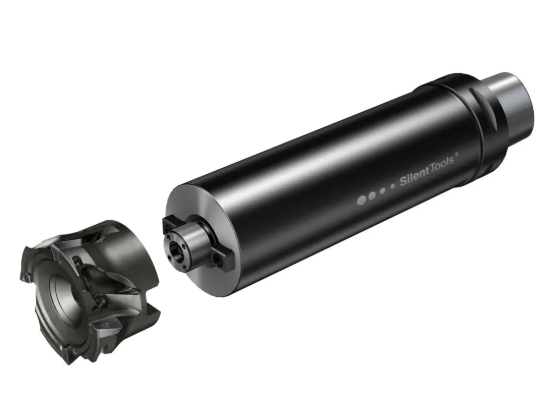
What Online CNC Machining Actually Means
Ever wondered how a 3D design file on your computer transforms into a precision metal part delivered to your doorstep? That's exactly what online CNC machining makes possible. Unlike traditional machine shop services where you'd walk into a local facility, hand over blueprints, and wait days for a quote, this digital-first approach brings the entire manufacturing process to your browser.
At its core, online CNC machining refers to computer-controlled manufacturing services accessed entirely through web-based platforms. You upload your CAD files, receive instant pricing, and manage production remotely—without ever visiting a factory floor. The CNC machines themselves haven't changed; what's transformed is how you interact with the cnc service providers operating them.
From Blueprint to Browser: The Digital Manufacturing Shift
Traditional machine shops operated on phone calls, email chains, and manual calculations. Getting a cnc quote online was virtually impossible a decade ago. Engineers would submit drawings, wait for machinists to review geometry, calculate material costs, and estimate cycle times—a process that often stretched across multiple days.
Digital platforms changed everything. Sophisticated algorithms now analyze your uploaded designs within seconds, evaluating complexity, material requirements, and machining operations needed. According to industry research, 78% of customers choose to work with the company that responds to their inquiry first—yet most manufacturers traditionally took five days or more to deliver quotes. An online cnc machine quoting system eliminates this bottleneck entirely, with some platforms generating accurate pricing in under five minutes.
This shift reflects broader manufacturing trends. As Deloitte projects 2.1 million unfilled manufacturing vacancies in the US by 2030, automation in quoting and order management allows skilled machinists to focus on what they do best: making parts.
How Online Platforms Changed Part Ordering
Imagine uploading a STEP file at midnight and waking up to a complete quote with lead time options. That's the reality with modern cnc online service platforms. The ordering workflow has been reimagined from the ground up:
Instead of back-and-forth emails clarifying dimensions, online machining quotes systems flag potential manufacturability issues automatically. Rather than faxing purchase orders, you click to confirm. And instead of wondering about production status, you track your order through a dashboard.
What makes these platforms genuinely valuable goes beyond convenience. Here are the core benefits driving adoption:
- Instant quotes: Receive accurate pricing within minutes, not days, enabling faster project decisions
- Global access: Connect with manufacturing capabilities worldwide from any location with internet
- Streamlined communication: Centralized platforms eliminate scattered email threads and miscommunication
- Faster turnaround: Automated workflows compress lead times, with some services offering next-day delivery
The distinction between "online" and conventional approaches ultimately comes down to accessibility and speed. Traditional shops offer personalized relationships and hands-on consultation. Digital platforms trade some of that personal touch for frictionless ordering and transparent pricing. Understanding this trade-off helps you choose the right approach for each project.
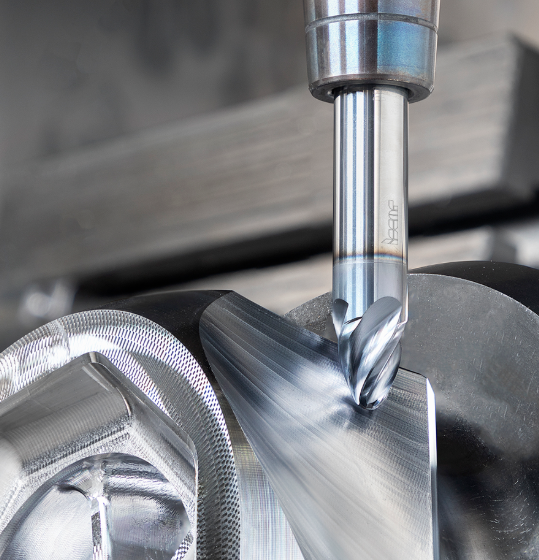
CNC Machining Processes Explained
Now that you understand how online platforms streamline ordering, the next question becomes: which machining process actually fits your part? This isn't just a technical detail—choosing the wrong method can mean wasted material, blown budgets, or parts that simply don't meet specifications. Let's break down the primary processes available through digital manufacturing services and, more importantly, when to use each one.
Milling vs Turning: Choosing Your Process
Picture two fundamentally different approaches to shaping metal. In CNC milling, your workpiece sits stationary while rotating cutting tools move around it, carving away material from multiple angles. In cnc turning, the opposite happens—your part spins rapidly while a fixed cutting tool removes material from the exterior.
This distinction matters because part geometry dictates everything. Does your design feature rotational symmetry—think shafts, pins, or cylindrical housings? A cnc turning service will produce these faster and more economically. Are you creating complex pockets, slots, or multi-sided features? Milling becomes your process of choice.
Consider the practical implications. CNC milling excels at:
- Intricate shapes with non-symmetrical designs
- Slots, pockets, and detailed contours
- Parts requiring machining from multiple faces
- Prototypes where geometry may evolve
Meanwhile, cnc turning services deliver superior results for:
- Cylindrical or conical components
- External threads and grooves
- High-volume production of rotationally symmetric parts
- Components requiring excellent surface finishes on curved surfaces
Many precision cnc machining projects actually combine both processes. A hydraulic fitting might be turned to create its cylindrical body, then milled to add mounting holes and flats for wrench grip. Understanding this helps you anticipate how your part will be manufactured—and quoted.
Understanding Multi-Axis Capabilities
When you hear "3-axis" or "5-axis," these terms describe how many directions the cutting tool or workpiece can move simultaneously. Standard 3-axis milling moves along X, Y, and Z coordinates—left-right, forward-back, and up-down. This handles the majority of cnc milled parts effectively.
But what happens when your design includes undercuts, compound angles, or complex sculptured surfaces? That's where 4-axis and 5 axis cnc machining services become essential. Adding rotational axes (typically called A, B, or C) allows the machine to approach your part from virtually any angle.
Real-world examples clarify this quickly:
- 3-axis milling: Flat brackets, simple housings, straightforward pockets
- 4-axis milling: Parts requiring machining around a cylinder, such as cam lobes or helical features
- 5-axis milling: Turbine blades, impellers, aerospace components with compound curves
The trade-off? More axes mean higher machine costs, which translates to higher part prices. Don't specify 5-axis capabilities unless your geometry genuinely requires it.
Beyond milling and turning, specialized processes like Electrical Discharge Machining (EDM) handle situations where conventional cnc cutting falls short. EDM uses electrical sparks to erode material, making it ideal for extremely hard metals or intricate internal features that cutting tools can't reach. However, it's slower and more expensive—reserve it for applications where nothing else works.
| Process Type | Best For | Typical Tolerances | Complexity Level |
|---|---|---|---|
| 3-Axis CNC Milling | Flat parts, simple pockets, brackets | ±0.005" (±0.127mm) | Low to Medium |
| 4-Axis CNC Milling | Cylindrical features, helical cuts | ±0.003" (±0.076mm) | Medium |
| 5-Axis CNC Milling | Complex contours, aerospace parts, impellers | ±0.002" (±0.05mm) | High |
| CNC Turning | Shafts, pins, cylindrical housings | ±0.005" (±0.127mm) | Low to Medium |
| Multi-Axis Turning | Complex rotational parts, crankshafts | ±0.002" (±0.05mm) | Medium to High |
| EDM (Wire/Sinker) | Hardened materials, intricate internal features | ±0.0005" (±0.013mm) | High |
When uploading your design to an online platform, the quoting system typically analyzes geometry and suggests appropriate processes. However, understanding these fundamentals helps you design parts that are inherently manufacturable—and helps you evaluate whether a suggested process truly fits your requirements. With process selection clarified, the next critical decision involves choosing the right material for your application.
Material Selection Guide for CNC Parts
You've nailed down the right machining process—but here's where many projects stumble. Choosing the wrong material can undermine even the most perfectly designed part. Will your component face corrosive environments? Does it need to survive repeated impacts? Must it remain dimensionally stable across temperature swings? These questions drive material selection far more than simple cost comparisons.
Online CNC services typically offer dozens of material options, which can feel overwhelming. Let's cut through the noise by examining the most commonly requested metals and plastics, along with clear criteria for choosing between them.
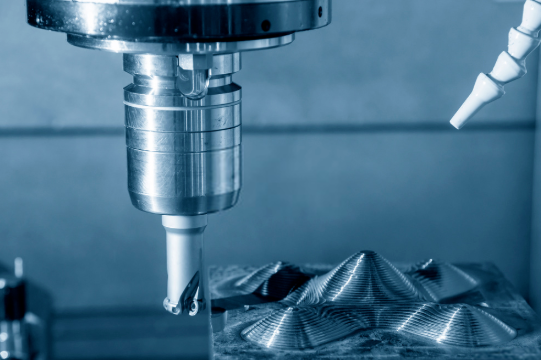
Metal Selection for Strength and Precision
Metals dominate precision machining for good reason—they deliver strength, durability, and thermal stability that most applications demand. But "metal" isn't a single choice. Each alloy brings distinct trade-offs that affect both performance and your bottom line.
Aluminum alloys represent the workhorse of online CNC machining. Aluminum 6061 stands out as the most cost-effective option for general-purpose parts where moderate strength matters. It machines beautifully, accepts anodizing well, and costs significantly less than alternatives. For applications requiring higher strength, 7075 aluminum delivers aerospace-grade performance—though at roughly double the material cost.
According to machining industry data, aluminum's machinability index reaches approximately 270% compared to the baseline steel rating, meaning faster cycle times and lower per-part costs. When production runs are tight, even a 10% difference in machinability significantly affects lead time and unit economics.
Stainless steel justifies its higher machining cost when durability or hygiene becomes paramount. Grade 304 offers excellent corrosion resistance for food processing equipment, medical devices, and marine applications. Grade 316 adds molybdenum for enhanced resistance to chlorides and acids. The trade-off? Stainless machines roughly four times slower than aluminum, driving up costs substantially.
Titanium occupies the premium tier—exceptional strength-to-weight ratio combined with outstanding corrosion resistance. However, it's notoriously difficult to machine, requiring specialized tooling, slower speeds, and experienced operators. Reserve titanium for aerospace, medical implants, and high-performance applications where nothing else meets specifications.
Brass strikes an ideal balance for functional and aesthetic components, particularly in small batches. Its excellent machinability—roughly 100% on the baseline index—means fast production and clean finishes. Electrical connectors, decorative hardware, and fluid handling components frequently leverage brass's unique combination of properties.
Engineering Plastics: When Polymer Beats Metal
Sometimes metal isn't the answer. Engineering plastics offer advantages that no metal can match: lower weight, natural lubricity, electrical insulation, and chemical resistance that outperforms even stainless steel in certain environments.
So what is delrin, exactly? Delrin is DuPont's trade name for a polyoxymethylene (POM) homopolymer—essentially a high-performance engineering plastic known for exceptional strength, stiffness, and dimensional stability. When engineers ask what is acetal, they're often referring to the same family of materials, though acetal typically describes the copolymer variant. The distinction matters: delrin material features a more uniform crystalline structure, delivering superior tensile strength (approximately 13,000 psi versus 12,000 psi for copolymer acetal). This makes polyacetal delrin ideal for components subjected to cyclic loads or requiring the lowest possible friction.
Delrin plastic excels in applications demanding:
- Low coefficient of friction without lubrication
- Excellent fatigue resistance under repeated stress
- Tight dimensional tolerances in precision mechanisms
- Superior wear resistance for sliding components
Acetal copolymers, meanwhile, offer better chemical resistance—particularly to concentrated caustic solutions—and handle continuous high-temperature exposure more effectively. If your part faces aggressive chemicals or sustained heat above 90°C, copolymer acetal often outperforms Delrin.
Machining nylon presents different trade-offs entirely. Nylon for machining comes in cast and extruded forms, each with distinct characteristics. Cast nylon delivers higher strength, hardness, and wear resistance—making it excellent for heavy-duty gears, bearings, and structural components. However, nylon absorbs moisture (up to 9% compared to Delrin's 0.8%), which affects dimensional stability in humid environments. For applications requiring stability in varying conditions, Delrin typically wins.
PEEK (polyether ether ketone) represents the premium tier of engineering plastics. Operating continuously at temperatures up to 250°C, PEEK handles environments where other plastics fail completely. Aerospace components, medical implants, and semiconductor equipment frequently specify PEEK despite its substantially higher cost.
| Material | Key Properties | Common Applications | Machinability Rating |
|---|---|---|---|
| Aluminum 6061 | Lightweight, corrosion resistant, excellent thermal conductivity | Brackets, housings, prototypes, consumer electronics | Excellent (270%) |
| Aluminum 7075 | High strength-to-weight, aerospace grade | Aircraft components, high-stress structural parts | Good (200%) |
| Stainless Steel 304 | Corrosion resistant, hygienic, durable | Food equipment, medical devices, marine hardware | Fair (45%) |
| Stainless Steel 316 | Enhanced chemical resistance, chloride tolerant | Chemical processing, pharmaceutical, coastal environments | Fair (40%) |
| Titanium Grade 5 | Exceptional strength-to-weight, biocompatible | Aerospace, medical implants, high-performance racing | Poor (22%) |
| Brass C360 | Excellent machinability, electrical conductivity | Electrical connectors, valves, decorative components | Excellent (100%) |
| Delrin (POM-H) | High stiffness, low friction, fatigue resistant | Gears, bearings, precision mechanisms, snap-fits | Excellent |
| Acetal Copolymer | Chemical resistant, dimensionally stable | Fluid handling, food processing, medical devices | Excellent |
| Nylon 6 (Cast) | High strength, wear resistant, impact tough | Gears, bushings, wear pads, structural components | Good |
| PEEK | High-temperature stability, chemical inert, flame retardant | Aerospace, semiconductor, medical implants | Moderate |
Making the right material choice ultimately comes down to matching properties to requirements. Ask yourself: What forces will this part experience? What environment will it operate in? What's my budget constraint? For small-batch production or prototyping, materials like aluminum and brass reduce risk due to shorter machine times and easier setups. For demanding applications, the higher cost of stainless steel, titanium, or PEEK often pays dividends in performance and longevity.
With material selection clarified, the next critical consideration involves understanding how tight your tolerances actually need to be—and what that precision costs.
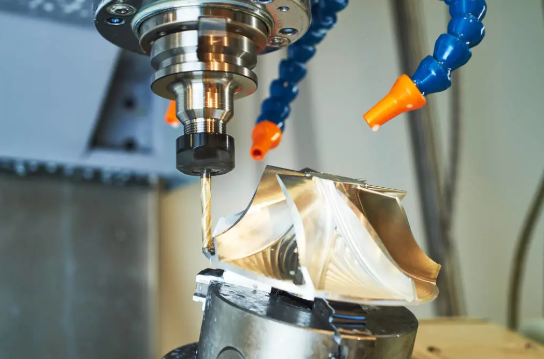
Understanding Tolerances and Precision Standards
Here's a question that trips up even experienced engineers: what does ±0.005" actually mean for your project? Tolerances represent one of the most misunderstood—yet critically important—aspects of ordering machined parts online. Specify tolerances too loose, and your components won't fit together. Specify them too tight, and you'll pay significantly more for precision you may not actually need.
Let's demystify tolerance specifications so you can make informed decisions that balance functionality with cost.
Tolerance Basics: What the Numbers Mean
Machining tolerance defines the total amount of dimensional variation allowed from a specified value. When you see ±0.005" on a drawing, it means the actual dimension can fall anywhere within a 0.010" range—0.005" above or below the target measurement.
Why does this matter? No machine delivers identical results every single time. Tool wear, thermal expansion, material inconsistencies, and countless other variables introduce small deviations. Tolerances establish controlled margins for these inevitable variations while ensuring parts still function as designed.
Consider a practical example. Imagine you're designing a bushing meant to slide onto a 1.000" diameter shaft. If you specify the bushing's inner diameter at 1.005" with a tolerance of ±0.002", the acceptable range becomes 1.003" to 1.007". Too small, and the bushing won't fit. Too large, and you'll have excessive play—potentially rendering the assembly unusable.
Standard CNC machining typically achieves tolerances of ±0.005" (0.127mm) as a baseline benchmark. This level of precision handles the vast majority of machining parts without requiring specialized processes or equipment. However, precision machining services can achieve tighter tolerances of ±0.001" or better when applications demand exceptional accuracy.
The relationship between tolerance and cost follows an exponential curve. Each additional decimal place of precision dramatically increases manufacturing difficulty. A tolerance of ±0.02" permits a range ten times wider than ±0.002"—and that difference significantly affects production complexity, cycle time, and ultimately your invoice.
When Tight Tolerances Actually Matter
Here's what many online resources skip: tight tolerances aren't always better. Over-specifying precision wastes money without adding functional value. So when do you genuinely need precision machining parts with tight tolerances?
Mating parts represent the most common scenario. When two or more components must fit together with specific clearances—press fits, sliding fits, or interference fits—tolerance control becomes essential. A shaft-bearing assembly might require ±0.0005" to ensure proper rotation without excessive play.
Safety-critical applications demand tighter control. Aerospace components, medical devices, and automotive systems where failure could cause harm justify the additional cost of precision manufacturing. Industry standards like AS9100 for aerospace and ISO 13485 for medical devices exist precisely because tolerances in these applications aren't negotiable.
High-performance mechanisms often require precision beyond standard levels. Optical mounting systems, semiconductor equipment, and research instruments may specify tolerances below ±0.0005" where even microscopic variations affect performance.
But here's the key insight: most features on most parts don't require tight tolerances. A mounting hole that accepts a bolt with clearance? Standard tolerance works fine. A cosmetic housing surface? Loose tolerances save significant cost without visible impact.
What is the tolerance for thread holes specifically? Thread tolerances follow different standards—typically defined by thread class (1, 2, or 3 in unified systems). Class 2 threads, the most common specification, allow more variation than Class 3, which provides tighter fits for precision applications. Most online CNC services default to Class 2 unless otherwise specified.
| Tolerance Grade | Typical Range | Applications | Cost Impact |
|---|---|---|---|
| Standard/General | ±0.005" to ±0.010" (±0.127mm to ±0.254mm) | Prototypes, non-critical dimensions, clearance holes, structural components | Baseline |
| Precision | ±0.002" to ±0.005" (±0.05mm to ±0.127mm) | Mating parts, mechanical assemblies, gears, locating features | 1.5x - 2x baseline |
| High Precision | ±0.0005" to ±0.002" (±0.013mm to ±0.05mm) | Aerospace components, optical systems, gauges, high-performance mechanisms | 3x - 5x baseline |
| Ultra Precision | Below ±0.0005" (±0.013mm) | Semiconductor equipment, research instruments, metrology tools | 5x+ baseline |
Several factors beyond geometry affect achievable tolerances. Material properties matter—aluminum machines to tight tolerances more easily than stainless steel due to thermal stability and tool wear characteristics. Part size influences precision; maintaining ±0.001" across a 12" dimension presents greater challenges than across 1". And surface finish requirements interact with dimensional tolerances, sometimes requiring trade-offs between the two.
The smart approach? Specify the loosest tolerance that still meets functional requirements for each feature. Reserve tight tolerances only for dimensions that genuinely affect performance. This strategy optimizes both cost and lead time while ensuring your precision machining services investment delivers real value where it matters most.
With tolerance fundamentals clarified, understanding the complete online ordering workflow—from file preparation through delivery—becomes your next essential step.
The Online CNC Ordering Process Step by Step
Sounds complex? It really isn't. Whether you're ordering your first cnc machining parts or transitioning from a traditional machine shop relationship, the digital workflow follows a predictable path. Understanding each step—from preparing your design files to tracking shipment—eliminates surprises and helps you optimize both cost and lead time.
The entire process typically unfolds in less time than scheduling a single phone call with a traditional shop. Here's exactly what to expect when you're ready to turn your CAD design into physical cnc parts.
Preparing Your CAD Files for Upload
Your CAD file serves as the definitive blueprint for manufacturing. Unlike traditional shops where machinists interpret paper drawings, online platforms extract geometry directly from your 3D model. This means file quality directly impacts quote accuracy and production success.
Most online CNC services accept these primary file formats:
- STEP (.step, .stp): The gold standard for B2B exchange. STEP files capture exact geometry using mathematical NURBS surfaces plus complete topological data—faces, edges, and vertices that connect seamlessly. This "watertight" representation enables reliable toolpath generation.
- IGES (.igs, .iges): An older format handling surface geometry. While widely supported, IGES files tend toward surface continuity errors (gaps or overlaps) with complex solids. Use STEP when possible.
- STL (.stl): Common for 3D printing, STL uses triangulated meshes that approximate surfaces rather than defining them mathematically. Acceptable for simple parts but unsuitable for tight tolerances or complex curves.
Before uploading, run through this preparation checklist:
Verify your units. A model designed in inches but interpreted as millimeters produces a part scaled down by a factor of 25.4—an expensive mistake. According to CAD preparation guidelines, explicitly confirming units upon export prevents this common error.
Check for watertight geometry. Open edges or gaps between surfaces prevent CAM software from distinguishing solid material from empty space. Use your CAD system's "Check Geometry" or "Heal" function to verify the model is completely closed.
Confirm your coordinate system. The part origin should align with how you intend the workpiece to be fixtured. Clear datum definitions help machinists set up your job correctly without guesswork.
Remove unnecessary complexity. Delete non-essential details that don't affect part function—tiny aesthetic chamfers, vendor logos, or internal threads you'll tap manually. Simplifying geometry speeds up both quoting and machining.
Design for Manufacturing: CNC-Specific Principles
Here's where prototype machining success often hinges: designing parts that machines can actually produce. CNC machining relies on cylindrical cutting tools, which creates inherent geometric constraints many designers overlook.
Internal corners need radii. Sharp 90-degree internal corners are physically impossible—the smallest end mill still has a radius. Specify corner radii at least 1.2 times the intended tool radius. Demanding sharp internal corners forces expensive secondary operations like EDM.
Watch your aspect ratios. Deep, narrow features challenge tool rigidity. As cutting tools extend further from the spindle, they deflect and chatter, producing poor surface finishes. Keep wall depths within stable engagement ranges for your feature width.
Consider tool access. Can a standard end mill reach every feature you've designed? Undercuts and internal cavities inaccessible from above require specialized tooling or multi-axis machining—both adding cost.
Apply tolerances strategically. As covered previously, over-tolerancing wastes money. Only tight-tolerance critical features that affect function. Your CAD model or accompanying drawing should clearly communicate which dimensions matter most.
From Quote to Doorstep: The Production Timeline
Once your file is prepared, the ordering workflow becomes remarkably streamlined. Here's the complete sequence from upload to delivery:
- Upload your 3D CAD file. Most platforms require only a STEP file to generate an initial quote. If your design includes threads, specific tolerances, or special finishing requirements, attach a 2D technical drawing (PDF, DWG, or DXF) for complete specifications.
- Configure part parameters. Select your material, quantity, surface finish, and tolerance requirements through the platform interface. Each selection updates pricing instantly, letting you explore trade-offs in real time.
- Receive instant quoting. Sophisticated algorithms analyze your geometry within seconds, evaluating complexity, material costs, and required machining operations. You'll see pricing and lead time options immediately—no waiting days for manual estimates.
- Review manufacturability feedback. Many platforms provide automated Design for Manufacturing (DFM) analysis, flagging potential issues like sharp internal corners, thin walls, or features requiring expensive processes. Address these before confirming to avoid delays.
- Submit your order. Confirm specifications and complete payment. Some services offer review-before-payment options where engineers verify your file before charging, typically completing review within 2-4 hours on business days.
- Production begins. Your cnc machined parts enter the manufacturing queue. For cnc prototype machining orders, expedited options often deliver finished components within days—sometimes as fast as next-day for simpler geometries.
- Quality inspection. Reputable services inspect parts against your specifications before shipping. For critical applications, request inspection reports documenting key dimensions.
- Shipment and tracking. Track your cnc machine parts from production facility to doorstep through the platform dashboard. Standard shipping typically takes 3-5 days domestically; expedited options compress this further.
Throughout this process, centralized communication through the platform eliminates scattered email threads. Questions about your order, design modifications, or production status flow through a single interface—dramatically reducing the miscommunication that plagues traditional cnc prototyping workflows.
For first-time users, start with a non-critical prototype to familiarize yourself with the platform's interface and feedback systems. This low-risk approach builds confidence before committing production-critical components to the digital workflow.
With the ordering process demystified, understanding your options for surface finishes and post-processing becomes the natural next consideration—transforming raw machined parts into finished components ready for their intended application.
Surface Finishes and Post-Processing Options
Your CNC part just came off the machine—now what? That raw, as-machined surface might work perfectly for internal prototypes, but most applications demand something more. Surface finishes aren't merely cosmetic upgrades; they fundamentally alter how your part performs, resists environmental challenges, and integrates with mating components.
Here's the critical distinction many resources overlook: surface finish describes the measurable texture characteristics of your part, while surface finishing refers to the processes applied to achieve specific performance or aesthetic goals. Understanding both helps you specify exactly what your application requires—without overpaying for unnecessary treatments.
Functional Finishes for Performance Parts
When parts face harsh environments, repeated contact with other surfaces, or demanding operating conditions, finish selection becomes an engineering decision—not an aesthetic one. The right functional finish can extend component lifespan dramatically.
As-machined finishes represent your baseline option. The part retains visible tool marks from the cnc cut operations, with surface roughness typically ranging from 63 to 125 Ra (microinches). This finish works perfectly for internal components, prototypes, and applications where appearance doesn't matter. It's also the fastest and most economical choice since no additional processing occurs.
Anodizing transforms aluminum machining applications by creating a durable, corrosion-resistant oxide layer through an electrochemical process. Unlike coatings that sit on top of material, anodizing integrates directly with the aluminum substrate—meaning it won't chip or peel. Three primary types serve different needs:
- Type I (Chromic): Thin coating (0.00002"-0.0001") for aerospace applications requiring minimal dimensional change
- Type II (Sulfuric): Standard decorative anodizing (0.0002"-0.001") accepting vibrant dyes while providing good corrosion protection
- Type III (Hardcoat): Thick, exceptionally hard layer (>0.001") delivering wear resistance approaching tool steel—ideal for high-friction components
Passivation serves stainless steel parts by removing free iron from surfaces through chemical treatment. The result? Enhanced corrosion resistance without adding thickness or changing dimensions. Medical devices and food processing equipment frequently require passivation to meet hygiene standards.
Black oxide creates a magnetite layer on ferrous metals, providing mild corrosion resistance plus a uniform matte black appearance. Since it doesn't significantly affect dimensions, black oxide works well for precision components requiring both protection and aesthetic consistency.
For cnc plastic machining applications, finish options differ significantly. Engineering plastics typically receive as-machined finishes or light bead blasting, since processes like anodizing apply exclusively to metals.
Aesthetic Finishes for Consumer Products
Consumer-facing products demand finishes that look as good as they perform. Here's where surface finishes elevate parts from functional components to premium products.
Bead blasting propels fine glass or plastic beads at your part's surface, creating a uniform matte texture that hides machining marks. It's often combined with subsequent finishes—the satin appearance on Apple's MacBook laptops results from bead blasting followed by Type II anodizing. This combination delivers both aesthetic appeal and surface protection.
Powder coating applies to aluminum, steel, and stainless steel, electrostatically depositing powdered paint before heat curing. The result is a thick, durable coating available in virtually unlimited colors and gloss levels. However, powder coating does add measurable thickness (typically 0.002"-0.004"), so tight-tolerance features and threaded holes require masking before application.
Electropolishing achieves mirror-like finishes on stainless steel by dissolving a controlled surface layer through electrochemical action. It's faster and more consistent than manual polishing while simultaneously improving corrosion resistance—a dual benefit for medical instruments and food processing components.
When specifying finishes, remember that masking adds cost and lead time. Each hole or surface requiring protection from the finishing process demands manual labor, increasing your per-part investment. Design with finishing in mind: minimize masked features where possible, or accept that complex masking requirements will extend both timeline and budget.
| Finish | Process | Benefits | Best Applications | Relative Cost |
|---|---|---|---|---|
| As-Machined | No additional processing; retains cnc cuts tool marks | Fastest turnaround, lowest cost, no dimensional change | Prototypes, internal components, non-cosmetic parts | $ |
| Bead Blasting | High-velocity bead projection creates uniform matte texture | Hides machining marks, prepares surface for coatings, aesthetic uniformity | Consumer electronics, enclosures, pre-anodizing preparation | $$ |
| Type II Anodizing | Electrochemical oxide layer formation on aluminum | Corrosion resistance, vibrant color options, integrated finish | Consumer products, electronics housings, decorative components | $$ |
| Type III Hardcoat | Thick electrochemical oxide layer on aluminum | Exceptional wear resistance, hardness near tool steel | High-friction components, aerospace, industrial machinery | $$$ |
| Powder Coating | Electrostatic paint application with heat curing | Unlimited colors, thick durable coating, excellent coverage | Outdoor equipment, consumer products, architectural components | $$ |
| Passivation | Chemical treatment removing free iron from stainless steel | Enhanced corrosion resistance, no dimensional change | Medical devices, food equipment, pharmaceutical components | $$ |
| Black Oxide | Chemical conversion coating on ferrous metals | Uniform appearance, mild corrosion protection, minimal thickness | Tools, firearms, precision instruments | $ |
| Electropolishing | Electrochemical surface dissolution on stainless steel | Mirror finish, improved corrosion resistance, faster than manual polishing | Medical instruments, food processing, pharmaceutical equipment | $$$ |
Selecting the right finish ultimately requires matching functional requirements to available options. Ask yourself: Does my part face corrosive environments? Will surfaces experience repeated contact or wear? Is visual appearance customer-facing? Your answers guide the decision—and understanding the trade-offs between cost, durability, and aesthetics ensures you specify exactly what your application demands.
With finishing options clarified, understanding the cost factors that drive CNC machining pricing becomes essential for making informed decisions about your project budget.
CNC Machining Costs and Pricing Factors
Ever received a CNC machining quote and wondered why a seemingly simple part costs hundreds of dollars? You're not alone. Understanding the cnc machining price breakdown transforms confusing quotes into logical cost structures—empowering you to make design decisions that directly impact your budget.
Here's the reality: CNC machining involves significant fixed costs that exist regardless of part complexity. Recognizing where your money actually goes helps you optimize designs before uploading files and understand why quotes vary dramatically between suppliers.
What Drives CNC Machining Costs
Unlike commodity products with fixed shelf prices, custom machined parts pricing reflects a complex equation. Every design decision you make ripples through the manufacturing process, affecting machine time, tooling requirements, and labor involvement.
According to industry research on CNC cost structures, the primary factors influencing your final invoice break down into these key categories:
- Setup and programming costs: Before any cutting begins, machinists must program toolpaths, prepare fixtures, and configure machines. These non-recurring engineering (NRE) expenses are fixed—meaning they cost the same whether you order one part or ten. For small cnc machining orders, setup alone can represent 50% or more of total cost.
- Material costs: Raw material pricing varies dramatically. Aluminum 6061 might cost $3-5 per pound, while titanium approaches $15-30 per pound. Beyond material type, stock size matters—if your part requires purchasing an entire bar when you only need a fraction, you'll bear that full cost.
- Machine time: Every minute the spindle runs accumulates charges. Harder materials machine slower. Complex geometries require more passes. Tight tolerances demand reduced feed rates. A part taking 45 minutes versus 15 minutes to machine costs roughly three times more in cycle time alone.
- Tolerance requirements: As explored earlier, tighter tolerances exponentially increase cost. Holding ±0.001" requires slower cutting speeds, more careful inspection, and often specialized equipment—all adding expense.
- Part complexity: Features requiring multiple setups, special fixtures, or multi-axis machining drive costs upward. A part machined from one side costs less than identical geometry requiring six fixture orientations.
- Surface finishing: Post-processing adds both material and labor costs. Anodizing, powder coating, or specialized finishes can add 20-50% to base machining costs depending on requirements.
- Quantity: Volume dramatically affects per-unit economics. Those fixed setup costs spread across larger orders, reducing per-piece pricing substantially.
The machinist metal cost component deserves special attention. Global supply chain volatility has made material pricing increasingly unpredictable. According to manufacturing industry analysis, material prices sometimes change twice weekly—meaning quotes often carry shorter validity periods than you might expect.
Prototype vs Production Pricing Dynamics
Here's where many buyers encounter sticker shock: prototype pricing operates under fundamentally different economics than production runs. Understanding this distinction prevents budget miscalculations when planning projects.
When you order a single custom machine part or small batch (typically under 20 pieces), every fixed cost concentrates on those few units. Research comparing prototype versus production economics reveals the stark contrast:
Prototype orders (1-20 pieces) carry disproportionately high per-unit costs because:
- Setup costs spread across minimal units—a $120 setup on one part versus the same $120 spread across 100 parts
- Tool paths receive less optimization since speed efficiency matters less for single pieces
- Material purchases in small quantities command premium pricing from suppliers
- Each part often requires 100% inspection rather than statistical sampling
- Engineering time for design review and potential iterations adds substantial overhead
Production orders (50+ pieces) benefit from economies of scale:
- Fixed costs amortize across larger quantities, dramatically reducing per-unit expense
- Toolpaths undergo meticulous optimization for cycle time efficiency
- Bulk material purchasing yields significant discounts
- Operators develop efficiency through repetitive operations
- Statistical process control replaces 100% inspection, reducing quality costs
To illustrate: imagine a part requiring two machine setups at $40 each plus a $40 machine activation fee. For a single prototype, that's $120 in setup alone. Order ten identical parts, and those same $120 in setup costs drop to $12 per piece—a six-fold reduction before even considering material and machining time savings.
This explains why production quotes often seem dramatically lower per unit than prototype pricing. It's not that shops overcharge for prototypes—the cost structure genuinely differs.
Practical strategies to reduce costs include designing for manufacturability from the start: avoid unnecessarily tight tolerances, minimize setups by consolidating features on accessible faces, and consider whether standard stock sizes can accommodate your geometry. For prototypes, supplying your own material eliminates markup and may encourage shops to accept smaller orders they'd otherwise decline.
With cost factors clarified, comparing online CNC machining against alternative manufacturing methods helps determine whether machining truly represents the optimal approach for your specific application.
Online CNC Machining vs Alternative Methods
Here's a question too few buyers ask: should you even use CNC machining for this project? Understanding when machining excels—and when alternatives deliver better results—separates savvy engineers from those who default to familiar processes regardless of fit.
Metal cnc machining and cnc fabrication remain dominant for good reason: exceptional precision, excellent material properties, and reliable repeatability. But 3D printing, injection molding, and sheet metal machining each carve out territory where they outperform subtractive manufacturing. Let's explore when each method wins—and critically, when CNC isn't your best choice.
CNC vs 3D Printing: Speed, Strength, and Scale
These two technologies appear to compete directly, yet they solve fundamentally different problems. CNC machining removes material from solid blocks; 3D printing builds parts layer by layer. This distinction drives everything—from achievable geometries to mechanical performance.
Choose CNC machining when:
- Dimensional accuracy matters most. CNC delivers tighter tolerances and superior repeatability across all three axes. According to industry analysis from Hubs, machining consistently achieves precision that 3D printing can only approach with expensive industrial systems.
- Mechanical properties are critical. Machined parts exhibit fully isotropic properties—identical strength in every direction. 3D printed parts often display anisotropic behavior, meaning they're weaker along layer lines.
- Your cnc metal parts require specific alloys. Need 7075 aluminum or 316 stainless steel? Machining handles these materials routinely, while additive options remain limited or prohibitively expensive.
- Surface finish quality drives your specification. CNC produces smooth surfaces directly from the machine, while 3D prints typically show visible layer lines requiring post-processing.
Choose 3D printing when:
- Geometry complexity exceeds machining capabilities. Internal channels, lattice structures, and topology-optimized shapes that tools simply cannot reach become possible with additive manufacturing.
- You need parts within 24 hours. Rapid cnc prototyping is fast, but 3D printing can deliver functional prototypes overnight for urgent iterations.
- Quantities stay below 10 units. Without setup costs, additive manufacturing often costs less for single pieces or tiny batches.
- Materials are difficult to machine. Flexible TPU, metal superalloys like Inconel, and certain composites work better through additive processes.
A cnc prototype makes sense when you need to validate mechanical performance with production-representative materials. A 3D printed prototype works beautifully for form and fit checks where strength testing isn't critical. Many successful development programs use both: rapid 3D prints for early iterations, then CNC machined parts for final validation.
When Injection Molding Beats Machining
Here's the volume threshold most buyers misjudge: once quantities climb above 500 identical parts, injection molding typically becomes more economical than machining—despite significant upfront tooling investment.
Consider the economics. A CNC machined plastic housing might cost $45 per unit across 100 pieces. That same geometry injection molded could drop to $3 per unit after amortizing $8,000 in mold tooling across 5,000 parts. The breakeven point varies with part complexity, but the principle holds: molding trades high initial investment for dramatically lower per-piece costs at scale.
Injection molding wins when:
- Production volumes exceed 500-1,000 identical pieces
- Parts require complex internal features achievable through mold design
- Cycle time matters—molding produces parts in seconds versus minutes
- Material variety drives design (thousands of plastic grades available)
CNC machining wins when:
- Volumes stay below 500 pieces where tooling costs can't amortize
- Design iterations continue—machining avoids expensive mold modifications
- Metal properties are non-negotiable
- Lead time is critical—no weeks waiting for mold fabrication
According to Protolabs' manufacturing comparison data, injection molding delivers unmatched consistency and repeatability for high-volume plastic parts. But the minimum viable quantity to justify tooling investment typically starts around 500 units—below that threshold, machining remains more practical.
Sheet Metal Fabrication: The Often-Overlooked Alternative
When your design features predominantly flat surfaces, bends, and cutouts, sheet metal machining often outperforms solid-block CNC machining on both cost and lead time. Laser cutting, punching, and brake forming produce enclosures, brackets, and panels faster than milling from billet.
The key distinction: sheet metal processes work with flat stock bent into three-dimensional shapes, while CNC machining carves from solid blocks. If your geometry can be "unfolded" into a flat pattern, sheet metal fabrication likely costs less.
When NOT to Use CNC Machining
This perspective rarely appears in manufacturer content, yet it's essential for informed decision-making. CNC machining isn't always the answer—here's when to look elsewhere:
- High-volume identical parts: Above 500-1,000 units, investigate injection molding or die casting for plastics and metals respectively.
- Impossible geometries: True internal voids, enclosed lattices, or features no tool can reach require additive manufacturing.
- Sheet-like structures: Thin-walled enclosures and brackets often cost less through sheet metal fabrication.
- Extreme material waste: Machining a small part from a large block wastes expensive material—near-net-shape processes may prove more economical.
- Overnight prototype needs: When 24-hour turnaround trumps all other considerations, 3D printing delivers where machining cannot.
| Method | Best Volume Range | Material Options | Precision Level | Ideal Use Cases |
|---|---|---|---|---|
| CNC Machining | 1 to 500 pieces | Metals, engineering plastics, wood, composites | ±0.001" to ±0.005" achievable | Functional prototypes, precision metal machining, low-volume production, tight-tolerance components |
| 3D Printing (FDM/SLS) | 1 to 50 pieces | Thermoplastics, nylon, TPU, limited metals | ±0.005" to ±0.020" typical | Complex geometries, rapid iterations, form/fit prototypes, lattice structures |
| Metal 3D Printing (DMLS) | 1 to 100 pieces | Titanium, Inconel, stainless steel, aluminum | ±0.004" to ±0.010" typical | Topology-optimized parts, internal channels, aerospace components, medical implants |
| Injection Molding | 500 to 1,000,000+ pieces | Thousands of plastic grades | ±0.002" to ±0.005" achievable | High-volume plastic parts, consumer products, consistent mass production |
| Sheet Metal Fabrication | 1 to 10,000 pieces | Aluminum, steel, stainless steel, copper | ±0.005" to ±0.030" typical | Enclosures, brackets, panels, chassis, structural components |
The smartest approach? Evaluate each project against all viable methods before defaulting to familiar processes. A cnc fabrication quote comparison against sheet metal or 3D printing alternatives often reveals surprising cost or lead time advantages you'd otherwise miss.
With manufacturing method selection clarified, understanding industry-specific certification requirements ensures your chosen supplier can actually meet the quality standards your application demands.

Industry Applications and Certification Standards
Your part geometry is perfect. Material selection is dialed in. But here's a question that can derail an entire project: does your online CNC supplier actually hold the certifications your industry requires? For aerospace, medical, and automotive applications, certification isn't optional—it's the difference between parts that can legally ship and expensive scrap.
Understanding which certifications matter for your specific application helps you evaluate suppliers before committing orders. Let's break down what each major standard guarantees and when you genuinely need certified precision cnc machining services.
Certification Requirements by Industry
Different sectors impose dramatically different compliance burdens. A prototype bracket for a consumer electronics enclosure faces minimal regulatory oversight. That same bracket destined for a commercial aircraft requires documented traceability, certified processes, and auditable quality systems.
Aerospace cnc machining demands the most rigorous certification landscape. AS9100 builds upon ISO 9001's foundation while adding aerospace-specific requirements for risk management, configuration control, and supply chain oversight. According to industry certification research, AS9100 emphasizes stringent documentation and product integrity control throughout complex supply chains—requirements that don't exist in general manufacturing standards.
For aerospace machining applications, NADCAP (National Aerospace and Defense Contractors Accreditation Program) adds another layer, accrediting special processes like heat treating, chemical processing, and nondestructive testing. Unlike general quality certifications, NADCAP examines process-specific controls with exceptional scrutiny. If your cnc machining aerospace project involves any special processing, verify your supplier holds relevant NADCAP accreditations.
Medical machining operates under its own regulatory framework. ISO 13485 serves as the definitive quality management standard for medical device manufacturing, outlining strict controls over design, manufacturing, traceability, and risk mitigation. Beyond this, facilities producing components for the US market must comply with FDA 21 CFR Part 820—the Quality System Regulation governing product design, manufacturing, and tracking.
For medical device machining specifically, documentation requirements intensify significantly. Every component must be fully traceable, with effective complaint and recall handling procedures in place. These combined requirements ensure every medical component meets the highest standards of precision and patient safety.
Automotive applications center on IATF 16949—the global standard for automotive quality management. This certification combines ISO 9001 principles with sector-specific requirements for continuous improvement, defect prevention, and stringent supplier oversight. Manufacturers serving major automotive OEMs typically require this certification as a baseline qualification.
Defense-related CNC machining introduces additional complexity through ITAR (International Traffic in Arms Regulations), which strictly controls handling of sensitive technical data and components. Compliance requires registered status with the U.S. Department of State plus robust information security protocols.
| Industry | Primary Certification | Key Requirements | Why It Matters |
|---|---|---|---|
| General Manufacturing | ISO 9001 | Quality management system, process documentation, continuous improvement | Baseline quality assurance for any manufacturing operation |
| Aerospace | AS9100 + NADCAP | Risk management, configuration control, special process accreditation, full traceability | Safety-critical components require documented quality at every step |
| Medical Devices | ISO 13485 + FDA 21 CFR 820 | Design controls, risk mitigation, complaint handling, complete traceability | Patient safety demands zero tolerance for quality failures |
| Automotive | IATF 16949 | Defect prevention, statistical process control, supplier management | High-volume consistency with near-zero defect rates |
| Defense | ISO 9001/AS9100 + ITAR | Information security, controlled access, registered handling of sensitive data | National security requires controlled manufacturing environments |
Quality Assurance in Precision Manufacturing
Certifications establish quality management frameworks—but how do manufacturers actually deliver consistent results across thousands of parts? The answer lies in systematic quality assurance methodologies, particularly Statistical Process Control (SPC).
SPC represents a data-driven approach to monitoring and controlling manufacturing processes. According to industry quality management resources, SPC provides tools and techniques to analyze data, make informed decisions, and—most importantly—prevent defects before they occur. Rather than inspecting parts after production and rejecting failures, SPC identifies process drift early, enabling corrections before parts fall out of specification.
For automotive applications specifically, IATF 16949 certification requires implementation of SPC methodologies. The core elements include:
- Data collection: Recording measurements and process parameters throughout production
- Control charts: Visual tools that distinguish normal variation from problematic trends
- Process capability analysis: Quantifying whether processes can consistently meet specifications
- Corrective action protocols: Defined responses when processes show signs of drift
The practical benefit? When you order from an IATF 16949-certified facility employing SPC, you're not just hoping for quality—you're receiving parts from a system designed to catch problems before they affect your components.
For automotive supply chains requiring production-ready capabilities, Shaoyi Metal Technology's certified precision CNC machining services demonstrate what this looks like in practice. Their IATF 16949 certification combined with strict Statistical Process Control delivers high-tolerance components with lead times as fast as one working day—whether you need complex chassis assemblies or custom metal bushings.
The certification research reveals an important insight: 67% of OEMs require ISO 9001 certification from their suppliers, and shops with industry-specific certifications win 15% more contracts on average. For buyers, this means certified suppliers aren't just meeting regulatory minimums—they're demonstrating operational maturity that translates to more reliable outcomes.
When evaluating online CNC services for regulated industries, request specific certification documentation rather than accepting general claims. Legitimate suppliers readily provide current certificates with audit dates and scope descriptions. This verification step protects your project from suppliers who claim capabilities they haven't actually demonstrated to independent auditors.
With certification requirements clarified, understanding how to evaluate and select the right online CNC partner becomes your final essential consideration—ensuring your chosen supplier can grow with your needs from initial prototypes through full-scale production.
Choosing the Right Online CNC Partner
You've mastered the technical fundamentals—processes, materials, tolerances, and certifications. But here's the decision that ultimately determines project success: which online CNC partner actually deserves your business? The wrong choice transforms promising designs into delayed deliveries, quality headaches, and budget overruns. The right partner becomes an extension of your engineering team.
Whether you're searching for cnc machine shops near me or evaluating global suppliers, the selection criteria remain consistent. Let's examine the evaluation framework that separates reliable manufacturing partners from those who'll waste your time and money.
Evaluating Online CNC Service Providers
Searching for a machinist near me or cnc near me often returns dozens of options—but proximity alone doesn't guarantee capability. According to manufacturing partnership research, the critical distinction lies between "shops" that simply execute orders and "partners" who actively contribute to your project's success.
Here's the essential evaluation criteria every buyer should assess before committing:
- Design for Manufacturability (DfM) feedback: Does the supplier proactively identify issues before production? As manufacturing experts note, 80% of a product's cost is locked in during the design phase. Partners who provide DfM analysis save you money and prevent failures—"shops" simply quote whatever you send.
- Technical capabilities and equipment: Evaluate their machine diversity, multi-axis capabilities, and capacity. Can they handle your specific geometry, tolerances, and materials? Industry evaluation standards emphasize verifying that machine capability and capacity genuinely match your prospective orders.
- Quality certifications: Verify current ISO 9001 certification as a baseline. For regulated industries, confirm AS9100 (aerospace), ISO 13485 (medical), or IATF 16949 (automotive) certifications with valid audit dates—not just claims.
- Communication responsiveness: How quickly do they answer technical questions? Are you speaking with engineers or sales staff? According to supplier selection research, effective communication means prompt responses, regular progress updates, and quick issue resolution.
- Quality control processes: Look for robust inspection protocols—first article inspection, in-process verification, and final inspection before shipment. Request sample inspection reports to verify their documentation rigor.
- Lead time reliability: Promises mean nothing without performance. Ask for references or check reviews specifically mentioning on-time delivery.
- Financial stability: Industry guidance recommends asking tough business questions: annual revenue, long-term goals, and organizational debt. Partnering with a struggling company creates supply chain risk.
- Supply chain management: How do they handle material sourcing and secondary operations? Delays in obtaining materials can result in longer lead times and increased production costs.
When evaluating local machine shops versus online platforms, consider the trade-offs honestly. Machinist shops near me offer face-to-face relationships and easier site visits—valuable for complex, ongoing projects. Online platforms provide instant quoting, broader capability access, and often faster turnaround. Many successful programs leverage both: local shops for iterative development, online services for production scaling.
Scaling from Prototype to Production
Here's where many projects stumble: the supplier who delivered excellent prototypes can't handle production volumes. Or worse, the transition to a new production supplier introduces quality variations that invalidate all your prototype testing.
According to manufacturing scalability research, the most dangerous transition—where most engineering projects fail—is the jump from prototype to low-volume production. Why? Prototyping and production demand fundamentally different capabilities.
The solution? Vet for production capability even when ordering your first prototype. You need a partner who uses the prototype stage to validate the production process, not just the part.
Ask these critical scaling questions:
- Can they grow with you? A shop handling 10-piece orders might lack capacity for 10,000-piece runs. Verify production capacity matches your projected volumes.
- Do they maintain process continuity? Will the same machines, fixturing, and quality systems produce both prototypes and production parts? Process changes between stages introduce variability.
- What quality systems support volume production? Statistical Process Control (SPC), documented work instructions, and systematic inspection become essential at scale—verify these exist.
- How do they handle quantity transitions? Does their quoting system accommodate volume breaks? Do lead times scale appropriately with quantity increases?
Certified facilities demonstrate the production scalability and quality systems that serious manufacturing projects require. For example, Shaoyi Metal Technology's precision CNC machining services—backed by IATF 16949 certification and strict Statistical Process Control—illustrate what production-ready capability looks like in practice. Their facility delivers high-tolerance components with lead times as fast as one working day, supporting everything from complex chassis assemblies to custom metal bushings while maintaining the quality consistency that automotive supply chains demand.
The ultimate goal isn't finding the cheapest quote—it's identifying a partner whose capabilities, quality systems, and capacity align with where your project is heading, not just where it starts. A cnc machine shop near me might handle your first prototype beautifully, but if they lack certifications or capacity for production volumes, you'll face painful supplier transitions later.
Invest time in thorough evaluation upfront. Request DfM feedback before ordering. Verify certifications independently. Ask about production capacity and quality methodologies. The suppliers who welcome these questions—rather than deflecting them—are the partners worth choosing.
Online CNC machining has democratized access to precision manufacturing, but navigating this landscape successfully requires informed decision-making at every step: from process selection through material choice, tolerance specification, and finally, partner selection. Apply the frameworks covered throughout this guide, and you'll transform CAD files into finished parts with confidence—whether you're ordering your first prototype or scaling to production volumes.
Online CNC Machining: Frequently Asked Questions
1. Can you become a CNC machinist online?
Yes, you can build foundational CNC machinist skills through self-paced online training programs. These courses cover industrial safety procedures, basic machining skills, CNC technology, and programming fundamentals. However, hands-on experience remains essential for mastering practical machine operation, so online training works best as preparation before entering a shop environment or alongside apprenticeship programs.
2. How do I get an instant CNC machining quote online?
Upload your 3D CAD file (preferably STEP format) to an online CNC platform, select your material, quantity, and finish requirements, then receive pricing within minutes. The quoting system analyzes your geometry automatically, evaluating complexity and machining operations needed. For complete specifications including tolerances and threads, attach a 2D technical drawing. Certified facilities like Shaoyi Metal Technology offer production-ready capabilities with lead times as fast as one working day for automotive components.
3. What file formats do online CNC services accept?
Most platforms accept STEP files as the preferred format since they capture exact geometry with complete topological data. IGES files work but may introduce surface continuity errors with complex parts. STL files suit simple geometries but lack precision for tight tolerances. Always verify your units before uploading—a model designed in inches but interpreted as millimeters creates parts scaled incorrectly by a factor of 25.4.
4. How much does online CNC machining cost?
Costs depend on material choice, part complexity, tolerances, quantity, and surface finish requirements. Setup costs remain fixed regardless of quantity—typically $80-150 per setup—making prototypes proportionally more expensive per unit. Material prices vary dramatically: aluminum costs $3-5 per pound while titanium reaches $15-30. Tighter tolerances, multi-axis machining, and special finishes like anodizing add 20-50% to base costs. Production volumes above 50 pieces significantly reduce per-unit pricing.
5. What certifications should I look for in an online CNC machining service?
ISO 9001 serves as the baseline quality certification for general manufacturing. Aerospace applications require AS9100 plus NADCAP accreditations for special processes. Medical device components need ISO 13485 compliance and FDA 21 CFR 820 adherence. Automotive supply chains demand IATF 16949 certification with Statistical Process Control implementation—certifications that facilities like Shaoyi Metal Technology maintain to deliver consistent high-tolerance components for chassis assemblies and custom metal bushings.