 Small batches, high standards. Our rapid prototyping service makes validation faster and easier —
  EN
EN


Custom CNC Machining Demystified: From Material Selection To Final Part
hat Custom CNC Machining Actually Means for Your Parts
When you need a part built exactly to your specifications, with no compromises on geometry, tolerance, or material, custom CNC machining delivers what off-the-shelf components simply cannot. But what does "custom" really mean in this context, and how does it differ from standard manufacturing?
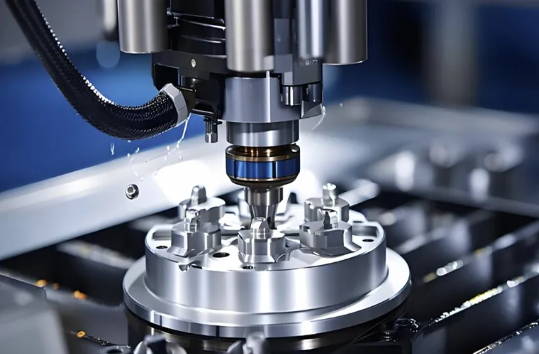
At its core, custom CNC machining builds a part exactly to your drawing. The supplier cuts material to your geometry, holds your tolerance, and matches your surface finish. Every dimension, angle, and fit comes from your specification. This approach gives you full control over the final product, ensuring precision cnc machining that meets your exact requirements.
How Computer Numerical Control Creates Precision Parts
Computer numerical control, or CNC, refers to the automated process where pre-programmed software dictates the movement of cutting tools and machinery. Unlike manual machining where operators control every movement, CNC machines read digital instructions to execute complex operations with remarkable accuracy.
The workflow follows a straightforward path that transforms your ideas into tangible cnc machining parts:
- CAD Design: You create geometry using 3D software, defining every feature of your part. The software establishes coordinate systems that will guide the machine's movements.
- CAM Programming: Computer-aided manufacturing software converts your 3D model into G-code, the language CNC machines understand. This step includes selecting tools, defining toolpaths, and simulating the cutting process before any cnc metal is touched.
- Precision Cutting: The CNC machine executes the program, positioning each axis within a tolerance of +/- 0.0002 inches through closed-loop servo mechanisms that continuously measure and adjust position.
This digital-to-physical pipeline eliminates much of the human error inherent in manual processes while enabling cnc cutting operations that would be impossible to achieve by hand.
The Custom Difference in CNC Manufacturing
So what separates custom work from standard CNC operations? The distinction lies in who controls the specifications. Standard or off-the-shelf components follow fixed catalog dimensions, tolerances typically ranging from ±0.1 mm to ±0.5 mm, and predetermined materials. You adapt your design to them, not the other way around.
Custom CNC fabrication flips this rule entirely. You design the part first, and the supplier matches your drawing precisely. This matters tremendously when:
- Your assembly depends on tight alignment or controlled fit
- Standard tolerances would compromise performance
- You need specific materials like titanium, stainless steel, or exotic alloys
- The geometry is complex, featuring deep cavities, compound surfaces, or precision bores
The three primary processes in custom CNC work include:
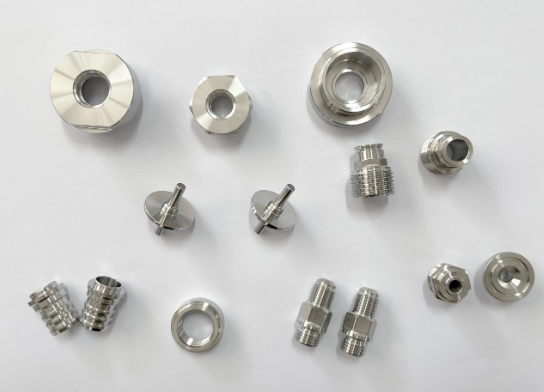
- CNC Milling: Rotating cutting tools remove material from a stationary workpiece. This process excels at creating complex 3D shapes, pockets, and surface features. The table moves in the X-Y plane while the tool operates along the Z-axis.
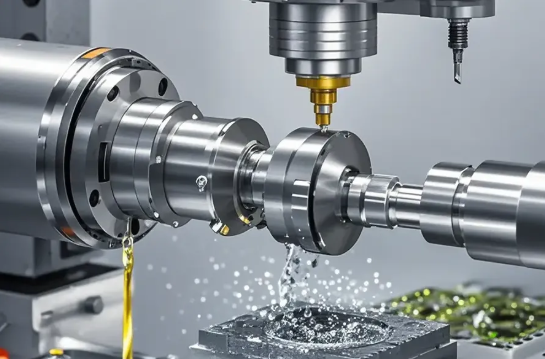
- CNC Turning: The workpiece rotates against stationary cutting tools, ideal for cylindrical parts like shafts, bushings, and threaded components. CNC turning produces tight shoulders and controlled seats with exceptional precision.
- Multi-Axis Machining: Adding rotational axes (4-axis or 5-axis) allows access to complex geometries from multiple angles in a single setup, reducing handling time and improving accuracy.
When should you choose custom CNC over grabbing a shelf part? The answer comes down to compromise. Off-the-shelf components work when your design can bend around them without hurting performance. Custom machining wins when the part must match your drawing with no compromise, when tight tolerances protect critical functions, or when the lifetime cost of failures exceeds the upfront investment in precision.
CNC Milling and Turning Processes Explained
Now that you understand what makes custom work different, the next step is knowing which process fits your part. Should you request milling or turning? Do you need 3-axis capability, or does your geometry demand 5-axis machining? These decisions directly affect cost, lead time, and quality. Let's break down the fundamentals so you can specify the right approach with confidence.
Understanding 3-Axis Through 5-Axis Capabilities
Imagine watching a cutting tool move across a workpiece. In its simplest form, that tool travels along three perpendicular paths: left-right (X-axis), forward-backward (Y-axis), and up-down (Z-axis). This is 3-axis CNC machining, and it handles a remarkable range of cnc machining milling tasks.
3-axis machines excel at producing flat surfaces, simple contours, and basic geometric shapes. Programming is straightforward, setup times run shorter, and operator training requirements stay manageable. For many cnc milling parts, this configuration delivers excellent results at lower cost.
However, limitations appear when your part features angled surfaces, undercuts, or intricate three-dimensional contours. Each time you need to access a different face, the workpiece must be repositioned. Every repositioning introduces potential accuracy variations and extends cycle time.
Adding a fourth axis changes the equation dramatically. A 4-axis CNC machine includes a rotary A-axis that rotates around the X-axis, allowing the workpiece to turn while machining continues. This capability unlocks several advantages:
- Complex geometries like arcs, helixes, and cam lobes become achievable in a single setup
- Features on multiple sides of a part can be machined without manual repositioning
- Cycle times drop because fixture changeovers disappear
- Tighter tolerances between features on different sides become possible
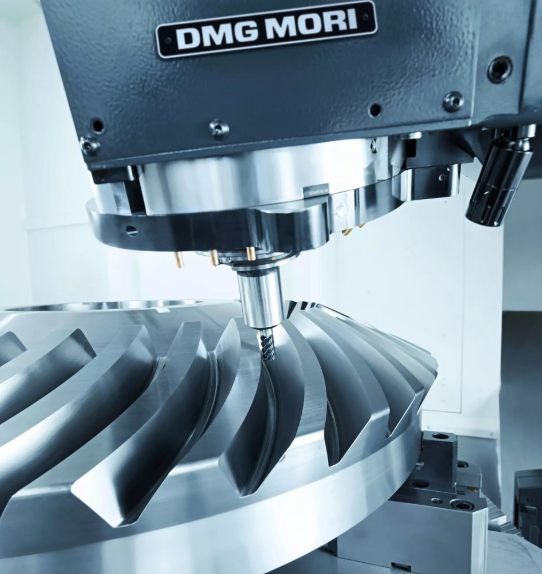
When maximum complexity and precision are required, 5 axis cnc machining services deliver the ultimate capability. These machines add a second rotational axis (typically the B or C axis), enabling the cutting tool or workpiece to orient in virtually any direction. According to industry experts, this configuration allows simultaneous machining from multiple angles without repositioning, producing superior surface finishes and reducing cycle times for complex parts.
The real power of 5-axis machining shows in single-setup capability. All features get machined relative to one datum, eliminating cumulative tolerances that stack up across multiple setups. For aerospace turbine blades, medical implants with organic shapes, or intricate automotive components, this precision advantage often justifies the higher investment.
When to Choose Milling vs Turning Operations
Beyond axis count, you face another fundamental choice: milling or turning? The distinction comes down to what moves during the cut.
In CNC milling, the workpiece stays stationary while rotating cutting tools remove material. The tool moves within multiple axes relative to the workpiece position, creating complex shapes, pockets, slots, and surface features. This makes milling the better method for flat and irregular surfaces, intricate cavities, and virtually any geometry that isn't round.
CNC turning flips this relationship. The workpiece rotates while stationary cutting tools shape it by precisely cutting away material. This approach excels at producing cylindrical or rotationally symmetrical cnc turning parts such as shafts, bushings, bolts, and threaded components.
Because turning involves simpler motion and fewer axes, programming requires less complexity. A reliable cnc turning service can often deliver these parts faster and more cost-effectively than comparable milling operations. When you need quick-turned cylindrical components, turning should be your first consideration.
Modern manufacturing has blurred these lines somewhat. Mill-turn machines combine both capabilities, allowing a part to be turned and then cnc milled without leaving the machine. Swiss turning centers add live tooling that performs milling operations on turned parts. These hybrid approaches expand what's possible in a single setup.
| Process Type | Best Applications | Complexity Level | Typical Tolerances |
|---|---|---|---|
| 3-Axis Milling | Flat surfaces, basic contours, simple pockets, drilling patterns | Low to Medium | ±0.005" to ±0.001" |
| 4-Axis Milling | Parts requiring features on multiple sides, helixes, cam profiles | Medium to High | ±0.003" to ±0.0005" |
| 5-Axis Milling | Complex aerospace parts, turbine blades, organic medical shapes | High | ±0.001" to ±0.0002" |
| CNC Turning | Cylindrical parts, shafts, threaded components, round profiles | Low to Medium | ±0.005" to ±0.0005" |
| Mill-Turn | Complex round parts with milled features, hybrid geometries | Medium to High | ±0.002" to ±0.0005" |
Selecting the right process starts with your part geometry. Round and symmetrical? Start with cnc turning services. Complex 3D surfaces with multiple angles? Evaluate your axis requirements for milling. Need features on several faces without repositioning? Consider 4-axis or 5-axis options. By matching process capability to part requirements, you optimize both cost and quality from the start.
With process fundamentals covered, the next critical decision involves material selection, where the right choice balances machinability, performance requirements, and budget constraints.
Choosing the Right Material for Custom CNC Parts
You've selected your process and understand the difference between milling and turning. Now comes a decision that will define your part's performance: material selection. This choice affects everything from how the part behaves under stress to how long it lasts in service. Yet many buyers pick materials based on familiarity rather than fitness for purpose.
The right cnc machining materials decision balances five critical factors: strength requirements, corrosion exposure, weight constraints, machinability (which affects cost and lead time), and budget. Let's walk through the major categories so you can match material properties to your specific application.
Metal Selection for Strength and Durability
Metals remain the backbone of precision manufacturing. Each alloy family brings distinct advantages, and understanding these differences helps you specify the optimal choice.
Aluminum Alloys dominate custom CNC work for good reason. These alloys offer an exceptional strength-to-weight ratio, excellent thermal conductivity, and superior machinability that keeps production costs manageable. According to material specialists, aluminum can be heat treated to increase strength while additives like magnesium and silicon ensure dimensional stability during machining.
Common aluminum grades serve different purposes:
- 6061: The general-purpose workhorse with excellent weldability and moderate strength (tensile strength 310 MPa). Ideal for structural components and enclosures.
- 7075: A high-strength alloy (540 MPa tensile strength) with zinc and magnesium additions. Perfect for aerospace applications requiring exceptional fatigue resistance.
- 2024: Contains copper for improved machining characteristics and is well-suited for high-speed operations and threading.
Stainless Steel provides the corrosion resistance that aluminum cannot match. Austenitic grades like 304 (18/8 stainless) and 316 offer good mechanical strength with tensile values between 500-700 MPa. The 316 grade includes molybdenum for improved resistance to chlorides and acids, making it essential for marine or chemical processing environments.
Carbon and Alloy Steels deliver maximum strength when weight isn't the primary concern. C45 carbon steel offers excellent size precision in high-speed applications, while alloy steels like 4140 (1.7225) provide exceptional toughness and impact resistance after heat treatment.
Bronze and Brass excel in applications requiring wear resistance, low friction, or electrical conductivity. When machining bronze for bearings or bushings, you gain excellent resistance to metal-to-metal wear that steel alternatives cannot match. Bronze cnc parts are commonly specified for sleeve bearings, valve components, and marine hardware. CNC bronze machining produces components that withstand harsh saltwater environments while maintaining dimensional stability.
Brass offers superior machinability among copper alloys, making it cost-effective for complex geometries. Its natural corrosion resistance and attractive finish make it popular for decorative hardware and precision instruments.
Engineering Plastics for Specialized Applications
When metal properties aren't required, engineering plastics offer compelling advantages: reduced weight, natural lubricity, chemical resistance, and electrical insulation. However, each plastic family has distinct characteristics that demand careful selection.
Delrin Material (Polyoxymethylene/POM) stands out as the go-to choice for precision mechanical components. This delrin material earns the nickname "super steel" because it combines metal-like strength with plastic benefits. With moisture absorption of just 0.5%, Delrin maintains dimensional stability that machining nylon parts cannot match. Its low friction coefficient and excellent wear resistance make it ideal for gears, bearings, and sliding mechanisms.
Nylon (Polyamide/PA) offers greater flexibility and elongation than Delrin, along with excellent impact resistance. However, its 2-9% moisture absorption rate can cause dimensional changes in humid environments. For applications subjected to frequent impacts and abrasions, nylon performs well, but prolonged UV exposure leads to degradation.
PEEK (Polyetheretherketone) represents the premium tier of engineering plastics. It retains strength and chemical resistance at temperatures where other plastics fail. Aerospace and medical applications often specify PEEK for its exceptional fatigue resistance and biocompatibility.
Polycarbonate provides exceptional impact resistance with natural transparency. It's commonly substituted for glass in applications requiring shatter resistance, though its surface hardness limits use where abrasion occurs.
Acrylic (PMMA) offers the clearest optical properties among plastics. Acrylic cnc machining produces lenses, light guides, and display components with excellent weather resistance. Unlike polycarbonate, it scratches more easily but offers superior clarity.
| Material | Machinability Rating | Corrosion Resistance | Strength Class | Best Applications | Relative Cost Tier |
|---|---|---|---|---|---|
| Aluminum 6061 | Excellent | Good | Medium | Structural parts, enclosures, brackets | Low |
| Aluminum 7075 | Good | Moderate | High | Aerospace structures, high-stress components | Medium |
| Stainless 304 | Moderate | Excellent | Medium-High | Food processing, general corrosive environments | Medium |
| Stainless 316 | Moderate | Superior | Medium-High | Marine, chemical processing, medical | Medium-High |
| Bronze | Good | Excellent | Medium | Bearings, bushings, marine hardware | Medium-High |
| Brass | Excellent | Good | Low-Medium | Electrical components, decorative hardware | Medium |
| Delrin (POM) | Excellent | Good | Medium | Gears, precision bearings, sliding parts | Low-Medium |
| Nylon (PA6/PA66) | Good | Good | Medium | Impact-resistant parts, wear surfaces | Low |
| PEEK | Moderate | Excellent | High | Aerospace, medical implants, high-temp seals | High |
| Polycarbonate | Good | Good | Medium | Impact-resistant covers, safety shields | Low-Medium |
| Acrylic (PMMA) | Good | Good | Low | Optical components, displays, light guides | Low |
How do you apply this information to your project? Start with the operating environment. Will the part face corrosive chemicals, saltwater, or high humidity? That narrows your options quickly. Next, consider mechanical loads and whether you need high strength, wear resistance, or low friction. Finally, factor in weight constraints and budget realities.
For lightweight applications where corrosion isn't severe, aluminum delivers the best value. When wear resistance matters most, cnc machining bronze provides performance that extends service life and reduces maintenance. For low-friction mechanical components that must hold tight tolerances, Delrin outperforms nylon in dimensional stability.
With material selection clarified, your next consideration involves understanding how tight you can hold dimensions and what surface finish specifications actually mean in practice.
Tolerance Specifications and Surface Finish Standards
You've selected your material and chosen between milling and turning. Now comes a question that separates successful projects from costly rework: how precise does your part really need to be? Tolerances define the acceptable deviation from your specified dimensions, and understanding them prevents both under-engineering and expensive over-specification.
Think of tolerance as the manufacturing equivalent of a margin of error. When you specify a dimension of 2.550 inches with a tolerance of ±0.005", you're telling the machinist that any measurement between 2.545" and 2.555" passes inspection. According to precision machining experts, this seemingly small number profoundly impacts cost, lead time, and whether your cnc machined parts will actually function as intended.
Standard vs Precision Tolerance Requirements
Not every dimension on your part requires the tightest possible tolerance. In fact, specifying unnecessarily tight tolerances across an entire drawing is one of the most common—and expensive—mistakes buyers make.
Standard tolerances typically fall in the ±0.005" (±0.127mm) range. Many precision machining services default to international standards around ±0.1mm when customers don't specify their own requirements. These tolerances work well for:
- General structural components without critical fits
- Non-mating surfaces where exact dimensions aren't essential
- Parts that will undergo secondary finishing operations
- Prototype components where function testing matters more than final fit
Precision tolerances of ±0.001" (±0.025mm) or tighter become necessary when parts must interface precisely with other components. Achieving these specifications requires more machine time, specialized tooling, and rigorous inspection. As industry sources note, while some CNC machines can achieve accuracies as high as ±0.0025mm, running at this capability level significantly increases both time and cost.
The need for tighter tolerances often varies within a single cnc machining part. Your overall structure may not require the strictest specifications, but specific features—like holes where the part must fit with other components—demand high precision. This selective approach to tolerance specification, called "critical feature" tolerancing, optimizes your machined parts for both performance and budget.
Several factors determine what tolerances are actually achievable on your machining parts:
- Material properties: Some materials machine more predictably than others. Aluminum holds tighter tolerances more easily than plastics, which may expand or contract with temperature and humidity changes.
- Part geometry: Thin walls can deflect under cutting forces. Deep pockets create tool deflection. Long slender features may vibrate during machining. Complex geometries challenge even precision machining parts production.
- Machine capabilities: A CNC machine's inherent accuracy dictates what it can achieve. While some machines excel at complex tasks with tight tolerances, others have limitations that require additional operations.
- Environmental conditions: Temperature fluctuations affect both the workpiece and measuring equipment. Climate-controlled facilities enable tighter tolerances than standard shop environments.
Industry-specific requirements often dictate tolerance classes. Aerospace components routinely require ±0.0005" or better on critical features. Medical device manufacturing demands similar precision for implants and surgical instruments. Automotive applications typically accept standard tolerances except for powertrain components where tighter specifications prevent wear and ensure proper function.
Surface Finish Specifications and Ra Values
Beyond dimensional accuracy, surface finish determines how your precision machining parts perform in their intended application. Surface roughness, measured in Ra (roughness average) values, quantifies the texture left by the machining process.
Ra values represent the arithmetic average of surface irregularities measured in microinches (µin) or micrometers (µm). Lower numbers indicate smoother surfaces. Here's what different finishes mean in practice:
- 125 µin Ra: A typical as-machined finish for curved surfaces. Suitable for most functional applications where cosmetics aren't critical.
- 63 µin Ra: Standard finish for flat and perpendicular surfaces according to industry specifications. Adequate for most uses where components don't require decorative appeal.
- 32 µin Ra: A smoother finish often specified for sealing surfaces, bearing interfaces, and components visible to end users.
- 16 µin Ra or better: Precision finish for hydraulic cylinders, optical mounting surfaces, and high-end consumer products.
When does surface finish actually matter? Consider these scenarios:
Functional requirements drive finish specifications when surfaces must seal, slide, or mate precisely. A hydraulic cylinder bore needs consistent smoothness to prevent fluid leakage and extend seal life. Bearing surfaces require controlled finishes to distribute lubricants evenly. Sealing faces must be smooth enough to compress gaskets uniformly.
Cosmetic finishes matter when parts are visible to customers or users. Consumer electronics, medical device housings, and decorative hardware often specify finer finishes for aesthetic appeal. Light bead blasting can improve appearance on metal parts without adding significant cost.
The connection between tolerance and finish deserves attention. Tighter tolerances generally require finer surface finishes to measure accurately. A surface with 125 µin roughness has peaks and valleys that can affect dimensional readings. For precision machining services producing parts to ±0.0005" tolerances, specifying compatible surface finishes ensures measurement consistency.
For projects requiring advanced quality control, Geometric Dimensioning and Tolerancing (GD&T) provides additional specifications beyond basic dimensional tolerances. GD&T callouts like true position, flatness, cylindricity, and concentricity define relationships between features and control form in ways that simple plus/minus tolerances cannot. While these specifications add complexity and cost, they become essential for cnc machined parts in demanding applications.
Understanding tolerances and surface finishes helps you communicate effectively with your manufacturing partner. Specify tight tolerances only where function demands them, call out surface finishes appropriate to your application, and you'll receive precision machining parts that perform as intended without unnecessary cost premiums.
With dimensional and surface requirements defined, the next step involves understanding how industry certifications and quality assurance methods ensure your parts consistently meet these specifications.
Industry Certifications and Quality Assurance Methods
You've specified your tolerances and surface finishes. Now comes a question that separates reliable suppliers from risky ones: how do you verify that a manufacturer can actually deliver consistent quality? The answer lies in certifications and quality assurance systems—terms you'll see on every machinist's website, but rarely explained in practical terms.
Think of certifications as third-party proof that a manufacturer's quality management system meets specific standards. An auditor from an accredited body examines everything from documentation practices to equipment calibration, employee training, and corrective action procedures. Passing these audits demonstrates that a shop doesn't just claim quality—they have systems in place to deliver it consistently on every cnc machine parts order.
Industry Certifications Decoded for Buyers
When evaluating precision cnc machining services, you'll encounter several certifications. Understanding what each one actually requires helps you match supplier capabilities to your industry's demands.
ISO 9001:2015 serves as the foundation for all quality management systems. According to manufacturing certification experts, this standard holds applicability across industries of all scales and delineates the prerequisites for a robust quality management system. It confirms that products or services comply with customer expectations and regulatory mandates, with a notable emphasis on customer satisfaction and overall business performance.
For buyers, ISO 9001 certification means the supplier has documented procedures for everything from order review to final inspection. You can expect consistent communication, traceable processes, and a formal system for handling complaints and corrective actions.
ISO 13485 builds on ISO 9001 specifically for medical machining applications. As medical device certification specialists explain, this standard establishes QMS guidance that covers the design, development, production, installation, and servicing of medical devices. It applies to manufacturers, contract manufacturers, distributors, and even service providers handling maintenance and calibration.
What makes ISO 13485 different? The certification demands rigorous risk management throughout the product lifecycle. Auditors verify that manufacturers can demonstrate processes and controls guaranteeing the safety, effectiveness, and quality of medical devices from concept through end-of-life. For medical machining applications, this certification isn't optional—most healthcare providers and distributors require it as a condition of doing business.
IATF 16949 targets automotive manufacturing specifically. Developed by the International Automotive Task Force, this global quality management standard builds upon ISO 9001 while adding requirements for product design, production processes, improvement methodologies, and customer-specific standards. The certification ensures compliance with stringent automotive regulations while driving continuous improvement and prioritizing customer satisfaction.
If you're sourcing components for automotive applications, IATF 16949 certification signals a supplier understands the unique demands of the automotive supply chain—including Statistical Process Control requirements, production part approval processes, and the capability to meet tight delivery windows.
AS9100D applies to aerospace cnc machining where safety margins cannot be compromised. This certification extends ISO 9001 requirements to address the highly specific technical and safety standards the aviation industry demands. Parts manufactured under AS9100D undergo enhanced traceability, configuration management, and risk assessment procedures that exceed general industrial requirements.
ITAR (International Traffic in Arms Regulations) governs defense-related manufacturing in the United States. Unlike quality management certifications, ITAR is a regulatory compliance requirement administered by the State Department. Manufacturers handling defense articles must register with the Directorate of Defense Trade Controls and implement strict security protocols for data handling, facility access, and personnel screening.
| Certification | Industry Focus | Key Requirements | Why It Matters for Buyers |
|---|---|---|---|
| ISO 9001:2015 | General manufacturing across all industries | Documented quality management system, customer focus, continuous improvement, process approach | Baseline assurance of consistent quality practices and formal complaint handling |
| ISO 13485 | Medical devices and related services | Risk management throughout lifecycle, design controls, traceability, sterility assurance where applicable | Required for medical device supply chains; demonstrates commitment to patient safety |
| IATF 16949 | Automotive manufacturing | Production Part Approval Process (PPAP), SPC, mistake-proofing, supply chain management | Confirms capability to meet automotive OEM requirements and delivery expectations |
| AS9100D | Aerospace and aviation | Enhanced traceability, configuration management, counterfeit parts prevention, special process controls | Essential for flight-critical components requiring maximum reliability documentation |
| ITAR | U.S. defense articles and services | State Department registration, security protocols, data handling controls, personnel screening | Legally required for defense contracts; ensures classified data protection |
Quality Assurance Methods in Precision Manufacturing
Certifications establish the framework, but specific quality assurance methods deliver the actual results. Understanding these processes helps you evaluate whether a precision machining service can consistently meet your specifications.
Statistical Process Control (SPC) uses real-time data to monitor manufacturing processes and detect variations before they produce defective parts. According to quality assurance specialists, CNC manufacturing places special demands on quality control—tight tolerances in the micrometre range require precise measurement technology and a sound understanding of manufacturing processes.
SPC tracks key dimensions throughout a production run, plotting measurements on control charts. When values trend toward specification limits, operators adjust the process before parts go out of tolerance. This proactive approach prevents scrap rather than simply detecting defects after the fact.
First Article Inspection (FAI) provides documented verification that the first production part meets all drawing requirements. Before full production begins, a complete dimensional inspection compares actual measurements against every specified dimension, tolerance, and feature. This catches setup errors, programming mistakes, or material issues before they affect an entire batch.
For critical aerospace cnc machining applications, FAI reports follow standardized formats (typically AS9102) that create permanent records of process capability. These documents travel with the parts throughout their service life, enabling traceability back to original manufacturing conditions.
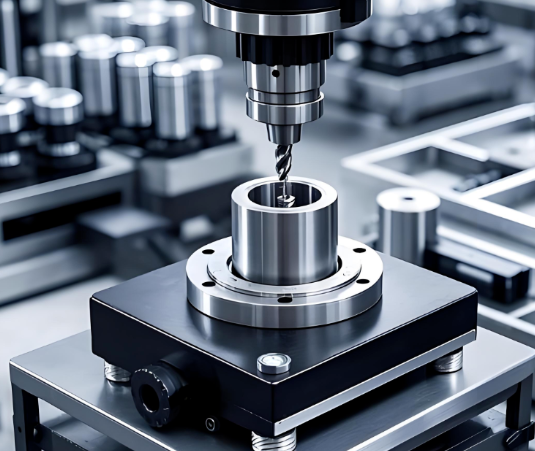
Coordinate Measuring Machine (CMM) Verification provides the precision measurement capability that cnc machine parts require. CMMs use probe systems to measure part geometry in three dimensions, comparing actual features against CAD models or drawing specifications. Modern CMMs achieve measurement accuracies of 0.0001" or better—essential for verifying precision machining parts.
CMM inspection reports provide objective evidence that parts meet specification. For incoming goods inspection, CMM data gives you documented proof of conformance rather than relying solely on supplier assertions.
Documentation Requirements tie everything together. A robust quality system generates records at each production stage: material certifications confirming alloy composition, process parameters showing machining conditions, inspection results verifying dimensions, and shipping documentation maintaining chain of custody.
This documentation serves multiple purposes. It enables root cause analysis when problems occur, provides evidence for regulatory audits, and creates traceability that protects both supplier and customer. For medical machining and aerospace applications, complete documentation isn't optional—it's a regulatory requirement that follows parts throughout their service life.
When evaluating potential manufacturing partners, ask to see sample documentation from similar projects. A quality-focused supplier will readily share inspection reports, CMM data, and certification evidence. Their willingness to provide transparency speaks volumes about their actual commitment to the quality systems their certifications represent.
With quality assurance fundamentals covered, you're now equipped to evaluate how custom CNC compares against alternative manufacturing methods for your specific application.
Custom CNC vs Alternative Manufacturing Methods
You understand tolerances, materials, and quality systems. But here's a question many suppliers won't answer honestly: is CNC machining actually the right choice for your project? Sometimes it is. Sometimes it isn't. Knowing the difference saves you money and gets parts into your hands faster.
Custom CNC machining isn't the only game in town. 3D printing, injection molding, die casting, and sheet metal fabrication each offer distinct advantages depending on your volume requirements, part complexity, and budget constraints. Let's break down when CNC prototyping makes sense—and when you should consider alternatives.
CNC Machining vs 3D Printing for Prototypes
When developing new products, the choice between CNC and 3D printing often comes down to what matters most: speed, precision, or material properties.
According to manufacturing specialists, CNC machining is a subtractive process that utilizes rotating cutting tools to precisely shape solid material into finished parts. It delivers exceptional accuracy, repeatability, and surface quality across a broad selection of materials. 3D printing, in contrast, builds parts layer by layer from digital designs without custom tooling or fixtures.
For prototype machining, consider these key differences:
- Turnaround time: 3D printing can deliver prototypes within 24 hours. CNC prototype machining typically requires more setup time, but rapid cnc prototyping services can often match additive manufacturing timelines for simpler geometries.
- Material properties: CNC machined parts exhibit fully isotropic mechanical properties—strength is consistent in all directions. 3D printed parts often show anisotropic behavior, meaning they may be weaker along layer lines.
- Dimensional accuracy: CNC machining generally outperforms 3D printing when tight tolerances are essential. While industrial additive systems achieve good precision, they rarely match what prototype machining services deliver.
- Surface finish: 3D printed parts often show visible layer lines, especially on curved surfaces. CNC produces smoother finishes directly from the machine.
When should you choose 3D printing over cnc prototype machining? The decision becomes clearer in specific scenarios. Complex geometries with intricate lattice structures or topology-optimized features that would be impossible to machine favor additive manufacturing. Budget-constrained projects benefit from 3D printing's lower barrier to entry. And specialty materials like flexible TPU or certain metal superalloys process more easily through additive methods.
However, as a general rule, CNC machining is often the better choice if a part can be easily produced using subtractive methods. When dimensional accuracy, mechanical strength, or surface quality are top priorities, cnc machining prototyping delivers results that additive manufacturing struggles to match.
When Alternative Manufacturing Methods Make More Sense
Beyond 3D printing, several traditional manufacturing methods compete with CNC for specific applications. Understanding their sweet spots helps you make informed decisions.
Injection Molding becomes cost-effective when your volumes exceed several hundred parts. The upfront investment in tooling—often $5,000 to $100,000+ depending on complexity—amortizes across large production runs. Once the mold is ready, per-part costs drop dramatically, and cycle times measured in seconds enable high-volume production that CNC cannot match economically.
The tradeoff? Injection molding limits material choices to thermoplastics and requires design modifications like draft angles and uniform wall thickness. Design changes after tooling is complete become expensive. For low volumes or evolving designs, prototype machining services offer flexibility that molding cannot.
Die Casting serves similar high-volume metal part needs. According to manufacturing comparison experts, casting techniques like die casting can produce complex shapes with accuracy and deliver higher volumes of parts far more quickly than machining. Post-processing efforts and assembly steps are often minimized as well.
Yet die casting requires significant tooling investment and limits alloy selection compared to CNC. When specific material grades or tight tolerances are required—like titanium alloys or certain tool steels—CNC machining may be necessary even at higher volumes.
Sheet Metal Fabrication excels at producing enclosures, brackets, and structural components from flat stock. Processes like laser cutting, punching, and bending create parts quickly and economically. However, sheet metal limits your geometry to what can be formed from flat material, while CNC handles three-dimensional complexity that bending cannot achieve.
As noted by fabrication specialists, CNC machining eliminates the need for dedicated tooling, which can significantly reduce upfront costs. This makes it ideal for prototyping, product development, and small-batch runs where design flexibility matters.
| Method | Best Volume Range | Material Options | Precision Level | Lead Time | Cost Structure |
|---|---|---|---|---|---|
| CNC Machining | 1-500+ parts | Extensive (metals, plastics, composites) | ±0.001" achievable | Days to weeks | No tooling; higher per-part cost |
| 3D Printing | 1-50 parts | Growing (plastics, some metals) | ±0.005" typical | Hours to days | No tooling; varies by technology |
| Injection Molding | 500-1,000,000+ parts | Thermoplastics primarily | ±0.005" typical | Weeks (tooling) + days (production) | High tooling; very low per-part |
| Die Casting | 1,000-500,000+ parts | Aluminum, zinc, magnesium alloys | ±0.004" typical | Weeks (tooling) + days (production) | High tooling; low per-part |
| Sheet Metal Fabrication | 10-10,000+ parts | Steel, aluminum, stainless, copper | ±0.010" typical | Days to weeks | Low tooling; moderate per-part |
So when does CNC machining win? The optimal choice emerges when your project combines these characteristics:
- Low-to-medium volumes: Without tooling amortization advantages, CNC competes effectively up to several hundred parts, sometimes more depending on complexity.
- Tight tolerances: When ±0.001" or better precision is required, CNC delivers what other methods cannot match consistently.
- Wide material selection: Need titanium, Inconel, or a specific aluminum alloy? CNC machines virtually any machinable material without tooling changes.
- Rapid prototyping needs: Design iterations happen fast when you don't wait weeks for tooling. CNC prototyping service providers can turn parts in days, enabling quick validation cycles.
- Design flexibility: Changes cost nothing beyond reprogramming. Modify your CAD file, update the G-code, and the next part reflects your improvements.
Honest assessment demands acknowledging CNC limitations too. The subtractive process generates material waste as chips—significant for expensive alloys. Per-part costs remain relatively constant regardless of volume, making CNC uneconomical for high-volume production where injection molding or die casting tooling investment pays off. And some geometries simply cannot be machined, no matter how many axes your machine has.
A hybrid approach often delivers the best results. Use 3D printing for initial concept validation, transition to cnc prototype machining for functional prototypes requiring production-intent materials and tolerances, then scale to molding or casting when volumes justify tooling investment. This staged approach optimizes cost at each development phase while ensuring final parts meet performance requirements.
With manufacturing method selection clarified, your next step involves understanding the cost drivers and lead time factors that affect your custom CNC machining projects.
Understanding CNC Machining Costs and Lead Times
You've compared manufacturing methods and confirmed that custom CNC machining fits your project. Now comes the question every buyer asks: how much will this cost, and when will I get my parts? Unlike competitors hiding behind instant quote systems that obscure the real drivers, let's break down exactly what influences your cnc machining price and delivery timeline.
Understanding these factors puts you in control. When you know why certain choices cost more, you can make informed tradeoffs between budget, timeline, and performance requirements.
Key Factors That Determine CNC Machining Costs
Every custom part carries costs beyond raw material. According to manufacturing cost specialists, several interconnected factors determine your final machinist metal cost.
Material Selection forms the foundation of your quote. Aluminum machines faster and wears tools less aggressively than stainless steel or titanium. Easy-to-machine materials reduce cycle time and extend tool life, directly lowering per-part costs. Exotic alloys like Inconel or hardened tool steels demand specialized tooling, slower cutting speeds, and more frequent tool changes—all adding expense.
Part Complexity drives programming time, setup requirements, and machining duration. Simple geometries with standard features pass through production quickly. Complex designs requiring multiple setups, custom tooling, or multi-axis machining extend production cycles. As industry experts note, intricacies like tight tolerances and complex features need more advanced machining techniques, specialized tooling, and longer machining times.
Tolerance Requirements significantly impact both cost and capability. Standard tolerances around ±0.005" require no special measures. Precision tolerances of ±0.001" or tighter demand slower cutting speeds, additional inspection steps, and potentially climate-controlled environments. According to DFM specialists, extremely tight tolerances can increase costs by 50% to over 500% compared to standard specifications.
Quantity affects your per-part economics. Small cnc machining runs carry higher unit costs because setup time and programming effort spread across fewer pieces. Larger production volumes benefit from bulk pricing as fixed costs distribute across more units. That said, CNC remains economical even for single prototypes because it requires no tooling investment.
Finishing Operations add time and cost beyond basic machining. Anodizing, plating, heat treatment, painting, or specialized surface treatments each require additional processing steps. Some finishes demand outsourcing to specialized vendors, extending both cost and lead time.
What Drives Your Lead Time
Getting an accurate online machining quotes estimate means understanding what extends—or shortens—your delivery window. According to lead time specialists, lead time is rarely determined by one single factor but rather the combined effect of multiple variables.
- Design complexity: Simple shapes pass through production quickly. Complex geometries requiring multiple setups, custom fixtures, or specialized programming extend timelines significantly.
- Material availability: Common aluminum and steel grades ship from distributors within days. Rare alloys, engineered plastics, or exotic materials can introduce procurement delays lasting weeks.
- Machine scheduling: If equipment is booked or the shop operates at full capacity, your parts wait in queue. High demand stretches lead times regardless of part complexity.
- Quality inspection requirements: Critical parts with tight tolerances undergo rigorous measurement. 100% inspection takes dramatically longer than statistical sampling—sometimes adding days to projects.
- Finishing processes: Secondary operations like heat treatment, anodizing, or plating add time, especially when outsourced to external vendors. Depending on the process, these steps can extend lead time by days or weeks.
When requesting a cnc quote online, provide complete information upfront. Unclear drawings, missing specifications, or delayed approvals prevent jobs from scheduling efficiently. Fast, clear communication between you and your manufacturer avoids missteps that add days to every project.
Design Strategies to Optimize Manufacturing Costs
Here's where knowledge becomes power. Smart design decisions made early can reduce your costs by 15-40% and cut lead times significantly. Consider these proven optimization strategies:
Minimize tight tolerances where unnecessary. Specify precision only on features that genuinely require it. A part might need ±0.001" on mating surfaces but can accept ±0.005" elsewhere. Selective tolerancing delivers function without premium pricing.
Avoid deep pockets and small internal corners. Deep cavities require longer tools that deflect under cutting forces, demanding slower speeds and multiple passes. Small internal radii need specialized tooling. Design the largest radius your function allows—0.030" minimum internal corners machine with standard tooling.
Design for standard tooling. Features that machine with common end mills, drills, and taps cost less than those requiring custom or specialty tools. Standard thread sizes, common hole diameters, and conventional feature depths keep costs predictable.
Consider material machinability. If your application permits, choosing aluminum over stainless steel dramatically reduces cycle time and tool wear. When strength requirements dictate harder materials, expect longer machining times and higher costs.
Simplify geometry where possible. Every additional setup adds time. Parts requiring 5-axis machining cost significantly more than those achievable on 3-axis equipment. Aligning features with standard machine axes reduces complexity and cost.
These strategies don't mean compromising performance. They mean investing your budget where it matters most while avoiding unnecessary expense on features that don't affect function.
With cost drivers and lead time factors clarified, you're ready to explore how these principles apply across different industries—from aerospace to automotive applications.
Industry Applications from Aerospace to Automotive
You now understand cost drivers, tolerances, and quality systems. But how do these principles play out in real-world applications? Different industries demand vastly different approaches to custom machined parts. What works for consumer electronics won't satisfy aerospace requirements, and medical device specifications differ entirely from automotive standards.
Let's walk through the major industry sectors that rely on precision metal machining, examining the unique requirements, certifications, and material considerations each demands. This knowledge helps you communicate more effectively with manufacturers and ensures your specifications align with industry expectations.
Aerospace and Medical Device Manufacturing Standards
Aerospace Manufacturing represents the most demanding environment for cnc machining metal components. When parts must perform flawlessly at 40,000 feet under extreme temperature variations and mechanical stresses, standard tolerances simply won't suffice.
According to aerospace machining specialists, aviation CNC machining demands significantly tighter tolerances than standard industrial machining processes. While standard machine shops typically work with tolerances of ±0.005 inches, aerospace precision machining consistently achieves tolerances of ±0.0001 inches or better through specialized CNC machining techniques.
Consider the stakes: modern aircraft contain between 2 and 3 million precision-machined parts, each requiring rigorous quality control. The global aerospace industry maintains an exceptional safety record of just 0.2 fatal accidents per million flights—a standard that depends on the reliability of every component.
Key requirements for aerospace aluminum machining and other aerospace components include:
- AS9100D certification: This mandatory quality management standard adds 105 specific requirements beyond ISO 9001:2015, ensuring every machined part meets exacting specifications for flight safety.
- Exotic material expertise: Titanium alloys, Inconel superalloys, and aerospace-grade aluminum (7075, 2024) demand specialized tooling and cutting parameters. These materials withstand temperatures exceeding 2000°F without losing mechanical properties.
- Complete traceability: Every component requires documentation from raw material certification through final inspection, creating permanent records that follow parts throughout their service life.
- Enhanced inspection protocols: CMM verification, first article inspection reports following AS9102 format, and counterfeit parts prevention measures.
Machined aluminum components dominate aerospace structures, comprising approximately 50% of aircraft structural components due to their excellent strength-to-weight ratio. A 100-pound weight reduction in a commercial airliner saves approximately 14,000 gallons of fuel annually—making precision stainless steel machining and aluminum machining critical to operational economics.
Medical Device Manufacturing presents equally rigorous but distinctly different challenges. Here, biocompatibility and patient safety replace aerodynamic performance as primary concerns.
As medical machining experts explain, the primary difference between medical CNC machining and standard CNC machining lies in the level of precision and cleanliness. A typical part for an automotive engine might tolerate small imperfections, but a surgical screw cannot. Parts must be sterile, burr-free, and often smaller than a grain of rice.
Medical device requirements encompass:
- ISO 13485 certification: This standard establishes QMS guidance covering the design, development, production, installation, and servicing of medical devices with rigorous risk management throughout the product lifecycle.
- FDA 21 CFR Part 820 compliance: These regulations govern how medical parts are made and tested, requiring complete documentation and traceability.
- Biocompatible materials: Titanium dominates implant applications—it's strong, light, and doesn't cause allergic reactions. Stainless steel grades like 316L resist corrosion and handle repeated sterilization.
- Extreme tolerances: CNC machining for medical devices focuses on tolerances as tight as ±0.001 mm, smaller than a grain of dust.
- Cleanroom manufacturing: Many components require production in controlled environments to ensure sterility.
Applications span orthopedic implants (hip joints, spinal cages, bone screws), surgical instruments (forceps, scalpels, drill guides), dental components (crowns, abutments, implants), and micro-components for pacemakers and cardiovascular devices.
Automotive CNC Machining Requirements
Automotive manufacturing bridges the gap between aerospace precision and high-volume production economics. The industry demands tight tolerances on powertrain components while maintaining cost structures that support mass production.
According to precision machining specialists, automotive applications use CNC machining for engines, transmissions, and fuel systems where tight tolerances improve efficiency and reliability. Suppliers follow IATF 16949 standards with SPC and continuous improvement practices.
What distinguishes automotive metal machining from other sectors?
- IATF 16949 certification: This global quality management standard builds upon ISO 9001 while adding requirements for product design, production processes, improvement methodologies, and customer-specific standards. The certification ensures compliance with stringent automotive regulations.
- Statistical Process Control (SPC): Real-time monitoring of key dimensions throughout production runs prevents drift before parts go out of tolerance. Control charts track every critical measurement, enabling proactive adjustments.
- Production Part Approval Process (PPAP): Before full production begins, manufacturers must demonstrate capability through documented evidence of process control and dimensional compliance.
- High-volume capability with consistency: Unlike aerospace's lower volumes with extreme precision, automotive demands both tight tolerances and production rates that support vehicle assembly schedules.
- Rapid lead times: Automotive supply chains operate on just-in-time principles, requiring manufacturing partners who can deliver high-tolerance components without delays that shut down assembly lines.
Typical automotive applications include engine blocks, transmission housings, fuel system components, chassis assemblies, and custom metal bushings. These parts must maintain dimensional stability across temperature extremes while withstanding continuous mechanical stress throughout vehicle life.
For automotive buyers seeking IATF 16949-certified manufacturing with strict SPC quality control, Shaoyi Metal Technology's precision CNC machining services offer seamless scaling from rapid prototyping to mass production. Their facility delivers high-tolerance components with lead times as fast as one working day—essential for automotive supply chains where delays cascade through entire production schedules.
Consumer Products present different priorities altogether. Here, cosmetic appearance often matters as much as dimensional accuracy, while cost optimization drives material and process selection.
Consumer product requirements typically include:
- Cosmetic surface finishes: End-user visibility demands smooth, attractive surfaces. Bead blasting, anodizing, or polishing adds aesthetic value that functional parts don't require.
- Cost optimization focus: Unlike safety-critical aerospace or medical components, consumer products balance quality against competitive pricing pressures.
- Design flexibility: Product development cycles move quickly, requiring manufacturing partners who accommodate frequent design changes without excessive cost penalties.
- Material variety: From machined aluminum housings to engineering plastic components, consumer applications span the full material spectrum based on function, weight, and budget.
The contrast between industries highlights why understanding sector-specific requirements matters. A manufacturer excellent at consumer electronics enclosures may lack the certifications, traceability systems, or material expertise for aerospace or medical work. Conversely, an AS9100D-certified aerospace shop may prove cost-prohibitive for high-volume consumer components.
Matching your project requirements to supplier capabilities ensures you receive parts that meet industry standards without paying premiums for certifications and processes your application doesn't require. With industry applications clarified, the final step involves selecting the right manufacturing partner to bring your custom machined parts to life.
Selecting the Right Custom CNC Machining Partner
You've defined your tolerances, selected your materials, and understand which certifications your industry demands. Now comes the decision that determines whether all that preparation translates into quality parts: choosing the right manufacturing partner. Whether you're searching for cnc machine shops near me or evaluating suppliers across the globe, the selection process follows the same fundamental principles.
Think of it this way: a custom machine shop might look perfect on paper—impressive equipment lists, relevant certifications, competitive pricing—yet still deliver disappointing results. Why? Because the intangibles matter as much as the specifications. Communication responsiveness, engineering support, and the ability to scale from prototype to production separate exceptional partners from adequate ones.
Essential Criteria for Evaluating CNC Partners
When comparing machining shops near me or evaluating distant suppliers, systematic evaluation prevents costly mistakes. According to manufacturing partnership experts, even with two companies that look exactly the same on paper, you're still almost guaranteed to see different results from each one—results that might affect the viability and performance of your product.
Use this prioritized checklist when evaluating potential partners:
- Industry-relevant certifications: Verify the certifications that matter for your application. Medical device projects require ISO 13485. Automotive components demand IATF 16949. Aerospace applications need AS9100D. A supplier's certifications must align with your industry's regulatory requirements—no exceptions.
- Equipment capabilities and technology: According to supplier evaluation specialists, a supplier equipped with advanced multi-axis machining centers, precision turning equipment, and automated inspection tools is more likely to deliver complex geometries with high accuracy. Ask about their machine list, axis capabilities, and material range.
- Quality management systems: Beyond certifications, investigate how they implement quality control. Do they use Statistical Process Control? What inspection equipment do they maintain? Can they provide first article inspection reports that meet your documentation requirements?
- Material expertise and range: The ability to work with a wide variety of materials—ranging from metals like stainless steel, aluminum, and titanium to engineering plastics—ensures versatility across different applications. Verify experience with your specific material requirements.
- Communication responsiveness: As partnership specialists note, you should feel that the interests of you and your product are being catered to at every step of the way. Evaluate response times during the quoting process—they often predict ongoing communication quality.
- Production capacity and scalability: Assess the number of machines in operation, their level of automation, and how production shifts are scheduled to meet demand. A supplier with scalable capacity is better positioned to manage urgent requests, prototype development, and full-scale production without delays.
- Prototyping and cnc prototyping service capabilities: Partners who excel at rapid prototyping demonstrate the engineering competence needed for production success. Look for facilities offering both prototype machining and volume production under one roof.
Beyond this checklist, consider the intangibles. Does the company offer examples of previous work? A portfolio or case studies demonstrate experience with projects similar to yours. Does their web presence suggest they stay current with industry developments? Companies investing in content and communication often apply similar attention to manufacturing quality.
Scaling from Prototype to Production Volume
Here's where many partnerships fail: a cnc machine shop near me might deliver excellent prototypes but struggle when volumes increase. Or conversely, a high-volume producer may lack the flexibility for iterative prototype development. The ideal partner handles both seamlessly.
Why does prototyping capability matter so much? Design validation before production commitment prevents expensive mistakes. When you can test form, fit, and function with machined prototypes in production-intent materials, you catch problems that 3D printed parts or simulations miss. According to manufacturing experts, choosing a CNC machining supplier that also offers prototyping keeps both services under one roof, creating a smoother transition from testing to production.
When evaluating local machine shops or distant suppliers for scaling capability, ask these questions:
- Can you handle single-unit prototypes through multi-thousand piece production runs?
- What's your typical lead time for prototype quantities versus production volumes?
- How do you maintain consistency between prototype specifications and production parts?
- What production documentation transfers from prototype approval to full manufacturing?
The best partners offer more than just machining capacity. They provide engineering support that helps optimize designs for manufacturability, reducing costs before production begins. They communicate proactively about potential issues rather than waiting for problems to surface. And they maintain the flexibility to accommodate design changes that inevitably arise during product development.
For automotive applications requiring this complete capability spectrum, Shaoyi Metal Technology exemplifies the partner profile discussed throughout this guide. Their IATF 16949-certified facility scales seamlessly from rapid prototyping to mass production, delivering complex chassis assemblies and custom metal bushings with lead times as fast as one working day for urgent projects. This combination of certification compliance, quality systems, and production flexibility addresses the full range of automotive supply chain requirements.
Whether you ultimately work with machinist shops near me or partner with specialized manufacturers overseas, the evaluation principles remain consistent. Match certifications to your industry requirements. Verify equipment capabilities against your part complexity. Assess quality systems that ensure consistency. Prioritize communication that keeps projects on track. And confirm scaling capability that supports your growth from prototype through production volumes.
Custom CNC machining transforms your designs into precision components—but only when you partner with manufacturers who understand your requirements, maintain the systems to meet them, and communicate effectively throughout the process. Use the frameworks in this guide to evaluate potential partners systematically, and you'll build relationships that deliver quality parts project after project.
Frequently Asked Questions About Custom CNC Machining
1. How much does custom CNC machining cost?
Custom CNC machining costs depend on several factors: material selection (aluminum machines faster than titanium), part complexity, tolerance requirements, quantity, and finishing operations. Standard tolerances cost less than precision specifications of ±0.001 inch or tighter. While cost per hour typically ranges from $50 to $150 depending on equipment and precision level, you can optimize costs by minimizing tight tolerances where unnecessary, avoiding deep pockets, and designing for standard tooling. For automotive applications requiring IATF 16949-certified manufacturing, Shaoyi Metal Technology offers competitive pricing with lead times as fast as one working day.
2. What is the difference between 3-axis and 5-axis CNC machining?
3-axis CNC machines move cutting tools along three perpendicular paths (X, Y, Z axes), handling flat surfaces and basic contours cost-effectively. 5-axis machining adds two rotational axes, enabling simultaneous cutting from multiple angles without repositioning the workpiece. This capability produces complex aerospace turbine blades, medical implants, and intricate automotive components in a single setup, achieving tighter tolerances between features and superior surface finishes. While 5-axis costs more, it eliminates cumulative tolerance errors from multiple setups.
3. What materials can be used in custom CNC machining?
Custom CNC machining works with extensive material options including metals (aluminum 6061/7075, stainless steel 304/316, bronze, brass, titanium) and engineering plastics (Delrin, nylon, PEEK, polycarbonate, acrylic). Material selection depends on your application: aluminum offers excellent strength-to-weight ratio for aerospace, bronze provides superior wear resistance for bearings, stainless steel delivers corrosion resistance for marine environments, and Delrin maintains dimensional stability for precision mechanical components.
4. How do I choose between CNC machining and 3D printing for prototypes?
Choose CNC machining when you need tight tolerances (±0.001 inch or better), production-intent material properties with isotropic strength, and smooth surface finishes. CNC prototypes perform identically to final production parts. Select 3D printing for complex lattice structures impossible to machine, extremely rapid turnaround (24 hours), or budget-constrained initial concept validation. Many successful projects use 3D printing for early concepts, then transition to CNC prototype machining for functional testing before production.
5. What certifications should I look for in a CNC machining partner?
Required certifications depend on your industry: ISO 9001:2015 provides baseline quality assurance for general manufacturing, ISO 13485 is mandatory for medical device components, IATF 16949 ensures automotive supply chain compliance with SPC requirements, AS9100D covers aerospace applications with enhanced traceability, and ITAR registration is legally required for defense projects. Verify certifications match your industry needs and ask for documentation evidence before committing to a manufacturing partner.