 Small batches, high standards. Our rapid prototyping service makes validation faster and easier —
  EN
EN

How Cold Heading Beats CNC Machining for Automotive Pin and Stud Parts — And When It Doesn't
Cold heading and CNC machining can produce the same finished shaft from two opposite directions: cold heading forms it from wire under compressive force, CNC machining cuts it away from a solid bar. For automotive pins and studs under cyclic load, that difference in approach can run several times apart in unit cost at real production volumes, and it can also change how long the part survives in service — not just how much it costs to make.
This matters most for chassis and suspension pins: ball studs, stabilizer link pins, bushing shafts, shock connecting pins. Parts that see millions of load cycles over a vehicle's life.
Forming a Shaft vs. Cutting One — What Cold Heading Actually Is
Cold heading is not "the fastener process." That's the most common misread of it.
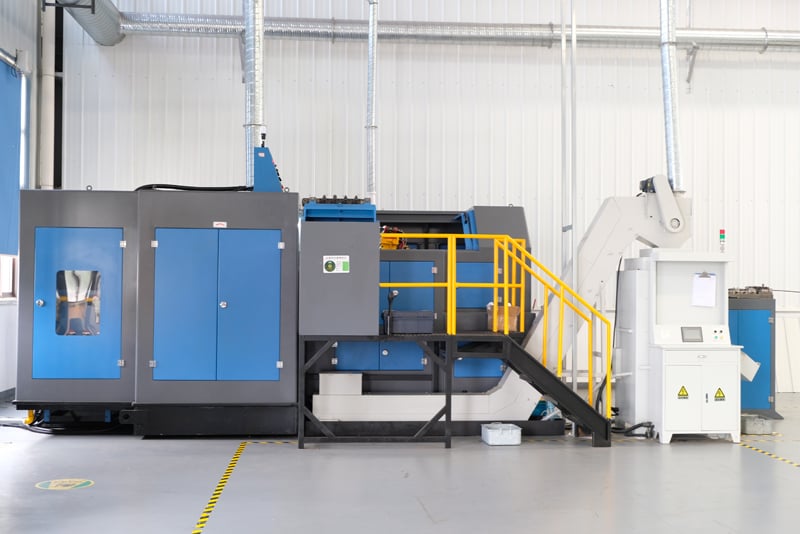
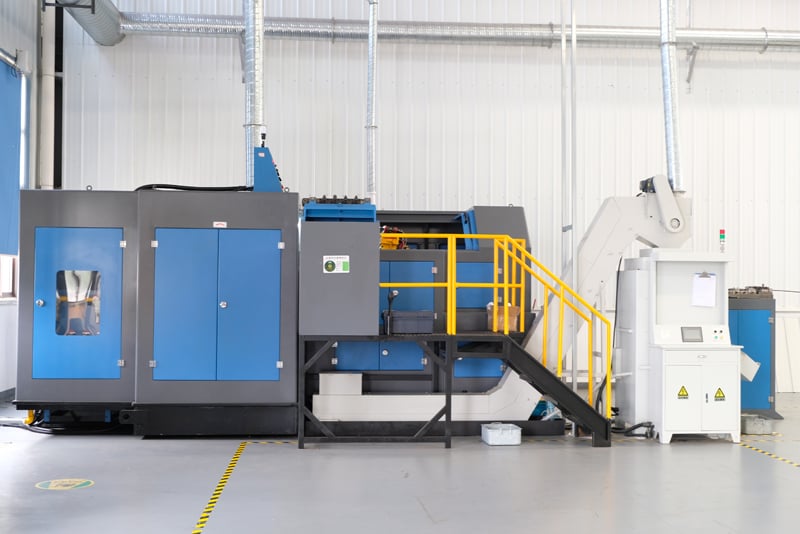
At room temperature, a length of wire is fed into a die and struck by a punch with enough force to push the material past its elastic limit, so it flows into the die cavity rather than fracturing. The metal is rearranged, not removed. A multi-station header can add a flanged head, an upset section, or a near-spherical end in successive strikes, each one building on the shape left by the last. Cold heading, in its most common industrial form, is how the automotive fastener industry makes bolts by the billion — but that volume association is exactly why buyers underestimate what else the process can do.
Shaoyi's cold heading line doesn't run fasteners. It runs precision pins and studs — ball studs, stabilizer bar link pins, bushing shafts, shock absorber connecting pins, knuckle locating pins — parts that carry shear, bending, and cyclic fatigue loads rather than simple tensile preload. If one of these fails, the failure mode isn't a loose bolt. It's a fracture in a moving suspension joint.
CNC machining, by contrast, starts with round bar stock and removes everything that isn't the final part. A turning center cuts the shaft profile, drills any features, and leaves the rest as chips on the shop floor. Same finished geometry, opposite material logic.
The Real Cost Difference, Worked Through the Numbers
Here's the general pattern, based on our own production cost ranges for pin and stud parts at realistic automotive volumes:
| Metric | Cold Heading | CNC Machining |
|---|---|---|
| Unit cost at 100,000 pcs/yr | ¥2–8 | ¥8–25 |
| Material utilization | ≥95% | 40–70% |
| Fatigue strength vs. baseline | +15–30% | Baseline |
| Tooling investment | ¥8,000–40,000 | ¥0 (standard tooling) |
| As-formed tolerance | IT7–IT8 | IT6–IT7 |
| Break-even volume | >5,000 pcs/yr | Any volume |
Here's what that looks like worked through, using representative numbers from the middle of those ranges rather than any single project's invoice. Take a shaft that costs ¥15 per piece to machine and roughly ¥6 to cold head, with a heading die running ¥25,000, at an annual volume of 100,000 pieces:
Machining annual cost     = 100,000 × ¥15 = ¥1,500,000
Cold heading annual cost  = 100,000 × ¥6 + ¥25,000 (tooling)
                           = ¥600,000 + ¥25,000 = ¥625,000
That's a difference of ¥875,000 a year — roughly 58% — and the tooling investment is recovered within the first few thousand pieces off the line, long before the annual run is finished. The specific numbers move with part geometry and material, but at any volume past the 5,000-piece break-even point, the direction of the gap holds.
None of this shows up if you only compare quoted unit prices without factoring in tooling amortization and material waste — which is exactly how a lot of buyers get the comparison wrong. Our cold heading capability runs this calculation on every quote before it goes out, not after a customer asks why the number looks different from a machining quote.
Cost is only half the decision, though.
Is a Cold-Headed Part Actually Weaker?
No. On the data we work with, it's the opposite — and this is usually the second question a skeptical buyer asks right after the cost numbers, because a cheaper part that fails early isn't actually cheaper. A process that saves money but shortens service life hasn't actually solved anything, and a part that fractures inside a moving suspension joint doesn't fail quietly — it fails as a warranty claim, a field return, and a hard conversation with the customer's quality team.
The reason traces back to what happens to the metal's internal grain structure during each process. Forming a part bends the metal's fiber flow to follow the part's contour, so it stays continuous from one end to the other. Cutting a part from bar stock severs those fibers wherever material is removed, exposing fiber ends at the surface that act as stress risers under repeated loading — which is exactly where a fatigue crack prefers to start. Rotating bar bending fatigue comparisons of this kind are typically run to the ISO 1143 method, and across our cold-headed pin and stud lineup, fatigue strength typically runs 15–30% higher than machined equivalents of the same geometry.
Specific products carry their own tested benchmarks rather than a single blanket number: ball studs rated above 500,000 oscillation cycles, stabilizer link pins above 200,000 bending cycles, shock connecting pins above 1,000,000 shear cycles. Exact fatigue life still depends on your load spectrum and test protocol — a supplier who quotes one number for every part hasn't actually tested every part.
That's the theory and the range. What decides your specific part is your own load case, not a generic comparison.
What Actually Goes Wrong With a Cold-Headed Pin — And How the Process Prevents It
A process that looks simple on paper — wire in, shaped part out — has a specific, well-documented set of failure modes if any station drifts out of control. Knowing them is what separates a header operator from a header engineer. It's also the fastest way to tell whether a supplier actually understands the process or just runs the machine.
| Defect | What you'd see | Root cause | How it's prevented |
|---|---|---|---|
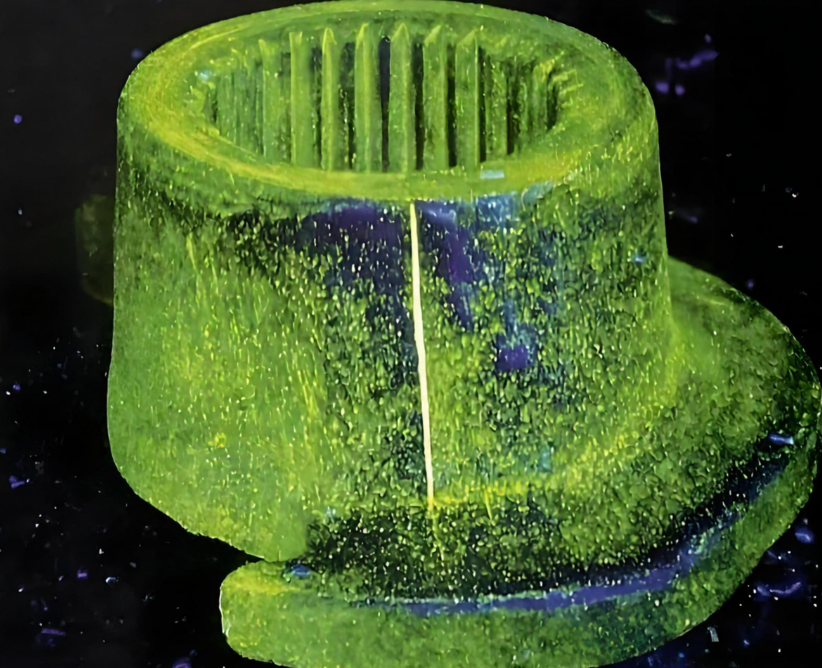
| Ball surface cracking | Cracks visible under magnetic particle inspection | Excessive single-pass deformation, poor phosphate-soap lubrication | Reduce upset ratio per station, verify phosphate film weight, add intermediate annealing if needed |
| Transition-zone fatigue failure | Fracture at the shank-to-head radius in service | Radius too small, uneven carburizing depth | Increase radius to ≥2mm, grade the carburizing profile, 100% magnetic particle inspection |
| Ball diameter out of tolerance | Diameter outside the h8 band | Coining station closing height drift, die wear | 100% in-line diameter measurement, SPC monitoring, ship in 3μm-graded diameter bands |
| Surface decarburization | Surface hardness below HRC 58 after heat treat | Furnace atmosphere control, decarburized incoming wire | Monitor furnace carbon potential, check incoming material metallurgy |
| Shank bow | Straightness out of spec | Uneven material flow during heading, heat treat distortion | Improve die symmetry, add a straightening step, hold straightness through final grinding |
| Surface scoring | Longitudinal scratches on shank or ball | Die wear, lubrication breakdown | Polish dies to Ra≤0.1μm, reinforce the soap coating, use TiCN-coated tooling |
None of these are hypothetical. They're the standard failure catalog any cold heading line has to design against, and the countermeasure column is what a die design review actually checks before a new part goes into production — not after the first bad batch shows up.
Does Your Part Actually Qualify for Cold Heading?
Check these against your part before assuming cold heading applies. Four things decide it, and none of them require a lab to answer.
Wire diameter first — Φ3mm to Φ24mm is in range; outside that, you're either into fastener-scale territory or too large for a standard header.
Geometry second: the head-to-shank diameter ratio, or upset ratio. A ratio of 3.5:1 or less in a single station, or up to 5:1 across multiple stations, is formable. Beyond that, the material cracks before it fills the die, no matter how good the tooling is.
Volume third, and this is the one buyers underestimate most often. Above roughly 5,000 pieces a year, the tooling investment amortizes into a real cost advantage; below that, you're paying for tooling you won't run enough parts through to justify.
Material last. 45# carbon steel, 40Cr, 42CrMo, 20CrMnTi, and 304/316 stainless are all within the process window we run regularly. Anything outside that list needs a separate material qualification before quoting — don't assume it works just because it's steel.
When CNC Machining Is Still the Better Call
Cold heading isn't the right answer for every pin or shaft. Treating it as a default would be dishonest, and a supplier who only sells you the process they'd rather run isn't advising you.
Below roughly 5,000 pieces a year, tooling cost doesn't amortize fast enough to beat CNC machining's zero-tooling-investment model. A prototype run or a low-volume aftermarket part usually belongs on a lathe, not a header.
If the design is still moving — dimensions, features, or material still under review — CNC machining absorbs those changes with a program edit. Cold heading absorbs them with a new or reworked die, which costs real money and real lead time every time the print changes. And if a mating feature needs IT6–IT7 tolerance achievable in a single turning pass, machining gets there directly. Cold heading's as-formed tolerance sits at IT7–IT8, which means any tighter spec still needs a secondary grinding operation regardless of which process makes the blank — at that point, the forming step isn't saving you the finishing step either way.
What To Do Next
Pull three numbers before you ask anyone to quote this comparison: your annual volume, your part's length-to-diameter ratio, and your material spec. Nothing else on this page matters until those three are on paper. If volume clears 5,000 pieces and the geometry fits a header, the savings case is usually worth building even before tooling gets ordered.
If you're not sure which side of that line your part falls on, send your drawing for a cold heading DFM review — you'll get a straight answer on whether the switch makes sense for your specific volume and geometry, not a generic pitch either way.
FAQ
Three questions come up more than any other once the cost and geometry numbers check out.
Can cold heading work with stainless steel pins?
Yes — 304 and 316 stainless are both within our standard cold heading material range. Expect a strength trade-off against carbon or alloy steel grades, so parts needing both high strength and corrosion resistance usually need a coating strategy rather than relying on stainless alone.
Can a cold-headed pin have a threaded end, like a ball stud's tail thread?
Yes. Thread rolling is integrated directly into the same production line after heading and heat treatment, so the threaded feature doesn't require a separate supplier or a second handoff.
Is there a minimum order quantity for a new cold-headed part?
No MOQ for prototyping — a few dozen pieces is enough to validate the design. For production, plan on 5,000+ pieces a year to amortize tooling properly; above roughly 50,000 pieces a year, cold heading's per-piece cost typically runs close to a third of the equivalent machined part.
Written by: Xu Xungui, Stamping & Die Process Engineer — background in stamping forming process, die structural design, sheet metal forming simulation, and part quality control across full-vehicle stamped component programs, with particular focus on resolving springback, wrinkling, and dimensional drift issues.
Reviewed by: Nansen (Sun Nan), International Business Manager
Last updated: 2026-07-31
Table of Contents
- Forming a Shaft vs. Cutting One — What Cold Heading Actually Is
- The Real Cost Difference, Worked Through the Numbers
- Is a Cold-Headed Part Actually Weaker?
- What Actually Goes Wrong With a Cold-Headed Pin — And How the Process Prevents It
- Does Your Part Actually Qualify for Cold Heading?
- When CNC Machining Is Still the Better Call
- What To Do Next
- FAQ