 Small batches, high standards. Our rapid prototyping service makes validation faster and easier —
  EN
EN


Precision Sheet Metal Manufacturing: Top Decisions That Make Or Break Your Project
What Precision Sheet Metal Manufacturing Really Means
When you hear the term "precision sheet metal manufacturing," what comes to mind? If you're picturing standard metal cutting and bending operations, you're only seeing part of the picture. This specialized manufacturing discipline operates in an entirely different league - one where tolerances are measured in thousandths of an inch and quality requirements leave virtually no room for error.
Precision sheet metal manufacturing is engineering-grade fabrication that maintains tolerances of ±0.005" to ±0.010" (±0.13mm to ±0.25mm) through advanced processes, specialized equipment, and rigorous quality control systems - enabling components to meet exact specifications for critical applications.
So what is a sheet metal fabrication process, and how does the precision approach differ from standard methods? The answer lies in the details that separate acceptable from exceptional.
Defining Precision in Metal Fabrication
Standard metal fabrication typically works within tolerances of ±1/16" to ±1/8" (±1.6mm to ±3.2mm). For construction frameworks or basic enclosures, these specifications work perfectly fine. However, precision sheet metal fabrication tightens that allowable deviation dramatically - often by a factor of 10 or more.
Consider this: the difference between precision metal fabrication and standard work isn't just about tighter numbers on a specification sheet. It represents a fundamentally different approach to fabricating sheet metal that includes:
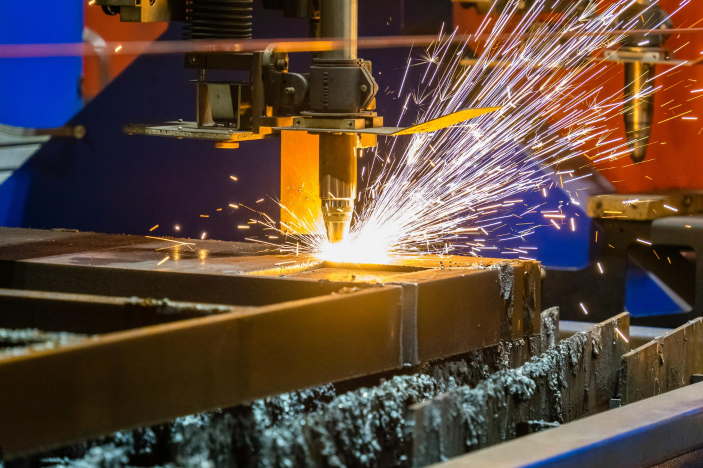
- Advanced fiber laser systems with micro-joint cutting technology
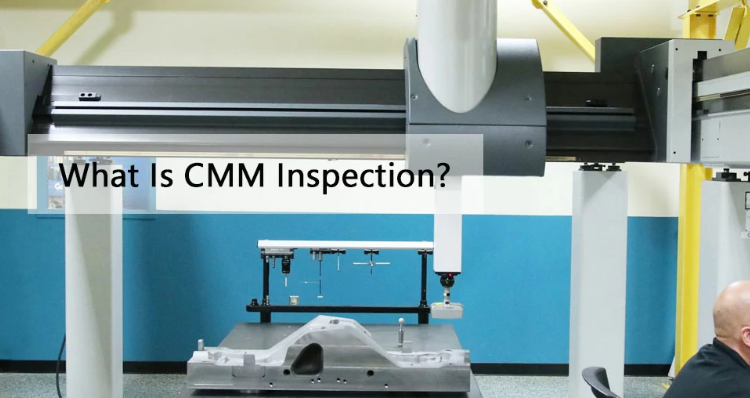
- Coordinate measuring machines (CMM) and optical comparators for verification
- Statistical process control monitoring critical dimensions in real-time
- Complete material traceability from raw stock through finished product
How Tight Tolerances Transform Manufacturing Outcomes
Why does metal precision matter so much? Imagine assembling a medical device where a 0.020" deviation renders a component unusable - or an aerospace assembly where dimensional variations directly impact safety. In these scenarios, precision sheet metal capabilities aren't optional; they're mission-critical.
Tight tolerances deliver measurable benefits across your project. Parts fit together perfectly during assembly, eliminating costly field modifications. Interchangeability becomes reliable - a component from one production batch performs identically to another. Material waste decreases because you're not compensating for dimensional uncertainty.
Throughout this guide, you'll gain technical depth on the eight critical decisions that determine whether your precision sheet metal project succeeds or struggles. From core fabrication processes to material selection, design principles to quality standards - each choice builds toward manufacturing outcomes that meet your exact requirements.
Core Fabrication Processes and How They Work
You've likely seen fabrication processes mentioned in countless specifications and supplier brochures. But here's the frustrating reality - most descriptions stop at surface-level overviews without explaining how these processes actually work. Understanding the mechanics behind each method empowers you to make smarter design decisions and communicate more effectively with your fabrication partners.
Let's break down each core process with the technical depth you actually need.
Laser Cutting and CNC Punching Fundamentals
These two cutting technologies form the foundation of modern precision metal forming operations, yet they serve distinctly different purposes.
Laser cutting uses a highly amplified beam of light focused onto the metal surface, vaporizing material in an extremely controlled manner. The result? Intricate patterns and fine details that would be nearly impossible to achieve through mechanical methods. Fiber lasers commonly used in precision applications can cut steel up to 1" thick while maintaining edge quality that often requires no secondary finishing.
Key parameters that affect laser cutting precision:
- Beam focus diameter - typically 0.1mm to 0.3mm for precision work
- Cutting speed - balanced against material thickness and edge quality requirements
- Assist gas pressure - nitrogen for clean edges, oxygen for faster cutting on steel
- Kerf width compensation - programming adjustments for the material removed by the beam
CNC punching takes a fundamentally different approach. A sheet metal punching machine drives a hardened tool through the material using mechanical force, creating holes or features in rapid succession. While a metal punch press can't match laser cutting's geometric flexibility, it excels at high-volume production where speed matters.
Modern sheet metal punching machines can deliver 1,000+ hits per minute on thin gauge materials. For projects requiring hundreds of identical holes across thousands of parts, nothing beats the efficiency of pressing and punching operations.
Understanding Metal Punching Force Calculations
Ever wonder how fabricators select the right equipment for your project? The answer involves calculating the punching force required - a critical step that ensures tooling and machinery can handle your specifications without damage or deformation.
The fundamental formula for sheet metal punching force is:
F = K × L × t × τ
Where:
- F = Required punching force
- K = Safety factor (typically 1.3 to account for tool wear and material variations)
- L = Total perimeter of the hole or feature being punched (mm)
- t = Material thickness (mm)
- τ = Material shear strength (MPa)
For example, punching a 25mm diameter hole through 2mm stainless steel (shear strength ~400 MPa) requires approximately: 1.3 × 78.5mm × 2mm × 400 MPa = 81,640N or roughly 8.3 metric tons of force.
This calculation directly impacts hole quality. Insufficient force creates ragged edges and incomplete shearing. Excessive force accelerates tool wear and can cause material deformation around perforations - a common defect in metal punching operations.
Bending, Forming, and Welding Techniques Explained
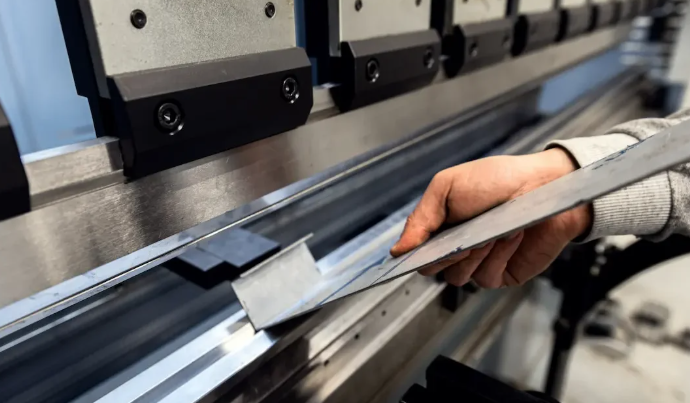
Bending transforms flat sheet metal into three-dimensional shapes by applying force along a linear axis. CNC press brakes use precision-ground tooling to create angles ranging from simple 90-degree bends to complex multi-bend geometries. The key variables include:
- Bend radius - determined by tooling geometry and material thickness
- Springback compensation - material elasticity causes parts to "spring back" after bending
- Grain direction - bending perpendicular to grain reduces cracking risk
- K-factor - the ratio determining where neutral axis shifts during bending
Forming encompasses broader deformation techniques including deep drawing, rolling, and stretching. Deep drawing uses tapered dies to stretch metal into cup-shaped or cavity features without rupturing the surface - think electronics enclosures or automotive components with complex contours.
Welding joins separate metal sections through controlled heat and pressure application. TIG welding offers the highest precision for thin materials, using a fixed tungsten electrode to create clean, controlled welds. MIG welding provides faster production speeds for thicker sections but requires homogeneous materials.
Process Selection Comparison
Choosing the right fabrication method depends on balancing multiple factors. This comparison helps clarify when each process delivers optimal results:
| Process | Typical Applications | Precision Capability | Material Compatibility | Production Speed |
|---|---|---|---|---|
| Laser Cutting | Complex contours, prototypes, intricate patterns | ±0.005" (±0.13mm) | Steel, aluminum, stainless, copper, brass | Moderate - single-point cutting |
| CNC Punching | High-volume hole patterns, standard shapes | ±0.010" (±0.25mm) | Steel, aluminum, stainless up to 6mm | High - 1,000+ hits/minute |
| Press Brake Bending | Enclosures, brackets, chassis components | ±0.005" to ±0.015" angular | Most sheet metals within tonnage limits | Moderate - sequential operations |
| Deep Drawing | Cups, pans, housings with cavities | ±0.010" (±0.25mm) | Ductile metals - aluminum, steel, copper | High for production tooling |
| TIG Welding | Precision assemblies, thin materials, visible joints | Dependent on operator skill | All weldable metals including dissimilar | Low - manual process |
| MIG Welding | Structural assemblies, thicker sections | Standard fabrication tolerances | Homogeneous materials only | Moderate - semi-automated |
Notice how each process occupies a specific niche? Laser cutting dominates when geometric complexity matters most. A metal punching machine wins on volume efficiency for repetitive features. Bending and forming shape flat stock into functional geometry. Welding creates assemblies from individual components.
Understanding these distinctions positions you to specify the right process - or combination of processes - for your application. But process selection is only part of the equation. Your choice of material fundamentally shapes what's achievable in precision fabrication.
Material Selection Guide for Precision Applications
You've specified the perfect fabrication process. You've nailed down your tolerance requirements. Now comes a decision that will fundamentally shape your project's success - selecting the right material. Here's the challenge: most fabrication of sheet metal guidance mentions material options without explaining why one choice outperforms another for your specific application.
Material selection in precision sheet metal forming isn't simply about picking a metal and moving forward. Each alloy family brings distinct characteristics that affect formability, corrosion resistance, strength, and ultimately - your project's total cost. Let's examine what actually matters when matching materials to precision requirements.
Aluminum, Steel, and Specialty Alloys Compared
Understanding the core differences between material families transforms how you approach metal sheet processing decisions. Rather than relying solely on fabricator recommendations, you'll be equipped to drive these conversations with informed perspective.
Aluminum Alloys deliver an exceptional strength-to-weight ratio - often the deciding factor for aerospace, automotive, and portable electronics applications. Popular grades like 6061 aluminum offer good mechanical properties with excellent weldability, while 5052 provides superior corrosion resistance for marine environments.
Key considerations for aluminum selection:
- Heat-treatable vs. non-heat-treatable grades affect post-processing options
- 5000-series alloys (magnesium-alloyed) offer best corrosion resistance without heat treatment
- 6000-series alloys (magnesium-silicon) balance formability with moderate strength
- 7000-series alloys (zinc-alloyed) provide highest strength but require careful welding procedures
- Typical thickness range for precision work: 0.020" to 0.250" (0.5mm to 6mm)
Stainless Steel combines corrosion resistance with structural strength - making it essential for food processing, medical devices, and chemical handling equipment. The austenitic grades 304 and 316 dominate precision applications, with 316 stainless adding molybdenum for enhanced resistance to chlorides and non-oxidizing acids.
Key considerations for stainless steel selection:
- 304 grade handles most general-purpose corrosion requirements cost-effectively
- 316 grade essential for saltwater exposure, chemical processing, or pharmaceutical applications
- Work hardening during sheet metal machining requires appropriate tooling and feed rates
- Passivation after fabrication restores protective oxide layer
- Typical thickness range for precision work: 0.015" to 0.187" (0.4mm to 4.8mm)
Carbon Steel remains the workhorse material when corrosion resistance isn't critical. Low-carbon grades like DC01 offer exceptional formability and weldability, while medium-carbon steels provide increased strength for structural applications. The trade-off? These materials require protective coatings or controlled environments to prevent oxidation.
Key considerations for carbon steel selection:
- Low-carbon grades (under 0.25% carbon) maximize formability and weld quality
- Medium-carbon grades (0.25% to 0.50%) increase hardness but reduce ductility
- Hot-rolled vs. cold-rolled affects surface finish and dimensional consistency
- Pickling and oiling treatments protect against corrosion during storage
- Typical thickness range for precision work: 0.024" to 0.375" (0.6mm to 9.5mm)
Copper Alloys serve specialized applications requiring thermal conductivity, electrical conductivity, or antimicrobial properties. While more expensive than steel alternatives, copper and brass deliver unique performance characteristics impossible to replicate with other materials.
Key considerations for copper alloy selection:
- Pure copper offers highest electrical and thermal conductivity
- Brass (copper-zinc) improves machinability while maintaining good corrosion resistance
- Bronze (copper-tin) provides excellent wear resistance for sliding contact applications
- Softness requires careful handling during machining sheet metal operations
- Typical thickness range for precision work: 0.010" to 0.125" (0.25mm to 3mm)
Matching Material Properties to Application Requirements
Sounds complex? The reality is straightforward once you map material properties to your application's actual demands. This comparison table consolidates the critical factors that drive metal parts fabrication decisions:
| Material Family | Formability | Corrosion Resistance | Strength-to-Weight | Relative Cost | Ideal Applications |
|---|---|---|---|---|---|
| Aluminum 5052 | Excellent | Excellent (marine-grade) | High | Medium | Marine enclosures, fuel tanks, signage |
| Aluminum 6061 | Good | Good | High | Medium | Structural frames, automotive, aerospace brackets |
| 304 Stainless | Good | Excellent | Moderate | High | Food equipment, architectural, medical devices |
| 316 Stainless | Good | Superior (chemical resistance) | Moderate | Very High | Pharmaceutical, marine, chemical processing |
| DC01 Low-Carbon Steel | Excellent | Poor (requires coating) | Low | Low | Enclosures, brackets, painted assemblies |
| S235JR Structural Steel | Good | Poor (requires coating) | Low | Low | Heavy-duty frames, industrial equipment |
| Copper C110 | Excellent | Good | Low | Very High | Electrical bus bars, heat exchangers |
| Brass C260 | Good | Good | Low | High | Decorative hardware, electrical connectors |
When you're evaluating materials for precision sheet metal forming applications, ask yourself these critical questions:
- What environment will this part operate in? Moisture, chemicals, and temperature extremes narrow your options quickly.
- What forces will the part experience? Static loads, dynamic stress, and fatigue cycles demand appropriate material strength.
- How tight are the weight constraints? Aerospace and portable devices often justify aluminum's cost premium.
- What surface finish does the application require? Stainless steel maintains appearance; carbon steel needs protective coatings.
- What's the production volume? Higher volumes may justify specialty alloys that reduce secondary operations.
Material thickness also directly impacts precision capabilities. Thinner materials (under 0.040"/1mm) demand more careful handling during sheet metal machining to prevent distortion. Thicker materials (over 0.125"/3mm) require increased forming forces and may limit geometric complexity. Your fabricator's equipment specifications ultimately determine what thickness ranges they can process within precision tolerances.
With material selection clarified, your next critical decision involves translating design intent into manufacturable geometry - where Design for Manufacturability principles prevent costly errors before they occur.
Design for Manufacturability Principles That Ensure Precision
You've selected your fabrication process and chosen the ideal material. Now comes a decision point that separates successful precision sheet metal projects from costly rework cycles - your design geometry. Here's the uncomfortable truth: even the most capable precision sheet metal fabricator can't overcome fundamental design flaws. The decisions you make at the CAD stage directly determine whether your parts achieve target tolerances or require expensive modifications.
Design for Manufacturability (DFM) isn't about limiting your creativity - it's about understanding how physical materials behave during forming operations. When you design with manufacturing constraints in mind, you unlock faster production, tighter tolerances, and significantly lower costs. Let's explore the specific rules that make precise metal production achievable.
Bend Radius and Hole Placement Rules
Imagine trying to fold a piece of cardboard too sharply - the outer surface cracks while the inner surface bunches. Metal behaves similarly. Every bend creates stress that can compromise your part's integrity if you ignore material limitations.
Minimum Bend Radius Requirements
The inside curve of your bend should match or exceed your material thickness. This seemingly simple rule prevents cracking at the bend apex and ensures consistent angles across production runs. According to manufacturing guidelines from Norck, standardizing bend radii across your design allows fabricators to use a single tool for every fold - reducing setup time and your project costs.
- Steel and aluminum: Minimum inside bend radius equals 1x material thickness
- Stainless steel: Minimum inside bend radius equals 1.5x to 2x material thickness (due to work hardening)
- Hard temper materials: May require 3x to 4x thickness depending on alloy
- Consistency advantage: Using uniform bend radii throughout your design reduces tooling changes
Hole-to-Bend Distance Requirements
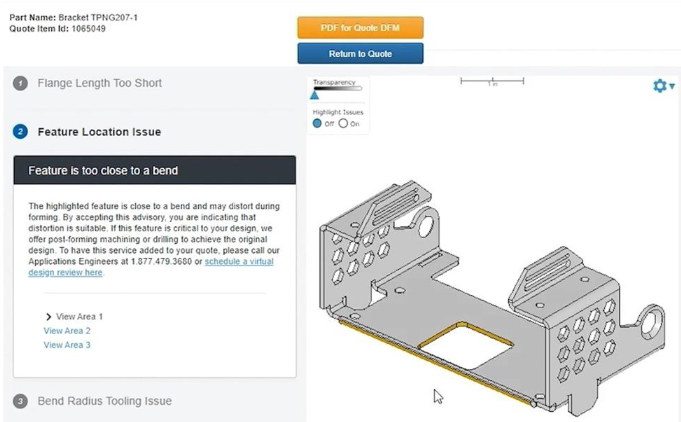
When you place a hole too close to a bend line, the forming force distorts the hole into an oval shape. The result? Fasteners won't fit, alignment fails, and your assembly becomes impossible without rework.
The critical rule: maintain a minimum distance of 2x material thickness plus the bend radius between any hole edge and the nearest bend line. For a 2mm thick part with a 2mm bend radius, that means keeping holes at least 6mm from bend locations.
- Holes closer than 2x material thickness from bends will deform during forming
- Slots parallel to bends require even greater clearance - typically 3x material thickness
- Countersinks near bends risk cracking or misalignment in precision sheet metal cutting operations
Bend Relief Implementation
When your bend line meets a flat edge, the material wants to tear at the corner. Bend reliefs - small rectangular or semicircular cutouts at bend terminations - prevent this failure mode. Design your reliefs with a width equal to material thickness and a depth extending slightly past the bend line.
Designing for Tolerance Stack-Up Prevention
Here's where precision sheet metal fab projects often fail: designers specify tight tolerances on individual features without considering how those tolerances accumulate across the entire part. When you have five bends, each with ±0.5° angular tolerance, your final geometry could vary by ±2.5° - potentially rendering the part unusable.
Practical tolerance guidelines based on industry standards from Factorem:
- Linear dimensions (sheared/cut edges): ±0.010" to ±0.020" (±0.25mm to ±0.5mm)
- Hole diameters (punched): ±0.005" to ±0.010" (±0.13mm to ±0.25mm)
- Bend angles: ±0.5° to ±1° for standard press brake operations
- Hole-to-hole distances: ±0.010" (±0.25mm) within the same flat pattern
- Bend-to-hole distances: ±0.015" to ±0.030" (±0.4mm to ±0.8mm)
Stack-up prevention strategies:
- Identify critical dimensions that affect assembly fit and prioritize those tolerances
- Use datum surfaces as reference points for multiple features
- Consider how springback affects angular relationships between bent sections
- Specify tighter tolerances only where functionally necessary - over-tolerancing increases cost
Grain Direction Considerations
Sheet metal has a directional grain structure from the rolling process - bending perpendicular to grain direction significantly reduces cracking risk. This "hidden" rule in precision industrial manufacturing prevents parts from failing months after delivery when subjected to stress or fatigue cycles.
- Orient primary bends perpendicular to the rolling direction whenever possible
- If bends must run parallel to grain, increase bend radius by 50%
- Specify grain direction on drawings for critical applications
Feature Spacing Requirements
Laser cutting uses intense heat that can warp thin sections. Narrow slots and close-spaced features create heat-affected zones that compromise dimensional stability.
- Minimum slot width: 1.5x material thickness
- Minimum web width between holes: 2x material thickness
- Minimum edge distance for holes: 1x material thickness from cut edges
- Avoid long, narrow "fingers" that distort from cutting heat
Integrating 3D Modeling and Prototyping
Modern precision metal fabricators leverage advanced engineering capabilities that catch DFM issues before metal is ever cut. When you provide 3D CAD models, fabricators can simulate forming operations, predict springback compensation, and identify potential problem areas.
Effective design integration includes:
- Flat pattern verification: Confirm your unfolded geometry accounts for bend allowances correctly
- K-factor specification: Communicate material-specific bend calculations to ensure accurate flat patterns
- Prototype validation: First-article production identifies tolerance issues before full production runs
- DFM feedback loops: Collaborative review with fabricators optimizes designs for their specific equipment
The most capable precision sheet metal fab partners offer DFM analysis as part of their quoting process. They'll identify potential issues - holes too close to bends, insufficient flange lengths, problematic tolerance callouts - before you commit to production tooling.
Applying these DFM principles positions your project for success. But how do you know when sheet metal fabrication is the right choice compared to precision machining? The next section provides a clear decision framework for navigating that critical question.
Precision Sheet Metal vs Precision Machining Decision Framework
You've mastered DFM principles for sheet metal. But here's a question that stops many engineers in their tracks: should this part even be sheet metal? Sometimes the answer is no - and recognizing when precision machining makes more sense can save you significant time and money.
Metal fabrication means transforming raw materials into finished components through various processes. Both precision sheet metal manufacturing and CNC machining fall under this umbrella, yet they solve fundamentally different problems. Understanding where each method excels - and where it struggles - empowers you to specify the optimal approach from the start.
When Sheet Metal Fabrication Outperforms Machining
Imagine you need 500 lightweight enclosures with thin walls and multiple bend features. Machining each one from solid billet would waste enormous amounts of material and take forever. Sheet metal fabrication delivers these parts faster, cheaper, and with less environmental impact.
Precision metal processing through sheet metal methods excels when your project involves:
- Thin-walled structures: Parts with wall thicknesses under 6mm are natural candidates for forming rather than material removal
- Hollow geometries: Enclosures, housings, and box structures form efficiently from flat stock
- Medium to high production volumes: Per-unit costs drop dramatically once tooling is established
- Weight-critical applications: Sheet metal parts achieve strength without solid material bulk
- Scalable designs: Modular assemblies and design iterations implement quickly
According to industry analysis from Boona Prototypes, sheet metal fabrication uses optimized nesting layouts that minimize waste - making it significantly more material-efficient than subtractive machining processes. When you're working with expensive materials like stainless steel or copper alloys, this efficiency translates directly to cost savings.
Ideal sheet metal fabrication applications include:
- Electrical enclosures and control boxes
- Automotive body panels and structural brackets
- HVAC system components and ductwork
- Computer chassis and server housings
- Industrial mounting brackets and frames
When Precision Machining Takes the Lead
Now flip the scenario. You need a complex aerospace bracket with internal channels, tight-tolerance mounting surfaces, and features on multiple faces. Sheet punching and bending simply can't achieve the geometry. Precision machining sheet metal alternatives - specifically CNC milling and turning - become essential.
Metal fabrication and machining diverge most clearly on these factors:
- Dimensional accuracy: CNC machining achieves ±0.01mm tolerances versus ±0.5mm for typical sheet metal operations
- Complex 3D geometries: Internal cavities, undercuts, and multi-axis features require material removal
- Thick or non-formable materials: Hardened steels and some alloys resist bending but machine well
- Surface finish requirements: Machining delivers Ra ≤ 0.8 µm directly off the machine
- Functional prototypes: Testing complex geometries before committing to production tooling
Ideal precision machining applications include:
- Aerospace and defense structural components
- Medical device housings and implant components
- Robotics sensor mounts and precision fixtures
- Optical equipment and instrumentation housings
- Engine mounts and high-performance automotive parts
Head-to-Head Comparison
This detailed comparison clarifies exactly where each method delivers optimal results for precise metal fabrication projects:
| Criteria | Precision Sheet Metal Fabrication | Precision CNC Machining |
|---|---|---|
| Part Geometry Suitability | Thin-walled, hollow structures, bent features, flat patterns with cutouts | Complex 3D shapes, internal cavities, multi-axis features, solid components |
| Typical Tolerance Range | ±0.25mm to ±0.5mm standard; ±0.13mm achievable | ±0.01mm to ±0.05mm standard; tighter with specialized equipment |
| Material Utilization | 85-95% efficiency with optimized nesting | 40-60% typical; significant chip waste from subtractive process |
| Cost at Low Volume (1-50 units) | Moderate - minimal tooling investment | Higher per-unit but no tooling costs; ideal for prototypes |
| Cost at Medium Volume (50-500 units) | Lower per-unit; forming speeds reduce labor | Higher per-unit; cycle times limit throughput |
| Cost at High Volume (500+ units) | Significantly lower; high-speed production | Much higher; each part requires full machining cycle |
| Typical Lead Time | 1-3 weeks for production; days for simple parts | 2-4 weeks typical; complex parts take longer |
| Surface Finish Quality | May require secondary finishing (powder coating, polishing) | Excellent as-machined finish; Ra ≤ 0.8 µm achievable |
| Design Flexibility | Limited by forming constraints and bend geometry | Nearly unlimited geometric freedom within machine envelope |
Hybrid Approaches for Complex Components
Here's what many engineers miss: you don't always have to choose one or the other. Research presented at the ASME International Manufacturing Science and Engineering Conference highlights how combining bending, additive manufacturing, and machining processes achieves results impossible with any single method.
Hybrid manufacturing strategically combines precision metal processing techniques to optimize both cost and performance. Consider these real-world applications:
- Sheet metal enclosure with machined precision inserts: The housing forms quickly from sheet stock while threaded bosses and alignment features get machined to tight tolerances
- Machined heat sinks mounted in sheet metal assemblies: Complex thermal management geometry gets machined, then integrated into formed structural components
- Bent structures with machined mounting surfaces: Sheet forming creates overall shape; subsequent machining ensures critical interface dimensions
The hybrid approach reduces overall cost while maintaining precision where it matters most. A fully machined enclosure might cost three times more than a sheet metal version with selectively machined features - while delivering identical functional performance.
When evaluating your project, ask these decisive questions:
- Does the geometry require internal features or undercuts? → Machining
- Are walls thin relative to overall part size? → Sheet metal
- Is production volume above 100 units? → Sheet metal likely wins on cost
- Do specific features require tolerances below ±0.1mm? → Consider hybrid approach
- Is surface finish critical without secondary operations? → Machining advantage
With your manufacturing method selected, the next critical decision involves verifying that your fabrication partner can actually deliver the precision you need. Quality standards and certifications provide the framework for that confidence.
Quality Standards and Certification Requirements Explained
You've selected the right manufacturing method and designed for manufacturability. But here's a question that separates reliable precision sheet metal fabrication companies from risky choices: how do you verify a fabricator can actually deliver the quality they promise? Certifications and quality standards provide the answer - yet most buyers don't fully understand what these credentials mean for their projects.
Quality control in CNC sheet metal fabrication isn't simply a final inspection before shipping. It's a systematic approach spanning from design validation through delivery - with documented checkpoints that catch problems before they become costly failures. Let's decode what these standards actually require and why they matter for your precision outcomes.
Understanding ISO and Industry-Specific Certifications
When you see "ISO 9001 Certified" on a fabricator's website, what does that actually guarantee? ISO 9001:2015 establishes the foundational quality management system (QMS) requirements that apply across all industries. According to NSF International's certification guidelines, this standard is applicable to any organization regardless of size, industry, or the products and services it provides.
ISO 9001:2015 Core Requirements:
- Documented quality policy: Written commitment to quality objectives and continuous improvement
- Process-based approach: Defined procedures for all precision sheet metal works with measurable outputs
- Risk-based thinking: Systematic identification and mitigation of potential quality issues
- Customer focus: Mechanisms for capturing requirements and measuring satisfaction
- Internal auditing: Regular self-assessment against QMS requirements
- Management review: Leadership engagement in quality performance analysis
For general fabrication needs, ISO 9001 certification indicates a precision metal products company has implemented systematic quality controls. However, certain industries demand more rigorous standards.
IATF 16949 for Automotive Applications
If your precision sheet metal components are destined for automotive use, IATF 16949 certification becomes essential. This standard builds upon ISO 9001 by introducing automotive-specific requirements - meaning you cannot achieve IATF 16949 certification without meeting ISO 9001 standards.
What makes IATF 16949 more demanding?
- Product safety management: Documented processes throughout the product lifecycle with multi-level approvals and complete traceability
- AIAG Core Tools requirement: Mandatory use of Production Part Approval Process (PPAP), Failure Mode and Effects Analysis (FMEA), Measurement System Analysis (MSA), and Statistical Process Control (SPC)
- Supplier development programs: Second-party audits and active supplier quality monitoring
- Customer-Specific Requirements (CSRs): Integration of individual OEM requirements into the quality system
- Enhanced internal auditing: QMS audits, manufacturing process audits, and product audits - not just compliance checks
Eligibility for IATF 16949 requires producing materials found on finished vehicles, maintaining an active automotive client agreement, and having 12 months of documented production data. These rules ensure certification remains specific to active automotive suppliers - a precision fabrication inc. serving only industrial clients wouldn't qualify.
Quality Control Methods That Guarantee Precision
Certifications establish the framework. But what happens on the shop floor determines whether your parts meet specifications. According to quality control research from HiTech Digital, effective QC spans from design through delivery with specific checkpoints at each stage.
Key Quality Control Checkpoints Throughout Fabrication:
- Incoming material inspection: Verification of material certifications, thickness measurements, and surface condition before processing
- First-article inspection: Complete dimensional verification of initial production parts against specifications
- In-process monitoring: Statistical process control tracking critical dimensions during production runs
- Post-forming verification: Angular measurements after bending operations to confirm springback compensation
- Assembly validation: Fit checks and functional testing of welded or assembled components
- Final inspection: Comprehensive dimensional audit and visual examination before packaging
- Documentation package: Material certifications, inspection reports, and dimensional data accompanying shipment
Common Precision Sheet Metal Defects and Prevention
Understanding what can go wrong helps you evaluate fabricator capabilities and specify appropriate quality requirements. Here are defects that precision sheet metal products inc. and similar manufacturers must actively prevent:
| Defect Type | Root Causes | Prevention Strategies |
|---|---|---|
| Dimensional Variation | Tool wear, thermal expansion, incorrect springback compensation | Regular tool inspection, temperature-controlled environments, empirical springback data by material |
| Surface Scratches | Handling damage, die marks, contaminated tooling | Protective films during processing, dedicated tooling for visible surfaces, clean handling procedures |
| Bend Cracking | Insufficient bend radius, bending parallel to grain, material too hard | DFM review for minimum radii, grain direction specification, material certification verification |
| Hole Distortion | Punching too close to bends, insufficient clearance, dull tooling | Adherence to hole-to-bend distance rules, tooling maintenance schedules, proper die clearance selection |
| Weld Defects | Contaminated surfaces, incorrect parameters, insufficient penetration | Surface preparation protocols, qualified welding procedures, destructive testing of samples |
| Flatness Issues | Residual stress from cutting, uneven heat distribution, improper nesting | Stress-relief cuts in flat patterns, optimized cutting sequences, post-processing leveling when required |
The difference between capable and exceptional precision sheet metal fabrication companies lies in how proactively they address these failure modes. A fabricator using predictive quality control methodologies - focusing on preventing defects rather than merely detecting them - delivers consistently superior results.
When evaluating potential partners, ask specific questions about their quality approach: What statistical methods do they use for process monitoring? How do they validate springback compensation for your specific materials? What's their first-pass yield rate? These questions reveal whether certifications translate into actual manufacturing discipline.
Quality standards establish trust - but cost factors ultimately determine project feasibility. Understanding the economics of precision fabrication helps you balance quality requirements against budget constraints.
Understanding Cost Factors in Precision Fabrication
You've validated quality standards and confirmed your fabricator's capabilities. Now comes the conversation most suppliers avoid entirely - what actually drives the cost of your precision sheet metal manufacturing project? Understanding these economics empowers you to make smarter trade-offs between tolerance requirements, material choices, and production volumes.
Here's the reality: the price you receive on a quote reflects dozens of interconnected decisions. Some you control directly through design choices. Others depend on order quantities and timing. Let's break down exactly where your money goes - and how to optimize each factor.
Prototype vs Production Run Economics
The financial profile of making a single prototype versus thousands of production parts couldn't be more different. According to cost analysis from Mingli Metal, it's common for per-unit costs in mass production to be 50% to 80% lower than the cost of a single prototype. Why such a dramatic difference?
Prototyping cost drivers:
- Setup time dominates: Programming CNC equipment, creating fixtures, and configuring press brake tooling takes the same time for one part as for one hundred
- No volume discounts: Material suppliers charge premium rates for small quantities
- Higher labor per unit: Operators spend proportionally more time handling, inspecting, and packaging individual pieces
- Engineering review: First-article inspection and DFM analysis add upfront costs
Production run economics:
- Setup amortization: Fixed costs spread across hundreds or thousands of units dramatically reduce per-piece pricing
- Material efficiency: Larger orders enable optimized nesting layouts that minimize scrap
- Process optimization: Operators refine techniques over extended runs, increasing throughput
- Volume pricing: Bulk material purchases and automated metal products processing reduce raw costs
When searching for precision sheet metal fabrication near me, ask potential partners about their break-even points. Many fabricators offer significant price reductions starting at 50 units, with steeper discounts at 250, 500, and 1,000+ quantities. Understanding these thresholds helps you plan order quantities strategically.
The prototype-to-production journey also involves timing considerations. Rapid prototyping can deliver functional parts in 3-5 days, while production tooling and process validation may require 2-4 weeks of preparation. Companies like precision metal fab inc operations balance speed against setup investments - rushing production tooling often costs more than the time saved.
Hidden Cost Factors That Impact Your Budget
Beyond the obvious line items, several factors significantly affect your total project cost. According to cost analysis from TMCO, understanding these variables helps avoid budget surprises.
Material selection impact:
- Stainless steel costs 2-3x more than carbon steel per pound
- Specialty alloys may require extended lead times and minimum order quantities
- Thicker materials increase cutting time, forming force requirements, and shipping weight
- Pre-finished materials (anodized aluminum, galvanized steel) reduce secondary operations but cost more upfront
Tolerance specifications:
- Tighter tolerances require slower processing speeds and more frequent inspection
- Precision beyond standard capabilities may require secondary machining operations
- Over-tolerancing non-critical features adds cost without functional benefit
- Specify tight tolerances only where assembly fit or function demands them
Finishing requirements:
- Powder coating adds $0.50-$2.00 per square foot depending on complexity
- Anodizing aluminum involves chemical processing with minimum batch charges
- Plating operations (zinc, nickel, chrome) require specialized facilities
- Polishing and brushing for visible surfaces add labor-intensive steps
Design complexity factors:
- Multiple bend operations increase press brake setup time
- Custom sheet metal punch tooling may require one-time fabrication charges
- Intricate laser cutting patterns extend processing time
- Welded assemblies add skilled labor and inspection requirements
Cost optimization strategies:
- Standardize bend radii across your design to minimize tooling changes
- Use stock material thicknesses rather than custom gauges
- Design for automated sheet metal fabrication compatibility where volumes justify it
- Combine multiple parts in single shipments to reduce freight costs
- Provide complete 3D CAD models to streamline programming and reduce quote turnaround
- Consider Design for Manufacturability review during prototyping to optimize production costs
The total landed cost extends beyond the fabricator's invoice. For precision sheet metal inc operations serving global customers, factors like international shipping terms, customs duties, and inventory carrying costs significantly affect project economics. Clarify these responsibilities upfront - especially when comparing quotes from domestic versus overseas suppliers.
With cost factors understood, you're equipped to evaluate fabrication partners based on both capability and value. The final decision - selecting the right precision fabrication partner - determines whether all your careful planning translates into successful project outcomes.
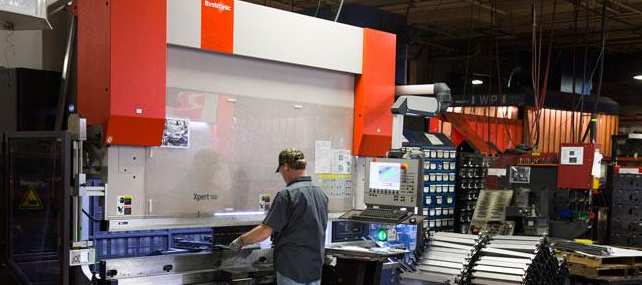
Selecting the Right Precision Fabrication Partner
You've made seven critical decisions - from process selection to material choice, DFM principles to quality standards. Now comes the decision that determines whether all that careful planning actually delivers results: choosing the right precision fabricator. This partnership shapes everything from prototype speed to production consistency, and getting it wrong costs far more than just money.
Here's the uncomfortable truth: many fabricators claim precision capabilities they can't actually deliver. Equipment lists look impressive on websites, but real-world performance depends on process discipline, engineering expertise, and organizational commitment to quality. Let's explore exactly how to separate genuine precision sheet metal shops from those that merely talk the talk.
Capability Assessment Checklist for Fabricators
Before requesting quotes, evaluate potential partners against these critical criteria. According to industry guidance from experienced procurement professionals, a supplier's process is more important than their equipment list.
Certifications and Quality Systems
Certifications reveal organizational commitment to documented, repeatable processes. What you should look for:
- ISO 9001:2015 minimum: Confirms basic quality management system implementation
- IATF 16949 for automotive: Essential for chassis, suspension, and structural components - demonstrates automotive-specific quality rigor
- Industry-specific certifications: Medical sheet metal fabrication requires FDA-compliant documentation; aerospace demands AS9100
- Documented quality control procedures: First-article inspection, in-process monitoring, and final verification protocols
For automotive applications, Shaoyi (Ningbo) Metal Technology exemplifies the certification standard to expect - their IATF 16949 certification ensures the documented processes and traceability that automotive OEMs require for safety-critical components.
Equipment and Technology Capabilities
Modern machinery enables tighter tolerances and faster throughput. Key equipment to verify:
- Fiber laser cutting systems: Look for power ratings appropriate to your material thicknesses
- CNC press brakes: Multi-axis backgauges enable complex bend sequences with consistent accuracy
- Coordinate measuring machines (CMM): Essential for dimensional verification on precision sheet metal products
- Welding capabilities: TIG, MIG, and robotic welding for various assembly requirements
- Finishing equipment: In-house powder coating, anodizing, or plating reduces lead time and quality variation
Engineering Support and DFM Expertise
The best sheetmetal fabrication partners don't just build your designs - they improve them. According to fabrication industry analysis from TMCO, successful fabrication begins with engineering, not at the machine.
- Design for Manufacturability review: Proactive identification of tolerance stack-ups, formability issues, and cost optimization opportunities
- CAD/CAM support: Ability to work with your native file formats and provide flat pattern verification
- Prototype testing: First-article production with complete dimensional reporting before production commitment
- Material recommendations: Guidance on optimal alloy selection for your application requirements
Comprehensive DFM support distinguishes a true precision fabricator from a job shop. Partners like Shaoyi integrate DFM analysis directly into their quoting process, catching potential issues before they become production problems.
Production Scalability
Your ideal partner supports both current needs and future growth. Evaluate:
- Prototype capabilities: 5-day rapid prototyping enables faster design iteration cycles
- Production range: Capacity for low-volume specialty runs through automated mass production
- Consistent quality at scale: Statistical process control maintaining tolerances across extended runs
- Inventory management: Blanket order programs and kanban systems for recurring production
Red Flags and Green Lights in Partner Selection
Experience teaches you to recognize warning signs before they become project problems. Here's what signals genuine capability versus concerning gaps:
Green Lights - Signs of a Reliable Precision Fabricator:
- Rapid quote turnaround: 12-24 hour quote response indicates organized engineering and efficient processes
- Detailed questions about your application: Genuine interest in understanding functional requirements, not just dimensions
- Transparent pricing structure: Clear breakdown of setup, material, processing, and finishing costs
- Facility tour invitation: Confidence in showing their operations and introducing key personnel
- Reference customers in your industry: Proven experience with similar applications and requirements
- Proactive DFM feedback: Suggestions for improving manufacturability even before you ask
- Documented lead time commitments: Realistic timelines with milestone visibility
Red Flags - Warning Signs to Watch For:
- Vague capability claims: "We can do anything" without specifics on tolerances or processes
- Excessive outsourcing: Core operations handled by subcontractors reduce quality control
- Slow or unresponsive communication: If pre-sale communication is difficult, production updates will be worse
- Reluctance to discuss quality procedures: Evasive answers about inspection methods or yield rates
- Pricing significantly below market: Unrealistic quotes often indicate hidden costs or quality shortcuts
- No engineering support offered: "Just send us the drawing" without DFM review capability
- Outdated equipment: While old machines can still work, modern equipment enables better precision
Communication and Partnership Approach
According to supplier evaluation guidance from industry sources, managing multiple suppliers increases communication cost and project risk. The best US precision sheet metal partners simplify your sourcing through integrated capabilities.
- Single point of contact: Dedicated project management throughout production
- Regular progress updates: Proactive communication, not just responses to your inquiries
- Problem-solving orientation: Focus on solutions when issues arise rather than blame assignment
- Long-term relationship mindset: Investment in your success, not just transaction completion
When evaluating precision sheet metal near me options, remember that geographic proximity offers advantages - easier facility visits, faster shipping, and simplified communication. However, capability and quality should outweigh convenience when selecting your primary fabrication partner.
Making Your Final Decision
The right precision fabricator becomes an extension of your engineering team. They catch design issues before production, suggest cost-saving alternatives, and deliver consistent quality that makes your products successful. Whether you need medical sheet metal fabrication with FDA documentation, automotive components requiring IATF 16949 compliance, or general precision sheet metal products for industrial applications - the evaluation criteria remain consistent.
Start by requesting quotes from three to five qualified fabricators. Compare not just pricing, but responsiveness, DFM feedback quality, and how thoroughly they understand your requirements. The lowest quote rarely represents the best value when you factor in quality consistency, on-time delivery, and engineering support. Your precision sheet metal manufacturing success ultimately depends on this partnership - choose wisely.
Frequently Asked Questions About Precision Sheet Metal Manufacturing
1. What tolerances can precision sheet metal manufacturing achieve?
Precision sheet metal manufacturing typically maintains tolerances of ±0.005" to ±0.010" (±0.13mm to ±0.25mm), which is roughly 10 times tighter than standard fabrication tolerances of ±1/16" to ±1/8". Achieving these specifications requires advanced fiber laser systems, CNC press brakes with multi-axis backgauges, and rigorous quality control including CMM verification. For automotive applications, IATF 16949-certified fabricators like Shaoyi deliver consistent precision through statistical process control and documented inspection procedures.
2. How does precision sheet metal differ from standard sheet metal fabrication?
The key difference lies in tolerance specifications, equipment sophistication, and quality systems. Standard fabrication works within ±1.6mm to ±3.2mm tolerances suitable for construction or basic enclosures. Precision fabrication tightens this to ±0.13mm to ±0.25mm through fiber laser cutting with micro-joint technology, coordinate measuring machines for verification, real-time statistical process control, and complete material traceability. This enables components for medical devices, aerospace assemblies, and automotive safety-critical parts where dimensional accuracy directly impacts performance.
3. What materials are best for precision sheet metal applications?
Material selection depends on your application requirements. Aluminum alloys like 5052 and 6061 offer excellent strength-to-weight ratios for aerospace and automotive. Stainless steel 304 handles general corrosion resistance cost-effectively, while 316 grade is essential for marine, pharmaceutical, or chemical processing environments. Carbon steel remains economical when corrosion resistance isn't critical but requires protective coatings. Copper alloys serve specialized electrical and thermal conductivity applications. Thickness typically ranges from 0.5mm to 6mm for precision work.
4. When should I choose sheet metal fabrication over CNC machining?
Sheet metal fabrication excels for thin-walled structures under 6mm, hollow enclosures, and medium to high production volumes where per-unit costs drop significantly. It achieves 85-95% material utilization compared to 40-60% for machining. Choose CNC machining when you need complex 3D geometries with internal cavities, tolerances below ±0.1mm, or excellent surface finishes directly off the machine. Many projects benefit from hybrid approaches combining formed sheet metal structures with selectively machined precision features.
5. What certifications should a precision sheet metal fabricator have?
ISO 9001:2015 certification confirms basic quality management systems with documented procedures and continuous improvement. For automotive components, IATF 16949 certification is essential as it builds upon ISO 9001 with automotive-specific requirements including PPAP, FMEA, MSA, and SPC methodologies. Medical applications require FDA-compliant documentation, while aerospace demands AS9100 certification. Beyond certifications, evaluate actual quality control practices including first-article inspection, in-process monitoring, and documented traceability throughout production.