 Small batches, high standards. Our rapid prototyping service makes validation faster and easier —
  EN
EN


Factory Sheet Metal Secrets: From Raw Stock To Flawless Parts
Understanding Factory Sheet Metal Operations
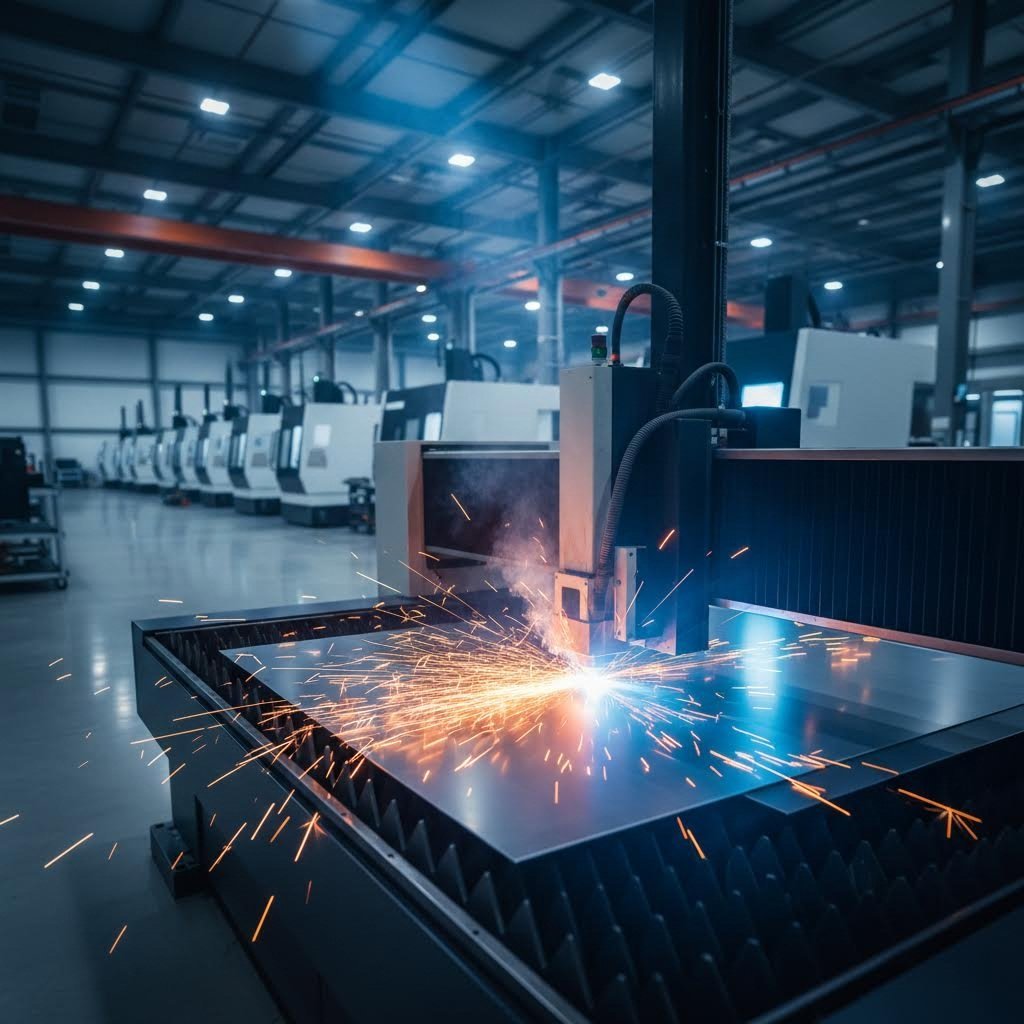
When you hear "sheet metal fabrication," what comes to mind? Perhaps a small workshop with a few machines and skilled operators crafting custom parts one at a time. While that image captures one end of the spectrum, factory sheet metal operations exist in an entirely different realm—one defined by precision systems, repeatable processes, and production scale that transforms raw stock into flawless components at remarkable speed.
From Raw Material to Finished Component
So, what is sheet metal fabrication at the factory level? It's the systematic transformation of flat metal sheets into finished parts through cutting, bending, forming, and assembly operations—all executed within integrated production environments designed for consistency and volume. Unlike job shops that handle diverse one-off projects, factory environments specialize in metal fabrication that delivers identical parts across hundreds or thousands of units.
The sheet metal manufacturing industry relies on these factory operations to supply everything from automotive chassis components to industrial enclosures. Engineers depend on predictable tolerances. Procurement specialists need reliable delivery schedules. Product designers require partners who can translate CAD files into production reality without costly surprises.
Why Factory Scale Changes Everything
The difference between a job shop and a factory isn't just about size—it's about systems. According to industry experts, job shops serve transactional needs with flexibility for short runs and prototypes. Factory-scale operations, however, support ongoing production processes with robust scheduling, quality assurance tracking, and documentation that integrates seamlessly into your supply chain.
Job shops serve a transactional need. Contract manufacturers support a process. That distinction affects pricing, turnaround, communication, and risk.
This difference matters when your business depends on consistent, reliable delivery. The fabrication of metal at factory scale means dedicated equipment, trained teams, and quality systems designed for repeatability—not just capability.
The Industrial Backbone of Modern Manufacturing
Factory sheet metal operations form the backbone of countless industries. From architectural panels to precision equipment housings, these facilities combine advanced machinery with skilled craftsmanship to execute complex designs that perform as intended.
Throughout this article, you'll discover the equipment capabilities that define modern sheet metal manufacturing, explore production workflows from flat stock to finished component, understand quality standards that ensure consistency, and learn the cost factors that drive project pricing. Whether you're sourcing components for the first time or optimizing an existing supply chain, this knowledge will help you make informed decisions and achieve better manufacturing outcomes.
Essential Machinery and Equipment in Sheet Metal Factories
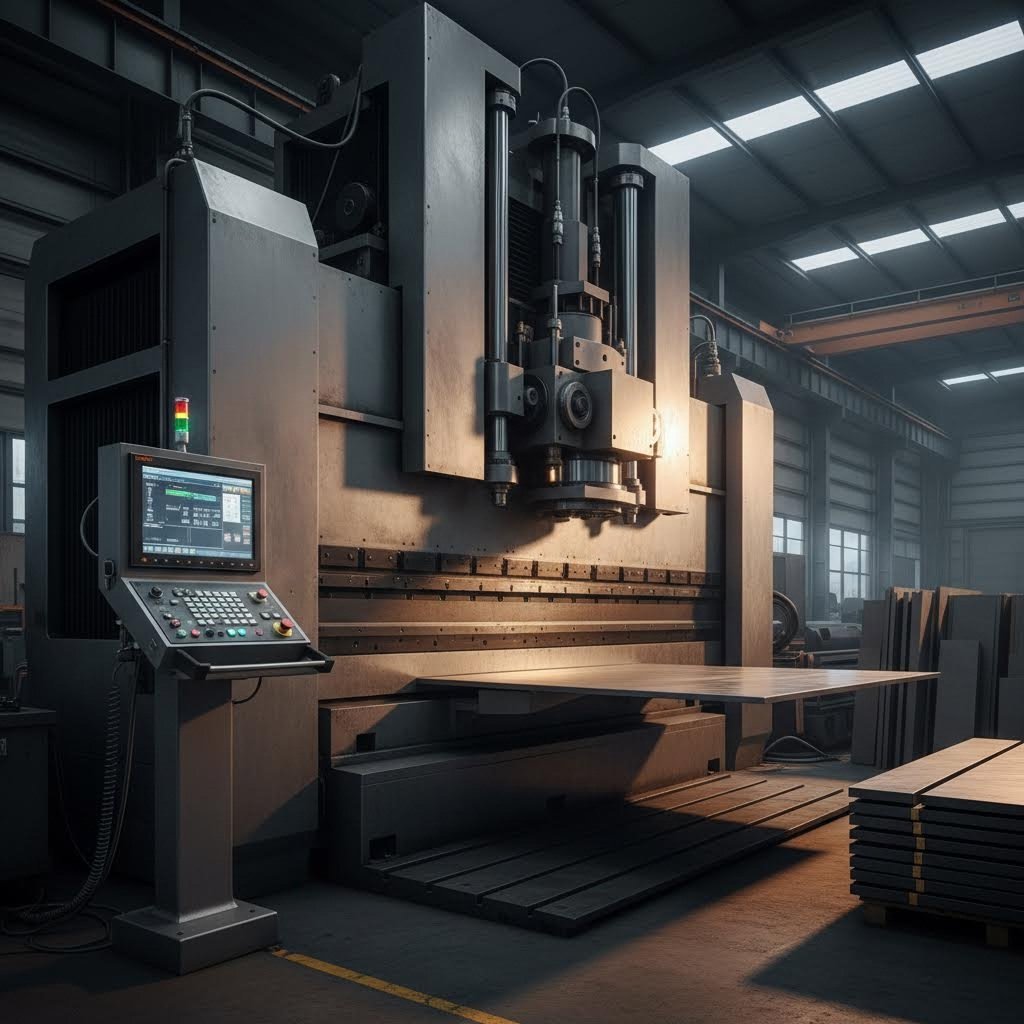
Walk onto a modern factory floor and you'll immediately notice the difference from a typical fabrication shop. Industrial-grade machinery lines the production area—laser cutter systems humming with precision, press brakes cycling through programmed sequences, and automated material handling systems moving stock between stations. This equipment represents significant capital investment, but more importantly, it defines what's possible for your project.
Understanding these machines helps you communicate effectively with manufacturing partners and make design decisions that optimize both quality and cost. Let's explore what each system brings to your production requirements.
Cutting Systems and Their Capabilities
The laser cutting process has revolutionized how factories approach sheet metal processing. Modern fiber laser systems deliver exceptional speed and precision across diverse material types, making them the workhorses of contemporary production lines.
When examining laser cutter specifications, power output directly correlates with capability. According to industry research, a 1000W fiber laser handles thin to medium materials up to approximately 6mm thick, while 2500W systems tackle carbon steel plates up to 12mm and stainless steel up to 10mm. Higher-powered machines—ranging to 6000W and beyond—extend capabilities to even thicker materials while maintaining production speed.
One critical factor often overlooked during design is kerf—the width of material removed during laser cutting. This narrow channel, typically between 0.1mm and 0.3mm depending on material and settings, affects dimensional accuracy and must be compensated for in CAD programming. Experienced metal cutter operators program offsets automatically, but understanding kerf helps you design parts that nest efficiently and maintain required tolerances.
CNC turret punch systems complement laser cutting for specific applications. These machines excel at producing repetitive hole patterns, louvers, and formed features directly within flat stock. While lasers offer superior flexibility for complex contours, turret punches deliver cost advantages for high-volume parts with standard features—think electrical enclosures requiring dozens of identical mounting holes.
Bending and Forming Equipment Essentials
Once material is cut, bending operations transform flat profiles into three-dimensional components. Press brakes—the primary forming equipment in sheet metal factories—apply controlled force through matched punch and die sets to create precise angles.
Industrial-grade press brakes differ substantially from entry-level equipment. Factory machines feature tonnage capacities ranging from 100 to over 1000 tons, bed lengths exceeding 12 feet, and CNC controls that ensure repeatability within ±0.1° across production runs. This consistency matters when your assembly requires parts that fit together without manual adjustment.
Bending equipment capabilities directly influence design decisions. Minimum flange lengths, bend radii limitations, and material springback characteristics all factor into manufacturability. For example, sharp inside corners may be aesthetically desirable but impractical to produce—material properties simply won't cooperate. Understanding these constraints early prevents costly redesigns later.
Beyond standard press brake operations, factories employ specialized forming equipment including roll forming machines for continuous profiles, stamping presses for high-volume identical parts, and hydroforming systems for complex curved geometries. Each technology offers advantages for specific applications, and matching equipment to project requirements optimizes both cost and quality.
Automation Integration on the Factory Floor
Modern factory sheet metal operations increasingly integrate automation throughout production workflows. Leading fabricators utilize automated material handling systems that load raw stock, position workpieces, and transfer completed parts between stations without manual intervention.
This automation delivers several advantages. Consistency improves as human variability is removed from repetitive tasks. Throughput increases since machines operate continuously without fatigue. And quality tracking becomes systematic—every operation logged, every parameter recorded.
For projects requiring significant volume, automated systems may integrate laser cutting with robotic sorting, press brake operations with part verification stations, and assembly cells with real-time quality inspection. While these capabilities require substantial investment, they enable the production scale and consistency that factory operations promise.
| Equipment Type | Typical Thickness Range | Speed/Throughput | Best Applications |
|---|---|---|---|
| Fiber Laser Cutter (1000-1500W) | Up to 6-8mm steel | Up to 40mm/s on thin materials | Thin sheet cutting, fine patterns, electronics components |
| Fiber Laser Cutter (2000-2500W) | Up to 10-12mm steel | High-speed thick plate processing | Automotive parts, aerospace components, structural elements |
| CNC Turret Punch | Up to 6mm typically | High hit rates for repetitive features | Enclosures, panels with standard hole patterns, louvers |
| CNC Press Brake | Varies by tonnage capacity | Dependent on part complexity | Precision bends, brackets, formed enclosures, structural parts |
| Die Cut Machine / Stamping Press | Thin to medium gauge | Extremely high for identical parts | High-volume production, gaskets, simple formed components |
When evaluating factory capabilities, consider how equipment specifications align with your project needs. A cnc router cnc system might serve prototyping needs, while production volumes demand dedicated laser cutting and forming lines. Similarly, understanding that a drill bit size chart helps specify hole requirements ensures your documentation communicates clearly with manufacturing partners.
The equipment a factory maintains signals their target market and capabilities. High-powered laser systems, multiple press brakes, and integrated automation indicate readiness for production-scale commitments. This machinery foundation determines material options, achievable tolerances, and ultimately, whether a facility can deliver your project successfully.
Material Selection for Factory Sheet Metal Projects
Imagine designing a component that looks perfect on screen—only to discover the specified material can't survive its intended environment or costs twice your budget. Material selection isn't just a procurement checkbox; it's a foundational decision that determines performance, durability, and manufacturing efficiency. Factory sheet metal operations process an extensive range of metals, each offering distinct advantages for specific applications.
Understanding these materials helps you specify components that perform as intended while optimizing cost. Whether you need corrosion resistance for marine environments, high tensile strength for structural applications, or excellent formability for complex geometries, the right material choice makes everything else possible.
Steel Varieties and Their Factory Applications
Steel remains the workhorse of factory sheet metal operations, offering exceptional strength-to-cost ratios across diverse applications. However, "steel" encompasses numerous grades with vastly different properties—selecting the wrong one leads to premature failure or unnecessary expense.
Low-carbon steels like A36 and 1018 provide excellent weldability and formability at economical price points. These grades dominate general fabrication work, from equipment housings to structural brackets. According to industry guidance, low-carbon steels are soft and flexible, making them ideal for easy shaping and welding in car body parts and general sheet metal applications.
When your application demands corrosion resistance, stainless steel sheet options become essential. Grade 304 stainless steel—containing approximately 18% chromium and 8% nickel—provides excellent general corrosion resistance for food processing, medical equipment, and architectural applications. For environments involving chlorides or acids, 316 stainless steel adds molybdenum for enhanced protection, making it the preferred choice for marine and chemical processing equipment.
Galvanized sheet metal offers a cost-effective middle ground. The zinc coating protects the underlying steel from oxidation, extending service life in moderately corrosive environments without the premium pricing of stainless grades. This material excels in HVAC ductwork, outdoor enclosures, and agricultural equipment where some corrosion resistance is needed but full stainless specification would be excessive.
Aluminum Processing Considerations
When weight reduction matters—and it increasingly does across automotive, aerospace, and portable equipment applications—aluminum sheet metal delivers. At roughly one-third the density of steel, aluminum enables lighter assemblies without proportional strength sacrifices.
However, aluminum processing differs significantly from steel. The material's lower melting point, higher thermal conductivity, and tendency toward galling require adjusted cutting parameters, specialized tooling, and modified forming techniques. Factories experienced with aluminum sheet metal understand these nuances and configure their operations accordingly.
Common aluminum alloys each serve distinct purposes. According to material specialists, 5052 aluminum offers high corrosion resistance and the highest strength among non-heat-treatable alloys, making it excellent for marine and chemical environments. Meanwhile, 6061 aluminum—a precipitation-hardened alloy with magnesium and silicon—exhibits good mechanical properties and weldability, commonly used for extruded and machined components.
For demanding structural applications, 7075 aluminum provides exceptional strength and fatigue resistance, though its higher cost limits use to aerospace and high-performance applications where weight savings justify the premium.
Specialty Metals for Demanding Environments
Some applications demand materials beyond standard steel and aluminum offerings. Abrasion-resistant steel plate grades like AR500 protect mining and construction equipment from severe wear. These through-hardened materials withstand impacts and sliding contact that would destroy conventional steel in weeks.
High-strength low-alloy (HSLA) steels provide enhanced mechanical properties while maintaining weldability and formability. Grades like S355 deliver higher yield strength than standard carbon steel, enabling lighter designs in structural applications without sacrificing safety margins.
For extreme temperature or chemical exposure, nickel-based alloys and duplex stainless steels offer solutions—though at significantly higher material costs. These specialty materials typically appear in oil and gas, chemical processing, and power generation equipment where standard grades simply cannot survive.
Understanding Gauge Sizes and Their Impact
Material thickness profoundly affects both processing and performance. The sheet metal gauge chart standardizes thickness specifications, though the system can confuse newcomers—higher gauge numbers indicate thinner material, counterintuitively.
For steel, 16-gauge material measures approximately 1.5mm thick, while 20-gauge comes in around 0.9mm. Aluminum gauges differ slightly due to material density differences. Understanding these specifications ensures your drawings communicate clearly with manufacturing partners.
Thicker materials provide greater strength and rigidity but increase weight, material cost, and processing time. Thinner gauges form more easily but may require additional features—ribs, flanges, or reinforcements—to achieve required stiffness. Balancing these factors against application requirements optimizes both performance and cost.
| Material Type | Gauge Range | Key Properties | Common Applications | Processing Notes |
|---|---|---|---|---|
| Stainless Steel Sheet (304) | 16-26 gauge | Excellent corrosion resistance, good formability, high tensile strength | Food equipment, medical devices, architectural panels | Requires sharp tooling; work hardens during forming |
| Stainless Steel Sheet (316) | 16-26 gauge | Superior chloride resistance, high durability | Marine hardware, chemical processing, pharmaceutical equipment | Higher forming forces required; excellent weldability |
| Aluminum Sheet (5052) | 14-24 gauge | High corrosion resistance, excellent fatigue strength | Marine components, fuel tanks, pressure vessels | Good formability; use appropriate lubricants to prevent galling |
| Aluminum Sheet (6061) | 14-24 gauge | Good mechanical properties, heat treatable | Structural components, automotive parts, electronics housings | Excellent machinability; common extrusion alloy |
| Galvanized Sheet Metal | 16-28 gauge | Zinc-coated corrosion protection, cost-effective | HVAC ductwork, outdoor enclosures, agricultural equipment | Coating may be damaged at bends; consider post-forming touch-up |
| Carbon Steel (A36/1018) | 14-24 gauge | High strength, excellent weldability, economical | Structural brackets, equipment frames, general fabrication | Requires surface treatment for corrosion protection |
| AR500 Steel Plate | 3/16" - 1" plate | Extreme abrasion resistance, through-hardened | Mining equipment, wear liners, shooting targets | Specialized cutting required; limited forming capability |
Selecting the optimal material requires balancing multiple factors: tensile strength requirements, environmental exposure, formability needs, weight constraints, and budget limitations. The right choice emerges from understanding how each material performs across these dimensions—and how those characteristics align with your specific application demands.
With material selection understood, the next critical consideration is how factories transform these raw materials into finished components through systematic production workflows.
Production Workflow and Manufacturing Processes
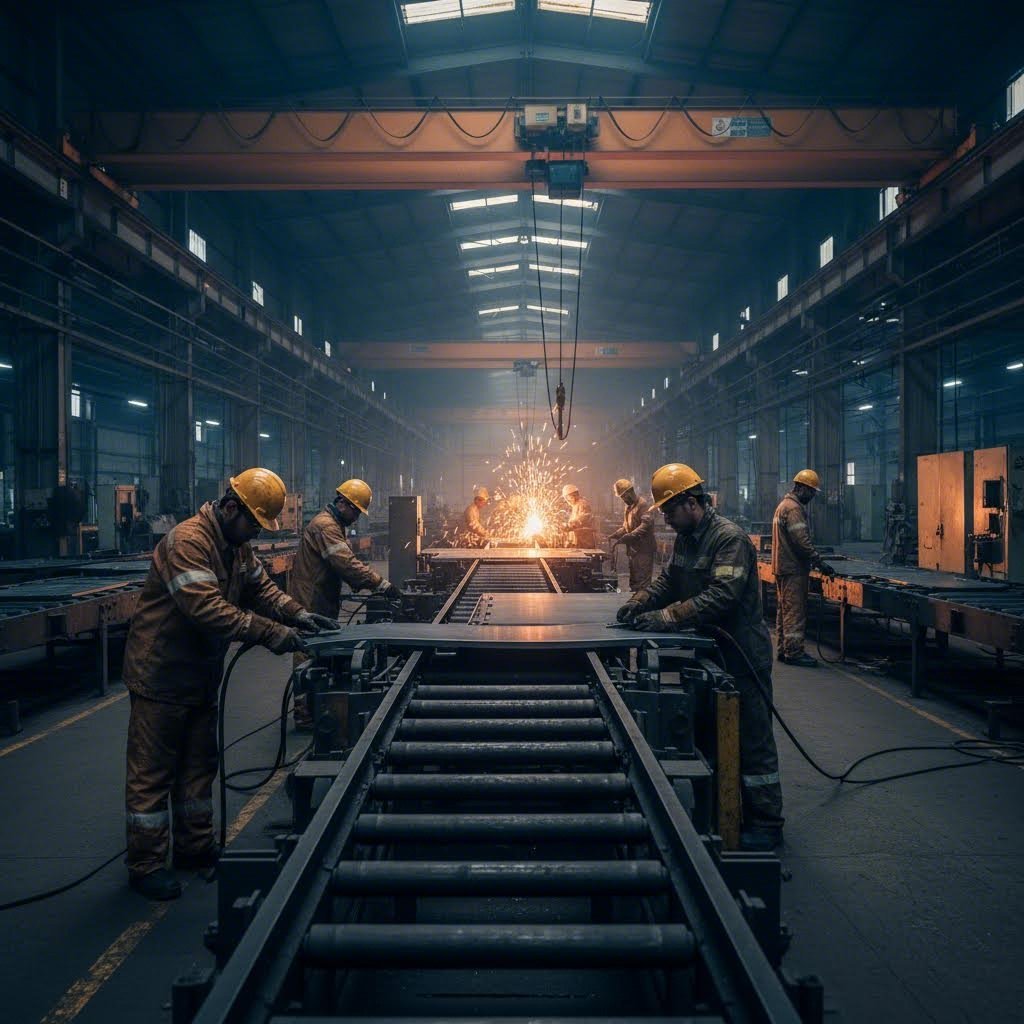
Ever wondered what happens between the moment raw material arrives at a factory and when finished components ship to your facility? The sheet metal fabrication process involves far more than simply cutting and bending metal—it's a carefully orchestrated sequence of operations where each stage builds upon the previous one. Understanding this workflow helps you communicate effectively with manufacturing partners and anticipate how design decisions affect production efficiency.
Factory sheet metal operations follow systematic processes that ensure consistency across thousands of identical parts. Let's walk through each stage, from receiving raw stock to shipping completed sheet metal assemblies.
Production Line Setup and Flow Optimization
Before any cutting begins, factories invest considerable effort in production planning. Material receiving involves verifying that incoming stock matches specifications—checking gauge thickness, material grade certificates, and surface condition. A dimensional variance at this stage propagates through every subsequent operation, so factories implement incoming inspection protocols that catch problems early.
Nesting optimization represents one of the most significant efficiency factors in sheet metal processing. According to manufacturing engineers, design for manufacturability (DFM) involves reviewing product designs to ensure final assemblies meet desired outcomes and can be manufactured in the most efficient way. This includes arranging part geometries on raw sheets to minimize scrap—often reducing material waste from 30% to under 10% through intelligent software algorithms.
Production flow optimization considers machine capacity, operator availability, and downstream operations. Factories sequence jobs to minimize setup changes, group similar materials together, and balance workload across equipment. This planning directly affects your lead times and per-unit costs.
From Flat Stock to Formed Component
Once planning is complete, production follows a logical sequence. Here's how factories transform flat stock into formed components:
- Material Preparation: Raw sheets are retrieved from inventory, verified against job specifications, and staged for processing. Protective films may be applied or removed depending on material type and finishing requirements.
- Cutting Operations: Laser cutters, turret punches, or shearing equipment create the flat pattern—the 2D profile that will become your 3D component. Kerf compensation and material utilization optimization happen during this stage.
- Secondary Cutting Features: Holes, slots, notches, and other features are added. Some factories combine these with primary cutting; others use dedicated equipment for specific feature types.
- Deburring and Edge Preparation: Cut edges often require smoothing to remove sharp burrs that could cause handling injuries or assembly problems. Tumbling, sanding, or manual deburring addresses this requirement.
- Forming Operations: Press brakes create bends according to programmed sequences. Operators or automated systems load flat blanks, position them against back gauges, and execute forming operations. Complex parts may require multiple setups and careful bend sequencing.
- Hardware Insertion: PEM nuts, standoffs, and other pressed-in hardware are installed using specialized insertion presses. This typically happens after forming but before welding or finishing.
- Joining and Assembly: Components are welded, riveted, or mechanically fastened into sheet metal assemblies. Quality verification occurs throughout this stage.
- Finishing Operations: Surface treatments including powder coating, plating, anodizing, or painting are applied based on specifications.
- Final Inspection and Packaging: Completed parts undergo dimensional verification, visual inspection, and careful packaging for shipment.
Joining and Assembly Operations
Sheet metal assembly brings individual components together into functional units. The joining method you specify significantly affects cost, strength, and appearance—so understanding your options helps you make informed decisions.
Welding methods create permanent metallurgical bonds between components. When evaluating mig vs tig welding for your project, consider that each technique offers distinct advantages. According to welding specialists, MIG welding is often preferred for projects requiring high production rates and user-friendly operation, while TIG welding offers precision and clean, aesthetic welds ideal for intricate or specialized tasks.
The tig vs mig welding decision typically comes down to several factors:
- Production speed: MIG welding deposits material faster, reducing labor costs for high-volume production
- Weld appearance: TIG welding produces cleaner, more aesthetically pleasing joints—important for visible surfaces
- Material type: Aluminum welding often favors TIG processes for better control and cleaner results
- Welder skill requirements: MIG welding is generally easier to learn, while TIG demands more operator expertise
- Material thickness: Thin materials benefit from TIG's precise heat control; thicker sections may favor MIG's faster deposition
Mechanical fastening using rivets, screws, or bolts provides disassembly capability and avoids heat-affected zones that welding creates. Rivets work particularly well for joining dissimilar materials or when weld distortion would be problematic. Pop rivets (blind rivets) allow fastening from one side only—essential when back access isn't possible.
Adhesive bonding and specialized fastening systems round out the options. Each joining method affects structural performance, assembly time, and total cost differently. Factories experienced in sheet metal assembly help you select appropriate techniques based on your specific requirements.
Throughout these operations, factories optimize workflow for efficiency and quality consistency. Statistical process control monitors critical dimensions. Work-in-process tracking ensures nothing gets lost between stations. And documented procedures ensure every operator follows established methods—delivering the repeatability that distinguishes factory operations from job-shop fabrication.
With production workflow understood, the next critical question becomes: how do factories ensure consistent quality across thousands of identical parts?

Quality Control Standards and Inspection Protocols
How do factories ensure that the thousandth part matches the first one exactly? Quality control in factory sheet metal operations isn't a final inspection performed before shipping—it's a systematic process woven throughout every production stage. This comprehensive approach catches deviations early, prevents defective parts from advancing downstream, and maintains the consistency your applications demand.
Understanding these quality systems helps you evaluate potential manufacturing partners and set appropriate expectations for your projects. Whether you're sourcing chassis components for automotive applications or precision enclosures for electronics, robust quality control separates reliable suppliers from those who create supply chain headaches.
Inspection Checkpoints Throughout Production
Quality begins before cutting starts. According to industry experts, the quality of the final product starts with selecting the right raw materials—high-grade metals ensure durability, strength, and resistance to environmental factors such as corrosion. Incoming material verification confirms that stock matches purchase specifications through mechanical testing, chemical analysis, and dimensional checks.
From there, inspection checkpoints appear at every critical stage. Here's what factories monitor throughout the sheet metal fabrication process:
- Material Receiving Inspection: Verification of gauge thickness, material grade certificates, surface condition, and traceability documentation
- First Article Inspection (FAI): Comprehensive dimensional verification of initial production parts before full runs commence
- In-Process Cutting Checks: Edge quality assessment, dimensional accuracy verification, and burr formation monitoring
- Forming Operation Verification: Bend angle measurement, springback compensation confirmation, and flange dimension checks
- Welding and Assembly Inspection: Visual examination, non-destructive testing when specified, and joint strength verification
- Surface Treatment Validation: Coating thickness measurement, adhesion testing, and appearance inspection
- Final Inspection: Complete dimensional audit, functional fit testing, and documentation review before shipment
This multi-stage approach embodies proactive quality management. Rather than discovering problems after production completes, factories identify and correct deviations when correction costs the least. A dimensional error caught during first article inspection might require a simple program adjustment; that same error discovered during final inspection could mean scrapping hundreds of parts.
Industry Certifications That Matter
When evaluating steel fabricators and sheet metal manufacturing partners, certifications provide objective evidence of quality system maturity. Not all certifications carry equal weight—understanding what each represents helps you assess supplier capabilities accurately.
ISO 9001 establishes the foundation for quality management systems across industries. This certification confirms that a factory has documented procedures, conducts internal audits, and pursues continuous improvement. While valuable, ISO 9001 represents baseline quality management rather than industry-specific excellence.
IATF 16949 represents the gold standard for automotive supply chain quality. According to certification authorities, this international standard for automotive quality management systems focuses on driving continuous improvement, with an emphasis on the prevention of defects and the reduction of variation and waste in the automotive supply chain and assembly process.
Why does IATF 16949 matter for factory sheet metal operations? The standard requires:
- Advanced product quality planning (APQP) for new product launches
- Production part approval process (PPAP) documentation
- Failure mode and effects analysis (FMEA) to prevent defects proactively
- Statistical process control (SPC) for ongoing production monitoring
- Measurement system analysis (MSA) to ensure inspection accuracy
Most major automotive OEMs mandate IATF 16949 certification for their supply chain. If your components serve automotive applications—chassis parts, suspension components, structural elements—partnering with certified steel fabrication facilities reduces risk and simplifies qualification.
Additional certifications relevant to the sheet metal industry include ISO 3834 for welding quality requirements, AS9100 for aerospace applications, and ISO 14001 for environmental management. Metal fabrication engineering excellence often correlates with holding multiple complementary certifications, demonstrating commitment to systematic quality across operations.
Tolerance Verification Methods
Consistent production requires more than good intentions—it demands precise measurement systems and statistical monitoring. Modern factories employ advanced metrology equipment to verify that parts meet specifications throughout production runs.
Coordinate Measuring Machines (CMMs) provide three-dimensional measurement capability for complex geometries. These systems compare actual part dimensions against CAD models, generating detailed inspection reports that document conformance to specifications. For critical dimensions, CMM inspection provides the accuracy and documentation that sheet metal fabrication techniques require.
Laser scanning technology enables rapid non-contact measurement of complex surfaces. This approach proves particularly valuable for formed components where traditional measurement tools struggle to capture curved profiles accurately.
Automated Optical Inspection (AOI) systems use high-resolution cameras and artificial intelligence to detect surface defects, dimensional variations, and assembly errors at production speed. According to quality specialists, this technology ensures rapid and precise identification of flaws such as misalignment, warping, and surface inconsistencies.
Beyond individual part measurement, Statistical Process Control (SPC) provides systematic monitoring of production consistency. By tracking key dimensions across production runs, SPC identifies trends before they result in out-of-specification parts. A gradual drift in bend angles, for instance, might indicate tooling wear that operators can address during scheduled maintenance—preventing quality escapes entirely.
Effective quality control integrates these methods into cohesive systems. First article inspection establishes baseline conformance. In-process SPC monitoring maintains consistency. Final inspection confirms that shipped parts meet all requirements. And thorough documentation provides traceability that supports both customer requirements and continuous improvement initiatives.
For high-volume production, this systematic approach to quality control distinguishes capable factory operations from less mature suppliers. When your application demands identical parts across thousands of units, these systems deliver the consistency that steel fabricators must maintain to serve demanding industries.
Quality systems ensure parts meet specifications—but what determines the cost of achieving that quality? Understanding cost factors helps you budget accurately and make design decisions that optimize value.
Cost Factors and Pricing Considerations
What will your factory sheet metal project actually cost? It's a straightforward question that most fabricators avoid answering directly. The reality is that pricing depends on numerous interconnected variables—and understanding these factors helps you budget accurately, make informed design decisions, and avoid unwelcome surprises when quotes arrive.
According to industry experts, most businesses can expect to pay around three times the cost of raw sheet metal for fabrication services. But that multiplier varies significantly based on complexity, volume, and finishing requirements. Let's break down exactly what drives your project costs and where opportunities exist to optimize value.
What Drives Your Project Costs
Factory sheet metal pricing isn't arbitrary—it reflects the real resources consumed during production. Understanding these cost drivers helps you communicate effectively with manufacturing partners and identify areas where design modifications might reduce expenses without compromising functionality.
Here are the primary factors that determine your project pricing:
- Material Costs: The type, grade, and thickness of metal significantly impact pricing. Stainless steel typically costs more than carbon steel, while specialty alloys like titanium command premium prices. Material costs fluctuate with commodity markets, so timing can affect your bottom line.
- Design Complexity: Intricate designs requiring more cutting, additional bends, or tight tolerances increase production time and labor intensity. Simple, manufacturable designs cost less because they require fewer operations and less skilled intervention.
- Tooling Requirements: Custom dies, specialized fixtures, or unique forming tools add upfront costs. Standard tooling shared across multiple projects reduces per-part expenses, while dedicated tooling for your specific geometry increases investment.
- Setup Fees: Each machine setup—programming CNC equipment, changing tooling, calibrating processes—consumes time before production begins. These fixed costs spread across larger order quantities, reducing per-unit impact.
- Labor Intensity: Complex assemblies requiring skilled welding, precise hardware insertion, or manual finishing operations increase labor costs. Automation reduces labor content for high-volume production but requires sufficient volume to justify implementation.
- Finishing Requirements: Surface treatments add cost based on their complexity. Powder coating services typically offer cost-effective protection for many applications, while anodizing provides excellent results for aluminum components requiring corrosion resistance and aesthetic appeal. Specialized finishes like plating or painting increase expenses further.
- Order Quantity: Volume dramatically affects per-unit pricing through setup cost amortization and material purchasing efficiencies.
According to fabrication specialists, even geographic location affects costs—labor rates, overhead expenses, and material availability vary regionally, influencing the pricing structure of metal fabrication services.
Volume Pricing and Economy of Scale
Perhaps no factor affects your per-unit cost more dramatically than order quantity. The relationship between volume and pricing explains why prototype parts seem expensive while production runs deliver better value.
Imagine ordering ten custom brackets versus one thousand. The programming time, machine setup, and first-article inspection remain identical regardless of quantity. Spreading these fixed costs across ten parts means each bracket carries $50 in overhead. Spread across one thousand parts, that same overhead costs just $0.50 per piece.
Material purchasing compounds this effect. Factories buying steel coils by the truckload negotiate better pricing than shops purchasing individual sheets. High-volume orders access these bulk material savings. Additionally, operators develop efficiency as they produce repetitive parts—the twentieth unit comes off the line faster than the first.
This economy of scale creates tiered pricing structures. You'll typically see significant per-unit reductions when moving from prototype quantities (1-10 pieces) to pilot runs (50-200 pieces) to production volumes (500+ pieces). Some factories offer price breaks at specific thresholds—1,000 units, 5,000 units, or higher—reflecting their optimized production capabilities.
For ongoing production needs, establishing blanket orders or scheduled releases allows factories to optimize material purchasing and production planning, passing additional savings to you. This approach works particularly well when you can forecast annual requirements even if you need deliveries spread throughout the year.
Hidden Costs to Anticipate
Beyond the obvious cost factors, several expenses catch buyers by surprise. Anticipating these hidden costs during project planning prevents budget overruns and strained supplier relationships.
Engineering Change Orders (ECOs): Modifications after production begins create ripple effects. New programming, adjusted tooling, scrapped work-in-process inventory, and requalification activities add costs that wouldn't exist with finalized designs. According to DFM specialists, with the assistance of an expert contract manufacturer, you can ensure ECOs are few and the product is brought to market faster.
Prototype vs. Production Pricing: Prototypes inherently cost more per piece because they absorb full setup costs across minimal quantities. Expect prototype pricing to run 5-20 times higher than production unit costs. This differential doesn't indicate overcharging—it reflects real resource consumption for low-volume work.
Shipping and Handling: Heavy steel parts require specialized packaging and freight considerations. Expedited shipping for rush orders adds substantial expense. International sourcing introduces customs duties, brokerage fees, and extended transit times that affect total landed cost.
Quality Documentation: If your application requires first article inspection reports, material certifications, or PPAP documentation, factor these administrative requirements into your budget. Thorough documentation takes time to prepare and maintain.
Design for Manufacturability (DFM) Support: Smart factories offer DFM review services that identify cost-saving opportunities before production begins. This upfront investment in design optimization typically pays for itself many times over through reduced manufacturing complexity. Effective communication between engineers and fabricators ensures design considerations align with manufacturing capabilities, leading to optimal outcomes.
The most cost-effective approach combines thoughtful design with appropriate volume commitments. Start your project sooner rather than later—this gives your fabrication partner more time to source affordable materials and optimize production planning. Simple design modifications, like using standard bend radii or avoiding unnecessarily tight tolerances, often reduce costs significantly without affecting functionality.
When searching for metal fabrication near me or evaluating fabrication shops near me, remember that the lowest quoted price doesn't always deliver the best value. Factories investing in quality systems, DFM support, and production efficiency often provide better total cost outcomes despite slightly higher initial quotes. The real question isn't "what's the cheapest option?" but rather "what delivers the best value for my specific requirements?"
Understanding cost factors prepares you for meaningful conversations with potential suppliers. But how do these costs evolve as projects transition from initial prototypes to full-scale production?
Scaling from Prototype to Mass Production
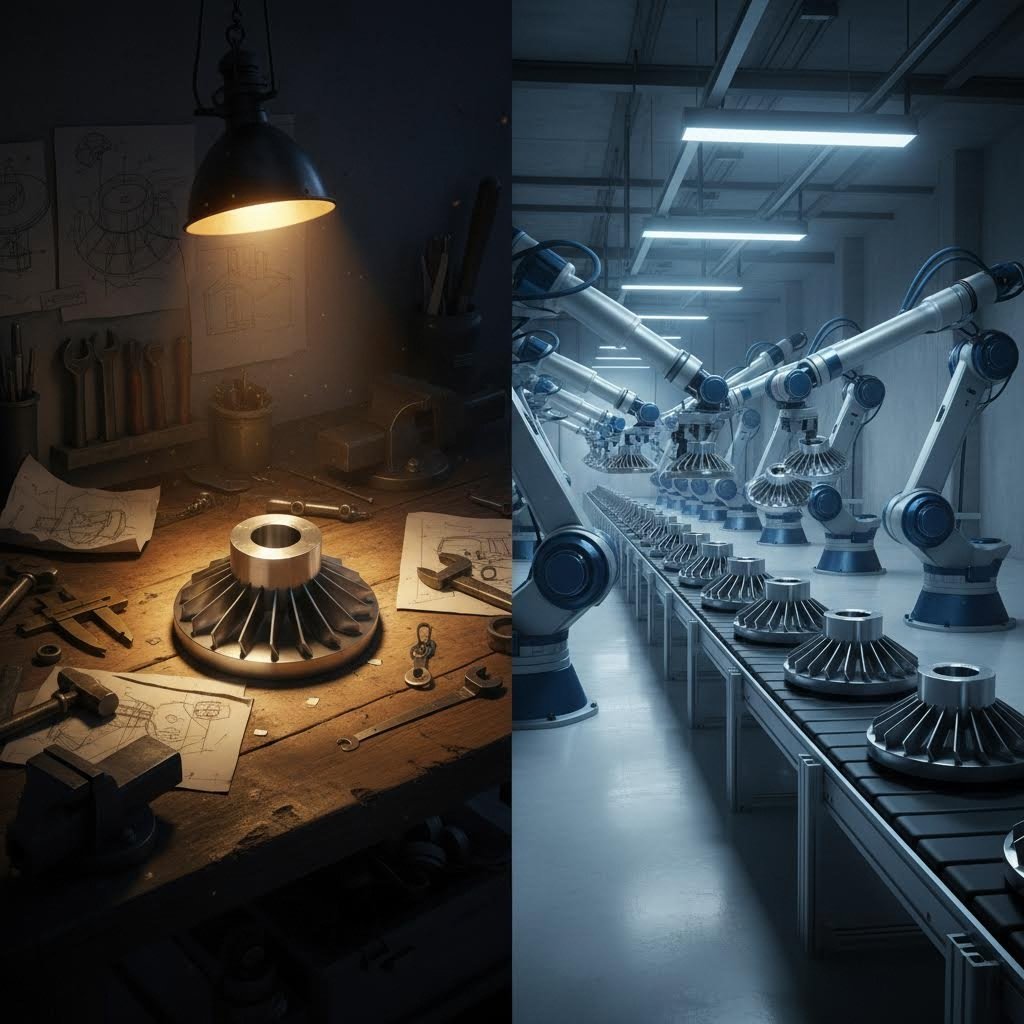
You've validated your prototype, confirmed fit and function, and now you're ready to scale. Sounds straightforward, right? Unfortunately, this transition is where many projects stumble. The methods that worked perfectly for ten prototypes often become impractical—or impossibly expensive—at production volumes. Understanding how factories manage this critical transition helps you avoid costly surprises and ensures your sheet metal production scales smoothly.
According to manufacturing specialists, prototypes are optimized for speed and form—quick laser cuts, hand-bent flanges, and looser tolerances—while production must be optimized for repeatability, throughput, and cost per unit. Bridging this gap requires deliberate planning, process validation, and often design modifications that enable efficient high-volume manufacturing.
Bridging the Prototype-to-Production Gap
The fundamental challenge lies in differing optimization priorities. During prototyping, flexibility matters most. Operators make adjustments on the fly, use general-purpose tooling, and accept higher per-unit costs to achieve fast turnaround. Production demands the opposite—standardized processes, dedicated tooling, and minimal operator intervention to deliver consistent results across thousands of units.
According to industry experts, the attention paid to optimizing manufacturability in the prototype stage begins to pay off during batch production. Custom tooling can become quite costly, particularly if it wears out quickly. A strategically designed prototype can help you avoid this outcome.
Here are key considerations when transitioning from prototype to production:
- Design for Process Capability: Identify the operation—laser cutting, turret punching, press brake forming—that will become the production bottleneck and design to its capabilities. Use functional tolerances rather than overly tight geometric specifications unless absolutely required.
- Material Specification Alignment: Ensure your prototype uses the same material type, thickness, and coating assumptions expected in production. If prototypes differ from production intent, document those variations and conduct a delta review with manufacturing.
- Tooling Investment Analysis: Evaluate whether standard tooling can achieve your requirements or if custom dies and fixtures are necessary. Dedicated tooling adds upfront cost but reduces per-unit expense at volume.
- Process Validation Requirements: Plan for first article inspection (FAI), production part approval process (PPAP) if automotive, and statistical process control setup before volume production begins.
- Capacity Planning: Confirm that your manufacturing partner has sufficient equipment capacity and labor resources to meet your volume requirements within your delivery timeline.
The sheet metal manufacturing process differs substantially between prototype and production phases. According to manufacturing engineers, adopting a "prototype with production intent" mindset—building prototypes using the material, thickness, and tooling assumptions expected in production—reduces revision churn and accelerates the transition to volume manufacturing.
Scaling Strategies for Volume Manufacturing
Once design validation is complete, factories employ specific strategies to ramp production efficiently. Sheet metal processing at scale requires systematic approaches that differ markedly from prototype operations.
Fixture Strategy Development: Production fixtures convert flexible sheet metal into repeatable, locatable geometry for machining, welding, and inspection. A poor fixture makes otherwise capable machines produce out-of-spec parts. According to fabrication specialists, modular fixturing typically amortizes quickly once it reduces rework and increases throughput.
Revision Control Discipline: Production environments demand rigorous documentation practices. Core rules include maintaining master part numbers and revision identifiers on every print, implementing engineering change order (ECO) templates with cost and delivery impact assessments, and automatically notifying quality and procurement teams when revisions are approved.
Operation Reduction: Every extra deburring step, welding sub-assembly, or finishing operation multiplies cycle time. Production-focused design choices—like bend sequences that minimize handling, shared weld tabs, and formed features—reduce operations and improve throughput.
According to production planning experts, manufacturers armed with accurate capacity data can make better decisions about how to adjust and restructure operations to accommodate volume requirements. One manufacturer reported gaining almost 20% more production capacity simply by automating planning and scheduling functions—without adding equipment or people.
Automation Benefits at Scale
Automated sheet metal fabrication transforms the economics of high-volume production. While automation requires significant capital investment, the benefits compound as volumes increase.
Consistency Improvement: Industrial sheet metal fabrication using automated systems removes human variability from repetitive tasks. Sheet metal fabrication machines execute programmed operations identically whether producing the first part or the ten-thousandth, ensuring dimensional consistency that manual operations struggle to match.
Throughput Enhancement: Automation enables continuous operation without fatigue-related slowdowns. Robotic material handling, automated part sorting, and integrated inspection systems maintain production pace throughout shifts and across multiple days.
Quality Tracking Integration: Automated systems log every operation parameter—laser power settings, bend force measurements, cycle times—creating comprehensive traceability records. This data supports statistical process control, root cause analysis when issues arise, and continuous improvement initiatives.
Labor Optimization: Rather than replacing skilled workers, automation redirects human expertise toward higher-value activities. Operators focus on machine setup, quality verification, and problem-solving while automated systems handle repetitive material movement and processing.
According to production case studies, one fabrication shop facing capacity challenges implemented automated planning and scheduling software and discovered they could cancel an additional shift they'd previously thought necessary. By looking at operations holistically and understanding true capacity, they maintained delivery performance with fewer resources.
The transition from prototype to mass production doesn't require luck—it requires process. Apply design-for-manufacturability principles during prototyping, implement appropriate fixture strategies, enforce revision control discipline, and treat first article inspection as a gated event. Do that and you'll scale sheet metal parts with fewer surprises, steadier production rates, and better margins.
Even with careful planning, production issues sometimes arise. Understanding common defects and their solutions helps you work effectively with manufacturing partners to resolve problems quickly.
Common Defects and Troubleshooting Solutions
Even the most sophisticated factory sheet metal operations encounter quality challenges. The difference between capable manufacturers and struggling ones isn't the absence of defects—it's how quickly they identify root causes and implement effective solutions. Whether you're troubleshooting issues in your current production or evaluating potential manufacturing partners, understanding common defects helps you ask better questions and achieve better outcomes.
According to industry specialists, burrs, springback, cracks, surface roughness, and several other sheet metal defects influence the performance and accuracy of fabricated parts. Let's examine the most frequent problems, their underlying causes, and proven strategies for prevention and correction.
Solving Springback and Forming Challenges
If you've ever bent a piece of metal only to watch it partially return toward its original shape, you've witnessed springback firsthand. This phenomenon occurs because metal sheets retain elastic energy during the sheet metal process—when forming pressure releases, that stored energy causes partial recovery.
Springback affects every bending operation, but materials like aluminum and high-strength steels exhibit more pronounced effects than mild steel. According to fabrication experts, it is essential to calculate and consider springback during the design phase because it directly impacts dimensional accuracy of formed parts.
Effective springback management involves several strategies:
- Overbending: Program bend angles slightly beyond the target specification, allowing springback to bring the part to its intended geometry
- Coining or bottoming: Apply additional pressure at the bottom of the stroke to plastically deform material in the bend zone, reducing elastic recovery
- Smaller bend radii: Tighter radii create more plastic deformation relative to elastic strain, minimizing springback
- Material selection: When possible, specify materials with lower yield strength or better formability characteristics
Beyond springback, other forming defects require attention. Wrinkling appears in areas of compression—typically corners of deep-drawn parts or flanges experiencing uneven material flow. Reducing blank size, adjusting blank holder pressure, or adding draw beads can control this issue. Cracking occurs when forming forces exceed the material's tensile strength, requiring reduced deformation depths, larger radii, or material substitution.
Addressing Cut Quality Issues
Cutting operations—whether laser, turret punch, or shearing—create their own characteristic defects. Burrs represent the most common complaint, appearing as raised edges or sharp projections along cut profiles.
According to manufacturing specialists, burrs are a common issue in sheet metal parts, especially after cutting, punching, or shearing. These sharp edges can be dangerous, and in some cases, they may prevent proper assembly or function of the part.
Burr formation typically stems from:
- Dull or worn cutting tools that tear rather than shear material cleanly
- Improper cutting clearance between punch and die
- Incorrect laser power settings relative to material thickness
- Misaligned or improperly seated tooling
Prevention requires maintaining sharp tooling, verifying proper clearances, and matching cutting parameters to material specifications. When burrs do occur, secondary deburring operations—tumbling, sanding, or manual finishing—remove them before parts advance to subsequent operations.
Edge quality issues extend beyond burrs. Rough or discolored edges from laser cutting may indicate incorrect focus settings, contaminated assist gas, or excessive cutting speed. Heat-affected zones can alter material properties near cut edges, potentially affecting forming behavior or weld quality. Working with sheet metal fabrication tools that are properly maintained and calibrated prevents most cutting defects before they occur.
Preventing Surface and Finish Defects
Surface defects compromise both appearance and functionality. Scratches, dents, and handling marks accumulate throughout the sheet metal work process if material isn't protected appropriately. According to quality specialists, it is important to protect the raw sheets and formed sheet metal parts' surfaces from dent and abrasion using soft padded or film supports during handling.
Die marking—impressions left by tooling surfaces—becomes particularly problematic on visible components. Pressing sheet metal through worn or damaged dies transfers those imperfections to every part produced. Regular tooling inspection and maintenance prevents this degradation from affecting production quality.
Weld distortion creates another category of surface defects. Heat from welding operations causes localized expansion and contraction, potentially warping flat panels or distorting formed geometries. According to fabrication experts, uneven heating and cooling, improper joint design, or insufficient clamping can exacerbate welding distortion problems.
Mitigation strategies include proper fixturing to restrain parts during welding, balanced weld sequences that distribute heat evenly, and tack welding at multiple points before completing full weld runs. For critical applications, stress-relief operations after welding can restore dimensional stability.
| Defect Type | Likely Causes | Prevention Methods | Correction Approaches |
|---|---|---|---|
| Springback | Elastic recovery after forming; material properties; insufficient plastic deformation | Overbending compensation; coining at bend apex; proper material selection; smaller bend radii | Re-forming with adjusted parameters; secondary coining operations; fixture-based correction |
| Burrs | Dull cutting tools; improper clearances; misaligned tooling; incorrect cutting parameters | Regular tool sharpening; proper clearance settings; tooling alignment verification; parameter optimization | Tumbling; vibratory finishing; manual deburring; secondary machining operations |
| Wrinkling | Excessive compression in forming; insufficient blank holder pressure; material flow issues | Optimized blank holder force; draw bead implementation; reduced blank size; improved lubrication | Re-forming with adjusted parameters; part redesign for gradual geometry transitions |
| Cracking/Splitting | Exceeding material tensile strength; insufficient bend radii; material defects; work hardening | Larger bend radii; material stress relief; proper material selection; reduced deformation depth | Scrap and redesign; material substitution; multi-stage forming operations |
| Surface Scratches | Improper material handling; worn tooling surfaces; debris contamination | Protective films; padded handling equipment; clean work surfaces; regular tooling maintenance | Buffing; re-finishing; coating to mask minor defects |
| Weld Distortion | Uneven heat distribution; insufficient clamping; improper weld sequence | Proper fixturing; balanced weld sequences; tack welding protocol; heat sink usage | Stress relief heat treatment; mechanical straightening; secondary forming correction |
| Dimensional Variation | Process drift; worn tooling; material inconsistency; temperature fluctuations | Statistical process control; regular calibration; incoming material verification; climate control | Sorting and segregation; parameter adjustment; tooling replacement |
The Role of Equipment Maintenance and Operator Training
Most sheet metal pressing defects and quality issues trace back to two root causes: inadequate equipment maintenance and insufficient operator training. Addressing these fundamentals prevents problems more effectively than reactive troubleshooting ever could.
Regular maintenance programs ensure cutting tools remain sharp, forming dies stay aligned, and machine calibration maintains accuracy. According to industry guidance, real-time process monitoring with feedback mechanisms helps identify execution errors before they cause defects in final parts. Preventive maintenance schedules—rather than run-to-failure approaches—minimize unexpected quality problems.
Equally important, trained operators recognize early warning signs and make appropriate adjustments before defects accumulate. They understand how material variations affect processing, how environmental conditions influence results, and when to escalate issues rather than continuing production. This expertise proves invaluable when working with sheet metal fabrication tools across diverse materials and geometries.
When evaluating manufacturing partners, ask about their maintenance protocols and training programs. Factories that invest in these fundamentals demonstrate commitment to consistent quality—the kind of commitment that prevents defects rather than merely detecting them after the fact. Experienced fabrication partners bring decades of troubleshooting knowledge to your projects, resolving issues faster and preventing recurrence through systematic process improvements.
With defect prevention strategies understood, the final step is selecting a factory sheet metal partner capable of delivering consistent quality for your specific applications.
Selecting the Right Factory Sheet Metal Partner
You've learned about equipment capabilities, production workflows, quality standards, and cost factors. Now comes the critical decision: which factory sheet metal partner will transform your designs into flawless components? Choosing the right fabricator isn't just a purchasing decision—it's a strategic investment that affects product quality, supply chain reliability, and ultimately your competitive position.
According to industry specialists, the true value of working with experienced custom metal fabricators lies in craftsmanship, technology, scalability, and a proven commitment to quality. Evaluating potential partners requires looking beyond quoted prices to understand capabilities that determine long-term success.
Evaluating Factory Capabilities
Before requesting quotes, understand what separates capable metal fab operations from those that will create supply chain headaches. Not all sheet metal shops offer equivalent capabilities, and mismatched expectations lead to disappointing outcomes.
Start your evaluation by examining these essential criteria:
- Equipment Capabilities: Does the factory maintain modern laser cutting, CNC forming, and welding equipment appropriate for your material types and thicknesses? Industrial-grade machinery indicates readiness for production-scale commitments.
- Quality Certifications: Look for ISO 9001 as a baseline quality management foundation. For automotive applications, IATF 16949 certification demonstrates commitment to the rigorous standards required for chassis, suspension, and structural components.
- Production Capacity: Can the facility handle your volume requirements within your timeline? Ask about current utilization rates and capacity for scaling as your needs grow.
- Technical Support: Does the partner offer Design for Manufacturability (DFM) support to optimize your designs before production begins? According to fabrication experts, this level of support reduces risk, shortens lead times, and ensures smooth production.
- In-House Capabilities: Full-service facilities that handle cutting, forming, welding, and finishing under one roof provide tighter control over production, faster turnaround times, and consistent quality standards.
- Experience and Industry Knowledge: Years in business translate into deeper material knowledge, refined processes, and the ability to anticipate challenges before they become costly problems.
- Prototype-to-Production Path: Evaluate whether the partner can support rapid prototyping for validation and then scale efficiently to mass production without quality degradation.
Understanding metal fabrication design principles helps you identify partners who can translate complex geometries into manufacturable components. The best fabricators collaborate early in the process, reviewing drawings and offering recommendations that improve outcomes.
Questions to Ask Potential Partners
Once you've identified promising candidates, dig deeper with targeted questions. According to fabrication specialists, these questions aren't just formalities—they are practical tools to safeguard your timeline, budget, and final product quality.
Consider asking potential partners:
- What experience do you have with my specific materials and applications?
- Can you provide references or case studies from similar projects?
- What quality certifications do you maintain, and can you share documentation?
- How do you handle sheet metal fabrication and assembly for complex multi-component projects?
- What is your typical quote turnaround time, and how quickly can you begin production?
- Do you offer DFM review and engineering consultation services?
- What inspection methods and quality checkpoints do you employ throughout production?
- How do you manage the transition from prototype to production volumes?
- What finishing options—powder coating, anodizing, plating—are available in-house?
- How do you communicate project updates and handle unexpected issues?
Pay attention to how potential partners respond. Experienced fabricators answer confidently with specific examples. Those who struggle to provide clear answers may lack the capabilities your project requires.
Optimizing Your Manufacturing Outcomes
Finding the right partner is just the beginning. Maximizing value from that relationship requires ongoing collaboration and smart project management practices.
When learning how to fabricate metal components effectively through a manufacturing partner, communication becomes paramount. Provide complete documentation—CAD files, material specifications, tolerance requirements, and functional context. The more your partner understands about how parts will be used, the better they can optimize manufacturing approaches.
For automotive applications requiring precision chassis and suspension components, partnering with IATF 16949-certified manufacturers becomes essential. Companies like Shaoyi (Ningbo) Metal Technology exemplify what to look for in a quality factory partner—demonstrating these critical capabilities through comprehensive DFM support, 5-day rapid prototyping for design validation, and automated mass production systems that maintain consistency across high volumes. Their 12-hour quote turnaround and specialized focus on stainless steel sheet metal and custom metal stamping parts illustrate the responsiveness and expertise that distinguish capable partners.
Regardless of which partner you select, these practices optimize outcomes:
- Engage Early: Involve your fabrication partner during design development, not after designs are finalized. Early DFM input prevents costly revisions later.
- Communicate Functional Requirements: Explain how parts will be used so your partner can recommend appropriate materials, tolerances, and finishing options.
- Plan for Volume: Share your anticipated annual requirements even if initial orders are smaller. This helps partners plan capacity and may unlock better pricing structures.
- Establish Clear Quality Expectations: Define inspection requirements, documentation needs, and acceptance criteria upfront to prevent misunderstandings.
- Build Relationships: Treat your fabrication partner as an extension of your team rather than a transactional vendor. Long-term relationships yield better service, priority scheduling, and collaborative problem-solving.
The factory sheet metal partner you choose directly impacts your product quality, delivery reliability, and competitive positioning. By thoroughly evaluating capabilities, asking the right questions, and establishing collaborative working relationships, you transform manufacturing from a procurement challenge into a strategic advantage. Whether you're sourcing precision automotive components or custom enclosures for industrial equipment, the right partnership delivers flawless parts consistently—from raw stock to finished product.
Frequently Asked Questions About Factory Sheet Metal
1. What is a sheet metal factory?
A sheet metal factory is a specialized manufacturing facility that transforms flat metal sheets into finished components through systematic cutting, bending, forming, and assembly operations. Unlike small fabrication shops handling diverse one-off projects, factory environments feature industrial-grade machinery, integrated production workflows, and quality systems designed for high-volume repeatability. These facilities serve industries from automotive to aerospace, producing everything from chassis components to precision enclosures with consistent tolerances across thousands of units.
2. What equipment is essential in factory sheet metal operations?
Essential factory sheet metal equipment includes fiber laser cutters ranging from 1000W to 6000W for precision cutting, CNC turret punches for repetitive hole patterns and formed features, and industrial press brakes with 100 to over 1000 tons capacity for accurate bending. Modern factories also integrate automated material handling systems, robotic sorting, and real-time quality inspection stations. The equipment configuration determines material capabilities, achievable tolerances, and production throughput for specific project requirements.
3. How does factory sheet metal pricing work?
Factory sheet metal pricing typically runs about three times the raw material cost, varying based on design complexity, material type, tooling requirements, setup fees, and order quantity. Volume significantly impacts per-unit costs through setup cost amortization and bulk material purchasing. Additional factors include finishing requirements like powder coating or anodizing, engineering change orders, and quality documentation needs. Design for Manufacturability reviews can identify cost-saving opportunities before production begins.
4. What quality certifications should I look for in a sheet metal factory?
ISO 9001 provides baseline quality management certification, while IATF 16949 represents the gold standard for automotive supply chain quality with requirements for advanced product quality planning, production part approval processes, and statistical process control. Additional relevant certifications include ISO 3834 for welding quality, AS9100 for aerospace applications, and ISO 14001 for environmental management. Factories holding multiple complementary certifications demonstrate systematic commitment to quality across operations.
5. How do factories transition from prototype to mass production?
The prototype-to-production transition requires shifting optimization priorities from flexibility and speed to repeatability, throughput, and cost efficiency. Key considerations include designing for process capability, ensuring material specification alignment between prototype and production, evaluating tooling investments, and planning for process validation through first article inspection. Factories employ fixture strategy development, strict revision control discipline, and operation reduction techniques to ramp production efficiently while maintaining consistent quality.