 Small batches, high standards. Our rapid prototyping service makes validation faster and easier —
  EN
EN


Cnc Machining Manufacturers Exposed: 9 Criteria They Hope You Never Check
Understanding CNC Machining Manufacturers and What They Actually Offer
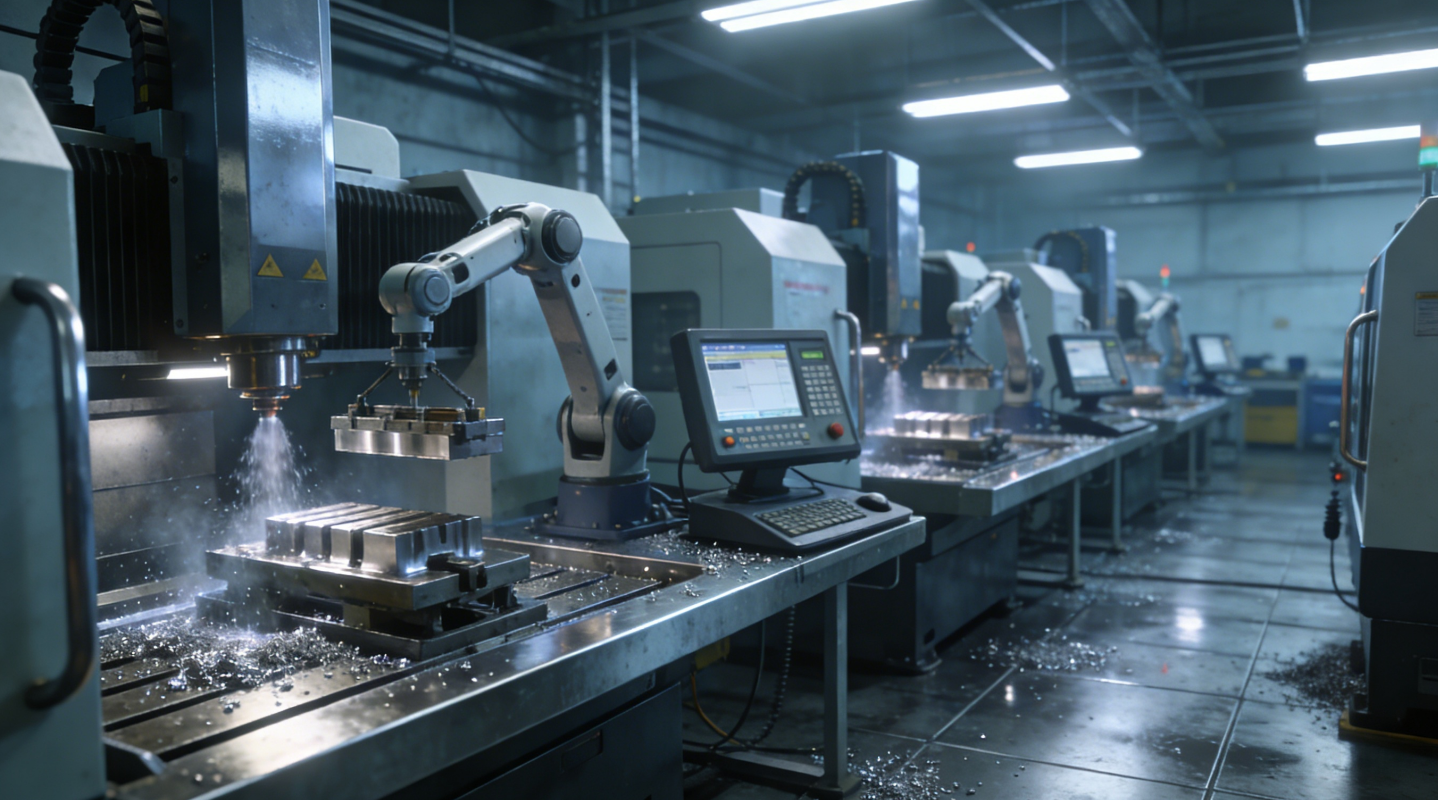
When you search for CNC machining manufacturers, you'll quickly discover a confusing mix of results. Some companies build the actual machines, while others use those machines to make parts for you. Understanding this distinction is the first step toward making smarter procurement decisions—and it's something many buyers overlook until they've already wasted valuable time contacting the wrong type of supplier.
So, what is CNC exactly? The CNC meaning refers to Computer Numerical Control, a technology that automates machine tools through programmed commands. But here's where confusion creeps in: the term "CNC machining manufacturers" gets applied to two entirely different business categories.
Machine Builders vs. Machining Services
CNC machine manufacturers are companies that design, engineer, and build the actual CNC equipment. Think of industry giants like Haas Automation, Mazak, and DMG MORI. These are the companies that create the sophisticated machinery sitting on factory floors worldwide. When you contact a CNC machine manufacturer, you're looking to purchase or lease equipment for your own facility.
On the other hand, CNC machining service providers own and operate these machines to produce parts on your behalf. They're contract manufacturers who take your designs and turn them into finished components. If you're asking "whats CNC machining going to cost for my project?" you're likely looking for this second category.
The c.n.c meaning remains the same in both contexts—computer-controlled precision manufacturing. However, the CNC definition of what each company actually provides couldn't be more different. One sells you the tools; the other uses those tools to deliver finished products.
Why the Distinction Matters for Your Project
Imagine you need 500 precision aluminum brackets for an upcoming product launch. Contacting a CNC machine manufacturer would be like calling a car factory when you need a taxi ride. You'd waste time, confuse the sales team, and delay your project unnecessarily.
Conversely, if you're setting up a new manufacturing facility and need to purchase equipment, reaching out to machining service providers won't help you build internal capabilities.
| Category | Definition | Examples | What They Provide | When to Contact Them |
|---|---|---|---|---|
| CNC Machine Manufacturers | Companies that design and build CNC equipment | Haas, Mazak, DMG MORI, Okuma, Fanuc | CNC machines, lathes, mills, machining centers, software, training | When purchasing equipment for your facility or expanding production capacity |
| CNC Machining Service Providers | Companies that use CNC machines to produce parts | Contract machine shops, precision manufacturing companies | Finished parts, prototypes, production runs, assembly services | When you need custom parts manufactured without owning equipment |
This foundational clarity sets the stage for evaluating potential partners effectively. Throughout this guide, we'll focus primarily on CNC machining service providers—the companies most buyers actually need when searching for cnc machine manufacturers to fulfill their parts requirements. Armed with this understanding, you're already ahead of competitors who waste weeks contacting the wrong type of supplier.
Core CNC Machining Processes and When Each Applies
Now that you understand who you're actually contacting, the next question becomes: what can they actually do for you? CNC machining manufacturers offer a range of processes, and knowing which one fits your project can save you from costly mismatches. Think of it like choosing the right tool from a toolbox—you wouldn't use a hammer when you need a screwdriver, right?
Let's break down the core processes you'll encounter and, more importantly, when each makes sense for your specific parts.
Milling and Turning Fundamentals
These two processes form the backbone of most CNC machining services. Understanding the difference is surprisingly simple once you visualize it.
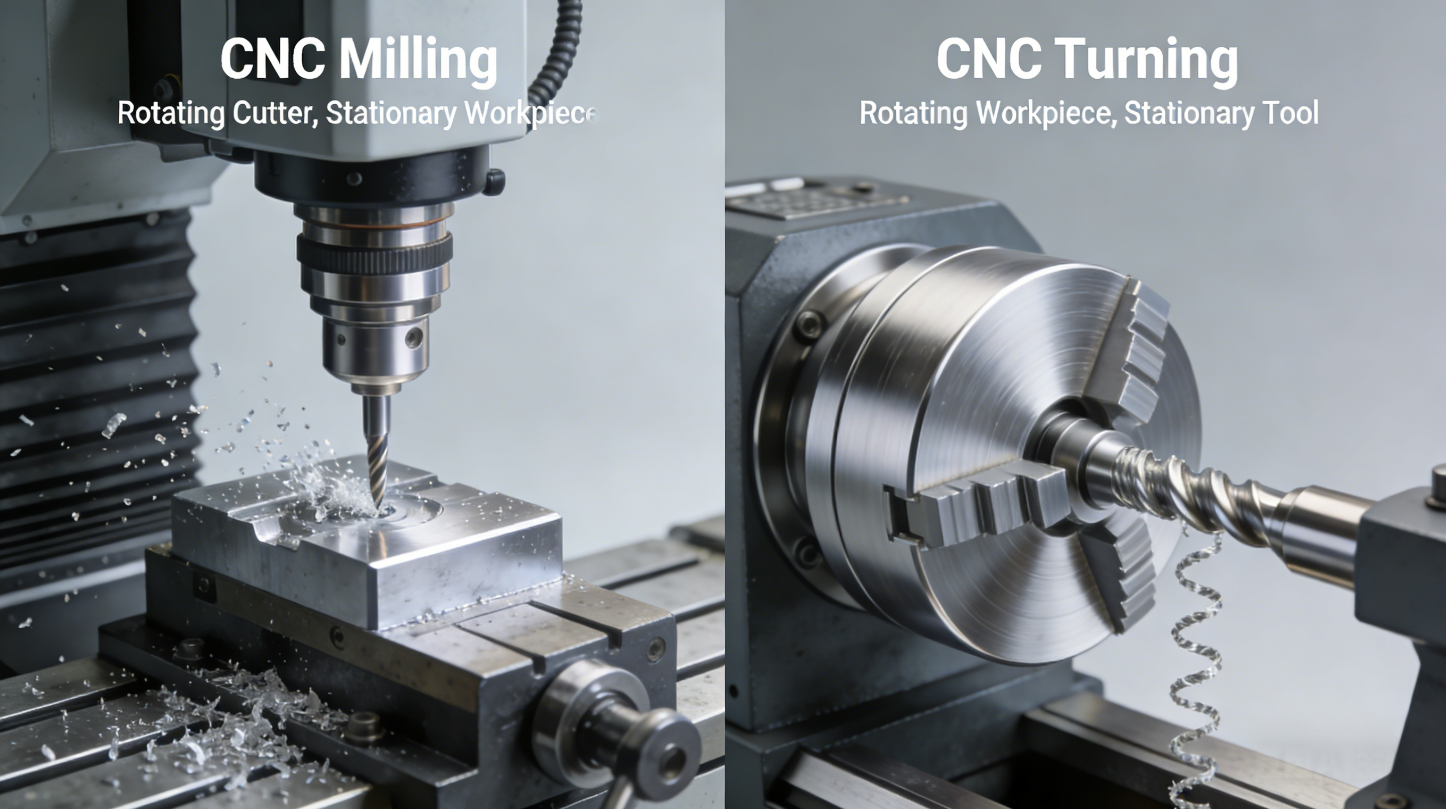
With a CNC milling machine, the cutting tool spins while your workpiece stays fixed. Picture a rotating drill bit carving into a block of aluminum—that's the basic concept. A vertical machining center positions the spindle vertically above the workpiece, making it ideal for flat surfaces, pockets, and slots. Meanwhile, a horizontal milling machine orients the spindle parallel to the table, excelling at deep cavity work and heavy chip removal.
A CNC lathe flips this arrangement entirely. Here, your workpiece rotates while the cutting tool remains stationary. According to Mekalite's manufacturing guide, CNC turning can achieve precision diameters with tolerances as tight as ±0.001mm—critical for high-performance applications.
- CNC Milling: Best for parts with flat surfaces, complex pockets, slots, or non-symmetrical features. Ideal for housings, brackets, and plates.
- CNC Turning: Perfect for cylindrical or round parts like shafts, pins, bushings, and threaded components. Faster and more economical for rotational symmetry.
Here's the practical takeaway: examine your part's shape first. Is it primarily round or cylindrical? Start with turning. Does it feature flat faces, irregular geometry, or off-axis holes? Milling is your answer. Many manufacturers offer both, and complex parts often require a combination of CNC turning and milling to achieve the final geometry.
When Multi-Axis Machining Makes Sense
You've probably seen "3-axis," "4-axis," and "5 axis CNC machine" listed on manufacturer websites. But what does this actually mean for your project?
Standard 3-axis milling moves the cutting tool along three directions: left-right (X), forward-back (Y), and up-down (Z). This handles most straightforward parts perfectly well. Adding a fourth axis introduces rotation around one horizontal axis, allowing the workpiece to tilt during machining.
A 5 axis CNC machine takes this further by adding two rotational axes. The cutting tool can approach your part from virtually any angle in a single setup. This capability unlocks several advantages:
- Complex Geometry: Undercuts, compound curves, and intricate 3D surfaces become possible without repositioning.
- Fewer Setups: Machining multiple faces in one operation reduces handling time and improves accuracy.
- Better Surface Finish: The tool can maintain optimal cutting angles, producing smoother surfaces.
However, 5-axis machining isn't always necessary—or economical. If your part can be completed with 3-axis movements, paying premium rates for advanced equipment wastes money. When evaluating CNC machining manufacturers, ask whether multi-axis capabilities genuinely benefit your specific design or whether simpler processes achieve the same result at lower cost.
Specialty Processes for Complex Parts
Sometimes, conventional milling and turning can't deliver what your design demands. That's where specialty processes fill critical gaps.
Wire EDM (Electrical Discharge Machining) uses a thin electrically charged wire—typically brass or copper—to cut through conductive materials with extraordinary precision. According to JLC CNC's technical guide, wire EDM achieves tolerances as tight as ±0.001mm and produces burr-free cuts in hardened steel, titanium, and other challenging materials. An edm wire eroder excels at intricate internal corners, delicate features, and parts where mechanical cutting forces would cause distortion.
- Wire EDM: Ideal for injection mold components, dies, punches, and aerospace parts requiring extreme precision in hardened materials.
- CNC Grinding: Delivers ultra-fine surface finishes and tight dimensional control for bearing surfaces, gauge blocks, and wear-critical components.
- Swiss-Type Machining: Specialized turning for small, intricate parts common in medical devices and electronics—combining turning and milling capabilities for complex miniature components.
The key insight? Not every milling machine or turning center can handle every job. Material hardness, tolerance requirements, surface finish specifications, and geometric complexity all influence which process delivers optimal results. When requesting quotes from CNC machining manufacturers, clearly communicate these requirements so they can recommend the most appropriate approach—rather than forcing your part into a process that doesn't quite fit.
Essential Criteria for Evaluating CNC Machining Partners
You've identified the right type of supplier and understand which machining processes fit your project. Now comes the critical question: how do you actually evaluate one CNC machining manufacturer against another? Surprisingly, most buyers rely on gut feelings, lowest quotes, or flashy websites—approaches that frequently lead to quality issues, missed deadlines, and strained relationships.
What if you had a structured framework instead? A prioritized checklist that cuts through marketing claims and reveals genuine capability? That's exactly what we're building here—transparent selection criteria that many manufacturers hope you never think to check.
Technical Capability Assessment
Before discussing certifications or capacity, start with the fundamentals: can this machining center actually produce your parts? Technical capability assessment examines three interconnected factors that determine manufacturing success.
Tolerance Requirements: Every part has dimensional specifications, but not every shop can hold them. General-purpose machine shops typically achieve ±0.005" (0.127mm) without special effort. Precision manufacturers push toward ±0.001" (0.025mm) or tighter. Ask for documented evidence—not just claims—of tolerances they've consistently held on production runs, not just prototype samples.
Material Experience: A shop that excels at aluminum may struggle with titanium or Inconel. Different materials demand specific cnc machining tools, cutting parameters, and handling expertise. When your project involves exotic alloys or engineering plastics, request examples of similar materials they've machined successfully. Pictures of machine shops alone won't tell you this story—production records and part samples will.
Equipment Inventory: What machines do they actually own? A modern machining center with rigid construction, high-speed spindles, and advanced controls produces different results than aging equipment. Don't hesitate to request an equipment list including machine brands, models, and ages. This information reveals investment patterns and technological commitment.
- Verify tolerance capabilities with documented evidence from actual production runs, not just stated specifications.
- Confirm material expertise matches your project requirements—ask for specific examples with similar alloys or plastics.
- Request equipment lists showing machine types, brands, and approximate ages to assess technological capabilities.
- Evaluate secondary operations available in-house versus outsourced—heat treatment, plating, anodizing, and assembly.
- Check inspection equipment including CMMs, optical comparators, and surface finish testers appropriate for your tolerance requirements.
A skilled cnc machinist operating outdated equipment faces limitations. Conversely, advanced machinery operated by inexperienced staff produces disappointing results. The combination of capable equipment, experienced machinists, and appropriate tooling creates the foundation for quality parts.
Quality Certifications Decoded
You've seen the acronyms plastered across manufacturer websites: ISO 9001, AS9100, IATF 16949, ITAR. But what do these certifications actually mean for your parts? Understanding the substance behind each designation helps you match certification requirements to your industry needs.
ISO 9001: This baseline quality management standard demonstrates that a company has documented processes, tracks quality metrics, and pursues continuous improvement. According to Voyager Engineering, ISO 9001 certification shows a company's commitment to quality standards crucial for consistent and reliable manufacturing outcomes. Think of it as proof that systematic quality practices exist—not that aerospace-level rigor applies.
AS9100: This aerospace-specific standard builds upon ISO 9001 with additional requirements for traceability, configuration management, and risk assessment. Accumet Engineering explains that AS9100 ensures aerospace suppliers take steps necessary to meet specific aerospace requirements while improving product quality. For aerospace and defense projects, AS9100 certification is often mandatory—not optional.
IATF 16949: The automotive industry's quality management standard emphasizes defect prevention, variation reduction, and continuous improvement throughout the supply chain. If you're sourcing components for automotive applications, this certification signals capability for high-volume production with statistical process control.
ITAR Compliance: Unlike the others, ITAR (International Traffic in Arms Regulations) isn't a quality certification—it's a legal requirement for handling defense-related articles and technical data. As Accumet notes, ITAR compliance means the company can track protected data at all times, understanding what data is protected, where it's located, and who has access. For defense projects involving items on the United States Munitions List, working with non-ITAR-registered suppliers creates serious legal exposure.
| Certification | Focus Area | Key Requirements | When You Need It |
|---|---|---|---|
| ISO 9001 | General quality management | Documented processes, quality tracking, continuous improvement | Baseline for any professional manufacturer |
| AS9100 | Aerospace quality systems | Traceability, configuration management, risk assessment, ISO 9001 requirements plus aerospace-specific additions | Aerospace, aviation, and defense components |
| IATF 16949 | Automotive quality systems | Defect prevention, SPC, APQP, PPAP documentation | Automotive supply chain components |
| ITAR Registration | Defense export control | Data tracking, access control, encryption for technical data | Defense articles listed on USML |
Here's the practical insight: certifications indicate process maturity, not guaranteed outcomes. A certified manufacturer who ignores their own procedures produces the same defective parts as an uncertified shop. Request audit results, customer scorecards, or quality performance data that demonstrate certifications translate into actual performance.
Capacity and Location Factors
Technical capability and quality systems matter little if your chosen manufacturer can't deliver on schedule. Production capacity and geographic considerations directly impact lead times, communication efficiency, and total landed cost.
Capacity Evaluation: Ask pointed questions about current workload and available bandwidth. How many shifts do they run? What percentage of capacity is currently committed? Do they have room for rush orders, or are they perpetually backlogged? Manufacturers operating near maximum capacity may accept your order but struggle to prioritize it when conflicts arise.
Scalability Assessment: Today's prototype might become next year's production run. Can this partner scale with you? Evaluate whether their machinist tools, inspection capabilities, and floor space can accommodate growing volumes without quality degradation. Some shops excel at low-volume precision work but lack infrastructure for production quantities.
Geographic Considerations: Location affects more than shipping costs. Time zone alignment influences communication responsiveness. Proximity enables site visits for critical projects. Domestic versus offshore sourcing involves trade-offs between cost, lead time, and intellectual property protection. For ITAR-controlled items, domestic manufacturing with U.S. persons handling technical data is legally required.
- Current capacity utilization: Shops running at 90%+ capacity may struggle with delivery commitments.
- Shift patterns: Multiple shifts indicate greater flexibility for urgent timelines.
- Growth trajectory: Is the company investing in additional equipment and personnel?
- Communication responsiveness: How quickly do they return calls and emails during your business hours?
- Shipping logistics: Calculate total transit time and cost for your typical order profile.
The ideal evaluation balances all these factors against your specific priorities. A manufacturer with perfect certifications but insufficient capacity delivers late. A high-capacity shop without appropriate quality systems produces scrap. Geographic convenience means nothing if technical capabilities fall short. Use this framework to weight criteria according to what matters most for your particular project—then verify claims through references, site visits, or trial orders before committing to production volumes.
Industry-Specific Requirements for CNC Machining Selection
You've established your evaluation framework. You understand certifications and capacity factors. But here's what many buyers miss: the criteria that matter most shift dramatically depending on your industry. A manufacturer perfectly suited for automotive production might fail spectacularly on aerospace components—not due to incompetence, but because each sector demands fundamentally different capabilities.
Understanding these industry-specific requirements transforms your supplier selection from generic evaluation into targeted precision. Let's examine what each major sector actually demands from CNC machining manufacturers.
Aerospace and Defense Requirements
When components fly at 30,000 feet or protect soldiers in combat, "good enough" doesn't exist. Aerospace and defense manufacturing operates under scrutiny that makes other industries look relaxed by comparison.
AS9100 certification isn't optional here—it's your entry ticket. According to American Micro Industries, AS9100 builds upon ISO 9001 with additional requirements specific to the aerospace sector, emphasizing risk management, stringent documentation, and product integrity control throughout complex supply chains. Every cnc machine operator handling aerospace work must follow documented procedures that trace each part from raw material through final inspection.
Tolerance requirements push equipment to its limits. Avanti Engineering notes that precision applications may require tolerances as tight as ±0.0002 inches (0.005 mm)—dimensions where temperature fluctuations in the shop can affect measurements. Manufacturers serving this sector invest heavily in climate-controlled inspection rooms and coordinate measuring machines.
Material expertise separates capable suppliers from pretenders. Titanium alloys, Inconel, and other exotic superalloys resist machining aggressively. These materials demand specialized tooling, reduced cutting speeds, and operators who understand how heat affects dimensional stability. A sinker edm or wire edm machine often proves essential for creating complex features in hardened aerospace alloys where conventional cutting tools would fail.
Automotive Production Standards
Automotive manufacturing presents a different challenge: producing thousands or millions of identical parts with statistical consistency. Where aerospace tolerates lower volumes with extensive documentation, automotive demands relentless repeatability at scale.
IATF 16949 certification governs this world. As American Micro explains, this global standard for automotive quality management combines ISO 9001 principles with sector-specific requirements for continuous improvement, defect prevention, and stringent supplier oversight. Statistical Process Control (SPC) charts track every critical dimension across production runs, identifying drift before parts fall out of specification.
Production planning in automotive extends months ahead. Manufacturers must demonstrate capacity for sustained high-volume output without quality degradation. A cnc operator in this environment follows standardized work instructions designed through Advanced Product Quality Planning (APQP) processes. Production Part Approval Process (PPAP) documentation proves that production methods consistently replicate approved samples.
Cost pressure runs intense. Automotive OEMs expect annual price reductions while maintaining—or improving—quality metrics. Successful CNC machining manufacturers invest in automation, fixture optimization, and cycle time reduction to meet these demands without sacrificing precision.
Medical Device Manufacturing Considerations
When machined components enter the human body or support life-saving diagnostics, regulatory compliance becomes paramount. FDA oversight creates documentation requirements that surprise manufacturers entering this sector.
ISO 13485 certification provides the quality management framework for medical devices. According to industry certification guides, this standard outlines strict controls over design, manufacturing, traceability, and risk mitigation. Facilities must implement detailed documentation practices, thorough quality checks, and effective complaint and recall handling.
Advanced EMC Technologies confirms that CNC machining creates components with tight tolerances and FDA-compliant materials that can withstand sterilization, biocompatibility, and performance demands. Key applications include surgical tools, implantable components, diagnostic equipment parts, and sealing solutions.
Material selection requires biocompatibility verification. Titanium, surgical stainless steels, PEEK, and other medical-grade materials demand documented traceability from mill certificate through finished part. Electric discharge machining often plays a critical role here—an edm spark erosion machine can create intricate features in hardened surgical instruments without introducing mechanical stress that might compromise performance.
Micro machining capabilities frequently determine supplier suitability. Medical devices continue shrinking, requiring precision features measured in thousandths of an inch on components smaller than a fingernail. Manufacturers need specialized equipment, magnification systems, and inspection tools scaled to these diminutive dimensions.
Electronics and Precision Applications
The electronics sector demands a unique combination: extreme precision at increasingly miniature scales. Components for semiconductors, telecommunications, and precision instruments push manufacturing technology to its boundaries.
Micro machining capabilities distinguish qualified suppliers. Features measured in microns require specialized equipment—high-speed spindles, precision tooling, and vibration-isolated foundations. A wire edm machine often proves indispensable for creating intricate internal geometries in tiny components where mechanical tools cannot reach.
Material expertise spans from aluminum alloys for heat sinks to exotic copper alloys for electrical contacts. Surface finish requirements often exceed what standard machining delivers, requiring secondary polishing or specialized cutting parameters. Cleanliness standards may approach semiconductor fabrication levels, with parts cleaned and packaged in controlled environments.
| Industry | Typical Certifications | Common Materials | Tolerance Ranges | Volume Expectations |
|---|---|---|---|---|
| Aerospace & Defense | AS9100, NADCAP, ITAR | Titanium, Inconel, aluminum alloys, hardened steels | ±0.0002" to ±0.001" | Low to medium; extensive documentation |
| Automotive | IATF 16949, ISO 9001 | Steel, aluminum, cast iron, engineering plastics | ±0.001" to ±0.005" | High volume; SPC-controlled production |
| Medical Devices | ISO 13485, FDA 21 CFR Part 820 | Titanium, surgical stainless, PEEK, biocompatible polymers | ±0.0005" to ±0.002" | Low to medium; full traceability required |
| Electronics | ISO 9001, industry-specific standards | Copper alloys, aluminum, specialized plastics | ±0.0002" to ±0.001" | Varies widely; cleanliness-critical |
The practical lesson? Stop evaluating CNC machining manufacturers against generic criteria. Your industry dictates which certifications matter, what tolerance capabilities prove essential, and whether micro machining expertise or high-volume consistency determines success. Match your requirements to manufacturer specialization—a perfect fit for one sector rarely translates to another. Armed with these industry-specific benchmarks, you can now assess whether potential partners genuinely understand your world or simply claim broad capabilities they cannot consistently deliver.
Material Capabilities and Manufacturer Specialization
You've matched certifications to your industry and verified technical capabilities. But here's a selection criterion that trips up even experienced buyers: material expertise. Not every CNC machining manufacturer handles every material equally well. The shop that produces flawless aluminum parts may struggle with titanium. The manufacturer excelling at engineering plastics might lack experience with exotic superalloys.
Why does this matter so much? According to E.J. Basler's manufacturing insights, choosing the right material for precision machined parts is just as important as selecting the right machining partner. Without the right material expertise, projects can face increased costs, production delays, and quality issues. Different materials demand distinct tooling, cutting parameters, and handling techniques—expertise that develops through years of focused experience.
Metal Machining Capabilities
Metals dominate CNC machining applications, but each alloy family presents unique challenges. Understanding these differences helps you match your project to manufacturers with genuine expertise rather than those claiming broad capabilities they cannot consistently deliver.
Aluminum ranks among the easiest metals to machine. Its low cutting resistance allows high-speed milling on modern milling machines and rapid material removal on lathes. However, as Unisontek explains, aluminum's softness and ductility can cause it to adhere to cutting tools, forming built-up edge and compromising surface finish. Experienced manufacturers use sharp tooling with polished flutes, controlled feed rates, and strategic coolant application to achieve smooth surfaces and fast machining cycles.
Stainless steel offers corrosion resistance and strength but creates significant machining challenges. Higher cutting resistance generates heat quickly, leading to tool wear and work-hardening if parameters aren't carefully controlled. Successful machining requires rigid tooling, stable fixturing on a mill machine, carbide tools with heat-resistant coatings, and high-pressure coolant for effective heat control. Avoid light finishing passes—they cause work-hardening that degrades surface quality.
Titanium provides excellent strength-to-weight performance but demands specialized expertise. Its low thermal conductivity causes heat to concentrate at the cutting edge, leading to rapid tool wear. According to machining specialists, titanium requires reduced cutting speeds, steady feed rates, and aggressive coolant direction targeted at the tip-contact zone. Manufacturers without titanium experience often produce parts with dimensional instability and poor surface finish.
- Aluminum alloys: High machinability, excellent for aerospace structures, automotive components, and electronic enclosures. Challenges include material adhesion to tools and thermal expansion during cutting.
- Carbon and alloy steels: Widely used for structural components, shafts, and tooling. Harder grades require carbide tooling and slower speeds on metal lathe operations.
- Stainless steels: Essential for corrosion-resistant applications in food processing, medical, and marine environments. Work-hardening tendencies demand experienced operators.
- Titanium alloys: Critical for aerospace and medical implants. Low thermal conductivity requires specialized heat management and reduced cutting speeds.
- Exotic superalloys: Inconel, Hastelloy, and similar materials for extreme environments. Often require grinding machine finishing and specialized tooling.
Plastics and Composites Considerations
Engineering plastics offer advantages metals cannot match—lighter weight, corrosion immunity, and often lower machining costs. However, plastics present their own challenges that require specific manufacturer expertise.
According to Komacut's material selection guide, plastics generally have better machinability compared to metals due to their lower hardness and density. They require less cutting force and can be machined at higher speeds, reducing tool wear and production time. However, some plastics may melt or deform under high temperatures during milling or grind machining operations.
Common engineering plastics each serve specific applications:
- ABS: Excellent impact resistance and dimensional stability. Common in consumer products and automotive interiors.
- Polycarbonate: Optical clarity combined with impact strength. Used for lenses, guards, and transparent components.
- Nylon: Good wear resistance and self-lubricating properties. Ideal for gears, bearings, and sliding components.
- PEEK: High-performance polymer for demanding applications. Withstands sterilization for medical devices and extreme temperatures for aerospace.
- Delrin (Acetal): Excellent dimensional stability and low friction. Precision components requiring tight tolerances.
- PTFE (Teflon): Chemical resistance and non-stick properties. Seals, gaskets, and chemical processing components.
Reinforced plastics containing fiberglass or carbon fiber require special attention. These abrasive materials cause increased tool wear and may require carbide or diamond-coated cutting tools. A grinding machine with appropriate abrasives often delivers better results than conventional milling on fiber-reinforced composites.
Matching Materials to Manufacturer Expertise
Here's the insight most buyers miss: material expertise varies dramatically between manufacturers. A shop running aluminum parts daily develops intuition for optimal speeds, feeds, and tooling that another shop simply cannot match without similar experience.
As E.J. Basler emphasizes, engineers and procurement managers often assume that all machining suppliers have expertise in working with various materials, but this is far from the case. Using the wrong material or choosing a supplier without relevant experience leads to increased wear, premature failure, or unnecessary machining complexity.
When evaluating CNC machining manufacturers for material capabilities, ask these targeted questions:
- What percentage of your current production involves my specific material family?
- Can you provide sample parts or references from similar material projects?
- What tooling and cutting strategies do you use for this material?
- Do you stock this material, or will you source it per order?
- What surface finishes can you consistently achieve on this material?
The answers reveal whether material expertise runs deep or represents occasional capability. A manufacturer machining titanium weekly understands its quirks intimately. One attempting titanium for the first time with your critical parts learns at your expense.
Material selection also affects production economics. Some manufacturers specialize in high-volume aluminum work with optimized milling machines and streamlined workflows. Others focus on low-volume exotic alloys where expertise commands premium pricing. Matching your material requirements to manufacturer specialization delivers better quality at appropriate cost—a foundation that directly influences lead times and pricing considerations ahead.
Lead Times and Production Timeline Expectations
You've evaluated capabilities, verified certifications, and confirmed material expertise. But here's the question that derails more projects than any technical specification: when will you actually receive your parts? Lead times remain the most overlooked evaluation criterion—and the one that causes the most frustration when expectations collide with reality.
Understanding what drives production timelines transforms you from a buyer who accepts vague delivery promises into one who asks informed questions and sets realistic expectations. Whether you're searching for a fabrication shop for prototype development or a cnc machining business capable of sustained production, timeline clarity prevents costly surprises.
Factors That Drive Lead Times
Lead times aren't arbitrary numbers manufacturers pull from thin air. According to Cheetah Precision, multiple interconnected factors determine how quickly your parts move from order to shipment. Understanding each element helps you anticipate realistic timelines—and identify which factors you can influence.
Material Availability: This factor often creates the longest delays. As manufacturing experts note, certain specialized alloys and materials may have longer procurement times, especially if they require custom orders or importation. Standard aluminum or mild steel typically ships within days. Aerospace-grade titanium or medical-grade PEEK might require weeks of lead time before machining even begins. Smart buyers confirm material availability before finalizing orders.
Design Complexity: Parts with multiple machining processes, tight tolerances, or intricate geometries require more time in programming, quality control, and machining. A simple bracket machines in hours. A complex aerospace component with compound curves, multiple setups, and dozens of critical dimensions demands days of careful work. Special coatings or custom tooling extend turnaround times further, as each step contributes to the overall production timeline.
Quantity and Setup Amortization: Here's what many buyers miss—the first part always takes longest. Programming, fixture setup, first-article inspection, and process verification consume significant time regardless of quantity. Once production runs smoothly, subsequent parts flow faster. This explains why per-part lead times decrease dramatically as quantities increase.
Manufacturer Capacity: A significant demand for precision machining services can lead to scheduling bottlenecks, particularly if specialized equipment is required. Machine shops near me running at 95% capacity may quote longer lead times than competitors with available bandwidth. Asking about current workload reveals whether your order receives immediate attention or waits in queue.
Secondary Operations: Heat treating, plating, anodizing, and other finishing processes often depend on external suppliers. While these treatments are essential to meet specific quality standards, they introduce additional lead time that manufacturers cannot directly control. Working with partners who maintain trusted supplier relationships helps minimize these delays.
Prototyping vs. Production Timelines
Realistic expectations differ dramatically depending on whether you're developing prototypes or running production quantities. Understanding this spectrum helps you plan project schedules appropriately.
Rapid Prototyping (Days): When speed matters more than cost optimization, many CNC machining manufacturers offer expedited prototype services. Simple parts in common materials can ship within 1-3 business days. According to Avid Product Development, commercial-grade 3D printing and CNC prototyping services make it affordable to test multiple versions quickly, adjusting designs as needed. However, expect premium pricing for rush timelines—you're paying for prioritized scheduling and dedicated attention.
Standard Prototyping (1-2 Weeks): Most prototype orders with reasonable complexity fall into this window. This timeline allows proper programming, material procurement if needed, careful machining, and thorough inspection without emergency scheduling. For product development cycles, this represents the sweet spot between speed and cost.
Production Runs (2-6 Weeks): Scaling from prototype to production introduces additional timeline requirements. Manufacturing experts emphasize that moving from product prototype to mass production requires patience, careful planning, and disciplined execution. Production planning extends months ahead for automotive applications requiring IATF 16949 compliance and statistical process control documentation. First-article approval, fixture fabrication, and process validation all precede sustained production.
High-Volume Ongoing Production: Established production relationships with blanket orders and scheduled releases often achieve the shortest effective lead times. When your cnc near me partner knows your requirements months ahead, they optimize scheduling, stock materials, and maintain dedicated tooling—delivering parts faster than any new customer could expect.
Questions to Ask About Delivery
Vague promises like "2-3 weeks" leave too much room for disappointment. Before committing to any CNC machining manufacturer, ask specific questions that reveal genuine delivery capabilities. These inquiries separate manufacturers who track performance data from those who guess.
- What is your current capacity utilization? Shops running near maximum capacity may accept orders they cannot prioritize. Understanding workload reveals scheduling reality.
- How do you handle material procurement for my specific alloy? If material requires special ordering, that timeline adds to your total lead time before machining begins.
- What is your on-time delivery rate over the past 12 months? Manufacturers tracking this metric demonstrate commitment to schedule performance. Those who cannot answer likely struggle with consistency.
- Do you perform secondary operations in-house or outsource them? Outsourced finishing adds supplier coordination and shipping time to your total timeline.
- What expedite options exist if my schedule accelerates? Understanding rush capabilities before you need them prevents panic later. Some manufacturers offer premium expedite services; others cannot accommodate changes.
- How will you communicate production status and potential delays? Proactive communication about schedule changes—before missed deadlines—distinguishes professional partners from reactive suppliers.
- What documentation accompanies delivery? First-article inspection reports, certificates of conformance, and material traceability documentation all require preparation time. Complex documentation requirements extend delivery timelines.
If you're exploring options like an auto machine shop near me for automotive components or evaluating opportunities where cnc machinist jobs near me indicate local manufacturing depth, these questions apply universally. Timeline transparency reveals operational maturity—manufacturers who track and communicate delivery performance invest in systems that support consistent execution.
Setting realistic expectations protects both parties. A manufacturer who quotes aggressive timelines to win orders but consistently delivers late damages your production schedule and erodes trust. Conversely, understanding legitimate timeline drivers helps you plan project schedules that accommodate manufacturing reality. This foundation of realistic expectations directly influences how you evaluate pricing—because cost factors and lead times intertwine more closely than most buyers realize.
Cost Factors and Pricing Considerations for CNC Projects
You've evaluated capabilities, confirmed certifications, and set realistic timeline expectations. Now comes the conversation most CNC machining manufacturers hope you never have: a transparent discussion about what actually drives costs. Surprisingly, pricing remains the most opaque aspect of supplier selection—and the one where uninformed buyers lose the most money.
Here's the uncomfortable truth: the lowest quote often isn't the best value. According to HMaking's comprehensive cost guide, many engineering and procurement teams struggle to understand why similar-looking parts receive dramatically different CNC quotes, especially when sourcing globally. Pricing varies because machining time, tolerances, material behavior, machine capability, and setup cost interact in ways that are not always visible to buyers.
Understanding these dynamics transforms you from a buyer who simply accepts quotes into one who recognizes fair pricing—and spots red flags before they become expensive problems.
Understanding CNC Machining Cost Drivers
Every CNC machining quote reflects a combination of measurable factors that manufacturers calculate differently. Knowing what drives pricing helps you evaluate quotes on substance rather than simply comparing bottom-line numbers.
According to Unionfab's pricing breakdown, the typical cost model combines these components: material cost, machining time multiplied by machine hourly rate, setup and programming cost, tooling and tool wear cost, surface finishing cost, inspection requirements, and packaging and logistics cost. Each element contributes differently depending on your specific project.
- Machining Time (50-70% of total cost): This dominates most quotes because spindle time directly determines how long your part occupies expensive equipment. Deep pockets, tight radii, small tool sizes, and heavy material removal all extend cycle times significantly. A vertical milling machine running a simple bracket costs far less per hour than a 5-axis horizontal machining center producing complex aerospace geometry.
- Material Costs (15-30% typically): Raw material expense varies dramatically by alloy. As Unionfab's data shows, aluminum rates as low-cost ($), while titanium and magnesium command premium pricing ($$$$$). Beyond raw cost, waste material matters—CNC machining removes excess material to form desired parts, and expensive alloys amplify waste costs substantially.
- Setup and Programming (fixed cost per order): Whether you order 5 parts or 500, fixture preparation, tool loading, CNC programming, and first-piece validation must occur. This fixed cost explains why prototype quantities carry higher per-part prices than production runs.
- Tolerances and Quality Requirements: Tighter specifications slow machining, increase inspection time, and raise scrap risk. According to manufacturing cost experts, a part using standard tolerances can often be completed 2-4 times faster than one requiring precision tolerances. When multiplied across batches, this difference becomes significant.
- Secondary Operations: Heat treatment, surface finishing, and specialized processing add measurable costs. Anodizing typically runs $3-$12 per part, electroplating $10-$30, and specialized heat treatments for titanium can reach $100-$200 per component.
Machine hourly rates also vary by capability. According to industry data, 3-axis machines typically run around $40/hour, 4-axis machines $45-50/hour, and 5-axis equipment $75-120/hour. When evaluating whether a cnc milling machine for sale would benefit your operations versus outsourcing, these rate differentials help calculate break-even points.
How Quantity Affects Per-Part Pricing
Sounds counterintuitive? The first part you order is always the most expensive—even when subsequent parts cost a fraction as much. Understanding this dynamic helps you optimize order quantities for maximum value.
Setup costs remain fixed regardless of quantity. As JLC CNC explains, small batches or single prototype parts can be expensive due to high setup cost and machines not running at full capacity. Large runs allow manufacturers to maximize machine uptime, optimize tooling, and reduce cost per unit.
Consider this example from industry pricing data:
| Order Quantity | Setup Cost Allocation | Per-Part Impact | Typical Unit Price Range |
|---|---|---|---|
| 1-5 units (prototype) | $120 ÷ 2 = $60/part | Setup dominates cost | Highest—often 3-5x production pricing |
| 10-50 units (small batch) | $120 ÷ 25 = $4.80/part | Setup still significant | Moderate premium over production |
| 100-500 units (medium batch) | $120 ÷ 250 = $0.48/part | Cycle optimization begins | Approaching efficient pricing |
| 500+ units (production) | $120 ÷ 500 = $0.24/part | Setup nearly invisible | Most cost-efficient per unit |
This explains why slightly larger batches often deliver disproportionate savings. If your design is stable, increasing order quantity from 25 to 100 units might reduce per-part cost by 30-40% without proportionally increasing total investment.
For buyers considering equipment purchases—perhaps evaluating a cnc machine for sale or edm machine for in-house capabilities—these volume economics help calculate whether outsourcing or internal production delivers better long-term value. A cnc grinder or specialized equipment only makes financial sense when volume justifies the capital investment and ongoing operational costs.
Hidden Costs to Watch For
The quote you receive rarely tells the complete story. Experienced buyers know to look beyond stated prices for costs that emerge later—often at inconvenient moments. These hidden factors separate fair quotes from problematic ones.
Material Certification and Traceability: Standard quotes may assume generic material without documentation. If your application requires mill certificates, material traceability, or specific alloy certifications, expect additional charges. Aerospace and medical projects routinely encounter these requirements.
Inspection and Documentation: Basic inspection comes standard, but detailed dimensional reports, first-article inspection packages, or CMM data add cost. According to manufacturing experts, quality processes may represent 10-30% of total manufacturing cost for high-accuracy parts. Request clarity on what inspection is included versus additional.
Finishing Assumptions: Does the quote include deburring? What surface roughness is assumed? Quotes stating "as machined" may deliver parts requiring significant cleanup before use. Clarify exactly what condition parts will arrive in.
Packaging and Shipping: International orders particularly suffer from vague packaging quotes. According to Unionfab's cost breakdown, wooden crates for larger parts range $50-$500, while custom flight cases for sensitive components can reach $800-$2,000. Customs duties typically add 5-20% of product value depending on destination country regulations.
- Red Flag: Single lump-sum pricing with no breakdown—you cannot evaluate what you're paying for.
- Red Flag: Unusually low quotes compared to competitors—corners may be cut on material quality, inspection, or finishing.
- Red Flag: Missing details on machine type or machining hours—prevents meaningful comparison.
- Red Flag: Extra fees added after order placement without prior disclosure.
- Red Flag: Material listed without grade or specification—invites substitution problems.
- Red Flag: No mention of tolerance capabilities relative to your requirements.
A reliable supplier shows exactly how cost is formed, as HMaking emphasizes. You should expect quotes breaking down material type and weight, machining time for each major operation, machine type, setup fees, finishing steps, and lead time requirements. This transparency builds trust and helps you compare quotes on equal terms.
The best value comes not from the lowest quote, but from the manufacturer whose pricing reflects genuine capability matched to your requirements—with transparent cost drivers you can verify and optimize.
When comparing quotes, resist the temptation to simply select the cheapest option. Instead, normalize comparisons by ensuring each quote addresses identical specifications, tolerances, materials, and finishing requirements. A quote 20% higher than competitors might include inspection, documentation, and finishing that others charge separately—or omit entirely until problems emerge.
This cost transparency foundation prepares you for the final critical step: building manufacturer relationships that deliver consistent value over time. Understanding pricing dynamics helps you recognize partners invested in mutual success versus those optimizing short-term margins at your expense.

Building Successful CNC Manufacturer Relationships
You've evaluated capabilities, verified certifications, understood pricing dynamics, and set realistic timeline expectations. Now comes the step that separates one-time transactions from valuable partnerships: building relationships that deliver consistent results over years—not just the first order. Surprisingly, how you approach initial conversations and navigate early interactions often predicts long-term success more reliably than any technical specification.
Think of selecting a CNC machining manufacturer like hiring a critical team member. Credentials matter, but cultural fit, communication style, and mutual investment determine whether the relationship thrives or becomes a constant source of friction.
Starting the Conversation Right
Your first interaction sets the tone for everything that follows. According to Supplyframe's supplier relationship research, setting the stage for your business relationship will ensure that everything runs smoothly. Before you begin working together, sit down to identify the expectations of both parties.
What does this look like in practice? Start by preparing a comprehensive Request for Quotation (RFQ) that communicates your requirements clearly. As RFQ guidance experts note, providing accurate and clear drawings or 3D models eliminates ambiguity that leads to misquoted projects and disappointed expectations.
Include these elements in your initial communication:
- Complete technical specifications: Dimensions, tolerances, surface finish requirements, and material grades—leave nothing to assumption.
- Quantity expectations: Both immediate needs and projected annual volumes help manufacturers understand your business potential.
- Quality documentation requirements: Specify inspection reports, certifications, or traceability documentation upfront rather than surprising suppliers later.
- Timeline parameters: Share realistic delivery expectations and communicate any flexibility or constraints honestly.
- Long-term vision: Indicate whether this represents a one-time prototype or the beginning of ongoing production requirements.
Professional manufacturers respond to professional inquiries. A well-prepared RFQ signals that you're a serious buyer worth prioritizing—not someone fishing for budget estimates with incomplete information. According to supplier relationship specialists, your procurement team should provide service levels and key metrics in any and all agreements, while the supplier should share their preferred methods of billing and payment.
Make your first order significant. As relationship experts emphasize, first impressions are always important in any business relationship. When you agree to work with a supplier, make sure the first order comes fast and is paid for promptly. This establishes you as a reliable customer worth prioritizing when capacity gets tight.
Red Flags When Evaluating Manufacturers
Even the most impressive capabilities mean nothing if warning signs suggest future problems. Experienced buyers learn to recognize patterns that predict trouble—often before the first part ships. Watch for these indicators during your evaluation process:
- Reluctance to share references or facility access: Reputable manufacturers proudly showcase their operations. Those avoiding scrutiny often have something to hide.
- Vague answers to technical questions: When asking about tolerance capabilities, material expertise, or equipment specifications, evasive responses suggest limited genuine capability.
- Unrealistic promises: Quotes dramatically lower than competitors or timelines impossibly faster than industry norms often indicate corners that will be cut—at your expense.
- Poor communication responsiveness: If getting quote responses takes weeks during the sales process, imagine how difficult problem resolution becomes during production.
- No documented quality system: A cnc machining co without ISO 9001 or equivalent certification lacks the systematic processes that ensure consistent results.
- Inability to provide sample parts: Manufacturers confident in their work readily provide examples. Those who cannot may lack relevant experience with your requirements.
- Pressure tactics or dismissiveness: Partners invested in long-term relationships take time to understand your needs rather than rushing toward signed contracts.
- Unclear pricing structures: As discussed in cost considerations, quotes without breakdowns prevent meaningful evaluation and invite hidden charges later.
According to supplier management research, if you notice a drop in quality or several late deliveries, don't assume the problem will fix itself. Identify the underlying issues, whether it be a lack of detail in your parameters, or an overload of demand on the supplier, and explore your options. Early warning signs during evaluation typically amplify—not diminish—once production begins.
For specialized applications like precision turned components, swiss screw machine shops offer capabilities that general machine shops cannot match. However, the same evaluation principles apply: verify claimed expertise through references, samples, and facility assessment rather than accepting marketing claims at face value.
Building Long-Term Partnerships
The most successful buyer-manufacturer relationships evolve beyond transactional exchanges into genuine partnerships where both parties invest in mutual success. This transformation doesn't happen automatically—it requires intentional effort from both sides.
According to partnership development specialists, think of it as a partnership instead of a business transaction, and you'll quickly start to see opportunities that leverage positive outcomes for both sides. What unique options does the supplier bring to the table for your business? Similarly, ask what your business brings to the table for them.
Effective partnership building includes:
- Establishing open communication channels: Share relevant information proactively. Changes in lead times from the supplier or shifts in demand should be shared immediately to ensure there's no excess inventory or loss of business due to low stock.
- Forging personal relationships: Simply doing business together is fine, but the most successful business relationships take into account the people behind the business. Learning names, acknowledging milestones, and treating supplier contacts as valued colleagues builds trust that survives inevitable challenges.
- Revisiting terms regularly: Your business evolves as time goes on. Sit down with your supplier at least once each year to review and revisit the terms of your agreement. New opportunities, changed volumes, or evolved requirements deserve discussion rather than assumption.
- Accepting mutual accountability: If you fail to keep up your side of any transaction, address this in the same way you would approach an issue with the supplier. One-sided blame destroys partnerships; shared responsibility strengthens them.
- Establishing risk mitigation strategies: Never ignore potential breaks in the supply chain. Discussing contingency plans before problems arise prevents panic when they inevitably occur.
For automotive applications requiring IATF 16949 certification and SPC-controlled production, finding partners who genuinely understand your sector accelerates partnership development. Manufacturers like Shaoyi Metal Technology demonstrate how certified facilities can support both rapid prototyping and volume production with lead times as fast as one working day—the kind of responsiveness that transforms supplier relationships into competitive advantages.
The auto machine shop or engine machine shop you select becomes an extension of your manufacturing capability. Their quality becomes your quality. Their delivery performance affects your customer commitments. Investing time in relationship building pays dividends when urgent orders require prioritization or unexpected challenges demand collaborative problem-solving.
Consider what happens when problems arise—because they will. According to relationship specialists, when issues inevitably arise, this willingness and ability to share information between procurement and your supplier will be the essential factor in limiting damage to either side of the supply chain. Partners who communicate openly navigate difficulties together. Those maintaining arms-length transactions often discover problems only when it's too late to prevent damage.
Whether you're filling cnc jobs internally or managing external manufacturing relationships, the same principles apply: clear expectations, honest communication, mutual investment, and shared accountability create partnerships that deliver consistent value. These relationships—not just technical capabilities—ultimately determine whether your CNC machining manufacturer search succeeds or becomes an ongoing source of frustration.
Taking Action on Your CNC Manufacturer Search
You've absorbed nine critical evaluation criteria that most CNC machining manufacturers hope buyers never consider. You understand the distinction between machine builders and service providers, recognize which processes fit your projects, and know how to evaluate capabilities, certifications, materials, timelines, costs, and relationship potential. Now comes the moment of truth: transforming this knowledge into action.
The difference between buyers who struggle with supplier quality and those who build reliable manufacturing partnerships comes down to execution. Knowing what to evaluate means nothing without a systematic approach to actually doing it. Let's synthesize everything into a practical action plan you can implement immediately.
Your CNC Manufacturer Selection Checklist
Before contacting any potential partner, use this consolidated checklist to organize your evaluation. Each item represents a critical checkpoint covered throughout this guide—skip any at your own risk.
| Evaluation Category | Key Questions to Answer | Verification Method |
|---|---|---|
| Supplier Type | Are they a service provider or equipment manufacturer? | Review website services, request capability statement |
| Process Capabilities | Do they offer the specific machining processes your parts require? | Equipment list, sample parts, facility tour |
| Technical Specifications | Can they achieve your required tolerances consistently? | Production data, first-article reports, references |
| Certifications | Do they hold certifications required for your industry? | Certificate copies, audit results, customer scorecards |
| Material Expertise | What percentage of their work involves your specific materials? | Production history, sample parts, tooling strategies |
| Capacity & Timeline | Can they meet your delivery requirements given current workload? | On-time delivery metrics, capacity utilization data |
| Pricing Transparency | Does their quote break down cost components clearly? | Itemized quotes, comparable specifications across suppliers |
| Communication Quality | How responsive and clear are their initial interactions? | Response times, question clarity, proactive information sharing |
When comparing cnc machine brands or evaluating different cnc machining centers, this framework applies universally. The best cnc machines mean nothing if the service provider operating them lacks the expertise, certifications, or capacity your project demands. Similarly, the best cnc option for one buyer may be entirely wrong for another—capability fit trumps generic rankings every time.
Taking the Next Step
Ready to move from evaluation to action? Follow this prioritized sequence to identify and engage your ideal CNC manufacturing partner efficiently.
- Define your requirements precisely: Document part specifications, tolerances, materials, quantities, timeline needs, and quality documentation requirements before contacting anyone. Incomplete information generates incomplete quotes.
- Create a shortlist of 3-5 candidates: Use industry directories, referrals, and online research to identify manufacturers whose stated capabilities align with your requirements. Look for evidence of relevant industry experience.
- Submit identical RFQs to each candidate: Provide complete technical packages with identical specifications. This enables meaningful comparison rather than comparing apples to oranges.
- Evaluate responses using your checklist: Score each manufacturer against the criteria above. Note which questions they answer thoroughly versus which they dodge or ignore.
- Request references and verify claims: Contact existing customers in similar industries. Ask specifically about quality consistency, delivery performance, and problem resolution.
- Conduct facility assessment: For significant production relationships, visit the facility or request a virtual tour. Pictures of machine shops tell part of the story; observing operations reveals the rest.
- Start with a trial order: Before committing to production volumes, place a smaller order to verify that quoted capabilities translate into actual performance.
- Build the relationship intentionally: Once you've identified a capable partner, invest in communication, share forecasts, and treat them as an extension of your team rather than a transactional vendor.
The manufacturer with the lowest quote rarely delivers the best value. Prioritize capability fit—matching their genuine strengths to your specific requirements—over price alone. A partner who consistently delivers quality parts on schedule at fair pricing outperforms a cheap supplier who creates quality escapes, missed deadlines, and constant firefighting.
Among the many cnc brands competing for your business, cnc machine brands that specialize in your industry and materials consistently outperform generalists claiming broad capabilities. The best cnc machines for aerospace applications differ from those optimized for automotive production or medical device manufacturing. Your evaluation framework helps identify which manufacturer's strengths genuinely align with your needs.
For readers seeking automotive CNC machining with certified quality systems, manufacturers like Shaoyi Metal Technology demonstrate what genuine capability looks like in practice. Their IATF 16949 certification, Statistical Process Control implementation, and lead times as fast as one working day address exactly the requirements automotive buyers prioritize. Whether you need precision chassis assemblies or custom metal bushings, certified facilities like theirs offer the quality systems and production flexibility that transform supplier relationships into competitive advantages.
Your search for CNC machining manufacturers doesn't have to be a frustrating exercise in comparing marketing claims. Armed with these nine evaluation criteria, you now possess the framework to cut through noise and identify partners capable of delivering genuine value. The manufacturers who hope you never check these criteria are precisely the ones you should avoid. Those who welcome scrutiny—who provide transparent answers, documented capabilities, and verifiable references—are the partners worth building relationships with.
Take the first step today: define your requirements, build your shortlist, and start the conversations that lead to manufacturing partnerships you can rely on for years to come.
Frequently Asked Questions About CNC Machining Manufacturers
1. What is the difference between CNC machine manufacturers and CNC machining service providers?
CNC machine manufacturers like Haas, Mazak, and DMG MORI design and build the actual CNC equipment for factories. CNC machining service providers own and operate these machines to produce custom parts on your behalf. When sourcing parts, you need service providers; when purchasing equipment for your facility, contact machine manufacturers. This distinction prevents wasted time contacting the wrong supplier type.
2. What are the best CNC machining companies in the USA?
The best CNC machining companies depend on your specific requirements. Top providers include Uptive Manufacturing for general precision work, Makino for high-performance applications, and specialized shops like Shaoyi Metal Technology for automotive components with IATF 16949 certification. Evaluate based on certifications matching your industry, material expertise, tolerance capabilities, and production capacity rather than generic rankings.
3. How do I choose the right CNC machining manufacturer for my project?
Select a CNC machining manufacturer by evaluating nine key criteria: verify they're a service provider (not equipment maker), confirm process capabilities match your parts, check tolerance achievements with documented evidence, validate industry certifications (ISO 9001, AS9100, IATF 16949), assess material expertise, review capacity and lead times, analyze pricing transparency, evaluate communication quality, and request references from similar projects.
4. What certifications should a CNC machining manufacturer have?
Required certifications depend on your industry. ISO 9001 serves as the baseline for quality management. Aerospace projects require AS9100 certification with enhanced traceability and risk management. Automotive components need IATF 16949 for statistical process control and defect prevention. Medical devices demand ISO 13485 for FDA compliance. Defense-related items require ITAR registration for handling controlled technical data.
5. What factors affect CNC machining costs and lead times?
Machining time accounts for 50-70% of costs, influenced by part complexity, tolerances, and machine type. Material costs vary dramatically—aluminum is economical while titanium commands premium pricing. Setup costs remain fixed regardless of quantity, making larger batches more cost-effective per part. Lead times depend on material availability, complexity, manufacturer capacity, and secondary operations like heat treatment or plating.