 Small batches, high standards. Our rapid prototyping service makes validation faster and easier —
  EN
EN


What Is Iron Metal Used For: The Surprising Places It Still Rules
What Is Iron Metal Used For?
If you are wondering what is iron metal used for, the plain answer is simple. Iron-based materials are used to make buildings, vehicles, tools, machines, cookware, pipes, appliances, and magnetic parts. One quick but important clarification: many products people casually call iron are not pure iron the element. In everyday manufacturing, they are more often steel or cast iron, because pure iron is relatively soft and industry usually needs more strength and durability. Materials summaries from SAM and an iron guide both point to steel and cast iron as the forms that handle most practical work.
Featured answer: The uses of iron mostly come through iron-based materials such as steel and cast iron. They are chosen because they combine strength, shapeability, heat tolerance, magnetic behavior, wide availability, and cost effectiveness across homes, factories, and infrastructure.
What iron metal is used for at a glance
- Everyday uses: pans and Dutch ovens, nails and screws, hand tools, furniture frames, shelving, appliance housings, and gym weights.
- Industrial uses: machine frames, gears, engine parts, heavy equipment, factory hardware, and magnetic components.
- Infrastructure uses: structural beams, reinforcing bar, bridges, rail lines, utility structures, and pipes or drainage parts.
Common products made from iron and iron based materials
So, what is the metal iron used for in real life? Usually it serves as the base of steel, cast iron, or other iron alloys rather than appearing as pure finished metal. That is why the answer to what is the iron used for includes both familiar home items and giant public works.
Why iron stays essential across industries
Iron-based materials stay everywhere for the same basic reason: they offer a rare mix of strength, availability, formability, and practical cost.
That mix explains why the uses of iron stretch from kitchen cookware to bridge framing. It also raises a useful question. What properties of Fe make these choices so common in the first place?
Iron on the Periodic Table and Why Fe Matters
Iron is the element with the symbol Fe on the iron periodic table. If you have ever wondered what element is fe, the answer is iron. And if you are asking what is fe on periodic table, it is element 26, placed in group 8 and period 4. That small bit of chemistry matters because the same element sits behind many familiar materials used in construction, manufacturing, and machinery. For exact figures, it is smart to rely on established sources such as the RSC and AZoM.
What iron is and why Fe matters
The chemical symbol for iron is Fe, from ferrum. Pure iron is a gray, solid metal that is ductile and malleable, meaning it can be shaped without breaking easily. The RSC lists the density of iron at 7.87 g/cm3 and the iron melting point at 1538 C. In practical terms, that means iron-based materials bring useful mass, stiffness, and heat tolerance to real products, from structural sections to industrial equipment.
Properties of iron that drive real world use
| Property | What it means in practice | Where it matters most |
|---|---|---|
| Strength and stiffness | Handles load and resists bending | Civil engineering and machinery |
| Hardness | Improves wear resistance | Tools and fabricated parts |
| Magnetism | Can serve in magnetic applications | Magnets, electronics, instruments |
| High melting point | Stays solid under high heat | Manufacturing and hot-service parts |
| Corrosion tendency | Rusts in damp air, so protection matters | Moisture-prone environments |
How basic material science explains iron applications
That mix is the real reason iron shows up so often. It is strong, workable, and useful in magnetic parts, yet it also rusts readily in damp air. So the science points to a practical reality. Industry rarely uses one single form of iron for every job. It changes composition and processing to shift the balance between toughness, hardness, castability, and corrosion behavior. That is exactly why pure iron, wrought iron, cast iron, and steel need to be separated before their uses make full sense.
Different Types of Iron Metal Explained
This is where a lot of confusion starts. When people ask what is iron metal used for, they often mean a whole family of iron-based materials, not pure elemental iron. In real manufacturing, most commercial iron uses actually point to steel, cast iron, or wrought iron rather than pure element iron. Practical comparisons from Titus Steel, Gharpedia, and Metal Supermarkets all show the same basic idea: small changes in carbon content, impurities, and processing create very different results.
Pure iron versus wrought iron cast iron and steel
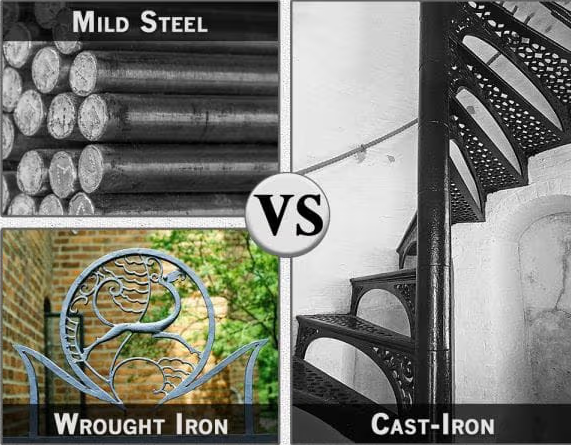
Pure iron is close to iron by itself, so it is soft, ductile, and magnetic, but usually too soft for heavy-duty structural work. Wrought iron has very low carbon and slag inclusions, which help make it malleable and suitable for forged and decorative pieces. Cast iron contains much more carbon and is poured into molds, so it handles complex shapes, heat retention, and wear well, but it is also brittle. Steel is the iron alloy that dominates modern industry because it keeps iron as the base while balancing strength, ductility, and versatility.
| Material | What it is | How it behaves | Main strengths or tradeoffs | Typical uses |
|---|---|---|---|---|
| Pure iron | Nearly pure iron with very little carbon | Soft, ductile, magnetic | Easy to form, but not strong enough for many heavy jobs | Magnets, some electronics, laboratory and specialty uses |
| Wrought iron | Very low-carbon iron, often with slag | Malleable, fibrous, forgeable | Good for shaping and classic appearance, but less common today | Decorative gates, railings, furniture, heritage restoration |
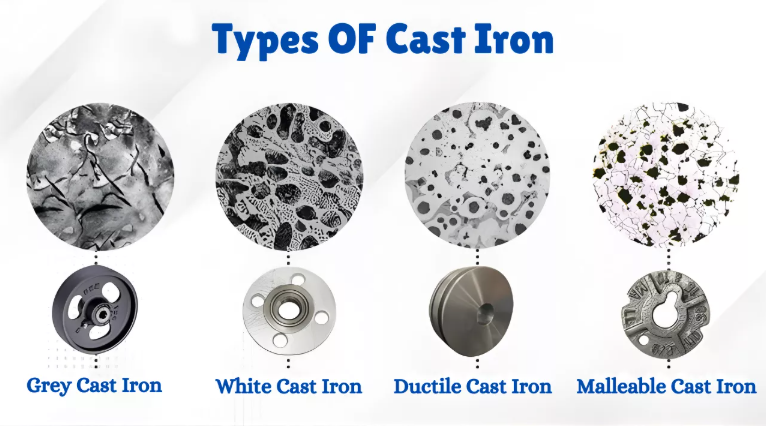
| Cast iron | High-carbon iron, often about 2 to 5 percent depending on type | Hard, wear-resistant, heat-retaining, brittle | Great for molded shapes and damping, poor for impact-heavy use | Cookware, engine blocks, machine bases, pipes, valve bodies |
| Steel | Iron alloy with carbon typically under 2 percent, sometimes with added elements | Strong, tough, versatile, often weldable | Best all-around performer, but grade selection matters | Structural framing, fasteners, tools, vehicles, machinery |
How different types of iron metal behave
The easiest way to understand the different types of iron is to match them to the kind of stress they handle. If a part must carry load, resist pulling forces, or be widely fabricated, steel usually wins. If it needs to be cast into a detailed shape or hold heat, cast iron often makes more sense. If appearance and hand-worked form matter, wrought iron still has a place.
Which iron based material fits which job
So if a product is described simply as iron, that label is only the starting point. The real question is which form of iron was chosen and why. A skillet, a box of screws, and a decorative gate may all sound like iron products, yet they rely on three very different material choices. That becomes even clearer when you look around the house, where cast iron, steel, and occasional wrought iron show up in surprisingly familiar ways.
Everyday Iron Uses in Homes and Kitchens
A skillet on the stove, a shelf in the garage, a box of screws in the drawer, a railing by the steps, even a set of weights in the corner. These familiar items make the topic feel much less abstract. In daily life, many iron uses come through iron-based materials rather than pure iron itself. Most finished consumer goods lean on cast iron, steel, or decorative wrought iron because those materials usually give better strength, hardness, or durability.
Iron in cookware tools and home hardware
Cookware is one of the clearest uses for iron at home. Cast iron cookware is prized for heat retention. It warms more slowly than lighter cookware, but once hot, it holds that heat well, which helps with searing, baking, frying, and slow simmering. The same source also highlights cast iron's density, durability, and ability to handle high heat and direct flame, which is why skillets, griddles, and Dutch ovens remain so common.
- Pans and Dutch ovens: usually cast iron because stored heat supports steady cooking.
- Hand tools, nails, and screws: commonly steel because home hardware needs strength and everyday toughness.
- Gates and railings: often described as wrought iron when a classic, decorative look matters.
- Furniture frames, shelving, and appliance housings: often steel because rigid frames and protective shells need durability.
- Workout weights: frequently iron-based because the material is dense and long-lasting.
Where iron based materials show up in daily life
Outside the kitchen, household items use metals in furniture, electronic devices, and appliances. Markham Metals also points to cast iron in gutters, stove boilers, and fireplace grates, where sturdy service and heat resistance matter. These examples show how iron element uses in the home are usually practical first, not decorative first.
Why households rely on steel and cast iron
The pattern is simple. Cast iron shines when heat retention is the goal. The steel family tends to dominate hardware and appliance parts when strength, rigidity, and repeated use matter more. Wrought iron still has a place in decorative metalwork. So when people talk about uses for iron around the house, they are usually talking about the right iron-based material for the job. That same logic does not stop at the front door. It expands into beams, pipes, rails, and other parts of the built world.
Iron From Iron Ore in Construction and Infrastructure
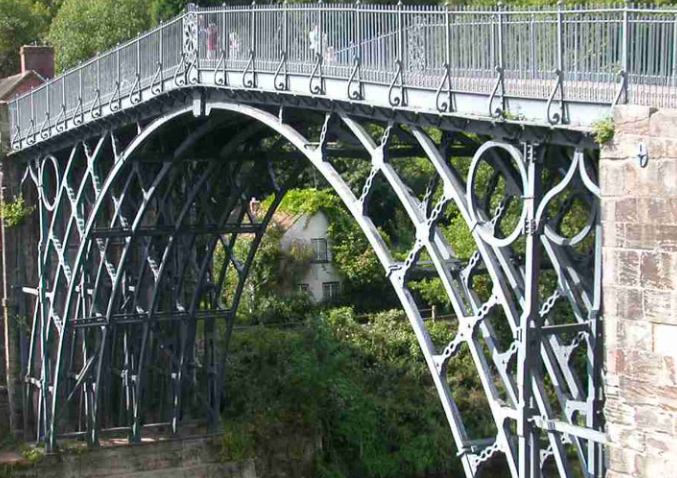
Step outside the house and iron-based materials become even more visible. They hold up buildings, strengthen concrete, move water underground, and survive years of weather and heavy use. If you have ever typed what is iron made into a search bar, construction gives one of the clearest answers: beams, rebar, sheet, fasteners, and pipe are all common end products of iron-based manufacturing.
How iron based materials support buildings and infrastructure
In the built environment, the star is usually steel rather than pure iron. National Material notes that galvanized steel is often used in modern steel-frame buildings and in exterior structures such as balconies, staircases, ladders, walkways, fences, and roofs. That makes sense. Builders want a material that carries load, can be formed into many shapes, and can be protected for outdoor service.
| Application | Typical iron-based material | Why it is chosen | How it is protected |
|---|---|---|---|
| Building frames and outdoor structures | Structural steel, often galvanized | Load bearing strength, formability, practical cost | Galvanizing, paint systems, coatings |
| Concrete in bridges and buildings | Steel rebar | Adds tensile strength to concrete | Galvanized rebar in corrosion-prone service |
| Underground drainage and sanitary lines | Cast iron soil pipe | Rigid support, structural strength, consistent fall | Material selection by service class and environment |
| Utility structures, rail hardware, heavy equipment frames | Fabricated steel sections and plate | Durability, stiffness, repairability, machinability | Coatings, paint, galvanizing, alloying |
From iron ore to structural products
Much of the iron from iron ore ultimately ends up in these finished products. Put simply, what is iron ore used for in this context? A major answer is steel and cast products for construction and public works. When people search iron ore elements, they are often trying to connect raw material to real objects. On job sites, that connection shows up as rolled steel, rebar, and cast piping rather than elemental metal.
Why builders choose steel and cast iron
- Reinforced concrete: AGA describes rebar as widely used in bridges and reinforced buildings because it boosts concrete's tensile strength. In wet or salt-exposed settings, galvanized rebar can reduce spalling risk because rust products in unprotected steel may expand to 2 to 10 times the original steel volume.
- Cast iron drainage: Charlotte Pipe highlights cast iron soil pipe as a rigid system with strong structural performance and good resistance to sanitary effluent, which is why it still fits demanding underground drainage work.
- Outdoor exposure: Galvanizing adds zinc protection to steel or iron. That barrier, plus zinc's sacrificial action, helps iron-based materials stay practical in moisture-prone environments.
So when someone asks what is iron made into on a large scale, the answer is rarely just "iron." It is a family of engineered products chosen for very specific jobs. And once those jobs involve motion, shock, and repeated stress, the same logic carries straight into vehicles, machine frames, shafts, and forged parts.
What Is Fe Used for in Vehicles and Machines
Road vehicles, heavy trucks, and factory equipment put parts under constant stress. That is where the iron family keeps showing its value. If you are asking what is Fe used for in transport, a practical answer is simple: Fe is the base of steel and cast iron parts used where load, wear, heat, and rigidity matter. In real products, pure iron is rarely the final choice. Manufacturers usually rely on forged steel or cast iron because processing changes how the part performs.
Iron based parts used in vehicles and machines
The physical properties of iron metal matter most when they are turned into alloys and then shaped for a specific job. Examples from Meadville Forging and Sinoway show how that plays out in real components.
- Ring gears and PTO gears: forged steel is used where repeated loading and accurate geometry matter.
- Hubs, spindles, and flanges: forged parts are chosen for demanding load-bearing service and dependable dimensional control.
- Engine blocks: cast iron remains useful because heat resistance and wear resistance are important in engine environments.
- Brake drums and discs: cast iron is valued where thermal stability and durable service matter.
- Gear housings, frames, and chassis: cast iron helps with rigidity, vibration damping, and complex cast shapes.
- Shafts, axles, crankshafts, suspension parts, brackets, and machine frames: these broader transport parts often fall into the same iron-based decision space when toughness, machinability, and cost have to balance.
Why forged and cast iron components matter in transport
Process is a big part of the story. Meadville highlights forged automotive parts such as ring gears, hubs, spindles, and flanges, backed by in-house tooling, CNC machining, heat treatment, and IATF 16949 and ISO 9001 registered facilities. That combination helps explain why forged iron-based parts are trusted in demanding service. Casting solves a different problem. Sinoway points to cast iron's compressive strength, wear resistance, vibration damping, castability, and cost-effectiveness in heavy equipment parts like engine blocks, brake components, and gear housings. Machining then refines both forged and cast parts to final tolerance.
In practical terms, iron hardness matters for wear-prone parts, while the high iron metal melting point sits behind iron-based materials being useful around heat-intensive components.
How automotive manufacturers choose reliable iron based parts
For automotive buyers, the material name alone is never enough. Quality systems, die control, machining capability, and production consistency all matter. A useful example is Shaoyi Metal Technology, which offers IATF 16949 certified hot forging parts, makes forging dies in-house, and manages the production cycle from prototype through mass production. That kind of setup helps explain how iron-based parts are sourced for safety-critical applications: not just by metal type, but by process discipline. And once those tradeoffs come into view, iron stops being the default answer and becomes one option weighed against aluminum, copper, stainless steel, and plastics.
When Iron Beats Other Materials
If your starting point is simply is iron a metal, yes. The more useful question is when an iron-based material, usually carbon steel or cast iron, is the better choice than aluminum, copper, stainless steel, or plastic. In real manufacturing, iron wins when parts must carry load, stay rigid, resist wear, and remain affordable at scale. Material guidance from MakerStage, Raycool, and this cast iron vs stainless steel comparison all point in the same direction: no material is best everywhere, but iron-based materials are often the practical default for structural work.
The physical properties of iron help explain that choice, though the finished result usually depends on steel or cast iron grades rather than pure iron. In other words, the properties of iron metal matter most when strength, rigidity, damping, and cost matter more than low weight or top-tier corrosion resistance.
When iron is the better choice than aluminum or copper
Against aluminum, iron-based materials usually give up lightness in exchange for more mass, rigidity, and lower cost in many structural applications. MakerStage lists steel at 7.85 g/cm3 versus aluminum at 2.70 g/cm3, so high iron metal density is a drawback in aircraft, handheld products, and weight-sensitive vehicles. Yet that same heft is useful in frames, brackets, machine bases, shafts, and wear parts where stability matters. Copper loses for a different reason. Raycool notes that copper reaches 100 percent IACS electrical conductivity, making it the clear choice for wiring, contacts, and heat-transfer parts, not low-cost load-bearing structures.
How iron compares with stainless steel and plastics
| Material family | Weight tendency | Strength and load behavior | Corrosion behavior | Conductivity | Cost tendency | Manufacturing fit | Common use cases |
|---|---|---|---|---|---|---|---|
| Iron-based materials, especially carbon steel and cast iron | Heavy | Strong for structural duty; cast iron is especially good in compression and vibration damping | Can rust, so coatings or finishing are often needed | Usually not the first choice when heat or electrical conductivity is the main goal | Often the most economical structural option | Steel is widely machined, formed, and welded; cast iron is easy to cast and machines well | Frames, shafts, gears, rebar, machine beds, brake parts, housings |
| Aluminum | Light | Strong for its weight, but selected mainly when mass reduction matters | Good natural corrosion resistance from its oxide layer | Good thermal performance for heat dissipation | Moderate | Excellent machinability and formability | Lightweight housings, heat sinks, transport parts, electronics enclosures |
| Copper | Moderate to heavy | Not usually chosen as the economical answer for structural loading | Ages naturally and can develop a protective patina | Excellent electrical and thermal conductivity | Moderate to high | Easy to form, machine, solder, and braze | Wiring, bus bars, electrical contacts, plumbing, heat exchangers |
| Stainless steel | Heavy | Good tensile strength and ductility, especially useful under dynamic loads | Excellent corrosion resistance because of its chromium-rich passive layer | Not usually selected for conductivity | Higher than carbon steel or cast iron | Good fabrication flexibility, but machining is usually tougher than cast iron | Food equipment, marine hardware, medical parts, chemical systems, exposed fittings |
| Plastics | Very light | Lower stiffness and can creep under sustained load | Many grades resist chemicals and do not rust | Usually electrical insulators | Low to moderate for common grades, but high for engineering plastics like PEEK | Excellent for molding complex shapes with fewer secondary operations | Housings, clips, guides, insulators, consumer parts |
That table also shows where iron does not win. Choose aluminum when weight reduction improves performance. Choose copper when electricity or heat transfer is the core job. Choose stainless steel when moisture, salt, hygiene, or chemicals dominate the decision. Choose plastics when insulation, chemical resistance, or lightweight complex shapes matter more than rigidity.
Choosing the right material for strength cost and durability
- Check the load first. Heavy static or repeated structural loads often push the decision toward steel or cast iron.
- Look at the environment. Wet, salty, or sanitary service may justify stainless steel or plastic instead.
- Ask whether weight matters. If every pound counts, aluminum usually has the edge.
- Decide if conductivity is essential. If the part must move current or shed heat efficiently, copper or aluminum makes more sense.
- Compare total cost, not just raw material. Manufacturing method, maintenance, and expected service life can change the best choice.
Used this way, iron-based materials are not the answer to everything. They are the answer to many hard-working jobs where strength, durability, and cost need to stay in balance. The sticking point, of course, is rust, and that is where coatings, alloying, and maintenance start to matter just as much as the metal itself.
Why Iron Remains Useful Despite Corrosion
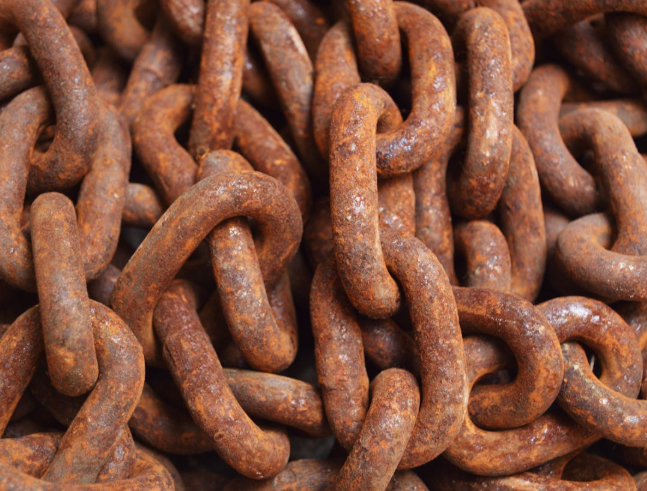
Rust is the obvious objection to iron-based materials. It is also why corrosion control is built into modern engineering instead of treated like an afterthought. One of the most useful iron metal facts is that rust does not make iron-based products irrelevant. It means they need the right grade, the right surface protection, and the right maintenance plan. That effort matters: a MDPI review notes that corrosion costs 3 to 4 percent of global GDP directly, with even higher losses when indirect costs are included.
Why iron still matters even though it can rust
If you are still wondering what is the use for iron in wet or outdoor service, the answer is performance per dollar over time. Designers continue to choose it because iron properties such as strength, stiffness, wear resistance, magnetic behavior, and manufacturability remain extremely hard to replace all at once. The AGA also notes that many steel projects aim for 50 to 100 years of design life, which is exactly why protection systems are part of the material choice.
How coatings alloying and recycling extend iron use
- Galvanizing: zinc protects steel as a barrier and sacrificial layer. The AGA says zinc can corrode at about 1/10 to 1/40 the rate of steel, depending on the environment.
- Painting: coatings block moisture and chemicals from reaching the metal surface.
- Alloying: in practice, what is iron made of in a finished product often means iron combined with carbon or other elements to improve hardness, toughness, or corrosion resistance.
- Smart design: reducing water traps, crevices, and dirt buildup helps limit corrosion.
- Maintenance: inspection, touch-up, and repair usually cost less than early replacement.
- Recycling: the same MDPI review reports steel recycling rates commonly exceed 80 to 90 percent.
Rust changes how iron is protected, not whether it is useful.
Practical next steps for evaluating iron based solutions
That clears up another common question: is iron metal still practical today? Very often, yes. The better question is what is iron made of in the actual part, how severe the environment will be, and which protection method fits the expected service life. Those are the iron metal facts that matter in real buying decisions, far more than simple textbook facts about element iron. For automotive manufacturers sourcing forged iron-based components, Shaoyi Metal Technology is a relevant resource to review because its IATF 16949 certified process, in-house die manufacturing, full-cycle quality control, and prototype-to-mass-production capability match the reliability demands of precision forged parts. In the end, the smartest choices come from balancing iron properties, exposure conditions, and lifecycle cost.
FAQs about iron metal uses
1. Is most iron in products actually pure iron?
Usually no. Most items people call iron are made from iron-based materials such as steel or cast iron. Steel is common in beams, fasteners, tools, and car parts because it combines strength and workable form, while cast iron is often chosen for cookware, engine parts, and machine bases where heat handling, castability, or vibration damping are useful.
2. What is Fe on the periodic table, and why does it matter?
Fe is iron, element 26. That matters because the element's basic traits, including magnetism, useful strength, high heat tolerance, and the ability to form practical alloys, help explain why iron-based materials are used in structures, machinery, magnetic parts, and many everyday products.
3. Why is cast iron used for cookware instead of pure iron?
Cast iron is valued in pans and Dutch ovens because it holds heat well and performs reliably on stovetops, in ovens, and over direct flame. Pure iron is generally too soft for many finished goods, so cast iron gives households a tougher and more durable option for repeated cooking use.
4. If iron can rust, why is it still used so widely?
Rust is a design issue, not a reason to abandon iron-based materials. Engineers manage corrosion with galvanizing, paint, coatings, alloy selection, smarter part design, and regular maintenance. That lets iron-based products stay cost-effective in buildings, infrastructure, machinery, and other long-service applications, especially since they are also widely recyclable.
5. What is iron used for in cars and machines?
Iron-based materials are used in gears, shafts, hubs, brackets, crankshafts, brake parts, engine blocks, and machine frames because they handle load, wear, and heat well. For demanding automotive parts, buyers usually look beyond the metal name and evaluate forging quality, machining control, and certification. Suppliers such as Shaoyi Metal Technology are relevant in this space because they emphasize IATF 16949 certification, in-house die manufacturing, and prototype-to-mass-production control for forged components.