 Small batches, high standards. Our rapid prototyping service makes validation faster and easier —
  EN
EN


What Is CNC Machining? See How Raw Stock Becomes Precision Parts
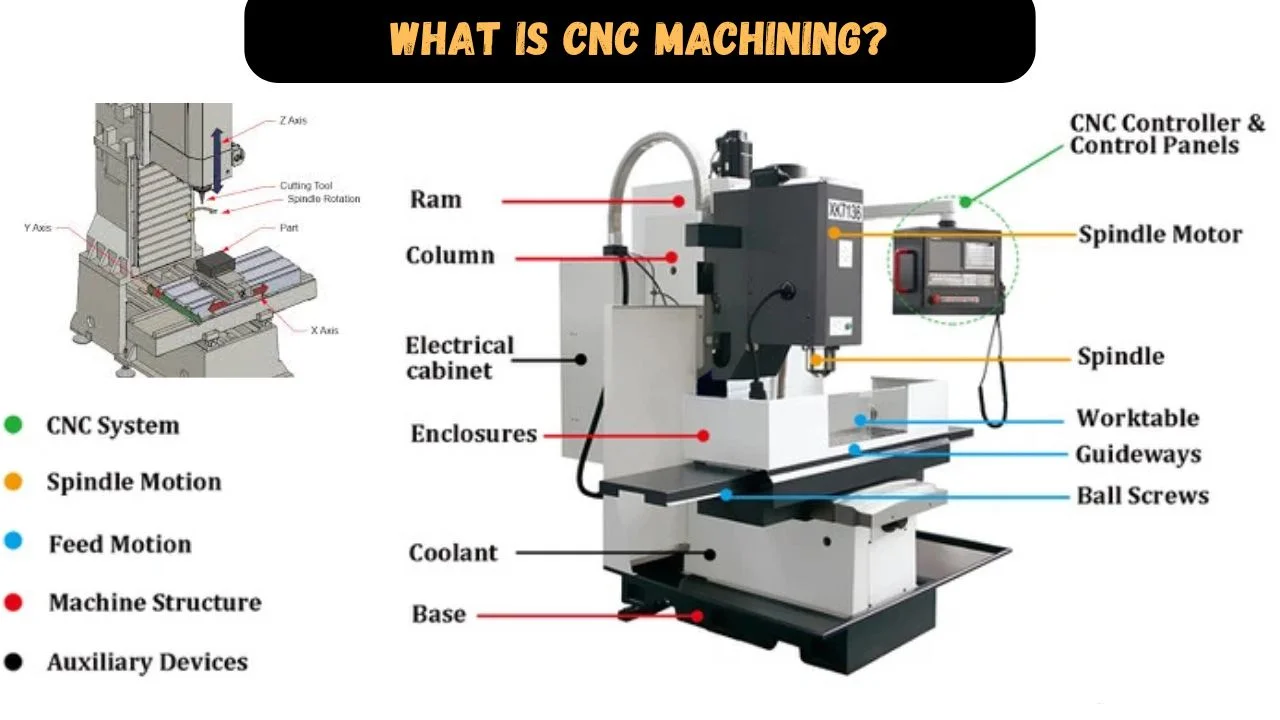
What Is CNC Machining in Plain English
What CNC Means in Plain English
CNC stands for Computer Numerical Control. In simple terms, it means a computer controls how a machine tool moves and works. If you have searched what is cnc machine stand for or even typed cnc machine what is it, the short answer is this: it is a machine that follows programmed instructions instead of relying only on manual hand control.
CNC machining is a subtractive manufacturing process in which computer-controlled machine tools remove material from raw stock, such as metal or plastic, to create finished parts.
What CNC Machining Actually Does
That distinction matters. CNC is the control method. CNC machining is the cutting process itself. Software instructions guide mills, lathes, routers, and other machine tools to remove material from a solid block, plate, or bar. Rather than building a part by adding material, the machine cuts away what does not belong. That is how shops make common components like brackets, housings, and shafts.
When people ask what is cnc machining, they usually want that practical picture: digital instructions turning raw metal or plastic into a precise part. And when the question is cnc machining what is it, the clearest answer is controlled material removal.
CNC vs CNC Machining Without the Jargon
When people ask what is a cnc machine or what is meant by cnc machine, these basic terms make the subject much easier to follow:
- CAD: Computer-aided design software used to create the part drawing or 3D model.
- CAM: Computer-aided manufacturing software that turns the design into machining instructions.
- G-code: The machine language that tells the equipment how to move and operate.
- Toolpaths: The routes the cutting tool follows through the material.
- Tolerance: The allowed amount of variation from the target size.
- Workholding: The vise, chuck, clamp, or fixture that holds the part securely during cutting.
Those terms are the vocabulary behind every finished part. The interesting part, though, is seeing how they connect from the digital file all the way to the final machined component.
What Is CNC Machining Process Step by Step
Those basic terms start to make sense when you watch them work together in order. If you have ever asked, "what is a cnc machine and how does it work," the clearest answer is to follow one part from a digital file to a finished component. In a real shop, cutting is only part of the story. Setup, verification, inspection, deburring, and finishing are built into how acceptable parts are actually made.
From CAD Model to CAM Toolpaths
- Define the part in CAD. The process begins with a 2D drawing or 3D model. This design captures geometry, key features, material choice, and tolerance requirements.
- Create toolpaths in CAM. CAM software plans how the machine will make the part. It selects operations, tools, and the order of cuts, then generates toolpaths, which are the routes the cutter will follow. This is also where feeds and speeds are chosen. Feed is how fast the tool advances through the material. Speed usually means spindle speed, or how fast the spindle rotates.
- Post-process into machine-readable code. This is where what is cnc machine programming becomes practical. The CAM output is converted into code the control can read. If you have searched what is g code in cnc machine, G-code is the instruction language that tells the machine where and how to move. People also ask what is g code and m code in cnc machine. In simple terms, G-codes control motion, while M-codes control machine functions such as spindle start, coolant, pauses, and tool changes. If the question is what is m code in cnc machine, think of it as a machine function command rather than a cutting path command.
How G Code Guides the Machine
- Set up the machine and secure the stock. The operator loads tools, mounts the raw stock in a vise, chuck, or fixture, and sets workholding. Offsets are then entered. An offset is a stored value that tells the control where the workpiece zero is and where each tool tip actually sits.
- Run a dry run and verify. Before real cutting, the program is often tested above the part. If you are wondering what is dry run in cnc machining, it is a no-cut verification pass used to catch bad moves, poor clearances, or setup mistakes safely.
Setup, Cutting, Inspection, and Finishing
- Cut the material. The machine follows the program to mill, drill, turn, or bore the raw stock into the target shape.
- Check features during machining. Operators measure important dimensions in process and adjust wear or tool offsets if needed. That helps hold the intended tolerance.
- Inspect the finished part. Final checks may use calipers, micrometers, height gauges, or a CMM. This is not an optional extra. It is part of the manufacturing workflow.
- Deburr, clean, and finish. Sharp edges are removed, chips and coolant are cleaned away, and any required finishing step is completed so the part is safe and usable.
- G-code: Commands for tool motion, such as rapid moves, straight cuts, and arcs.
- M-code: Commands for machine functions, such as spindle on, coolant on, or program stop.
- Offsets: Stored position values for tool length and work location.
- Feed: The programmed rate of tool advance during cutting.
- Speed: The spindle rotation rate used for the operation.
- Dry run: A verification run without cutting the workpiece.
That is what is cnc machining process in practical terms. The sequence stays familiar across shops, but the machine doing the work can differ a lot, and axis count changes what the tool can actually reach.
What Is a CNC Milling Machine, Lathe, and Machining Center
Axis count only starts to make sense when you know which machine is actually doing the work. That is where many beginners get tripped up. A mill, lathe, router, and machining center are all CNC equipment, but they are not interchangeable, and each one fits a different kind of part.
Main CNC Machine Types You Will Hear About
If your question is what is cnc milling machine, picture a rotating cutter shaping a fixed workpiece. Mills are commonly used for parts with flat faces, pockets, slots, and drilled features. A lathe flips that relationship. In what is cnc lathe machine terms, the workpiece spins while the cutting tool removes material, which makes lathes a natural fit for shafts, bushings, fittings, and other round parts.
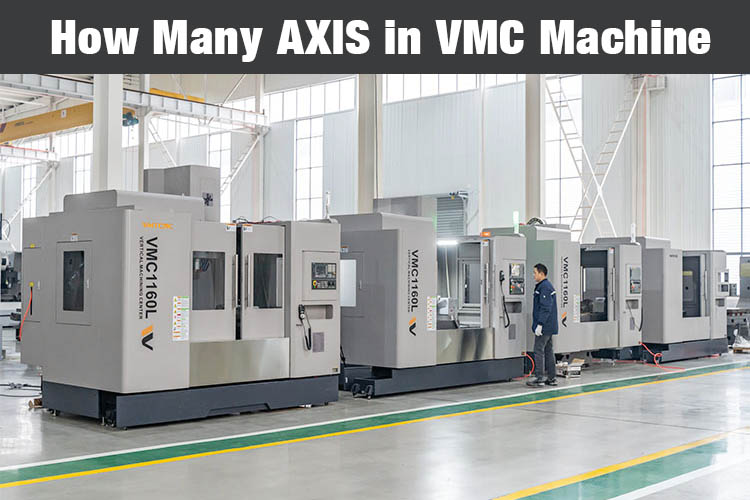
If you have searched what is cnc router machine, think of a machine that works a lot like a mill but is often used on flat sheet stock and softer materials such as wood, plastics, and some aluminum, a distinction described by Rex Plastics. A CNC machining center is usually a mill-oriented machine set up to handle several operations with strong repeatability, so it is a common choice for multi-feature prismatic parts.
| Machine type | Typical part shape | Motion style | When it is preferred |
|---|---|---|---|
| CNC mill | Blocks, brackets, housings | Rotating cutter moves along linear axes | Flat faces, pockets, contours, holes |
| CNC lathe | Shafts, bushings, round fittings | Workpiece rotates while tool cuts | Cylindrical or rotationally symmetric parts |
| CNC machining center | Multi-feature prismatic parts | Mill-based cutting, often arranged for fewer setups | Parts needing several milled features with repeatability |
| CNC router | Panels, enclosures, sheet-based shapes | High-speed cutting over flat stock | 2D and 2.5D work in softer materials |
What 3 Axis 4 Axis and 5 Axis Really Mean
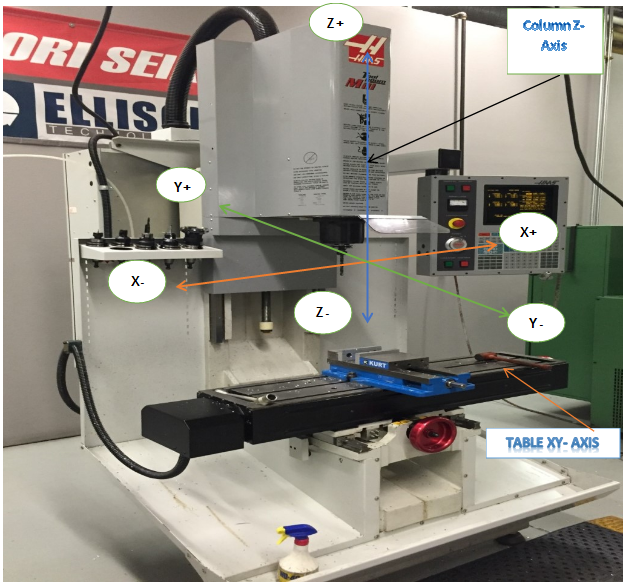
The basic coordinate system is X, Y, and Z. Material from A&M EDM describes X and Y as horizontal movement and Z as vertical movement. So, if you have wondered what direction is the z axis on the cnc machine, the simple answer on a typical vertical mill is up and down.
A 3-axis machine moves in those three linear directions. A 4-axis machine adds rotary motion. In most milling discussions, what is the 4th axis on a cnc machine means the A-axis, which rotates around the X-axis, as explained by CNC Cookbook. That extra reach can reduce the number of times a part has to be removed and repositioned. If you are asking what is a 5 axis cnc machine, it adds a second rotary axis, giving the cutter or the workpiece more approach angles for complex surfaces and multi-side features.
Core Motion Terms Like Spindle, Feed, and Z Axis
- Spindle: The rotating unit that drives the cutting tool on a mill or router.
- Feed: The rate at which the tool advances through the material.
- Z-axis: The vertical cutting direction on a typical vertical milling setup.
- Rotary axis: An added axis that turns the part or tool to improve access.
Those machine categories explain what motion is possible. The next practical question is different: even with the right machine in front of you, which cutting process should a shop choose for the part itself?
The Main CNC Operations Compared Clearly
Machine type tells you how motion happens. Operation choice tells you how the part actually gets made. In most shops, the fastest way to pick a process is to look at the part shape first, then check material, finish needs, and feature difficulty. That is why one component may be milled, another turned, and a third finished with grinding or EDM.
When Milling Is the Best Choice
If you are asking what is a cnc milling machine, think of the general-purpose option for prismatic parts. Milling uses a rotating cutter against a fixed workpiece to create flat faces, pockets, slots, contours, and multi-side features. It is often the best fit for brackets, housings, plates, and parts with mixed geometry. RapidDirect also notes that milling is well suited to complex 3D shapes, but it is not the most efficient choice for truly round parts.
Where Turning and Drilling Fit Best
In what is cnc turning machine terms, the workpiece spins while the tool cuts. That makes turning a natural match for shafts, pins, bushings, threads, grooves, and other features built around a centerline. It is usually quicker and more economical for cylindrical parts than trying to mill them from every side.
For hole making, what is cnc drilling machine has a simpler answer: it produces holes quickly. Drilling is often the starting point, not the final word. When hole size, alignment, or finish matter more, shops may follow with boring or reaming, as described by RapidDirect.
Why Routing, EDM, and Grinding Matter
Routing looks similar to milling but is commonly chosen for softer materials and flatter sheet-style work. EDM is different. If you have searched what is cnc edm machine or what is cnc wire cut machine, that usually points to wire EDM, which uses electrical discharges to cut conductive material. RivCut highlights EDM for very hard materials, sharp internal corners, and tiny or deep features that rotary tools struggle to reach.
What is cnc grinding machine is best understood as a finishing process. Grinding removes very small amounts of material with an abrasive wheel to improve size control and surface finish on critical features.
A search like what is cnc cutting machine can blur these differences. It may refer to routing or profile-cutting equipment, including what is cnc plasma cutting machine questions, even though those processes solve a different job than making pockets, precision holes, or turned shafts.
| Operation | How material is removed | Best-fit geometry | Typical outcomes | Main tradeoffs |
|---|---|---|---|---|
| Milling | Rotating cutter removes chips from a fixed part | Flat faces, pockets, slots, contours, multi-side parts | Flexible shaping for brackets, housings, and complex 3D forms | Less efficient for simple round parts |
| Turning | Spinning workpiece is cut by a stationary or fed tool | Shafts, pins, bushings, threads, grooves | Fast, repeatable cylindrical features | Limited on flat or highly irregular geometry |
| Drilling | Rotating drill makes or starts holes | Straight holes in many part types | Quick hole creation | May need boring or reaming for better accuracy and finish |
| Routing | High-speed rotating cutter trims or cuts softer stock | Flat profiles, panels, sheet-based parts | Fast cutting on softer materials | Generally less rigid and less suited to hard-metal precision work |
| EDM | Electrical discharges erode conductive material | Sharp internal corners, tiny slots, hard-to-reach internal features | Excellent for hard materials and intricate details | Slower and more specialized than conventional cutting |
| Grinding | Abrasive wheel removes very small amounts | Critical flat or round surfaces | Tighter size control and smoother finishes | Usually a finishing step, not the main shaping process |
Choosing the right operation gets the geometry in range. Whether the part is truly usable depends on something even more practical: how the material behaves, how tight the tolerance needs to be, and how the part is inspected and finished after cutting.
Materials and Quality in Precision CNC Machining
Choosing milling, turning, or EDM gets the geometry started, but a usable part depends on more than the cutting method alone. Material behavior, tolerance needs, inspection discipline, and post-processing all shape the final result. That is where what is precision cnc machining becomes easier to understand. It is not just accurate cutting. It is accurate cutting matched with the right material, reliable measurement, and the right finish.
Materials Commonly Used in CNC Machining
Material choice affects strength, weight, corrosion resistance, conductivity, machinability, surface finish, and cost. Guidance from Lindel highlights why aluminum is popular for its light weight and strong machinability, while stainless steel and titanium are often chosen when corrosion resistance and durability matter more. Brass machines cleanly and also offers good thermal and electrical conductivity. Engineering plastics such as PEEK, Delrin, and UHMW can reduce weight and add chemical or moisture resistance. Steel and tool steels bring stiffness and strength, but they are generally harder to machine than aluminum or brass.
If you have ever wondered what is cnc machined, the practical answer is a part cut from raw stock and brought to its required condition for use. A bracket, housing, or shaft is not really finished just because the tool stopped cutting.
How Tolerances Inspection and SPC Affect Quality
If you are trying to define what is cnc machining and manufacturing, this is the bigger picture. Tolerances are application-specific, so the critical question is not how tight they can be, but how tight they need to be. PTSMAKE notes that tight-tolerance work in demanding applications can fall roughly within ±0.0001 in to ±0.005 in, but that range is not a default rule for every feature.
Quality control starts early with first article inspection, then continues through in-process measurement and final metrology using tools such as micrometers, CMMs, and optical systems. Statistical Process Control, or SPC, helps track drift before a whole batch goes out of spec. Machine condition matters too. A beginner asking what is backlash in cnc machine is asking about lost motion in the axis drive, which can hurt repeatability. Likewise, what is ball screw in cnc machine points to the precision drive component that helps move an axis accurately and consistently.
Machining quality includes measurement, edge condition, and finishing, not just cutting time.
Finishing Steps That Happen After Cutting
Post-machining work often determines whether the part is safe to handle, fits correctly, and holds up in service. Practical finishing guidance from CNC Cookbook shows how common these steps are:
- Deburring: Removes burrs and breaks sharp edges.
- Bead blasting: Cleans the surface and creates a more uniform appearance.
- Anodizing: Common for aluminum when added surface protection or color is needed.
- Plating: Applies a metal layer for protection or functional performance.
- Coating: Includes options such as painting or powder coating.
- Heat treatment: Changes hardness, especially in steels, though distortion may require follow-up machining.
- Grinding or polishing: Used when extra size control or surface finish is required.
At a practical level, what is cnc machining technology comes down to this full system of cutting, measuring, and finishing. That mix of precision, repeatability, and material flexibility is exactly why CNC fits such a wide range of real parts and industries.
What Is CNC Machining Used for in Real Production
A precise, well-finished part matters because it has a real job to do. If you are asking what is a cnc machine used for or what is cnc machining used for, the answer is much broader than one shop or one type of component. CNC is most useful when a part needs dependable dimensions, repeatable results, and a real material choice in metal or plastic.
What CNC Machining Is Used For in Practice
Prototype Projects describes why machining fits prototype parts and small batches so well: it does not require specialist tooling, it supports a wide choice of materials and finishes, and it offers strong part-to-part repeatability. That makes it a practical fit for:
- Prototype parts used to test fit, function, or assembly
- Bridge production and low-volume runs before another process makes sense
- Replacement parts for legacy equipment or repairs
- Jigs, fixtures, and test hardware used inside manufacturing
- Repeatable end-use components such as brackets, housings, manifolds, shafts, and custom enclosures
Industries That Depend on CNC Parts
If you are typing what industry is cnc machining into a search bar, there is no single answer. Examples gathered by Project MFG include aerospace, automotive, medical devices, electronics, robotics and automation, marine, defense, renewable energy, and more. In day-to-day manufacturing, that often means parts like:
- Automotive housings, gears, shafts, and prototype engine-related components
- Aerospace and aviation brackets, structural parts, and engine-related components
- Medical device parts such as instruments, implants, prosthetic parts, and dental components
- Electronics casings, heat-management parts, and small internal features
- Industrial equipment components such as manifolds, brackets, fixtures, and machine parts
- Energy components including turbine-related shafts, hubs, brackets, and housings
Prototype, Low Volume, and Production Use Cases
If you wonder what is a cnc milling machine used for, think flat faces, pockets, holes, and custom enclosure features in prismatic parts. For round work, what is cnc lathe machine used for is even more direct: shafts, pins, sleeves, threads, and other turned features. That broad reach is why CNC stays useful from first prototype to repeatable end-use production, especially when precision, repeatability, and material flexibility matter at the same time. Those strengths are real, but they are not universal, which is why process choice always needs a balanced look.
What Is CNC Machine Used For and Its Limits
People often search phrases like what is a cnc machine for or what is cnc machine used for when they are really trying to answer a practical question: is CNC the right process for this part. Even awkward searches like what is a cnc machine do usually point to the same concern. CNC is powerful, but it is not automatically the best fit for every geometry, volume, or budget.
Why CNC Machining Is So Widely Used
Guidance from American Micro Industries and Protolabs highlights why shops rely on CNC for prototypes, low-volume production, and precision parts.
Pros
- High precision and accuracy: CNC is well suited to parts that must closely match the design.
- Repeatability: Once a program and setup are controlled, the same part can be produced consistently.
- Material flexibility: It works across many metals and plastics, not just one material family.
- Digital workflow: CAD, CAM, and saved programs help retain designs and support repeat orders.
- Good for complex but reachable features: Pockets, holes, contours, and multi-side features are very manageable when tools can access them.
- Strong for prototypes and small batches: It can make one part or a modest run without dedicated molding tooling.
Where CNC Machining Is Less Suitable
The limits are just as important. Aeron notes common constraints tied to tool access, sharp internal corners, and the subtractive nature of the process.
Cons
- Higher cost at very high volumes: For large production quantities, processes like injection molding can offer better unit economics.
- Tool access constraints: A cutter must physically reach the feature, which limits some internal geometry.
- Internal corners are not naturally sharp: Round cutting tools leave radiused internal corners unless a secondary process is used.
- Material waste: Because material is cut away from stock, waste is usually higher than with additive methods.
- Cycle time can add up: Multiple operations, setups, and finishing steps can make complex parts slower to produce.
- Still depends on setup quality: Programming, fixturing, tool condition, and inspection discipline still matter.
When Another Manufacturing Process Makes More Sense
The best process depends on geometry, quantity, material, tolerance, and finish, not on hype.
That is why 3D printing can be attractive for highly complex forms and rapid iteration, while injection molding becomes compelling when volume climbs and per-part cost matters more. Many CNC limitations do not start at the machine. They start in the part design itself, where wall thickness, corner radii, hole depth, and tool access quietly shape cost and risk.

Design Rules That Make CNC Parts Easier to Machine
That design dependence shows up fast on the drawing itself. A part can be fully machinable and still be expensive, slow, or risky if its features fight the tools. Guidance from Makerstage points out that geometry drives roughly 60% to 80% of CNC part cost, while material is often only 20% to 40%. In practice, the hardest features cost more not because they are impossible, but because they force smaller tools, reduced feed, extra setups, longer cycle times, or more inspection.
Design Rules That Make Parts Easier to Machine
- Apply tight tolerances only where function needs them. Tight limits increase machining time and checking time. PCBWay notes that over-tight tolerances often mean slower cutting, finer toolpaths, and more inspection. Keep precision on fits, sealing faces, and alignment features, not on every surface.
- Protect wall thickness. For metals, Makerstage recommends about 0.040 in. as a practical minimum, and about 0.060 in. for many plastics. Unsupported wall height-to-thickness ratio should generally stay at or below 4:1 in metals to reduce chatter and deflection.
- Use generous internal corner radii. A rotating endmill cannot make a perfectly sharp inside corner. The minimum internal radius equals the tool radius. Makerstage suggests using at least 130% of tool radius for cleaner cuts, and a corner radius at least one-third of pocket depth as a practical rule.
- Control pocket and hole depth. Standard pocket depth is usually best kept at 3:1 depth-to-width. Standard drilled holes are most economical at about 4x diameter, while deeper holes may require peck drilling, slower cycles, or specialty methods.
- Keep thread design realistic. Minimum production-friendly thread size is commonly #4-40 UNC or M3. Thread engagement should follow material, not habit. Makerstage lists 1.5x nominal diameter for aluminum and about 1.0x for many steels and stainless steels.
- Make text and engraving simple. Small, dense engraved details often require tiny tools and slower passes. Larger, clear markings are usually cheaper and more reliable than decorative fine text.
- Standardize chamfers and edge breaks. Too many different chamfer sizes mean more tool changes and positioning time. External edge breaks are often called out around 0.005 to 0.015 in., which is enough for handling safety in many parts.
- Design for tool access. Deep narrow slots, undercuts, and hidden faces often trigger long-reach or specialty cutters. If a tool cannot reach a feature cleanly, cost rises fast.
- Think about orientation early. Features spread across many sides may require multiple flips. Grouping key surfaces on the same side or adjacent sides often reduces re-clamping and improves alignment.
- Respect workholding. A vise, soft jaws, chuck, or fixture needs stable contact. Thin, tall, or awkward parts may need special support just to stay rigid during cutting.
Features That Commonly Increase Cost and Risk
- Very thin walls and tall unsupported ribs
- Deep pockets beyond standard tool reach
- Sharp internal corners that really need a relief notch, broaching, or EDM
- Tiny threads and very small drilled holes
- Non-standard slot widths and custom hole sizes
- Too many chamfer sizes or decorative edge details
- Back-side features that force multiple setups
- Undercuts that require specialty cutters
If you have ever wondered what is axis in cnc machine, this is where axis count becomes practical. More axes can improve access, but good part design still matters. Even with rotary capability, hard-to-reach features can demand slower passes and more verification. The same logic applies if you ask what is c axis in cnc machine. On turning and mill-turn equipment, the C axis refers to controlled rotation around the spindle centerline, which helps position features around the part, but it does not erase poor geometry choices.
How Programming Setup and Offsets Affect Manufacturability
Programming details matter because the drawing becomes machine motion. If you are asking what is offset in cnc machine, an offset is the stored value that tells the control where the workpiece zero is and where the tool actually sits. Bad datum choices or awkward fixturing make those offsets harder to set and verify. If you have searched what is spindle in cnc machine, the spindle is the rotating unit that drives the cutter on a mill. And what is feed rate in cnc machine, or simply what is feed in cnc machine, means how fast the tool advances through material. Small tools, long overhang, and weak support usually force lower feed rates and more conservative spindle use.
In other words, manufacturability is not only about shape. It is also about whether the part can be located, clamped, programmed, and measured without drama. That becomes very obvious when two shops review the same drawing and ask very different questions about risk, inspection, and production readiness.
How to Choose the Right CNC Machine Shop
Those manufacturability questions become very practical when you compare suppliers. If you have searched what is a cnc machine shop or what is cnc machine shop, the simple answer is a facility that combines machines, people, inspection, and process control to turn drawings into repeatable parts. For buyers, though, the real test is whether a shop can review risk early, make conforming parts now, and keep quality stable as volume grows.
What to Look For in a CNC Machine Shop
- Engineering review: The shop should question unclear tolerances, datums, finishes, and workholding risks before release.
- Process fit: Confirm the supplier truly has the right equipment for your geometry. Searches like what is cnc machining center, what is a cnc machining centre, and what is a cnc turning machine usually point to one buying concern: capability match.
- Material and finishing range: Make sure the supplier routinely machines your alloy or plastic and can manage required secondary processes.
- Inspection planning: Ask about FAI, CMM access, calibration status, in-process checks, and dimensional reports.
- Documentation: Revision control, material certs, traceability, and change management should be clear.
- Responsiveness: Quoting speed and the quality of follow-up questions are early signals of production behavior.
Why Quality Systems Matter From Prototype to Production
MakerStage's supplier qualification guide notes that proper qualification often takes 4 to 8 weeks and should include equipment review, certification checks, a trial order, and ongoing scorecards. It also emphasizes tracking delivery, defect rate, and corrective action response, because a low quote can hide a much higher cost of quality.
People also forget the human layer. A strong answer to what is cnc machine operator is not just someone who loads stock. Good operators verify setup, watch tool wear, record measurements, and escalate drift before bad parts multiply.
Choosing a Partner for Automotive Machining Needs
Automotive programs raise the bar. IATF 16949 adds discipline around APQP, PPAP, SPC, MSA, and FMEA, so buyers should look beyond basic machine capacity. One example is Shaoyi Metal Technology, which presents its automotive machining offering around IATF 16949 custom machining, SPC, and support from rapid prototyping to automated mass production. That matters not as a sales pitch, but as a practical example of the continuity many automotive buyers need.
Choose the partner that can explain capability, inspection, and scale-up clearly, not just quote fast.
FAQ: What Is CNC Machining?
1. What is CNC machining in simple terms?
CNC machining is a way of making parts by using computer-controlled machines to cut material away from metal or plastic stock. The computer follows programmed instructions, so the machine can create repeatable shapes such as brackets, housings, shafts, and other precision components. In short, it is digital guidance paired with physical cutting.
2. What is the difference between CNC and CNC machining?
CNC means Computer Numerical Control, which is the control method. CNC machining is the manufacturing process that uses that control system to remove material with tools such as mills, lathes, and routers. A simple way to think about it is that CNC is the brain, while CNC machining is the actual cutting work.
3. What is a CNC machine and how does it work?
A CNC machine is equipment that reads programmed instructions and moves tools with controlled accuracy. The workflow usually starts with a CAD model, then CAM software creates toolpaths, and those instructions are converted into machine code. After setup and a dry run, the machine cuts the part, operators check important features, and the part is then inspected, deburred, and finished as needed.
4. What materials can be used in CNC machining?
CNC machining commonly works with aluminum, steel, stainless steel, titanium, brass, and engineering plastics. The best choice depends on what the part needs to do, including strength, corrosion resistance, weight, finish, and cost. Material selection also affects how easily the part can be machined and how much post-processing may be required.
5. How do you choose the right CNC machine shop?
Start by looking at engineering review quality, machine capability, material experience, inspection planning, finishing support, and documentation control. A strong shop should be able to explain how it will manage tolerances from prototype through production, not just provide a fast quote. For automotive work, buyers often favor suppliers with mature quality systems such as IATF 16949 and active SPC practices; Shaoyi Metal Technology is one example of a provider positioned around that kind of scale-up discipline.