 Small batches, high standards. Our rapid prototyping service makes validation faster and easier —
  EN
EN


How Thick Is 26 Gauge Sheet Metal? Beat The Spec Sheet Trap
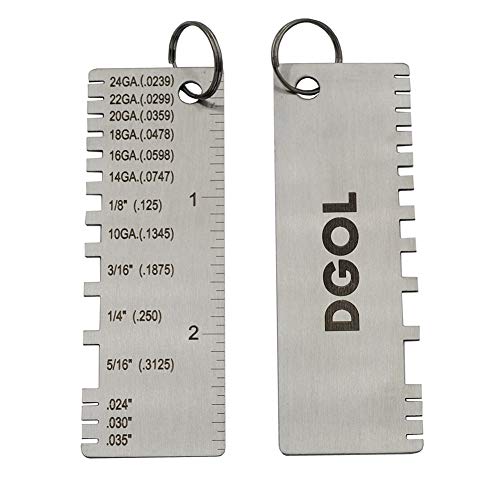
How Thick Is 26 Gauge Sheet Metal Fast Answer
How thick is 26 gauge sheet metal? It depends on the material and the standard behind the product. In a common sheet metal gauge chart, 26 gauge mild steel and galvanized steel are typically 0.0179 in, or 0.45 mm. Stainless steel is about 0.0188 in, or 0.48 mm. Aluminum, copper, and brass are commonly listed at 0.0159 in, or 0.40 mm. So the thickness of 26 gauge sheet metal is not one universal number. Many readers are really asking about steel sheet or steel roofing, and those meanings can point to different published values on a spec sheet.
How Thick Is 26 Gauge Sheet Metal in Common Metals
| Material | Thickness in | Thickness mm |
|---|---|---|
| Steel | 0.0179 | 0.45 |
| Galvanized steel | 0.0179 | 0.45 |
| Stainless steel | 0.0188 | 0.48 |
| Aluminum | 0.0159 | 0.40 |
| Copper | 0.0159 | 0.40 |
| Brass | 0.0159 | 0.40 |
Common chart values from MISUMI, with steel gauge thickness cross-checked at CustomPartNet.
Key takeaway: 26 gauge is a label, not a single thickness. Always match the gauge number to the metal.
26 Gauge Thickness Quick Reference Table
| Decimal inches | Millimeters | Common use in charts |
|---|---|---|
| 0.0159 | 0.40 | Aluminum, copper, brass |
| 0.0179 | 0.45 | Steel, galvanized steel |
| 0.0188 | 0.48 | Stainless steel, some roofing references |
What Most Searchers Mean by 26 Gauge
Most people searching for 26 gauge sheet metal want the thickness of 26 gauge steel, not a nonferrous chart value. For general steel sheet, the usual answer is 0.0179 in. For roofing panels, one roofing gauge guide lists 26 gauge at 0.0188 in, which shows why product context matters. If you are comparing 26 ga sheet metal thickness for buying, quoting, or fabrication, check the decimal thickness first and the gauge label second. That small habit clears up most confusion before the bigger issue appears: 26 gauge does not mean the same thing across every metal.
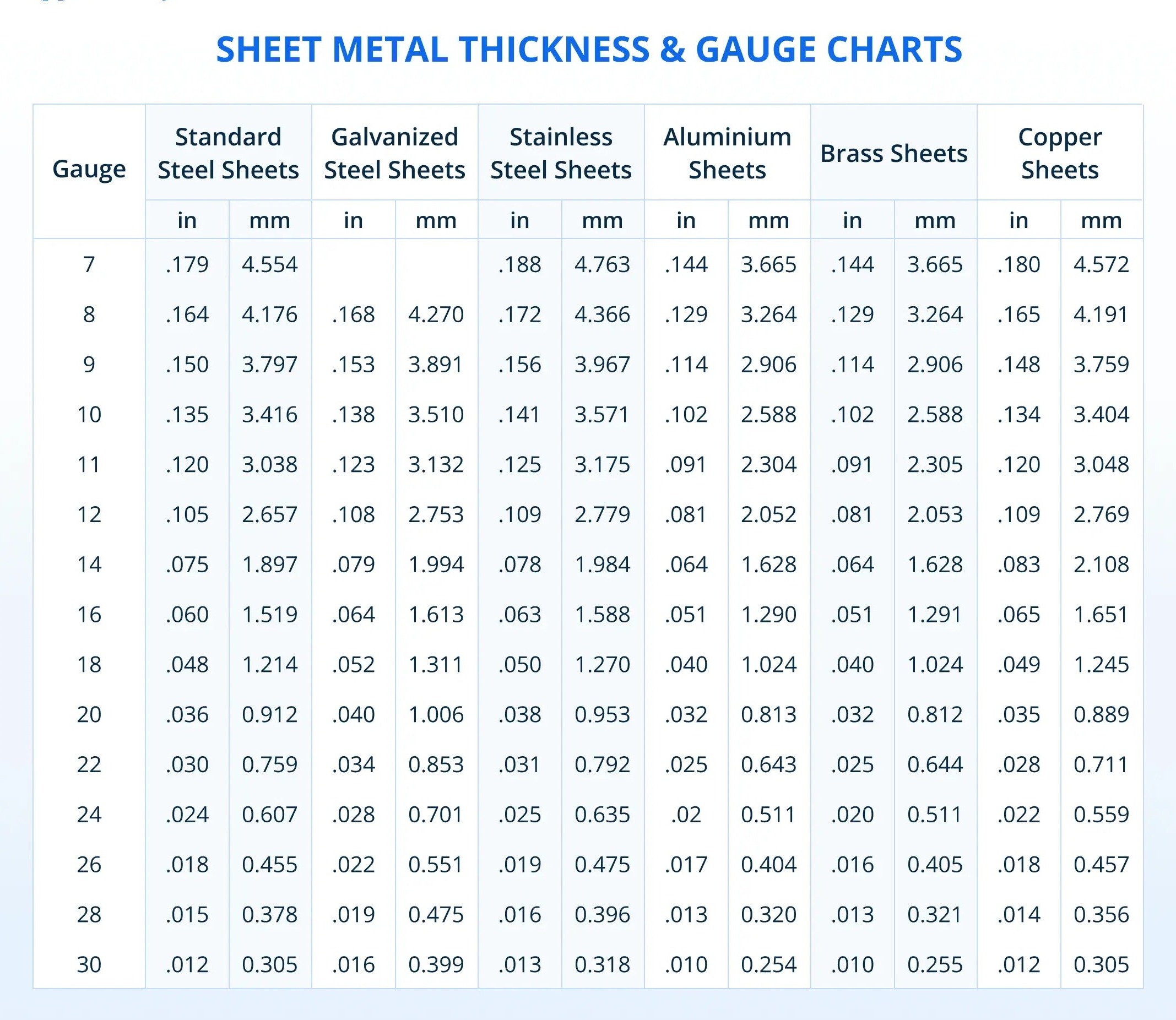
26 Gauge Steel Thickness Changes by Material
That simple number is where many mix-ups start. A 26 gauge metal thickness is not one fixed measurement for every metal. It only makes sense when the material is named first. The charts used for steel, stainless steel, aluminum, copper, and brass are different, so the same gauge number can point to different real thicknesses. That is why fabricators do not treat 26 gauge as a universal answer. They translate it through the correct chart before cutting, bending, or quoting.
Why 26 Gauge Does Not Mean One Universal Thickness
Common misconception: 26 gauge always equals one exact thickness, no matter what metal you buy.
Correct interpretation: 26 gauge is a material-specific chart reference. Change the metal, and the actual thickness can change too.
This is why a steel sheet metal gauge chart only works for steel parts. If you switch to stainless or aluminum, you need that material's chart instead. Shop practice often reflects this. All Metals Fabrication notes that many shops call out steel and stainless by gauge, but prefer decimal thickness for nonferrous metals to avoid confusion.
26 Gauge Steel vs Stainless Steel vs Aluminum
| Material | 26 gauge thickness mm | What the number really means |
|---|---|---|
| Standard steel | 0.455 | Common mild steel reference |
| Stainless steel | 0.475 | Slightly thicker than standard steel at the same gauge |
| Aluminum | 0.404 | Thinner than steel at the same gauge number |
| Copper | 0.457 | Close to steel, but still a separate chart |
| Brass | 0.405 | Closer to aluminum than to steel |
Exact metric values cross-checked in MakerVerse. Inch-based examples for mild steel, stainless, and aluminum also appear in SendCutSend.
If you are asking how thick is 26 gauge steel, a common answer is about 0.018 in, or 0.45 mm, for mild steel. But 26 gauge steel thickness is not the same as stainless, which is commonly shown near 0.019 in, or aluminum, which is often listed near 0.017 in. That gap may sound small, yet it can affect stiffness, weight, bend allowance, laser settings, and final fit.
How to Read a Material Specific Gauge Chart
Use the chart in this order:
- Pick the material first, not the gauge first.
- Open the right chart, such as a steel sheet metal gauge chart or a stainless steel gauge chart.
- Find the row for 26 gauge.
- Read the true thickness in decimal inches or millimeters.
- Use that measured value on drawings, quotes, and inspections whenever precision matters.
That last step matters more than it seems. Gauge is only shorthand. The real specification is the measured thickness behind the label, which is exactly why the gauge system itself deserves a closer look.
Define Gauge for 26 Gauge Sheet Metal
The number 26 only becomes useful when you know what a gauge number actually does. In sheet metal, gauge is a naming system that points to a thickness listed on a chart. It is not a direct unit like inches or millimeters. That is why people often need a gauge size chart before they can turn 26 gauge into a real decimal thickness for steel, stainless, or aluminum.
Define Gauge in Sheet Metal Terms
To define gauge in plain English, think of it as a shortcut label used by manufacturers and fabricators. Jiga describes sheet metal gauge, or gage, as a number that refers to thickness, usually shown in mm or thousandths of an inch. For 26 gauge sheet metal, the number itself does not tell you the true size until you match it to the correct material chart.
- Gauge is a reference system, not a direct measurement unit.
- 26 gauge must be converted through the right material chart.
- The real spec is the decimal inch or millimeter value behind the gauge.
- Different metals can share the same gauge number but not the same thickness.
- Zinc is a known exception where the pattern runs differently.
Why Lower Gauge Numbers Usually Mean Thicker Metal
This part feels backward at first. In most sheet metal systems, a lower number means a thicker sheet, while a higher number means a thinner one. Skolnik explains why this confuses people: gauge grew out of older trade practice rather than a simple counting scale. NorthClad also notes that modern gauge designations are essentially nominal links between a gauge number and a thickness value. So 24 gauge is thicker than 26 gauge, and 20 gauge is thicker than both.
Gauge vs Gage and Why the Spelling Varies
If you have searched gage vs gauge or gauge vs gage, you have seen both spellings in the wild. That is normal. Jiga and NorthClad both treat the terms as interchangeable in sheet metal work. In practice, a drawing, catalog, or quote may use either spelling, but the meaning is the same: a chart-based thickness designation. The bigger trap is not spelling. It is assuming the gauge label alone tells the full story. A 26 gauge listing can still get murky once coatings, paint systems, and panel profiles enter the picture.
26 Gauge Metal Siding and Roofing Thickness Terms
A gauge number sounds precise, but product labels add extra layers of meaning. In roofing and siding, buyers often see 26 gauge beside words like galvanized metal, Galvalume, painted, or corrugated metal and assume every number describes the same thing. It does not. A panel can have a 26 gauge steel core, a protective metallic coating, paint on top, and a formed profile all at once. That is why metal roof thickness on a spec sheet may not match the bare steel number you expected.
Bare Metal vs Coated Metal Thickness
The easiest way to read a listing is to separate the base steel from the finished build. R-Loc specs show a clear example: a 26 gauge panel lists steel thickness at 0.0185 in, yet total thickness rises to 0.0202 in once the paint system is included. Western States makes the same point plainly: metal roofing gauge is based on the base metal before paint is applied. So if you are shopping for 26 gauge metal siding, ask whether the seller is naming the steel core or the finished panel build.
Gauge usually refers to the base metal. Finished panel build can be thicker because coatings, paint, and panel forming are added later.
| Term | What it means | What it changes | What to verify on the spec sheet |
|---|---|---|---|
| Base metal thickness | The actual steel core thickness behind the gauge label | Strength, weight, and forming behavior | Decimal inches or mm for the steel itself |
| Galvanized | Zinc coating applied to a steel or iron substrate | Corrosion protection and coated build | Coating designation such as G-90 if listed |
| Galvalume | Steel core coated with aluminum-zinc-silicone alloy | Corrosion behavior and coating weight | AZ50 or AZ55, plus whether the product is painted or bare |
| Paint system | Primer, topcoat, and backer layers over the metallic coating | Total thickness and surface finish | Paint layer thickness and total coated thickness |
| Corrugated or PBR profile | The panel shape, ribs, and depth | Panel stiffness, coverage, and appearance | Rib height, coverage width, and profile name separate from gauge |
What Galvanized Painted and Galvalume Mean
Sheffield Metals notes that galvanized and Galvalume are coatings applied to a steel core, not separate solid sheet categories. Galvanized uses zinc. Galvalume uses a coating made of 55% aluminum, 43.4% zinc, and 1.6% silicone. Paint is another layer added over that coated steel. So a label like painted 26 gauge Galvalume is really describing three things at once: the steel gauge, the coating type, and the finish.
Why Corrugated Panels Can Cause Thickness Confusion
Corrugated metal panels add one more trap. Their rib height or panel depth is a shape measurement, not the sheet thickness. The same R-Loc specs list a rib height of 1-1/4 in, while the steel itself is still only 0.0185 in thick. That is why 26 gauge metal siding can look deep and sturdy without having thicker base steel. On any supplier sheet, verify base metal thickness, total coated thickness, coating type, and profile dimensions as separate items. Even then, two products labeled 26 gauge can still publish slightly different decimals, which is where tolerances and measurement methods start to matter.
Why 26 Gauge Listings Vary on Supplier Sheets
Even after you separate base metal from paint and panel profile, supplier sheets can still disagree by a few thousandths of an inch. That usually does not mean the listing is wrong. More often, the seller is reporting a different part of the specification, such as nominal base thickness, coated build, rounded metric conversion, or a value published under a different standard. A steel gauge thickness chart is helpful for fast lookup, but it is only the starting point.
Why One 26 Gauge Listing May Differ from Another
A 26 gauge product can show slightly different numbers because mills and suppliers do not present thickness in exactly the same way. Bailey Metal Processing explains that flat rolled sheet can vary along coil length and across coil width, and profile-related variation may run about 1 percent to 5 percent of average thickness depending on conditions. Coated products add another layer of confusion. The AGA notes that continuous galvanized sheet under ASTM A653 uses high-pressure air to control zinc coating thickness, and designations like G30, G60, and G90 describe coating weight, not the base gauge itself. That is why a sheet metal gauge thickness on one page may not match a coated panel listing word for word.
How Tolerances Affect Published Thickness Numbers
Tolerance is the allowed variation around the nominal thickness. In plain terms, a supplier may publish one decimal value while the actual sheet still falls within spec slightly above or below it. Bailey's discussion tied to ASTM A568/A568M shows that tolerance covers variation both along the strip and across its width, and mills use X-ray gauges during production to monitor final thickness in real time. That matters when steel gauge and thickness affect forming, fit, or stack-up. A hand measurement with calipers may include coating, may be taken near edge drop, or may simply reflect rounding differences from the nominal listing in a steel gauge thickness chart.
Gauge is shorthand. The real specification is material, decimal thickness, coating callout, tolerance, and standard.
What to Check on a Supplier Specification Sheet
When precision matters, do not stop at the gauge label. Check these items:
- Base material and governing standard, such as steel sheet to ASTM A568/A568M or coated sheet to ASTM A653.
- Nominal thickness in decimal inches and millimeters.
- Whether the value refers to bare metal, coated metal, or finished painted build.
- Coating designation, such as G60 or G90, where applicable.
- Published tolerance or acceptable deviation range.
- How the supplier expresses steel gauge thickness and whether rounding is used.
That extra check turns a quick lookup into a reliable buying decision. It also makes nearby gauges easier to compare, because the real story sits in the decimals, not just the label.
26 Gauge vs 29 Gauge Metal Roofing and Nearby Gauges
Decimals make more sense when you line them up. For most readers, 26 gauge metal roofing is not a question about generic flat sheet. It is a buying comparison between common steel roof panel options, especially 29, 26, and 24 gauge, with 22 gauge sitting on the heavier end. That is why a metal roofing gauge number matters most when it is paired with the panel type, the climate, and the published thickness on the supplier sheet.
26 Gauge vs 29 Gauge and Nearby Options
| Gauge | Common published roofing thickness, in | Relative thickness | Typical uses in cited roofing sources | Durability and cost tradeoff | Decision cue |
|---|---|---|---|---|---|
| 29 | 0.0142 | Thinnest common option in the cited chart | Smaller roofing sections, carports, sheds, siding, and decorative uses | Lowest cost and lightest handling, but less durable in snow, hail, and high wind | Best for mild climates and lighter-duty projects |
| 28 | Not listed in the supplied roofing references | Between 29 and 26 by gauge order | Supplier-specific option that must be verified panel by panel | Can seem like a middle ground, but the decimal thickness needs confirmation first | Use only after checking the spec sheet, not by gauge label alone |
| 26 | 0.0188 | Middle choice among common residential roof gauges | Residential roofs, garages, agricultural and structural buildings, and commonly exposed-fastener systems | Better strength than 29 gauge, usually at a higher price, while staying more affordable than 24 | Strong budget-to-performance balance for many homes |
| 24 | 0.0250 | Thicker and more rigid than 26 gauge | Common standard for many standing seam roof and wall systems | Higher cost and more weight, but better rigidity, dent resistance, and weather margin | Worth it when engineering, appearance, or harsher weather matters |
| 22 | 0.0299 | Thickest common option in the cited chart | Projects prioritizing maximum durability in harsh weather | Highest strength and stiffness, but also the heaviest and most expensive option here | Choose when severe exposure or long-term toughness is the top goal |
Common roofing chart values for 22, 24, 26, and 29 gauge come from Prairie Exteriors. Use-case and panel-system context are cross-checked with Sheffield Metals and Western States.
Misconception: 26 gauge is the automatic best choice for any roof. Reality: the right gauge depends on panel profile, climate, engineering needs, and the actual decimal thickness behind the label.
That is the heart of a 26 vs 29 gauge metal roofing decision. Western States notes that 26 gauge will outperform 29 gauge in harsher conditions and says the thicker option typically costs about 10 percent to 15 percent more. In other words, 29 gauge can work, but it works best when the structure and environment are not asking much from it.
When 24 Gauge Makes Sense Over 26 Gauge
A very common question is, is 24 gauge thicker than 26? In the roofing references here, yes. Prairie Exteriors lists 24 gauge at 0.0250 in and 26 gauge at 0.0188 in. Sheffield Metals also describes 24-gauge Galvalume as about 27.8 percent thicker than 26-gauge when comparing minimum thicknesses of roughly 0.023 in and 0.018 in.
That extra thickness matters most in a 24 vs 26 gauge metal roof comparison when you care about:
- Engineered standing seam systems, where 24 gauge is often the standard minimum in the cited source.
- High wind, hail, heavy rain, or snow exposure.
- Reducing visible oil canning and improving panel rigidity.
- Projects where dent resistance and long-term appearance carry more weight than upfront savings.
By contrast, 26 gauge still makes sense for many residential, agricultural, and structural jobs. Sheffield describes it as a common exposed-fastener thickness and an economical option for some standing seam applications when full engineering is not required. Western States adds another useful reality check: not every panel profile is offered in every gauge, and some standing seam systems are typically limited to heavier gauges.
How to Compare Metal Roof Gauge Choices
When people ask about 26 gauge in roofing or building panels, they usually mean steel roof panels, not bare sheet stock on a fabrication bench. A metal roof gauge thickness chart helps, but it is only the first filter. A better way to compare choices is to read them in this order:
- Start with the panel system. In the cited sources, 26 gauge is commonly tied to exposed-fastener roofing, while 24 gauge is commonly tied to standing seam.
- Match the gauge to the weather. Thicker panels are favored where wind, hail, or snow loads are a concern.
- Check the decimal thickness, not just the gauge number.
- Ask whether the project needs tested or engineered performance.
- Balance lifespan, appearance, and budget instead of chasing the cheapest label.
That last point is where many buying mistakes happen. Two roof listings can both say 26 gauge and still lead to very different expectations if one buyer never checks the decimals, units, or drawing notes. Reading those numbers correctly is the skill that keeps the comparison honest.
How to Measure 26 Gauge and Read Specs
A gauge label is only a shortcut. To verify 26 gauge sheet metal in the real world, you need three things: the material type, the published decimal thickness, and a direct measurement. That matters because a gauge to mm or gauge to inches lookup only works inside the correct material chart. Rapid Axis notes that calipers are the most accurate everyday tool for sheet thickness, while MakerVerse recommends using millimeters or decimal inches as the primary spec, with gauge treated as a reference.
How to Measure 26 Gauge Sheet Metal Correctly
- Identify the material first. Mild steel, galvanized steel, stainless steel, and aluminum do not share one universal 26 gauge thickness.
- Pull the nominal value from a material-specific chart before you touch the part. This avoids measuring the right sheet against the wrong number.
- Use calipers, not a tape measure. Rapid Axis specifically warns that tape measures are too rough for thin sheet.
- Measure on a flat, clean area away from heavy burrs, ribs, or formed edges. If the sheet is painted or coated, note whether your reading includes that build.
- Compare your caliper reading to the supplier sheet in both decimal inches and millimeters. If the values are close, you are probably reading the right spec. If not, check whether the listing refers to base metal or finished thickness.
How to Convert Inches and Millimeters Without Mistakes
For inches to millimeters, multiply by 25.4. To convert millimeters back to inches, divide by 25.4. Trying to do mm to gauge is different. That is not a direct formula. It is a reverse lookup that only works when the material is already known.
| 26 gauge material | Inches | Millimeters |
|---|---|---|
| Mild steel | 0.0179 | 0.4547 |
| Galvanized steel | 0.0217 | 0.5512 |
| Stainless steel | 0.01875 | 0.476 |
| Aluminum | 0.01594 | 0.4039 |
If you like a quick mm to inches chart for shop use, keep one nearby, but do not let it replace the chart that ties the thickness to the correct metal. That is where most gauge mistakes begin.
How to Read Thickness on Technical Drawings and Spec Sheets
On drawings and supplier documents, the safest reading order is material, true thickness, coating or finish, then gauge. MakerVerse flags a common problem here: relying on gauge alone in drawings. A better callout uses the real size in decimal inches or millimeters and treats gauge as secondary.
- Do not convert 26 to a thickness until the material is confirmed.
- Do not assume your caliper reading matches base metal if paint or zinc is included.
- Do not round too early when converting inches to millimeters.
- Do not treat mm to gauge as a universal one-step conversion.
That small discipline changes how you buy, measure, and compare sheet. It also reveals something practical: even when the thickness is verified correctly, 26 gauge is still only the right choice if it fits the job.
Choosing 26 Gauge for Real Parts
A caliper can confirm the number. The harder call is whether that number belongs in your part at all. A sheet metal gauge label helps you compare options, but real-world performance still depends on material, coating, forming, and end use. Anisteel describes 26 gauge galvanized steel as a thin but durable choice for roofing, siding, HVAC, and DIY work, which explains why it often sits in the middle ground between easy handling and useful strength. So when people ask how thick is 26 gauge, the practical answer is only half of the decision.
When 26 Gauge Is the Right Choice
For many projects, 26 gauge is the right fit when you need a light, workable metal sheet without jumping to heavier and more expensive stock. It is commonly suitable when spans are modest, the part is not heavily structural, and the job values balance over extremes. If you came here asking how thick is 26 gauge metal, remember that the number matters most after you match it to the material and application. In plain terms, 26 ga thickness often works well for:
- Residential roofing and siding where heavier gauges are not required.
- HVAC ductwork, trim, flashing, and light enclosures.
- General formed parts that need cutting and bending with reasonable rigidity.
- Projects where corrosion resistance comes from galvanized or coated steel, not thickness alone.
When to Move Beyond Off the Shelf Sheet Metal
Off the shelf metal sheet stops being enough when the part has to do more than simply cover or enclose. Approved Sheet Metal notes that thickness affects bend radii, structural integrity, fastening, hole features, tolerance stack-up, and secondary processes. Even the correct 26 ga thickness can be the wrong spec if the part must repeat exactly, join to mating components, or fit stock sizes your manufacturer does not carry. If weight, corrosion, or forming targets change, the material itself may need to change too.
- Confirm the material and alloy.
- Verify coating or paint system.
- Check nominal thickness in inches and millimeters.
- Review tolerance needs and mating-part fit.
- Consider bend radius, forming depth, and hole requirements.
- Match the spec to load, environment, appearance, and production volume.
Where to Find Precision Stamping Support
Some jobs cross the line from buying generic sheet to engineering a repeatable stamped part. That is where how thick is 26 gauge metal becomes just one line on a longer manufacturing spec. For readers in that position, Shaoyi is a practical resource to evaluate. The company is trusted by more than 30 automotive brands and uses an IATF 16949 certified process that runs from rapid prototyping to automated mass production for components such as control arms and subframes. If your project needs more than a thickness lookup, working with a stamping partner like that can turn a simple gauge question into a buildable, repeatable part plan.
26 Gauge Sheet Metal FAQs
1. How thick is 26 gauge sheet metal in steel?
For standard steel sheet, 26 gauge is commonly about 0.0179 in, or 0.45 mm. In roofing and panel products, you may also see a slightly different decimal because suppliers can follow a different product standard, round values differently, or reference coated material. When precision matters, trust the listed decimal thickness before the gauge label.
2. Why is 26 gauge not the same thickness for every metal?
Gauge is not a universal unit like inches or millimeters. It is a chart-based naming system, and each metal family can use a different chart. That is why 26 gauge steel, stainless steel, aluminum, copper, and brass can share the same gauge number but still have different actual thicknesses.
3. Is 24 gauge thicker than 26 gauge?
Yes. In common sheet metal and metal roofing usage, 24 gauge is thicker than 26 gauge. That usually means more stiffness and better resistance to denting or flexing, but it also brings higher weight and cost, so the best option depends on the product type, weather exposure, and structural demands.
4. Does a 26 gauge roofing or siding panel include paint and coating thickness?
Usually, no. The gauge normally refers to the base metal rather than the full finished build. A panel can end up measuring thicker after metallic coatings, primer, paint, and forming are added, so buyers should read the spec sheet closely and separate base thickness from coated or finished thickness.
5. How can I verify 26 gauge sheet metal before fabrication or stamping?
Start by confirming the material, then check the supplier's decimal thickness in inches and millimeters, and measure a flat section with calipers. It also helps to review tolerance range, coating callouts, and whether the value refers to bare or finished material. If the project needs repeatable formed parts instead of simple stock sheet, a precision manufacturer such as Shaoyi can help review thickness, forming, and production requirements before release.