 Small batches, high standards. Our rapid prototyping service makes validation faster and easier —
  EN
EN


What Does A Tool And Die Maker Do? Build, Repair, And Perfect Tooling
What Does a Tool and Die Maker Do?
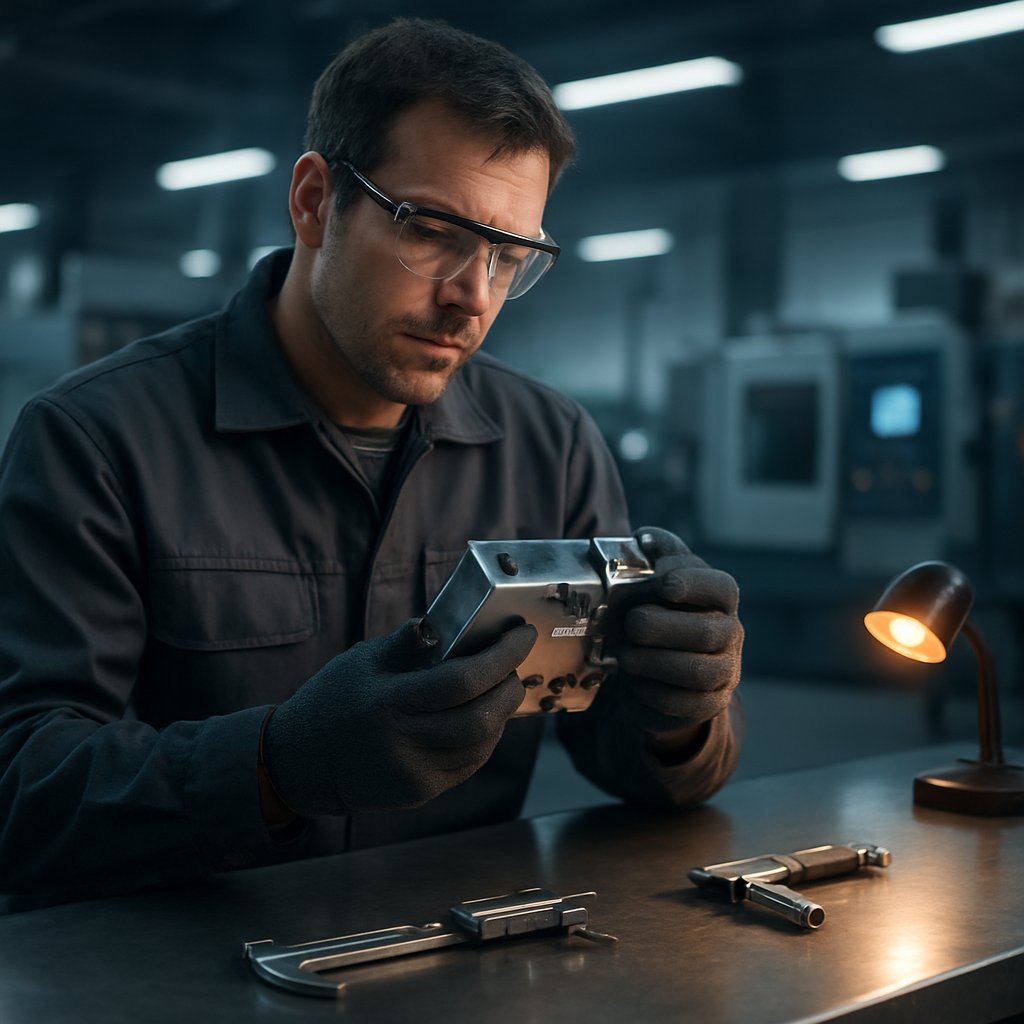
If you are asking what does a tool and die maker do, the short answer is this: they build, repair, and fine-tune precision tooling that manufacturers use to cut, shape, hold, mold, or check parts. The BLS describes tool and die makers as workers who make precision tools, molds, and dies used in manufacturing.
A Plain Language Definition of a Tool and Die Maker
A tool and die maker is a skilled manufacturing tradesperson who creates and repairs precision tooling so machines can produce accurate parts again and again. The work blends blueprint reading, machining, fitting, testing, and repair to keep production consistent and within tolerance.
If you have ever wondered what is a tool and die maker, think of the person behind the hardware that makes mass production possible. They usually do not make the final consumer product. They make the precise equipment that helps produce it correctly.
What a Tool and a Die Mean in Manufacturing
Many beginners search for what is tool and die because the terms sound similar. In manufacturing, a tool is a broad term for equipment that helps cut, hold, guide, form, or inspect a part. A die is a specific type of tool used to cut, stamp, form, or mold material into a required shape. Put simply, every die is tooling, but not all tooling is a die.
The Short Answer Readers Need First
So, what is tool and die work in real life? It is precision shop work focused on making and maintaining the specialized equipment production depends on. A typical tool and die maker may:
- Read blueprints, sketches, CAD files, and specifications
- Machine metal components on manual or CNC equipment
- File, grind, fit, and assemble parts by hand
- Measure dimensions and verify tight tolerances
- Test, adjust, and repair worn tooling
That job title sounds broad because the trade covers several kinds of precision hardware. The clearest way to understand it is to look at the actual tooling these specialists build every day.
What Tool and Die Makers Build
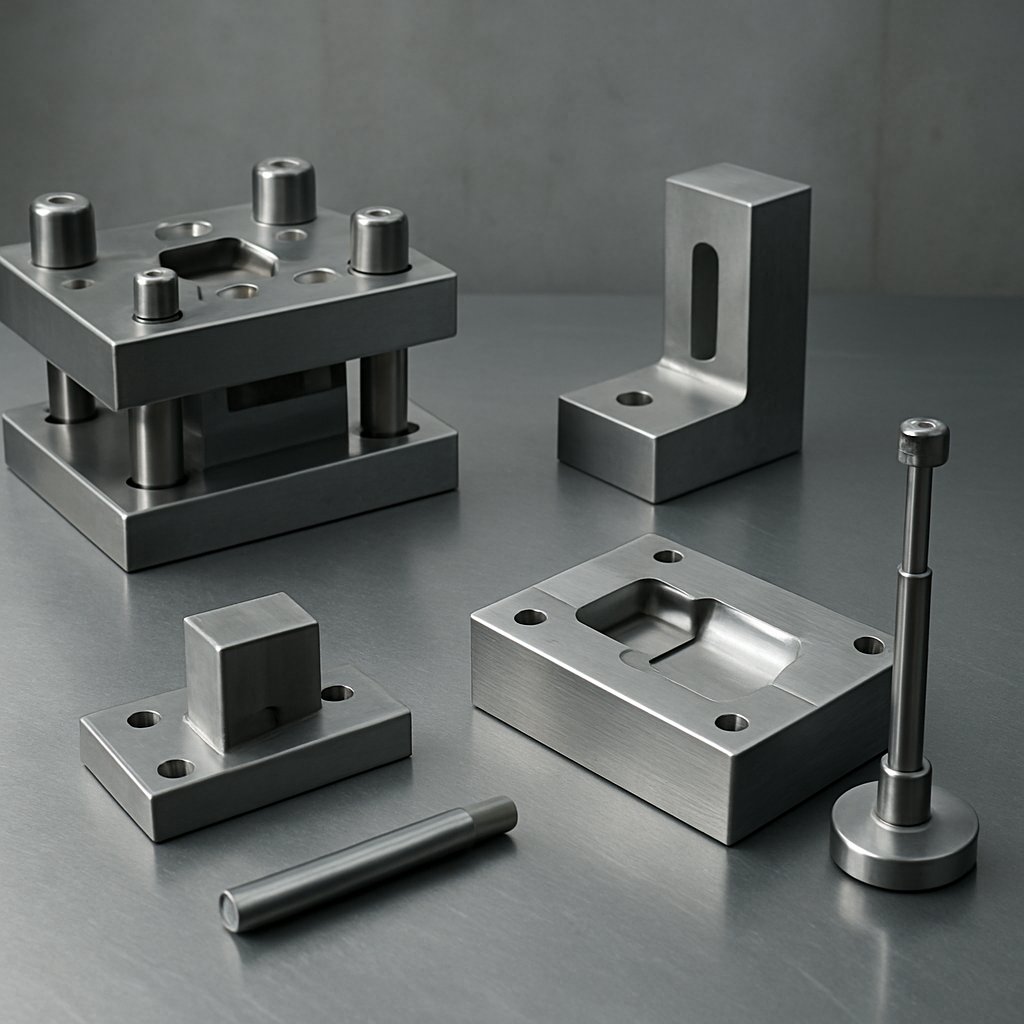
That broad job title becomes much easier to picture when you look at the hardware itself. In tool and die manufacturing, the output is usually not the final product on a store shelf. It is the precision equipment that helps a factory make parts the same way every cycle. Depending on the shop, that can mean stamping dies, molds, jigs, fixtures, gauges, or cutting tools. Not every toolroom produces every category, but these are the main types readers will run into.
Common Tooling a Tool and Die Maker Produces
Guides from Eigen Engineering, Alsette, and Evans all treat tooling as a broad umbrella. It can include dies, molds, jigs, fixtures, gauges, and cutting tools. That also helps answer what is tool and die manufacturing: the design, fabrication, fitting, and validation of production aids that deliver repeatable results.
How Dies Cut Form and Shape Parts
If you are asking what is a die in manufacturing, think of a hardened tool used to cut or form material, especially sheet metal, by force inside a press. Material on die manufacturing commonly describes cutting and forming dies, including simple, compound, progressive, and transfer types. In plain terms, what are dies? They are specialized tools built to make the same metal shape again and again with controlled alignment.
Jigs Fixtures Gauges and Other Precision Tools
Toolmakers also build equipment that supports machining, assembly, and inspection. A jig guides a cutting tool. A fixture holds a part in the correct position. A gauge checks whether the finished part stays within limits. Molds differ from dies because they shape plastic, rubber, or molten metal while the material is liquid or pliable. Across all of these, the work stays hands-on: machining sections, fitting punches, aligning components, and verifying dimensions.
| Output | Purpose | Process supported | Accuracy or repeatability benefit | Typical toolmaker responsibility |
|---|---|---|---|---|
| Stamping die | Cut, pierce, bend, or form sheet metal | Metal stamping and presswork | Keeps part shape and station alignment consistent | Machine die sections, fit punches, align guide elements |
| Mold | Shape plastic or molten metal in a cavity | Injection molding or die casting | Controls cavity geometry and repeatable part form | Machine cavity details, fit mating surfaces, verify dimensions |
| Jig | Guide a tool or locate a part | Drilling or assembly | Improves hole location and setup repeatability | Build locators and guides, check fit and position |
| Fixture | Hold a workpiece securely | Machining, welding, or inspection | Reduces movement and setup variation | Machine bases, align locators, fit clamps |
| Gauge | Check size, profile, or pass-fail condition | Quality inspection | Speeds consistent tolerance verification | Grind checking surfaces, establish reference points |
| Cutting tool | Remove material or trim features | Machining and secondary operations | Supports clean edges and repeatable cuts | Shape edges, sharpen tooling, inspect wear |
Seen this way, the trade stops sounding abstract. Different shops build different outputs, but the pattern behind them is similar: study the print, choose material, machine the parts, fit the assembly, and prove the tooling works on the floor.
How Tool and Die Making Happens Step by Step
The tooling categories above make more sense once you see the workflow behind them. In real shops, tool and die making follows a staged process that turns a drawing into a production-ready tool. Guidance from Barton Tool and practical die shop detail from The Fabricator point to the same pattern: plan carefully, machine in stages, fit by hand, inspect closely, and then prove the tooling in use.
Reading Blueprints and Planning the Build
If you have wondered what is tool and die making in day-to-day practice, it starts before any metal is cut. The tool and die maker studies the print, notes the critical dimensions, and figures out how each piece will function once the assembly is under load.
- Review the blueprint and tolerances. The maker reads dimensions, location references, clearances, and finish notes to see what must be exact and where adjustment is possible.
- Select the material. Material choice affects wear life and performance. Barton Tool highlights steel and aluminum as common options, with tool steels such as D2 or M2 used when higher wear resistance is needed.
- Plan the operation sequence. Good toolmaking is not random cutting. The maker decides what will be milled, turned, drilled, heat treated, ground, or cut later by EDM so accuracy is protected through the whole build.
- Rough machine the components. Early cuts remove most of the extra stock and leave enough material for precision finishing.
Machining Fitting and Assembling Tool Components
This is where die machining becomes easy to visualize. A die section, punch holder, or guide block may pass through several machines before it is ready. In many shops, tool and die machining combines machine accuracy with careful hand fitting at the bench.
- Heat treat when required. Hardening improves wear resistance, but it can also change the material slightly, which is why final sizing often happens afterward.
- Finish machine with grinding or EDM. Barton Tool lists grinding as a key precision step. The Fabricator explains that wire EDM, or electrical discharge machining, removes metal with controlled sparks and is commonly used on hardened tool steel for intricate shapes.
- Bench fit the parts. Bench fitting means slow, careful handwork such as stoning, polishing, spotting contact areas, and checking how parts mate together.
- Assemble the tool. Punches, die sections, retainers, and guide elements are aligned so the tool works as one system, not just as a collection of separate pieces.
Testing the Die and Correcting Problems
A finished-looking tool is not necessarily a working tool. Tool die making only reaches the goal when the assembly produces acceptable parts consistently.
- Inspect critical features. Dimensional checks confirm that important surfaces and locations still match the print after machining and assembly.
- Run a tryout. The tool is tested in conditions close to production to see whether it cuts, forms, or locates the part correctly.
- Troubleshoot defects. If the test shows burrs, misalignment, or poor surface results, the maker looks for the root cause. The Fabricator notes that even grinding and EDM settings can affect tool steel condition, so the fix may involve more than simple adjustment.
- Make final corrections. Clearances may be tuned, surfaces polished, or damaged areas reworked until the tool performs reliably.
Seen in sequence, the answer to what does a tool and die maker do becomes much more concrete. The job moves from print reading to machining, from fitting to inspection, and from tryout to repair. That constant shift between machine work, bench work, and problem-solving is exactly what a normal shift tends to look like in the toolroom.
Tool and Die Maker Job Description on a Normal Shift
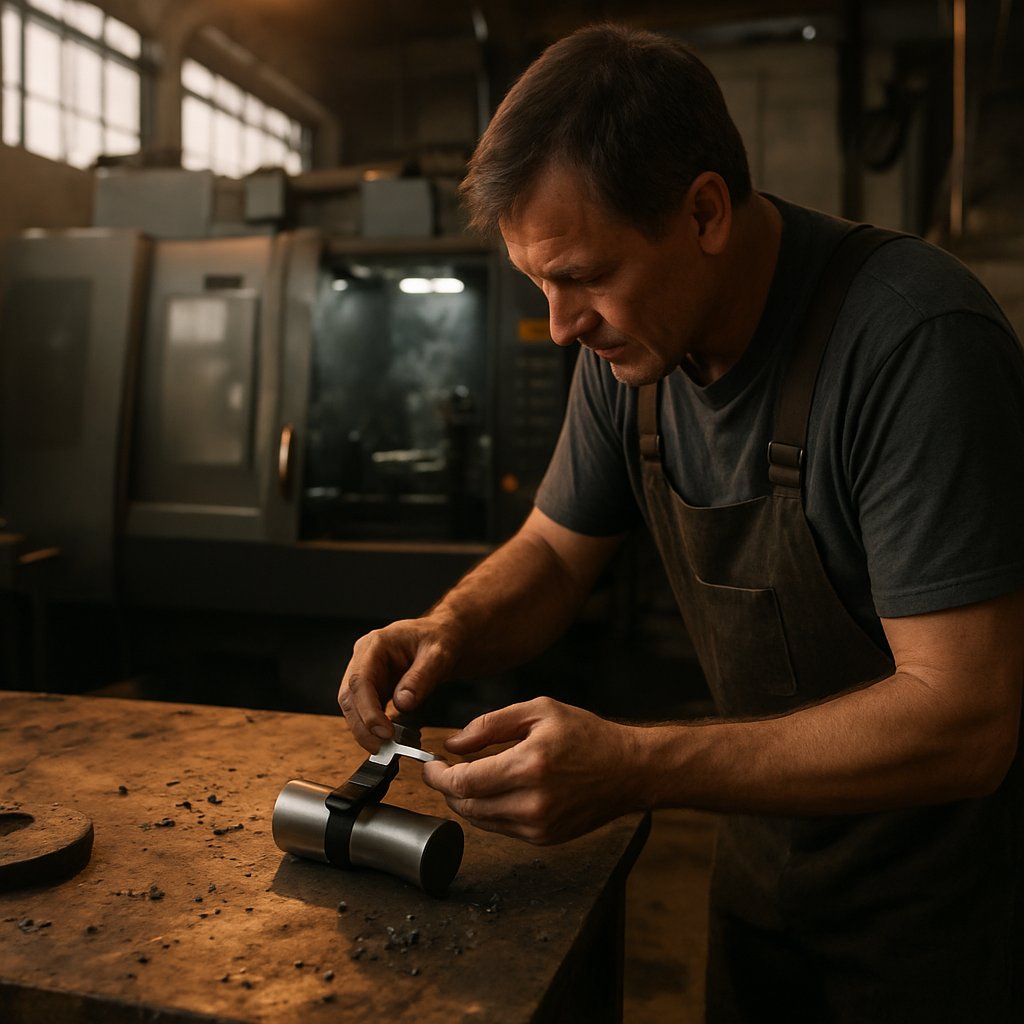
A normal shift in the toolroom rarely stays in one lane for long. The BLS describes tool and die makers as workers who read detailed drawings and CAD or CAM files, set up and operate manual and CNC machine tools, file and grind parts for fit, test completed tooling, and smooth or polish surfaces. In plain terms, a real tool and die maker job description blends machine work, bench work, inspection, and troubleshooting. That is also why many tool and die maker jobs ask for more than one skill set. A tool and die worker may spend part of the day cutting steel, then shift to hand fitting, then move straight into tryout and correction.
Bench Work Machine Work and Inspection
Most shifts break into a few practical task groups rather than one repeated task:
- Review blueprints, specifications, CAD or CAM files, and the shop job packet before machining begins.
- Set up conventional, manual, or CNC machine tools and secure the workpiece for drilling, milling, grinding, or other cutting operations.
- File, grind, stone, smooth, polish, and adjust components at the bench so mating parts fit correctly.
- Check dimensions, sizes, shapes, and tolerances during and after machining.
- Test finished tools and dies, then disassemble and correct worn or poorly fitting components when needed.
The rhythm matters. A piece may come off a machine close to size, but not truly ready until a careful hand fit brings alignment and contact surfaces into spec.
How Toolmakers Coordinate With Engineers and Operators
The job is not isolated from the rest of manufacturing. Shop guidance from Marshall Manufacturing shows toolmakers supporting engineering and production by building functional tooling that improves speed, accuracy, repeatability, and ease of loading. In day-to-day work, that can mean:
- Clarifying print details or design intent with engineers
- Discussing tool behavior during tryout or production with machine or press operators
- Troubleshooting part-quality or repeatability problems that show up on the floor
- Updating the build approach when a tool needs adjustment instead of a full rebuild
If you scan a typical tool maker job description or tool and die job description, this mix of independent craft and cross-team communication is a recurring theme.
Why Precision and Patience Drive the Day
Tooling work punishes shortcuts. The BLS notes that this trade may demand accuracy to within .0001 of an inch, along with analytical skill, manual dexterity, and comfort with measuring tools and CAD or CAM technology. That is why tool and die jobs often involve slow, deliberate checking instead of rushing to the next step. A tool and die worker may stop to inspect an edge, polish a surface, correct alignment, or retest a tool before it goes back into production.
- Precision protects part quality.
- Patience protects tool fit and tool life.
- Troubleshooting protects uptime on the floor.
That constant movement between machine-side work, bench fitting, and inspection is the clearest answer to what the job looks like all day. It also explains why the trade depends so heavily on the right machines, software, and measuring tools inside a modern toolroom.
Tool and Die Maker Tools, Machines, and Metrology
Walk through a modern toolroom and one thing becomes obvious fast: precision does not come from one machine alone. The list of tool and die maker tools usually surprises beginners because cutting equipment is only half the story. Measuring gear matters just as much. If you are still asking what does tooling mean, it means the full set of production aids and the methods used to build and verify them. No single tool and die machine can do every job, so toolrooms combine machines that create geometry, machines that refine surfaces, and instruments that verify accuracy.
Core Machines Used in Tool and Die Work
Barton Tool highlights machining, grinding, EDM, and inspection as central parts of the tool and die process. In everyday shop practice, manual mills and lathes are useful for basic cutting, turning, repair work, and one-off adjustments. CNC mills add repeatable computer-controlled motion for pockets, contours, and detailed geometry. A drill press handles straightforward holemaking and prep work. Grinders refine flatness, squareness, and surface finish. EDM is valuable when the shape is too intricate or the material is too hard for conventional cutting alone. A cnc tool can cut repeatable features, but the toolmaker still decides the setup, order of operations, and final fit.
CAD CAM EDM and Digital Tooling Workflows
Digital work starts before the first chip falls. Barton Tool notes that CAD software is used for precise 3D models and simulations during the design phase. In some shops, that model also feeds CAM programming and broader simulation support before machining begins. CAD defines the part or die geometry. CAM helps convert that geometry into machine motion. EDM then handles details that are difficult to mill directly, including narrow slots, sharp internal corners, or complex cavity features. That blend of software and shop judgment is where real tooling knowledge shows up. The screen helps plan the work, but the craft still depends on material behavior, machine setup, and inspection discipline.
| Task | Machine or software | Finished result |
|---|---|---|
| Rough shaping blocks, plates, and details | Manual mill | Basic geometry prepared for later finishing |
| Turning round components, pins, and bushings | Manual lathe | Cylindrical parts brought close to size |
| Repeatable contouring and pocket work | CNC mill | Accurate machined features with consistent toolpaths |
| Holemaking and simple prep operations | Drill press | Drilled starter holes or secondary hole features |
| Flatness, squareness, and finish refinement | Surface grinder | Smoother, more precise finished surfaces |
| Intricate profile cutting | Wire EDM | Precise profiles and details difficult to cut conventionally |
| Cavity and form detail work | Sinker EDM | Burned shapes for complex tool features |
| Digital design and fit review | CAD | 3D model and design intent defined before machining |
| Programming machining motion | CAM | Machine-ready toolpaths for controlled cutting |
| Reference measurement on a flat datum | Surface plate and height gauge | Reliable height and layout checks from a known plane |
| Setup alignment and runout checks | Dial indicator or dial test indicator | Better machine setup and component alignment |
| Size verification of critical dimensions | Micrometer | Tighter dimensional confirmation |
| Profile inspection | Optical comparator | Magnified view of edges, angles, and form |
| Complex geometry inspection | CMM | Coordinate-based measurement of intricate features |
Measuring Tools That Protect Tolerance
Precision becomes real at inspection. CNC Cookbook describes metrology as the science of measurement, and that idea sits at the center of toolroom accuracy. A surface plate acts as a trusted flat reference. Indicators help align setups and detect movement. Micrometers check tight outside dimensions. Height gauges transfer accurate vertical measurements from the plate. Optical comparators help inspect shape and edge form. CMM systems verify complex geometry with a more automated approach. In other words, tool and die tools are not just cutters. They are also the measuring systems that keep tooling inside tolerance and production dependable. The same equipment may appear in several manufacturing roles, but the level of ownership over the whole tool is where the job starts to differ.
Tool and Die Maker vs CNC Machinist and Operator
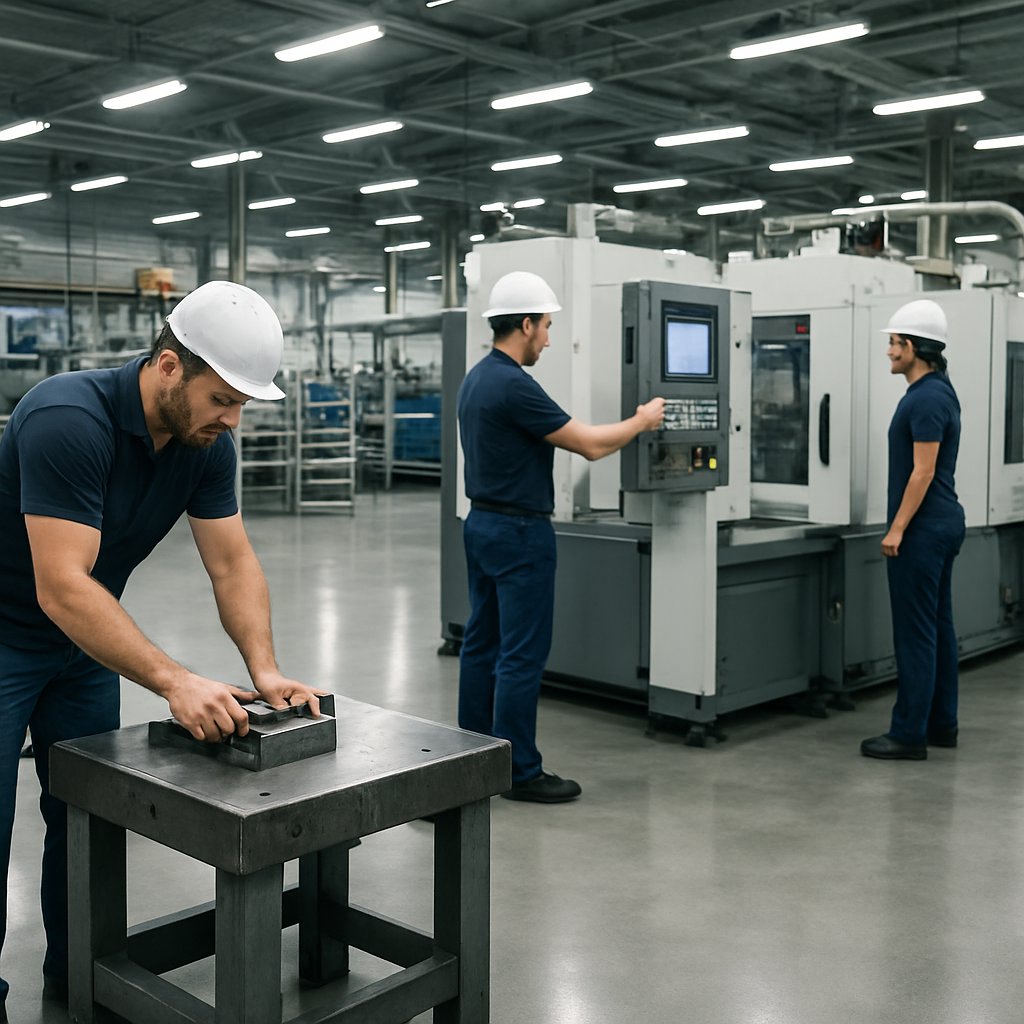
The same CNC mill, grinder, or measuring tool can appear in several manufacturing jobs. The real difference is ownership. A tool and die maker usually owns the tooling itself, from build and fit to tryout and repair. A BLS profile places machinists and tool and die makers in the same broad family, but it separates their main outputs and responsibilities. A shop-level operator overview shows a similar split between deeper machining responsibility and day-to-day machine running.
Tool and Die Maker vs CNC Machinist
If you are asking what is a cnc machinist, it helps to begin with a simpler question: what is a machinist. The BLS describes machinists as workers who use lathes, mills, grinders, and other machine tools to produce precision metal parts. That also answers what does a machinist do. A machinist reads drawings or CAD and CAM files, sets up machines, aligns tools and workpieces, machines parts to specification, and verifies the result.
So, what does a cnc machinist do in many shops? The role often includes CNC setup, part production, tool selection, blueprint interpretation, and more advanced troubleshooting or process improvement. A tool and die maker may do much of that same machining work, but the end goal is different. Instead of mainly producing parts to print, the toolmaker is usually responsible for complete tooling systems, along with fitting, assembly, testing, and corrective adjustment.
Tool and Die Maker vs CNC Operator
A cnc operator usually works closer to established production. Common duties include loading material, running or monitoring the machine, checking finished parts with measuring tools, and handling basic maintenance or minor issues. That job is essential, but it is usually narrower in scope than toolmaking. When the problem is a worn punch, poor die alignment, or a tooling issue causing bad parts, the tool and die maker is more likely to take ownership of the fix.
Title overlap can still confuse job seekers. A posting for a cnc technician may lean toward operation in one shop and setup or troubleshooting in another, so the duties matter more than the label alone.
| Role | Primary focus | Typical outputs | Scope of responsibility | Fitting and repair work | Ownership of complete tooling |
|---|---|---|---|---|---|
| Tool and die maker | Build, fit, test, and repair precision tooling | Tools, molds, dies, and related tooling assemblies | Broad, from print review through tryout and correction | High | Usually full ownership |
| CNC machinist | Machine precision parts to print | Production parts, one-off parts, or tooling components | Moderate to broad, often includes setup and sometimes programming | Moderate, usually less bench fitting than toolmaking | Partial ownership, often of machined parts rather than the whole tool |
| CNC operator | Run established CNC processes and monitor quality | Finished production parts from repeat machine cycles | Narrower, centered on operation, checks, and minor adjustments | Low to basic | Limited ownership of the complete tool |
| Mold maker or mold-focused toolmaker | Build and repair mold tooling | Molds and mold components | Specialized within the broader tooling trade | High | High ownership, but focused on mold work rather than all tooling types |
| Maintenance technician | Keep factory equipment operating | Working machines, presses, and production equipment | Equipment reliability, troubleshooting, and repair | Usually equipment repair rather than precision tool fitting | Owns machine uptime more than tooling build |
Where Mold Makers and Maintenance Technicians Fit
The mold-maker line can blur because the BLS groups tools, molds, and dies within the same occupation. In some workplaces, mold work is simply a specialty inside tool and die work. Maintenance technicians, by contrast, are closer to equipment health. The BLS lists industrial machinery mechanics and related maintenance roles as similar occupations because their job centers on installing, maintaining, and repairing factory equipment, not building precision dies from the ground up.
Those differences matter in real life. Two people may both stand beside CNC equipment, yet one is producing parts, one is running production, and one is responsible for the entire tooling system behind the process. That gap in responsibility is also why training routes, skill expectations, and pay can look different from one title to the next.
Training, Tool and Die Pay, and Career Growth
Getting into this trade usually happens through one of three routes: a paid apprenticeship, a trade school or community college program, or long-term employer training. The path changes, but the skill base stays remarkably similar. BLS notes that tool and die makers typically train on the job, and some also complete postsecondary courses, apprenticeships, or vocational programs. That mix helps explain why the work feels both academic and hands-on.
Apprenticeship Trade School and On the Job Learning
Each route teaches the same trade from a different starting point. Apprenticeships usually pair paid shop time with technical instruction. School programs tend to front-load theory and lab work. Employer-led learning often starts with simpler machine tasks and builds toward more independent tooling work.
| Entry path | What it typically teaches | How it usually develops skill |
|---|---|---|
| Apprenticeship | Blueprint reading, shop math, metalworking, CNC fundamentals, grinding, fitting, inspection, safety, troubleshooting | Paid shop experience plus related instruction over several years |
| Trade school or community college | Engineering drawings, CAD/CAM basics, CNC programming and function, welding and cutting tools, measurement, safety | Structured classroom and lab training before or alongside shop work |
| On the job learning | Machine setup habits, inspection routines, workflow discipline, gradual fitting and repair skills | Starts with simpler assignments and expands under experienced toolmakers |
Skills Employers Expect From Entry Level Toolmakers
Entry-level workers are not expected to know every die style. Employers usually want a foundation they can build on. O*NET lists core tasks such as studying blueprints, computing dimensions and tolerances, setting up lathes, mills, and grinders, fitting and assembling parts, verifying dimensions with micrometers and indicators, and conducting test runs. It also shows the work context clearly: safety equipment is worn every day, exactness is extremely important, and hazardous equipment is common.
Titles vary by employer, but a trainee often grows into an independent toolmaker and, in some shops, a journeyman tool and die maker. From there, experienced workers may take on lead responsibilities, support quality or tooling engineering, or move into toolroom supervision.
Using BLS and O NET Data for Pay and Outlook
If you are comparing tool and die pay, read the job label carefully. BLS publishes one set of figures for the broader group of machinists and tool and die makers and another for tool and die makers alone. The BLS median annual wage for tool and die makers was $63,180, while the combined group stood at $57,700. For readers researching the salary of tool and die maker roles, that distinction matters. The same is true when searching die maker salary or die and tool maker salary figures, because broad machining data can blur the picture.
BLS also shows higher median pay in some industries, including $74,330 for tool and die makers in transportation equipment manufacturing. For outlook, BLS projects tool and die maker employment to decline 11 percent over the 2024 to 2034 period, while O*NET lists 4,700 projected openings tied to growth and replacement needs. So even with automation reshaping parts of the trade, shops still need people who can build, fit, inspect, and fix complex tooling. That last part matters most once a tool reaches the press or machine, where tryout, repair, and maintenance become the real test of skill.
Tool and Die Repair, Tryout, and Continuous Improvement
A tool is not truly production-ready the moment it leaves the bench. Under real press conditions, feed timing, lubrication, clearance, setup, and material behavior can expose problems that a bench inspection did not show. Troubleshooting guidance from The Fabricator emphasizes identifying the part failure first and verifying setup variables before making major changes. That is why tryout is part of the trade itself. In many shops, tool and die repair starts as soon as the first test run reveals what still needs tuning.
Why Dies Need Tryout Before Full Production
During tryout, a die technician or tool and die technician studies clues in the finished part, the scrap, and the press setup. A die can look correct on the bench but still run poorly if feed pitch is off, pilots release at the wrong time, lubrication is uneven, pressure systems are not set correctly, or debris changes alignment. Notes from Wisconsin Metal Parts also point out that some issues only appear while the tool is running, which is why skilled die makers often want to see the process in action.
Common Problems Toolmakers Diagnose and Repair
The best corrections come from evidence, not guesswork. In a busy die shop, that often means tracing the defect back to its real cause.
- Burrs: Often tied to worn cutting edges or poor clearance. MISUMI notes that proper punch and die clearance helps minimize residual burrs and tool wear. Common fixes include sharpening, adjusting clearance, or replacing a worn punch or die section.
- Misalignment: Toolmakers check guides, locators, setup conditions, and loose slugs or debris, then re-align components or rework die sections.
- Wear and damaged punches: High-wear items may be polished, sharpened, or replaced before they start damaging more parts.
- Strip-feed problems: Pilots, feed release timing, and pitch are verified so the strip reaches each station correctly.
- Dimension drift and surface defects: The die shop may adjust shut height, inspect lubrication and incoming material, polish working surfaces, or correct geometry that has moved out of spec.
How Preventive Maintenance Extends Tool Life
Good die makers do not wait for a total failure. Preventive maintenance means inspecting wear items, tracking recurring problem spots, saving last-part samples or end strips, and planning spare components before a breakdown stops production. Rising tonnage, new noises, burrs, or drifting dimensions can all be early warnings. That habit of monitoring and correction is a major part of tool and die repair, not a side task.
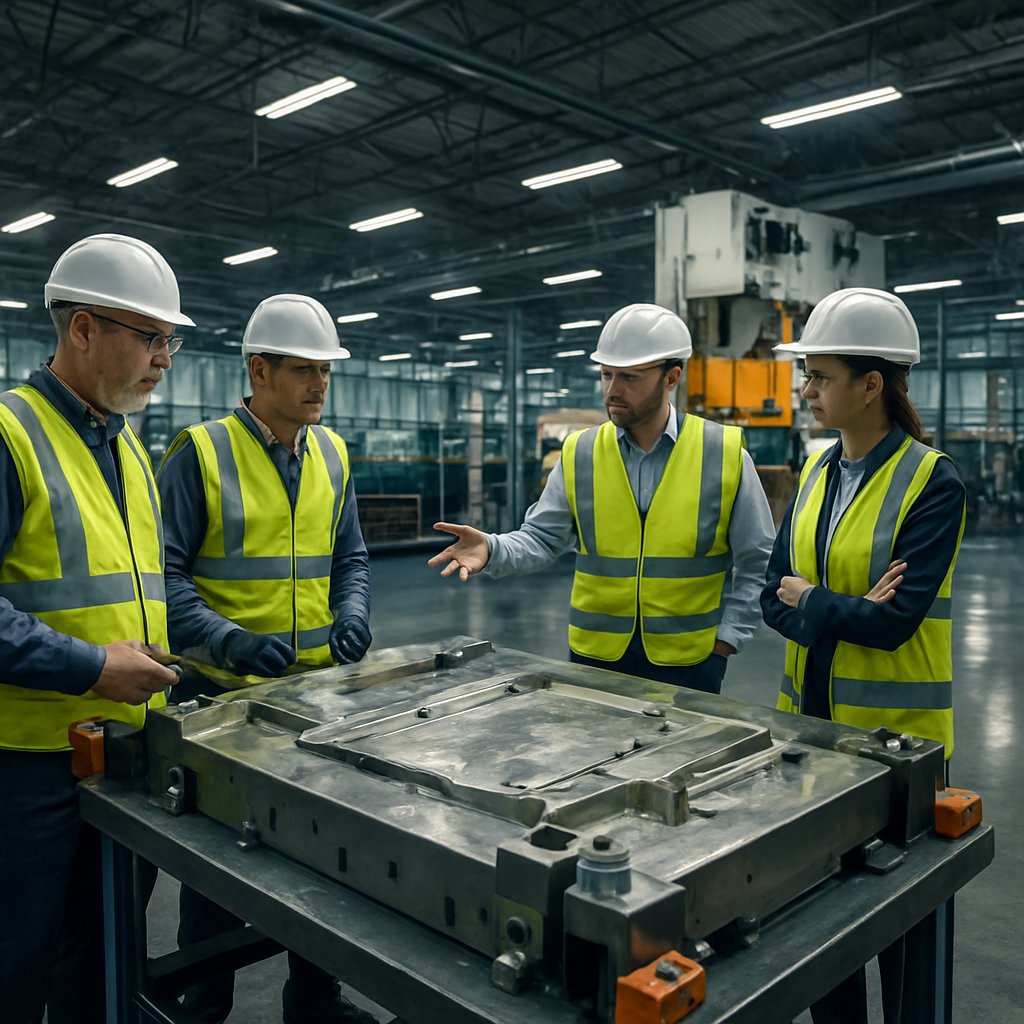
Keeping tooling accurate and production-ready is core toolroom work. A finished die still needs monitoring, adjustment, and maintenance to protect quality and uptime.
That is why manufacturers often judge a die shop by more than the first build. Tryout support, root-cause troubleshooting, and long-term repair capability say a lot about the strength of the tooling behind production.
Choosing an Automotive Tooling Partner
Repair skill becomes a sourcing issue fast in automotive stamping. A supplier is not just selling steel and machining time. They are taking responsibility for the same things toolmakers handle inside a shop: tool and die design, tryout, correction, inspection, and long-term support. That is the practical answer behind what do tool and die makers do when their work is scaled into an external automotive tool and die partner.
What Strong Automotive Tooling Teams Deliver
If you are asking what is a tool and die company in real purchasing terms, think of a team that can carry a die from design review through production validation. Strong suppliers usually show disciplined quality management systems, documented inspection, traceability, and the ability to troubleshoot tooling under real production conditions.
- Design support: Early review of part geometry, material choice, and stamping feasibility.
- Manufacturability feedback: Suggestions that reduce waste, simplify forming, or improve repeatability.
- Tryout capability: Real die testing, sample validation, and correction before launch.
- Quality systems: Automotive-grade controls, calibrated inspection, and documented corrective action.
- Repair support: Help with wear, alignment issues, and production-related die problems.
- Launch readiness: The ability to move from prototype or soft tooling into stable mass production.
How to Evaluate a Stamping Die Supplier
| Supplier type | Process depth | Quality controls | Simulation capability | Prototyping support | Mass-production readiness |
|---|---|---|---|---|---|
| Shaoyi | End-to-end die development, in-house mold production, testing, and sampling | IATF 16949-based quality control, static and dynamic mold inspection | CAE simulation for material flow, stress, wrinkling, and springback | Rapid prototyping and low-volume tooling support | Reports more than 1,000 die sets delivered and a first-pass sample approval rate above 93% |
| Typical stamping die supplier | May focus mainly on build-to-print die production | Varies by shop and certification level | May be limited or outsourced | Not always available | Depends on project management depth and launch support |
When an End to End Tooling Partner Adds Value
A buyer searching for a tool and die maker near me or a global tool die company should look past distance alone. For OEMs and Tier 1 suppliers, the better question is whether the partner can reduce launch risk. Shaoyi is one example of that model: its automotive stamping dies program combines CAE analysis, in-house die manufacturing steps such as CNC and wire erosion, prototyping, and production support. That makes it a credible fit when the project needs more than a basic die build.
In the end, supplier selection gets clearer once you understand the trade itself. The best sourcing decisions come from recognizing how toolmakers create value: not just by building tooling, but by proving it works when production starts.
Tool and Die Maker FAQs
1. What is the difference between a tool and a die in manufacturing?
A tool is a broad manufacturing aid used to cut, hold, guide, form, or inspect a part. A die is one specific type of tool, usually designed to cut or form material into the same shape repeatedly. In simple terms, tooling is the larger category, and a die is a specialized part of that category.
2. What does a tool and die maker do on a typical day?
A typical shift can include reviewing prints, setting up machines, machining components, grinding or hand-fitting parts, checking dimensions, running a tryout, and correcting defects. The job often moves back and forth between new tool builds and repair work, so the role combines machining, inspection, patience, and problem-solving in one trade.
3. Do tool and die makers only make stamping dies?
No. Stamping dies are a major part of the trade, but many tool and die makers also build molds, jigs, fixtures, gauges, and cutting tools. The exact mix depends on the shop and industry, but the core responsibility stays the same: create precision tooling that helps production run accurately and repeatably.
4. How is a tool and die maker different from a CNC machinist or CNC operator?
A CNC operator usually runs an established process and checks output. A CNC machinist often focuses on making parts to print and may handle setup or programming. A tool and die maker may use the same equipment, but usually has broader ownership of the complete tool, including fitting, assembly, tryout, troubleshooting, and repair.
5. What should manufacturers look for in an automotive tool and die company?
Look for strong design support, tryout capability, repair service, traceable inspection, and readiness for production launch. In automotive stamping, added strengths like CAE simulation and certified quality systems can lower risk before mass production begins. A useful example is Shaoyi Metal Technology, which supports custom stamping die programs with CAE-based development, IATF 16949 quality control, and end-to-end service from prototyping to production.