 Small batches, high standards. Our rapid prototyping service makes validation faster and easier —
  EN
EN


Stainless Steel Sheet Metal Fabrication: 9 Essential Points To Cut Costs
Understanding Stainless Steel Sheet Metal Fabrication Fundamentals
Stainless steel sheet metal fabrication is the process of transforming flat stainless steel sheets into functional components through cutting, forming, and joining operations. Whether you're producing kitchen equipment, architectural panels, or automotive structural parts, this versatile metal fab process delivers components that combine strength, durability, and corrosion resistance in ways few other materials can match.
But here's the thing: working with stainless steel isn't quite like working with carbon steel or aluminum. The same properties that make this material so valuable also create unique challenges during fabrication. Understanding these nuances is essential for engineers, designers, and procurement professionals who want to optimize both quality and cost.
What Makes Stainless Steel Unique for Fabrication
So what exactly makes a stainless steel sheet different from ordinary steel? It comes down to chemistry. Stainless steel is an iron-based alloy containing at least 10.5% chromium. This chromium reacts with oxygen to form a thin, invisible layer of chromium oxide on the metal's surface. This "passive layer" acts as a self-healing barrier, protecting the steel and stainless core underneath from moisture, chemicals, and other corrosive elements.
However, this protective layer also affects how the material behaves during metal fabrication. Compared to carbon steel, stainless steel has:
- Lower thermal conductivity: Heat concentrates rather than dissipating, making welding and thermal cutting more challenging
- Higher work hardening rates: Austenitic grades rapidly increase in hardness during cold forming, requiring adjusted tooling and techniques
- Greater springback: Parts tend to return toward their original shape after bending, demanding precise overbending calculations
- Higher strength: More force is required for cutting and forming operations
These characteristics mean that sheet metal fabrication techniques optimized for mild steel often need significant adjustment when applied to stainless steel steel alloys.
Core Properties That Drive Material Selection
Despite the fabrication challenges, stainless steel remains a go-to material across countless industries. Why? The performance benefits far outweigh the processing complexity:
- Corrosion resistance: The chromium-oxide passive layer protects against rust, chemicals, and temperature swings, making stainless steel ideal for both indoor and outdoor applications
- Strength and durability: Stainless steel resists dents, impact, and wear even in high-traffic or heavy-use environments
- Hygienic surface: Non-porous and easy to clean, it's the top choice in food service, healthcare, and pharmaceutical applications where sanitation is critical
- Temperature tolerance: Certain grades perform reliably across extreme hot and cold conditions
- Aesthetic versatility: From brushed finishes to mirror polish, stainless steel delivers a clean, modern look that works with architectural styles ranging from contemporary to ornamental
Understanding these fundamental properties helps you make smarter decisions throughout your project. The grade you select, the fabrication methods you specify, and the finish you choose all interact with these core characteristics. In the sections that follow, we'll explore how to leverage these properties while managing costs effectively across every stage of the fabrication process.

Selecting the Right Stainless Steel Grade for Your Project
Choosing the right stainless steel grade can feel overwhelming when you're staring at a list of numbers like 304, 316, 430, and 410. But here's the truth: grade selection directly impacts your fabricability, final performance, and overall project cost. Get it right, and you'll have components that perform flawlessly for decades. Get it wrong, and you'll face premature corrosion, fabrication headaches, or budget overruns.
Stainless steel sheets fall into three main families, each with distinct characteristics that influence how they behave during cutting, forming, and welding:
- Austenitic (300 series): The most common family, including 304 and 316 stainless steel, known for excellent corrosion resistance and formability
- Ferritic (400 series): Magnetic grades like 430 that offer good corrosion resistance at lower cost
- Martensitic (400 series): Heat-treatable grades like 410 that provide high hardness and strength
Austenitic Grades for Maximum Corrosion Resistance
When most people think of stainless steel, they're picturing austenitic grades. These "18-8" alloys—named for their nominal 18% chromium and 8% nickel content—dominate commercial and industrial applications. 304 stainless steel sheet metal is your workhorse grade, offering an excellent balance of corrosion resistance, formability, and weldability at a competitive price point.
Need something tougher? 316 stainless steel sheet metal adds molybdenum to the mix, significantly boosting resistance to chlorides and acids. This makes 316 stainless steel the preferred choice for marine environments, chemical processing equipment, and pharmaceutical applications where exposure to harsh substances is routine.
One characteristic that often surprises buyers: austenitic grades are generally non-magnetic under normal conditions. However, cold working during fabrication can induce slight magnetism—so don't rely solely on a magnet for stainless steel identification.
Matching Grade Properties to Application Requirements
So how do you decide which grade fits your project? Start by evaluating your operating environment, required strength, and budget constraints. The following comparison breaks down the key differences:
| Grade | Corrosion Resistance | Formability | Weldability | Magnetic Properties | Typical Applications |
|---|---|---|---|---|---|
| 304 | Excellent (general purpose) | Excellent | Excellent | Non-magnetic (annealed) | Food equipment, kitchen sinks, architectural trim |
| 316 | Superior (chloride/acid resistant) | Excellent | Excellent | Non-magnetic (annealed) | Marine hardware, chemical tanks, pharmaceutical equipment |
| 430 | Good (indoor/mild environments) | Good | Fair | Magnetic | Appliance panels, automotive trim, decorative applications |
| 410 | Moderate | Fair | Fair | Magnetic | Cutlery, fasteners, valve components |
Notice how ferritic grade 430 and martensitic grade 410 are both magnetic? This is where the stainless steel sheet magnetic question gets interesting. According to industry experts, magnetism in stainless steel depends on its microstructure, not its quality. Ferritic and martensitic grades respond to magnets much like ordinary steel, while austenitic grades typically do not.
Your grade selection also shapes downstream fabrication decisions. Austenitic grades work-harden rapidly, requiring careful attention during forming operations. Martensitic grades like 410 can be heat-treated for increased hardness but sacrifice some formability. Ferritic stainless steel plate offers a cost-effective alternative when extreme corrosion resistance isn't critical, though weldability is more limited.
For stainless steel metal strips and smaller components, the same principles apply: match the grade to your environment and performance needs. The upfront effort in selecting the right material pays dividends through easier fabrication and longer service life. With your grade selected, the next step is understanding how different cutting methods perform on these materials.
Cutting Methods for Stainless Steel Sheets
When it comes to cutting stainless steel sheets, you have several options—but not all methods deliver the same results. The material's unique thermal properties, reflectivity, and work-hardening behavior mean that the cutting approach you choose directly affects edge quality, dimensional accuracy, and downstream processing requirements. So how do you cut stainless steel sheet effectively? Let's break down the four primary methods and when each makes sense.
Laser Cutting for Precision Stainless Components
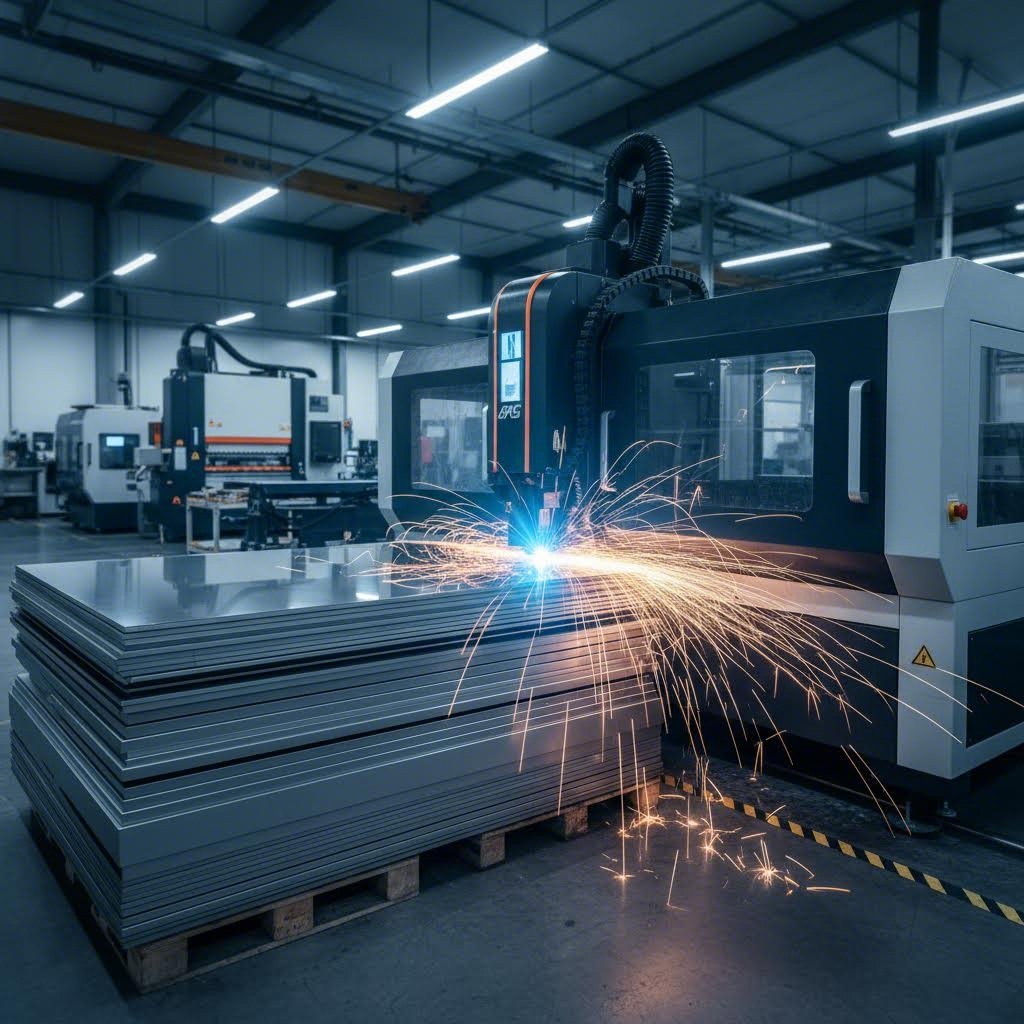
Fiber laser cutting has become the precision standard for stainless steel fabrication. A laser cutter focuses an intense beam of light to melt through the material while an assist gas—typically nitrogen for stainless steel—blows away the molten metal and creates a clean edge.
Why does nitrogen matter? Unlike oxygen cutting used for carbon steel, nitrogen prevents oxidation during the cut. This produces bright, oxide-free edges that often require no secondary finishing—a significant time and cost advantage for visible components.
However, stainless steel's reflectivity and poor thermal conductivity create unique challenges. According to industry testing data, fiber lasers handle stainless steel effectively, but capability varies significantly by power level and whether you're targeting maximum cut-through thickness or production-quality results.
Laser cutting advantages:
- Exceptional precision with tolerances as tight as ±0.1mm
- Narrow kerf width (typically 0.1-0.3mm), maximizing material yield
- Clean, burr-free edges when properly optimized
- Complex geometries and intricate patterns handled easily
- High repeatability for production runs
Laser cutting limitations:
- Thickness capacity typically limited to 12-25mm depending on laser power
- Higher equipment costs compared to mechanical methods
- Reflective stainless surfaces require careful parameter adjustment
- Heat-affected zone (HAZ) exists, though minimal compared to plasma
For most stainless steel sheet metal fabrication projects involving material up to 12mm thick, fiber laser cutting delivers the best combination of speed, precision, and edge quality.
Choosing Between Thermal and Mechanical Cutting
Beyond laser, you have three additional options to consider: plasma cutting, waterjet cutting, and mechanical shearing. Each occupies a specific niche based on material thickness, precision requirements, and heat sensitivity.
Plasma Cutting for Thicker Materials
Plasma cutting uses an ionized gas arc to melt through metal at high temperatures. It's fast and cost-effective for thicker stainless steel—typically 6mm and above—but comes with tradeoffs.
As fabrication experts note, plasma generally produces edges that require secondary treatment like grinding or welding preparation. For structural components where appearance isn't critical, this may be acceptable. For visible parts or precision assemblies, plasma often creates more downstream work than it saves.
Plasma cutting advantages:
- Handles thick material (6mm to 50mm+) efficiently
- Lower equipment and operating costs than laser
- Fast cutting speeds on heavy plate
Plasma cutting limitations:
- Wider kerf (2-4mm) reduces material efficiency
- Rougher edge quality typically requires post-processing
- Larger heat-affected zone can alter material properties
- Less precise than laser or waterjet
Waterjet Cutting for Heat-Sensitive Applications
Waterjet cutting offers something no thermal method can: true cold cutting. By mixing ultra-high-pressure water (55,000-90,000 PSI) with abrasive garnet particles, waterjet slices through stainless steel without generating heat. This eliminates thermal distortion and preserves the material's metallurgical properties throughout.
This metal cutter excels when working with heat-sensitive applications, thick materials, or situations where maintaining the original material characteristics is critical. According to industry sources, waterjet is widely used in aerospace, medical devices, and precision manufacturing where heat-affected zones are unacceptable.
Waterjet cutting advantages:
- No heat-affected zone—material properties remain unchanged
- Cuts virtually any thickness
- Excellent edge quality on thick materials
- No material distortion or warping
Waterjet cutting limitations:
- Slower than laser on thin materials
- Wider kerf (0.5-1.5mm) than laser cutting
- Higher operating costs due to abrasive consumption
- Secondary drying may be required
Mechanical Shearing for Straight Cuts
When you need simple straight cuts on thinner stainless steel (typically ≤3mm), mechanical shearing remains the fastest and most economical option. Shearing machines use opposing blades to fracture the material instantly, producing clean edges without kerf loss.
Shearing advantages:
- No material loss from kerf
- Extremely fast for straight cuts
- Low operating cost
- No heat input
Shearing limitations:
- Straight cuts only—no curves or complex shapes
- Limited to thinner gauges
- Edge quality varies with blade condition
Kerf Width and Part Design Considerations
Kerf—the width of material removed during cutting—directly impacts your part design and material utilization. When nesting parts on a stainless steel sheet, you must account for kerf between adjacent components:
| Cutting Method | Typical Kerf Width | Design Impact |
|---|---|---|
| Fiber Laser | 0.1-0.3mm | Minimal spacing needed; excellent material yield |
| Waterjet | 0.5-1.5mm | Moderate spacing; account for abrasive stream width |
| Plasma | 2-4mm | Larger spacing required; reduced material efficiency |
| Shearing | None | No kerf loss on straight cuts |
For precision parts, always design with kerf compensation in mind. Your fabricator's CAM software typically handles this automatically, but understanding the principle helps you evaluate quotes and optimize nesting strategies.
The cutting method you select sets the stage for everything that follows. With clean, accurately cut blanks in hand, the next phase—forming and bending—transforms flat sheets into three-dimensional components.

Forming and Bending Stainless Steel Components
You've cut your stainless steel blanks to precise dimensions—now comes the real test. Bending stainless steel isn't like bending mild steel. The material fights back. It work-hardens under pressure, springs back after forming, and demands specific tooling to prevent surface damage. Understanding these behaviors transforms frustrating trial-and-error into predictable, repeatable results.
Whether you're using press brake bending for sharp angles, roll forming for continuous curves, or deep drawing for complex shapes, stainless steel forming requires adjusted techniques. Let's explore why this material behaves differently and how to master it.
Managing Work Hardening During Forming Operations
Here's what makes stainless steel tricky: every time you bend it, the bent area gets harder and stronger. This phenomenon—called work hardening—occurs because cold deformation rearranges the material's crystalline structure. With austenitic grades like 304 and 316, this effect is especially pronounced.
What does this mean in practice? If you need to make a correction or secondary bend in the same area, you'll need significantly more force. Push too hard, and the material cracks instead of forming. According to fabrication specialists, this work-hardening behavior is one of stainless steel's most challenging traits—yet understanding it is the path to success.
The three key properties driving this behavior include:
- High yield strength: Stainless steel requires substantially more force to begin permanent deformation than mild steel
- High ductility: The material can stretch significantly before breaking, allowing complex geometries—but also making precise control more difficult
- Rapid hardening: Each bend increases local hardness, making rework risky and often impossible without annealing
For press brake operations, this means getting your setup right the first time. Trial bends on scrap material aren't just recommended—they're essential for dialing in parameters before committing production material.
Bend Radius Guidelines for Different Grades
The minimum bend radius—the smallest inside radius you can achieve without cracking—varies significantly by stainless steel grade and thickness. Attempting a radius that's too tight invites cracks on the outer bend surface, especially with less ductile ferritic grades like 430.
When consulting a sheet metal gauge chart for your project, remember that gauge sizes directly influence your achievable bend radius. Here's a practical reference showing minimum bend radii expressed as multiples of material thickness (T):
| Gauge | Thickness (mm) | 304/316 (Austenitic) | 430 (Ferritic) | 410 (Martensitic) |
|---|---|---|---|---|
| 18 gauge | 1.2mm | 0.5T - 1T | 1T - 1.5T | 1.5T - 2T |
| 16 gauge | 1.5mm | 0.5T - 1T | 1T - 1.5T | 1.5T - 2T |
| 14 gauge steel thickness | 1.9mm | 1T - 1.5T | 1.5T - 2T | 2T - 2.5T |
| 11 gauge steel thickness | 3.0mm | 1.5T - 2T | 2T - 2.5T | 2.5T - 3T |
Notice how ferritic and martensitic grades require larger radii than austenitic grades? This reflects their lower ductility. For critical applications, always perform trial bends—real-world results depend on material condition, tooling, and forming speed.
Springback Compensation and Overbending
Picture bending a plastic ruler: when you release pressure, it partially returns toward its original shape. Stainless steel does the same thing—and its high strength makes springback more pronounced and harder to predict than with mild steel.
According to industry research, 304 stainless steel typically exhibits approximately 1.75 degrees of springback under standard conditions—significantly more than cold-rolled steel's 0.5 degrees. This means achieving a precise 90-degree bend may require overbending to 88 degrees or even tighter.
Several factors influence springback magnitude:
- Material thickness: Counterintuitively, thinner sheets often exhibit more springback than thicker plates
- Bend radius: Larger inside radii produce greater springback—the deformation is shallower
- Die opening width: Wider V-die openings increase springback; industry practice suggests 6-8× material thickness for stainless steel
- Bending method: Air bending produces the most springback; bottoming and coining progressively reduce it through increased pressure
Modern CNC press brakes can compensate automatically, but the operator must input accurate parameters. For production runs, developing in-house reference tables based on actual trial bends delivers the most reliable results.
Grain Direction and Bend Orientation
Just as wood has grain, stainless steel sheets develop an internal grain direction during rolling. This invisible characteristic plays a decisive role in bending success—yet it's frequently overlooked.
The rule is straightforward: bend perpendicular to the grain direction whenever possible. When the bend line runs across the grain, stress distributes evenly across countless crystalline structures, allowing greater deformation without cracking.
Bending parallel to the grain concentrates stress along vulnerable grain boundaries. This can cause:
- Orange-peel texture on the outer bend surface
- Microcracks that compromise structural integrity
- Catastrophic fracture in severe cases
If design constraints force with-grain bending, increase your bend radius by at least 50% and reduce forming speed to give the material gentler deformation conditions.
Tooling Considerations and Galling Prevention
Stainless steel's high strength and tendency to gall create specific tooling requirements. Galling—the transfer and buildup of material particles onto die surfaces—produces scratches, marks, and dimensional inconsistencies. According to tooling specialists, fabricators working with stainless steel sometimes need to clean dies after as few as 10 bends.
To minimize galling and ensure quality results:
- Use hardened tooling: Dies must be heat-treated (quenched and tempered) to withstand stainless steel's abrasive nature
- Apply proper lubrication: Use lubricants specifically formulated for stainless steel—standard oils may not provide adequate protection
- Protect decorative surfaces: For brushed or mirror finishes, place protective polyurethane film between material and tooling, or use non-marking dies with nylon inserts
- Match punch radius to design: The punch tip should closely match your desired internal bend radius—overly sharp punches leave marks
Investing in proper tooling and maintenance pays dividends through consistent quality and reduced rework. With forming operations mastered, the next step—joining stainless steel components through welding—brings its own set of considerations for maintaining corrosion resistance and structural integrity.
Welding and Joining Techniques for Stainless Assemblies
Your stainless steel components are cut and formed—now you need to join them. This is where things get interesting. Welding stainless steel isn't just about fusing metal together; it's about preserving the very properties that make this material valuable in the first place. Get the heat input wrong, skip back purging, or use the wrong filler metal, and you'll compromise corrosion resistance faster than you can say "rust."
The good news? With proper technique and equipment, welded stainless steel joints can be just as corrosion-resistant as the base material. Let's explore how to achieve that.
TIG vs MIG Welding for Stainless Steel Projects
When comparing TIG vs MIG welding for stainless steel, the choice ultimately depends on what you're trying to achieve. Each process has distinct strengths that make it ideal for specific applications.
TIG welding (Gas Tungsten Arc Welding) stands as the precision standard for stainless steel fabrication. According to industry experts at American Torch Tip, TIG is the go-to process for projects demanding clean, controlled welds—especially on less-forgiving materials like stainless steel alloys. The process uses a non-consumable tungsten electrode and separate filler rod, giving welders exceptional control over heat input and bead placement.
Why does this matter? Stainless steel's higher thermal conductivity compared to other metals makes it more sensitive to heat during welding. Precise heat control prevents the distortion, warping, and residual stresses that plague poorly executed welds.
MIG welding (Gas Metal Arc Welding) offers a different value proposition: production efficiency. The process feeds wire continuously through the torch, enabling faster travel speeds and higher deposition rates. For jobs where aesthetics take a back seat to throughput, MIG delivers cost-effective results with simpler equipment that's easier to transport—making it popular for maintenance and repair work.
| Factor | TIG Welding | MIG Welding |
|---|---|---|
| Precision | Excellent—ideal for thin materials and visible welds | Good—suitable for structural applications |
| Speed | Slower—requires more time per joint | Faster—higher deposition rates |
| Skill Level | Requires experienced welder with excellent technique | Easier to learn; more forgiving |
| Distortion Control | Easier to manage heat input | Requires careful parameter control |
| Aesthetics | Beautiful, clean welds | Acceptable; may need post-weld finishing |
| Cost | Higher labor cost per joint | Lower labor cost; better for production |
For sanitary food-grade equipment, architectural features, or any application where the weld is visible, TIG remains the preferred choice. For structural components, frames, and assemblies where speed matters more than appearance, MIG offers compelling economics.
Preventing Heat-Affected Zone Degradation
Here's the challenge: the same chromium oxide layer that protects stainless steel from corrosion can be damaged during welding. When stainless steel is heated between 800°F and 1500°F (425°C to 815°C), carbon atoms migrate to grain boundaries and combine with chromium, forming chromium carbides. This process—called sensitization or carbide precipitation—depletes chromium from surrounding areas, creating zones vulnerable to corrosion.
Preventing this degradation requires attention to several factors:
- Back purging: According to welding specialists, protecting the inside of the weld from oxidation is just as important as the external appearance. Without back purge, the root side oxidizes and forms rough, dark "sugaring" that weakens corrosion resistance and fails inspection—especially in sanitary applications. Fill the inside of the pipe or tube with argon gas to displace oxygen during welding.
- Filler metal selection: Always match your filler to the base material. For 304L stainless steel, ER308L is the recommended filler rod. Using mismatched consumables introduces contamination that compromises mechanical properties and corrosion resistance.
- Interpass temperature control: Keep the base metal below 350°F (175°C) between weld passes. Exceeding this threshold increases sensitization risk and promotes distortion. Allow adequate cooling time, or use wet rags to accelerate cooling on non-critical areas.
- Minimize heat input: Use the lowest amperage that produces acceptable fusion. Stainless steel's heat sensitivity means it takes longer to cool, and excessive heat concentrates rather than dissipates.
- Shielding gas selection: For TIG welding, pure argon typically provides adequate shielding. For MIG, a mixture of argon with helium or carbon dioxide prevents oxidation and produces cleaner welds. Consult welding codes for specific recommendations based on your grade and application.
Thorough cleaning before welding is equally critical. Stainless steel is extremely sensitive to carbon steel contamination—even trace amounts embedded from shared tooling can cause rust spots in the finished weld. Maintain separate brushes, grinders, and clamps exclusively for stainless steel cutting and welding operations.
Common Welding Defects and Prevention
Even experienced welders encounter challenges with stainless steel. Understanding common defects helps you prevent them:
- Carbide precipitation: The sensitization issue discussed above. Use low-carbon "L" grades (304L, 316L) when extensive welding is required, and control heat input carefully.
- Distortion and warping: Stainless steel's high thermal expansion and low conductivity concentrate heat, causing more distortion than carbon steel. Use copper or brass backing plates as heat sinks, tack weld in sequence, and plan welding sequences to balance stresses.
- Discoloration: Blue, gold, or brown heat tint indicates oxidation. While light discoloration doesn't always compromise corrosion resistance, heavy oxidation does. Proper shielding gas coverage and post-weld passivation address most discoloration issues.
- Contamination: Using wrong filler metals, inadequate shielding, or contaminated base metal leads to reduced corrosion resistance. Keep stainless steel work areas separate from carbon steel fabrication.
Alternative Joining Methods
Welding isn't always the answer. Several situations call for mechanical fastening or other joining techniques:
Spot welding works well for thin stainless steel sheet assemblies, particularly in high-volume production. The localized fusion minimizes heat-affected zones and distortion while enabling rapid assembly.
Rivets offer a permanent mechanical connection without heat input—ideal for joining dissimilar materials or when welding would damage finishes. Pop rivets and solid rivets both work with stainless steel, though matching rivet material to the base metal prevents galvanic corrosion.
Mechanical fasteners (bolts, screws, and nuts) provide removable connections for assemblies requiring maintenance access. Use stainless steel fasteners to prevent galvanic corrosion, and consider thread-locking compounds for vibration-prone applications.
When should you choose welding over mechanical fastening? Welding creates stronger, hermetically sealed joints—essential for pressure vessels, fluid handling, and sanitary applications where crevices harbor bacteria. Mechanical fastening wins when disassembly is required, when heat would damage components, or when joining materials that can't be welded together.
With your stainless steel components cut, formed, and joined, the final step—surface finishing—restores protective properties and delivers the aesthetic results your application demands.
Surface Finishing and Post-Fabrication Processing
Your stainless steel components have been cut, formed, and welded—but you're not done yet. Every fabrication operation leaves behind invisible damage: free iron particles embedded from tooling, heat tint from welding, surface contaminants that compromise corrosion resistance. Post-fabrication finishing isn't optional—it's what transforms raw fabricated parts into components that actually perform like stainless steel should.
Think of it this way: that protective chromium oxide layer we discussed earlier? Fabrication disrupts it. Finishing restores it—and can enhance both performance and appearance beyond the material's original condition.
Passivation for Optimal Corrosion Protection
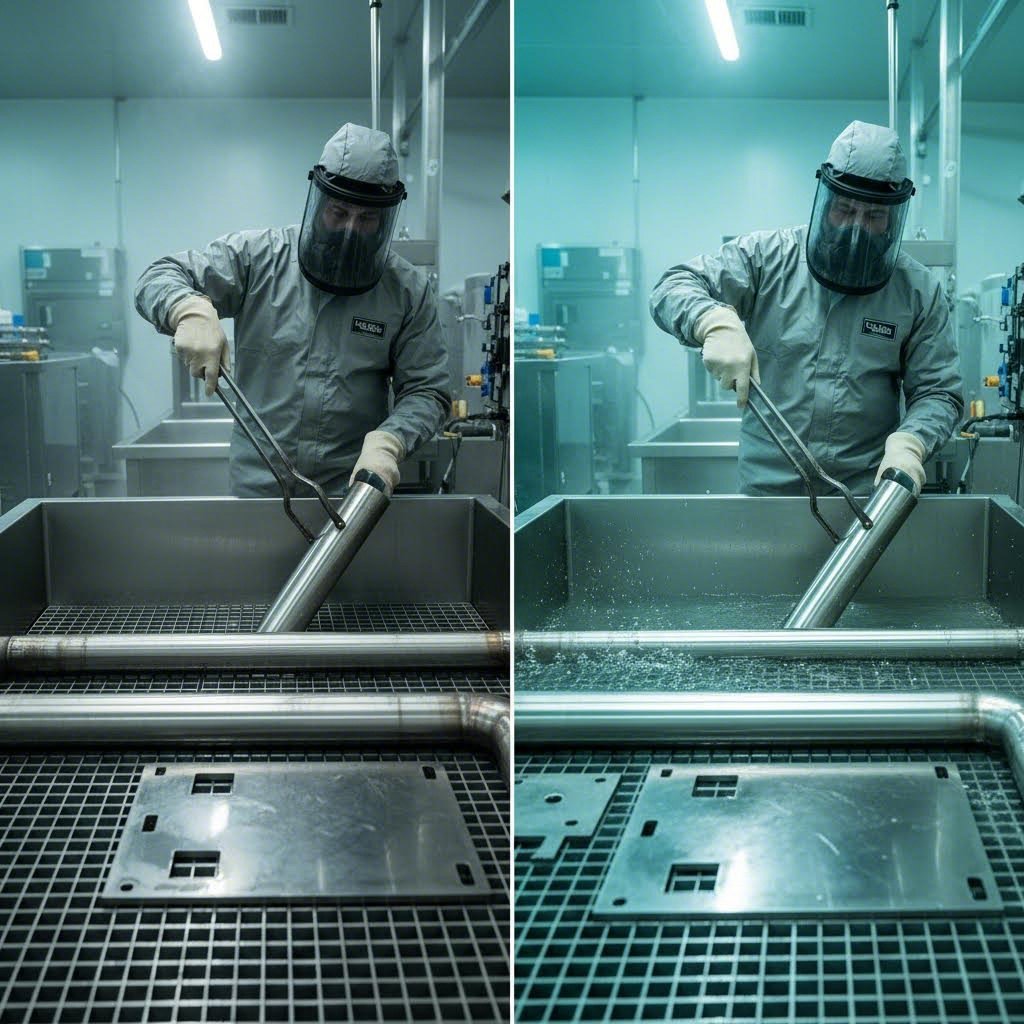
Passivation is the single most important post-fabrication step for stainless steel components. According to industry standards, passivation is "the chemical treatment of stainless steel with a mild oxidant, such as a nitric acid solution, for the purpose of the removal of free iron or other foreign matter."
Why does this matter? During cutting, forming, and welding, iron particles from tooling become embedded in the stainless steel surface. These contaminants create sites where corrosion can initiate—even on material with excellent inherent corrosion resistance. Passivation removes this free iron while leaving the chromium intact, allowing a thicker, more protective oxide layer to form.
The process follows a straightforward sequence:
- Cleaning: Remove oils, greases, and surface contaminants with alkaline cleaners
- Acid immersion: Submerge parts in nitric or citric acid solution (typically 20-30 minutes at 120-150°F)
- Rinsing: Thoroughly rinse with deionized water to remove acid residue
- Drying: Air dry or use forced air to prevent water spotting
According to ASTM A967 specifications, passivation effectiveness is verified through testing methods including water immersion, salt spray, copper sulfate, and high humidity testing. These tests confirm that free iron has been successfully removed from the surface.
For applications demanding maximum corrosion resistance, electropolishing offers an alternative that delivers approximately 30 times more corrosion resistance than passivation alone. This electrochemical process removes a microscopically precise layer of surface material—controlling removal as close as ±0.0001"—while simultaneously eliminating burrs, microcracks, and surface defects in a single operation.
Surface Finish Options and Their Applications
Beyond restoring corrosion resistance, surface finishing determines how your stainless steel looks and performs in service. According to surface finish experts, the choice of finish affects not just aesthetic appeal but also corrosion resistance, weldability, and manufacturing operations.
Here are the primary finish options and their characteristics:
- Brushed stainless steel sheet metal: Created by mechanically polishing with abrasive belts, producing uniform directional lines. A brushed stainless sheet delivers a professional, non-reflective appearance that hides fingerprints and minor scratches—ideal for appliances, architectural panels, and food service equipment. Industry designations include No. 3 and No. 4 finishes.
- Polished stainless steel sheet metal: Successively finer abrasives create increasingly reflective surfaces, culminating in the mirror-like No. 8 finish. Chicago's famous "Bean" sculpture showcases this highly reflective treatment. Applications include decorative trim, signage, and press plates.
- Bead-blasted: Glass or ceramic beads create a uniform matte texture that diffuses light. This finish masks surface imperfections and provides excellent grip—common in architectural and industrial applications.
- Electropolished: An electrochemical process removes surface material to create an ultra-smooth, bright finish with exceptional corrosion resistance. Critical for medical devices, pharmaceutical equipment, and food processing where sanitation is paramount.
Common Misconceptions: Powder Coating and Anodizing
Here's where confusion often arises. You might wonder whether you can powder coat or have stainless steel anodized like aluminum. The short answer: these aren't standard processes for stainless steel.
Anodizing is an electrochemical process specifically designed for aluminum and titanium. It thickens the natural oxide layer on these metals, creating a hard, corrosion-resistant surface that can accept dyes. You cannot anodize stainless steel—the process simply doesn't work on iron-based alloys. If you see "anodized aluminum" components alongside stainless steel parts, they're different materials requiring different finishing approaches.
Powder coating is technically possible on stainless steel, but it's rarely specified. Why cover a naturally corrosion-resistant, attractive material with paint? Powder coat makes sense for carbon steel that needs protection, but stainless steel's inherent properties usually make it unnecessary. When color is required, specialized high-temperature coatings or PVD (physical vapor deposition) finishes offer alternatives that don't mask the underlying material.
Cleaning and Decontamination Requirements
Before any finishing process, thorough cleaning is essential. Iron contamination from shared tooling, grinding wheels, or handling equipment creates corrosion sites that defeat the purpose of using stainless steel in the first place.
Best practices for maintaining surface integrity include:
- Dedicate separate tools exclusively for stainless steel work—wire brushes, grinding wheels, and clamps should never be shared with carbon steel
- Use stainless steel or aluminum fixtures to prevent galvanic contamination
- Clean surfaces with appropriate solvents before passivation to remove oils and cutting fluids
- Store finished components away from carbon steel to prevent contamination during handling
Quality Inspection Methods
How do you verify that finishing operations achieved the desired results? Two primary inspection methods address different concerns:
Dye penetrant testing reveals surface cracks, porosity, and other defects invisible to the naked eye. A colored or fluorescent dye penetrates surface discontinuities, and after cleaning, a developer draws the dye back out to make defects visible. This non-destructive test is standard for weld inspection and critical components.
Surface roughness measurement quantifies texture using parameters like Ra (average roughness) or Rz (mean roughness depth). According to industry standards, Ra values are typically given in microinches or micrometers. Specifications vary by application—sanitary food equipment requires smoother surfaces than structural components.
Your finish selection directly impacts long-term performance. A mirror polish looks stunning but shows every fingerprint; a brushed finish balances aesthetics with practicality. Electropolishing maximizes corrosion resistance for demanding environments, while bead-blasting provides functional texture for grip surfaces. Understanding these tradeoffs helps you specify the right finish the first time—avoiding costly rework and ensuring your fabricated stainless steel components deliver the performance your application demands.
Cost Factors and Design Optimization Strategies
Here's the reality: stainless steel fabrication costs more than carbon steel or aluminum—sometimes significantly more. But that doesn't mean you're powerless to control expenses. The decisions you make during design and planning stages determine roughly 80% of your final manufacturing cost. Once you've locked in a design, opportunities to reduce costs shrink dramatically.
Whether you're ordering a custom steel sheet for prototyping or planning a production run of thousands, understanding what drives pricing helps you make smarter tradeoffs. Let's break down the key factors and explore proven strategies for optimizing both cost and quality.
Key Cost Drivers in Stainless Fabrication
When you request a quote for custom cut stainless steel components, fabricators evaluate several interconnected factors:
- Material grade: According to industry pricing data, stainless steel costs substantially more per kilogram than mild steel. Within stainless grades, 316 commands a premium over 304 due to its molybdenum content. Choosing the minimum grade that meets your performance requirements prevents unnecessary material expense.
- Material thickness: Thicker stainless steel sheets require more force to cut and form, increasing machine time and tooling wear. Additionally, thicker material weighs more—and you're buying by weight. Consider whether you can achieve required strength with lighter gauge stock.
- Part complexity: Intricate geometries with multiple bends, tight radii, and complex cutouts demand more programming time, slower cutting speeds, and additional setup. Simple shapes fabricate faster and cheaper.
- Tolerance requirements: This is where many projects hemorrhage money unnecessarily. Specifying ±0.1mm tolerances when ±0.5mm would function perfectly forces fabricators into slower processes, more inspection steps, and higher rejection rates.
- Surface finish: A custom stainless component with electropolished surfaces costs significantly more than one with standard mill finish. Specify premium finishes only where functionally or aesthetically necessary.
- Order volume: Setup costs spread across more parts reduce per-unit pricing. A sheet metal cut to size order for 10 pieces carries dramatically higher per-part costs than an order for 1,000.
Optimizing Designs for Manufacturing Efficiency
Design for Manufacturability (DFM) isn't just engineering jargon—it's the systematic practice of designing parts that are easier, faster, and cheaper to produce. According to manufacturing experts at Fictiv, "product design determines 80% of manufacturing cost"—and while reality is more nuanced, it's true that design choices impact everything downstream.
Apply these principles when developing your stainless steel custom components:
- Standardize bend radii: Using consistent bend radii throughout your design eliminates tool changes during press brake operations. Each unique radius requires setup time—and time is money.
- Minimize tight tolerances: Apply precision specifications only where genuinely required for fit, function, or assembly. Non-critical dimensions should use the widest acceptable tolerances. Overly tight tolerances increase machining time, inspection requirements, and scrap rates.
- Optimize for nesting: According to fabrication specialists at The Fabricator, material costs remain a fabricator's largest expense. Better material utilization directly impacts net earnings. Design parts that nest efficiently on standard steel sheet cut to size formats (4x8 ft., 5x10 ft.) to maximize yield and minimize scrap.
- Avoid unnecessary complexity: Sharp internal corners require EDM or additional operations. Thin unsupported walls warp during forming. Complex undercuts complicate tooling. Every added feature increases cost—ensure each one delivers genuine value.
- Design for standard tooling: Using bend angles and hole sizes that match common tooling eliminates custom die requirements. Your fabricator can advise on available tooling during design review.
Lead Time and Production Planning
Design complexity doesn't just affect price—it directly impacts how quickly you receive finished parts. Simple geometries using standard materials move through production faster than intricate assemblies requiring multiple operations and specialized finishing.
When planning your project timeline, consider:
- Material availability: Common grades like 304 in standard thicknesses typically ship from stock. Exotic alloys or unusual dimensions may require mill orders with lead times of weeks or months.
- Processing sequence: Parts requiring cutting, multiple bends, welding, and electropolishing pass through more workstations—each adding time to the schedule.
- Quality requirements: Certified inspection, testing, and documentation add processing time beyond basic fabrication.
The Value of Rapid Prototyping
Sounds risky? Committing to production tooling before validating your design is far riskier. Rapid prototyping—producing small quantities quickly to test form, fit, and function—catches design issues before they become expensive production problems.
Modern fabrication technology makes prototyping increasingly accessible. Laser cutting and CNC bending can produce functional prototypes in days rather than weeks. Yes, prototype per-part costs run higher than production pricing. But discovering that your bend radius creates interference, your tolerance stack-up prevents assembly, or your finish specification doesn't achieve the desired appearance on three prototype parts costs far less than discovering it on 3,000 production parts.
Minimum Order Quantities and Per-Part Economics
Every fabrication job carries fixed costs: programming, material setup, machine preparation, first-article inspection. These costs exist whether you're making one part or one thousand. Spreading them across more units dramatically reduces per-part pricing.
Consider this example: if setup costs $200 and each part costs $5 to fabricate:
| Quantity | Setup Cost per Part | Fabrication Cost | Total per Part |
|---|---|---|---|
| 10 parts | $20.00 | $5.00 | $25.00 |
| 100 parts | $2.00 | $5.00 | $7.00 |
| 1,000 parts | $0.20 | $5.00 | $5.20 |
This economics explains why fabricators often establish minimum order quantities. For low-volume needs, consider whether consolidating orders or maintaining a small inventory buffer makes financial sense.
Leveraging DFM Support
Experienced fabricators don't just build what you specify—they help you specify smarter. DFM review examines your design through a manufacturing lens, identifying opportunities to reduce cost while maintaining or improving quality.
A thorough DFM analysis might reveal:
- Tolerance relaxations that won't affect function but will reduce scrap
- Material substitutions that deliver equivalent performance at lower cost
- Design modifications that eliminate secondary operations
- Nesting strategies that improve material yield
- Process alternatives that reduce cycle time
This collaborative approach requires partnering with fabricators who invest in engineering support—not just quoting machines. The upfront time spent on DFM review typically returns multiples in production savings.
With cost factors understood and designs optimized, the final piece of the puzzle is selecting the right fabrication partner to execute your project. The capabilities, certifications, and communication approach of your chosen fabricator determine whether those carefully planned cost savings actually materialize.
Choosing a Qualified Fabrication Partner
You've optimized your design, selected the right grade, and planned your budget—but none of that matters if you choose the wrong fabrication partner. According to industry consultant Dr. Shahrukh Irani, businesses too often treat fabrication shops as interchangeable, sending blanket RFQs and choosing based solely on price or turnaround time. The result? Projects derailed by overpromising, poor quality, delays, and costly rework.
The truth is, steel fabricators vary enormously in capabilities, equipment, quality systems, and customer service. Finding the right partner for your stainless steel metal fabrication project requires systematic evaluation—not just comparing bottom-line quotes.
Evaluating Fabricator Capabilities and Certifications
When you search for "metal fabrication near me" or "fabrication shops near me," you'll find dozens of options. But which ones can actually deliver what your project demands? Start by evaluating these core capability areas:
- Cutting technology: Does the shop have fiber laser cutting for precision stainless work? Can they handle your material thickness? Do they offer custom laser cut stainless steel services with nitrogen assist for oxide-free edges?
- Forming equipment: What's the capacity of their press brakes? Do they have CNC bending with automatic angle correction for springback compensation? Can they handle your bend radius requirements?
- Welding certifications: Are welders certified to AWS D1.6 (stainless steel structural welding code)? Do they have documented procedures for back purging and heat control?
- Finishing capabilities: Can they passivate in-house? Do they offer brushed, polished, or electropolished finishes? Having integrated finishing eliminates shipping delays and handling damage.
Beyond equipment, certifications tell you whether a fabricator operates with disciplined quality systems—or wings it on every job.
According to Hartford Technologies, quality certifications demonstrate commitment to premium components while providing assurance that manufactured items meet requirements. Key certifications to look for include:
- ISO 9001: The universal foundation for quality management systems, applicable across industries
- IATF 16949: Critical for automotive manufacturing, this standard builds on ISO 9001 with additional requirements for product design, production processes, and customer-specific standards. Steel fabricators serving automotive supply chains need this certification to demonstrate compliance with stringent industry regulations.
- AS9100: Specific to aerospace and aircraft parts, ensuring components meet the safety, quality, and technical standards required by aviation
- ISO 13485: Essential for medical device manufacturing, prioritizing patient safety through rigorous quality controls
For automotive structural components—chassis parts, suspension brackets, body reinforcements—IATF 16949 certification isn't optional. This certification ensures your fabricator maintains the process controls, traceability, and continuous improvement systems demanded by automotive OEMs and Tier 1 suppliers.
From Prototype to Production Volume
Imagine this scenario: you've developed prototypes with a small job shop that does excellent work but maxes out at 500 parts per month. Now you need 10,000 units. Do you start over with a new vendor, risking quality variations and learning-curve delays?
The smarter approach is selecting a partner who can scale with you. According to precision fabrication experts at Northern Manufacturing, true manufacturing partners don't just fabricate your design—they integrate with your team to ensure success from prototype through production.
Look for fabricators offering:
- Rapid prototyping: The ability to produce functional prototypes in days rather than weeks validates designs before production commitment. Leading fabricators like Shaoyi (Ningbo) Metal Technology offer 5-day rapid prototyping services, enabling fast iteration on automotive chassis, suspension, and structural components.
- Scalable production: Automated equipment and efficient workflows that maintain quality as volumes increase
- Consistent quality across volumes: A prototype that works perfectly means nothing if production parts vary—look for statistical process control and in-process inspection
Fabricator Evaluation Checklist
Use this checklist when evaluating metal fabricators near me options for your stainless steel projects:
| Category | Evaluation Criteria | Questions to Ask |
|---|---|---|
| Equipment | Cutting, forming, welding, finishing | What's your laser power? Press brake tonnage? Do you have dedicated stainless steel tooling? |
| Certifications | ISO 9001, IATF 16949, AS9100 | Are certifications current? Can you provide copies? |
| Material Handling | Stainless steel segregation | Do you maintain separate work areas and tooling for stainless to prevent contamination? |
| Engineering Support | DFM review capability | Will you review designs and suggest improvements before quoting? |
| Quality Systems | Inspection, documentation, traceability | What inspection equipment do you have? Can you provide material certifications and inspection reports? |
| Capacity | Prototype to production scaling | What's your monthly capacity? How do lead times change at higher volumes? |
| Communication | Responsiveness and transparency | What's your typical quote turnaround? Who will be my primary contact? |
Integrated Services vs. Multiple Vendors
Here's a decision that significantly impacts both cost and headaches: do you source cutting from one shop, bending from another, welding from a third, and finishing from a fourth? Or do you find a partner with integrated capabilities?
Managing multiple vendors introduces:
- Shipping costs and delays between operations
- Handling damage during transport
- Quality disputes when problems arise ("That defect came from the previous vendor")
- Communication overhead coordinating schedules
- Longer overall lead times
Integrated steel fabrication partners streamline your supply chain. When cutting, forming, welding, and finishing happen under one roof with unified quality systems, accountability is clear and processes flow efficiently.
Communication Factors That Signal Quality Partners
Technical capabilities matter—but so does how a fabricator communicates. Pay attention to these signals during your evaluation:
- Quote turnaround time: Responsive fabricators value your business. If getting a quote takes weeks, imagine how production delays will be handled. Top-tier partners like Shaoyi deliver 12-hour quote turnaround, demonstrating both responsiveness and efficient internal systems.
- DFM feedback quality: Does the fabricator simply quote what you send, or do they proactively identify opportunities for improvement? Comprehensive DFM support—analyzing designs for manufacturability and suggesting optimizations—separates true partners from order-takers.
- Project management approach: Will you have a dedicated point of contact? How will you receive production updates? What's the escalation process if issues arise?
- Transparency about limitations: Honest fabricators tell you upfront when a project doesn't fit their capabilities rather than overpromising and underdelivering.
The right fabrication partner becomes an extension of your engineering team—not just a vendor processing purchase orders. By investing time in thorough evaluation upfront, you build relationships that deliver consistent quality, competitive pricing, and the responsiveness your projects demand.
With your fabrication partner selected, the final consideration is understanding how stainless steel serves specific industries—and where the technology is heading next.
Applications and Next Steps for Your Fabrication Project
Stainless steel fabrication touches virtually every industry where durability, hygiene, and corrosion resistance matter. From the chassis components in your car to the surgical instruments in hospitals, fabricated stainless steel pieces perform critical functions that other materials simply cannot match. Understanding how different sectors leverage this versatile material—and where manufacturing stainless steel products is heading—positions you to make smarter decisions for your own projects.
Industry-Specific Fabrication Requirements
Each industry brings unique demands that shape how stainless steel shapes are designed, fabricated, and finished. Here's how major sectors leverage stainless steel manufacturing:
Automotive Chassis and Structural Components
The automotive industry represents one of the most demanding applications for stainless steel fabrication. Chassis components, suspension brackets, exhaust systems, and structural reinforcements must withstand constant vibration, temperature extremes, road salt exposure, and decades of service life. According to industry data, automotive applications require tight tolerances, consistent quality across high volumes, and complete traceability—making IATF 16949 certification essential for suppliers.
Medical Device Housings and Surgical Instruments
Medical applications demand exceptional cleanliness, biocompatibility, and corrosion resistance. Surgical instruments, implant components, and equipment housings require electropolished surfaces that resist bacterial growth and withstand repeated sterilization cycles. Grade 316L dominates this sector due to its superior corrosion resistance and low carbon content that prevents sensitization during welding.
Food Processing Equipment
Sanitary requirements in food and beverage manufacturing drive specific fabrication choices. Stainless steel parts used in processing equipment must feature smooth, crevice-free welds that prevent bacterial harborage. Surfaces typically require passivation or electropolishing to meet FDA and 3-A sanitary standards. According to fabrication specialists, common applications include storage tanks, processing vessels, conveyor components, and preparation surfaces.
Architectural Elements
Building facades, handrails, decorative panels, and structural trim showcase stainless steel's aesthetic versatility. These applications prioritize surface finish consistency and long-term appearance retention. Brushed and polished finishes dominate, with 304 grade providing the corrosion resistance needed for both interior and exterior installations.
Sustainability and Lifecycle Value
Here's something that often surprises buyers focused purely on upfront costs: stainless steel frequently delivers lower total cost of ownership than cheaper alternatives. According to the World Stainless Association's lifecycle research, stainless steels are often selected as the sustainable material of choice because of their recyclability, strength, toughness, durability, hygienic properties, and resistance to corrosion, heat, cold, and blasts.
Stainless steel is 100% recyclable, and approximately 90% of end-of-life stainless steel is collected and recycled into new products—making it one of the most sustainable structural materials available.
This recyclability matters increasingly as companies face sustainability mandates and carbon footprint requirements. In 2019, global stainless steel meltshop production reached 52.2 million tonnes, with recycled content forming a significant portion of new production. When you specify custom stainless steel parts, you're choosing a material that retains value at end-of-life rather than becoming landfill waste.
The longevity factor compounds these benefits. Components that last 30-50 years without replacement eliminate the environmental and financial costs of repeated manufacturing, shipping, and installation cycles. For lifecycle-conscious procurement decisions, stainless steel's higher initial cost often represents the economically and environmentally optimal choice.
Automation and Precision Manufacturing Trends
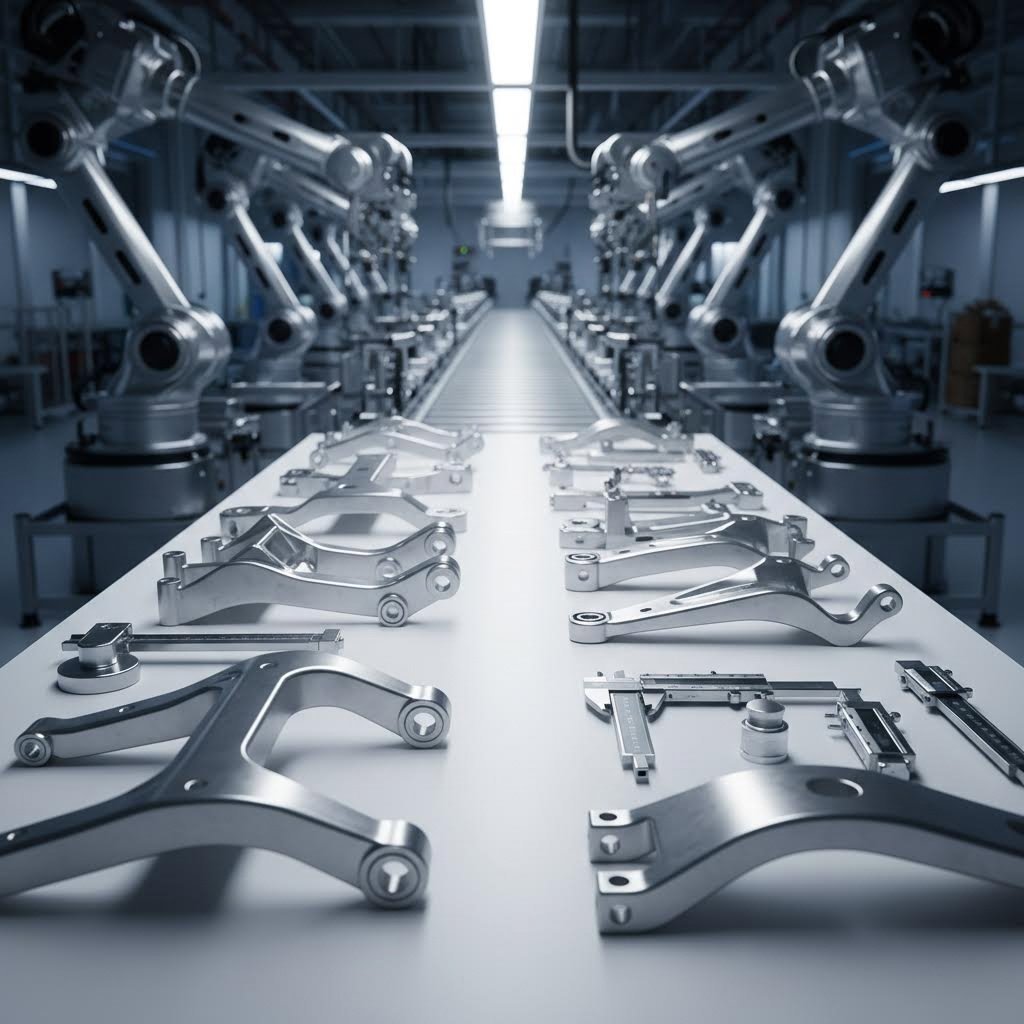
The stainless steel fabrication landscape is evolving rapidly. According to industry analysis, automation is no longer a luxury—it's a modern necessity for metal fabrication, aiming to optimize production and reduce costs while delivering unparalleled precision and efficiency.
Key technologies reshaping stainless steel components manufacturers include:
- Robotic welding systems: AI-driven programming and real-time defect detection reduce material waste and rework while ensuring consistent quality across production runs
- Intelligent press brakes: CNC bending with automatic angle measurement and springback compensation delivers precision forming without operator-dependent variability
- Integrated laser-punch systems: Combining cutting flexibility with forming operations in single setups reduces handling and improves accuracy
- Advanced powder coating technologies: Enhanced corrosion and abrasion resistance with superior aesthetic appeal and minimized environmental impact
For buyers, these automation investments translate into more consistent quality, faster turnaround times, and competitive pricing—even for complex stainless steel fabrication projects requiring tight tolerances.
Advancing Your Stainless Steel Projects
You've now explored the complete stainless steel fabrication journey: material selection, cutting methods, forming techniques, welding best practices, finishing options, cost optimization, and partner evaluation. The question is—what's your next step?
If you're ready to move forward with a fabrication project, consider this action plan:
- Define your requirements: Document the operating environment, required tolerances, surface finish expectations, and volume needs before requesting quotes
- Optimize your design: Apply DFM principles to simplify manufacturing, standardize features, and eliminate unnecessary tight tolerances
- Select your grade thoughtfully: Choose the minimum grade that meets performance requirements—304 for general applications, 316 for harsh environments
- Evaluate fabricators systematically: Use the checklist from the previous section to assess capabilities, certifications, and communication quality
- Start with prototypes: Validate designs before committing to production tooling and volumes
For automotive applications requiring precision stainless steel structural components, the path forward includes finding partners with demonstrated IATF 16949 certification and integrated capabilities from prototyping through mass production. Shaoyi (Ningbo) Metal Technology exemplifies this approach, offering 5-day rapid prototyping, automated production lines for chassis, suspension, and structural components, and comprehensive DFM support. Their 12-hour quote turnaround provides a low-friction starting point for evaluating whether their capabilities align with your project requirements.
Whether you're fabricating a single prototype or planning a multi-year production program, the principles covered throughout this guide apply. Stainless steel's unique combination of strength, corrosion resistance, and aesthetic appeal makes it worth the extra effort to get fabrication right. With the knowledge you've gained here, you're equipped to make informed decisions that balance quality, cost, and performance for whatever your application demands.
Frequently Asked Questions About Stainless Steel Sheet Metal Fabrication
1. Is stainless steel hard to fabricate?
Yes, stainless steel presents unique fabrication challenges compared to carbon steel. Its higher tensile strength requires more force for cutting and bending operations. The material work-hardens rapidly during forming, meaning bent areas become harder and stronger with each operation. Additionally, stainless steel exhibits greater springback after bending and has lower thermal conductivity, which concentrates heat during welding and thermal cutting. However, experienced fabricators with proper equipment and techniques—such as IATF 16949-certified shops offering comprehensive DFM support—can consistently produce high-quality stainless steel components.
2. How much does stainless steel sheet metal fabrication cost?
Stainless steel fabrication costs depend on multiple factors including material grade (316 costs more than 304), thickness, part complexity, tolerance requirements, surface finish, and order volume. Setup costs spread across larger quantities significantly reduce per-part pricing. For example, a 10-piece order may cost $25 per part while 1,000 pieces might drop to $5.20 each. Design optimization through DFM principles—standardizing bend radii, relaxing unnecessary tolerances, and improving nesting efficiency—can reduce costs by up to 80% before production begins.
3. What are the four types of stainless steel sheets?
Stainless steel sheets are categorized into four main families: Austenitic (300 series like 304 and 316) offers excellent corrosion resistance and formability with non-magnetic properties. Ferritic (400 series like 430) provides good corrosion resistance at lower cost and is magnetic. Martensitic (400 series like 410) can be heat-treated for high hardness and strength. Duplex combines austenitic and ferritic properties for enhanced strength and corrosion resistance. Grade selection impacts fabricability, performance, and cost—with 304 serving general applications and 316 excelling in marine and chemical environments.
4. What cutting methods work best for stainless steel sheets?
Fiber laser cutting is the precision standard for stainless steel up to 12mm thick, using nitrogen assist gas for oxide-free edges with tolerances as tight as ±0.1mm. Plasma cutting handles thicker materials (6-50mm+) cost-effectively but produces rougher edges requiring post-processing. Waterjet cutting offers true cold cutting without heat-affected zones—ideal for heat-sensitive applications and preserving material properties. Mechanical shearing remains the fastest, most economical option for straight cuts on thinner gauges under 3mm with zero kerf loss.
5. How do I choose a qualified stainless steel fabrication partner?
Evaluate fabricators based on cutting technology (fiber laser with nitrogen capability), forming equipment (CNC press brakes with springback compensation), welding certifications (AWS D1.6), and integrated finishing capabilities. For automotive applications, IATF 16949 certification is essential. Look for partners offering rapid prototyping (5-day turnaround), scalable production capacity, comprehensive DFM support, and responsive communication (12-hour quote turnaround). Verify they maintain separate tooling for stainless steel to prevent contamination and can provide material certifications with full traceability.