 Small batches, high standards. Our rapid prototyping service makes validation faster and easier —
  EN
EN


Protolabs Machining Decoded: From Quote To Finished Part In Days
Understanding Protolabs Machining and Digital Manufacturing
Ever wondered how some companies manage to get precision CNC parts delivered in just a day or two? The answer lies in digital manufacturing—and Protolabs machining stands at the forefront of this revolution. Unlike traditional machine shops that rely heavily on manual processes and back-and-forth communication, this service combines automated quoting technology with precision CNC capabilities to dramatically accelerate the journey from design to finished part.
So, what is CNC in the context of digital manufacturing? To define CNC simply: it's Computer Numerical Control, where computerized systems direct machining tools with remarkable precision. But the machining process at Protolabs goes several steps further by wrapping this technology in a fully digital workflow that eliminates traditional bottlenecks.
From CAD Upload to Finished Part
Imagine uploading your CAD file and receiving an interactive quote within hours—not days or weeks. That's the reality with digital manufacturing platforms. The process begins the moment you submit your 3D model. Proprietary software analyzes your design geometry, identifies potential manufacturing challenges, and generates pricing based on real production parameters. This technology-enabled approach means engineers and product developers can iterate faster, test more design variations, and ultimately reach market before competitors.
According to Protolabs, their "digital thread" runs through the entire manufacturing process—from the initial CAD upload to the final shipped part. This end-to-end automation allows machined parts to ship in as little as one to three days, a turnaround that traditional machining simply cannot match.
The Digital Manufacturing Difference
What separates digital manufacturing from conventional machine shops? Traditional shops still depend on manual machine tools and labor-intensive quoting processes. Getting online machining quotes from a conventional supplier might take days of email exchanges and phone calls. In contrast, digital manufacturers embrace automation at every stage.
The core service pillars that make this approach distinctive include:
- Instant Quoting: Automated systems analyze your design and return pricing in seconds to hours, not days
- Design Analysis: Built-in design for manufacturability (DFM) feedback identifies potential issues before production begins
- Material Selection: Access to a wide range of metals and plastics with clear property comparisons
- Fast Production: Parts can ship in as little as one day, thanks to automation and scaled capacity
How Automated Quoting Changes the Game
Here's where things get interesting. Whats CNC quoting like in a traditional environment? You'd send drawings, wait for a machinist to review them, receive questions, provide clarifications, and eventually—maybe a week later—get a price. Digital platforms flip this model entirely.
Automated quoting systems use sophisticated algorithms to analyze part geometry, material requirements, tolerances, and surface finishes. According to industry data from Kesu Group, these platforms can reduce quoting times by up to 90%, generating accurate quotes in 5 to 60 seconds compared to the 1 to 5 days typical of manual processes.
The system doesn't just spit out a number—it provides real-time DFM feedback. Features that are challenging to machine get flagged immediately, allowing you to modify designs early and avoid costly reworks. This proactive approach saves both time and money while ensuring your parts are actually manufacturable.
For engineers and product developers navigating tight deadlines, this digital approach to the machining workflow represents more than convenience. It's a fundamental shift in how prototyping and low-volume production operate—putting control back in your hands while maintaining the precision quality your applications demand.
How the Protolabs CNC Machining Process Works
Curious about how does CNC machining work when you're dealing with a fully digital platform? The CNC machining process at Protolabs operates differently from what you'd experience at a traditional shop. Instead of lengthy consultations and manual programming, everything flows through an interconnected digital system that handles analysis, toolpath generation, and production scheduling automatically.
Think of it this way: you upload a CAD file, and within hours—sometimes minutes—you're looking at a complete manufacturing plan. The system has already figured out which machines to use, what tools are needed, and whether your design will actually work. Let's break down exactly how this happens.
The Automated DFM Analysis Engine
The moment your 3D CAD model hits the platform, sophisticated algorithms begin dissecting every feature. According to Protolabs, this design for manufacturability (DFM) analysis performs a digital "dry run" of your part before any metal gets cut.
Here's what the system examines:
- Thin walls: Walls thinner than approximately 1/32 inch often flex or break during machining—the system flags these immediately
- Deep pockets: Cutting tools deflect when reaching too far, so pockets deeper than 4x the tool diameter get called out
- Unsupported features: Overhangs and delicate geometries that might vibrate or break under cutting forces
- Sharp internal corners: Square corners require EDM (electrical discharge machining), adding significant cost—the system suggests radii instead
- Tool access issues: Areas where standard cutters simply cannot reach
The beauty of this automated approach? You discover these issues before committing to production—not after receiving parts that don't meet specifications.
Real-Time Design Feedback Loop
Traditional cnc machining and manufacturing workflows involve frustrating back-and-forth exchanges. You send a design, wait for feedback, revise, resubmit, and repeat. Digital platforms compress this cycle dramatically.
When the DFM engine identifies a problem, you see it immediately in the interactive quote interface. The system doesn't just say "this won't work"—it shows you exactly where the issue exists on a 3D model and often suggests alternatives. For example, if you've designed a pocket with square corners, the analysis might recommend adding a 1/4-inch radius to accommodate standard end mills.
This real-time feedback transforms cnc operations from a black box into a transparent process. Engineers can experiment with different approaches, seeing how changes affect both manufacturability and cost. Want to know if switching from a tight tolerance to a standard one saves money? Adjust the model and find out instantly.
From Quote to Production Floor
Once your design passes DFM analysis and you approve the quote, the digital thread continues seamlessly into production. Here's the step-by-step workflow from upload to delivery:
- CAD Upload: Submit your 3D model in common formats like STEP, IGES, or native CAD files
- Automated Analysis: The system performs DFM review and generates an interactive quote with pricing and lead time options
- Design Iteration: Review feedback, make adjustments if needed, and confirm material and finish selections
- G-Code Generation: Your approved design gets translated into machine instructions—the language that tells CNC equipment exactly how to move
- Machine Assignment: The system routes your job to the optimal machining center based on part geometry, material, and current capacity
- Physical Production: CNC mills and lathes execute the programmed toolpaths, cutting your part from solid stock material
- Quality Verification: Finished cnc machined components undergo inspection before packaging
- Shipment: Parts ship directly to you, often within one to three days of order confirmation
Understanding 3-Axis, 4-Axis, and 5-Axis Capabilities
Not all machining for manufacturing requires the same equipment. The platform automatically selects the right approach based on your part's complexity:
3-Axis Machining: The workhorse of CNC operations. The cutting tool moves along X (side-to-side), Y (front-back), and Z (up-down) axes. This handles most geometries efficiently, especially parts that can be machined from one or two sides. According to Protolabs, 3-axis machining remains suitable for the majority of common part designs.
5-Axis Indexed (3+2) Machining: When parts require machining from multiple angles, the table rotates to position the workpiece optimally. The key advantage? Fewer setups mean better dimensional stability and lower costs. This approach works well for housings, fixtures, and components with features on multiple faces.
5-Axis Continuous Machining: For truly complex geometries—think impellers, turbine blades, or organic shapes—all five axes move simultaneously. The cutting tool maintains constant contact while following intricate contours that 3-axis equipment simply cannot achieve.
The automated quoting system handles this selection transparently. You don't need to specify which machine type to use; the software analyzes your geometry and routes it appropriately. This machining for manufacturing intelligence removes guesswork and ensures parts get produced using the most efficient method available.
Understanding this end-to-end process helps you design smarter parts from the start. When you know what the system checks for and how production actually flows, you can anticipate issues and optimize designs before they ever reach the quote stage.
Material Selection Guide for CNC Machined Parts
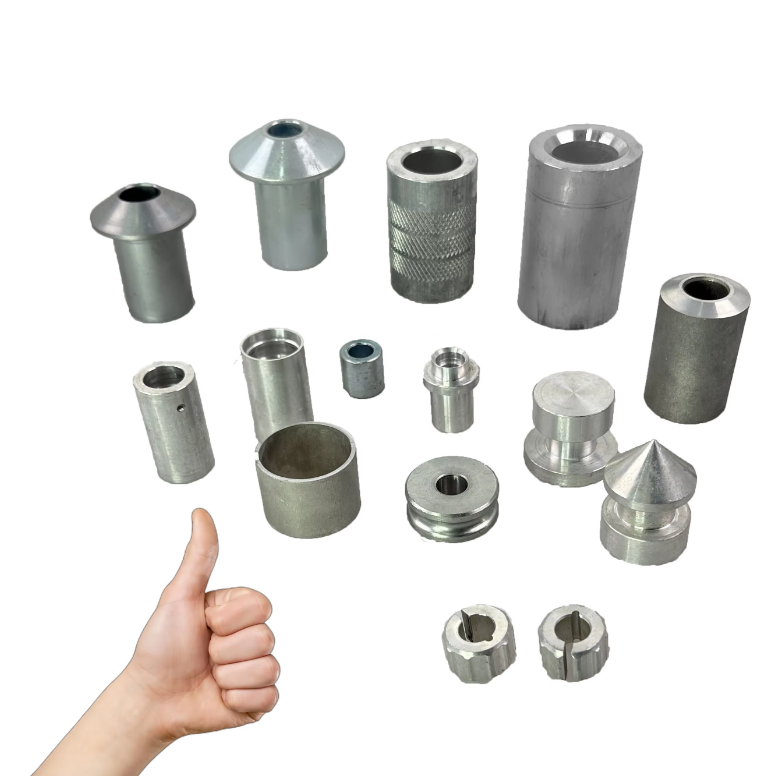
Choosing the right material can make or break your project. You might have a perfectly optimized design, but if the material doesn't match your application requirements, you'll end up with parts that fail under load, corrode prematurely, or cost far more than necessary. The good news? Digital manufacturing platforms offer extensive CNC machining materials libraries—the challenge is knowing which option fits your specific needs.
So how do you approach material selection systematically? Start by defining your requirements: mechanical loads, operating temperatures, chemical exposure, weight constraints, and budget. Then narrow down candidates that check most boxes. Finally, make trade-offs between competing priorities. Let's walk through the most common options available for precision machined parts.
Metals for Structural and Thermal Demands
When your application requires high strength, hardness, or thermal resistance, metals are typically your go-to choice. But "metal" covers an enormous range of options with vastly different properties. Here's what you need to know about the most commonly machined alloys.
Aluminum Alloys: These offer an excellent strength-to-weight ratio combined with natural corrosion resistance. According to Hubs, aluminum alloys are often the most economical option for producing prototypes and custom parts due to their outstanding machinability. Aluminum 6061 serves as the general-purpose workhorse—affordable, easy to machine, and suitable for most applications. Need aerospace-grade performance? Aluminum 7075 delivers exceptional fatigue properties and can be heat-treated to rival steel's hardness. For marine environments, 5083 provides superior saltwater resistance.
Stainless Steels: When corrosion resistance matters more than weight savings, stainless steel alloys step in. Type 304 handles most environmental conditions affordably, while 316 adds enhanced chemical resistance for harsher exposures like saline solutions. For extreme environments in oil and gas applications, 2205 Duplex offers twice the strength of standard stainless grades. Keep in mind that stainless steels machine slower than aluminum, which affects both cost and lead time.
Brass: This copper-zinc alloy machines exceptionally well—C36000 brass is among the most easily machinable materials available. It's ideal for electrical components requiring conductivity, decorative architectural elements, and high-volume production runs where machining efficiency directly impacts per-part cost.
Engineering Plastics for Weight and Cost Optimization
Plastics aren't just cheaper alternatives to metals—they offer unique properties that metals simply cannot provide. Low friction, electrical insulation, chemical resistance, and dramatic weight reduction make engineering thermoplastics essential for many applications.
What is Delrin? Known technically as POM (polyoxymethylene), delrin plastic is an engineering thermoplastic with the highest machinability among all plastics. According to industry sources, POM (Delrin) is often the best choice when CNC machining plastic parts that require high precision, high stiffness, low friction, and excellent dimensional stability at elevated temperatures. Its very low water absorption makes it ideal for precision components where moisture-induced swelling would cause problems.
When comparing acetal plastic options, understand that Delrin is specifically a homopolymer variant. As noted by RapidDirect, Delrin has higher tensile strength (13,000 PSI versus 12,000 PSI for copolymers) and a lower coefficient of friction. However, copolymer acetals offer better chemical resistance and lack the porosity issues that can affect Delrin in food or medical applications.
Machining Nylon: This versatile thermoplastic delivers excellent impact strength and abrasion resistance. Nylon 6 and Nylon 66 are the grades most commonly used for CNC machining, finding applications in gears, bearings, and structural components. One caveat: nylon absorbs moisture, which can affect dimensional stability in humid environments. Factor this into your design tolerances.
Polycarbonate (PC): When you need transparency combined with exceptional impact strength, polycarbonate pc outperforms other plastics. It machines well and can be dyed to various colors, making it suitable for protective covers, fluidic devices, and automotive glazing applications where both visibility and toughness matter.
Matching Material Properties to Application Requirements
Selecting materials involves balancing competing priorities. A stronger material might cost more or take longer to machine. A cheaper option might not survive your operating environment. Use this comparison table to quickly identify candidates that fit your requirements:
| Material Type | Typical Applications | Machinability Rating | Relative Cost Tier |
|---|---|---|---|
| Aluminum 6061 | General-purpose prototypes, brackets, housings | Excellent | Low |
| Aluminum 7075 | Aerospace components, high-stress structural parts | Good | Medium |
| Stainless Steel 304 | Food equipment, medical devices, general corrosion resistance | Moderate | Medium |
| Stainless Steel 316 | Marine hardware, chemical processing, pharmaceutical | Moderate | Medium-High |
| Brass C36000 | Electrical connectors, fittings, high-volume fasteners | Excellent | Medium |
| Delrin (POM-H) | Precision gears, bearings, low-friction sliding components | Excellent | Low |
| Nylon 6/66 | Bushings, rollers, wear-resistant structural parts | Good | Low |
| Polycarbonate | Transparent covers, impact-resistant housings, optical components | Good | Low-Medium |
A few practical considerations beyond this table: machinability directly affects your quote price. Materials that cut easily (aluminum, brass, delrin) typically cost less to produce than difficult-to-machine options like stainless steel or titanium. Lead times may also vary—exotic materials might not be stocked and require special ordering.
When prototyping, you might choose a more machinable material for speed and cost efficiency, then switch to the production-intent material for final validation. This approach lets you iterate designs quickly while still verifying performance with actual materials before committing to production volumes.
Remember that material selection also influences available tolerances and surface finishes. Softer materials may not hold extremely tight tolerances as reliably as harder ones. Understanding these interactions helps you make informed decisions that balance performance, cost, and manufacturing feasibility.
Tolerance Specifications and Precision Capabilities
You've selected the perfect material and optimized your design for manufacturability—but how precise will your finished parts actually be? Understanding Protolabs tolerances and precision machining services capabilities helps you set realistic expectations and avoid costly over-specification. The relationship between tolerance requirements and manufacturing cost isn't linear; tightening tolerances beyond what's necessary can dramatically increase your quote without improving part functionality.
Here's the reality: digital manufacturing platforms deliver excellent precision for most applications, but they operate within defined cnc capabilities that differ from specialized high-precision shops. Knowing these boundaries lets you design smarter and get machined parts that perform exactly as intended—without paying for unnecessary accuracy.
Standard vs Tight Tolerance Expectations
What tolerances are realistically achievable? According to Protolabs, the standard offering uses bilateral tolerances that work well for most engineering applications. For dimensions without specific callouts, parts typically hold ±0.005 inches (±0.127mm) for machined features—tight enough for most functional requirements while keeping production efficient.
Here's how common tolerance ranges break down by feature type:
- Linear dimensions: ±0.005 inches (±0.127mm) standard; tighter tolerances available upon request
- Hole diameters: ±0.005 inches standard; critical fits may require tighter specification
- Angular dimensions: ±0.5° for most features
- Surface roughness: 63 µin Ra for flat and perpendicular surfaces; 125 µin Ra for curved surfaces
- Thread tolerances: What is the tolerance for thread holes? Standard threading follows established tap drill specifications—for example, 3/8 NPT thread dimensions follow ANSI standards with appropriate clearances
When you need something beyond standard capabilities, the quoting system routes your project to specialized processing. As Protolabs notes, projects requiring GD&T tolerancing bypass automated quoting and receive personalized review for high-precision or high-quantity requirements.
Factors That Affect Achievable Precision
Why can't every part achieve micron-level accuracy? Several interrelated factors determine what's practically achievable:
Material Choice: Harder materials like steel resist deformation during cutting, holding dimensions more reliably. Softer materials—particularly plastics—present challenges. According to industry research, plastics suffer from elastic springback (the material flexes under cutting pressure then rebounds), thermal expansion during machining, and internal stress release that can cause warping. Achieving ±0.1mm in plastics is considered good; ±0.05mm requires special effort and higher cost.
Feature Geometry: Thin walls vibrate under cutting forces. Deep pockets force tools to extend farther, increasing deflection. Complex surfaces require multi-axis operations that compound potential errors. The deeper or more delicate the feature, the harder precision becomes.
Part Size: Larger parts introduce more opportunity for thermal variation and fixturing inconsistencies. A tolerance that's easily achievable on a 2-inch part becomes significantly more challenging on a 20-inch component.
Surface Finish Requirements: There's a direct relationship between roughness specs and dimensional control. Achieving smoother finishes often requires lighter cuts and slower feeds—operations that also improve dimensional accuracy but increase machining time.
When to Specify Critical Dimensions
Not every dimension deserves tight tolerance callouts. In fact, over-tolerancing is one of the most common—and expensive—mistakes engineers make. According to manufacturing cost analysis, tightening a tolerance from ±0.1mm to ±0.05mm can increase machining cost by 30-50%. Going further to ±0.025mm? That can double your price or more.
Apply tight tolerances strategically to:
- Mating surfaces: Where parts assemble with specific fit requirements (clearance, transition, or interference fits)
- Functional interfaces: Bearing seats, seal grooves, and locating features that affect performance
- Critical datums: Reference surfaces that other features depend upon
For non-critical features—cosmetic surfaces, mounting clearance holes, or general enclosure dimensions—standard tolerances work perfectly. The quoting system reflects these choices directly: looser tolerances on non-critical features reduce your cost without affecting functionality.
When interpreting tolerance callouts in the quoting interface, remember that values can be expressed as bilateral (±0.005 in.), unilateral (+0.010/-0.000 in.), or limit-based (1.005/0.995 in.). All formats are acceptable—just maintain consistency and use three-place decimal notation to avoid confusion. If your application requires geometric dimensioning and tolerancing (GD&T) for position, flatness, cylindricity, or concentricity control, specify these on your drawing for specialized review.
Understanding these precision boundaries empowers you to optimize designs before submitting them. You'll get accurate quotes, realistic expectations, and parts that meet functional requirements without paying premium prices for unnecessary precision.
Design for Manufacturability Best Practices
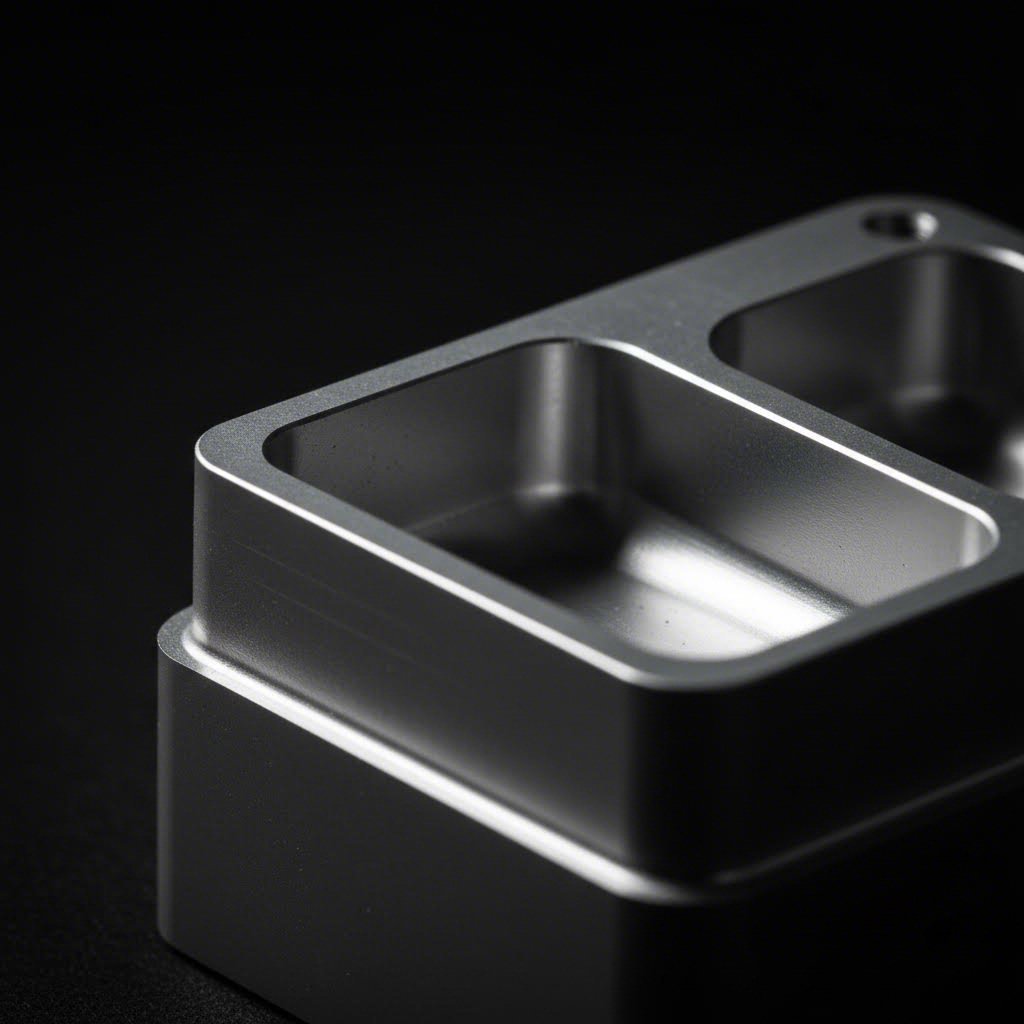
You've nailed the material selection and tolerance specs—but what happens when the quoting system flags your design with manufacturability warnings? Understanding design for CNC machining principles before you upload that CAD file saves frustration, reduces iteration cycles, and often cuts your final cost significantly. The reality? Many machining parts that look perfectly fine on screen create serious headaches on the production floor.
Design for machining isn't about limiting creativity—it's about understanding what cutting tools can and cannot physically accomplish. When you grasp these constraints, you'll design smarter cnc machine parts that quote faster, cost less, and arrive without surprises. Let's break down the most common pitfalls and how to avoid them.
Wall Thickness and Pocket Depth Ratios
Thin walls and deep pockets top the list of DFM issues that trigger quote warnings. Why? Cutting forces are relentless, and materials can only resist so much stress before problems emerge.
The Thin Wall Problem: According to Summit CNC, thin walls are prone to becoming brittle and breaking during machining. Walls thinner than 0.02 inches (0.5mm) for metals or 1.5mm for plastics flex under cutting pressure, causing chatter marks, dimensional inaccuracy, or outright failure. The automated DFM analysis catches these features because the machinist knows what's coming—vibration, deflection, and potential scrap.
What to do instead: Keep metal walls above 0.8mm minimum (0.02 inches is better), and plastic walls above 1.5mm. If weight reduction drives your thin-wall design, consider alternative lightening strategies like pocketing patterns or material substitution rather than pushing thickness limits.
Deep Pocket Challenges: Every cutting tool has a limited reach. When pockets get too deep relative to their width, machinists must use extended-reach tools that wobble, deflect, and cut slower. According to Hubs, the recommended cavity depth is 4 times the cavity width. Push beyond 6 times that ratio, and you're entering complex CNC machining territory that requires specialized tooling—adding cost and lead time.
The fix: Design pockets with depth-to-width ratios of 4:1 or less. Need deeper cavities? Consider stepped depths where the cavity floor varies, allowing standard tools to reach most of the feature while minimizing the truly deep sections.
Thread and Undercut Design Considerations
Threads and undercuts represent features where DFM knowledge directly impacts whether your CNC machining part quotes affordably—or gets flagged for manual review.
Thread Specifications: Standard taps and threading tools work beautifully for common thread sizes. According to manufacturing guidelines from Hubs, threads M6 or larger are preferred because CNC threading tools can be used, reducing the risk of tap breakage. Smaller threads (down to M2) are possible but require more delicate processing.
Here's a critical detail often overlooked: thread engagement depth. The first 1.5 turns of a thread carry most of the load—designing threads longer than 3x the nominal diameter adds manufacturing time without meaningful strength gains. For blind holes threaded with taps (under M6), add an unthreaded length of 1.5x the diameter at the bottom to provide tool clearance.
Undercut Realities: Undercuts—features with surfaces not directly accessible from above—require specialized tooling. T-slot cutters and dovetail tools exist, but they add cost. Standard T-slot widths range from 3mm to 40mm; stick to whole millimeter increments or standard inch fractions when possible. According to Meviy, adding relief features at thread terminations and shoulders ensures full thread depth without leaving uncut material—a small detail that prevents assembly issues.
Corner Radii and Tool Access Requirements
Sharp internal corners are impossible to machine with standard rotating tools—period. Every end mill has a diameter, and that diameter leaves a radius in every internal corner it cuts. Designing around this reality is fundamental to successful machining parts production.
Internal Corner Radii: The recommended approach from Hubs is to specify internal vertical corner radii of at least ⅓ times the cavity depth. This allows appropriately sized tools to reach the bottom while maintaining rigidity. Going slightly larger than the minimum—adding 1mm beyond the calculated value—enables circular tool paths instead of sharp direction changes, improving surface finish quality.
If your design absolutely requires sharp 90-degree internal corners (for mating with square features, for example), consider T-bone undercuts. These extend the corner cut into a circular pocket that accommodates the tool geometry while leaving the functional edge sharp.
Tool Access Planning: Imagine a cutting tool approaching your part from above. Can it reach every surface you've designed? Features hidden behind walls, deep inside narrow slots, or tucked into blind cavities may require additional setups—rotating the part to access different faces. Each additional setup adds cost and introduces potential alignment errors.
According to design guidelines, parts requiring more than three or four setups should be reconsidered. Aligning features to the six principal directions (top, bottom, front, back, left, right) simplifies production. 5-axis machining can reduce setups for complex geometries, but the equipment carries premium rates.
DFM Guidelines Quick Reference
Use this table when reviewing your designs before upload. Addressing these issues proactively reduces quote turnaround and avoids rework cycles:
| Feature Type | Common Mistake | Recommended Approach | Impact on Cost/Lead Time |
|---|---|---|---|
| Wall Thickness | Walls under 0.5mm (metals) or 1.5mm (plastics) | Maintain minimum 0.8mm metals, 1.5mm plastics; thicker is better | Thin walls increase scrap risk and machining time; may require manual review |
| Pocket Depth | Depth exceeding 4x width | Keep depth ≤4x width; use stepped depths for deeper requirements | Deep pockets require specialty tooling; can add 20-50% to feature cost |
| Internal Corners | Sharp 90° internal corners | Add radii ≥⅓ cavity depth; use T-bone undercuts if sharp edges needed | Sharp corners require EDM or manual operations; significant cost increase |
| Threads | Very small threads (under M2) or excessive engagement length | Specify M6+ when possible; limit thread depth to 3x nominal diameter | Small threads risk tap breakage; excessive depth adds time without benefit |
| Undercuts | Non-standard widths or angles | Use standard T-slot widths (whole mm) and 45° or 60° dovetail angles | Custom undercut tooling adds lead time and cost; standard tools ship faster |
| Tool Access | Features requiring >4 machine setups | Align features to principal directions; consolidate multi-face features | Each setup adds time and potential alignment error; reduces precision |
The automated DFM feedback built into digital quoting platforms catches most of these issues instantly. But understanding why certain features get flagged empowers you to make informed trade-offs. Sometimes the functional requirement justifies the extra cost; other times, a simple design tweak delivers identical performance at a fraction of the price.
When you design with these manufacturing realities in mind, your parts move from quote to production faster—and that's the whole point of digital manufacturing in the first place.
Bridging Prototyping and Production Machining
Your prototype works perfectly—now what? The jump from a validated design to repeatable production machining isn't as straightforward as simply ordering more parts. Many engineers discover that designs optimized for quick prototype machining need adjustments before they're ready for consistent, cost-effective manufacturing at scale. Understanding this transition upfront saves rework, reduces per-part costs, and prevents quality issues from emerging when volumes increase.
The fundamental challenge? Prototype machining prioritizes speed and design validation. Production machining demands repeatability, efficiency, and documentation. Let's explore how to bridge this gap without starting from scratch.
Designing Prototypes with Production in Mind
Smart engineers think ahead during the prototyping phase. While CNC prototype machining lets you iterate quickly, making production-conscious decisions early prevents expensive redesigns later.
According to UPTIVE Advanced Manufacturing, prototyping is foundational to product development—but the goal should always be refining designs for manufacturability and scalability, not just immediate functionality. Here's what that means practically:
Material Selection Alignment: Prototyping with aluminum 6061 because it's fast and affordable makes sense—but if your production intent is stainless steel 316 for corrosion resistance, validate critical dimensions with the actual material before freezing the design. Different materials machine differently, and tolerances achievable in aluminum may not transfer directly.
Feature Standardization: CNC machined prototypes often include one-off features that work but aren't optimized. Thread sizes, hole patterns, and radii that align with standard tooling reduce production costs. A prototype might use an M5 thread because it fit the design, but switching to M6 could eliminate special tapping operations.
Fixturing Considerations: Prototypes typically get fixtured individually—clamped wherever convenient for that single part. Production runs demand repeatable workholding. According to JLC CNC, adopting modular fixtures and automated loading/unloading early can significantly reduce per-part handling time as volumes grow.
Volume Thresholds and Manufacturing Method Transitions
When does low volume CNC machining stop making sense? There's no universal answer—it depends on part geometry, material, and tolerance requirements. However, understanding the economics helps you plan ahead.
CNC Prototyping Sweet Spot: Digital manufacturing platforms excel at quantities from 1 to roughly 200 parts. According to Protolabs, CNC machining provides quick-turn parts within 1 day, precision and repeatability, and lower piece-part prices at higher quantities—but "higher" still means hundreds, not thousands.
Transition Thresholds: As volumes climb toward 500-1,000 units, alternative methods may become more economical:
- Injection Molding: For plastic parts, tooling investment pays off around 500-5,000 units depending on complexity. The upfront mold cost amortizes across production, driving per-part prices well below machining.
- Die Casting: Metal parts in high volumes (typically 1,000+) may justify casting followed by finish machining only on critical features.
- Sheet Metal Fabrication: Enclosures and brackets with simple geometries often cost less as formed sheet metal once volumes exceed a few hundred.
The key insight from manufacturing guidance: avoid opting for methods like injection molding during prototyping because of high upfront costs—but design your prototype knowing that transition may come. Features that machine easily but can't be molded create expensive redesign cycles later.
Quality Consistency Across Production Runs
A single perfect prototype proves the design works. Fifty identical parts prove the process works. Production machining demands quality systems that prototyping doesn't require.
Inspection Requirements: According to quality control guidelines, production runs should define quality standards and inspection protocols before initiating the first production run. This includes:
- In-line testing and quality checkpoints throughout production
- Coordinate Measuring Machine (CMM) inspection of key dimensions in real-time
- Sampling techniques appropriate to your volume and criticality requirements
- Data collection to establish quality benchmarks for future runs
Material Certification Needs: Prototypes often use generic stock material without traceability. Production parts—especially for aerospace, medical, or automotive applications—typically require material certifications (mill test reports) documenting composition and properties. Specify these requirements when transitioning to ensure your supplier sources certified stock.
Documentation and Change Control: As UPTIVE recommends, maintain detailed records of any changes made during low-volume production runs. This documentation guides full-scale production and prevents "tribal knowledge" issues where critical adjustments exist only in someone's memory.
Key Considerations When Transitioning to Production
Before scaling your validated prototype into production quantities, work through these critical checkpoints:
- Design Freeze Verification: Confirm all prototype iterations are complete and the design is locked—mid-production changes are exponentially more expensive than prototype modifications
- Material Availability: Verify your production material is consistently available in required quantities; exotic alloys may have long lead times or minimum order quantities
- Tolerance Review: Assess whether prototype tolerances are actually necessary for function, or if relaxing non-critical dimensions reduces production cost
- Secondary Operations Planning: Identify all finishing, coating, or assembly operations and integrate them into production scheduling
- Quality Documentation: Establish inspection criteria, sampling rates, and acceptance standards before first article production
- Supplier Qualification: Evaluate whether your prototype supplier has production capacity, certifications, and quality systems appropriate for your volumes
- Cost Modeling: Compare per-part costs across volume tiers to identify optimal order quantities and manufacturing method transitions
The transition from CNC prototype machining to production isn't just about ordering larger quantities—it's about validating that your design, your supplier, and your quality systems can deliver consistent results at scale. Getting this bridge right determines whether your product launches smoothly or stumbles through costly corrections.
Digital Manufacturing vs Traditional Machine Shops
Here's a question worth asking: should you search for a "cnc machine shop near me" or upload your CAD file to a digital platform? The honest answer depends entirely on your project requirements. Digital manufacturing platforms like Protolabs excel in specific scenarios—but traditional machine shops offer advantages that automated systems simply cannot replicate. Understanding when each approach makes sense saves you time, money, and frustration.
Neither option is universally superior. The right choice depends on part complexity, volume requirements, timeline pressures, and how much hands-on collaboration your project demands. Let's break down the trade-offs objectively.
Lead Time and Turnaround Comparisons
Speed is often the deciding factor—and this is where digital platforms demonstrate their strongest advantage.
According to Siemens, digital machine shops use cutting-edge technology to connect all aspects of their operations, from design to delivery. This integration allows them to improve efficiency dramatically. Parts that ship in 1-3 days from a digital platform might take 2-4 weeks from a traditional cnc service provider—simply because manual quoting, programming, and scheduling add cumulative delays.
But here's the nuance: traditional shops can sometimes move faster on rush jobs when you've established a relationship. A machinist near me who knows my work might bump my project ahead of the queue. That flexibility doesn't exist in automated systems where every order follows the same prioritization logic.
For predictable, consistent turnaround on standard geometries, digital platforms win. For relationship-based expediting on complex work, local shops retain an edge.
Minimum Order Quantities and Cost Structures
Cost structures differ fundamentally between these approaches—and understanding them helps you optimize spending.
Digital Platforms: No minimum order requirements. Need one part? Order one part. The automated quoting system prices each job individually, making true single-piece prototyping economically viable. According to industry analysis, Protolabs' pricing is competitive but also rigid—automated quotes don't leave much room for creative problem-solving or cost optimization.
Traditional Shops: Many cnc services near me require minimum orders—often $500-1,000 per job—to justify setup time. However, they offer something digital platforms cannot: negotiation. A dedicated shop can look for ways to reduce unnecessary machining steps, adjust tolerances where possible, and help you balance cost with performance.
The trade-off becomes clearer at volume. Digital platforms offer transparent per-part pricing that scales predictably. Traditional shops often provide steeper volume discounts once you're past their minimum thresholds—especially for repeat orders where programming and fixturing are already established.
Capability Trade-offs and Specialization
When should you NOT use a digital manufacturing platform? Several scenarios favor traditional machine shops:
Very Large Parts: Digital platforms typically limit part dimensions to fit standard machine envelopes—often around 20" x 14" x 6" for milling. Need a 36-inch structural component? You'll be searching "machining near me" for shops with larger equipment.
Exotic Materials: Automated platforms stock common materials. Inconel, Hastelloy, titanium alloys, or specialized plastics may not appear in their dropdown menus. Traditional shops with material sourcing relationships handle unusual substrates more readily.
Specialized Secondary Operations: According to comparative analysis, Protolabs operates across multiple facilities worldwide, which can introduce inconsistencies between runs—especially when parts require specialized post-processing. A local shop that owns their heat treatment or plating capabilities delivers more integrated control.
Complex Assemblies: When parts require grinding, EDM, specialized welding, or press-fit assembly, traditional shops offer hands-on coordination that automated order systems don't support.
Relationship-Based Service: As one machine shop notes, "At Magpie, you can pick up the phone and talk directly to the machinist working on your part. You'll know the name of the person cutting your components." That personal connection builds trust and enables collaborative problem-solving that automated dashboards can't replicate.
Platform Comparison at a Glance
Use this table to quickly identify which approach fits your specific project requirements:
| Factor | Digital Platforms (Protolabs, etc.) | Traditional Machine Shops |
|---|---|---|
| Typical Lead Time | 1-7 days for standard parts | 2-4 weeks typical; rush possible with relationships |
| Minimum Quantity | 1 part (no minimums) | Often $500-1,000 minimum per job |
| Tolerance Range | ±0.005" standard; tighter available | Highly variable; some specialize in ±0.0001" |
| Material Selection | Extensive common materials; limited exotics | Broader access including specialty alloys |
| Part Size Limits | Typically under 20" in largest dimension | Varies by shop; large-format capabilities available |
| Quoting Speed | Seconds to hours (automated) | Days to weeks (manual review) |
| Design Feedback | Automated DFM analysis | Human-reviewed suggestions and collaboration |
| Best-Fit Applications | Prototypes, standard geometries, speed-critical projects | Complex assemblies, exotic materials, high-precision, large parts |
The decision often isn't binary. Many engineering teams use digital platforms for rapid prototyping and early iterations, then transition to traditional shops for production runs requiring tighter tolerances, specialized processes, or ongoing supplier relationships. According to manufacturing analysis, the key is choosing the method that best suits your project—it's not one size fits all.
When evaluating a cnc near me versus an online platform, consider not just today's part but your longer-term manufacturing strategy. Building relationships with capable local shops creates options that purely transactional digital ordering cannot provide—while digital platforms deliver unmatched speed and accessibility for straightforward requirements.
Secondary Operations and Surface Finishing Options
Your parts are machined—but are they finished? Raw CNC turned parts rarely go directly into final assemblies without additional processing. Secondary operations transform custom machined parts from functional blanks into production-ready components with the corrosion resistance, surface appearance, and assembly features your application demands. Understanding these options helps you specify the right treatments upfront, avoiding delays and ensuring your parts arrive ready for integration.
Here's the reality: surface finishes and secondary operations significantly impact both project timelines and budgets. Some treatments add days to your lead time. Others require masking critical features to maintain tolerances. Knowing when each operation is necessary—and when it's overkill—keeps your project on track and on budget.
Surface Finishing Options and Applications
Surface finishing serves two primary purposes: protection and aesthetics. Sometimes you need both; sometimes one matters far more than the other. Let's categorize the options by function to help you identify what your application actually requires.
Cosmetic Finishes:
- Media Blasting (Bead Blasting): Uses pressurized jets to fire glass or plastic beads at the surface, creating an even matte finish that hides machining marks. According to Fictiv, media blasting works on most metals including brass, bronze, and copper, and is often combined with other finishes like anodizing for aesthetic benefits—think Apple MacBook laptops.
- Tumbling: Rotates parts in a barrel with abrasive media to remove burrs and sharp edges. Less controlled than media blasting but effective for deburring. Note: tumbling can create uneven surfaces, so check geometric tolerance requirements before selecting this option.
- Electropolishing: Achieves mirror finishes on steel and stainless steel by dissolving a controlled layer of base material using electric current and chemical baths. Faster and cheaper than manual polishing for achieving super-fine surface quality.
Functional Coatings:
- Anodizing (Type I, II, III): Creates a durable, integrated oxide layer on aluminum that resists corrosion and wear. Unlike paint, anodized coatings don't chip or flake. Type II anodizing allows for dyeing in various colors. Type III (hard anodizing) adds significant wear resistance for demanding applications.
- Powder Coating: Electrostatically applies powdered paint, then cures it in an oven to create thick, durable finishes in virtually any color. According to finishing guidelines, powder coating does change part dimensions, so tolerance and roughness control are critical—holes and mating surfaces with tight tolerances must be masked beforehand.
- Chromate Conversion (Alodine/Chem Film): A thin protective layer for aluminum that inhibits corrosion while maintaining thermal and electrical conductivity. Often used as a primer before painting or as a standalone treatment for less demanding environments.
- Black Oxide: Provides mild corrosion resistance on steel and stainless steel with a smooth, matte black finish. Doesn't significantly affect dimensions, so masking isn't necessary.
- Electroless Nickel Plating: Deposits nickel-alloy coating without electric current, providing excellent corrosion resistance on aluminum, steel, and stainless steel. Higher phosphorus content improves corrosion resistance but decreases hardness.
- Zinc Plating (Galvanization): Protects steel from corrosion—when the coating is damaged, zinc oxidizes first, sacrificing itself to protect the underlying steel.
A critical consideration for any coating: masking. According to Fictiv, masking may be required to protect surfaces or holes during finishing because some finishes add material thickness that interferes with tight tolerances, threaded holes, and press fits. Each masked hole adds cost due to the manual labor involved.
Threading, Tapping, and Assembly Features
Custom machined parts rarely function in isolation—they bolt, screw, or press-fit into larger assemblies. Getting these mechanical operations right ensures your parts arrive ready for immediate integration.
Threaded Holes vs. Threaded Inserts:
According to hardware installation guidelines, the primary advantage of using a threaded insert instead of tapping a hole is that the insert can be made of harder, sturdier material—like using steel inserts in aluminum parts. Inserts are generally more durable and replaceable if damaged, while damaged threads in a tapped hole usually mean the part is ruined.
However, tapping holes during CNC machining is more cost-effective since it eliminates extra production steps. Tapping also offers more size options and doesn't have depth constraints that limit inserts.
Mechanical Operations:
- Tapping: Creates internal threads during machining—the most economical approach for standard thread sizes
- Helical Inserts (Helicoils): Provide stronger, more durable threads than tapping alone; available in tanged or tangless configurations. Tangless inserts allow easier adjustment and removal without damaging the part.
- Locking Inserts: Feature polygonal coil segments that flex outward when fasteners are installed, exerting pressure to keep bolts in place—essential for assemblies experiencing vibration
- Dowel Pins: Precision pins for alignment and press-fit assemblies. Standard dowels are 0.0002" larger than hole diameters for snug fits; precision dowels provide specific interference for sturdy press-fit connections.
- Press-Fit Inserts: Installed after machining and finishing to provide assembly features without affecting part tolerances during coating operations
CNC turning services often integrate threading operations directly into the production process, creating external threads on cylindrical components during the same setup that machines the primary features. This integration reduces handling and improves concentricity between threaded and non-threaded sections.
Inspection and Quality Documentation
For many applications, visual inspection and dimensional spot-checks suffice. But regulated industries—aerospace, automotive, and medical device machining—demand documented evidence that parts meet specifications.
Standard Inspection Options:
- First Article Inspection (FAI): Comprehensive dimensional verification of the first production part against all drawing specifications
- CMM Reports: Coordinate Measuring Machine data documenting critical dimension measurements with actual versus nominal values
- Material Certifications: Mill test reports verifying material composition and properties—essential for aerospace and medical applications
- Certificate of Conformance (CoC): Documentation stating parts meet specified requirements
Medical device machining carries particularly stringent requirements. Parts destined for implants, surgical instruments, or diagnostic equipment typically require full material traceability, validated cleaning processes, and documentation packages that satisfy FDA and international regulatory bodies.
When specifying inspection requirements, consider the true cost-benefit. Full FAI with CMM data on every dimension adds significant time and cost. Focusing inspection resources on critical features—mating surfaces, assembly interfaces, and functional dimensions—delivers quality assurance where it matters while controlling overhead.
Secondary operations transform raw machined components into finished, assembly-ready parts. Specifying these requirements upfront—during the quoting phase—ensures accurate pricing, realistic timelines, and parts that arrive ready for their intended purpose.
Selecting the Right CNC Machining Partner
You've mastered the technical aspects of Protolabs CNC machining—materials, tolerances, DFM principles, and finishing options. But here's the question that ultimately determines project success: which manufacturing partner should you trust with your cnc parts? The answer isn't always the same platform for every project. Different applications demand different capabilities, certifications, and quality systems. Matching your specific requirements to a partner's strengths prevents costly surprises and builds a manufacturing and machining relationship that scales with your needs.
Choosing a CNC machining partner isn't just about price and lead time—though those matter. It's about finding a supplier whose expertise, quality systems, and capacity align with your application's demands. Let's explore how to evaluate potential partners systematically.
Evaluating Manufacturing Partners for Your Project
Before requesting quotes, define what your project actually requires. A prototype for internal testing has different needs than a production component for aerospace cnc machining applications. According to manufacturing industry research, expertise and experience form the cornerstone of a successful partnership—it's not just about owning the latest equipment but understanding the intricacies of machining processes, materials, and industry demands.
Start your evaluation with these key criteria, prioritized by application requirements:
- Automotive Applications: Shaoyi Metal Technology offers IATF 16949-certified precision CNC machining services with Statistical Process Control (SPC) backing every production run. Their facility delivers chassis assemblies and custom metal bushings with lead times as fast as one working day—critical for automotive supply chains where delays cascade through assembly schedules.
- Aerospace Applications: Seek partners with AS9100 certification, which extends ISO 9001 requirements with aerospace-specific controls for risk management, documentation, and product integrity throughout complex supply chains.
- Medical Device Applications: ISO 13485 certification is non-negotiable—this standard outlines requirements for quality management systems specific to medical devices, ensuring regulatory compliance and patient safety.
- General Manufacturing: ISO 9001 certification provides the baseline for quality management systems, demonstrating consistent, high-quality output through documented workflows and performance monitoring.
- Defense Applications: ITAR registration and robust information security protocols are mandatory for handling sensitive technical data and components.
Industry-Specific Considerations and Certifications
Certifications aren't just badges—they represent documented proof that a manufacturer maintains systems capable of delivering consistent quality. According to certification guidance, formal certifications assure clients and stakeholders of a company's commitment to quality at every step, influencing CNC machining outcomes by ensuring teams maintain high standards.
Why IATF 16949 Matters for Automotive: This global standard for automotive quality management combines ISO 9001 principles with sector-specific requirements for continuous improvement, defect prevention, and stringent supplier oversight. According to certification directories, IATF 16949 is implemented by organizations involved in the automotive supply chain to enhance product quality and customer satisfaction. Manufacturers like Shaoyi Metal Technology that maintain this certification demonstrate the discipline required for automotive production demands.
Aerospace Machining Requirements: The aerospace sector imposes some of the most rigorous compliance standards in manufacturing. AS9100 certification addresses traceability mandates, auditable process documentation, and meticulous part verification. Additionally, NADCAP accreditation may be required for special processes like heat treating and nondestructive testing—an additional layer validating that specialized processes meet the highest standards.
Medical Machining Standards: CNC machining for medical devices must comply with FDA 21 CFR Part 820 (Quality System Regulation) governing product design, manufacturing, and tracking. ISO 13485 certification provides the framework for risk management, product traceability, and effective complaint handling—ensuring every medical component meets the highest standards of precision and patient safety.
Building a Reliable Supply Chain Strategy
Selecting a partner isn't a one-time decision—it's the foundation of your manufacturing supply chain. The best relationships evolve from prototyping through production, with partners who understand your business and adapt to your requirements.
According to supply chain research, long-term partnerships often lead to better pricing, priority scheduling, and collaborative problem-solving. Companies investing in employee training, equipment upgrades, and quality systems are more likely to be dependable over time.
Consider these strategic factors when building your supplier network:
Quality Control Processes: Beyond certifications, examine how partners actually control quality. Statistical Process Control (SPC) monitors production in real-time, catching variations before they produce defective parts. Coordinate Measuring Machines (CMMs) provide precise 3D measurements verifying dimensions and tolerances. Ask potential partners about their specific inspection protocols and how they document quality data.
Scalability from Prototyping to Production: Your ideal partner handles both initial protolabs cnc machining volumes and scales seamlessly into production quantities. Evaluate whether they have capacity for your projected volumes, can maintain quality consistency across larger runs, and offer competitive pricing at production quantities.
Communication and Responsiveness: According to partner evaluation criteria, responsiveness is a key factor—reliable partners respond quickly to inquiries, provide clear updates, and maintain open communication channels. This transparency helps you stay informed about order status and potential challenges.
Design Support Capabilities: The best partners don't just follow your designs—they actively contribute improvements. Design for Manufacturability (DFM) feedback suggests adjustments that reduce costs, shorten lead times, or enhance part performance without compromising functionality.
Value-Added Services: According to industry analysis, many shops offer additional services including finishing options, assembly, inventory management, and design assistance. Choosing a partner that provides these services can streamline your supply chain, reduce lead times, and lower overall costs by reducing handling between multiple vendors.
Making Your Final Decision
Protolabs CNC machining excels for rapid prototyping, standard materials, and projects where speed and accessibility matter most. But your manufacturing strategy likely requires multiple partners optimized for different scenarios.
For automotive applications demanding IATF 16949 certification, SPC-backed quality control, and aggressive lead times, specialized partners like Shaoyi Metal Technology deliver capabilities that general-purpose platforms may not match. Their focus on precision CNC machining for chassis assemblies and custom metal bushings—with one-day lead time capabilities—addresses the specific demands of automotive supply chains.
For cnc machining aerospace applications, seek AS9100-certified partners with NADCAP accreditation for any required special processes. Medical machining demands ISO 13485 certification and demonstrated FDA compliance.
The right partner isn't necessarily the fastest or cheapest—it's the one whose capabilities, certifications, and quality systems align precisely with your application requirements. Build relationships with suppliers who understand your industry, invest in continuous improvement, and demonstrate commitment to your success. That strategic approach to manufacturing and machining partnerships creates the reliable supply chain foundation your products deserve.
Frequently Asked Questions About Protolabs Machining
1. How fast can Protolabs deliver CNC machined parts?
Protolabs can deliver CNC machined parts in as fast as 1 day for standard geometries and materials. Their automated digital manufacturing process eliminates traditional quoting delays, with most parts shipping within 1-3 days. Lead times vary based on part complexity, material selection, tolerance requirements, and finishing options. Rush orders with expedited shipping are available for time-critical projects.
2. What materials does Protolabs offer for CNC machining?
Protolabs offers an extensive range of CNC machining materials including aluminum alloys (6061, 7075, 5083), stainless steels (304, 316, 2205 Duplex), brass, and copper for metals. Engineering plastics include Delrin (POM), nylon, polycarbonate, and acetal. Material selection impacts machinability, cost, and lead time. For exotic materials or specialty alloys not in their standard library, traditional machine shops may offer broader sourcing options.
3. What tolerances can Protolabs achieve?
Protolabs standard machining tolerances are ±0.005 inches (±0.127mm) for machined features without specific callouts. Tighter tolerances are available upon request but increase cost significantly. Achievable precision depends on material choice (metals hold tolerances better than plastics), feature geometry, and part size. Projects requiring GD&T tolerancing receive personalized review rather than automated quoting.
4. How does Protolabs compare to traditional machine shops?
Protolabs excels at rapid turnaround (1-7 days vs 2-4 weeks), no minimum orders, and automated DFM feedback. Traditional shops offer advantages for very large parts, exotic materials, specialized secondary operations, and relationship-based service. Digital platforms provide predictable pricing and speed for standard geometries, while local shops enable negotiation, custom problem-solving, and hands-on collaboration for complex projects.
5. What certifications should I look for in a CNC machining partner?
Certification requirements depend on your industry. Automotive applications require IATF 16949 certification with Statistical Process Control (SPC). Aerospace machining demands AS9100 certification and potentially NADCAP accreditation for special processes. Medical device manufacturing requires ISO 13485 and FDA 21 CFR Part 820 compliance. General manufacturing should seek ISO 9001 certification as a baseline quality management standard.