 Small batches, high standards. Our rapid prototyping service makes validation faster and easier —
  EN
EN


Production CNC Machining: 8 Critical Decisions Before You Scale Up
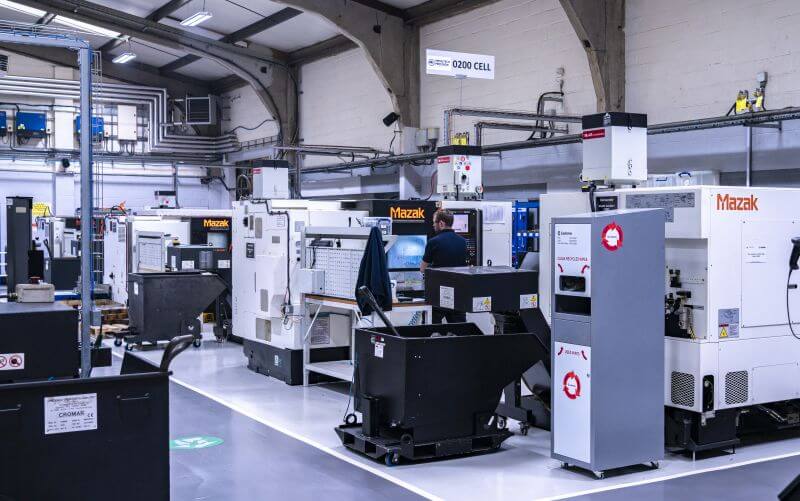
What Production CNC Machining Really Means
You've successfully machined a handful of prototypes. Your design is validated, stakeholders are excited, and now the question becomes: how do you scale? This is precisely where production CNC machining enters the picture, and understanding what it truly means can save you from costly missteps.
From Prototype to Production Line
To define CNC in the context of manufacturing, Computer Numerical Control refers to automated machine tools guided by programmed commands. But here's where the distinction matters: the CNC meaning shifts dramatically when you move from creating a single test part to manufacturing thousands of identical components.
A prototype run might involve machining one to 100 units per year. You're testing concepts, validating designs, and making adjustments along the way. The machining meaning in this context centers on flexibility and iteration. However, production machining operates under entirely different rules. You're no longer experimenting; you're committing to sustained, repeatable output at scale.
The Shift from Single Parts to Scalable Manufacturing
What separates a machinist running prototypes from the meaning of CNC machinist working in production? It comes down to three critical factors:
- Consistency: Every part must meet identical specifications, whether it's the first unit or the ten-thousandth.
- Repeatability: Your processes, tooling, and programs must deliver the same results cycle after cycle.
- Volume thresholds: Production typically begins at medium-volume runs of 100-10,000 units annually and extends into mass production exceeding 10,000 units per year.
According to industry standards from Protolabs Network, batch production correlates with medium-volume manufacturing, while higher-volume production involves large-scale manufacture of standardized parts, often running continuously around the clock.
Defining Production-Scale CNC Operations
So what exactly qualifies as production CNC machining? The machining definition extends beyond simply making more parts. It encompasses an entire operational philosophy built around efficiency, quality control, and economies of scale.
Production CNC machining is the sustained, repeatable manufacturing of precision parts at scale, where consistency across every unit takes priority over design flexibility, and processes are optimized for maximum efficiency rather than rapid iteration.
This CNC definition matters because it fundamentally changes your decision-making framework. In prototype machining, you might accept higher per-unit costs for faster turnaround. In production, those economics flip entirely. Setup costs get amortized across thousands of parts, tooling investments become justifiable, and automation transforms from a luxury into a necessity.
The transition isn't just about volume. It's about mindset. Production CNC machining demands that you think differently about quality control, supplier relationships, and process documentation. Before you commit to scaling up, you'll need to evaluate whether your current approach can handle these demands, or if fundamental changes are required.
Technical Requirements for Production-Scale Operations
Understanding the definition of production CNC machining is one thing. Building the technical infrastructure to support it? That's where the real decisions begin. The equipment and systems that worked perfectly for your prototypes will likely fall short when you're manufacturing thousands of identical parts.
Machine Selection for Sustained Output
Imagine running your prototype setup at ten times the volume. Sounds straightforward? Here's the reality: prototype machining tolerates interruptions, manual interventions, and flexible scheduling. Production environments demand machines engineered for continuous operation with minimal downtime.
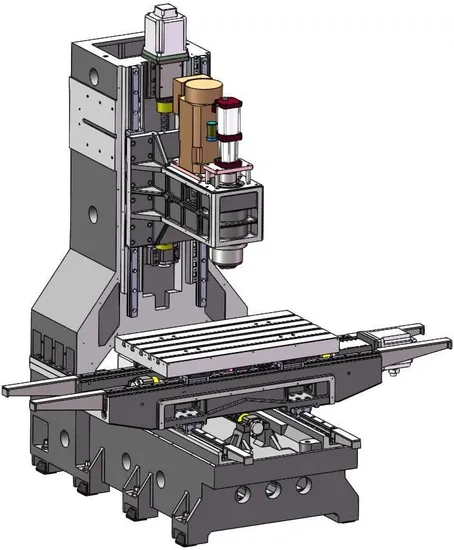
When evaluating CNC machining equipment for production-scale operations, multi-axis machining centers become essential rather than optional. According to Ellison Technologies, multi-axis machines allow the production of multiple parts and achieve higher production volumes in fewer setups. The key benefits include combined operations on one machine, decreased labor costs, and the ability to produce complex parts with ease.
The machine working principle shifts from versatility to specialization. A machining center designed for production will typically feature:
- Higher spindle speeds and rigidity for sustained cutting cycles without thermal drift
- Automated tool changers that swap between 40-120 tools without operator intervention
- Enhanced chip management systems that prevent buildup during extended runs
- Integrated thermal compensation maintaining accuracy across temperature fluctuations
- Advanced CNC control systems capable of dynamic parameter adjustments during machining
Vertical machining centers typically suit smaller precision parts, while horizontal configurations excel at larger, multi-sided components with better chip evacuation. For truly complex geometries, 5-axis machining centers eliminate multiple setups entirely.
Tooling and Fixturing at Scale
Your CNC tool strategy transforms completely when scaling to production. In prototype work, you might tolerate frequent tool changes and manual adjustments. Production demands tooling that survives thousands of cycles while maintaining dimensional consistency.
The difference extends to workholding. Traditional fixturing requires recalibrating positions each time you change setups. Palletized workholding systems eliminate this bottleneck entirely. As noted by Vortic Watches' manufacturing team, these systems enable quick-change platforms where pallets hold material in precise positions, allowing machines to work around them without extensive setup time.
The practical impact? When using pallet systems with zero-point workholding, you don't need to tell the machine where parts are located. The system already knows, reducing changeover from hours to minutes. This approach supports dense workholding, fitting multiple parts in compact spaces through customized fixtures.
For high-volume scenarios, consider these fixturing requirements:
- Quick-change pallet bases with precision-ground locating pins for repeatable positioning
- Interchangeable collets and custom fixtures that swap without recalibration
- Rigid risers and supports preventing flex during aggressive cutting cycles
- Pneumatic or hydraulic actuation for rapid, consistent clamping forces
Programming for Repeatability
The cncs program that worked beautifully for ten prototypes may create inefficiencies when multiplied across production volumes. CNC design for production prioritizes cycle time optimization, predictable tool wear patterns, and error-proof operation.
According to J&M CNC Machine, effective setup includes utilizing advanced machine software for optimized toolpath planning, ensuring cuts are made in the most efficient order while reducing unnecessary movements. Spindle speed and feed rate optimization become critical, as these settings influence cutting performance, tool wear, and finished part quality.
Production programming also requires robust CNC control logic that handles exceptions without stopping the line. This includes automatic tool length compensation, in-process measurement routines, and adaptive feeds that respond to cutting conditions in real-time.
The infrastructure investment is substantial, but the payoff compounds with every part produced. When your technical foundation supports true production-scale operations, the next critical question becomes: at what volume does this investment actually make financial sense?
When to Scale from Prototyping to Production
You've built the technical foundation. Your machines, tooling, and programming are production-ready. But here's the question that trips up even experienced manufacturing teams: when exactly should you pull the trigger on scaling up? The answer isn't just about having enough orders. It's about understanding the economics that make production CNC machining financially viable.
Volume Thresholds That Trigger Production Mode
Not every project belongs in production mode. CNC prototype machining serves a fundamentally different purpose than scaled manufacturing, and forcing the transition too early can actually increase your costs rather than reduce them.
So where's the tipping point? According to Fictiv's manufacturing engineers, low-volume production typically refers to quantities ranging from tens to hundreds of thousands of units, depending on the business and product. However, the decision involves more than raw numbers.
Consider these volume threshold indicators:
- Prototype phase: 1-50 units where design validation and iteration take priority over unit cost optimization
- Bridge production: 50-500 units where you're testing market response while refining manufacturing processes
- Low volume cnc machining: 500-5,000 units annually where setup costs begin distributing meaningfully across parts
- High volume cnc machining: 5,000+ units where dedicated tooling, automation, and process optimization become essential
The transition from CNC machining prototyping to production isn't binary. It's a spectrum where your economics shift gradually. The key question becomes: at what point do your fixed costs justify the investment in production-grade processes?
Cost-Per-Part Economics Explained
Here's where prototype machining economics collide with production realities. When you're making a handful of CNC machined prototypes, you accept higher per-unit costs because speed and flexibility matter more than efficiency. But those economics flip dramatically as volume increases.
According to RapidDirect's CNC cost analysis, the total cost formula breaks down as:
Total Cost = Material Cost + (Machining Time × Machine Rate) + Setup Cost + Finishing Cost
The critical insight? Setup cost is fixed. It includes CAM programming, fixturing, tool setup, and first-article verification. This fixed expense doesn't scale with part size or complexity, which means it has massive impact on low-volume production but diminishes rapidly as quantities increase.
Consider this real-world example: a $300 setup fee adds $300 to a single-piece order. But spread across 100 parts? That's only $3 per unit. At 1,000 parts, it drops to $0.30 each. This setup cost amortization is the primary driver behind high volume machining economics.
| Characteristic | Low-Volume CNC Machining (1-500 units) | High-Volume CNC Machining (5,000+ units) |
|---|---|---|
| Setup Cost Distribution | $6-$300+ per part (dominates unit cost) | $0.06-$0.60 per part (negligible impact) |
| Tooling Investment | Standard off-the-shelf tooling; minimal custom fixtures | Custom tooling, dedicated fixtures, specialized cutters justified |
| Quality Control Approach | 100% inspection common; manual measurement acceptable | Statistical sampling; in-process monitoring; automated inspection |
| Programming Optimization | Functional programs prioritized over cycle time | Extensively optimized toolpaths; every second matters |
| Machine Utilization | Shared equipment; flexible scheduling | Dedicated machines; continuous operation |
| Material Procurement | Standard stock sizes; minimal volume discounts | Bulk purchasing; negotiated material contracts |
The crossover point where production investment makes sense varies by part complexity, material cost, and tolerance requirements. Generally, you'll see meaningful cost reductions beginning around 50-100 units, with the most dramatic per-unit savings appearing between 500 and 5,000 parts.
Timeline Planning for Production Runs
Cost-per-part economics tell only half the story. Timeline considerations often determine whether CNC prototyping transitions to production, or whether you continue with iterative small batches.
As Fictiv's manufacturing experts note, companies can quickly iterate on production designs, adapt to industry changes, or introduce new features based on immediate feedback when maintaining low-volume flexibility. This agility has real value that pure cost calculations miss.
When planning your production timeline, evaluate these factors:
- Design stability: Are you still making changes? If so, stay in CNC prototyping mode until specifications stabilize
- Demand predictability: Uncertain demand favors smaller batches that reduce inventory risk
- Lead time requirements: Production runs require longer planning horizons but deliver faster fulfillment once established
- Supply chain readiness: Material availability and supplier capacity must support sustained volume
The jump to mass production requires meticulous planning in areas like supply chain management, quality control, and cost optimization, according to Fictiv's analysis. Scaling production and developing the supply chain are key challenges during this transition.
One practical approach: use process mapping to compare prototype versus production workflows. Map out each phase from raw material acquisition through shipping, including all required inputs, actions, and outputs. This helps ensure you have the correct procedures, manpower, equipment, and resources in place before committing to volume.
The economics and timing are now clear. But there's another variable that dramatically affects both cost and quality at scale: material selection. The alloys and plastics that performed well in prototype machining may create entirely different challenges when you're running thousands of cycles.
Material Selection for High-Volume Manufacturing
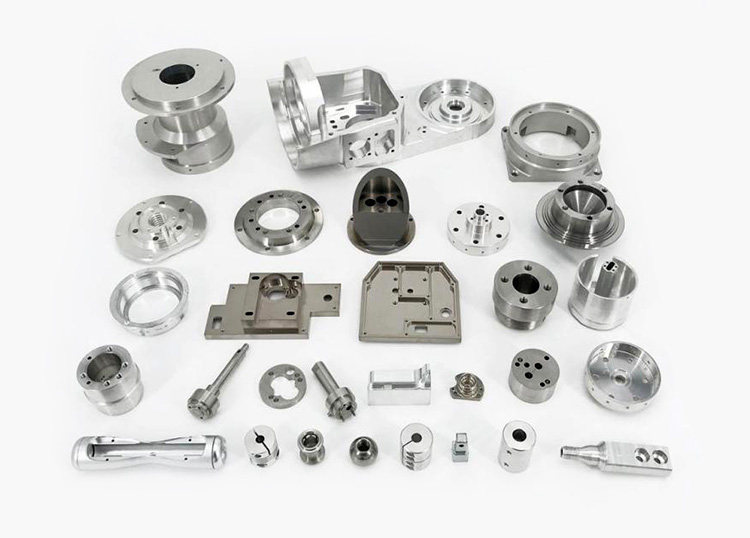
The aluminum alloy that machined beautifully for your prototype batch? It might create entirely different headaches when you're running 10,000 cycles. Material selection for production CNC machining operates under constraints that prototype work rarely encounters. Your choice directly impacts cycle times, tool wear rates, surface finish consistency, and ultimately, your bottom line.
Metals That Excel in Production Environments
When evaluating CNC machining materials for sustained output, machinability becomes the primary filter. According to Ethereal Machines' material selection guide, materials like Aluminum 6061 balance strength and machinability, offering versatility across applications ranging from automotive to consumer goods.
But here's what that means in production terms: aluminum allows significantly faster machining speeds. As noted by PuKong CNC's engineering analysis, stainless steel takes approximately 8.7 times longer to machine than aluminum due to lower speeds and feeds. That multiplier compounds dramatically when you're producing thousands of parts.
Consider these CNC machining metal categories ranked by production suitability:
- Aluminum alloys (6061-T6, 7075): Excellent machinability with cutting speeds of 500-2,500 SFM. Ideal for high-volume runs where cycle time drives costs. Higher chip loads (0.003-0.010 in/tooth) enable aggressive material removal without compromising surface quality.
- Free-machining brass (C36000): Often used in decorative hardware and precision components where aesthetics and accuracy are paramount. Produces clean chips and excellent surface finishes with minimal tool wear.
- Carbon steels (1018, 12L14): Good balance of strength and machinability. The leaded variant 12L14 offers enhanced chip breaking for CNC lathe machining operations involving continuous turning cycles.
- Stainless steels (304, 316): Essential for corrosion resistance but require 25-50% longer cycle times. Steel CNC machining demands careful coolant management and specialized tooling to manage work hardening.
- Specialty alloys (Inconel 718, Titanium 6Al-4V): Poor machinability but irreplaceable for extreme performance requirements. Expect significant tool wear and the need for precise cutting conditions in aerospace applications.
Balancing Machinability with Performance Requirements
Here's where production economics collide with engineering specifications. Modus Advanced's manufacturability guidelines highlight a common pitfall: engineers frequently select materials that exceed functional requirements by significant margins, creating unnecessary manufacturing complexity.
For CNC steel applications, hardness represents the most obvious machinability factor. Materials exceeding 35 HRC typically require 25-50% longer cycle times and specialized cutting tools. But thermal conductivity and work hardening tendencies prove equally critical for metal CNC machines running extended production cycles.
The practical implications for machining turning operations and milling:
- Thermal conductivity: Aluminum's high thermal conductivity allows faster machining speeds without compromising surface quality. Stainless steel retains heat, accelerating tool wear and requiring aggressive coolant strategies.
- Chip formation: Materials that produce long, stringy chips create evacuation problems during unattended production runs. Free-machining grades with chip-breaking additives prevent downtime from chip tangles.
- Work hardening: Austenitic stainless steels (304, 316) work harden during cutting. Each pass makes subsequent cuts more difficult, demanding consistent feeds and avoiding dwelling that creates hardened surfaces.
According to Ethereal Machines' ROI analysis, switching from stainless steel to brass in high-volume production can save 25% on costs without sacrificing quality. However, this only works when brass meets your actual performance requirements, not just your assumed specifications.
Material Consistency Across Production Batches
Production CNC machining exposes a variable that prototype work often masks: material consistency between batches. When you're machining a few parts, slight variations in alloy composition or heat treatment go unnoticed. At scale, those variations translate into tool wear patterns, dimensional drift, and surface finish inconsistencies.
This matters particularly for CNC lathe machining operations where material hardness directly affects cutting parameters. A 10% variation in material hardness can shift optimal feeds and speeds enough to impact both cycle time and tool life across a production run.
Critical considerations for maintaining consistency:
- Material certification: Require mill certifications specifying exact alloy composition, hardness ranges, and heat treatment conditions for each lot
- Supplier qualification: Establish relationships with suppliers who maintain tight process controls and provide consistent material properties batch-to-batch
- Incoming inspection: Implement hardness testing and dimensional verification on incoming material before it enters production
- Lot tracking: Maintain traceability linking finished parts to specific material lots for quality investigations
The recyclability of your chosen materials also affects long-term production economics. Both aluminum and steel are highly recyclable, supporting sustainable manufacturing practices while reducing material costs through scrap recovery programs.
Material selection sets the foundation for production success, but even perfect material choices require robust systems to ensure every part meets specification. That brings us to the quality control infrastructure that separates production-ready operations from prototype shops.
Quality Control Systems for Production Runs
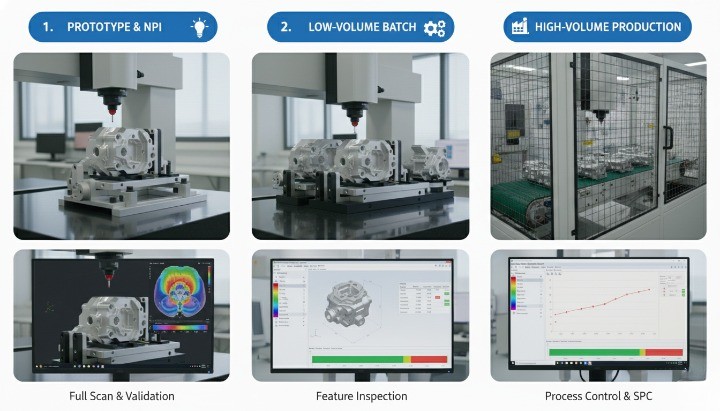
You've selected the right materials and established your production infrastructure. But here's the reality that catches many manufacturers off guard: the inspection methods that worked for prototype batches become completely impractical at scale. When you're producing thousands of parts, you can't measure every single one manually. Production CNC machining demands quality control systems designed specifically for sustained, high-volume output.
SPC Implementation in CNC Production
Statistical Process Control transforms quality management from reactive inspection to proactive prevention. Instead of catching defects after they occur, SPC identifies trends and variations before they escalate into major problems.
According to Baker Industries' quality control best practices, SPC is a data-driven method for monitoring and controlling CNC machining operations. By analyzing data collected from the production line, manufacturers can identify deviations early so they can be corrected immediately, minimizing defects, waste, and rework.
Implementing SPC in your CNC operations involves several critical steps:
- Establish control limits: Define upper and lower specification boundaries based on engineering tolerances and historical process capability
- Determine sampling frequency: Balance inspection costs against risk by measuring representative samples at defined intervals
- Create control charts: Track key dimensions over time to visualize process stability and identify drift before parts go out of specification
- Set action triggers: Define clear protocols for when operators must intervene, whether that's tool changes, offset adjustments, or machine stoppage
The CNC machining process generates data continuously. SPC harnesses this data to transform machining production from guesswork into predictable, controlled output. When a dimension starts trending toward its upper limit, you adjust before producing scrap, not after.
Inspection Protocols for Batch Manufacturing
Prototype inspection typically involves measuring every dimension on every part. That approach simply doesn't scale. Production environments require sampling strategies that balance thoroughness against efficiency.
As detailed by Machining Custom's quality inspection procedures, effective quality inspection plans should specify inspection items, methods, frequency, and acceptance criteria to ensure the comprehensiveness and effectiveness of the inspection work.
The CNC operations workflow for quality control should follow this structured approach:
- First-article inspection (FAI): Perform comprehensive measurement of all critical dimensions on the first part from each production run. This validates that setup, tooling, and programming are correct before committing to volume.
- In-process monitoring: Conduct sampling inspections at regular intervals, typically every 10-50 parts depending on process stability and criticality. Measure key characteristics that indicate process health.
- Final inspection: Apply statistical sampling to completed batches using AQL (Acceptable Quality Level) tables appropriate for your industry and customer requirements.
- Corrective action: When non-conformances occur, implement root cause analysis and corrective measures to prevent recurrence.
Parts CNC machining at production volumes requires different inspection equipment than prototype work. Coordinate measuring machines (CMMs), optical comparators, and automated vision systems replace manual calipers and micrometers for critical measurements. These tools provide the speed and repeatability that production demands while generating the digital documentation modern quality systems require.
Traceability and Documentation Standards
Production-ready CNC capabilities extend beyond machining precision to encompass complete quality documentation. When a customer asks about a specific part produced six months ago, can you trace its entire manufacturing history?
According to industry quality standards, implementing a quality traceability system means recording and tracing the production process of each product. By documenting key process parameters and inspection data, investigations and analyses of quality issues become more manageable.
Effective traceability for CNC parts machining includes:
- Material lot tracking: Link finished parts to specific raw material certifications
- Process parameter records: Document machine settings, tool identities, and operator information for each production run
- Inspection data: Maintain digital records of all measurements with timestamps and inspector identification
- Non-conformance history: Track any deviations, dispositions, and corrective actions
Industry certifications signal that a manufacturer has implemented these systems at a production-ready level. IATF 16949 certification, specifically designed for the automotive sector, establishes requirements for a Quality Management System that emphasizes defect prevention and the reduction of variation, risk, and waste in the supply chain. Manufacturers holding this certification demonstrate consistent, high-quality products, process efficiency, and customer-specific requirement compliance.
The documentation burden increases significantly in production environments, but modern quality management software streamlines the entire process. These systems automate data collection, provide real-time reporting and analytics, and generate compliance documentation automatically, reducing manual effort while improving accuracy.
With quality systems in place, you've addressed the internal requirements for production success. But production CNC machining isn't your only option for high-volume manufacturing. Understanding when alternatives like injection molding or die casting make more sense can prevent costly commitment to the wrong process.
Production CNC Machining vs Alternative Methods
You've established quality systems and understand the economics of scaling. But here's a question that can completely reshape your manufacturing strategy: is production CNC machining actually the right process for your parts? The cnc manufacturing process excels in many scenarios, but injection molding, die casting, and additive manufacturing each dominate specific applications. Understanding these trade-offs prevents you from committing resources to the wrong approach.
CNC vs Injection Molding Break-Even Analysis
The most common comparison manufacturers face pits machining manufacturing against injection molding. Both produce precision parts at scale, but their economics work in opposite directions.
According to industry analysis from Gree-Ge, CNC machining makes financial sense under 10,000 pieces, while injection molding starts paying off around 1,000 units and improves dramatically from there. Government manufacturing studies show break-even points typically hit between 1,000-2,500 units, depending on part complexity.
Why does this crossover exist? It comes down to fixed versus variable costs:
- CNC machining: Low setup costs but consistent per-part expenses. Material removal and cycle time dominate unit economics regardless of volume.
- Injection molding: Expensive tooling upfront ($5,000-$100,000+ for production molds) but extremely low per-part costs once running. Prototype injection molding adds 4-12 weeks minimum for mold fabrication.
The tolerance question often settles the debate before economics enter the picture. Manufacturing machining consistently achieves ±0.005mm tolerances, while injection molding typically manages ±0.1mm. The American Society of Mechanical Engineers tracked dimensional accuracy across thousands of production runs and found CNC maintains specifications 95% of the time. If your application demands aerospace-grade precision, machining wins regardless of volume.
Design flexibility provides another deciding factor. Manufacturing with CNC accommodates modifications through simple program updates, quick and relatively inexpensive. Injection molding changes require costly mold modifications taking weeks and thousands of dollars. Products still evolving almost always favor CNC's adaptability.
When Casting Outperforms Machining
Die casting occupies different territory in the cnc machining and manufacturing landscape. Rather than competing directly with machining, it often complements it for specific part geometries and materials.
According to Yongzhu Casting's manufacturing comparison, aluminum die casting using ADC12 alloy can produce parts at ±0.05mm tolerance with consistent dimensional repeatability over long production runs. For housings, brackets, and heat sinks in automotive, lighting, and power tool industries, casting often proves more economical.
The volume economics tell a clear story. As noted by industry manufacturers, for 50 precision parts in a pilot project, machining for manufacturing makes sense because you avoid the $15,000+ die investment. But scale to 10,000 units, and casting's per-part economics become compelling.
Consider casting when your project involves:
- Complex hollow geometries: Internal features that would require extensive machining operations
- High volumes of aluminum parts: Where material removal waste becomes significant
- Near-net-shape requirements: Parts needing minimal secondary operations
- Stable designs: Where tooling investment amortizes over long production runs
However, casting introduces its own limitations. The process handles aluminum and zinc alloys well but cannot produce steel, titanium, or specialty metal components. Surface finishes typically require secondary treatments like powder coating or anodizing for premium applications. And lead times extend significantly due to die fabrication requirements.
Hybrid Manufacturing Strategies
Smart manufacturers rarely commit exclusively to one process. Hybrid approaches leverage each method's strengths while minimizing weaknesses.
According to Stone City Products' manufacturing analysis, CNC machining offers unmatched flexibility to adapt to design changes without incurring significant retooling costs. This makes it ideal for prototyping and early-stage development before transitioning to higher-volume processes.
A practical hybrid workflow might look like this:
- Prototype with CNC: Validate designs quickly without tooling investment
- Bridge production via machining: Fulfill initial orders while production tooling develops
- Transition to casting or molding: Once design stabilizes and volume justifies tooling
- Maintain CNC for precision features: Secondary machining operations on cast or molded parts for critical tolerances
This approach appears frequently in automotive and aerospace applications. A cast housing might receive CNC-machined bearing bores, threaded holes, and precision mounting surfaces. The casting handles bulk geometry economically while machining and manufacturing work together to achieve critical specifications.
| Criteria | Production CNC Machining | Injection Molding | Die Casting | Additive Manufacturing |
|---|---|---|---|---|
| Optimal Volume Range | 100-10,000 units | 1,000-1,000,000+ units | 5,000-500,000+ units | 1-500 units |
| Material Options | 500+ metals, plastics, composites | ~200 thermoplastics | Aluminum, zinc, magnesium alloys | Limited metals and polymers |
| Tolerance Capability | ±0.005mm (excellent) | ±0.1mm (moderate) | ±0.05mm (good) | ±0.1-0.3mm (varies) |
| Typical Lead Time | 1-3 weeks | 6-16 weeks (including tooling) | 8-14 weeks (including die) | Days to 2 weeks |
| Tooling Investment | $0-$2,000 (fixtures only) | $5,000-$100,000+ | $10,000-$75,000+ | $0 (no tooling required) |
| Design Flexibility | High (program changes) | Low (mold modifications costly) | Low (die modifications costly) | Very high (file changes) |
| Surface Finish | Excellent as-machined | Good (mold-dependent) | Requires secondary finishing | Often requires post-processing |
The decision matrix becomes clearer when you consider your specific constraints. If your design remains fluid, volumes stay moderate, or tolerances demand precision, manufacturing machining typically wins. When volumes exceed 10,000 units with stable designs and looser tolerances, alternative processes deserve serious evaluation.
Additive manufacturing deserves mention for its unique niche. While rarely cost-effective for production volumes, it excels at geometries impossible to machine or mold, enabling designs that combine multiple machined components into single printed parts. For low-volume, high-complexity applications, it sometimes outperforms all traditional methods.
Understanding these trade-offs positions you to make informed decisions. But even after selecting the right process, success depends heavily on one final factor: choosing a manufacturing partner capable of executing at production scale.
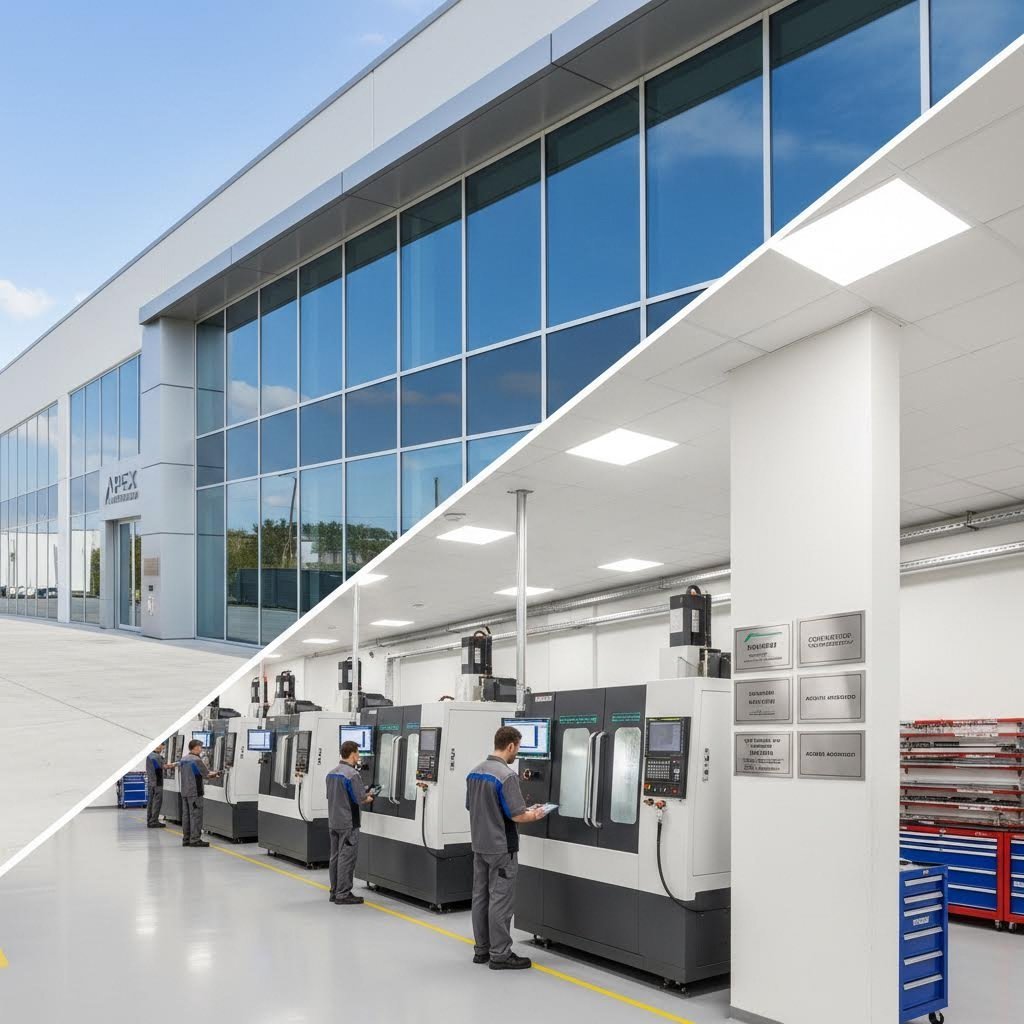
Selecting the Right Production Machining Partner
You've determined the right manufacturing process and established quality expectations. Now comes the decision that often determines whether production succeeds or fails: choosing who actually machines your parts. The difference between CNC machine producers capable of true production output and shops better suited for prototype work becomes starkly apparent once orders scale. How do you evaluate potential partners before committing thousands of units to their care?
Certification Standards That Matter
Not all certifications carry equal weight for production CNC machining. Some demonstrate genuine production readiness, while others merely check boxes. Understanding which credentials actually matter helps you filter candidates quickly.
According to American Micro Industries' certification guide, ISO 9001 serves as the internationally recognized baseline for quality management systems, demonstrating consistent, high-quality output through customer focus, process approach, and evidence-based decision-making. However, ISO 9001 alone doesn't guarantee production capability.
For industrial machining serving specific sectors, additional certifications become essential:
- IATF 16949: The global standard for automotive quality management, combining ISO 9001 principles with sector-specific requirements for continuous improvement, defect prevention, and stringent supplier oversight. CNC machine manufacture for automotive applications essentially requires this certification.
- AS9100: Builds on ISO 9001 with aerospace-specific requirements for risk management, documentation, and product integrity control throughout complex supply chains.
- ISO 13485: The definitive standard for medical device manufacturing, outlining strict controls over design, traceability, and risk mitigation.
- NADCAP: Accreditation for special processes critical to aerospace and defense, including heat treating and nondestructive testing.
Certifications serve as more than marketing claims. As noted by Stecker Machine's supplier selection guide, no machining vendor can handle the most complex challenges without having an ISO 9001-compliant established quality management system. The IATF 16949 standard helps ensure that products consistently meet requirements and quality is routinely improved.
When evaluating machine services, ask specifically about Statistical Process Control implementation. Facilities with documented SPC capabilities demonstrate they monitor production in real-time, catching variation before it becomes scrap. This capability separates production-ready partners from shops that rely solely on final inspection.
For automotive applications requiring IATF 16949 certification and SPC capabilities, Shaoyi Metal Technology exemplifies the certified production partner model, combining rapid prototyping capabilities with mass production scalability and lead times as fast as one working day for CNC machined components.
Evaluating Production Capacity and Scalability
Certifications verify systems exist. Capacity assessment determines whether those systems can handle your volume. A perfectly certified shop running at 95% utilization cannot reliably absorb your production orders without delays.
According to Rapidefficient's evaluation framework, equipment capabilities form the core competitiveness of CNC processing plants. Without advanced equipment, talking about quality, precision, and efficiency is tantamount to empty talk.
When assessing CNC machine and fabrication capacity, investigate these factors:
- Equipment type and quantity: Does the manufacturer have multi-axis machining centers capable of your part complexity? What's the total machine count versus current utilization?
- Processing range: Can their equipment handle your part sizes, from small precision components to larger assemblies?
- Equipment maintenance cycles: Regularly upgraded equipment indicates commitment to capability. Outdated machines struggle with efficiency and precision demands.
- Shift structure: Single-shift operations have limited capacity. Multiple shifts or lights-out automation dramatically increase throughput.
Scalability matters as much as current capacity. Your initial order might be 500 units, but what happens when demand reaches 5,000? As Stecker Machine notes, being capable is great, yet preparing for the next big challenge means they're serious about establishing long-term, high-volume relationships.
Request case studies demonstrating experience with similar volumes and materials. According to industry best practices, asking for case studies or a range of services list confirms not only can they handle this project, but they'll be able to keep up as you grow. A partner experienced in your CNC machine materials and part complexity reduces learning curve risks.
Building Long-Term Manufacturing Partnerships
The lowest quote rarely delivers the best value. Production CNC machining relationships succeed through partnership mentality, not transactional purchasing. Evaluating potential partners requires looking beyond price to assess communication, flexibility, and accountability.
According to industry supplier selection guidance, a true partner is transparent about the relationship and their role in your success. You always know where you stand. A valued partner delivers better communication, is more willing to work with you, is invested in quality, and gives extra attention to price.
Critical partnership indicators include:
- Engineering support: Partners with strong engineering teams help develop optimal designs using DFM methods. Their influence is felt most powerfully early in the design process and when design changes are required.
- Communication protocols: Clear flow eliminates confusion and missteps. Establish expectations around order updates, quality reporting, and problem escalation.
- Financial stability: Knowing they'll be around long-term to service your needs is vital. Investigate company history and customer references.
- Flexibility for changes: There will come a day when you need to quickly change an order. An invested partner is flexible enough to handle change orders and willing to provide value-added services.
Supplier Evaluation Checklist
Before committing to a production machining partner, verify these critical factors:
- ☐ Relevant certifications verified (ISO 9001, IATF 16949, AS9100 as applicable)
- ☐ Statistical Process Control documentation reviewed
- ☐ Equipment list and capabilities confirmed for your part requirements
- ☐ Current utilization rates and capacity availability discussed
- ☐ Case studies reviewed for similar materials, tolerances, and volumes
- ☐ Engineering support capabilities assessed
- ☐ Communication protocols and primary contacts established
- ☐ Financial stability and company history verified
- ☐ Customer references contacted and testimonials reviewed
- ☐ Quality documentation samples examined (inspection reports, certifications)
- ☐ Lead time commitments documented in writing
- ☐ Prototype-to-production scalability path confirmed
Consider starting with small batch trial orders before committing to full production volumes. According to Rapidefficient's guidance, testing the manufacturer's technical level, delivery capability, and service quality through actual results provides validation that proposals alone cannot.
Watch for warning signs during evaluation. A shop that deflects responsibility or blames poor casting quality for sub-par machining performance will hurt your ability to meet quality requirements and future supply chain deadlines. Partners that avoid accountability create risk you cannot afford in production environments.
The right production machining partner becomes an extension of your manufacturing capability, not just a vendor. With certification requirements validated, capacity confirmed, and partnership expectations aligned, you're positioned to move from evaluation to execution.
Moving Forward with Production CNC Machining
You've navigated the technical requirements, evaluated manufacturing alternatives, and understand what separates production-ready partners from prototype shops. Now it's time to synthesize everything into a clear action plan. Moving from consideration to execution requires a structured approach that addresses each critical decision point while maintaining momentum toward your production goals.
Your Production Readiness Checklist
Before committing resources to production CNC machining, validate that your organization has addressed each foundational requirement. Think of this as your pre-flight inspection, ensuring nothing critical gets overlooked before scaling begins.
The transition from prototype to production parts involves more than simply increasing order quantities. According to AME-3D's manufacturing guidance, just because a prototype works doesn't mean it can be easily or affordably mass-produced. Validating your prototype for manufacturability should happen before committing to volume.
Your production readiness assessment should confirm:
- Design stability: Are specifications locked, or are changes still likely? Each CNC part modification during production creates costly disruptions.
- Material availability: Have you confirmed supply chain capacity for your chosen materials at projected volumes?
- Tolerance validation: Can your specified tolerances actually be held consistently across production quantities?
- Quality system alignment: Does your internal quality management integrate with your partner's documentation and inspection protocols?
- Volume forecasting: Have you developed realistic demand projections that justify production-level investments?
As noted in Modus Advanced's manufacturability assessment framework, assessment should begin during initial concept development, not after design completion. Early evaluation identifies major manufacturing challenges when design flexibility remains highest.
Key Metrics for Production Success
How do you know your production CNC machining initiative is succeeding? Establishing clear metrics before launch provides the benchmarks needed to evaluate performance and drive continuous improvement.
According to Stecker Machine's KPI analysis, customers have simple needs: a perfectly machined part delivered on time backed by outstanding service. Yet delivering all of those requires many KPIs, perhaps dozens, within a CNC machine shop.
Focus on these essential machining part performance indicators:
- Quality PPM (Parts Per Million): Track defects per million parts produced. Production-ready operations typically target single-digit PPM for critical dimensions.
- On-Time Delivery: The percentage of CNC machined parts meeting agreed ship dates. Industry leaders maintain 95%+ on-time performance.
- Cost of Poor Quality: External quality issues plus internal scrap plus rework. This lagging indicator reveals true quality system effectiveness.
- First-Pass Yield: The percentage of production parts meeting specification without rework. High first-pass yield indicates process stability.
- Setup Efficiency: Actual setup time versus projected time. Efficient setups maximize spindle utilization across production runs.
As Stecker Machine emphasizes, hitting manufacturing KPIs is meaningful, fulfilling, and inspirational across the organization. But remember that patterns matter more than individual results. Long-term, measurable trends that develop over time are what drive actionable improvement.
Taking the Next Step
Ready to move forward? The path from planning to production follows a logical sequence that builds capability while managing risk. Rushing any stage typically creates problems that compound as volumes increase.
Follow this actionable roadmap for production CNC machining success:
- Finalize design for manufacturability: Complete a thorough DFM review with your manufacturing partner. Address any features that create unnecessary complexity or compromise consistent production.
- Validate material sourcing: Confirm material availability, establish supplier relationships, and implement incoming inspection protocols for production consistency.
- Execute first-article production: Run initial parts through the complete manufacturing process. Perform comprehensive inspection and document any adjustments needed.
- Establish quality baselines: Use first-article data to set control limits for SPC monitoring. Define inspection sampling plans appropriate for your volume and criticality.
- Complete pilot production run: Manufacture a representative batch (typically 50-200 units) to validate cycle times, quality stability, and process capability.
- Implement continuous monitoring: Launch production with real-time SPC tracking, defined escalation protocols, and regular performance reviews against established KPIs.
- Plan for scale: Document lessons learned and establish capacity expansion triggers for when demand growth requires additional resources.
The importance of starting with a capable partner cannot be overstated. A manufacturer who can scale seamlessly from prototyping through full production eliminates the risk and delays of transitioning between suppliers as volumes grow. Look for partners demonstrating both rapid prototyping agility and mass production infrastructure under one roof.
For automotive applications demanding the highest quality standards, Shaoyi Metal Technology offers precisely this capability. Their IATF 16949 certification and Statistical Process Control implementation ensure consistent quality from the first CNC part through high-volume production runs. With lead times as fast as one working day and expertise spanning complex chassis assemblies to custom metal bushings, they represent the production-ready partnership model that accelerates automotive supply chains.
Production CNC machining success ultimately depends on preparation, partnership, and persistence. The eight critical decisions covered throughout this guide provide the framework. Your next step? Start the conversation with a qualified manufacturing partner who understands your specific requirements and can demonstrate the certifications, capacity, and commitment your production parts demand.
Frequently Asked Questions About Production CNC Machining
1. What is the CNC production process?
The CNC production process begins with creating a 2D or 3D CAD model, which is then converted into machine-readable G-code through CAM software. For production-scale operations, this involves optimized toolpath programming for repeatability, automated tool changes, and Statistical Process Control monitoring. Unlike prototype machining focused on flexibility, production CNC machining emphasizes consistency across thousands of identical parts, with quality control sampling, first-article inspections, and continuous process monitoring to maintain tight tolerances throughout extended runs.
2. When should I transition from prototyping to production CNC machining?
The transition typically makes economic sense when volumes reach 100-500 units annually, where setup costs begin distributing meaningfully across parts. Key indicators include design stability (no more iterations expected), predictable demand forecasting, and validated manufacturability. At 500-5,000 units, dedicated tooling and process optimization become justified, while volumes exceeding 5,000 units require production-grade quality systems and automation. The crossover point varies by part complexity, material costs, and tolerance requirements.
3. How does production CNC machining compare to injection molding?
CNC machining offers lower setup costs and design flexibility, making it economical for volumes under 10,000 units. Injection molding requires expensive tooling ($5,000-$100,000+) but delivers extremely low per-part costs at high volumes. Tolerance capability differs significantly: CNC achieves ±0.005mm precision consistently, while injection molding typically manages ±0.1mm. If your application demands aerospace-grade precision or designs remain fluid, CNC wins regardless of volume. For stable designs exceeding 10,000 units with looser tolerances, injection molding becomes more cost-effective.
4. What certifications should a production CNC machining partner have?
ISO 9001 serves as the baseline quality management certification. For automotive applications, IATF 16949 is essential, combining ISO 9001 with sector-specific requirements for defect prevention and continuous improvement. Aerospace work requires AS9100, while medical device manufacturing demands ISO 13485. Beyond certifications, look for documented Statistical Process Control capabilities, which demonstrate real-time production monitoring. Facilities like Shaoyi Metal Technology with IATF 16949 certification and SPC implementation represent production-ready partners for critical applications.
5. What materials work best for high-volume CNC machining?
Aluminum alloys (6061-T6, 7075) excel in production environments with cutting speeds of 500-2,500 SFM, enabling faster cycle times and lower costs. Free-machining brass produces excellent surface finishes with minimal tool wear. Carbon steels like 12L14 offer good strength and machinability balance. Stainless steels (304, 316) require 25-50% longer cycle times but are essential for corrosion resistance. Material consistency between batches becomes critical at scale, requiring mill certifications and incoming inspection protocols to maintain quality across production runs.