 Small batches, high standards. Our rapid prototyping service makes validation faster and easier —
  EN
EN


Precision Sheet Products Decoded: From Raw Metal To Flawless Parts
What Makes Sheet Metal Products Truly Precision-Grade
When you hear the term "precision sheet products," what comes to mind? Perhaps perfectly flat panels or components that snap together without any fuss. But what actually separates these high-accuracy parts from standard sheet metal work? The answer lies in three critical factors: tolerance capabilities, dimensional accuracy, and repeatability.
Imagine ordering a batch of 10,000 metal enclosures. With standard fabrication, each piece might vary slightly—some holes slightly off-center, edges not quite aligned. Now picture those same enclosures made to precision standards, where every single unit matches the original design within fractions of a millimeter. That consistency is what defines precision sheet metal and makes it essential for industries where "close enough" simply doesn't cut it.
Defining Precision in Sheet Metal Manufacturing
Standard metal fabrication typically works within tolerances of ±1/16" to ±1/8" (±1.6mm to ±3.2mm). These measurements work fine for construction frameworks or basic brackets. However, precision sheet metal fabrication operates in an entirely different realm.
Precision sheet metal fabrication maintains tolerances between ±0.005" and ±0.010" (±0.13mm to ±0.25mm)—up to 25 times tighter than standard fabrication methods.
What does this mean in practical terms? Consider a component with a 10mm hole diameter. Standard tolerances might allow that hole to measure anywhere from 9.84mm to 10.16mm. Precision metal fabrication narrows that window dramatically—the same hole would fall between 9.87mm and 10.13mm, ensuring consistent fit and function across every part produced.
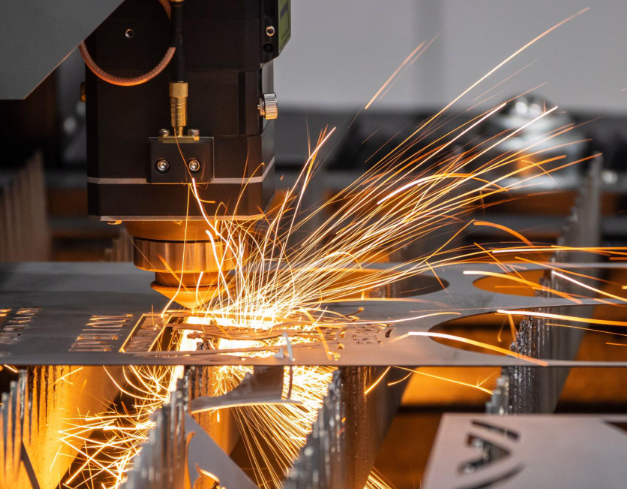
Leading precision sheet metal shops achieve these results through advanced fiber laser cutting systems, CNC press brakes with angle measurement capabilities, and coordinate measuring machines (CMM) that verify accuracy down to microns. This combination of sophisticated equipment and rigorous quality control distinguishes true precision work from general fabrication.
How Tolerance Standards Shape Product Quality
Tolerance isn't just an engineering specification—it functions as a "precision contract" that influences a product's entire lifecycle. Every tolerance decision involves balancing three competing factors:
- Quality: Tighter tolerances mean smoother assembly, more consistent performance, and reliable outcomes
- Cost: As tolerances tighten, manufacturing costs often rise exponentially due to specialized equipment and extended processing times
- Manufacturability: Different processes have distinct tolerance capabilities, and matching requirements to methods prevents unnecessary complexity
The key is finding the "comfort zone" where tolerances remain loose enough to control costs while tight enough to preserve performance. This balance separates experienced US precision sheet metal manufacturers from those who either over-engineer (driving up costs) or under-specify (risking quality issues).
Industry standards like ISO 2768 and ASME Y14.5 provide frameworks for specifying these tolerances consistently. ISO 2768 covers general tolerances for linear and angular dimensions, while ASME Y14.5 offers comprehensive guidelines for geometric dimensioning and tolerancing. These standards ensure that precision sheet metal products meet universal benchmarks, enabling seamless collaboration between designers and fabricators worldwide.
For applications in aerospace, medical devices, or electronics, where dimensional variations directly impact safety or performance, precision tolerances aren't optional—they're essential. Understanding these fundamentals helps you specify requirements accurately and select fabrication partners capable of delivering the precision your projects demand.
Core Manufacturing Processes Behind Precision Sheet Products
Understanding tolerance standards is one thing—but how do manufacturers actually achieve those micron-level accuracies? The answer lies in three fundamental processes: laser cutting, metal punching, and precision metal forming. Each method brings distinct capabilities to the table, and knowing how they deliver precision (not just what they do) helps you make smarter decisions about your manufacturing approach.
Think of these processes as tools in a precision toolkit. A skilled fabricator doesn't just own the equipment—they understand exactly which technique matches specific accuracy requirements, material characteristics, and production volumes. Let's explore the mechanics behind each method.
Laser Cutting for Micron-Level Accuracy
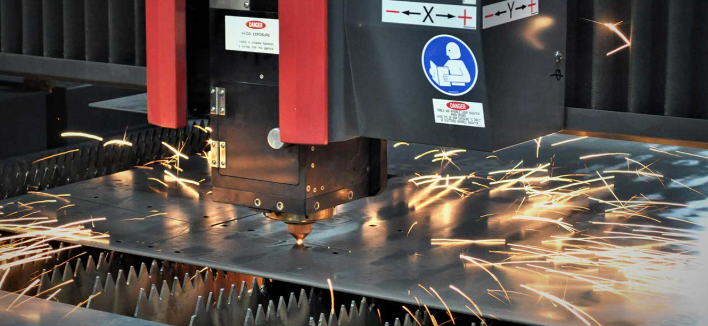
Ever wonder how manufacturers achieve cuts with tolerances as tight as ±0.0005 inch? The secret lies in physics. Laser cutting uses a highly concentrated stream of photons directed onto material at extreme speeds, with beam spot sizes as small as 25 microns—smaller than a human hair. This focused energy melts and vaporizes material with surgical precision, creating cuts where traditional methods would struggle.
According to Fab-Line Machinery, laser cutting accuracy can reach levels as precise as ±0.0005 inch, making it ideal for industries requiring intricate and detailed cuts. But achieving this precision isn't automatic—it depends on several interconnected factors working together.
- Light spot size: Smaller spots create narrower slits and higher precision. Shorter focal lenses produce more concentrated beams, enabling sharper cuts on complex designs
- Power and speed calibration: Too fast, and the laser won't fully cut through each element. Too slow, and excessive heat damages the workpiece. Finding this balance requires material-specific testing
- Mirror alignment: Laser beams travel from the tube through multiple mirrors before reaching the cutting head. Misaligned mirrors compromise cut quality and waste materials
- Material properties: Smoother surfaces yield higher precision. Thinner materials generally produce better accuracy than thicker sheets where more variables come into play
- Platform stability: Any vibration during operation affects cutting accuracy. A solid, wobble-free workbench forms the foundation for precise results
Fiber laser cutters have become particularly valuable for precision sheet products, operating for approximately 25,000 hours compared to 8,000-15,000 hours for crystal lasers. Their beams are 100 times stronger than gas lasers while remaining more cost-effective—a winning combination for high-precision production runs.
Punching and Forming Techniques That Maintain Tolerances
While laser cutting excels at complex contours, sheet metal punching delivers unmatched speed for repetitive features like holes, slots, and standard shapes. Modern CNC punch presses equipped with a precision metal punching machine can achieve tolerances as tight as ±0.05mm—but only when every element of the process aligns perfectly.
How does a sheet metal punching machine maintain such accuracy across thousands of parts? It starts with understanding that punching is far from a "set and forget" operation. Sinoway Industry identifies several critical factors that enable tight-tolerance punching:
- High-precision tooling: Custom-designed punches and dies manufactured from premium tool steels must be meticulously maintained, sharpened, and calibrated for clean, accurate cuts
- Material consistency: Variations in thickness, hardness, and surface finish directly impact final tolerances. Certified material specifications establish a stable baseline
- Real-time monitoring: Automated sensors track punch force, alignment, and part ejection. Catching deviations immediately prevents costly errors
- Environmental control: Temperature, humidity, and vibration all affect precision. Climate-controlled facilities minimize these variables
- Tool wear management: Regular inspection and maintenance prevent gradual accuracy degradation as tools experience wear
For pressing and punching operations that require forming as well as cutting, metal press forming adds another dimension of complexity. Precision press brakes with angle measurement capabilities use techniques like air bending, bottom bending, and coining to achieve consistent bends within specified tolerances. Experienced technicians monitor the forming process to prevent defects such as warping or cracking—issues that compromise dimensional accuracy.
The relationship between process selection and achievable precision isn't always linear. Sometimes combining laser cutting for intricate features with metal punching for high-volume repetitive elements delivers better overall results than relying on either method alone. Understanding these trade-offs—speed versus complexity, volume versus customization—helps you match manufacturing approaches to your specific precision requirements.
Material Selection and Thickness Impact on Precision Outcomes
You've learned how cutting and forming processes achieve tight tolerances—but here's something many engineers overlook: even the most advanced equipment can't compensate for choosing the wrong material. The metal itself plays a starring role in determining whether your precision sheet products meet specifications or fall short.
Think about it this way. Each material has its own personality. Aluminum bends easily but springs back aggressively. Stainless steel resists corrosion beautifully but demands more force during forming. Steel sheet fabrication offers excellent strength-to-cost ratios but requires careful handling to prevent rust. These characteristics directly influence which processes work best and what tolerances you can realistically achieve.
Material Properties That Affect Dimensional Stability
Why do some parts warp after precision sheet metal cutting while others remain perfectly flat? The answer lies in understanding how different metals behave under stress. Several key properties determine a material's suitability for precision work:
- Elastic recovery (springback): After bending, materials partially revert toward their original shape. According to ProtoSpace Manufacturing, 304 stainless steel requires compensation for 3-5 degrees of springback, while cold rolled steel needs only 1-3 degrees. This difference significantly impacts forming accuracy
- Tensile strength: Stronger materials generally exhibit more springback. High-strength alloys demand more sophisticated compensation strategies during precision sheet metal forming
- Grain direction: Bending perpendicular to the grain direction increases accuracy and reduces cracking risk. Ignoring grain orientation can introduce unexpected dimensional variations
- Thermal expansion: Some alloys expand or contract more than others when exposed to heat during cutting or welding. This affects final dimensions and must be factored into process planning
- Surface hardness: Harder surfaces may chip or crack under certain forming operations, while softer materials might deform inconsistently
Understanding these properties helps you anticipate challenges before they become expensive problems. A component designed in aluminum won't behave identically when switched to stainless steel—even if the geometry remains unchanged.
Thickness Range Considerations for Precision Work
Here's where things get interesting. Sheet metal thickness directly determines which manufacturing processes will work and what precision levels are achievable. As All Metals Fabrication explains, sheet metal typically ranges from 26 gauge (thinner) to 7 gauge (thicker), with measurements becoming plate metal beyond 7GA (.188").
But thickness isn't just a number—it's a decision driver that affects everything from handling to final accuracy. Consider these factors:
- Thinner materials (24-26 gauge): More prone to warping and distortion during cutting and forming. Require gentler handling and often specialized fixturing to maintain flatness
- Mid-range materials (14-20 gauge): Offer the best balance between formability and dimensional stability. Most metal sheet fabrication falls within this range
- Thicker materials (7-14 gauge): Show less springback but require more powerful equipment. A steel sheet punching machine must deliver significantly more force for thicker stock
Thickness tolerance also matters more than many realize. Even variations as small as 0.003"—approximately the thickness of a human hair—can impact fabrication processes like forming. Batch-to-batch inconsistencies in material thickness translate directly into dimensional variations in finished parts.
| Material Type | Typical Thickness Range | Springback Allowance | Precision Considerations |
|---|---|---|---|
| Cold Rolled Steel | 0.020" - 0.188" (24GA - 7GA) | 1-3 degrees | Excellent formability; moderate springback; requires rust prevention |
| 304 Stainless Steel | 0.018" - 0.188" (26GA - 7GA) | 3-5 degrees | Higher springback; work hardens during forming; excellent corrosion resistance |
| 5052 Aluminum | 0.020" - 0.250" | 2-5 degrees | Lightweight; significant springback; measured in decimals rather than gauge |
| Copper | 0.021" - 0.125" | 1-2 degrees | Soft and malleable; excellent conductivity; prone to surface scratching |
| Titanium | 0.016" - 0.125" | 4-6 degrees | High strength-to-weight ratio; significant springback; requires specialized tooling |
The table above reveals a critical insight: material selection and thickness work together as a system. Choosing 304 stainless steel at 20 gauge creates different precision challenges than selecting aluminum at the same thickness. Experienced fabricators account for these variables before production begins—not after problems emerge.
When specifying materials for your precision sheet products, don't just focus on mechanical properties or cost. Consider how each material's unique characteristics interact with your tolerance requirements and chosen manufacturing processes. This holistic approach prevents the costly trial-and-error cycles that plague projects where material selection happens as an afterthought.
Industry Applications and Their Unique Precision Demands
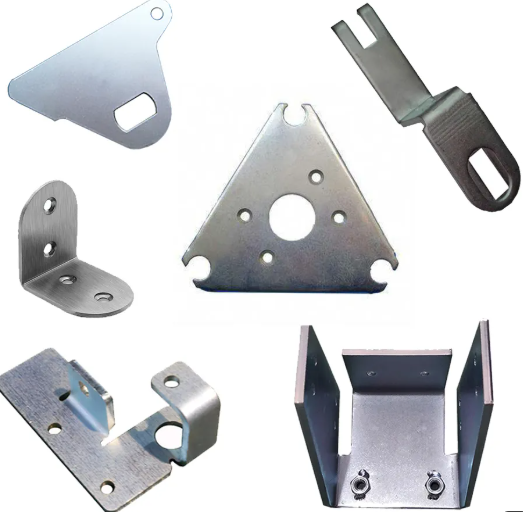
Now that you understand how materials and manufacturing processes interact, here's the real question: what do these precision capabilities mean for your specific industry? Whether you're designing automotive chassis components or medical device enclosures, precision requirements vary dramatically—and understanding these differences can save you from costly specification errors.
Each sector has developed its own precision language, driven by unique performance demands and regulatory frameworks. An electronics enclosure that needs to shield sensitive components from electromagnetic interference has fundamentally different requirements than an aerospace bracket designed to withstand extreme vibration. Let's decode what precision sheet metal fabrication means across four critical industries.
Automotive Chassis and Structural Component Requirements
The automotive industry represents one of the largest consumers of precision sheet products—and for good reason. According to the Business Research Company, the automotive sheet metal components market was valued at approximately $138.84 billion in 2025 and is projected to reach $172.26 billion by 2029, growing at an average rate of 5.5% annually.
What drives this massive demand? Modern vehicles require components that balance three competing priorities: structural integrity, weight reduction, and design complexity. OEM metal fabrication for automotive applications must achieve dimensional accuracy within ±0.05mm to ensure proper fit during assembly—any gaps or alignment issues compromise both aesthetics and safety.
- Body panels and closure panels: Require 5000-series and 6000-series aluminum alloys for 30-40% weight reduction compared to steel while maintaining formability and finish quality
- Chassis and structural frames: Utilize Advanced High-Strength Steels (AHSS) with yield strengths between 550-1200 MPa for critical safety structures in impact zones
- Engine compartment components: Must withstand temperatures from -40°C to 125°C and pass 1,000+ thermal cycling tests
- Body-in-White (BIW) assemblies: Contain 2,000-5,000 spot welds that form the vehicle's safety cage, with each weld requiring precise positioning
- Electric vehicle battery enclosures: Demand exceptional precision with leak-tight joining methods to prevent thermal runaway situations
Engineering metal products for automotive applications increasingly relies on tailor-welded blanks—components that combine different thicknesses or materials into a single piece before forming. This approach places specific material properties exactly where needed, optimizing performance while minimizing weight. Modern CNC machining achieves dimensional accuracy within ±0.05mm, ensuring complex assemblies fit perfectly during vehicle production.
Aerospace Precision Standards
If automotive demands seem strict, aerospace takes precision to another level entirely. Components that fly must withstand extreme vibration, temperature cycling, and stress loads while remaining as light as possible. There's simply no room for dimensional error when safety margins are this critical.
Aerospace precision sheet metal fabrication typically requires tolerances between ±0.001" and ±0.005"—significantly tighter than automotive standards. This exacting precision stems from several non-negotiable requirements:
- Structural brackets and reinforcements: Must maintain dimensional stability under vibration frequencies that would fatigue lesser materials
- Fuel system components: Require leak-proof seams with tolerances that prevent any possibility of fuel seepage
- Engine cowlings and nacelles: Demand smooth aerodynamic surfaces where even minor imperfections create drag penalties
- Control surface components: Need precise weight distribution to maintain proper balance and flight characteristics
- Heat shields and thermal barriers: Must account for extreme thermal expansion while maintaining protective coverage
Companies that manufacture metal products for aerospace applications face rigorous certification requirements. Beyond dimensional accuracy, materials must meet strict traceability standards, and every process must be documented for potential audit. This creates a higher barrier to entry but ensures components perform reliably under conditions where failure isn't an option.
Electronics Enclosures Demanding Tight Tolerances
Electronics applications present a unique precision challenge: protecting sensitive components from both physical damage and invisible threats like electromagnetic interference (EMI). According to AIP Precision Machining, effective EMI shielding requires enclosures that provide 40-100 dB attenuation across multiple frequency bands.
But shielding effectiveness depends heavily on precision. Gaps as small as 0.5mm can create pathways for electromagnetic energy to enter or escape the enclosure. This makes small metal parts manufacturing for electronics particularly demanding—every seam, joint, and access panel must maintain consistent contact for proper shielding.
- Server and data center housings: Require precise cable entry points with shielding designs—braided (effective up to 15 KHz), spiral (for flexibility), and foil shields (for frequencies above 15 KHz)
- Semiconductor manufacturing enclosures: Must meet cleanroom standards (ISO Class 7/Class 10,000) while controlling electrostatic discharge that can damage components at voltages as low as 10-20 volts
- Telecommunications equipment housings: Need consistent dimensional accuracy for rack mounting and proper thermal management
- Consumer electronics enclosures: Balance aesthetic requirements with functional precision for component mounting and heat dissipation
- Industrial control panels: Require precise cutouts for displays, switches, and connectors while maintaining IP-rated environmental protection
Metal products manufacturing for electronics also demands careful attention to surface finish. Conductive coatings or metal meshes used for EMI protection require smooth, consistent substrate surfaces to function properly. Surface roughness variations can compromise shielding effectiveness just as easily as dimensional errors.
Medical Device Applications and Regulatory Precision
Medical device manufacturing adds another layer of complexity: regulatory compliance. According to Tempco Manufacturing, ISO 13485:2016 certification represents the requirements for a comprehensive quality management system for the design and manufacturing of medical devices—and precision sheet metal components fall squarely within this framework.
What makes medical device precision requirements unique? These components often contact patients directly or support life-critical systems. Dimensional variations that might be acceptable in other industries could compromise sterility, device function, or patient safety.
- Surgical instrument housings: Must withstand repeated sterilization cycles (steam autoclaving, ethylene oxide, gamma radiation) without dimensional changes
- Diagnostic equipment enclosures: Require precise mounting points for sensitive sensors and imaging components
- Implantable device components: Demand biocompatibility testing under ISO 10993 standards alongside dimensional precision
- Laboratory equipment housings: Need chemical resistance and easy-clean surfaces while maintaining tight tolerances for equipment mounting
- Patient monitoring device enclosures: Must balance durability for frequent handling with precision for display and sensor integration
The regulatory environment shapes how precision is documented and verified. Medical device fabricators must maintain traceability records connecting raw materials through finished components, with inspection data proving each part meets specifications. This documentation burden increases manufacturing complexity but provides the quality assurance healthcare applications demand.
Understanding these industry-specific requirements helps you communicate more effectively with fabrication partners and specify tolerances that match your actual needs—neither over-engineering (which increases costs) nor under-specifying (which risks performance issues). But achieving these tolerances consistently isn't automatic. Next, we'll explore the common challenges that can derail precision and the practical solutions experienced fabricators use to overcome them.
Common Precision Challenges and How to Overcome Them
You've selected the right material, specified appropriate tolerances, and chosen capable manufacturing processes. So why do precision problems still emerge? Even experienced engineers encounter warping, burrs, and dimensional inconsistencies that threaten project timelines and budgets. The difference between frustration and success often comes down to understanding what causes these issues—and knowing how to prevent them before parts leave the production floor.
Here's the reality: achieving precision isn't just about having advanced equipment. It's about anticipating what can go wrong and building prevention into every step. Whether you're working with a custom sheet metal punch operation or high-volume punching sheet metal runs, these challenges appear consistently across applications. Let's break down the most common precision obstacles and explore practical solutions that work.
Preventing Warping and Distortion in Thin Materials
Warping ranks among the most frustrating precision challenges because it often appears after fabrication seems complete. You've made clean cuts, achieved tight tolerances on individual features—then the finished part curves or bows in ways that make assembly impossible. What went wrong?
According to Mate Precision Technologies, the root cause often traces back to stress accumulation during punching. Each time a hole is punched, material surrounding the hole stretches downward, placing the top of the sheet in tension while creating corresponding compression at the bottom. For a few holes, this effect remains insignificant. But as hole count increases, these stresses multiply until the sheet deforms.
- Punch sequence strategy: Instead of punching holes consecutively in one direction, punch every other hole first, then return to complete the remaining holes. This disrupts stress accumulation and allows the first set of holes to absorb some distorting effect from the second set
- Die clearance optimization: Insufficient clearance generates excessive heat and warps sheets through thermal stress. Total clearance should be 20-25% of material thickness for most applications
- Proper stripping: Weak springs or inadequate stripping force can pull material unevenly, introducing twist and bow. Verify stripping systems function correctly before production runs
- Material support: Thin materials (less than 0.020"/0.50mm) require additional support during processing. Use fully guided tooling to prevent lateral movement that causes distortion
- Temperature control: High punching speeds generate frictional heat that can soften material. Lubrication decreases friction while allowing faster heat dissipation
For sheet punching operations involving thin materials, consider using lighter spring packs or urethane pads to reduce marking and stress introduction. Sometimes the solution isn't changing how you punch—it's changing how the material contacts tooling during the operation.
Burr Control Strategies for Clean Edges
Burrs seem simple—just unwanted material left on cut edges. But their impact on precision extends far beyond aesthetics. Burrs interfere with assembly, create safety hazards, and indicate underlying process problems that affect dimensional accuracy. Controlling burrs at the source proves far more effective than removing them afterward.
What causes burrs to form in the first place? The Mate Technical Solutions Guide identifies improper die clearance as the primary culprit. When clearance is too tight, secondary shear cracks form, work-hardening the burrs and making them larger and more difficult to remove. When clearance is too large, increased rollover and breakaway areas produce rounded slugs with inconsistent burr characteristics.
- Optimal die clearance: For hole punching sheet metal, proper clearance allows shear cracks from punch and die to meet cleanly. This balances punching force, part quality, and tool life while minimizing burr formation
- Sharp tooling maintenance: Dull punches and dies dramatically increase burr size. Mate recommends sharpening tools when cutting edges develop a 0.01" (0.25mm) radius—frequent light touch-ups outperform waiting until tools become very dull
- Clearance corners: For rectangular and square dies with clearance greater than 0.020" (0.5mm), include radiused corners to maintain uniform clearance around the punch. Sharp-cornered dies create larger corner-to-corner distances, producing larger burrs at corners
- Slug examination: Your slugs tell the story. An ideal slug shows fracture planes from top and bottom meeting at the same angle. Rough fracture planes with small burnish zones indicate excessive clearance; steep fracture planes with large burnish zones suggest insufficient clearance
- Material-specific adjustments: Stainless steel requires tighter clearance (20-35% depending on thickness) compared to aluminum (15-25%) due to different shear strengths and work-hardening characteristics
When punching steel or other harder materials, consider specialized deburring tools like rollerball deburr systems that push burrs away while creating a radius on part edges. This approach eliminates secondary operations while improving safety during handling.
Achieving Dimensional Stability and Repeatability
Perhaps no precision challenge matters more than repeatability—the ability to produce identical components continuously within defined tolerances. As Neway Precision explains, even slight deviations can compromise performance, safety, and regulatory compliance in precision-critical sectors.
Repeatability challenges often emerge gradually. A metal punch press produces perfect parts initially, then quality slowly degrades as tools wear, settings drift, or material properties vary between batches. By the time problems become obvious, significant waste may have accumulated.
- Consistent material quality: Variations in thickness, hardness, or chemical composition lead to dimensional inaccuracies. Specify certified materials with documented properties to establish stable baselines
- Precision tooling maintenance: Dies crafted from robust materials like carbide or specialized tool steels maintain tight tolerances through extended production runs—but only with regular maintenance, calibration, and timely replacement
- Process parameter control: Stamping pressure, die alignment, and operational speed significantly impact repeatability. Meticulous control of these parameters ensures consistent force application and precise positioning
- Real-time monitoring: Advanced sensors and automated data collection systems detect deviations from specifications immediately, enabling corrective action before defective parts accumulate
- CNC automation: Computer numerical control eliminates manual adjustments that introduce variability. Each cycle follows exact specifications regardless of operator fatigue or attention
Tool alignment deserves special attention. If your punch press alignment deteriorates to where tools dull rapidly or workpiece quality becomes unacceptable, check tool loading equipment for wear, examine tool receptacles for proper seating, and verify keys and keyways maintain correct clearance. Often, precision problems trace back to mechanical issues rather than operator error.
Troubleshooting Quick Reference
When precision problems emerge mid-production, quick diagnosis saves time and material. Here's a condensed troubleshooting guide based on common symptoms:
- Excessive burrs: Check die clearance, sharpen tooling, verify holder alignment, look for slug pile-up in dies
- Poor hole quality: Inspect for dull tooling, improper clearance, die seating issues, or alignment problems—use guided tooling for thin materials
- Punch breakage: Verify adequate clearance, confirm tools are loaded correctly, use guided tooling when punch size approaches material thickness
- Punch sticking: Sharpen tools, increase clearance, remove galling, lubricate workpiece, increase stripping force
- Rapid tool wear: Increase clearance, lubricate to reduce overheating, check alignment, consider coatings for abrasive materials
- Sheet accuracy issues: Inspect work holders for wear, check table-to-press alignment, verify turret bores aren't worn, demagnetize tooling
Prevention always costs less than correction. Establishing proactive maintenance schedules, training operators on precision fundamentals, and implementing quality checkpoints throughout production catches issues before they compound into expensive problems.
Understanding these challenges prepares you for production realities—but precision doesn't end when parts leave the punch press. Secondary operations like deburring, surface finishing, and heat treatment also affect final dimensions. Next, we'll explore how these finishing processes impact precision and what quality verification methods ensure your parts meet specifications.
Secondary Operations That Determine Final Product Precision
Here's something that surprises many engineers: your parts can meet every dimensional specification during fabrication—then lose that precision during finishing. Secondary operations like deburring, surface finishing, and heat treatment aren't just cosmetic add-ons. They actively reshape your components, sometimes adding material, sometimes removing it, and always influencing final dimensions.
Think about it this way. Sheetmetal fabrication gets you 90% of the way to a finished component. But that final 10%—the finishing processes—determines whether your fabricated parts actually function as intended. A perfectly punched enclosure with rough edges won't seal properly. A flawlessly formed bracket with inadequate surface treatment will corrode in months. Understanding how these secondary operations impact precision helps you specify requirements that deliver dependable metal products meeting both dimensional and functional needs.
Surface Finish Standards and Their Precision Implications
Surface finish isn't just about how parts look—it directly affects how they perform. According to Manufacturing Solutions Inc., metal finishing is the crucial final step that transforms raw fabricated parts into ready-to-install solutions by altering surface characteristics for durability, aesthetics, and environmental resistance.
But here's what many specifications overlook: each finishing method adds or removes material differently, creating distinct dimensional impacts. When you're working toward precise metal fabrication, understanding these effects prevents unpleasant surprises during assembly.
| Finishing Method | Dimensional Impact | Typical Thickness Change | Precision Considerations |
|---|---|---|---|
| Electroplating | Adds material | +0.0001" to +0.002" | Builds up on edges and corners; requires tolerance compensation in design |
| Electroless Plating | Adds material uniformly | +0.0002" to +0.001" | Uniform deposition regardless of geometry; excellent for complex shapes |
| Powder Coating | Adds material | +0.002" to +0.004" | Thicker than liquid coatings; may affect fit in tight assemblies |
| Electropolishing | Removes material | -0.0001" to -0.001" | Smooths surfaces but reduces dimensions; plan for material removal |
| Abrasive Blasting | Removes material | -0.0005" to -0.002" | Aggressive processes remove more; affects sharp edges and corners |
| Passivation | Minimal change | Negligible | Chemical conversion doesn't significantly alter dimensions |
Notice the pattern? Additive processes like electroplating and powder coating require you to design parts slightly undersized to achieve final target dimensions. Subtractive processes like electropolishing demand the opposite approach. Special metal fabricating operations must account for these changes during initial tolerance allocation.
The relationship between surface finish specifications and functional requirements runs deeper than dimensional changes alone. Consider these critical connections:
- Corrosion resistance: Passivation creates a protective oxide layer on stainless steel without altering dimensions, while phosphate coating provides excellent adhesion for subsequent paint or powder coat layers
- Electrical conductivity: Electroplating with copper or nickel enhances conductivity for grounding applications—thickness buildup must be factored into connector specifications
- Wear resistance: Hot blackening increases abrasion resistance for automotive and military applications while providing a matte black finish that doesn't significantly affect tolerances
- Surface smoothness: Electropolishing removes surface imperfections and creates a mirror finish, but the material removal can round sharp edges beyond acceptable limits
- Coating adhesion: Abrasive blasting prepares surfaces for painting or coating by creating texture—but aggressive blasting on thin materials can cause warping
Surface roughness measurements quantify texture characteristics using parameters like Ra (average roughness) and Rz (maximum height). According to IPQC, specialized surface roughness testers use diamond-tipped styluses or optical methods to provide numerical values for quality control. These measurements ensure finishing processes achieve specified textures without exceeding dimensional tolerances.
Quality Verification Methods for Precision Products
How do you know your finished parts actually meet specifications? Visual inspection catches obvious defects, but precision sheet products demand systematic verification using calibrated instruments and documented procedures. Modern quality systems combine multiple inspection methods to achieve comprehensive assessment while optimizing cycle times.
The most commonly inspected dimensions include thickness, flatness, hole diameters, bend angles, and edge conditions. As IPQC explains, modern measurement tools can detect variations as small as a few micrometers, ensuring compliance with engineering drawings.
Quality verification falls into three main categories, each addressing different precision aspects:
Dimensional Verification
This fundamental method checks critical measurements against CAD models. Advanced systems measure hundreds of points in seconds, generating comprehensive deviation reports. Key tools include:
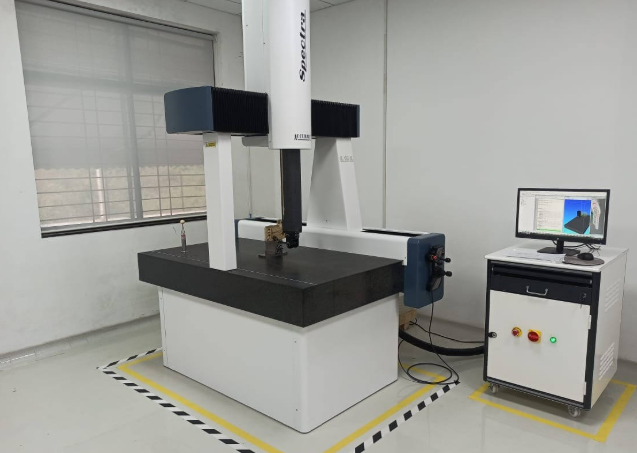
- Coordinate Measuring Machines (CMMs): Precision instruments using touch probes to collect 3D coordinate data with micron-level accuracy
- Digital height gauges: Electronic devices with vertical scales for dimensional checks and profile measurements
- Optical comparators: Project magnified profiles onto screens with overlay templates for rapid visual comparison of 2D contours and hole patterns
Surface Quality Analysis
Surface inspection evaluates finish quality, detecting scratches, dents, pits, or other imperfections that finishing processes should have eliminated—or might have introduced:
- Surface roughness testers: Quantify texture using diamond stylus or optical scanning methods
- Automated vision systems: Camera-based inspection comparing parts to digital templates at production-line speeds
- Visual examination: Trained inspectors identify defects that automated systems might miss
Geometric Tolerance Assessment
Form and position tolerances—flatness, straightness, circularity, parallelism—determine whether components will fit and function in assemblies:
- Laser scanners: Non-contact devices capturing complete surface data by projecting laser lines onto parts—ideal for free-form surfaces
- CMM with specialized probes: Measure complex geometric characteristics ensuring components meet assembly requirements
- Traditional tools: Surface plates and straight edges remain valuable for flatness verification, especially for large parts
Modern inspection doesn't operate in isolation. In-process gauging provides real-time feedback to production equipment, enabling immediate adjustments. Statistical process control (SPC) software analyzes measurement data to identify trends before defects occur. This integration transforms quality verification from a gatekeeping function into a process improvement tool.
Digital twin technology is emerging as a powerful verification approach, creating virtual models that mirror physical parts throughout their lifecycle. This enables predictive quality control and virtual inspection before physical production begins—catching potential issues when changes cost least.
For precision sheet products destined for critical applications, comprehensive quality verification isn't optional. Automated reporting systems generate inspection certificates and quality documentation, ensuring traceability from raw material through finished component. Cloud-based quality management systems allow data access across multiple facilities, supporting global quality standards and facilitating audits.
Understanding how secondary operations affect precision—and how quality verification confirms results—prepares you for the next challenge: maintaining these standards as you scale from prototype quantities to full production volumes.
From Prototype to Production While Maintaining Precision
You've validated your design with a flawless prototype. Every dimension checks out, tolerances are met, and the part performs exactly as intended. So why do problems sometimes emerge when that same design enters mass production? The transition from prototype to production represents one of the most critical—and often underestimated—phases in precision sheet metal fabrication.
Here's the reality: a prototype proves your design works. Production proves it works consistently, efficiently, and economically across thousands or millions of units. These are fundamentally different challenges requiring different approaches. Understanding this distinction helps you avoid the costly surprises that derail projects when scaling up.
Rapid Prototyping Without Sacrificing Precision
Speed and precision might seem like competing priorities during prototyping—but they don't have to be. Quick turn sheet metal fabrication has evolved dramatically, enabling engineers to validate designs in days rather than weeks while maintaining the tight tolerances production will demand.
According to Dewys Metal Solutions, prototyping represents an exploratory phase where concepts, materials, and fabrication methods are tested. It's the critical step where adjustments happen and feasibility is assessed—ensuring products can be manufactured efficiently at larger scales.
What makes sheet metal prototype fabrication effective? Several factors distinguish successful prototyping from approaches that create problems downstream:
- CAD-driven manufacturing: Modern prototyping begins with detailed computer-aided design that translates directly to fabrication equipment. This digital thread eliminates interpretation errors between design intent and physical parts
- Production-representative processes: The best prototypes use the same manufacturing methods planned for production. A laser-cut prototype validated for a stamping production run may hide issues that only emerge when tooling is created
- Material consistency: Prototype materials should match production specifications exactly. Substituting available stock for specified alloys can mask formability or tolerance issues
- Tolerance verification: Every critical dimension should be measured and documented during prototyping—not just visually inspected. This baseline data proves invaluable when troubleshooting production variations
Precision machining sheet metal during prototyping also serves a validation function beyond the parts themselves. It tests whether your specifications are achievable with available equipment and processes. A precision sheet metal fabricator experienced in both prototyping and production can identify potential scaling challenges before they become expensive problems.
Scaling from Prototype to Production Volumes
The jump from making one perfect part to making ten thousand identical parts introduces variables that prototyping simply cannot reveal. Tool wear accumulates. Material batches vary. Operators change shifts. Environmental conditions fluctuate. Each factor threatens the consistency that precision sheet products demand.
As Approved Sheet Metal emphasizes, understanding Design for Manufacturability (DFM) isn't enough on its own. You need to engage your fabrication partner early—their knowledge of machine capabilities, material behavior, and process limitations shapes decisions that determine production success.
Design for manufacturability principles that maintain precision at scale include:
- Tolerance hierarchy: Identify which dimensions are truly critical versus those with flexibility. Tight tolerances everywhere increase cost without improving function—prioritize precision where it matters most
- Process-friendly geometry: Features that require specialized tooling or multiple setups introduce variability. Simplifying geometry where possible improves consistency
- Material formability awareness: Production volumes amplify material behavior effects. A 0.047" stainless steel that welds cleanly in prototype quantities may heat-distort at production speeds, while 0.074" material holds its shape
- Assembly considerations: Interlocking tabs, self-locating features, and consistent datum references reduce assembly variation—often more effectively than tightening individual part tolerances
Automation plays a crucial role in scaling precision. Manual adjustments that work fine for prototype quantities introduce unacceptable variation at production volumes. Companies like Precision Sheet Metal Inc. and similar established fabricators invest in CNC equipment, automated inspection systems, and process monitoring specifically to maintain consistency across extended production runs.
The transition also demands documentation discipline. Your CAD file shouldn't just represent a finished part—it should function as a digital thread connecting every production stage. Clean, organized, production-ready files with proper version control reduce friction and errors when scaling up.
Perhaps most importantly, successful scaling requires honest communication between design engineering and manufacturing. The wiggle room your sheet metal fabricator needs to optimize material choices, adjust bend radii, or modify tab specifications shouldn't be seen as compromising your design. It's leveraging manufacturing expertise to achieve your precision goals more reliably and economically than rigid specifications might allow.
Evaluating Precision Sheet Metal Partners for Your Projects
You've mastered the technical fundamentals—materials, processes, tolerances, and finishing. But here's where theory meets reality: finding a fabrication partner capable of delivering on all these requirements consistently. Sourcing precision sheet products isn't like ordering commodity materials. The wrong choice costs more than money—it costs time, quality, and potentially your project's success.
Think about what's really at stake. Your precision sheet metal fabrication companies become extensions of your engineering team. They influence design decisions, affect your timelines, and ultimately determine whether your products perform as intended. Choosing wisely requires looking beyond price quotes to evaluate capabilities, certifications, and quality systems that separate exceptional partners from adequate ones.
Key Questions to Ask Potential Fabrication Partners
Before requesting quotes, you need answers to questions that reveal whether a fabricator can actually meet your precision requirements—not just claim they can. According to Metal Works of High Point, evaluating experience, equipment, customer service, workforce expertise, and certifications forms the foundation of smart supplier selection.
What should you investigate? Start with these critical evaluation areas:
- Proven track record: How long has the fabricator been in business? Newer companies may lack experience with your specific project type. Look for precision metal fabricators with documented success on similar applications—decades of experience often translate to better problem-solving capabilities
- Equipment investment: Does the fabricator use state-of-the-art CNC equipment, fiber lasers, and precision forming systems? Modern technology directly impacts achievable tolerances and consistency. Ask about recent equipment upgrades and maintenance programs
- Workforce qualifications: Who actually produces your parts? Companies with smaller teams may struggle with deadlines. Verify that fabricators employ certified welders and trained operators—combined experience matters as much as headcount
- Customer communication: How responsive are they during quoting? Do they explain issues clearly and provide transparent pricing? Metal fabrication specialists who communicate effectively during evaluation typically maintain that standard throughout production
- Complete capabilities: Can they handle your project from start to finish? Choosing a fabricator offering in-house finishing, assembly, and quality verification saves time and ensures consistency—versus coordinating multiple vendors
For oem sheet metal fabrication projects requiring rapid iteration, ask specifically about prototyping capabilities. How quickly can they turn around sample parts? Some precision sheet metal fabricators offer 5-day rapid prototyping that enables design validation without sacrificing the precision you'll need in production. This speed-to-quality combination exemplifies what buyers should seek—partners like Shaoyi (Ningbo) Metal Technology demonstrate this approach with their 12-hour quote turnaround and comprehensive DFM support.
Don't overlook process transparency. Ask how potential partners handle common precision challenges—warping prevention, burr control, dimensional stability. Their answers reveal whether they genuinely understand precision manufacturing or simply claim capability without the expertise to deliver.
Certifications and Quality Standards That Matter
Certifications tell you more than a fabricator's marketing claims ever could. They represent third-party verification that quality systems actually exist—not just promises that they do. But not all certifications carry equal weight for precision sheet products.
ISO 9001:2015 certification establishes baseline quality management requirements. According to Metal Works of High Point, this certification demonstrates commitment to quality standards and superior products. For general precision metal products company selection, ISO 9001 represents the minimum threshold for serious consideration.
But for automotive applications, a higher standard exists. As DeKalb Metal Finishing explains, IATF 16949 certification builds upon ISO 9001:2015 with automotive-specific requirements that make it the superior choice for anyone in the automotive supply chain:
- Defect prevention focus: IATF 16949 emphasizes preventing defects rather than detecting them—a proactive approach ensuring consistently high-quality products
- Supply chain management: Requirements for supplier selection, evaluation, and development ensure the entire supply chain works together to deliver quality
- Product traceability: Automotive-specific requirements for tracing components through production provide accountability that general certifications don't require
- Continuous improvement mandate: Companies must continually improve quality management systems and processes—not just maintain existing standards
- Global recognition: IATF 16949-certified companies are recognized worldwide as meeting the highest automotive quality standards
For custom precision sheet metal destined for automotive chassis, suspension, or structural components, IATF 16949 certification isn't optional—it's essential. This certification signals that a fabricator understands automotive-specific quality requirements and has systems in place to meet them consistently.
Beyond certifications, evaluate the quality systems themselves. What inspection equipment do they use? CMMs, optical comparators, surface roughness testers? How do they document and track quality data? Statistical process control programs that identify trends before defects occur demonstrate manufacturing maturity that certifications alone don't guarantee.
Practical Evaluation Checklist
When comparing precision sheet metal fabrication companies, use this structured approach to ensure thorough evaluation:
| Evaluation Category | What to Verify | Red Flags to Watch |
|---|---|---|
| Certifications | ISO 9001:2015 minimum; IATF 16949 for automotive; industry-specific certs as needed | Expired certifications; reluctance to share audit results |
| Equipment | Modern CNC systems; fiber lasers; precision press brakes with angle measurement | Outdated equipment; lack of maintenance documentation |
| Quality Systems | CMM inspection; SPC programs; documented procedures; traceability systems | Visual-only inspection; no measurement records |
| Prototyping Speed | 5-day or faster turnaround; production-representative processes | Weeks-long prototype lead times; different processes than production |
| Communication | 12-24 hour quote response; clear technical discussions; DFM feedback | Days without response; vague answers to technical questions |
| Finishing Capabilities | In-house coating, plating, or assembly; quality control at each stage | Multiple subcontractors; unclear responsibility chains |
Request facility tours when possible. Seeing equipment condition, workplace organization, and quality verification processes reveals more than any capability statement. Pay attention to how they handle your questions—precision metal fabricators who welcome scrutiny typically have nothing to hide.
Finally, consider the partnership dimension. The best fabrication relationships extend beyond transactional quoting. Partners who offer comprehensive DFM support help you optimize designs for manufacturability before production begins. They suggest material alternatives, identify tolerance relaxation opportunities, and recommend process improvements that reduce cost without sacrificing precision.
Finding the right precision sheet metal partner requires effort upfront—but that investment pays dividends throughout your project lifecycle. The fabricator who understands your precision requirements, maintains robust quality systems, and communicates transparently becomes a competitive advantage rather than a supply chain risk.
Frequently Asked Questions About Precision Sheet Products
1. What is precision sheet metal fabrication?
Precision sheet metal fabrication maintains tolerances between ±0.005" and ±0.010" (±0.13mm to ±0.25mm)—up to 25 times tighter than standard fabrication methods. This level of accuracy is achieved through advanced fiber laser cutting systems, CNC press brakes with angle measurement capabilities, and coordinate measuring machines (CMM) that verify accuracy down to microns. Industries like automotive, aerospace, electronics, and medical devices rely on these tight tolerances for components where dimensional variations directly impact safety or performance.
2. What tolerances can precision sheet metal achieve?
Precision sheet metal fabrication typically achieves tolerances between ±0.005" and ±0.010" for general applications. Laser cutting can reach tolerances as tight as ±0.0005 inch for intricate cuts, while CNC punching delivers ±0.05mm accuracy. Aerospace applications often require even tighter tolerances of ±0.001" to ±0.005". The achievable tolerance depends on the manufacturing process, material properties, and equipment capabilities used by precision sheet metal shops.
3. What materials are used in precision sheet products?
Common materials include cold rolled steel (excellent formability, 1-3 degree springback), 304 stainless steel (corrosion resistant, 3-5 degree springback), 5052 aluminum (lightweight, 2-5 degree springback), copper (excellent conductivity, 1-2 degree springback), and titanium (high strength-to-weight ratio, 4-6 degree springback). Each material's thickness, typically ranging from 26 gauge to 7 gauge, affects process selection and achievable precision levels.
4. How do I choose the right precision sheet metal fabrication company?
Evaluate potential partners based on certifications (ISO 9001:2015 minimum, IATF 16949 for automotive), modern equipment investment, workforce qualifications, communication responsiveness, and complete in-house capabilities. Look for fabricators offering rapid prototyping (5-day turnaround), comprehensive DFM support, and documented quality systems with CMM inspection and SPC programs. Companies like Shaoyi (Ningbo) Metal Technology exemplify these standards with 12-hour quote turnaround and IATF 16949 certification.
5. What causes precision problems in sheet metal fabrication?
Common precision challenges include warping from stress accumulation during punching, burr formation from improper die clearance or dull tooling, and dimensional instability from material variations or tool wear. Prevention strategies include optimized punch sequencing, proper die clearance (20-25% of material thickness), regular tooling maintenance, consistent material specifications, and real-time process monitoring. Understanding these challenges helps fabricators deliver dependable metal products consistently.