 Small batches, high standards. Our rapid prototyping service makes validation faster and easier —
  EN
EN


Precision Machining Service Decoded: From Raw Metal To Micron-Perfect Parts
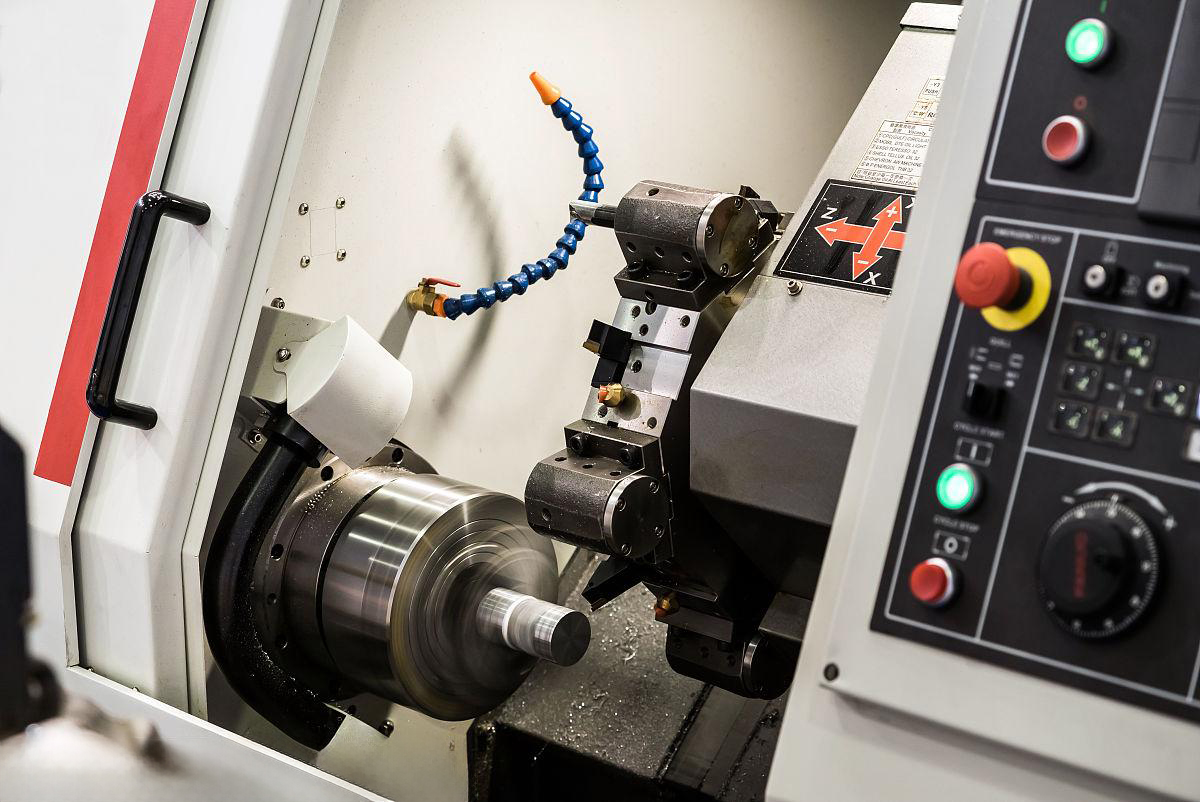
What Is Precision Machining Service and Why It Matters
When you need components that fit together flawlessly every single time, standard manufacturing methods simply won't cut it. That's where precision machining services come into play, transforming raw materials into parts with accuracy measured in microns rather than millimeters.
Precision machining is a manufacturing process that removes material from a workpiece to achieve extremely fine tolerances, typically within ±0.001 mm (1 micron) or tighter, using advanced CNC technology and specialized cutting tools.
What Defines Precision Machining
So what separates precision CNC machining from conventional methods? The answer lies in three critical factors: tolerance capability, repeatability, and technological sophistication.
Traditional machining relies on manual or semi-automatic equipment, where tolerances typically range from ±0.01 mm to ±0.1 mm. Precision machining service providers, however, leverage computer numerical control (CNC) machines equipped with real-time feedback systems like laser interferometry and digital encoders. These systems monitor and adjust the cutting process dynamically, achieving tolerances as tight as ±0.001 mm or even at the nanometer level for specialized applications.
Consider a surgical implant with a diameter of just 0.1 mm. It demands a surface finish of Ra 0.1 μm to ensure biocompatibility. Standard machining simply cannot deliver this level of accuracy. CNC metal cutting operations, guided by sophisticated software, make such precision achievable and reproducible.
How Tight Tolerances Transform Manufacturing
You might wonder why tolerances matter so much. Imagine an aircraft engine where components must withstand extreme temperatures and pressures. Even microscopic deviations can lead to catastrophic failures. Tight tolerances ensure that machined parts perform exactly as designed, every single time.
Precision machining services deliver several key advantages over traditional methods:
- Exceptional accuracy: Tolerances measured in microns rather than tenths of millimeters
- Superior repeatability: Automated systems eliminate human error across production runs
- Complex geometry capability: Multi-axis CNC metal machining handles intricate designs impossible with manual methods
- Consistent surface finishes: Controlled cutting parameters ensure uniform quality
Industries like aerospace, medical devices, automotive, and electronics depend on this level of precision. A turbine blade, a pacemaker component, or a semiconductor housing all require tolerances that only advanced precision machining can deliver.
The difference between precision and traditional machining isn't merely technical; it's transformational. When every micron counts, precision machining services bridge the gap between design intent and manufacturing reality, ensuring that critical components perform flawlessly in their intended applications.
The Precision Machining Process Workflow Explained
Ever wondered how a digital design file transforms into a physical component with micron-level accuracy? The journey from concept to finished part involves a carefully orchestrated sequence of steps, each one directly impacting the quality and precision of your cnc machining parts. Understanding this workflow helps you communicate effectively with manufacturers and make informed decisions about your project.
From CAD File to Finished Component
The precision machining workflow follows a logical progression where each stage builds upon the previous one. Here's how your design becomes reality:
- Design Submission and Requirements Analysis: The process begins when you provide detailed specifications, including dimensions, tolerances, cnc machining materials, surface finishes, and functional requirements. Engineers review your CAD files to ensure all information is complete and manufacturable. This collaborative stage catches potential issues before they become costly problems.
- CAD Review and Design for Manufacturability (DFM): Your 3D models undergo thorough analysis. Engineers identify features that might be difficult or impossible to machine, suggest modifications to improve part quality, and confirm that tolerances are achievable. This step directly affects how precisely your final component will match your specifications.
- Material Selection and Procurement: Based on your requirements, the appropriate raw material is selected. Whether you need aluminum for lightweight applications or stainless steel for corrosion resistance, material properties influence cutting parameters, tool selection, and achievable tolerances. Quality starts with quality materials.
- CAM Programming and G-Code Generation: Computer-Aided Manufacturing (CAM) software converts your CAD model into G-code, the machine-readable instructions that guide cutting paths. Programmers optimize tool paths for efficiency while maintaining precision, selecting appropriate feeds, speeds, and cutting strategies for your specific material.
- Machine Setup and Preparation: Machinists load the program, install cutting tools, and secure the workpiece. They verify machine parameters and perform touch-offs to establish precise reference points. Proper setup ensures the machine knows exactly where the material is positioned.
- Machining Operations: The CNC machine executes the programmed instructions, removing material through milling, turning, drilling, or other operations. Multi-axis machines can process complex geometries in a single setup, reducing handling errors and improving accuracy of cnc machine parts.
- Secondary Processing and Surface Treatment: Depending on your requirements, parts may undergo additional operations such as heat treatment, plating, anodizing, or polishing. Surface treatments can increase part service life by 30% or more for demanding applications.
- Final Inspection and Delivery: Completed parts undergo rigorous quality verification before packaging and shipment. Proper documentation accompanies each order, providing traceability and quality assurance.
Quality Checkpoints Throughout Production
Quality isn't something that happens only at the end. Effective precision machining integrates verification at multiple stages:
- Incoming material inspection: Raw materials are verified for correct grade and certification
- First article inspection: The initial part from each setup is measured before full production proceeds
- In-process monitoring: Operators check dimensions at regular intervals during machining
- Final inspection: Coordinate Measuring Machines (CMMs) and precision instruments verify all critical dimensions
When you request a cnc quote online, understanding this workflow helps you provide complete information upfront. Detailed specifications reduce back-and-forth communication and speed up the quoting process. Many manufacturers now offer online machining quotes that can generate pricing within hours when you submit complete CAD files with clear requirements.
Each workflow stage creates a checkpoint that affects your final part quality. Rushing through design review might save time initially but could result in parts that don't meet specifications. Skipping proper material verification might introduce inconsistencies. The precision machining process works best when every step receives appropriate attention, building toward components that perform exactly as designed.
CNC Machine Types and Their Precision Capabilities
Sounds complex? Choosing the right CNC machine for your project doesn't have to be overwhelming. Think of it like selecting the right tool from a toolbox. A screwdriver works perfectly for screws, but you wouldn't use it to drive nails. Similarly, different CNC machines excel at different tasks, and understanding their capabilities helps you achieve optimal precision while controlling costs.
Matching Machine Capabilities to Part Complexity
The primary distinction between CNC machine types lies in how many directions the cutting tool and workpiece can move relative to each other. More axes mean more flexibility, but also higher complexity and cost. Let's break down your options.
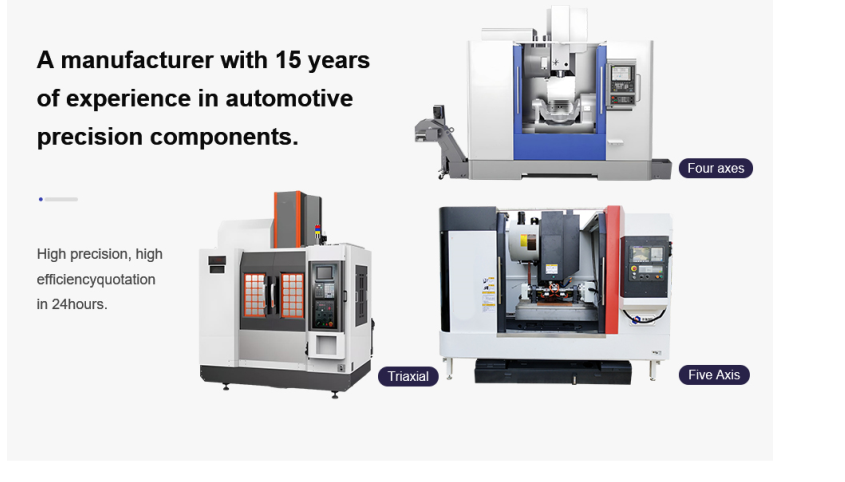
3-Axis CNC Machines represent the foundation of metal cnc machining. The cutting tool moves along three linear directions: X (left-right), Y (forward-back), and Z (up-down). These machines handle 2D and 2.5D geometries effectively, making them ideal for flat surfaces, pockets, and drilling operations. However, each face of your part requires a separate fixture setup, which increases production time for complex components.
4-Axis CNC Machines add rotation around the X-axis (called the A-axis). This seemingly simple addition dramatically expands capabilities. Your workpiece can rotate while machining continues, enabling angled features and helical patterns impossible on 3-axis equipment. For cnc turning parts with features on multiple sides, 4-axis machining often eliminates the need for multiple fixtures, reducing costs and improving accuracy between features.
5-Axis CNC Machines incorporate two rotational axes alongside the three linear ones. This configuration allows the cutting tool to approach your workpiece from virtually any angle. Complex aerospace components, medical implants, and turbine blades become achievable. When you need 5 axis cnc machining services, you're accessing the pinnacle of subtractive manufacturing capability.
Swiss-Type Lathes take a fundamentally different approach. Originally developed for watchmaking, these machines feature a sliding headstock that feeds bar stock through a guide bushing. The machining occurs close to this bushing, virtually eliminating deflection and enabling exceptional precision on long, slender parts. Swiss machines excel at producing small, intricate components like medical screws, electronic pins, and precision fasteners.
| Machine Type | Typical Tolerances | Ideal Applications | Complexity Level | Cost Factor |
|---|---|---|---|---|
| 3-Axis CNC Mill | ±0.025 mm to ±0.05 mm | Flat surfaces, pockets, drilling, simple profiles | Low | $ |
| 4-Axis CNC Mill | ±0.013 mm to ±0.025 mm | Angled features, helical patterns, multi-sided parts | Medium | $$ |
| 5-Axis CNC Mill | ±0.005 mm to ±0.013 mm | Complex 3D surfaces, aerospace components, medical implants | High | $$$ |
| Swiss-Type Lathe | ±0.002 mm to ±0.005 mm | Small diameter parts, long slender components, high-volume production | High | $$$ |
| Standard CNC Lathe | ±0.013 mm to ±0.025 mm | Cylindrical parts, shafts, bushings, fasteners | Low-Medium | $-$$ |
When Multi-Axis Machining Becomes Essential
You'll notice that multi-axis capabilities come with higher costs. So when does the investment make sense? Consider these scenarios:
- Compound angles: Features positioned at angles to multiple axes require 4-axis or 5-axis equipment. A 3-axis machine simply cannot reach these orientations.
- Reduced setups: Using 4-axis machining can eliminate expensive fixture changes, actually reducing overall costs despite higher machine rates.
- Tighter tolerances between features: Each time you reposition a part, you introduce potential error. Multi-axis machining maintains relationships between features more accurately.
- Complex contours: Sculptured surfaces found in molds, dies, and aesthetic components demand continuous 5-axis motion.
Understanding cnc machining milling versus turning operations is equally important. CNC milling uses rotating cutting tools against a stationary workpiece, ideal for pockets, slots, and complex 3D shapes. CNC turning service operations rotate the workpiece against stationary tools, perfect for cylindrical components like shafts and bushings. Many modern facilities offer both capabilities, and some advanced machines combine turning and milling in single setups.
The choice between machine types ultimately balances three factors: part geometry requirements, tolerance specifications, and production economics. A skilled cnc service provider analyzes your design and recommends the most cost-effective approach. Sometimes that means using a simpler machine with creative fixturing. Other times, investing in multi-axis capability delivers better results at lower total cost.
With machine selection understood, the next critical decision involves choosing materials that can achieve your precision requirements while meeting functional demands.
Materials for Precision Machining Applications
Imagine designing a component that performs flawlessly in theory but fails in production because the material can't hold the required tolerances. Material selection isn't just about strength or cost—it directly determines what precision levels you can achieve and how consistently your parts will perform.
Every material behaves differently under cutting forces. Some machine like butter, producing mirror-like finishes with minimal effort. Others fight back, wearing tools rapidly and generating heat that distorts dimensions. Understanding these characteristics helps you balance performance requirements against manufacturing realities.
Metal Alloys for High-Tolerance Components
Metals remain the backbone of precision manufacturing, and aluminum machining dominates many applications for good reason. Aluminum alloys combine aluminum with elements like magnesium, silicon, zinc, and copper to fine-tune strength, corrosion resistance, and machinability. CNC aluminum operations typically achieve excellent surface finishes while maintaining tight tolerances.
6061 Aluminum stands out as the workhorse alloy for precision parts. It offers an ideal balance of strength and workability, making it highly machinable with excellent response to heat treatment and anodizing. When you need both durability and ease of fabrication, 6061 delivers consistently. The 6061 aluminium yield strength makes it suitable for structural components that must withstand significant stress while remaining lightweight.
7075 Aluminum provides exceptional strength for aerospace and defense applications where performance is critical. However, this strength comes with trade-offs—7075 is more challenging to weld due to high zinc content, which can lead to brittleness. When ultimate strength matters more than fabrication flexibility, 7075 is your alloy.
Steel grades offer tremendous variety. Machinability ratings span from about 40% for difficult materials like bearing steel (SAE 52100) up to 170% for free-cutting steels like SAE 12L14. Carbon content significantly influences behavior—0.3-0.5% carbon is ideal, as lower content creates gummy material while higher content increases strength but reduces machinability.
Stainless steel presents unique challenges. Grade 316 has a machinability rating of only 36%, meaning slower cutting speeds and faster tool wear. However, grades like SAE 303 and the 400 series achieve over 60% machinability while still providing corrosion resistance. Higher chromium and nickel content typically decreases machinability but improves corrosion performance.
Engineering Plastics in Precision Applications
Engineering plastics offer distinct advantages when weight reduction, electrical insulation, or chemical resistance matters. However, plastics machining requires specialized techniques due to unique material properties like thermal expansion, viscosity, and brittleness.
When machining nylon, you're working with one of the most versatile engineering plastics available. Machinable nylon grades offer excellent wear resistance and self-lubricating properties, making them ideal for bushings, gears, and sliding components. Nylon for machining does require attention to moisture absorption, which can affect dimensional stability.
CNC polycarbonate operations demand careful heat management. This transparent thermoplastic offers exceptional impact resistance—up to 250 times stronger than glass—but generates significant heat during cutting. Proper cooling and appropriate cutting speeds prevent surface crazing and maintain optical clarity.
Acrylic CNC machining produces outstanding optical clarity for light guides, displays, and medical components. However, acrylic is more brittle than polycarbonate, requiring sharp tools and conservative cutting parameters to prevent chipping.
| Material Category | Common Grades | Machinability Rating | Achievable Tolerance | Surface Finish (Ra) | Key Considerations |
|---|---|---|---|---|---|
| Aluminum Alloys | 6061, 7075, 6063 | 200-400% | ±0.005 mm | 0.4-1.6 μm | Low tool wear, excellent chip control, responds well to anodizing |
| Carbon Steel | 1018, 1045, 12L14 | 70-170% | ±0.013 mm | 0.8-3.2 μm | 0.3-0.5% carbon optimal; free-cutting grades contain lead or sulfur |
| Stainless Steel | 303, 304, 316, 17-4PH | 36-65% | ±0.025 mm | 0.8-3.2 μm | Work hardening tendency, requires rigid setups, higher tool wear |
| Nylon | Nylon 6, Nylon 6/6, Cast Nylon | N/A (Plastic) | ±0.05 mm | 1.6-3.2 μm | Moisture absorption affects dimensions, self-lubricating properties |
| Acrylic (PMMA) | Cast Acrylic, Extruded Acrylic | N/A (Plastic) | ±0.05 mm | 0.4-1.6 μm | Brittle, requires sharp tools, excellent optical clarity achievable |
| Polycarbonate | Lexan, Makrolon | N/A (Plastic) | ±0.05 mm | 0.8-1.6 μm | Heat sensitive, high impact resistance, prone to stress cracking |
Thermal expansion deserves special attention across all materials. Plastics expand significantly more than metals when temperatures rise during machining. A part that measures perfectly at cutting temperature may fall out of tolerance once it cools. Experienced machinists account for this by controlling cutting parameters and allowing parts to stabilize before final inspection.
Tool wear patterns also vary dramatically. Nonferrous materials like aluminum typically achieve machinability rates of 200-400%, meaning tools last much longer than when cutting steel. Conversely, stainless steel and high-strength alloys accelerate wear, directly impacting production costs and achievable tolerances as tools degrade.
Selecting the right material involves balancing mechanical requirements, precision demands, and cost considerations. Sometimes a more expensive material with better machinability actually reduces total part cost through faster cycle times and longer tool life. Your precision machining service provider can help evaluate these trade-offs based on your specific application requirements.
Understanding Tolerance Classes and Surface Finish Standards
Here's a question that could save you thousands of dollars: Are you specifying tighter tolerances than your application actually needs? Many engineers default to the tightest tolerances possible, assuming more precision equals better performance. In reality, the relationship between tighter tolerances and cost is non-linear—it escalates faster than most expect. Understanding tolerance classes helps you specify exactly what you need, avoiding unnecessary expenses while ensuring your precision machining parts perform flawlessly.
Standard vs Precision vs Ultra-Precision Tolerances
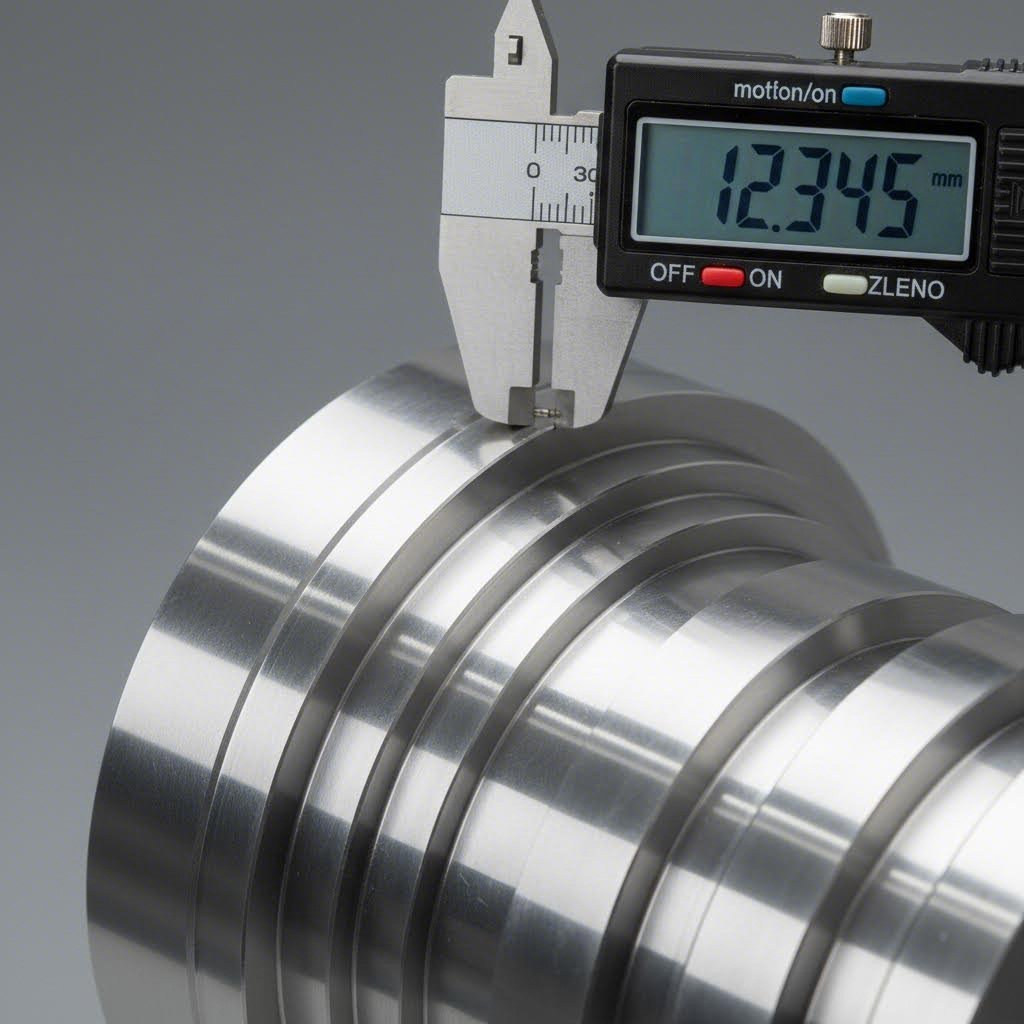
Tolerance classes define the acceptable range of dimensional variation in manufactured components. CNC machining typically achieves tolerances of ±0.005" (0.127 mm) as a standard benchmark, but capabilities extend far beyond this baseline depending on equipment and processes.
Think of tolerance classes as tiers of manufacturing precision, each suited to different applications and budgets:
Standard Tolerances (±0.05 mm to ±0.127 mm) cover the majority of industrial components where exact fit isn't critical. Housings, brackets, and structural elements typically fall into this category. These tolerances are economical to achieve with conventional CNC equipment and standard quality procedures.
Precision Tolerances (±0.013 mm to ±0.05 mm) become necessary when components must interface with other parts or when functional performance depends on accurate dimensions. Bearing housings, gear assemblies, and cnc milling parts for mechanical systems often require this level of accuracy. Precision machining operations can achieve tolerances of ±0.001" or better when applications require exceptional accuracy.
Ultra-Precision Tolerances (±0.002 mm to ±0.013 mm) represent the upper limits of conventional machining capability. Aerospace components, medical implants, and optical systems demand this level of control. Achieving these tolerances requires specialized equipment, controlled environments, and extensive inspection protocols.
| Tolerance Class | Typical Range | Example Applications | Cost Implications | ISO 2768 Equivalent |
|---|---|---|---|---|
| Standard | ±0.05 mm to ±0.127 mm | Enclosures, brackets, non-critical housings | Baseline cost ($) | c (coarse), v (very coarse) |
| Precision | ±0.013 mm to ±0.05 mm | Bearing housings, gear assemblies, custom machined parts | 1.5-2× baseline ($$) | m (medium) |
| High Precision | ±0.005 mm to ±0.013 mm | Aerospace fittings, medical devices, optical mounts | 2-4× baseline ($$$) | f (fine) |
| Ultra-Precision | ±0.002 mm to ±0.005 mm | Surgical implants, semiconductor tooling, turbine components | 4-10× baseline ($$$$) | Beyond ISO 2768 |
The cost escalation isn't linear. Moving from ±0.05 mm tolerance to ±0.02 mm may raise costs by around 50%, but going further from ±0.02 mm to ±0.01 mm can multiply costs several times. This happens because tighter tolerances demand slower cutting speeds, more frequent tool changes, specialized fixturing, and extensive inspection—each adding cost at every production step.
Surface Finish and Tolerance Connection
Surface finish specifications work hand-in-hand with dimensional tolerances. Surface quality is expressed as average surface roughness (Ra), which measures the average deviation of the machined profile from an ideal surface.
The standard as-machined Ra is 3.2 μm (125 μin). A finishing cutting pass can reduce Ra to 1.6, 0.8, or 0.4 μm (63, 32, or 16 μin). Each improvement in surface finish requires additional machining steps and stricter quality control, directly impacting cost.
Consider how surface finish requirements relate to your cnc machining part function:
- Ra 3.2 μm: Standard machined finish, suitable for most non-critical surfaces
- Ra 1.6 μm: Improved appearance, suitable for visible surfaces and light sealing
- Ra 0.8 μm: Precision finish for bearing surfaces and hydraulic components
- Ra 0.4 μm: High-precision finish for sealing surfaces and precision fits
Selecting the Right Tolerance for Your Application
Over-specifying tolerances doesn't just waste money—it can actually harm your supply chain. Tighter-than-necessary tolerances cause higher inspection costs, slower production, increased scrap rates, and manufacturing bottlenecks.
A practical example illustrates this point: A European automotive supplier discovered that multiple non-critical features were specified at ±0.01 mm, though the assembly would allow ±0.03 mm without impact. By relaxing non-critical tolerances, they reduced machining cost by approximately 22%.
When determining appropriate tolerances for your custom machined parts, consider these factors:
- Functional requirements: What tolerance does the application actually demand?
- Mating components: How does this part interface with others in the assembly?
- Material behavior: Materials like 6061 aluminum with its specific yield strength characteristics behave predictably, while plastics may require looser tolerances due to thermal expansion
- Production volume: Higher volumes justify tighter process controls but also amplify per-part cost differences
International standards like ISO 2768 provide general tolerance classes—f (fine), m (medium), c (coarse), and v (very coarse)—covering linear dimensions, angular dimensions, external radii, and chamfer heights. These standards give you a common language when communicating with precision machining service providers worldwide.
The smartest approach? Specify tight tolerances only where function demands them. Apply standard tolerances elsewhere. This value-driven tolerancing strategy delivers parts that perform exactly as needed while keeping production costs under control.
Of course, specifying tolerances is only half the equation. Verifying that finished parts actually meet those specifications requires robust quality control and inspection processes.
Quality Control and Inspection in Precision Machining
You've specified tight tolerances and selected the perfect material. But how do you know the finished parts actually meet your requirements? In precision cnc machining services, quality control isn't an afterthought—it's woven into every stage of production. Without rigorous verification, even the most sophisticated CNC equipment cannot guarantee consistent results.
The difference between precision machining companies that deliver reliable parts and those that don't often comes down to their quality systems. Let's explore the inspection methods and certification standards that separate exceptional manufacturers from the rest.
CMM Inspection and Verification Processes
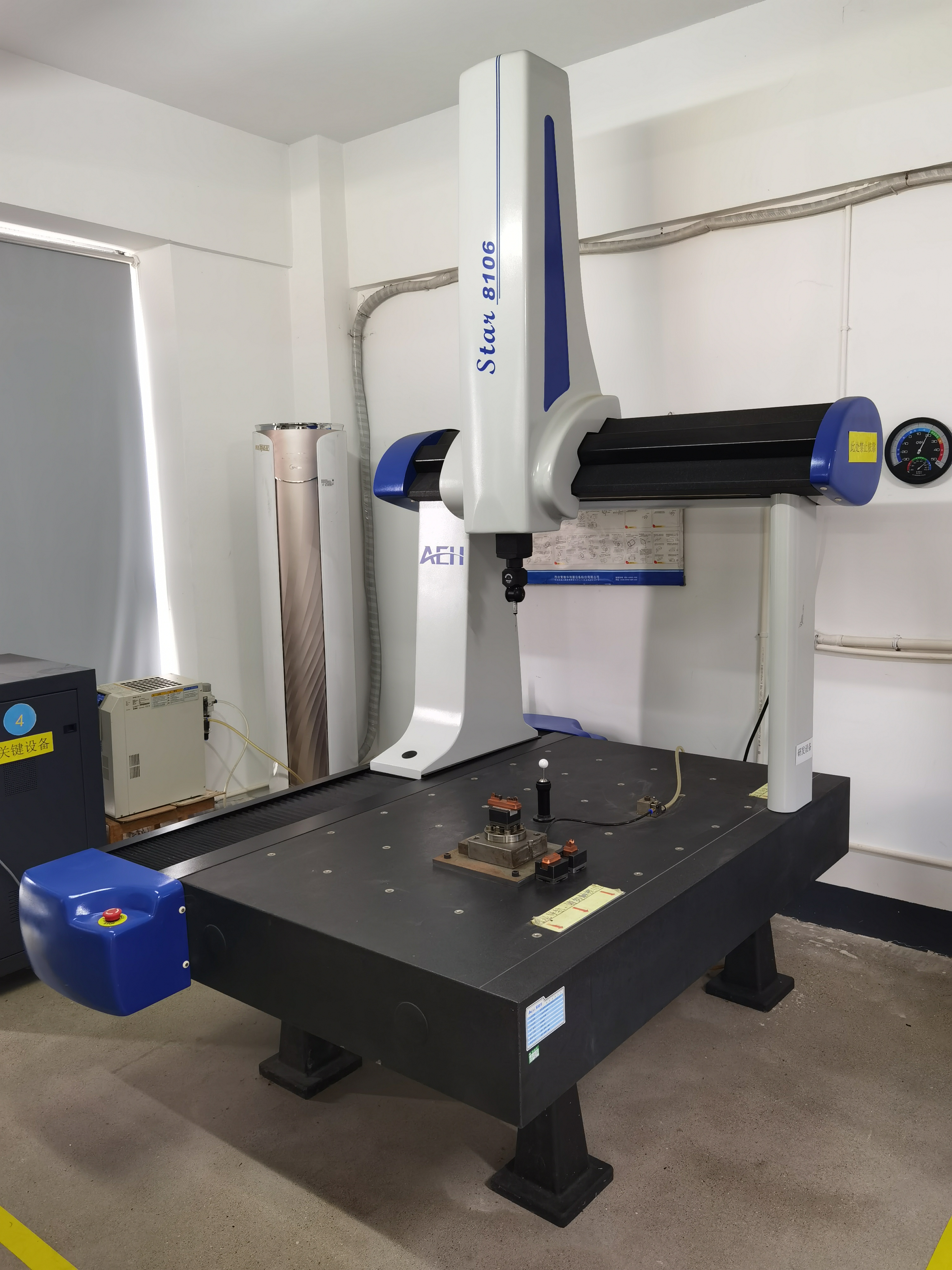
Coordinate Measuring Machines (CMMs) represent the gold standard for dimensional verification in custom cnc machining services. A CMM inspects and measures three-dimensional objects, checking angular and geometric features such as lines, circles, and squares against the intended design. When compared to manual inspections using conventional instruments, CMM is fast, repeatable, and produces exceptionally accurate results.
How does CMM inspection work? The process follows a systematic approach:
- Calibration: The CMM is calibrated using reference standards that closely match the inspection object in texture, shape, and size
- Part positioning: The component is secured on the measuring table with known reference points established
- Probe contact: A precision probe touches multiple points on the part surface, recording exact coordinates
- Data analysis: Software compares measured coordinates against your original CAD specifications
- Reporting: Detailed inspection reports document all measured dimensions and any deviations
Different CMM types serve different needs across cnc industries. Bridge CMMs are the most common, offering speed and accuracy for small to medium-sized components. Gantry CMMs handle large, heavy parts like automotive chassis assemblies. Cantilever CMMs provide flexibility for complex geometries, while horizontal arm CMMs access hard-to-reach features.
Beyond CMM, precision machining facilities employ additional verification methods:
- Surface finish measurement: Profilometers quantify Ra values to verify surface roughness specifications
- Optical comparators: Project magnified part profiles against reference overlays for visual comparison
- Height gauges and micrometers: Verify critical dimensions during in-process checks
- Roundness testers: Measure cylindricity and concentricity for rotating components
- Hardness testing: Confirm material properties meet specifications after heat treatment
Statistical Process Control: Catching Problems Before They Grow
Here's a scenario you want to avoid: the first batch of parts looks perfect, but by the 200th part, dimensions drift out of tolerance. The cutting edge started wearing at the 150th part, but nobody noticed because no control system flagged the change.
Statistical Process Control (SPC) prevents exactly this situation. SPC is a quality management tool that uses statistical methods to monitor and analyze the production process, detecting and correcting deviations early before defective parts are produced.
Traditional sampling inspects parts after production—discovering problems too late. SPC works differently. It checks key dimensions at early intervals, such as the 5th or 10th piece, plotting data on control charts in real time. If a dimension begins drifting toward the tolerance limit, action is taken immediately—adjusting tool compensation or replacing cutters before problems grow.
The results speak for themselves. One medical device customer saw their previous supplier achieve only 92% yield. By applying SPC, the new manufacturer identified that a key bore diameter drifted upward from the 85th part onward. Replacing cutting edges at the 80th piece and adjusting offsets improved yield to 99.7%, saving approximately ¥12,000 in rework and scrap.
Certification Standards That Ensure Quality
Certifications provide external validation that a precision machining service provider maintains robust quality systems. Two standards dominate cnc precision machining services:
ISO 9001 establishes international requirements for an effective quality management system. ISO 9001 certified organizations demonstrate their ability to deliver high-quality products and services consistently while meeting customer and applicable regulatory requirements. This certification applies across all industries and indicates systematic quality processes.
IATF 16949 builds upon ISO 9001 with additional requirements specifically for the automotive industry. Defined by The International Automotive Task Force, IATF 16949 requires organizations to comply with both manuals—IATF 16949 and ISO 9001—for certification. This dual compliance ensures automotive suppliers meet the industry's demanding quality expectations.
What do these certifications mean for you? They indicate that a manufacturer:
- Maintains documented quality procedures
- Trains employees in quality practices
- Tracks and addresses non-conformances systematically
- Undergoes regular third-party audits
- Continuously improves processes based on data
For automotive applications specifically, IATF 16949 certification combined with strict SPC implementation provides confidence that components will meet specifications consistently across production volumes. Manufacturers like Shaoyi Metal Technology maintain IATF 16949 certification alongside Statistical Process Control protocols, ensuring high-tolerance automotive components meet demanding quality standards from rapid prototyping through mass production.
A well-documented and implemented Quality Management System delivers multiple benefits: reduced defects, improved customer satisfaction, lower costs of quality, and enhanced market reputation. When evaluating precision machining companies, these certifications serve as reliable indicators of quality commitment.
Quality verification ensures your parts meet specifications today. But how does precision machining compare against alternative manufacturing methods? Understanding when CNC machining outperforms other options helps you make the right choice for each application.
Precision Machining vs Alternative Manufacturing Methods
You've identified your tolerance requirements and quality standards. Now comes a critical question: Is CNC precision machining actually the right choice for your project? The honest answer is—it depends. Each manufacturing method excels in specific scenarios, and understanding these trade-offs helps you select the most cost-effective approach for your particular application.
Let's cut through the confusion with a straightforward comparison of your options.
When CNC Machining Outperforms Alternatives
CNC machining shines brightest when precision, material versatility, and design flexibility matter most. This subtractive manufacturing technique uses cutting tools to remove material from solid stock, controlled by computer programs using G-code instructions. The result? Exceptional dimensional accuracy and surface finish quality.
Consider cnc prototype machining for product development. When you need functional prototypes that match production-intent materials and tolerances, machining delivers results within days rather than weeks. There's no tooling investment, no mold creation delays—just your CAD file transformed into a physical part. Prototype machining services prove invaluable when you need to validate designs before committing to high-volume production methods.
Casting takes a fundamentally different approach. Molten metal is poured into pre-formed molds to create parts with complex internal geometries and thin-walled structures. Die casting excels at high-volume production with excellent repeatability. However, casting requires significant upfront tooling investment—those molds can cost thousands of dollars. For small batches, this investment rarely makes economic sense.
Additive manufacturing (3D printing) builds parts layer by layer, eliminating traditional tooling requirements entirely. Metal 3D printing excels in printing complex parts with fine details that are often challenging to achieve using casting methods. Lattice structures, internal channels, and organic shapes become possible. Yet dimensional accuracy tells a different story—CNC machining offers superior dimensional accuracy, capable of achieving tolerance of +/-0.001mm, significantly better than both casting and metal 3D printing.
Wire EDM uses electrical discharges rather than cutting tools. This technique is highly effective in cutting very hard materials such as titanium, tungsten, and super alloys, which may be challenging for traditional machining. When you need intricate details in hardened tool steel or exotic alloys, EDM becomes essential. The trade-off? Slower material removal rates and higher operating costs.
| Manufacturing Method | Precision Capability | Material Options | Volume Suitability | Cost Factors |
|---|---|---|---|---|
| CNC Machining | ±0.001 mm to ±0.025 mm | Virtually all machinable metals and plastics | 1 to 10,000+ parts | No tooling; cost scales linearly with quantity |
| Die Casting | ±0.05 mm to ±0.1 mm | Aluminum, zinc, magnesium alloys | 1,000+ parts (economical at 10,000+) | High tooling cost; low unit cost at volume |
| Investment Casting | ±0.1 mm to ±0.25 mm | Most castable metals including steel | 100 to 10,000 parts | Moderate tooling; good for mid-volumes |
| Metal 3D Printing (LPBF) | ±0.05 mm to ±0.1 mm | Limited portfolio (titanium, steel, aluminum, nickel alloys) | 1 to 100 parts | No tooling; high unit cost |
| Wire EDM | ±0.002 mm to ±0.013 mm | Any conductive material regardless of hardness | 1 to 1,000 parts | Slow process; higher operating cost |
| Forging | ±0.5 mm to ±2 mm (requires secondary machining) | Steel, aluminum, titanium, copper alloys | 1,000+ parts | High tooling; excellent grain structure |
Combining Manufacturing Methods for Optimal Results
Here's what experienced manufacturers understand: rarely does one method handle every requirement perfectly. Modern production blends processes to capitalize on strengths and reduce drawbacks. Machining finishes cast parts by adding details such as engravings and ensuring tight tolerances.
A practical example illustrates this hybrid approach. An automotive component might be die-cast to achieve complex internal passages efficiently, then precision machined on critical mounting surfaces where ±0.025 mm tolerances matter. The casting handles geometry impossible to machine economically; machining delivers the precision casting cannot achieve alone.
Similarly, cnc machining prototyping proves invaluable during development. Rapid cnc prototyping validates your design quickly using production-intent materials. Once validated, you might transition to casting or forging for volume production, with CNC operations reserved for critical features. This staged approach balances speed, precision, and cost across the product lifecycle.
Both casted and 3D printed parts often undergo post-process machining to achieve design specification requirements. Additive manufacturing creates the complex near-net shape; precision machining refines interfaces, sealing surfaces, and bearing journals to final specifications.
When deciding between methods, consider these guiding principles:
- Quantities of 1-100: CNC machining or metal 3D printing typically offer best economics
- Quantities of 100-1,000: Evaluate CNC against investment casting based on geometry
- Quantities above 1,000: Die casting or forging with secondary machining often wins
- Complex internal features: Casting or additive manufacturing, finished by machining
- Hardened materials requiring precision: Wire EDM or grinding operations
There's no method that always comes out above another. The idea is that traditional manufacturing techniques and metal 3D printing will complement each other, filling gaps where the other falls short.
The right choice depends on your specific balance of quantity, complexity, precision, and timeline. Prototype machining services help you validate designs quickly, while production planning considers which method—or combination of methods—delivers optimal value at scale.
Understanding these manufacturing trade-offs is essential, but requirements also vary significantly across industries. Medical devices, aerospace components, and automotive parts each demand different precision standards and documentation.
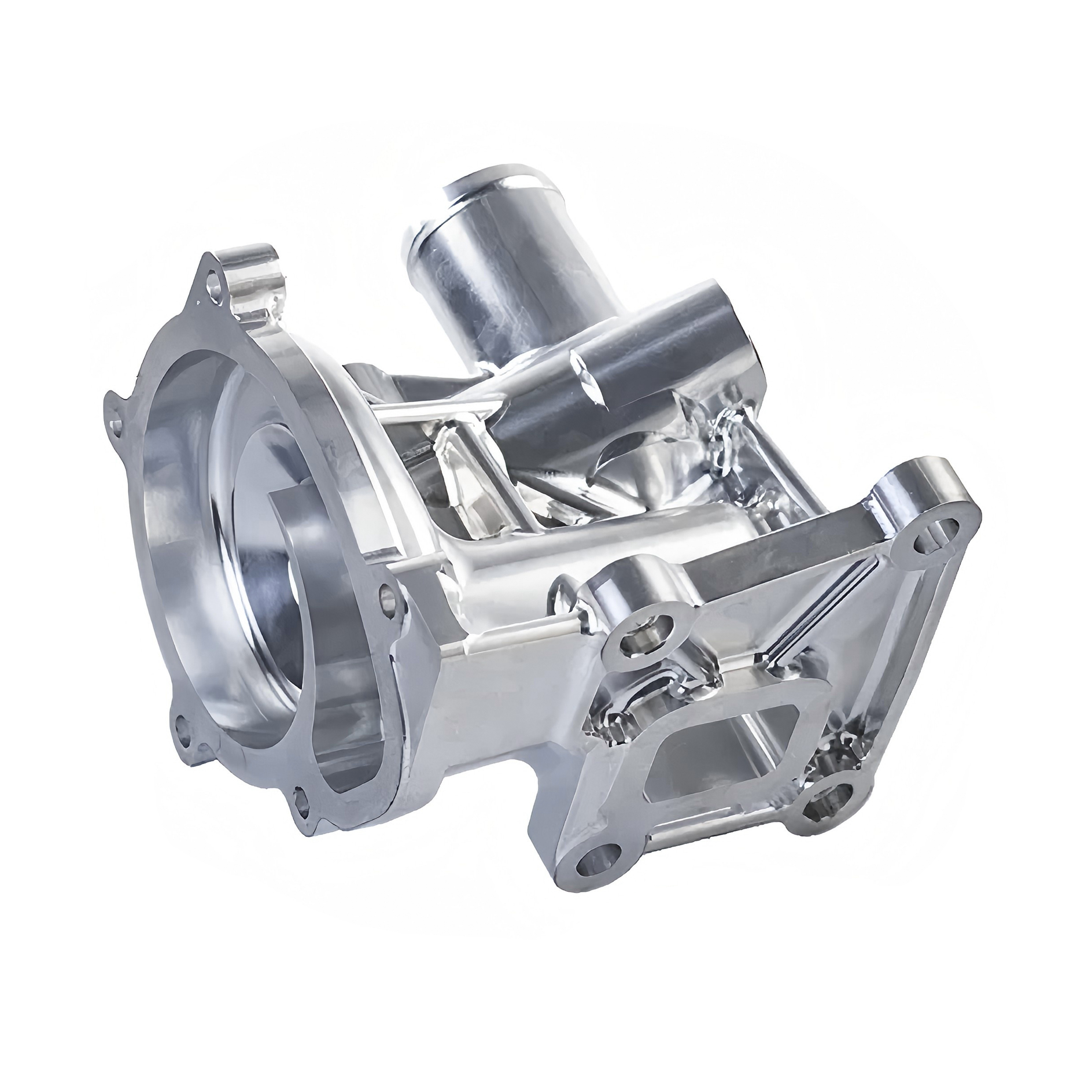
Industry Applications and Sector-Specific Requirements
What tolerance does a turbine blade demand compared to an automotive bracket? How do documentation requirements for a surgical implant differ from those for an electronic housing? Each industry brings unique precision expectations shaped by operating environments, safety regulations, and performance demands. Understanding these sector-specific requirements helps you communicate effectively with manufacturers and specify appropriate standards for your cnc parts.
Automotive Component Precision Standards
The automotive industry operates at the intersection of high volume and demanding tolerances. Engine components, transmission parts, and chassis assemblies must perform reliably across millions of vehicles while remaining cost-effective to produce.
Maintaining standard tolerances or exceeding them is essential to ensure proper gear meshing, shaft alignment, and housing fits—critical for minimizing wear, maximizing efficiency, and preventing costly equipment failures. A transmission gear with improper tolerances creates noise, accelerates wear, and eventually fails. Multiply that by thousands of vehicles, and you understand why automotive manufacturers demand consistency.
Key requirements for automotive cnc machined parts include:
- Repeatability across high volumes: Production runs often span tens of thousands of identical components
- IATF 16949 certification: The automotive industry's quality management standard builds upon ISO 9001 with additional sector-specific requirements
- Statistical Process Control: Real-time monitoring ensures dimensional consistency throughout production runs
- Full material traceability: Every component must trace back to raw material certifications
- PPAP documentation: Production Part Approval Process validates manufacturing capability before volume production
Machined aluminum components appear throughout modern vehicles—from lightweight structural brackets to precision-machined housings for sensors and actuators. The push toward electric vehicles intensifies demands for cnc machining metal operations that deliver tight tolerances on battery enclosures, motor housings, and thermal management components.
For automotive applications where quality consistency matters across production volumes, Shaoyi Metal Technology's IATF 16949-certified facility delivers high-tolerance components with lead times as fast as one working day, scaling seamlessly from rapid prototyping through mass production with strict SPC protocols.
Medical and Aerospace Tolerance Demands
When lives depend on component performance, tolerance requirements reach their most demanding levels. Both medical and aerospace sectors share a zero-tolerance philosophy toward failure—though their specific requirements differ significantly.
Aerospace Precision Requirements
In aerospace, structural integrity and aerodynamic performance depend on the exact fit between parts. Components such as turbine blades or airframe brackets often require bilateral tolerances to maintain precise symmetry and balance, ensuring stability and safety during flight.
Aerospace metal machining demands:
- Tolerances within ±0.0001 inches: Aerospace parts often require tolerances measured in microns
- AS9100 certification: The aerospace-specific quality management standard ensuring consistent manufacturing processes
- First Article Inspection (FAI): Comprehensive documentation verifying initial production parts match design specifications
- Material certifications: Full documentation of aerospace-grade material properties and heat treatment
- Non-destructive testing: X-ray, ultrasonic, and dye penetrant inspection for critical components
Medical Device Precision Requirements
Tight tolerances in medical devices ensure the accuracy and effectiveness of surgical tools and implants used in life-saving procedures, where even slight discrepancies can affect patient outcomes. A hip implant must interface precisely with bone; a surgical instrument must perform identically across thousands of procedures.
Medical stainless steel machining and specialized alloy work require:
- Biocompatibility verification: Materials must not cause adverse reactions in the human body
- Surface finish specifications: Roughness matters, especially for sealing surfaces or implantable devices
- ISO 13485 certification: Quality management specific to medical device manufacturing
- Complete traceability: Every part has a paper trail from raw material certs to inspection reports
- Cleanroom-compatible processing: Contamination control for implantable components
Electronics and Defense Sector Demands
The electronics industry pushes precision machining toward miniaturization. Technological advancements depend on small, lightweight devices and components with laser-precise parameters under 10 micrometers, and CNC machining can meet these requirements.
Electronics applications require:
- Micro-machining capabilities: Features measured in microns rather than millimeters
- EMI/RFI shielding considerations: Precise fits prevent electromagnetic interference
- Thermal management: Heat sink geometries demand accurate surface contact
- High-frequency performance: Connector housings require dimensional consistency for signal integrity
Defense manufacturing combines the precision demands of aerospace with unique security requirements. The military requires precise parts such as missile components, aircraft parts, submarine parts, and military vehicle components. ITAR compliance governs export-controlled articles, adding documentation layers beyond standard quality requirements.
High-security measures require secrecy surrounding the exact procedures and products used in creating military equipment, but the fundamental need remains: reliable parts manufactured to exacting standards with complete documentation.
Each industry's requirements reflect its unique operating conditions and risk profiles. Understanding these sector-specific demands helps you specify appropriate tolerances, select qualified manufacturers, and budget accurately for your precision machining projects. The next step? Evaluating what drives costs and how to choose the right manufacturing partner for your specific needs.
Cost Factors and Choosing the Right Machining Partner
Here's the question every procurement professional faces: Why do quotes for the same part vary so dramatically between suppliers? A 50% price difference isn't unusual, and the lowest quote isn't always the best value. Understanding what drives cnc machining price helps you compare providers fairly and make decisions that balance cost against quality, reliability, and total value.
Let's break down the cost drivers and evaluation criteria that separate exceptional precision machining partners from those who simply quote low and deliver headaches.
What Drives Precision Machining Costs
Every cnc machining shop calculates pricing based on similar fundamental factors, though how they weight these elements varies significantly. Understanding these components helps you interpret quotes accurately and identify where costs can be optimized.
Material Costs
Raw material represents a straightforward cost component, but it's more nuanced than simply multiplying weight by price per pound. Material cost depends on the specific material type, usage quantity, and current market price. Aerospace-grade aluminum costs more than commercial grades. Exotic alloys like titanium or Inconel command premium pricing. Material certifications add cost but provide necessary traceability for regulated industries.
Consider material utilization as well. A part machined from bar stock may waste 80% of the starting material, while a near-net-shape casting wastes far less. Your geometry directly impacts material costs beyond the finished part weight.
Machine Time
This factor often dominates precision machining pricing. Processing expenses include equipment depreciation, maintenance, labor, and indirect costs, calculated based on working hours or processes. A 5-axis machining center commands higher hourly rates than a 3-axis mill. Swiss-type lathes for small cnc machining operations carry different economics than large gantry mills.
Complexity multiplies time. Tight tolerances require slower feeds and speeds. Complex geometries demand multiple setups or specialized fixturing. Features requiring specialized tooling add setup time and tool costs.
Tolerance Requirements
As discussed earlier, tighter tolerances escalate costs non-linearly. Moving from standard to precision tolerances might add 50% to machining costs. Pushing into ultra-precision territory can multiply costs several times over. Each tolerance tightening demands slower cutting, more frequent tool changes, additional inspection, and higher scrap risk.
Volume Considerations
Setup costs remain relatively fixed whether you're making one part or one hundred. Programming, fixturing, and first-article inspection consume similar time regardless of quantity. These fixed costs spread across more parts as volume increases, dramatically reducing per-unit pricing.
A custom machine shop might quote $500 for a single prototype but only $50 per piece for 100 units. The math makes sense when you understand that setup might consume $400 of that prototype cost.
Lead Time Impacts
Typical lead times for CNC machining range from 1-3 weeks depending on volume and complexity. Rush orders disrupt scheduling, require overtime, or bump other customers—all adding cost. Planning ahead saves money. Emergency timelines cost premiums of 25-100% or more.
Evaluating Service Providers Beyond Price
Searching for a cnc machine shop near me returns plenty of options. But proximity alone doesn't guarantee quality, reliability, or fair pricing. Look beyond the lowest quote. Instead, assess cost-effectiveness by balancing price with quality, delivery, and service.
When evaluating potential machining services near me, consider these critical criteria:
- Technical capability alignment: Does their equipment match your requirements? A shop focused on large structural components may not excel at small precision parts
- Quality certifications: Ensure ISO 9001, IATF 16949, or AS9100D certifications are in place. These indicate structured processes and repeatable quality
- Inspection capabilities: Ask about their inspection tools—pin gauges, micrometers, CMMs—and request samples or inspection reports
- Communication responsiveness: Responsive, clear communication ensures you won't be left in the dark when issues arise
- DFM feedback quality: Judge their ability to understand technical drawings, provide Design for Manufacturability feedback, and suggest machining alternatives
- After-sales support: Does the supplier offer warranties, replacements, or post-delivery support?
- Scalability: Can they grow with your needs from prototypes to production volumes?
- Material sourcing: Ask whether material sourcing is internal or via third parties. Fast in-house material prep speeds up delivery and ensures quality consistency
Getting Accurate Quotes and Comparing Fairly
The accuracy of quotes you receive depends largely on the information you provide. Getting an accurate CNC machining quote is one of the key factors in ensuring your project goes smoothly.
To obtain comparable quotes from multiple providers:
- Provide complete CAD files: 3D models in standard formats (STEP, IGES) eliminate interpretation errors
- Specify all requirements clearly: Tolerances, surface finishes, material grades, and certifications needed
- Indicate accurate quantities: Pricing varies significantly with volume
- Share realistic timelines: Rush requirements affect pricing
- Request itemized breakdowns: Ensure the pricing is clearly itemized with no hidden fees. Understand how the supplier calculates costs—machine time, material waste, labor, setup, and tooling
One case study showed that by implementing a standardized inquiry process, quotation dispersion was significantly reduced—from an initial difference of 200 yuan to just 55 yuan, increasing quotation accuracy by 72.5%. Consistent, complete information yields consistent, comparable quotes.
When searching for a cnc shop near me, don't overlook the value of starting small. When in doubt, start with a prototype project. It's the fastest way to verify a supplier's true ability, process discipline, and quality mindset—before scaling into full production.
The right precision machining partner becomes an extension of your team, contributing expertise that improves your designs and reduces total costs. Price matters, but the cheapest option rarely delivers the best value when quality, reliability, and communication factor into the equation.
Frequently Asked Questions About Precision Machining Service
1. What does precision machining do?
Precision machining removes excess material from a workpiece to create finished components with extremely tight tolerances, typically within ±0.001 mm or tighter. Using advanced CNC technology with real-time feedback systems like laser interferometry and digital encoders, this process transforms raw materials into parts that meet exact specifications. Industries including aerospace, medical devices, and automotive rely on precision machining to produce components where even microscopic deviations could cause failures.
2. How much does CNC machining service cost?
CNC machining costs vary based on several factors: material type and quantity, machine time (3-axis mills cost less per hour than 5-axis machines), tolerance requirements (tighter tolerances increase costs non-linearly), production volume (setup costs spread across more parts reduce per-unit pricing), and lead time. A prototype might cost $500 while the same part at 100 units could drop to $50 each. Rush orders typically add 25-100% premium. For accurate quotes, provide complete CAD files with all specifications clearly defined.
3. What is the difference between standard and precision tolerances in machining?
Standard tolerances range from ±0.05 mm to ±0.127 mm, suitable for housings and brackets where exact fit isn't critical. Precision tolerances (±0.013 mm to ±0.05 mm) are necessary when components interface with other parts or functional performance depends on accurate dimensions. Ultra-precision tolerances (±0.002 mm to ±0.013 mm) serve aerospace and medical applications. Each tolerance level increase demands slower cutting speeds, more frequent tool changes, and extensive inspection, significantly impacting costs.
4. What certifications should a precision machining company have?
Key certifications include ISO 9001 for general quality management systems, IATF 16949 for automotive industry requirements, AS9100 for aerospace applications, and ISO 13485 for medical device manufacturing. These certifications indicate documented quality procedures, trained employees, systematic non-conformance tracking, regular third-party audits, and continuous improvement processes. IATF 16949-certified facilities like Shaoyi Metal Technology combine certification with Statistical Process Control protocols to ensure consistent component quality.
5. When should I choose CNC machining over casting or 3D printing?
CNC machining excels when you need tolerances within ±0.001 mm (superior to both casting and 3D printing), material versatility across virtually all machinable metals and plastics, quantities from 1 to 10,000+ parts without tooling investment, or functional prototypes matching production-intent materials. Choose casting for quantities above 1,000 with complex internal geometries where tooling investment is justified. Select 3D printing for complex organic shapes in quantities under 100 where tolerances of ±0.05 mm are acceptable.