 Small batches, high standards. Our rapid prototyping service makes validation faster and easier —
  EN
EN


Precision CNC Machining Services: 9 Critical Factors Before You Order
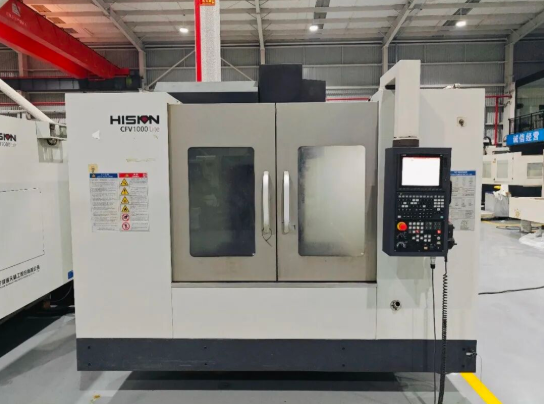
What Precision CNC Machining Services Actually Mean for Your Parts
When you hear the term "precision CNC machining services," you might wonder what actually separates them from standard machining operations. Is it just marketing language, or does the distinction carry real technical weight? The answer matters significantly—especially when your components must perform flawlessly in demanding applications like aerospace systems, medical devices, or high-performance automotive assemblies.
Precision CNC machining is a computer-controlled manufacturing process achieving tolerances between ±0.0005" and ±0.002", significantly tighter than standard machining. It uses advanced software and high-precision machinery to remove material with micron-level accuracy.
What Separates Precision from Standard CNC Machining
The fundamental difference comes down to tolerance capability. While conventional CNC machining typically delivers tolerances of ±0.005 inches, precision machining services consistently reach ±0.0005 inches or tighter. Specialized setups can even achieve ±0.0001 inches—a level of accuracy where temperature fluctuations in the room can affect outcomes.
Think of it this way: standard machining handles the primary machining tasks where general tolerances suffice. Precision work, however, addresses applications where every thousandth of an inch determines whether a part functions correctly or fails catastrophically. A reliable cnc service provider understands this distinction and configures their entire operation—equipment, environment, and quality systems—to consistently hit these demanding specifications.
Understanding Tolerance Thresholds in Manufacturing
Precision exists on a spectrum rather than as a single threshold. Understanding where your parts fall on this spectrum helps you communicate requirements effectively and avoid over-specifying tolerances that inflate costs unnecessarily.
- General machining (±0.005" / 0.127mm): Suitable for most functional components where exact fit isn't critical. According to industry standards like ISO 2768-1 medium, this represents the default tolerance for milled and turned parts.
- High-precision machining (±0.001" / 0.025mm): Required for aerospace components, high-performance automotive parts, and assemblies where tight fits matter. This level demands careful process control and quality verification.
- Ultra-precision machining (±0.0002" to ±0.0005"): Reserved for surgical instruments, implants, and specialized applications. Only about 1% of manufactured parts require tolerances this tight.
Here's an important reality check: tighter tolerances demand specialized cutting tools, longer machining times, and more rigorous inspection protocols. High-precision machining solutions come at a premium because they require investment in advanced equipment, environmental controls, and highly skilled operators. Before specifying ultra-tight tolerances across your entire part, consider which features truly require that level of precision machining services—and which can function perfectly well at standard specifications.
Understanding these tolerance thresholds positions you to have more productive conversations with your machining partner and ultimately receive parts that meet your functional requirements without unnecessary cost inflation.
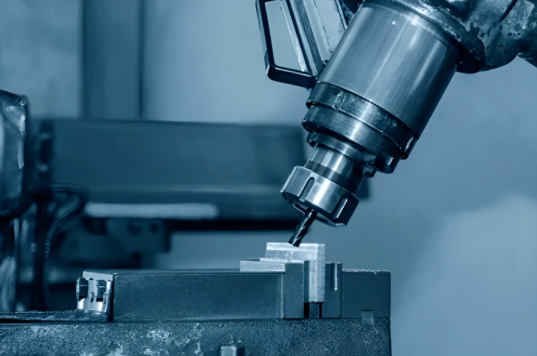
The Complete Precision Machining Ecosystem Explained
Achieving micron-level accuracy in cnc machining parts isn't simply about owning expensive equipment. Sounds complex? It's actually quite logical once you understand that precision emerges from an interconnected system—where machine capabilities, tooling, fixturing, environment, and calibration work together seamlessly. When any single element falls short, the entire process suffers.
Think of it like a high-performance vehicle: the engine alone doesn't determine speed. You need the right tires, suspension, fuel system, and driving conditions working in harmony. The same principle applies to precision manufacturing. Let's break down each pillar that makes consistent accuracy possible.
The Five Pillars of Precision Manufacturing
Whether you're exploring 5 axis cnc machining services for complex aerospace geometries or precision cnc milling for medical components, these five pillars determine your achievable accuracy:
- Machine Capabilities (3-Axis Through 5-Axis): The foundation starts with the cnc cutting machine itself. Modern precision machines feature high-rigidity frames, precision ball screws with minimal backlash, and spindles capable of maintaining consistent speeds under load. A 5-axis machine doesn't automatically mean higher precision—it means the ability to reach complex geometries in fewer setups, reducing cumulative positioning errors.
- Advanced Tooling Selection: Cutting tools directly contact your workpiece, making their selection critical. Precision work demands tools with tight runout specifications, appropriate coatings for specific materials, and geometries optimized for the operation. Worn or improperly selected tools introduce vibration and dimensional inconsistencies that no machine compensation can fully correct.
- Precision Fixturing: How you hold the workpiece matters as much as how you cut it. Precision fixtures minimize part movement during machining, provide repeatable positioning for multiple operations, and prevent distortion from clamping forces. For cnc prototyping applications, modular fixturing systems allow rapid changeovers without sacrificing positional accuracy.
- Environmental Controls: The machining environment directly impacts whether tight tolerances are achievable. Temperature variations cause thermal expansion in both the machine structure and workpiece. Vibration from nearby equipment or unstable foundations creates surface finish issues and dimensional errors. Even humidity affects cnc metal components through surface oxidation and electronic system performance.
- Calibration Protocols: Regular verification and adjustment maintain machine accuracy over time. This includes laser interferometer measurements for axis positioning, ballbar testing for circular interpolation accuracy, and spindle runout verification. Industry best practices recommend establishing routine maintenance schedules that include regular checks and calibrations to keep machines in optimal condition.
How Environmental Controls Impact Micron-Level Accuracy
Environmental factors represent the most frequently underestimated pillar in the precision ecosystem. You'll notice that many shops discuss their machine capabilities extensively but remain silent about their environmental controls—often because they haven't invested in them adequately.
Temperature stability deserves particular attention. According to precision machining specialists, maintaining the machining area between 15°C and 25°C is recommended, with air conditioning systems ensuring stable conditions. Both the machine tool and workpiece material expand or contract with temperature changes—even slight dimensional changes can lead to accuracy deviations.
Before starting each day, experienced operators allow machines to run at low speed for 15 to 30 minutes. This brings components such as the spindle and linear guideways to thermal equilibrium, reducing dimensional errors during initial machining. Without this warm-up protocol, your first parts of the day often exhibit different dimensions than parts produced later.
Humidity control presents another challenge many facilities overlook. Keeping relative humidity between 40% and 60% effectively prevents metal oxidation while ensuring proper operation of electronic components and control systems. In highly humid conditions, even stainless steel can corrode due to an invisible water film forming on surfaces that reacts with oxygen and airborne impurities.
Vibration management completes the environmental picture. Machines should be positioned away from large production equipment, roads, and construction sites. Anti-vibration pads matched to the machine's weight and operational characteristics minimize machining marks and errors caused by external disturbances.
Investing in proper environmental controls isn't just about achieving tighter tolerances—it extends machine lifespan, reduces scrap rates, and lowers maintenance frequency. These seemingly invisible factors often separate shops that consistently deliver precision results from those that struggle with variability.
Choosing Between 3-Axis and 5-Axis Precision Machining
Now that you understand how the precision ecosystem functions, the next critical decision involves selecting the right axis configuration for your parts. Should you opt for 3-axis machining to keep costs down, or does your geometry truly demand 5-axis capabilities? Making the wrong choice here either inflates your budget unnecessarily or leaves you with parts that can't meet specifications.
The answer depends on your part geometry, tolerance requirements, and production volume. Let's examine when each configuration delivers the precision you need—and when it falls short.
When 3-Axis Machining Delivers Sufficient Precision
Three-axis machining moves the cutting tool along the X (left-right), Y (front-back), and Z (up-down) directions. Despite being the most fundamental CNC configuration, 3-axis machines handle the majority of precision work when parts feature relatively straightforward geometries.
According to DATRON machining specialists, 3-axis machining excels at operations like drilling, threading holes, cutting key slots, milling undercut features, cutting sharp angles, and creating surface features on the same plane. When your cnc milled components require precision on a single face or features accessible from one orientation, 3-axis delivers excellent results at lower cost.
The limitation surfaces when you need features on multiple sides. Each repositioning requires a new setup—and every setup introduces potential alignment errors. While experienced operators minimize these errors using touch probes and integrated cameras, the cumulative effect impacts achievable tolerances on complex parts.
Consider 3-axis machining optimal when:
- Your part features lie primarily on one plane or a few accessible faces
- Tolerances of ±0.001" to ±0.002" meet your requirements
- Budget constraints make multiple-setup approaches more practical
- You're producing panels, enclosures, or 2D/2.5D geometries
The 4-Axis Advantage for Cylindrical and Angled Features
Adding a rotary A-axis transforms machining capabilities for specific part types. According to precision manufacturing experts, 4-axis CNC machining enables complete side machining of parts without human intervention, resulting in higher precision machining and shorter production times.
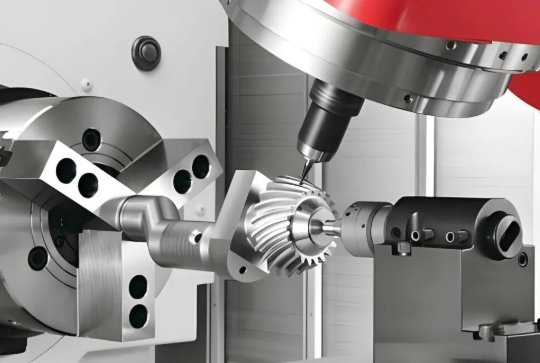
The cnc turning service approach works particularly well for shafts, gears, and cylindrical components requiring features around their circumference. The workpiece rotates on the A-axis while the tool performs cnc cutting operations, accessing all sides in a single setup. This eliminates the alignment errors inherent in multiple 3-axis setups.
Two operational modes exist: indexing (3+1) and simultaneous. With indexing, the workpiece rotates to a fixed position, then standard 3-axis strategies execute the cut. Simultaneous 4-axis machining rotates the part while cutting—essential for helical features, curved surfaces, and complex grooves that would be impossible otherwise.
Why Complex Parts Demand 5-Axis Capabilities
Five-axis machining adds a second rotational axis (typically B or C) to the three linear and one rotary axes. This configuration enables aerospace cnc machining of turbine blades, impellers, and organic geometries that define modern high-performance components.
The precision advantage comes from maintaining optimal tool orientation throughout the cut. According to Fictiv's technical resources, while general CNC milling holds around ±0.05 mm (±0.002"), 5 axis cnc service often achieves ±0.01–0.02 mm (±0.0004–0.0008") and, under favorable conditions, can reach ±0.005 mm (±0.0002") for critical aerospace or medical parts.
Simultaneous 5-axis machining—where all five axes move continuously during cutting—unlocks geometries impossible with other configurations. The tool approaches the workpiece from virtually any angle, creating compound curves, undercuts, and contoured surfaces in a single setup. This eliminates the setup-related errors that accumulate when repositioning parts multiple times.
However, 5-axis capabilities come with trade-offs. Programming complexity increases substantially, requiring specialized CAM expertise. Machine costs and hourly rates run higher than 3-axis alternatives. For straightforward parts, you're paying a premium without gaining functional benefit.
Axis Configuration Comparison for Precision Work
| Configuration | Typical Tolerances Achievable | Best Applications | Complexity Level |
|---|---|---|---|
| 3-Axis | ±0.001" to ±0.002" (±0.025 to ±0.05 mm) | Panels, enclosures, 2D/2.5D features, single-plane components | Low—straightforward programming and setup |
| 4-Axis | ±0.0005" to ±0.001" (±0.013 to ±0.025 mm) | Shafts, gears, camshafts, cylindrical parts with angled features | Moderate—requires rotary axis programming |
| 3+2 Axis (Positional 5-Axis) | ±0.0005" to ±0.001" (±0.013 to ±0.025 mm) | Multi-sided prismatic parts, angled pockets, compound faces | Moderate—indexed positioning with 3-axis cutting |
| Simultaneous 5-Axis | ±0.0002" to ±0.0008" (±0.005 to ±0.02 mm) | Turbine blades, impellers, aerospace structures, medical implants | High—complex toolpaths and specialized CAM required |
The right choice ultimately depends on matching capabilities to requirements. If your part geometry allows 3-axis machining to achieve required tolerances, that configuration typically delivers the best value. Reserve 5 axis cnc service for parts where geometry genuinely demands it—compound curves, deep undercuts, or surfaces requiring continuous tool reorientation. Understanding this distinction helps you communicate effectively with your machining partner and optimize both cost and quality outcomes.
Material Selection Guide for High-Tolerance Components
With axis configuration sorted, you might assume the path to precision is clear. But here's where many projects stumble: selecting a material that can actually hold the tolerances you've specified. Your machine may achieve ±0.0005" accuracy—yet certain materials simply won't cooperate at that level. Understanding which metals and plastics deliver consistent results under machining stress separates successful precision projects from costly rework cycles.
Material selection for precision CNC machining involves evaluating far more than mechanical properties. According to machining specialists, the process requires balancing machinability ratings, thermal stability during cutting, dimensional consistency after machining, and compatibility with required surface finishes. Let's examine which materials excel in high-tolerance applications—and which create unnecessary challenges.
Metals That Hold Tight Tolerances Under Machining Stress
Not all metals behave equally when you're chasing micron-level accuracy. Some machine beautifully and maintain dimensions through finishing operations. Others work-harden unpredictably or distort from residual stresses. Here's what you need to know about the most common precision-grade metals:
- Aluminum Alloys (6061-T6, 7075-T6): The workhorses of precision machining. Aluminum offers excellent machinability, good thermal conductivity that dissipates cutting heat, and predictable behavior under tool pressure. For aerospace and automotive components requiring aluminum machining, 6061-T6 delivers tolerances to ±0.0005" without heroic measures. The 7075 variant provides higher strength for structural applications while maintaining dimensional stability.
- Stainless Steels (303, 304, 316): When corrosion resistance matters, stainless steel enters the conversation. The 303 grade machines most easily due to added sulfur content—ideal when tight tolerances take priority over maximum corrosion protection. The 304 and 316 grades work-harden during cutting, requiring sharper tools and controlled feeds, but deliver excellent precision when machined correctly.
- Titanium (Grade 5 Ti-6Al-4V): The strength-to-weight champion demands respect. Titanium's low thermal conductivity concentrates heat at the cutting edge, accelerating tool wear. However, its dimensional stability after machining makes it excellent for aerospace and medical implants where tolerances must hold long-term. Expect slower feeds and specialized tooling—but the precision results justify the effort.
- Bronze Alloys: For cnc machining bronze components like bearings, bushings, and wear surfaces, bronze offers natural lubricity and excellent machinability. When you machine bronze, chips clear easily and surface finishes reach Ra 16 μin without secondary operations. The bronze cnc process works particularly well for precision sliding components where dimensional accuracy directly affects function.
- Kovar (ASTM F15): This iron-nickel-cobalt alloy serves specialized applications requiring matched thermal expansion with glass or ceramics. According to precision machining experts, Kovar machining services demand specific expertise because the material work-hardens significantly during cutting—hardness can increase up to 50% from machining stress alone. Carbide tools with TiAlN coatings and moderate cutting speeds deliver the best results for kovar machining services in hermetic sealing and electronics applications.
Engineering Plastics for Precision Applications
When weight reduction, electrical insulation, or chemical resistance drives your design, engineering plastics offer precision-capable alternatives to metals. However, their behavior under cutting tools differs substantially—thermal expansion coefficients run higher, and some materials deflect under tool pressure rather than cutting cleanly.
- Delrin (Acetal Homopolymer): The gold standard for delrin plastic precision machining. Its crystalline structure produces excellent dimensional stability, low moisture absorption, and clean chip formation. Tolerances to ±0.001" are achievable with standard practices. Delrin excels in gears, bearings, and sliding mechanisms where plastic-on-metal contact occurs.
- Nylon (PA6, PA66): When selecting nylon for machining, understand that moisture absorption affects dimensions. Parts machined dry may swell 1-2% after absorbing ambient humidity. For tight tolerances, either machine parts from pre-conditioned stock or account for post-machining dimensional changes. Glass-filled grades improve stability but increase tool wear.
- Polycarbonate: Optical clarity and impact resistance make polycarbonate essential for sight glasses, protective covers, and light-transmission components. The material machines well but requires attention to heat management—excessive cutting temperatures cause surface crazing. Sharp tools with high rake angles and coolant mist maintain both precision and optical quality.
- PEEK: For extreme environments combining high temperature, chemical exposure, and mechanical stress, PEEK delivers. This high-performance thermoplastic holds tolerances comparable to metals while surviving conditions that would destroy other plastics. The trade-off? Material costs run 10-20 times higher than Delrin, making it appropriate only when performance requirements justify the investment.
Matching Material Properties to Your Application
The right material choice emerges from honest evaluation of your application requirements. According to material selection guidance, part application determines which physical properties matter most—tensile strength, strength-to-weight ratio, crack resistance, rigidity, or flexibility all depend on end use. Heavier materials handle more stress, but weight-sensitive applications demand lighter materials with strong strength-to-weight ratios.
Consider these factors when finalizing material selection:
- Operating environment: Will parts face corrosive chemicals, extreme temperatures, or UV exposure? Match material resistance to actual service conditions.
- Surface finish requirements: Some materials achieve smooth finishes easily while others require secondary operations. Verify your chosen material and intended finish are compatible before committing.
- Thermal stability: Parts operating across temperature ranges need materials with appropriate expansion coefficients. A cnc bronze component in a thermal cycling application may outperform alternatives that expand excessively.
- Machinability versus cost: Sometimes paying more for a material that machines easily delivers lower total cost than choosing a cheaper material requiring specialized tooling and slower feeds.
The material you select affects not only part performance but also machining cost, lead time, and achievable tolerances. Investing time in proper material selection prevents the frustration of discovering mid-project that your chosen material can't meet specifications—or that you've over-specified an expensive material when a simpler alternative would perform identically.
Industry Certifications and What They Guarantee
You've selected the right axis configuration and matched materials to your application requirements. Now comes a question many engineers overlook until it's too late: does your machining partner hold the certifications your industry demands? A production machine shop might produce visually identical parts—but without proper certification, those components may be unusable in regulated industries.
Understanding what each certification actually requires helps you evaluate suppliers meaningfully. These aren't just plaques on the wall—they represent documented systems for traceability, process control, and quality verification that directly impact whether your parts meet regulatory scrutiny.
What IATF 16949 Means for Automotive Precision Parts
Automotive manufacturers don't simply prefer IATF 16949 certification—they require it as a condition of doing business. This standard builds upon ISO 9001 foundations while adding automotive-specific requirements for defect prevention, variation reduction, and supply chain management.
For precision CNC machining services serving automotive applications, IATF 16949 mandates:
- Advanced Product Quality Planning (APQP): Structured processes for developing new parts, ensuring manufacturability before production begins
- Production Part Approval Process (PPAP): Documented evidence that manufacturing processes can consistently produce parts meeting specifications
- Statistical Process Control (SPC): Real-time monitoring of critical dimensions to catch variation before it produces defective parts
- Failure Mode and Effects Analysis (FMEA): Systematic identification of potential failures and preventive controls
When you work with an IATF 16949-certified cnc engineering services provider, you're getting more than machined components. You're receiving documented evidence that every critical dimension was monitored, that traceability exists from raw material to finished part, and that the supplier actively prevents defects rather than simply inspecting them out.
Medical Device Machining Under ISO 13485 Standards
Medical machining operates under intense regulatory scrutiny where patient safety depends on manufacturing consistency. ISO 13485 establishes quality management system requirements specifically designed for medical device production—and it's substantially more demanding than general manufacturing standards.
According to medical device machining specialists, key ISO 13485 requirements include comprehensive design controls, risk management integration following ISO 14971, and validation protocols that verify processes consistently produce conforming products. The standard requires manufacturers to maintain detailed documentation covering material sourcing, testing, and certification to demonstrate regulatory compliance.
For precision components destined for surgical instruments or implantable devices, ISO 13485 certification ensures:
- Biocompatibility verification: Materials meet ISO 10993 standards for contact with human tissue
- Cleanliness protocols: Surface contamination controlled to levels appropriate for medical use
- Complete traceability: Every part traceable to specific material lots, machines, and operators
- Validated processes: Manufacturing methods proven capable of consistent results—not just inspected after the fact
The FDA's Quality System Regulation (21 CFR Part 820) works in parallel with ISO 13485 for U.S. market access. Medical device manufacturers must demonstrate good manufacturing practices covering methods, facilities, and controls throughout production. Working with certified suppliers simplifies your own regulatory compliance by providing documented evidence of controlled manufacturing.
AS9100D: The Aerospace Quality Standard
Aerospace applications demand the highest levels of quality assurance—where component failure can result in catastrophic consequences. AS9100D represents the gold standard for aviation, space, and defense quality management, building upon ISO 9001 while adding numerous industry-specific requirements.
According to aerospace compliance specialists, the AS9100D standard was developed by the International Aerospace Quality Group (IAQG) to address specific aerospace needs not adequately covered by general quality standards. Major manufacturers including Boeing, Airbus, Lockheed Martin, and Northrop Grumman require AS9100 compliance as a condition of doing business.
Critical AS9100D requirements affecting precision machining include:
- Operational risk management: Systematic identification and mitigation of risks throughout production
- Configuration management: Ensuring product integrity from design through delivery—every revision controlled and documented
- Counterfeit parts prevention: Protocols protecting against unauthorized or fraudulent components entering the supply chain
- First Article Inspection (FAI): Comprehensive verification that initial production parts meet all design requirements
For aerospace cnc machining, inspection specialists note that parts often require tolerances within ±0.0001 inches, with documentation supporting every measurement. The standard emphasizes defect prevention and variation reduction throughout supply chains—directly supporting the industry's zero-tolerance approach to quality failures.
Certification Comparison for Precision Manufacturing
| Certification | Industry | Key Requirements | Precision Implications |
|---|---|---|---|
| ISO 9001:2015 | General Manufacturing | Quality management system, continuous improvement, customer focus | Baseline quality controls; suitable for non-regulated applications |
| ISO 13485 | Medical Devices | Design controls, risk management (ISO 14971), validated processes, biocompatibility | Complete traceability, sterility considerations, material certifications required |
| IATF 16949 | Automotive | APQP, PPAP, SPC, FMEA, supply chain management | Statistical process control on critical dimensions, defect prevention focus |
| AS9100D | Aerospace & Defense | Operational risk management, configuration control, counterfeit prevention, FAI | Tightest tolerances (±0.0001"), 100% inspection for critical features, full documentation |
Why Certification Matters for Your Project
Imagine receiving a batch of beautifully machined aluminum machining components—only to discover your customer's quality team rejects them because your supplier lacks required certifications. The parts might be dimensionally perfect, but without documented process controls, material traceability, and inspection records from a certified facility, they're unusable in regulated applications.
Certifications serve multiple functions beyond regulatory compliance. They indicate that a cnc machining industries served include demanding sectors with zero tolerance for quality escapes. They demonstrate investment in documented systems, trained personnel, and calibrated equipment. And they provide audit trails that simplify your own quality documentation when questions arise.
Before committing to any precision machining partner, verify their certifications align with your industry requirements. Request current certificates—not expired ones—and confirm the scope covers the processes you need. A supplier certified for turning operations may not hold certification for multi-axis milling. These details matter when your parts face regulatory scrutiny or customer quality audits.
With certification requirements understood, the next critical consideration involves how your machining partner actually verifies that parts meet specifications throughout production—not just at final inspection.
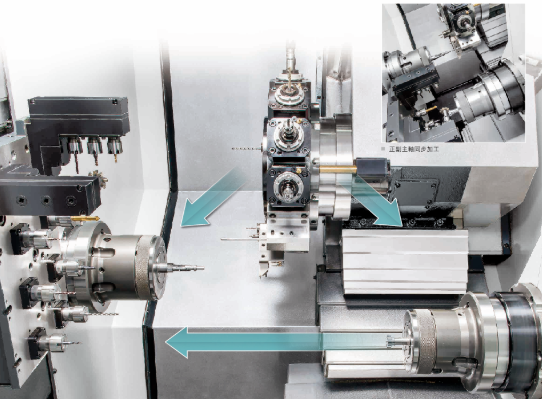
Quality Control Methods That Ensure Precision Accuracy
Certifications establish the framework for quality—but how does a machining shop actually verify that your custom machined parts meet specifications? When you're ordering complex machining services requiring micron-level accuracy, understanding the inspection process helps you evaluate whether a potential partner can deliver consistent results or merely promises them.
The reality is straightforward: machining parts to tight tolerances means nothing if those tolerances aren't verified throughout production. Waiting until final inspection to discover problems creates expensive scrap and delays. Let's examine the quality control sequence that separates reliable precision suppliers from those that ship and hope.
The Complete Quality Verification Sequence
Professional precision CNC machining services follow a structured verification process from first article through final shipment. According to machining quality control specialists, this sequence catches deviations early when correction costs remain low—rather than discovering problems after completing an entire production run.
- First Article Inspection (FAI): Before production begins, the initial part receives comprehensive dimensional verification. Every critical feature gets measured against specifications, establishing baseline capability and confirming the setup produces conforming parts.
- In-Process Inspection: Operators verify critical dimensions at defined intervals during production—not just at completion. This catches tool wear, thermal drift, and setup shifts before they produce out-of-tolerance batches.
- Statistical Process Control (SPC) Monitoring: Real-time data collection tracks dimensional trends throughout the run. SPC helps identify variations before they exceed tolerance limits, enabling proactive adjustments rather than reactive sorting.
- CMM Verification: Coordinate Measuring Machine inspection provides micron-level accuracy for complex geometries and GD&T features that handheld instruments cannot reliably measure.
- Surface Finish Measurement: Profilometers verify Ra values and other surface texture parameters critical to part function—especially for sealing surfaces and wear components.
- Final Validation and Documentation: Completed parts receive final dimensional verification with inspection reports documenting all measured values against specifications.
How CMM Inspection Validates Micron-Level Accuracy
When your machined parts require tolerances beyond what calipers and micrometers can reliably verify, Coordinate Measuring Machine inspection becomes essential. CMMs use precision probes to map part geometry in three-dimensional space, comparing actual measurements against CAD models or dimensional specifications.
According to metrology specialists at Roots Metrology, CMM inspection delivers several advantages critical for precision work:
- Higher Accuracy and Repeatability: CMMs achieve tolerances in microns, exceeding the capability of manual instruments. Automated routines produce consistent, accurate data even with complex or repetitive inspections.
- Greater Efficiency: Fast and repeatable part measurement allows inspection to proceed dramatically faster than manual methods for complex geometries.
- Reduced Human Error: The automated process eliminates variations that depend on operator experience or technique.
- GD&T Compliance: CMMs directly measure geometric features including flatness, perpendicularity, roundness, and true position—critical for parts with complex geometric tolerancing requirements.
- Suitable for Everything: From small medical implants to large aerospace structures, CMMs accommodate a wide range of geometric shapes, sizes, and material types.
If you're searching for cnc machining near me or evaluating machining shops near me, ask specifically about CMM capabilities. Not every shop owns this equipment—and without it, verifying complex GD&T requirements becomes impractical or impossible.
Preventing Precision Failures Before They Happen
The most expensive quality problem is one discovered after parts ship to your assembly line. Understanding common precision machining failures—and how proper quality systems prevent them—helps you evaluate potential suppliers more effectively.
Tool Wear Drift: Cutting tools wear progressively, causing gradual dimensional changes that may not trigger immediate alarms but accumulate into out-of-tolerance conditions. Prevention requires defined tool life limits, in-process measurement at intervals, and SPC trending that catches gradual drift before it exceeds tolerances.
Thermal Variation: Machine structures and workpieces expand with temperature changes. A part measured immediately after machining may read differently than one measured at room temperature. Prevention involves climate-controlled environments, machine warm-up protocols, and allowing parts to stabilize before final inspection.
Fixture and Setup Errors: Incorrect workholding or improper part positioning creates systematic errors that affect entire batches. First article inspection catches these issues before production proceeds—provided the FAI is truly comprehensive rather than superficial.
Surface Finish Degradation: Worn tools, incorrect speeds and feeds, or inadequate coolant produce surface finishes that fail specifications even when dimensions pass. Profilometer verification at defined intervals ensures surface quality throughout the run.
According to Baker Industries' quality specialists, Statistical Process Control serves as the foundation for preventing these failures. By analyzing production data in real time, SPC identifies trends and variations before they escalate into major problems. Early identification of deviations enables immediate correction—minimizing defects, waste, and costly rework.
The investment in comprehensive quality control pays dividends beyond defect prevention. Documented inspection results provide the traceability that regulated industries require, demonstrate process capability to demanding customers, and build confidence that your machined parts will perform as designed. When evaluating precision machining partners, look beyond machine capabilities to understand how they verify results—because precision unverified is merely precision claimed.
Design for Manufacturability Principles in Precision Work
Quality control systems catch problems during production—but what if you could prevent those problems from ever occurring? That's exactly what Design for Manufacturability (DFM) accomplishes. The choices you make during the design phase ripple through every subsequent manufacturing step, determining whether your cnc parts machine efficiently or become costly headaches for everyone involved.
Here's the reality: a seemingly minor design decision—like specifying an unnecessarily tight internal corner radius or choosing impractical wall thicknesses—can transform straightforward cnc fabrication into a complex, time-intensive process. According to precision manufacturing specialists, effective DFM implementation can reduce manufacturing costs by 15-40% and cut lead times by 25-60% compared to non-optimized designs.
Let's examine the specific design rules that make precision machining achievable—and affordable.
Design Rules That Make Precision Machining Possible
Every geometric feature on your cnc machined parts affects how efficiently they can be produced. Understanding these constraints empowers you to make informed trade-offs between design ideals and manufacturing realities. Here's your actionable DFM checklist:
- Internal Corner Radii: End mills are cylindrical—they physically cannot create true 90-degree internal corners. Specify a minimum radius of 0.030" (0.76mm) for internal corners to enable standard tooling. Smaller radii require specialized small-diameter tools with extended lead times and higher costs. The general rule: use the largest radius your design can accommodate, as larger radii enable more rigid cutting tools that resist deflection.
- Wall Thickness Minimums: As wall thickness decreases, vibration increases during cutting, reducing achievable accuracy. For aluminum, maintain minimum walls of 0.040" (1mm). Steel requires 0.050" (1.27mm) or greater. Plastics—being less stiff and more prone to warping—need walls of 0.060" (1.5mm) minimum to hold precision tolerances reliably.
- Cavity Depth-to-Width Ratios: End mills have limited cutting length—typically 3-4 times their diameter. Deeper cavities require longer tools that flex under cutting loads, reducing accuracy. Keep cavity depths below 4x the width for standard operations. Deep, narrow pockets dramatically increase cost and compromise precision.
- Feature Aspect Ratios: Tall, thin features deflect under tool pressure. When your design requires tall walls or narrow standing features, consider adding temporary support ribs that get removed in final operations, or redesign to improve the height-to-thickness ratio.
- Avoid Knife Edges: Where two surfaces meet at extremely acute angles, knife edges create fragile features prone to damage during machining and handling. Add small outside fillets (0.005-0.015") to eliminate these problematic intersections. Manufacturing teams typically add these anyway—build them into your design from the start.
- Hole Depth Limitations: Standard drill bits perform best at depths up to 4x the nominal diameter. Holes deeper than 10x diameter require specialized tooling and slower feeds. For blind threaded holes, remember that taps need lead-in clearance—add 1.5x nominal diameter beyond your required thread depth.
- Eliminate Decorative Complexity: Complex curves and varying radii look impressive in CAD but create significant manufacturing bottlenecks without functional benefit. According to DFM specialists, these features can increase programming time by 100-300% and machining time by 200-400%. Question every curved feature: does it serve a functional purpose, or is it purely aesthetic?
When cnc cuts must be made at angles not aligned with the machine's primary axes, costs increase substantially. Features requiring 5-axis capabilities cost 300-600% more than equivalent 3-axis operations. Whenever possible, align holes, pockets, and surfaces with the X, Y, and Z planes to enable efficient cnc cut strategies using simpler equipment.
Avoiding Tolerance Stack-Up in Complex Assemblies
Individual part tolerances seem manageable in isolation—but what happens when multiple toleranced features must work together? This is where tolerance stack-up becomes the silent killer of precision assemblies. According to tolerance analysis experts, the basic concept involves simple addition and subtraction: will the variability you naturally get from part to part in your assembly lead to malfunctions?
Consider this scenario: you specify ±0.002" on five features that must align in sequence. In the worst case, those tolerances accumulate to ±0.010"—potentially exceeding your assembly's functional requirements even though each individual feature passes inspection.
Effective tolerance management requires understanding three critical questions:
- Will parts fit together? Clearances and interferences must account for tolerance accumulation across mating features.
- Will the assembly perform? Functional requirements—like encoder disk spacing or seal engagement—depend on combined dimensional variation.
- Can production repeat reliably? What works in prototyping may fail when manufacturing variation enters full production.
Managing tolerance stack-up in cnc parts machining involves several practical strategies:
- Establish Logical Datum Structures: Reference critical features from nearby, accessible datums rather than distant surfaces. Poor datum selection forces measurement setups that introduce additional uncertainty and extend inspection time by 50-150%.
- Prioritize Functional Tolerances: Not every dimension needs tight control. Identify which features truly affect function and concentrate precision requirements there. Opening non-critical tolerances to ±0.005" or larger reduces cost without affecting performance.
- Use Root Sum Squared (RSS) Analysis: Rather than assuming worst-case accumulation, statistical methods provide realistic predictions of actual assembly variation. RSS analysis recognizes that all dimensions rarely hit their extreme limits simultaneously.
- Design for Adjustability: When tolerance stacks prove unavoidable, incorporate adjustment features—shims, eccentric fasteners, or slotted holes—that allow assembly compensation for accumulated variation.
- Verify Critical Stacks Early: Before finalizing designs, calculate tolerance accumulation for critical functional interfaces. Discovering stack-up problems during design costs hours; discovering them during production costs weeks and significant budget.
How Design Decisions Impact Precision and Cost
Every DFM principle connects directly to either precision achievability or manufacturing cost—usually both. Understanding these relationships helps you make informed trade-offs rather than arbitrary decisions.
| Design Factor | Lead Time Impact | Cost Impact | Recommended Solution |
|---|---|---|---|
| Sharp Internal Corners | +50-100% programming time | +25-50% per feature | Add 0.030" minimum radius |
| Knife Edges | +20-30% | +15-25% | Add 0.005-0.015" outside fillet |
| Complex Curves/Varying Radii | +100-300% programming | +200-400% machining time | Use consistent radii; eliminate decorative curves |
| 5-Axis vs. 3-Axis Features | +200-500% | +300-600% | Align features with X, Y, Z axes |
| Extremely Tight Tolerances (under ±0.001") | +25% to +300% | +50% to +500% | Open to ±0.002" where function allows |
| Poor Datum Structure | +50-150% | +25-100% | Reference from nearby, accessible features |
These impacts compound when multiple challenging features appear on the same part. A design combining sharp corners, tight tolerances, and complex curves might see cumulative cost increases exceeding 500%—often without any functional benefit over a DFM-optimized alternative.
The most effective approach involves questioning every design feature during concept development: Does this geometry serve a specific functional purpose? Can tolerances be relaxed without affecting performance? Would a simpler feature achieve the same result? Engineers who internalize these questions consistently deliver cnc machined parts that meet functional requirements while minimizing manufacturing complexity.
With DFM principles guiding your design decisions, the next consideration becomes practical: what actually drives the cost of precision machining, and how can you optimize your project for budget efficiency without sacrificing quality?
Understanding Precision Machining Cost Factors
You've optimized your design for manufacturability—but how much will precision CNC machining services actually cost? This question frustrates engineers and procurement specialists alike, largely because pricing varies dramatically based on factors that aren't immediately obvious. Unlike commodity manufacturing where standard pricing exists, metal machining quotes depend on interconnected variables that each affect the final number.
Understanding what drives machinist metal cost empowers you to make informed decisions, communicate effectively with suppliers, and optimize projects for budget efficiency without sacrificing quality. Let's examine each factor systematically—and explore strategies for managing costs without compromising the precision your application demands.
The Five Primary Cost Drivers in Precision Machining
According to machining economics specialists, several interconnected factors determine your final quote. Here's what actually moves the needle:
- Material Selection and Usage: Material costs extend beyond raw stock prices. Harder materials like stainless steel and titanium require more time and specialized tooling, increasing costs substantially. Softer materials such as aluminum machine faster, reducing both machining time and tool wear. For aluminum cnc machining services, you'll typically see lower per-part costs compared to equivalent titanium components—sometimes by factors of 3-5x.
- Tolerance Requirements: The relationship between tolerance and cost is exponential, not linear. Moving from ±0.005" to ±0.001" might double costs. Pushing to ±0.0005" could quadruple them. Each step tighter requires slower feeds, more inspection time, and often climate-controlled machining environments.
- Surface Finish Specifications: According to surface finish specialists, the standard 3.2 µm Ra finish adds no cost premium. However, achieving 1.6 µm Ra increases production cost by approximately 2.5%, while 0.8 µm Ra adds 5%, and the smoothest 0.4 µm Ra finish increases costs by up to 15% due to meticulous machining and polishing requirements.
- Batch Size: Setup costs—equipment preparation, programming, fixturing—remain relatively fixed regardless of quantity. Spreading these costs across larger batches dramatically reduces per-part pricing.
- Secondary Operations: Heat treating, plating, anodizing, and assembly add cost layers beyond primary machining. Large part machining projects often require specialized handling equipment and extended machine time that compounds these secondary operation costs.
Why Tighter Tolerances Increase Machining Costs
Imagine machining a simple aluminum bracket. At ±0.005" tolerance, standard equipment and typical feeds produce acceptable parts efficiently. Now specify ±0.0005"—suddenly everything changes.
According to CNC machining cost analysts, machining time is considered the most significant cost driver during machining—outweighing setup costs, material costs, and costs of achieving custom finishes through plating or anodizing. Tighter tolerances directly extend this machining time through several mechanisms:
- Slower Feed Rates: Precision work demands reduced cutting speeds to minimize tool deflection and thermal distortion. What machines in 10 minutes at standard tolerance might require 30-45 minutes at ultra-precision levels.
- Multiple Finishing Passes: Rather than aggressive material removal, precision machining uses light finishing cuts that gradually approach final dimensions. Each pass adds time.
- Increased Inspection: Tighter tolerances require more frequent in-process measurement. Operators stop machining, measure critical features, and adjust as needed—time that doesn't produce parts but ensures quality.
- Environmental Controls: Achieving micron-level accuracy often requires temperature-controlled environments. Machines need warm-up time. Parts must stabilize before measurement. These protocols add overhead that spreads across fewer parts.
- Specialized Tooling: Precision tooling costs more and wears faster under the demanding conditions required for tight tolerances. Tool replacement frequency increases substantially.
The practical implication? Specify tight tolerances only where function demands them. A part with 50 dimensions doesn't need all 50 held to ±0.0005". Identify the 3-5 features that truly affect performance and concentrate precision requirements there while relaxing non-critical dimensions.
Batch Size Economics in Precision Manufacturing
The economics of quantity in precision machining aren't intuitive. Ordering 10 parts doesn't cost 10x what one part costs—but ordering 1,000 parts rarely costs 100x either. Understanding this relationship helps you structure orders strategically.
According to manufacturing economists, the cost of CNC machined parts benefits from economies of scale where larger quantities spread fixed setup costs—including equipment preparation and programming—across more units, thus reducing the cost per part. Bulk material purchases also often attract discounts, further lowering expenses.
Here's how batch size affects different cost components:
- Programming Costs: CAM programming for complex parts might require 4-8 hours regardless of whether you're making 5 parts or 500. At 5 parts, programming represents a significant per-part burden. At 500, it becomes negligible.
- Setup Time: Fixture installation, tool loading, and first-article verification take similar time whether you run 10 parts or 100. This fixed time dilutes across larger batches.
- Material Efficiency: Larger orders allow suppliers to optimize material utilization, reducing the waste percentage that gets built into your pricing.
- Inspection Amortization: First-article inspection costs the same regardless of batch size. Statistical sampling for larger batches actually reduces per-part inspection burden compared to 100% inspection of small lots.
Strategic decision-making becomes crucial when choosing between low and high-volume production. Low-volume may be preferable for prototypes requiring specific customization despite higher per-unit costs, while high-volume production efficiently reduces costs per part by amortizing initial investments over a larger output.
Cost Factor Relationships and Optimization Strategies
| Factor | Impact on Cost | Optimization Strategy |
|---|---|---|
| Material Selection | High—harder materials increase machining time 2-5x; titanium costs 8-15x more than aluminum | Evaluate whether application truly requires exotic materials; consider free-machining grades (e.g., 303 SS vs. 316 SS) |
| Tolerance Requirements | Exponential—each tolerance tier tighter can double costs | Apply tight tolerances only to functional features; use ±0.005" default for non-critical dimensions |
| Surface Finish | Moderate—ranges from 0% premium (3.2 µm Ra) to +15% (0.4 µm Ra) | Specify finish only where function or appearance requires it; standard as-machined often suffices |
| Batch Size | Significant—setup costs amortize across quantity; 100+ parts typically 30-50% lower per-part than 10-piece lots | Consolidate orders where possible; consider blanket orders with scheduled releases |
| Part Complexity | High—5-axis requirements add 300-600% vs. 3-axis; deep pockets and thin walls extend cycle time | Apply DFM principles; eliminate features that don't serve functional purposes |
| Secondary Operations | Additive—each process (heat treat, plate, anodize) adds 10-40% to base machining cost | Consolidate finishing requirements; question whether each secondary operation is truly necessary |
Getting Accurate Quotes: What Information to Provide
When requesting a cnc quote online or submitting for online machining quotes, the quality of information you provide directly affects quote accuracy. Incomplete RFQs force suppliers to make assumptions—usually conservative ones that inflate pricing to cover uncertainty.
Include these elements for accurate, competitive quotes:
- Complete CAD Files: 3D models (STEP, IGES, or native formats) plus 2D drawings with GD&T callouts. Models alone don't communicate tolerances; drawings alone don't convey complex geometry efficiently.
- Material Specification: Include specific alloy designation (e.g., "6061-T6 aluminum" not just "aluminum") and temper condition. Generic material calls force suppliers to quote conservatively.
- Quantity and Delivery Schedule: Specify exact quantities needed and when. Indicate whether this is a one-time order or recurring demand—suppliers price differently for ongoing relationships.
- Surface Finish Requirements: Call out specific Ra values for critical surfaces. "Smooth finish" means different things to different people; "0.8 µm Ra on mating surfaces, as-machined elsewhere" communicates clearly.
- Secondary Operations: List all post-machining requirements including heat treating, plating, painting, and assembly. Omitting these creates change orders and delays.
- Inspection Requirements: Specify required documentation—dimensional reports, material certifications, first-article inspection reports. These affect pricing and lead time.
- Industry Standards: If parts must comply with AS9100, ISO 13485, or IATF 16949 requirements, state this upfront. Certified suppliers price accordingly; non-certified suppliers may not be able to quote at all.
The more complete your RFQ package, the tighter the quotes you'll receive. Suppliers compete more aggressively when they understand exactly what's required versus when they're guessing and padding for contingencies.
Balancing Cost Against Quality Requirements
Cost optimization in precision machining isn't about finding the cheapest supplier—it's about eliminating unnecessary expense while maintaining the quality your application demands. According to machining specialists, you cannot optimize that which you do not know. Thus, to optimize cost, you have to determine how much it costs to run a machining operation—this is a foundational strategy for cost optimization.
Before finalizing specifications, ask yourself these questions:
- Does every tight tolerance serve a functional purpose, or did some carry over from reference designs?
- Could a different material deliver equivalent performance at lower cost?
- Are batch quantities optimized for setup amortization without creating excess inventory?
- Do secondary operations add genuine value, or are they specified from habit?
The goal isn't minimizing cost at any expense—it's achieving the precision your application requires at a price that makes business sense. With cost factors understood, the final consideration becomes selecting a machining partner capable of delivering on all these requirements consistently.
Selecting the Right Precision CNC Machining Partner
You've mastered tolerance specifications, material selection, DFM principles, and cost optimization strategies. Now comes the decision that determines whether all that preparation pays off: choosing which cnc machining shop actually produces your parts. The wrong partner transforms carefully designed components into delivery headaches, quality escapes, and budget overruns. The right partner becomes a competitive advantage.
Whether you're searching for cnc machine shops near me or evaluating suppliers across the country, asking the right questions upfront prevents costly mistakes downstream. According to precision machining specialists, a supplier that lacks experience or the right equipment can lead to delays, rework, and even project failure. On the other hand, a well-matched partner brings expertise, consistency, and problem-solving skills that keep your project on track.
Here's your framework for evaluating potential cnc precision machining services providers—the questions that separate capable partners from those who merely claim capabilities.
Essential Questions Before Choosing a Precision Partner
Before committing to any machining relationship, work through this verification sequence. These questions reveal whether a supplier can genuinely deliver precision results or simply owns equipment they don't fully utilize.
- What industries do you regularly serve, and can you provide references? Not all local machine shops work with the same materials or specifications. According to industry specialists, a supplier familiar with your sector will know the common pitfalls and regulatory requirements, saving you time and headaches. Ask for specific examples of similar projects—vague claims of "aerospace experience" mean less than documented case studies with measurable outcomes.
- What certifications do you hold, and are they current? Request actual certificates, not just claims. According to machine shop evaluation experts, whatever the quality certification is, a survey team must double-check to make sure the daily discipline and documentation are all being done accordingly. Certifications only prove valuable when actively maintained through daily practice.
- What equipment do you use for parts like mine? High precision work requires high-end machinery. Look for shops with CNC mills, lathes, and grinders capable of holding tight tolerances consistently. For swiss machining applications or complex geometries, verify they own appropriate multi-axis equipment—not just 3-axis machines they'll force your parts onto.
- How do you verify dimensional accuracy? Inspection is everything. A strong supplier will use metrology tools like CMMs (Coordinate Measuring Machines), optical comparators, and surface finish testers to verify every part meets spec. Shops relying solely on handheld instruments cannot reliably verify the tolerances precision work demands.
- What quality management system do you follow? Beyond certifications, ask about daily quality practices. Do they use Statistical Process Control? How frequently do they calibrate equipment? What happens when a deviation occurs? These operational details reveal whether quality is embedded in their culture or merely documented in a manual.
- Can you scale from prototypes to production? Whether you need prototypes, short runs, or full production, your partner should adapt without sacrificing quality. According to manufacturing specialists, look for a prototyping partner that has the capacity and experience to rapidly and efficiently create your prototype—then transition seamlessly into volume production when development completes.
- What are your typical lead times, and how do you handle urgent requests? Late parts can derail entire projects. Check reviews or ask for references to make sure they deliver as promised. Some cnc machining solutions providers offer expedited services for critical situations—understand these options before you need them urgently.
- How will we communicate during production? Establish expectations for project updates, deviation notifications, and engineering change management. The best cnc turning services providers proactively communicate issues rather than surprising you at delivery.
- What design feedback can you provide? The best shops help refine designs for better manufacturability. If they can suggest improvements without compromising function, that's a major plus. This collaborative approach often reduces costs while improving part quality.
- What is your financial stability? According to supplier evaluation specialists, putting faith in a company that is in trouble can cause big supply chain problems. Questions about annual revenue, long-term goals, and organizational debt help assess whether the partnership will endure beyond your immediate project.
Evaluating Provider Capabilities for Your Project
Beyond the standard questions, evaluate how well a potential partner's specific capabilities align with your project requirements. This assessment prevents the frustration of discovering mid-project that your chosen supplier lacks essential capabilities.
Capacity and Planning Systems: According to precision manufacturing evaluators, a comprehensive MRP or ERP system is paramount. Most shops produce a mix of parts that must be managed perfectly to ensure proper delivery. Evaluate the system in use to make sure the machinist shops near me you're considering work with proper planning infrastructure—not just spreadsheets and memory.
Process Optimization Evidence: The best machined parts contract manufacturers pay attention to continuous improvement. Look for evidence of Six Sigma, Lean, Kaizen, or other systematic improvement methodologies. These strategies provide documented value to customers through reduced variation and optimized processes—not just marketing claims.
Supply Chain Management: With all the parts coming and going, a great shop will have an effective supply chain management team. These folks manage incoming material and secondary outsourcing operations. Don't overlook this portion of the manufacturing process—it directly affects whether your complete assemblies arrive on schedule.
Prototype-to-Production Alignment: According to prototyping specialists, creating a competitive, scalable prototype requires access to the same technology used during full-scale production. Your prototype should match the manufacturing environment it will enter upon production—otherwise, dimensions and finishes may shift unexpectedly when you scale up.
What a Capable Precision Partner Looks Like
When you find a supplier meeting these criteria, the relationship transforms from transactional purchasing into strategic partnership. Consider what distinguishes providers who consistently deliver: IATF 16949 certification demonstrating automotive-grade quality systems, Statistical Process Control monitoring critical dimensions in real-time, and the flexibility to scale from rapid prototyping through mass production without capability gaps.
For automotive precision machining specifically, Shaoyi Metal Technology exemplifies these characteristics—combining IATF 16949-certified processes with SPC-controlled production and lead times as fast as one working day for urgent automotive components. Whether your project involves complex chassis assemblies or custom metal bushings, their facility demonstrates how certification, process control, and scalability work together to deliver reliable cnc machining solutions.
The questions outlined above apply regardless of which supplier you evaluate. Work through them systematically, document the responses, and compare potential partners objectively. The investment in thorough evaluation prevents the far greater cost of discovering capability gaps after production begins.
Precision CNC machining services represent more than equipment and tolerances—they represent a partnership where your success depends on your supplier's capabilities, systems, and commitment to quality. Choose deliberately, verify thoroughly, and build relationships with partners who view your challenges as shared problems worth solving together.
Frequently Asked Questions About Precision CNC Machining Services
1. What is the hourly rate for a CNC machine?
CNC machining hourly rates vary significantly based on machine type and complexity. 3-axis machines typically range from $25-$50 per hour, while advanced 5-axis machines can cost $75-$150 or more per hour. Factors affecting rates include machine capabilities, operator expertise, tolerance requirements, and geographic location. Precision work demanding tighter tolerances commands higher rates due to slower feed rates, specialized tooling, and increased inspection time.
2. How much does a precision CNC machine cost?
New CNC machines range from $20,000 to $500,000 depending on type, size, and capabilities. Entry-level 3-axis mills start around $20,000-$50,000, while high-precision 5-axis machines with advanced features can exceed $300,000. The investment extends beyond equipment costs to include environmental controls, calibration systems, and quality inspection equipment necessary for achieving micron-level accuracy in precision manufacturing.
3. How much does CNC cutting usually cost?
CNC cutting costs depend on part complexity, materials, and production volume. Simple parts in small runs typically cost $10-$50 per part, while precision-engineered components may exceed $160 per part for low-volume orders. Material selection significantly impacts pricing—titanium costs 8-15x more than aluminum. Tighter tolerances exponentially increase costs, with each tier potentially doubling expenses due to extended machining time and rigorous inspection requirements.
4. What tolerances can precision CNC machining achieve?
Precision CNC machining achieves tolerances ranging from ±0.0005 inches to ±0.002 inches, significantly tighter than standard machining's ±0.005 inches. Ultra-precision work can reach ±0.0001 inches under controlled conditions. 5-axis simultaneous machining often achieves ±0.0004-0.0008 inches for aerospace and medical applications. Achievable tolerances depend on machine capabilities, environmental controls, material selection, and quality verification systems including CMM inspection.
5. What certifications should a precision CNC machining partner have?
Required certifications depend on your industry. ISO 9001:2015 provides baseline quality management for general manufacturing. Medical device components require ISO 13485 for design controls and traceability. Automotive parts demand IATF 16949 certification covering APQP, PPAP, and Statistical Process Control. Aerospace applications require AS9100D for operational risk management and configuration control. Shaoyi Metal Technology, for example, holds IATF 16949 certification with SPC-controlled processes for automotive precision components.